TLDR: Centipedes come inside for three main reasons: moisture, prey insects, and easy entry points. Fix leaky pipes, run a dehumidifier, seal cracks in your foundation, and treat for the bugs centipedes eat. If you’re seeing them often, you likely have a bigger pest problem that needs professional help.
If you’ve spotted a fast, many-legged creature darting across your bathroom floor, you’ve likely met a house centipede. They are one of the most common calls we get at Better Termite & Pest Control. Homeowners in Alexandria and Northern Virginia see them a lot.
After 57 years in business, I can tell you that centipedes rarely show up without a reason. Knowing what attracts centipedes to your home is the first step toward getting rid of them and keeping them out.
The 7 Things That Attract Centipedes to Your Home
1. Moisture and High Humidity
Moisture is the number one thing that attracts centipedes. Unlike most insects, centipedes cannot close their breathing pores. This means they dry out fast and need humid spaces to survive.
You’ll most often find centipedes in:
- Basements and crawl spaces
- Bathrooms, especially near tubs and toilets
- Kitchens, under sinks
- Laundry rooms
- Areas with leaky pipes or poor airflow
One homeowner had a millipede problem in her basement. After our inspection, we found that high moisture in the soil around her home was the cause. The same conditions attract centipedes. When we see centipedes, the root cause is almost always too much moisture. That same moisture draws in the bugs they eat.
2. Other Pest Insects (Their Food Source)
This surprises many homeowners: if you’re seeing lots of centipedes, you probably have another pest problem too.
House centipedes hunt other bugs. Penn State Extension says they eat silverfish, firebrats, carpet beetle larvae, cockroaches, spiders, and other small pests. Lots of centipedes often points to a bigger bug problem.
In the DC metro area, German, oriental, and American roaches are very common. These bugs are what centipedes hunt for food.
The National Pest Management Association’s Pestworld Magazine says the first step in centipede control is a full inspection. You need to find what prey insects are drawing them in. House centipedes are “nocturnal predators that prefer smaller arthropods to feed on such as carpet beetle larvae, silverfish, and spiders.”
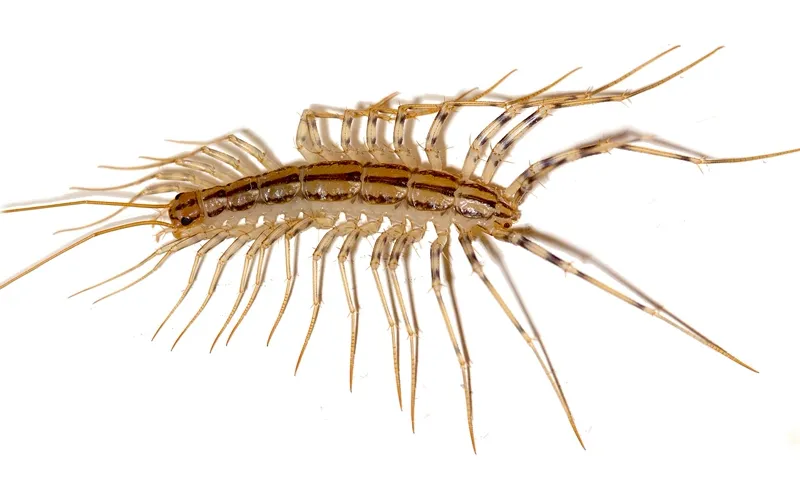
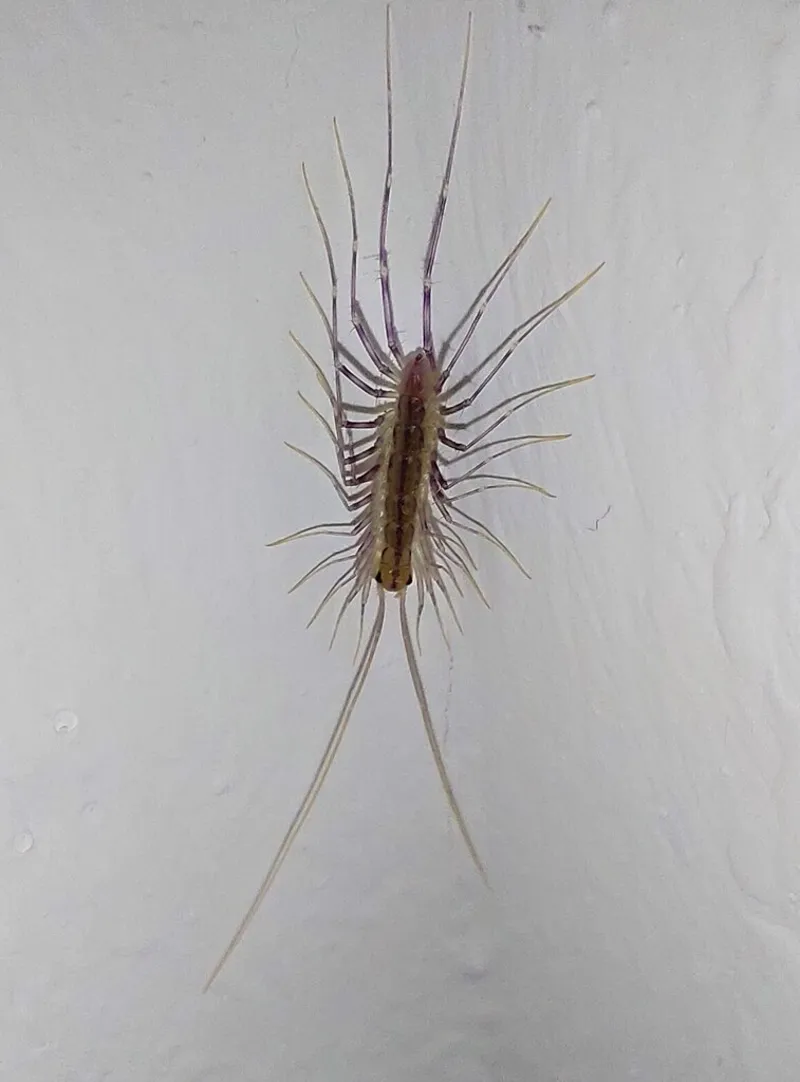
Here’s what house centipedes look like up close. Their long, banded legs and flat bodies make them easy to identify once you know what to look for.

3. Dark, Quiet Hiding Spaces
Centipedes are active at night. They prefer dark, still areas where they can rest during the day and hunt after dark. Common hiding spots include:
- Cardboard boxes stored on concrete floors
- Cluttered storage areas
- Inside cement block walls
- Under furniture that rarely gets moved
- Crawl spaces and unfinished basements
4. Easy Entry Points Around Your Foundation
Centipedes don’t need much space to get inside. Small gaps around pipes, loose siding, open vents, and unsealed windows all give them a way in.
The soil around your foundation is a great spot for centipedes. It stays cool, damp, and full of insects. Outdoor species like stone centipedes and soil centipedes thrive in these spots. Once they set up along your perimeter, getting inside is easy. Homes near wooded areas like Fairfax and Burke often see more centipedes. The extra moisture and insects near trees draw them in.
5. Temperature Changes and Weather Extremes
Centipedes head indoors when outdoor conditions get harsh. You’ll see more activity when:
- Hot, dry weather sends them looking for moisture
- Cold snaps push them toward heated spaces
- Heavy rains flood their outdoor hiding spots
- Spring and fall transitions trigger movement indoors
6. Outdoor Debris Near Your Home
What’s happening outside your home matters just as much as what’s inside. Centipedes thrive in:
- Leaf litter and mulch piled against the foundation
- Firewood stacked near walls
- Landscape timbers and railroad ties
- Dense ground cover plants
- Compost piles
These spots create damp, sheltered areas right next to your home.
7. Outdoor Lights That Draw Insects
Centipedes aren’t attracted to light, but the bugs they eat are. Bright white lights near doors and windows draw moths, flies, and other insects. This creates a food source right at your entry points. Switch to yellow or sodium vapor bulbs for outdoor lighting to attract fewer insects.
Where Centipedes Hide in Your Home
Knowing where centipedes hide helps you focus your efforts. Here are the most common spots:
Bathrooms: Moisture, floor drains, and small insects make bathrooms a top hiding spot.
Basements and Crawl Spaces: These areas often have the highest humidity in your home. Block walls and floor drains give centipedes extra ways in.
Kitchens: Under-sink areas with pipes and possible leaks draw centipedes seeking moisture.
Laundry Rooms: Washing machines add humidity, and floor drains offer entry points.
Garages: Less sealing, easy access, and plenty of clutter make garages a common spot.
How to Keep Centipedes Out of Your Home
The key to centipede control is fixing what attracts them. Here’s a step-by-step approach:
Use dehumidifiers in basements and crawl spaces. Fix all leaky pipes and faucets. Make sure bathrooms and kitchens have good airflow. Grade soil away from your foundation. Fix any standing water issues.
Caulk cracks and gaps in your foundation. Put screens over floor drains. Seal around pipes and conduits. Add weather stripping to doors and windows. Repair damaged siding and trim.
Get cardboard boxes off basement floors. Keep storage areas tidy. Move firewood away from your home. Clear leaves and debris from around your foundation. Use a dehumidifier in damp basements.
Since centipedes follow their food, controlling other pests is key. If you’re seeing lots of centipedes, consider a general pest control program that targets the insects they’re hunting.
At Better Termite & Pest Control, our licensed technicians treat both centipedes and the pests they feed on. We seal entry points, reduce moisture sources, and apply targeted treatments. When we treat for centipedes, we also find and treat the underlying pest issues that brought them in.
Are House Centipedes Dangerous?
House centipedes are mostly harmless to people. While they can bite, they rarely do and prefer to run away. They do eat other household pests like cockroaches and silverfish.
However, a large centipede population is a warning sign. It usually means you have enough prey insects to support them, which points to a bigger pest problem.
When Centipedes Point to a Bigger Problem
In my years as a licensed technician, centipedes are often the symptom, not the main problem. When homeowners in Bethesda, Germantown, or Kensington call about centipedes, our inspection often finds:
- Silverfish in humid areas
- Cockroach problems in kitchens and basements
- Spiders in crawl spaces
- Carpet beetles in closets and storage areas
- Moisture issues that attract many pest species
Treating only the centipedes without fixing these root causes means they’ll keep coming back.
Penn State Extension says that “reduction in the centipede food source is the first step in managing a house centipede population.” This is why pro pest control looks at the whole picture. We don’t just treat the pest you see. We fix the conditions drawing it in.
That’s why a full inspection matters. Solving the centipede problem starts with finding and treating whatever is feeding them.
Get Help with Your Centipede Problem
Centipedes might look scary, but they’re manageable once you know what attracts them. The key is fixing moisture, entry points, and prey insects, the three factors that draw centipedes indoors.
If you’re dealing with centipedes in your home, our team at Better Termite & Pest Control can help. We have over 1,000 five-star reviews and 57 years serving Northern Virginia, Maryland, and the DC metro area. We solve centipede problems at their source.
Call us at 703-683-2000 or email info@bettertermite.com to schedule an inspection. We’ll find what’s attracting centipedes to your home and build a treatment plan that works.