Ambrosia Beetles Identification Guide
Subfamily Scolytinae
Ambrosia beetles are small wood-boring insects that tunnel into trees and introduce symbiotic fungi that serve as their food source. Unlike most wood-boring beetles, ambrosia beetles do not eat wood directly but cultivate fungal gardens inside their tunnels, which can cause significant damage to stressed or dying trees.
Taxonomy
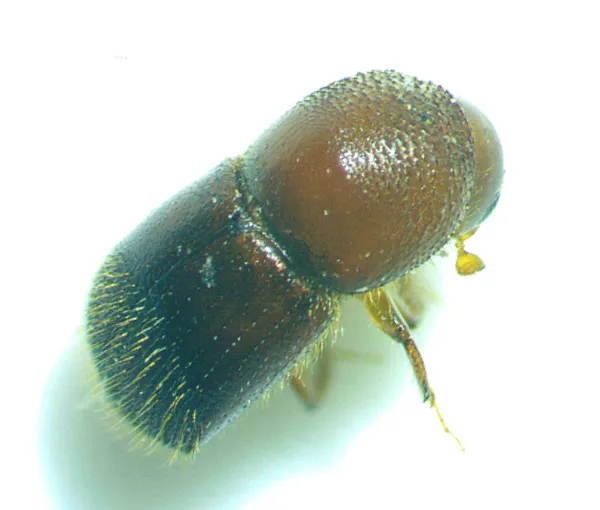
Ambrosia Beetles Coloration
Common color patterns to help identify ambrosia beetles
Ambrosia Beetles
Seasonal Activity
When ambrosia beetles are most active throughout the year
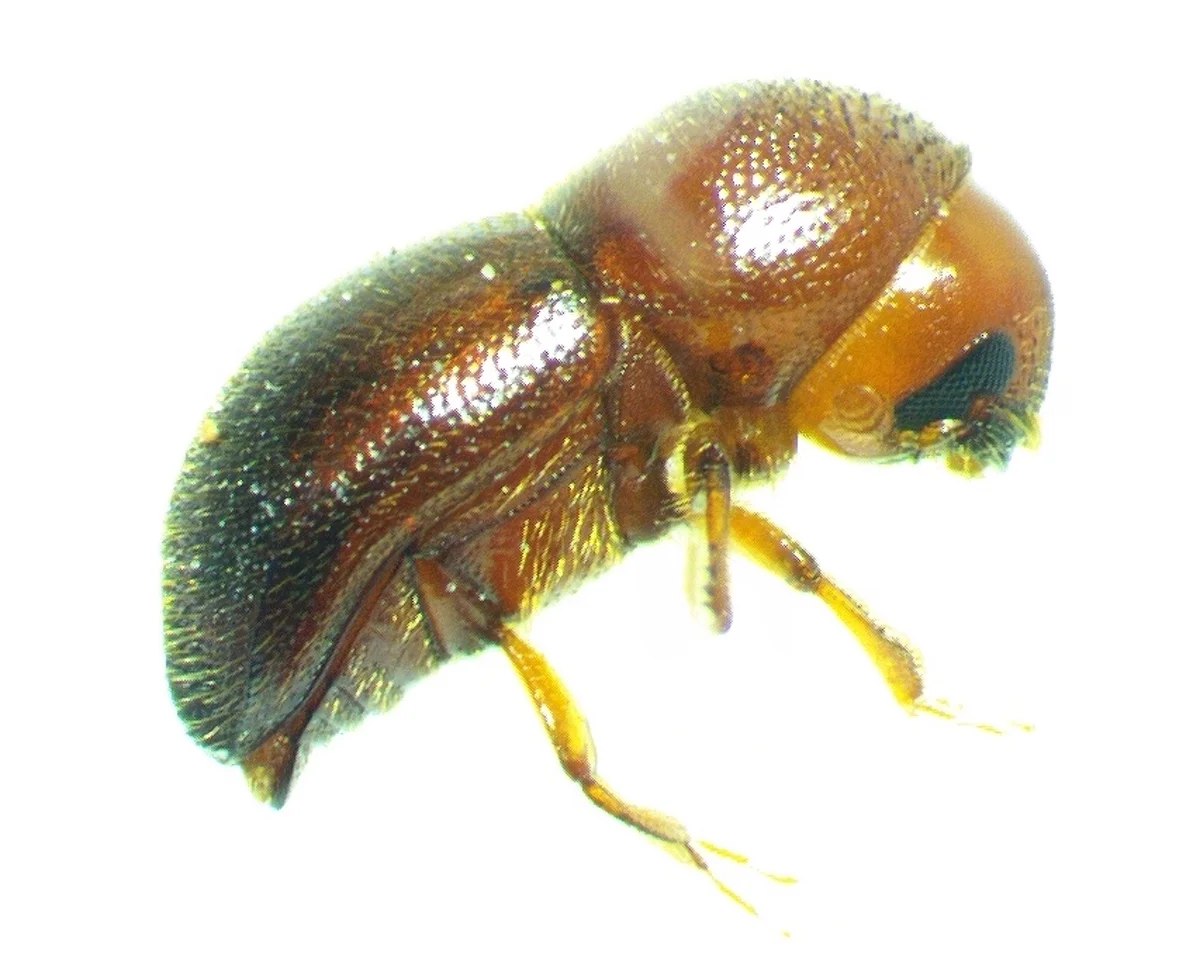

Where Ambrosia Beetles Are Found
Hover over states to see their names. Green regions indicate where ambrosia beetles have been reported.
Ambrosia Beetle Identification Guide
Ambrosia beetles are a unique group of wood-boring insects that have evolved a remarkable farming relationship with fungi. Unlike termites or other wood-boring beetles that feed directly on wood, ambrosia beetles excavate tunnels into trees and grow fungal gardens on the tunnel walls. The beetles and their larvae feed exclusively on this cultivated fungus, earning them the nickname “fungus farmers” of the insect world.
There are approximately 3,000 ambrosia beetle species worldwide, with several invasive species now established throughout North America. These beetles primarily target stressed, dying, or recently dead trees, though some species can attack trees that appear healthy.
Physical Characteristics
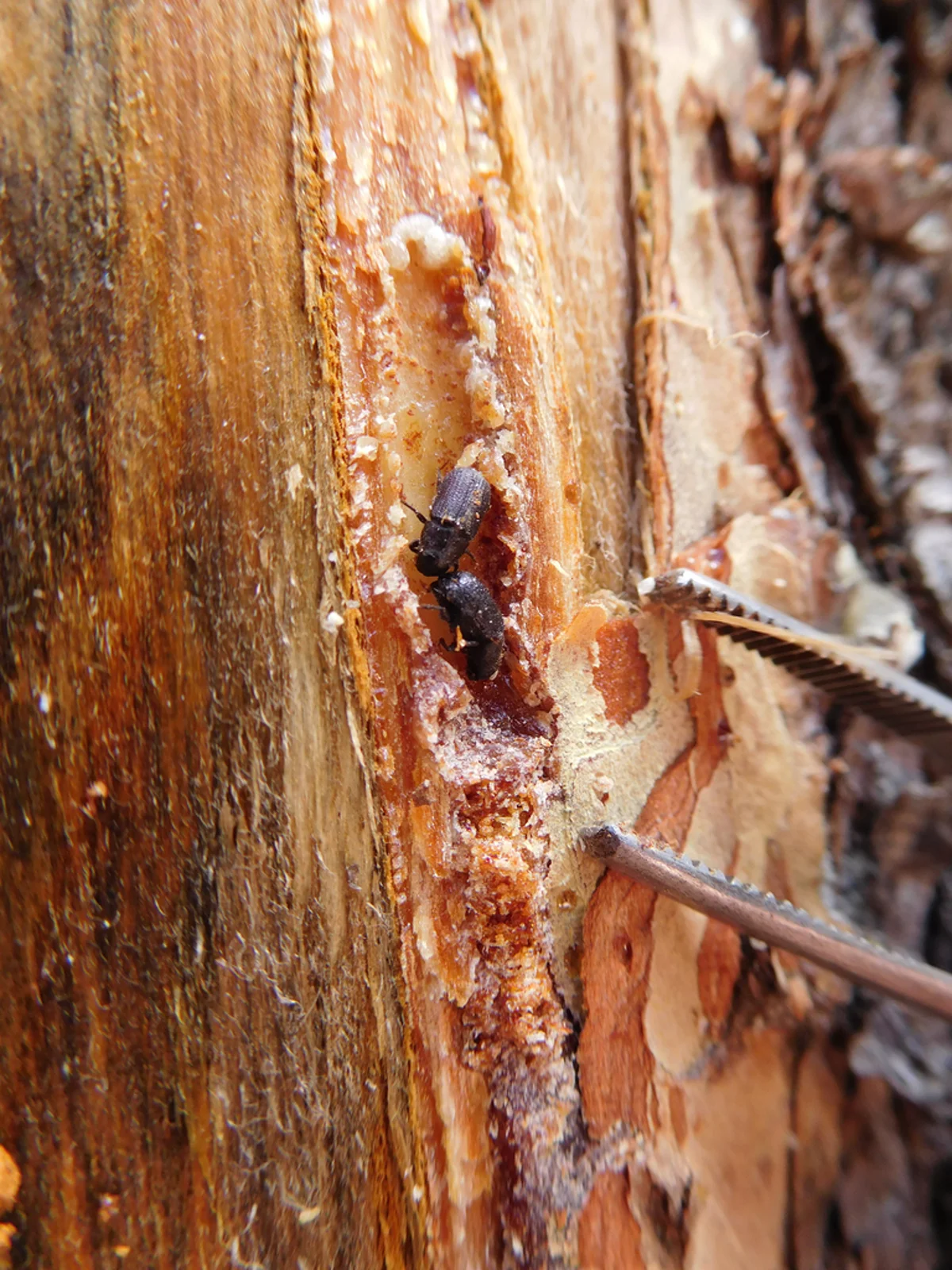
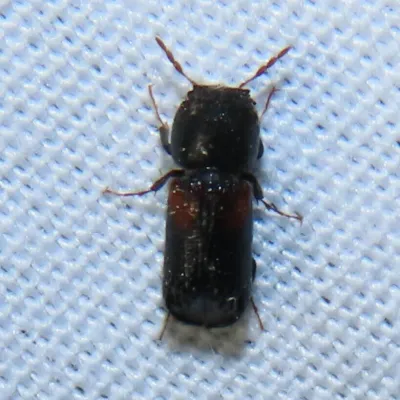
Ambrosia beetles are small insects, typically measuring 1 to 6 millimeters (about 1/16 to 1/4 inch) in length. Most species share several identifying features:
- Body shape: Cylindrical and compact, well-suited for boring into wood
- Color: Ranges from reddish-brown to dark brown or black, depending on species
- Head: Often partially hidden beneath a hood-like projection of the thorax
- Antennae: Short with a distinctive club-shaped tip
- Legs: Six short legs adapted for moving through tunnels
The larvae are small, legless, white grubs with dark head capsules. When disturbed, they typically curl into a C-shape. Larvae remain inside the galleries throughout their development, feeding on the fungus their mothers introduced.
Common Species in North America
Granulate Ambrosia Beetle (Xylosandrus crassiusculus) is the most common species affecting ornamental trees and nursery stock. Originally from Asia, it was introduced to South Carolina in the early 1970s and has since spread throughout the eastern and southern United States. Adults are stout-bodied, dark reddish-brown, and about 2.5 mm (1/10 inch) long. This species can attack over 200 tree species.
Redbay Ambrosia Beetle (Xyleborus glabratus) is an invasive species first detected in Georgia in 2002. It carries a fungus (Raffaelea lauricola) that causes laurel wilt disease, which has devastated redbay and other trees in the laurel family throughout the southeastern United States. Unlike most ambrosia beetles, this species can attack healthy trees.
Keyhole Ambrosia Beetle (Xyleborinus saxesenii) is a European species now established across North America. It attacks a wide range of hardwood species and is commonly found in recently cut logs, firewood, and stressed shade trees.
Common Ambrosia Beetle (Euplatypus parallelus) is found throughout tropical and subtropical regions of the Americas. It is larger than most ambrosia beetles and creates distinctive pin-hole damage in hardwoods.
Ambrosia Beetle Behavior and Biology
The Fungus Farming System
What makes ambrosia beetles truly remarkable is their symbiotic relationship with fungi. This mutualistic partnership has evolved independently in multiple beetle lineages over millions of years.
Female beetles carry fungal spores in specialized structures called mycangia. These sac-like organs are located near the mandibles or thorax, depending on the species. When a female bores into a new tree, she inoculates the tunnel walls with fungal spores.
The fungus penetrates the tree’s xylem tissue and extracts nutrients, which it concentrates on the gallery walls. This creates a nutritious coating that feeds the beetle colony. The beetles do not digest wood; instead, they push sawdust out of the tunnel as waste.
Lifecycle and Reproduction
Ambrosia beetles develop through four life stages: egg, larva, pupa, and adult. The complete lifecycle takes approximately 55 to 60 days under summer conditions.
Mating and gallery construction: After emerging from her natal gallery, a female beetle locates a suitable host tree by detecting ethanol and other stress compounds. She bores directly into the wood and creates a system of tunnels called galleries. After establishing the fungal garden, she lays 20 to 60 eggs.
Larval development: Eggs hatch in about one to two weeks. The larvae feed on the fungal coating within the galleries for several weeks before pupating. Unlike many wood-boring beetles, ambrosia beetle larvae do not tunnel through the wood themselves. For general information on beetle larva identification, see our blog guide. A related species, Dermestid Beetles, shares similar characteristics.
Sex ratios and flight: Ambrosia beetle populations are heavily female-biased, often 10 females for every male. Males are smaller, flightless, and never leave the home gallery. Their sole purpose is mating with their sisters. Only fertilized females disperse to start new colonies. A related species, June Bugs, shares similar characteristics.
Seasonal activity: Initial flight typically occurs when daytime temperatures exceed 70 degrees Fahrenheit in spring. In southern regions, ambrosia beetles can produce multiple generations per year and may remain active year-round in warmer areas. A related species, False Powderpost Beetles, shares similar characteristics.
Host Selection and Attraction
Ambrosia beetles locate host trees by detecting volatile chemicals, particularly ethanol. Trees produce ethanol when they are stressed by:
- Drought or flood conditions
- Root damage from construction or transplanting
- Disease infection
- Physical injury
- Freeze damage
- Recent death
This is why recently transplanted trees are especially vulnerable. The stress of transplanting triggers ethanol release, attracting beetles within days or weeks of planting. Trees in urban landscapes often experience multiple stressors that increase their susceptibility.
Signs of Ambrosia Beetle Infestation
Toothpick-Like Frass Tubes
The most distinctive sign of ambrosia beetle activity is the appearance of toothpick-like strands protruding from the tree trunk. As the female excavates her gallery, she pushes boring dust out of the entry hole. This compacted sawdust can extend 1 to 1.5 inches from the bark.
These frass tubes are fragile and easily broken by wind, rain, or physical contact. After they break off, only tiny pencil-lead sized holes remain visible. Fresh frass indicates active boring, while older, weathered frass suggests past activity.
Entry Holes and Staining
Ambrosia beetle entry holes are characteristically small, typically 1 to 2 mm in diameter. Look for:
- Multiple small holes clustered on the trunk, often at heights of 2 to 6 feet
- Dark staining around entry holes from fungal growth
- Sap weeping from fresh entry points in some tree species
- Entry holes may be oriented at different angles, unlike the horizontal tunnels of bark beetles
Tree Decline Symptoms
Trees attacked by ambrosia beetles may show various decline symptoms:
- Wilting or flagging branches
- Yellowing or browning foliage
- Branch dieback starting in the upper canopy
- Bark cracking or loosening
- Reduced vigor and growth
In severe cases, particularly with invasive species carrying pathogenic fungi like the redbay ambrosia beetle, trees may die within weeks to months of initial attack.
Internal Damage
If you cut into affected wood, you may observe:
- Dark streaking or staining from the ambrosia fungus
- Networks of narrow tunnels, often following a branching pattern
- Pinhole-sized tunnel openings on cut surfaces
- Fungal growth visible in gallery walls
Treatment and Management Approaches
Prevention Strategies
Preventing ambrosia beetle attacks is far more effective than treating established infestations. Key prevention measures include:
Maintain tree health: Healthy, vigorous trees are less attractive to ambrosia beetles. Provide adequate water during drought, avoid root damage during construction, and address pest or disease problems promptly.
Time transplanting carefully: In areas with high ambrosia beetle pressure, transplant trees in late fall or winter when beetle activity is lowest. Avoid spring planting when beetles are most active.
Reduce stress after transplanting: Water newly planted trees consistently. Apply mulch to retain soil moisture and moderate root temperatures. Avoid fertilizing heavily immediately after transplanting, as this can stress roots.
Remove heavily infested material: Cut and destroy heavily infested trees before beetles emerge to start new infestations. Chip, burn, or solarize infested wood rather than storing it as firewood.
Protective Treatments
For high-value trees in areas with ambrosia beetle pressure, preventive treatments may be warranted:
Trunk sprays: Pyrethroid insecticides applied to tree trunks can kill beetles before they bore into the wood. Applications must be timed before beetle flight begins and may need repeating during the flight season. This approach is most practical for small numbers of high-value landscape trees.
Systemic treatments: Some systemic insecticides can provide protection when injected into trees or applied as soil drenches. These products move through the tree’s vascular system and may kill beetles as they feed on the fungus. Effectiveness varies by product and tree species.
Managing Established Infestations
Once ambrosia beetles have established galleries inside a tree, control options are limited. The beetles are protected from contact insecticides while inside their tunnels.
Assess tree viability: Determine whether the tree can be saved. Trees with minor infestations and good overall health may recover. Heavily infested trees, especially those with pathogenic fungal infections, often decline regardless of treatment efforts.
Support tree recovery: For trees worth saving, reduce additional stressors. Provide adequate irrigation, apply organic mulch, and consider growth regulator treatments to redirect energy to defense.
Monitor for spread: Check nearby susceptible trees for signs of attack. Early detection allows for protective treatments before damage becomes severe.
Prevention Tips for Homeowners
While ambrosia beetles primarily affect trees rather than structures, homeowners can take steps to reduce problems on their property:
- Select appropriate trees: Choose tree species well-suited to your site conditions. Trees planted in unsuitable locations experience chronic stress.
- Water during drought: Established trees may need supplemental watering during extended dry periods to prevent stress.
- Avoid damaging roots: Be careful with construction, trenching, and grade changes near trees. Root damage triggers stress responses that attract beetles.
- Inspect nursery stock: Before purchasing trees, check for tiny holes and sawdust tubes on trunks. Do not buy infested plants.
- Manage firewood: Do not store fresh-cut firewood near valuable landscape trees. Beetles emerging from firewood can attack nearby trees.
For more information on beetle species that may affect your home, see our guide on wood-boring beetles.
- Act quickly on tree problems: Address disease, pest, or environmental problems promptly. The longer a tree remains stressed, the more attractive it becomes to beetles.
References and Further Reading
- UC IPM: Granulate Ambrosia Beetle: Comprehensive guide to biology and management
- Clemson University HGIC: Ambrosia Beetles: Identification and control information
- NC State Extension: Ambrosia Beetle Pests of Nursery and Landscape Trees: Detailed species information and management
- University of Georgia CAES: Granulate Ambrosia Beetle Biology and Management: Research-based management guide
- Indiana DNR: Granulate Ambrosia Beetle Fact Sheet: Species identification and biology
- USDA Forest Service: Ambrosia Beetles: Overview of ambrosia beetle ecology
Other Wood Boring Beetles
Explore other species in the wood boring beetles family
Commonly Confused With
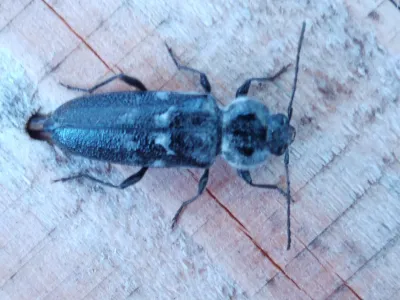
Ambrosia Beetles are often mistaken for these similar pests
Where Ambrosia Beetles Are Found
Hover over states to see their names. Green regions indicate where ambrosia beetles have been reported.
Common Questions about Ambrosia Beetles
What are ambrosia beetles?
+
Ambrosia beetles are small wood-boring insects that belong to the weevil family. Unlike most wood borers, they do not eat wood. Instead, they tunnel into trees and cultivate symbiotic fungi on the tunnel walls. The beetles and their larvae feed exclusively on this fungus. There are about 3,000 ambrosia beetle species worldwide.
How do I know if I have ambrosia beetles?
+
The most distinctive sign is toothpick-like strands of sawdust (called frass) protruding from tiny holes in tree bark. These strands can extend up to 1.5 inches and are easily broken by wind or rain. Other signs include pencil-lead sized entry holes, wilting or dying branches, and dark staining in the wood beneath the bark.
Do ambrosia beetles attack healthy trees?
+
Most ambrosia beetle species prefer trees that are already stressed, dying, or recently dead. They are attracted to ethanol, a chemical released by stressed woody plants. However, some invasive species like the granulate ambrosia beetle can attack seemingly healthy trees, especially newly transplanted ones.
What kind of damage do ambrosia beetles cause?
+
Ambrosia beetles cause damage through their tunneling and the fungi they introduce. The fungal growth can clog the tree's vascular tissues, blocking water and nutrient transport. This leads to branch dieback, wilting foliage, and can eventually kill the tree. The dark fungal staining in wood also reduces its commercial value.
Can ambrosia beetles damage my home?
+
Ambrosia beetles primarily attack living or recently dead trees, not structural lumber. They do not typically infest seasoned, dried wood in homes. However, they can damage newly built homes if fresh, unseasoned lumber is used. Firewood and ornamental trees near homes are more common targets.
When are ambrosia beetles most active?
+
Most ambrosia beetle species become active in spring when daytime temperatures exceed 70 degrees Fahrenheit. Flight activity peaks in April and May in most regions. They can produce multiple generations per year and remain active through summer and early fall.
How do ambrosia beetles spread?
+
Female ambrosia beetles carry fungal spores in specialized structures called mycangia. After mating, fertilized females fly to new host trees, bore into the wood, and introduce the fungus. Some species have been spread internationally through infested wood products, firewood, and nursery stock.
What trees do ambrosia beetles attack?
+
Ambrosia beetles can attack over 200 species of trees, including oaks, maples, magnolias, dogwoods, sweetgums, redbuds, fruit trees, and many ornamental species. They tend to prefer deciduous trees over conifers. Trees weakened by drought, flooding, disease, or recent transplanting are most vulnerable.

With five years of hands-on experience in the pest control industry, George Schulz is a registered technician with the Virginia Pest Management Association and a proud third-generation professional in a family business that's been protecting homes for over 57 years. He manages and trains a team of service pros while also leading internal research efforts—recently spearheading a deep-dive review of thousands of documents on pest control materials to hand-pick the most kid and pet friendly, most effective solutions tailored specifically for homes in the DC metro area.