Northern Paper Wasps Identification Guide
Polistes fuscatus
Northern paper wasps are social insects that build distinctive umbrella-shaped nests from chewed wood fibers. They are common across eastern North America and often nest near human structures.
Taxonomy
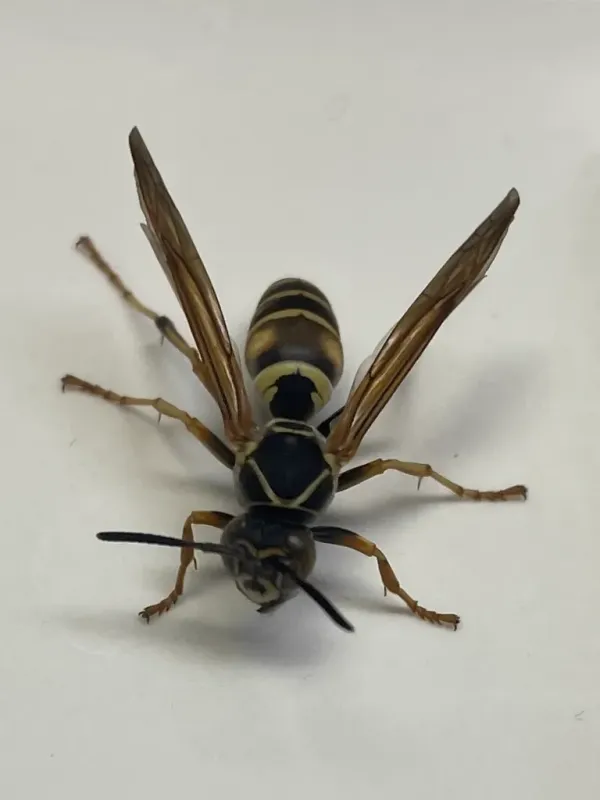
Northern Paper Wasps Coloration
Common color patterns to help identify northern paper wasps
Northern Paper Wasps
Seasonal Activity
When northern paper wasps are most active throughout the year

Where Northern Paper Wasps Are Found
Hover over states to see their names. Green regions indicate where northern paper wasps have been reported.
Northern Paper Wasp Identification Guide
Physical Characteristics
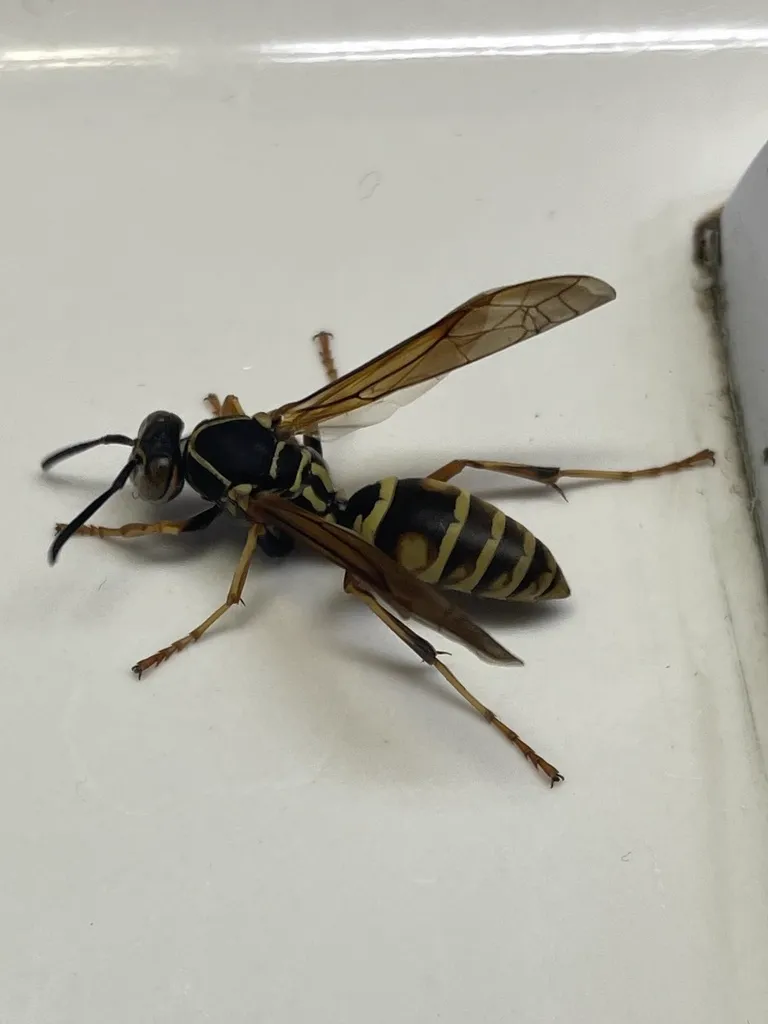
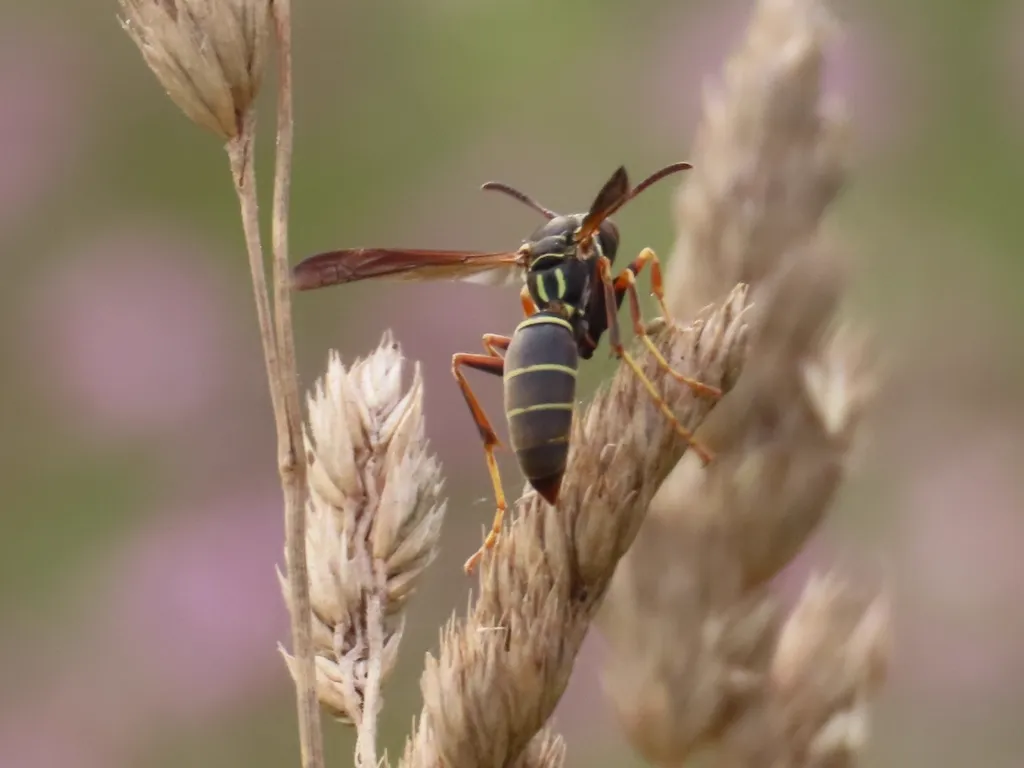
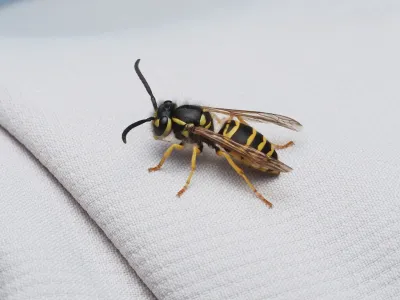
Northern paper wasps are about 15 to 21 mm long. They have thin bodies with a narrow waist. Their long legs hang down when they fly, unlike the tucked legs of yellowjackets. Colors range from dark reddish-brown to nearly black, with yellow bands on the belly. Their heads are pointed, unlike the rounder heads of yellowjackets.
At rest, these wasps fold their wings lengthwise along their bodies. This gives them a narrow look. Their antennae are orange or reddish-brown. Males have curved antenna tips and more yellow on their faces.
Distinguishing Features
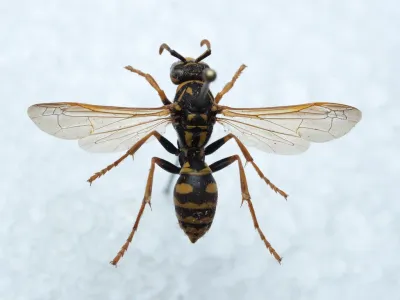
Northern paper wasps look different from European paper wasps in a few ways. The northern species is darker with more brown and red tones. European paper wasps have brighter yellow and black patterns like yellowjackets. Northern paper wasps also have varied face markings. They use these patterns to tell colony members apart.
Northern Paper Wasp Behavior and Biology
Social Structure
Northern paper wasps live in colonies with a clear pecking order. Each spring, a queen comes out of hibernation and starts a new colony. She builds the first nest cells and lays the first eggs. Other females may join as workers, but usually only the queen lays eggs.
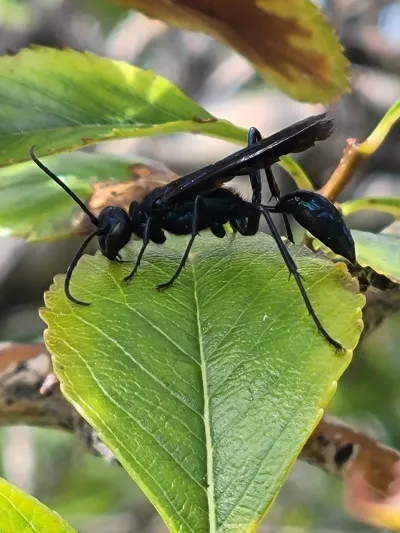
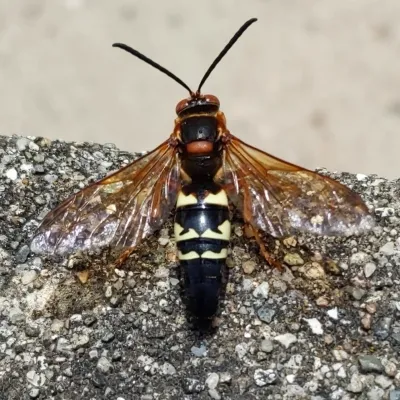
The queen shows her rank through body language and postures. She also marks her eggs with chemicals. This lets her spot and remove eggs laid by workers. This system keeps order in the colony. A related species, Cow Killers, shares similar characteristics.
Nest Construction A related species, Great Black Wasps, shares similar characteristics.
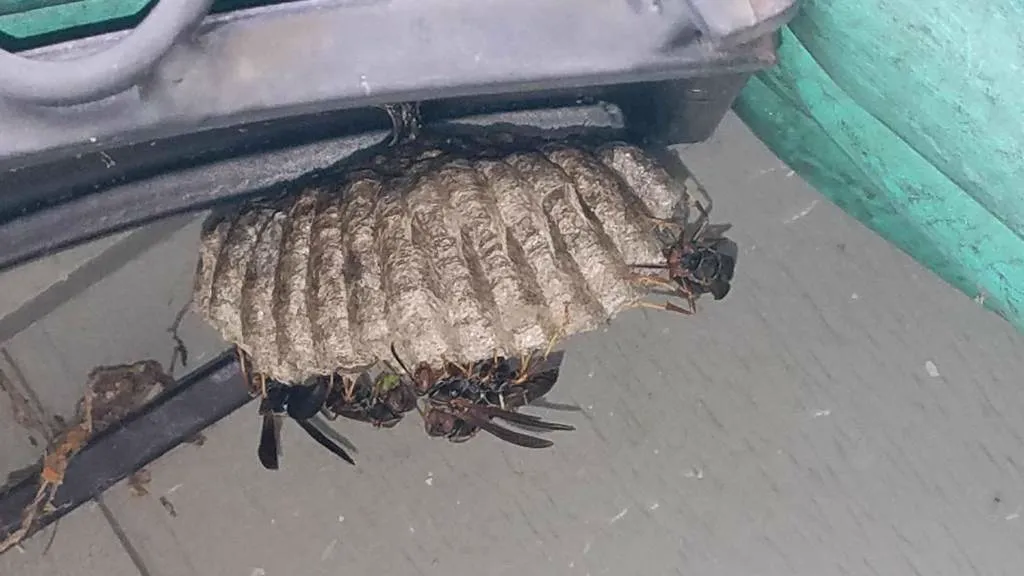
Paper wasps build nests from chewed wood mixed with spit. This makes a papery material that forms the classic umbrella shape. The nest hangs from a single stalk. Each cell faces down and holds one growing larva.
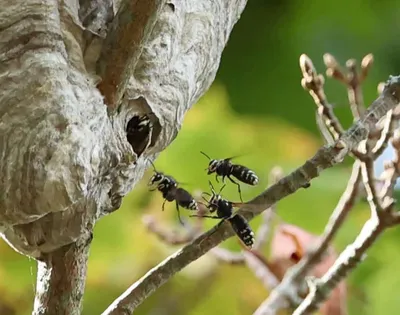
Unlike bald-faced hornet nests, paper wasp nests are open. You can see the honeycomb pattern from below. A typical colony has 20 to 75 wasps, though some grow larger. Nests often appear under eaves, porch ceilings, and other covered spots.
Life Cycle
The colony lasts one year. Queens wake up in early spring and start building nests. The first workers hatch in late spring. These workers find food and expand the nest while the queen lays more eggs.
By late summer, the colony makes new queens and males. After mating, new queens find sheltered spots to spend the winter. The old queen, workers, and males die when frost arrives. Only mated queens live to start new colonies the next spring.
Diet and Foraging
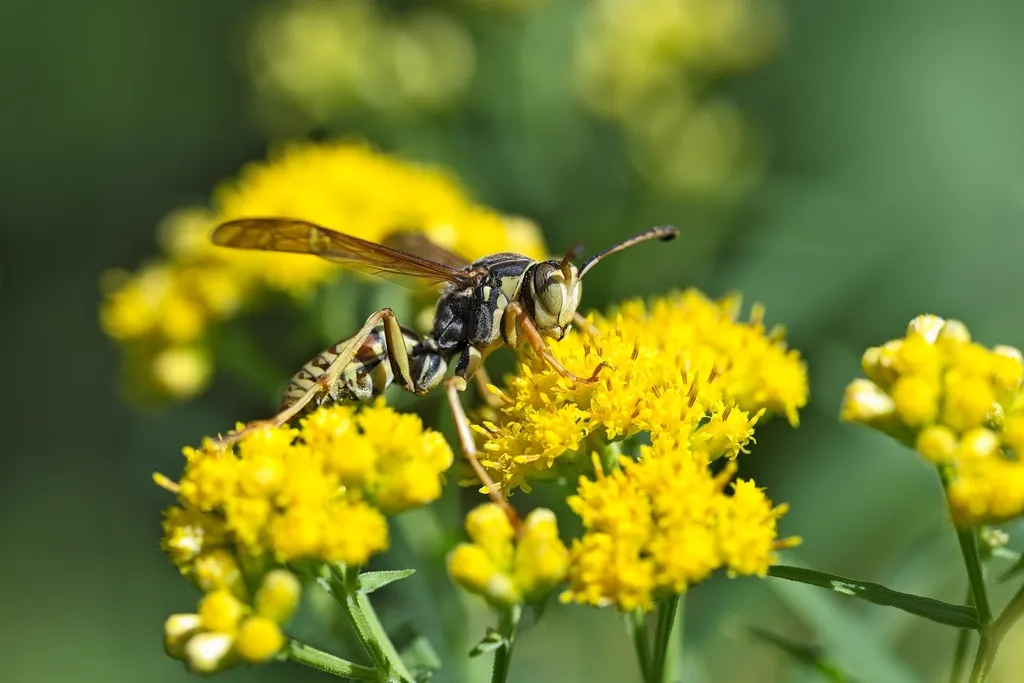
Adult northern paper wasps feed on nectar from flowers. They visit goldenrod, asters, and many garden plants in summer and fall. They also drink fruit juices and other sweet liquids.
Larvae need protein to grow. Worker wasps hunt caterpillars, beetle larvae, and other soft-bodied insects, much like red paper wasps do. They chew this prey into a paste and feed it to the growing larvae. The larvae then make a sugary liquid that adult wasps eat.
How We Treat for Northern Paper Wasps
When dealing with northern paper wasp infestations, we follow a proven treatment protocol:
-
Nest location and identification: Our technician first confirms the species and locates all active nests on your property. Treatment approach varies based on nest accessibility and proximity to high-traffic areas.
-
Direct nest treatment: For accessible aerial nests like those under eaves or on porch ceilings, we apply a residual insecticide directly to the nest. This eliminates the colony effectively.
-
Nest removal: After treatment takes effect, we can remove the nest if it is in a highly visible or frequently used area. This prevents any returning wasps from reusing the site.
-
Prevention guidance: We advise customers on reducing attractants around their property. Sealing gaps under eaves, keeping garbage covered, and addressing areas where wood is readily available can discourage future nesting.
-
Warranty coverage: If wasps return to treated areas, customers with an active service plan have access to free unlimited callbacks until the issue is resolved. Most wasp treatments include a 30-day warranty.
References
- Northern Paper Wasp - Animal Diversity Web
- Polistes fuscatus - Wikipedia
- Getting Rid of Paper Wasps and Yellow Jackets - Penn State Extension
- Common Social Bees and Wasps of Pennsylvania - Penn State Extension bees
Other Wasps
Explore other species in the wasps family
Commonly Confused With
Northern Paper Wasps are often mistaken for these similar pests
Where Northern Paper Wasps Are Found
Hover over states to see their names. Green regions indicate where northern paper wasps have been reported.
Common Questions about Northern Paper Wasps
How can I tell a northern paper wasp from a yellowjacket?
+
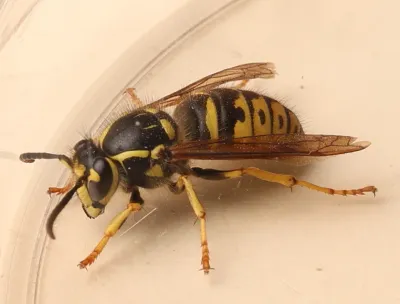
Northern paper wasps have longer, more slender bodies than yellowjackets. Their legs dangle noticeably when they fly, and their waist is narrower. Yellowjackets are more compact with shorter legs tucked close to their bodies during flight.
Are northern paper wasps aggressive?
+
Northern paper wasps are generally docile unless their nest is threatened. They will defend their colony if disturbed, so avoid getting too close to active nests. Unlike yellowjackets, they rarely sting without provocation.
Where do northern paper wasps build their nests?
+
They prefer sheltered locations like under eaves, porch ceilings, deck railings, and in sheds or barns. Their open, umbrella-shaped nests hang from a single stalk and are often visible in these protected spots.
Do northern paper wasps come back to the same nest every year?
+
No, they abandon their nests each fall. Only mated queens survive the winter by hibernating in protected areas. In spring, these queens start completely new nests rather than reusing old ones.
What do northern paper wasps eat?
+
Adults feed on flower nectar and fruit juices. They hunt caterpillars and other soft-bodied insects to feed their growing larvae.
Can northern paper wasps recognize each other?
+
Yes, research shows that northern paper wasps can recognize individual colony members by their unique facial patterns. This ability helps them maintain their social hierarchy and identify intruders.
How quickly can you remove a paper wasp nest?
+
We typically offer same-day or next-day service for wasp nest removal. After treatment, wasp activity decreases significantly within 24 hours.

With five years of hands-on experience in the pest control industry, George Schulz is a registered technician with the Virginia Pest Management Association and a proud third-generation professional in a family business that's been protecting homes for over 57 years. He manages and trains a team of service pros while also leading internal research efforts—recently spearheading a deep-dive review of thousands of documents on pest control materials to hand-pick the most kid and pet friendly, most effective solutions tailored specifically for homes in the DC metro area.