Great Black Wasps Identification Guide
Sphex pensylvanicus
The great black wasp is a large, solitary digger wasp with iridescent blue-black coloring. Despite its intimidating size, this wasp is not aggressive toward humans and rarely stings.
Taxonomy
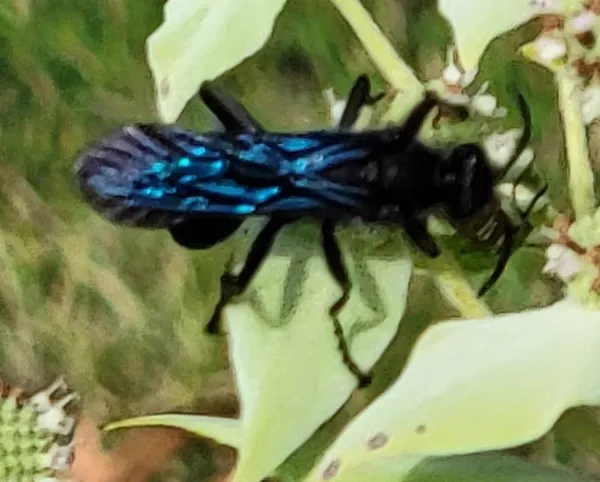
Great Black Wasps Coloration
Common color patterns to help identify great black wasps
Great Black Wasps
Seasonal Activity
When great black wasps are most active throughout the year
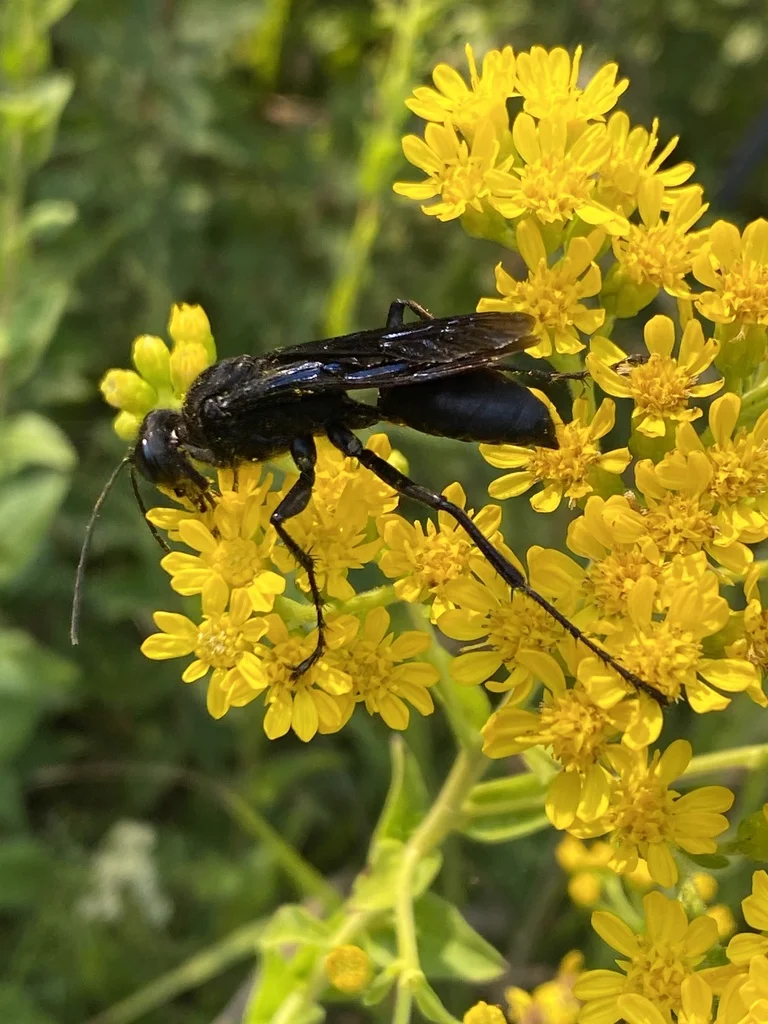
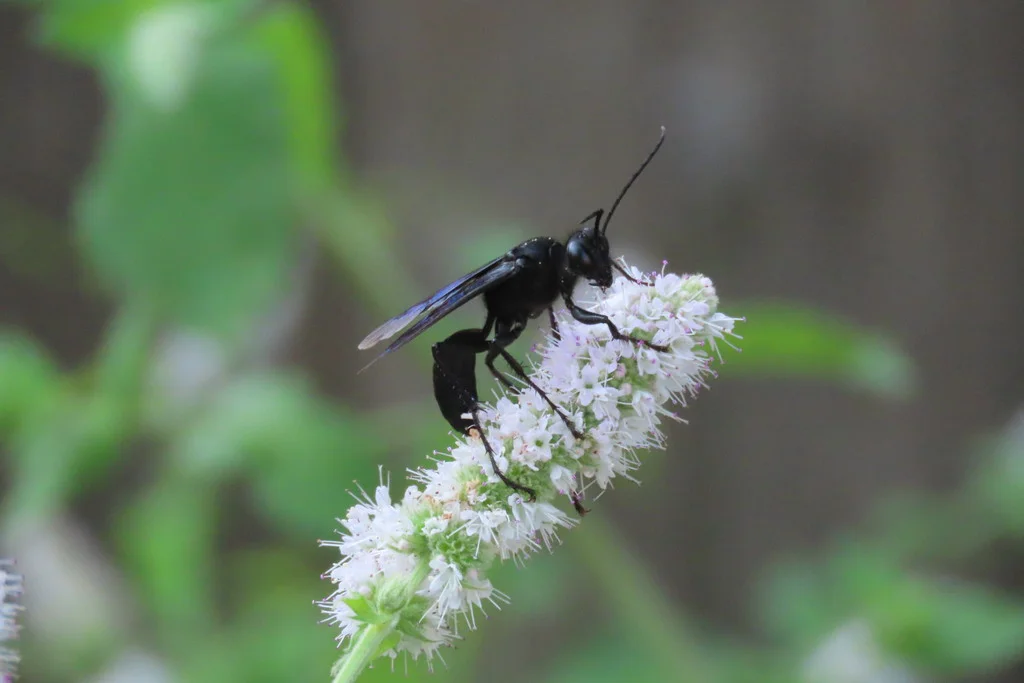
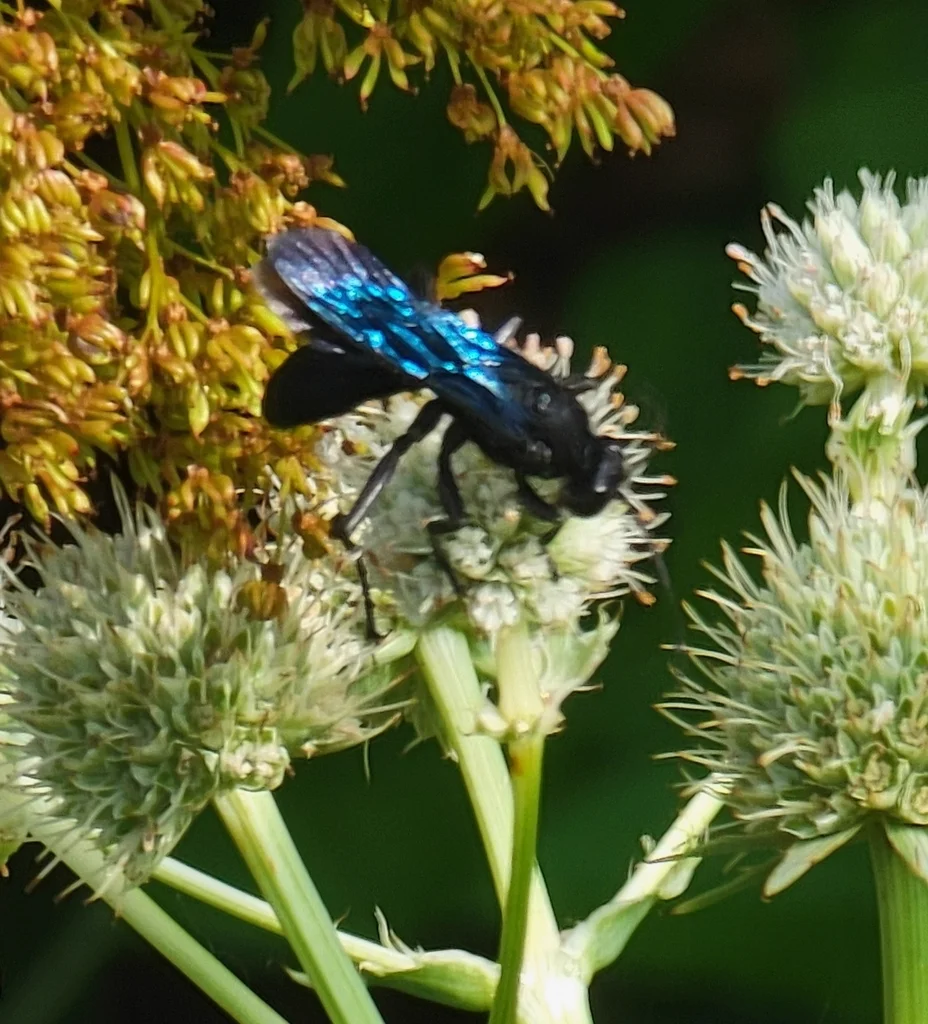

Where Great Black Wasps Are Found
Hover over states to see their names. Green regions indicate where great black wasps have been reported.
Great Black Wasp Identification Guide
Physical Characteristics
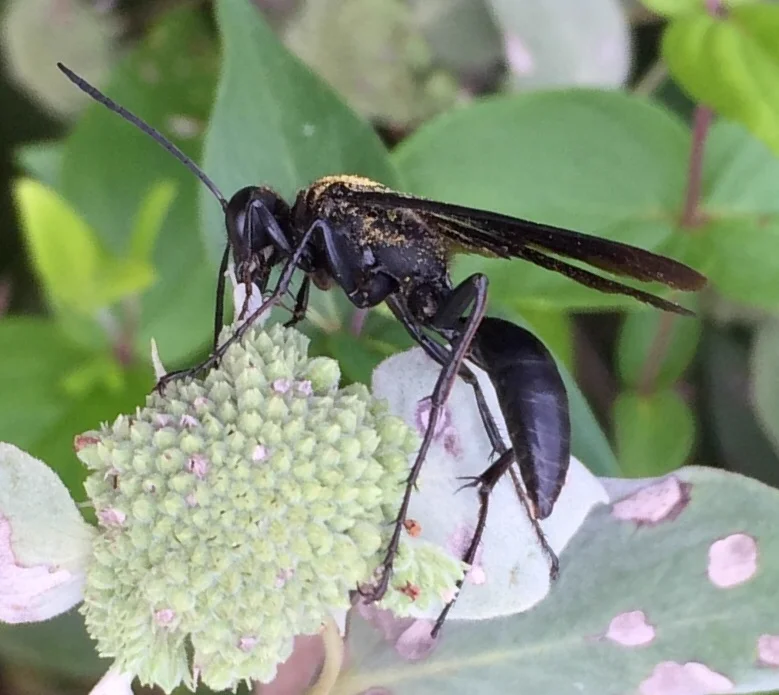
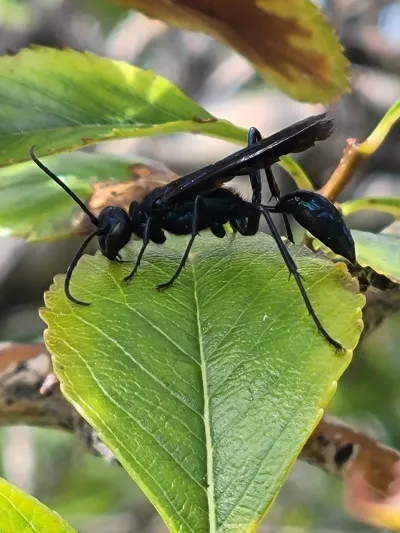
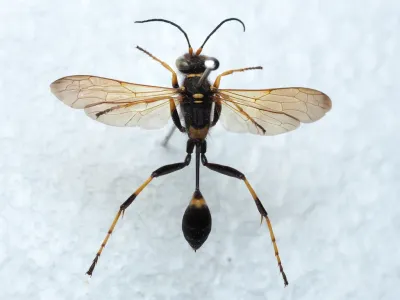
The great black wasp is one of the largest solitary wasps in eastern North America. Females measure 1 to 1.4 inches long. Males are slightly smaller at 0.7 to 1.1 inches. Their large size often alarms homeowners who see them in gardens or near flowers.
The body is all black with a blue or violet shine that shows up in direct sunlight. The wings are smoky black with the same metallic look as the body. A narrow waist connects the middle body section to the long abdomen. This gives the wasp its slender shape. Long black legs trail behind them during flight.
Fine body hairs cover parts of the thorax and help collect pollen when they visit flowers. Large eyes give them excellent vision for hunting prey. Strong jaws help females dig burrows and handle captured insects.
Distinguishing Features
Several features help tell great black wasps apart from similar large insects:
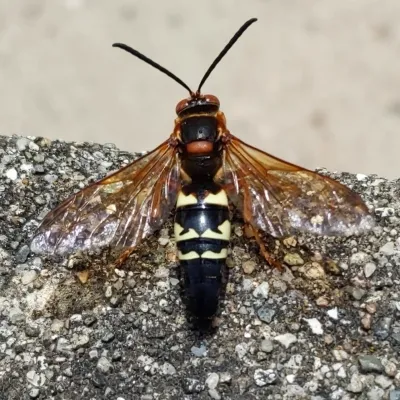
- Color: All black body with blue-violet metallic shine. Cicada killers have orange and black patterns instead.
- Size: Up to 1.4 inches long. Only cicada killers are larger in the eastern United States.
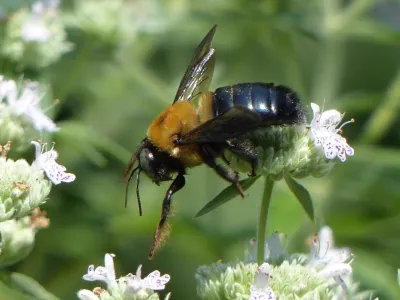
- Shape: Very narrow waist and long body. More slender than carpenter bees or bumble bees.
- Wings: Smoky black wings with blue highlights when viewed in sunlight.
Great Black Wasp Behavior and Biology
Great black wasps are solitary insects. Each female works alone to build her nest and stock it with food for her young. There is no queen or worker caste. They have no social structure like yellowjackets or paper wasps. This is one reason why great black wasps pose little threat to people.
Hunting Behavior
Female great black wasps are skilled hunters. They catch grasshoppers, katydids, and crickets. The wasp finds prey using her sharp eyesight. She then attacks and stings the insect three times to paralyze it. The prey stays alive so it remains fresh for the developing larva.
After paralyzing a grasshopper or katydid, the female carries it back to her burrow. She may fly with smaller prey or drag larger catches along the ground. A single female can catch dozens of insects during the nesting season.
Nesting Habits
Females dig underground burrows in sandy or loose soil. They prefer sunny, open areas with little grass. Lawns, gardens, and sandy patches near sidewalks or driveways make good nesting sites. The wasp uses her strong jaws and legs to dig a tunnel about one foot deep.
Inside the burrow, the female creates several chambers. She puts two to six paralyzed grasshoppers or katydids in each one. Then she lays a single egg on the underside of one prey insect. The egg is about 5 to 6 millimeters long.
Life Cycle
The egg hatches in about two days. The larva then feeds on the paralyzed prey. This stage lasts about 10 days. The larva eats all the stored insects and grows to 30 to 35 millimeters long.
After eating its food supply, the larva spins a cocoon and enters the pupal stage. It stays underground through fall and winter. The adult emerges the following summer. Males come out before females. Adults live for one to two months during the summer nesting season.
Feeding Habits
Adult great black wasps feed on flower nectar and visit many plant species during summer months. Research has documented their visits to milkweeds, Queen Anne’s lace, rattlesnake master, white sweet clover, spotted bee balm, and mountain mint. While feeding on nectar, they transfer pollen between flowers.
Sting Risk
Great black wasps look scary but pose minimal sting risk to humans. Several factors make them less likely to sting than social wasps like yellowjackets:
- Solitary behavior: They do not defend colonies, so they have no reason to be aggressive
- Non-defensive: They do not guard their ground nests like other wasps do
- Reluctant to sting: Females only sting if handled or trapped against skin
- Males cannot sting: Male wasps have no stinger at all
The sting is painful but is not considered dangerous unless you have an insect sting allergy. People allergic to wasp stings should be careful around any stinging insect and carry any prescribed medication.
Treatment Options for Great Black Wasps
Great black wasps are solitary and do not require treatment in most cases. Their ground nests are temporary and do not damage structures or lawns. However, if nesting occurs in a high-traffic area, several approaches can help manage their activity.
Prevention and Deterrent Methods
-
Keep soil moist: Females prefer dry, sandy areas for nesting. Watering the area regularly makes it less attractive for burrows.
-
Add thick grass: Overseeding and fertilizing creates dense turf that discourages nesting.
-
Apply mulch: Two to three inches of mulch over bare soil covers potential nesting sites.
-
Use sprinklers: Running a sprinkler over an active nesting area can prompt females to relocate.
Professional Treatment
If great black wasps nest in areas where children play or people walk barefoot, a pest control professional can assess the situation. Treatment typically involves applying a residual insecticide to the burrow entrance and surrounding soil. These wasps are solitary and not aggressive, so treatment carries less risk than treating social wasp colonies.
Great black wasps are only active for a few months each summer. Nesting activity ends naturally by fall. In many cases, waiting out the season may be the simplest approach.
References
Other Wasps
Explore other species in the wasps family
Commonly Confused With
Great Black Wasps are often mistaken for these similar pests
Where Great Black Wasps Are Found
Hover over states to see their names. Green regions indicate where great black wasps have been reported.
Common Questions about Great Black Wasps
Are great black wasps dangerous to humans?
+
Great black wasps are not dangerous to humans. They are solitary wasps that do not defend colonies, so they have no reason to be aggressive. Only females can sting, and they do so rarely unless directly handled or stepped on. Males have no stinger at all.
Why are great black wasps in my yard?
+
Great black wasps visit yards with flowering plants where they feed on nectar. They are also attracted to areas with grasshoppers, crickets, and katydids that they hunt to feed their larvae. Sandy or loose soil provides ideal nesting sites for females digging burrows.
Do great black wasps build nests on houses?
+
No, great black wasps do not build nests on structures. They are ground-nesting wasps that dig burrows in sandy or loose soil. Unlike paper wasps or mud daubers, they do not construct nests under eaves or on walls.
What do great black wasps eat?
+
Adult great black wasps feed primarily on flower nectar from milkweed and other native plants. Females hunt grasshoppers, crickets, and katydids to provision their underground nests for their developing larvae.
How can I tell a great black wasp from a carpenter bee?
+
Great black wasps have a narrow, thread-like waist between their thorax and abdomen, while carpenter bees have a thick, fuzzy body without a distinct waist. Great black wasps are longer and more slender at 1 to 1.4 inches compared to the rounder shape of carpenter bees.
Should I treat for great black wasps?
+
Great black wasps pose minimal sting risk to people and help control grasshopper populations. Treatment is usually not needed unless nesting occurs in high-traffic areas. A pest control professional can assess your situation and recommend the best approach.
When are great black wasps most active?
+
Great black wasps are most active from July through September. Peak activity occurs during warm, sunny days when females are hunting prey, digging burrows, or visiting flowers for nectar. They are daytime insects and are not active at night.

With five years of hands-on experience in the pest control industry, George Schulz is a registered technician with the Virginia Pest Management Association and a proud third-generation professional in a family business that's been protecting homes for over 57 years. He manages and trains a team of service pros while also leading internal research efforts—recently spearheading a deep-dive review of thousands of documents on pest control materials to hand-pick the most kid and pet friendly, most effective solutions tailored specifically for homes in the DC metro area.