Blue Mud Daubers Identification Guide
Chalybion californicum
Blue mud daubers are metallic blue solitary wasps known for hunting black widow spiders. These non-aggressive wasps reuse abandoned mud nests and help control spider populations around homes.
Taxonomy
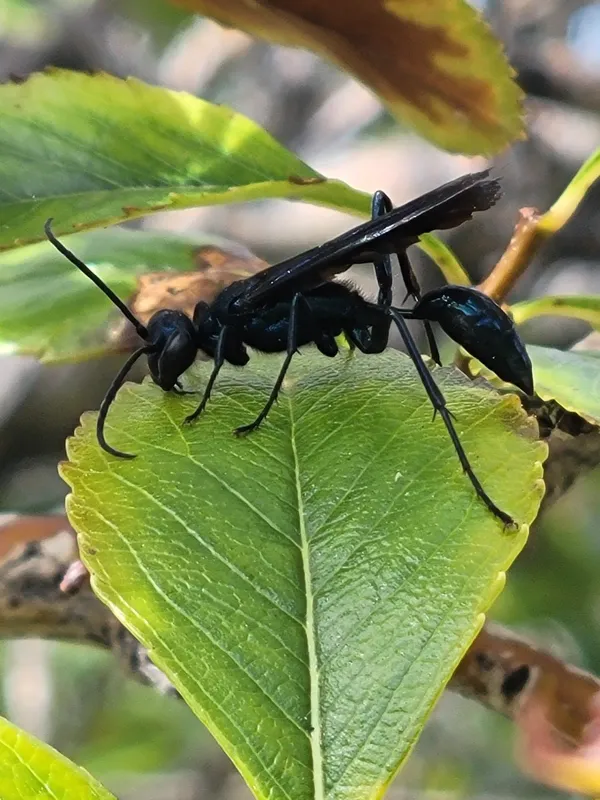
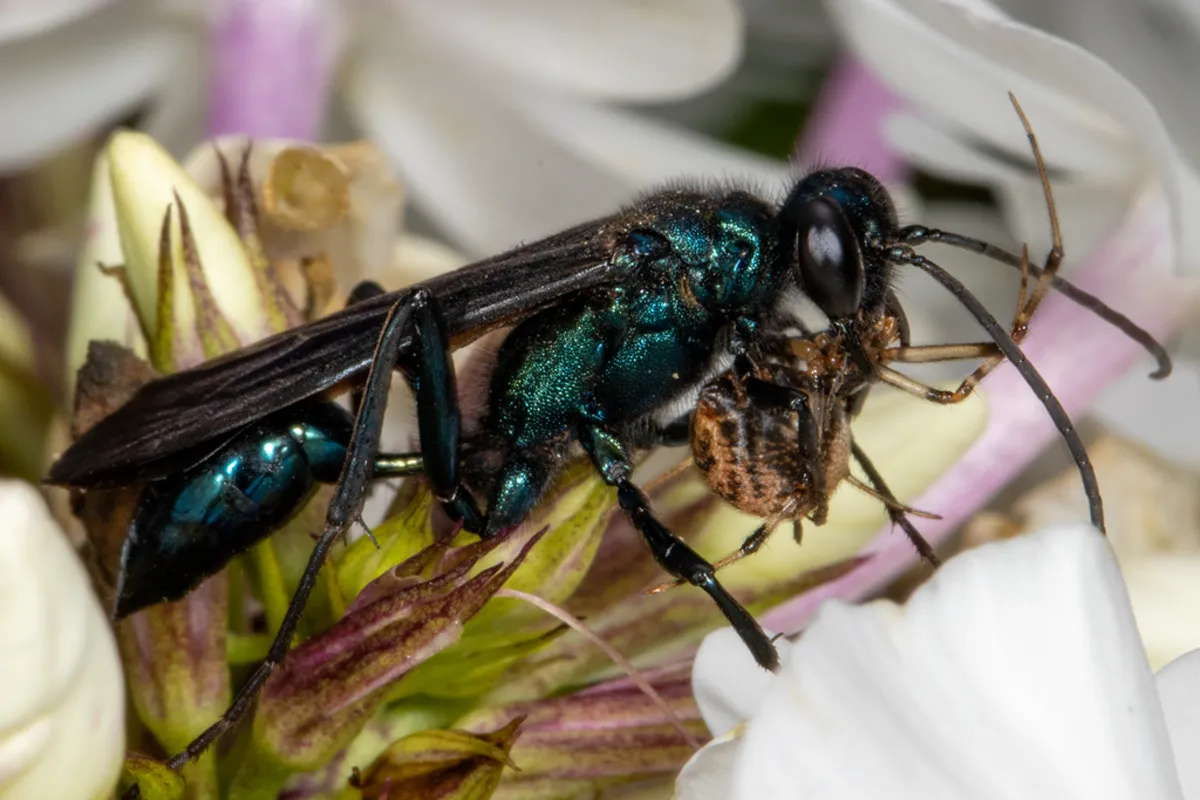
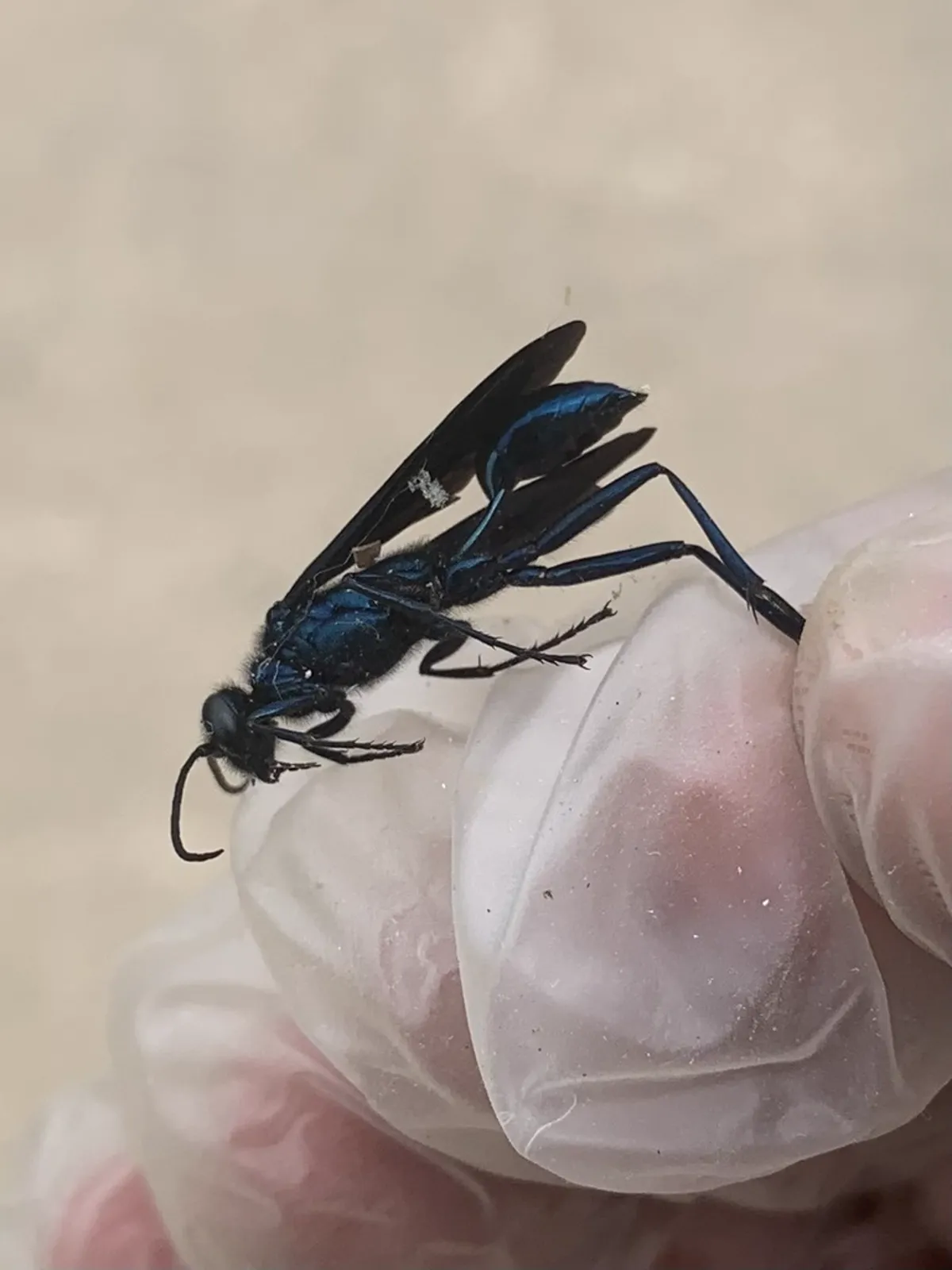
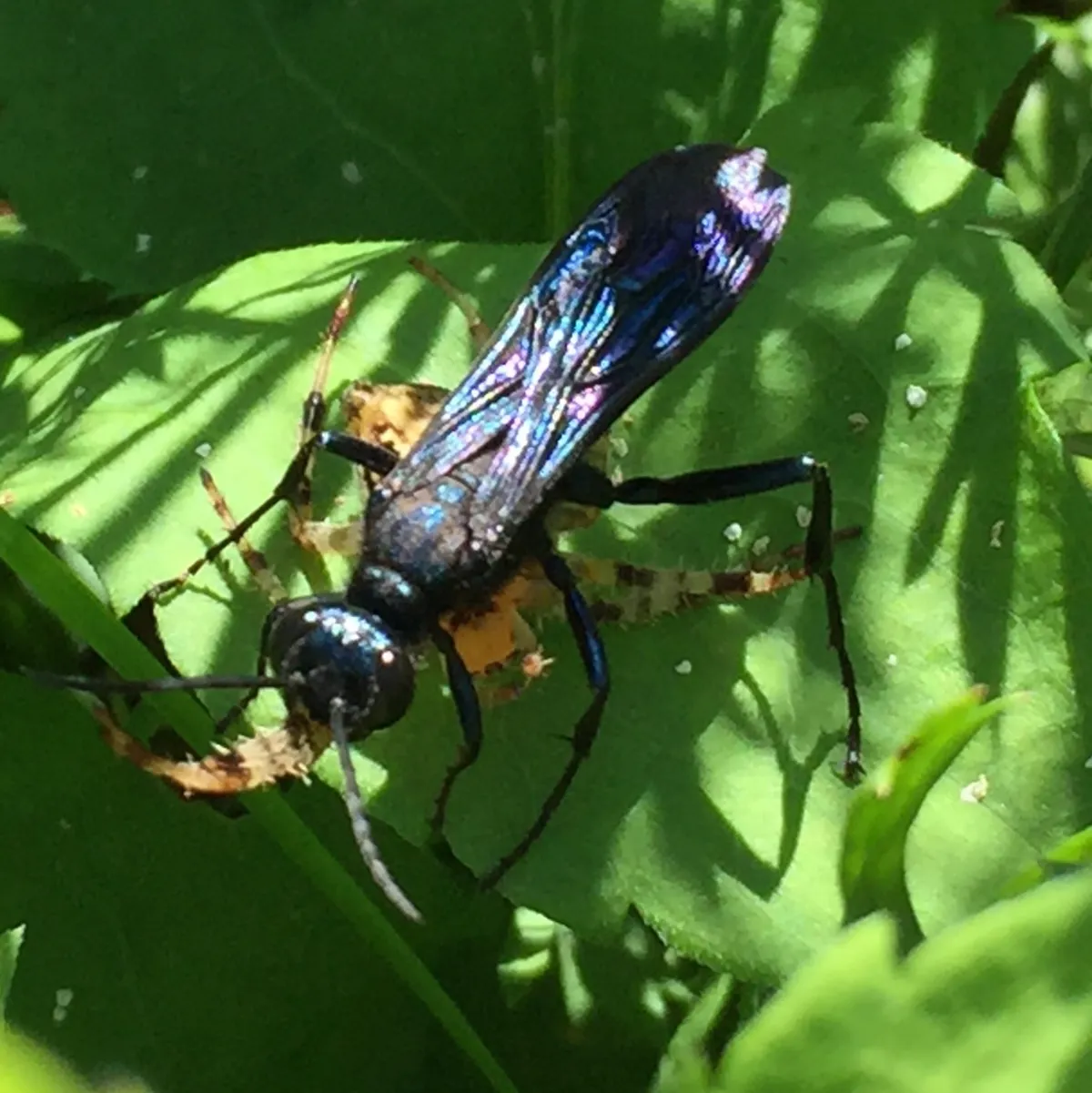
Blue Mud Daubers Coloration
Common color patterns to help identify blue mud daubers
Blue Mud Daubers
Seasonal Activity
When blue mud daubers are most active throughout the year

Where Blue Mud Daubers Are Found
Hover over states to see their names. Green regions indicate where blue mud daubers have been reported.
Blue Mud Dauber Identification Guide
Physical Characteristics
Blue mud daubers are easy to spot due to their metallic blue or blue-black color that shimmers in sunlight. They measure between 10 and 23 millimeters long. Females are larger than males. Males are typically 9 to 13 millimeters. Females reach 20 to 23 millimeters.
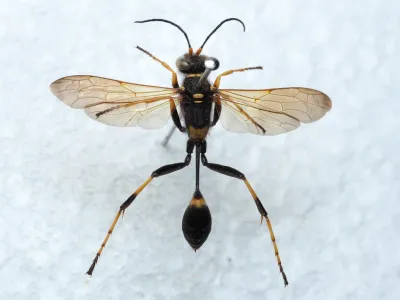
The most obvious feature is their thin, thread-like waist. This narrow section connects the thorax and abdomen. All mud daubers share this trait, but the blue metallic sheen makes these wasps easy to identify. Their legs and antennae are black. Their wings are dark with a subtle blue tint.
The genus name Chalybion comes from the Greek word for steel or metal. This fits their distinctive coloring. In flight, their long legs hang down and their slender bodies give them a graceful look.
Common Species
The most common blue mud dauber in North America is Chalybion californicum, found from southern Canada through northern Mexico. This species has been introduced to Hawaii and Bermuda as well.
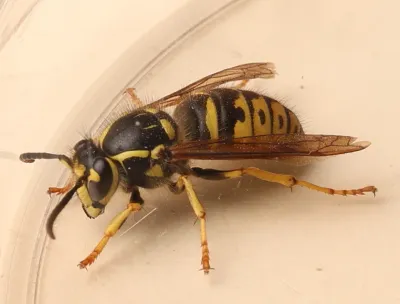
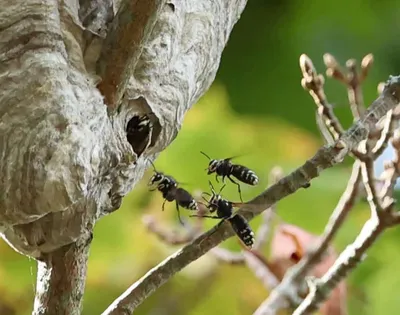
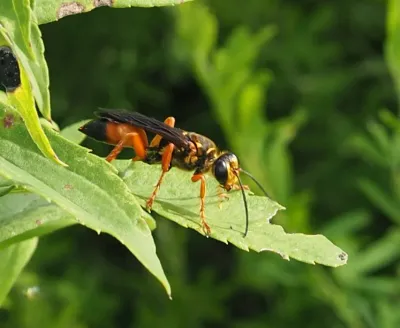
A similar wasp is the steel-blue cricket hunter (Chlorion aerarium). People often confuse it with the blue mud dauber. Cricket hunters go after crickets instead of spiders. They also have slightly different body shapes.
Blue Mud Dauber Behavior and Biology
Blue mud daubers are solitary wasps. Each female works alone rather than living in a colony. This makes them far less aggressive than social wasps like yellowjackets or European hornets. They spend most of their time hunting spiders or gathering nectar from flowers.
Nesting Habits
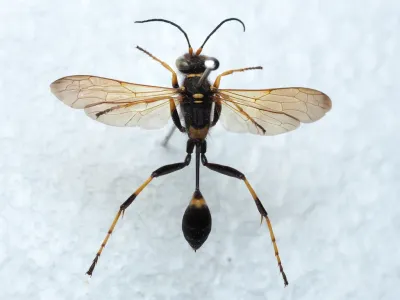
Unlike the black and yellow mud dauber that builds its own mud nests, blue mud daubers take a different approach. They look for abandoned mud nests built by other species. They prefer nests from the black and yellow mud dauber (Sceliphron caementarium).
When a blue mud dauber finds an old nest, she brings water to soften the hard mud. She removes any contents left behind, including spiders and larvae. After cleaning out the chamber, she fills it with her own paralyzed spiders. She lays an egg and seals the cell with fresh mud.
This means blue mud daubers often nest in the same spots where other mud daubers have built. Common nesting sites include the undersides of eaves, porch ceilings, garages, sheds, and under bridges and buildings.
Hunting and Spider Predation
Blue mud daubers are well known for hunting black widow spiders. Adult females also hunt orb-weaver spiders and comb-footed spiders. The black widow belongs to this group.
Their hunting skills are impressive. Some blue mud daubers land on spider webs and lure the spider out of hiding. They catch and paralyze the spider without getting stuck in the web. The paralyzed spider is then carried back to the nest. It serves as food for the developing larva.
A single blue mud dauber can remove many black widows from an area during one nesting season.
Diet
Adult blue mud daubers feed on flower nectar. This gives them the energy they need for flight and daily activity. They visit many types of wildflowers including wild carrot, barberry, and golden alexanders.
Adult wasps are nectar feeders. Their larvae eat only meat. They feed on the paralyzed spiders their mother stores in the nest.
Life Cycle
Blue mud daubers follow a yearly life cycle. Adults come out in late spring as the weather warms. Females spend summer finding nests, hunting spiders, and filling cells with paralyzed prey.
After a female places several paralyzed spiders in a mud chamber, she lays one egg on the last spider. She then seals the cell. The larva hatches and feeds on the spiders over several weeks. It then forms a cocoon inside the mud cell.
The new generation spends winter as pupae inside the sealed chambers. They come out the next spring as adults. The cycle starts again. Adult wasps from the current season do not live through winter.
Social Behavior
Blue mud daubers are solitary, but they sometimes gather in groups during bad weather or at night. These groups are not colonies. They are just wasps seeking shelter together. The wasps spread out again when the weather improves.
Blue Mud Dauber Sting Risk
Blue mud daubers pose very little sting risk to humans. They are not aggressive. They will not sting unless handled or trapped against skin. Yellowjackets become aggressive around food and defend their nests. Blue mud daubers do not act this way. Like other solitary wasps, they prefer to flee rather than fight. They show little interest in people.
Their stingers are mainly used to paralyze spider prey, not for defense. When disturbed, a blue mud dauber will usually fly away rather than sting.
When Blue Mud Dauber Activity Becomes a Concern
Blue mud daubers are solitary and pose little sting risk. However, there are times when their presence may be unwanted:
- Nests in high-traffic areas near doorways or porches
- Multiple wasps nesting in enclosed spaces like garages
- Concerns about wasp activity around children or pets
- Aesthetic concerns about mud nests on home exteriors
In these cases, nest removal or treatment may be appropriate.
Blue Mud Dauber Treatment and Removal
If blue mud dauber nests need to be addressed, timing and approach matter.
Nest Removal
Inactive nests can be scraped off in late fall or winter. At this point, adult wasps have died and the next generation is spending winter elsewhere. A putty knife works well for removing dried mud from wood, brick, or concrete.
For active nests in problem spots, treatment follows the same approach used for other solitary wasps. A residual insecticide can be applied directly to the nest. Blue mud daubers are solitary and not aggressive. This makes treatment easier than dealing with social wasp colonies like yellowjackets.
Prevention
To stop blue mud daubers from nesting in certain areas:
- Remove old mud dauber nests right away. Blue mud daubers like to reuse these structures.
- Seal gaps and cracks where nests often appear.
- Paint or finish bare wood under eaves.
- Reduce spider numbers that attract hunting wasps.
References
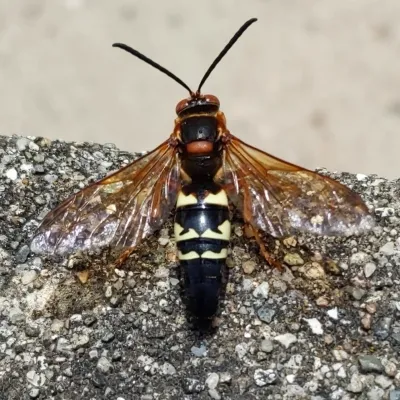
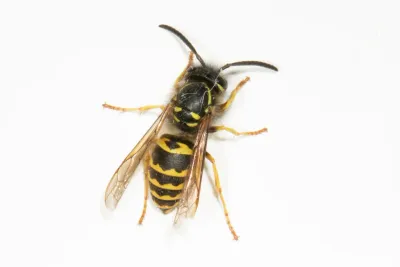
Other Wasps
Explore other species in the wasps family
Commonly Confused With
Blue Mud Daubers are often mistaken for these similar pests
Where Blue Mud Daubers Are Found
Hover over states to see their names. Green regions indicate where blue mud daubers have been reported.
Common Questions about Blue Mud Daubers
Are blue mud daubers dangerous?
+
Blue mud daubers are not dangerous to humans. They are solitary wasps and rarely sting unless handled directly or trapped against skin. They do not aggressively defend their nests like social wasps do.
Do blue mud daubers eat black widow spiders?
+
Yes, blue mud daubers are well-known predators of black widow spiders. They hunt and paralyze black widows along with other spider species to provision their nests for developing larvae.
Why are blue mud daubers blue?
+
Blue mud daubers have a metallic blue or blue-black coloration due to the structure of their exoskeleton. The name of their genus, Chalybion, comes from the Greek word for steel, referring to their distinctive metallic sheen.
Do blue mud daubers build their own nests?
+
Unlike other mud daubers, blue mud daubers do not build their own nests from scratch. Instead, they take over abandoned mud nests built by black and yellow mud daubers, softening the old mud with water to renovate the chambers.
Where do blue mud daubers live?
+
Blue mud daubers live throughout North America from southern Canada to northern Mexico. They nest in sheltered locations like under eaves, in garages, and on porch ceilings where they can find abandoned mud dauber nests.
How can I tell a blue mud dauber from other wasps?
+
Blue mud daubers have a distinctive metallic blue or blue-black color across their entire body. They have a very thin thread-like waist and slender build. Their shimmering blue appearance makes them easy to distinguish from other wasp species.
Should I remove blue mud daubers from my property?
+
Blue mud daubers are solitary wasps that hunt spiders including black widows. They are not aggressive toward humans. If nests are in problem areas like doorways or high-traffic zones, treatment or removal may be needed.

With five years of hands-on experience in the pest control industry, George Schulz is a registered technician with the Virginia Pest Management Association and a proud third-generation professional in a family business that's been protecting homes for over 57 years. He manages and trains a team of service pros while also leading internal research efforts—recently spearheading a deep-dive review of thousands of documents on pest control materials to hand-pick the most kid and pet friendly, most effective solutions tailored specifically for homes in the DC metro area.