Shield Bugs Identification Guide
Pentatomidae
Shield bugs, named for their distinctive shield-shaped bodies, are common household invaders that release a pungent defensive odor when disturbed. These overwintering pests seek shelter indoors during fall and can congregate in large numbers on sunny exterior walls.
Taxonomy
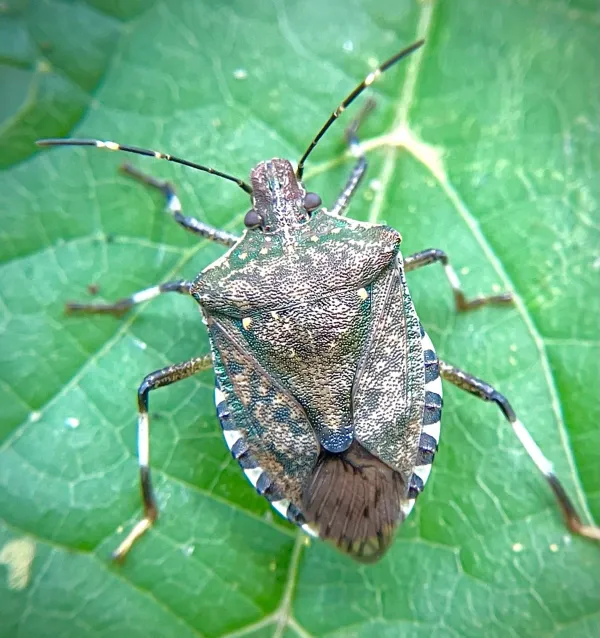
Shield Bugs Coloration
Common color patterns to help identify shield bugs
Shield Bugs
Seasonal Activity
When shield bugs are most active throughout the year
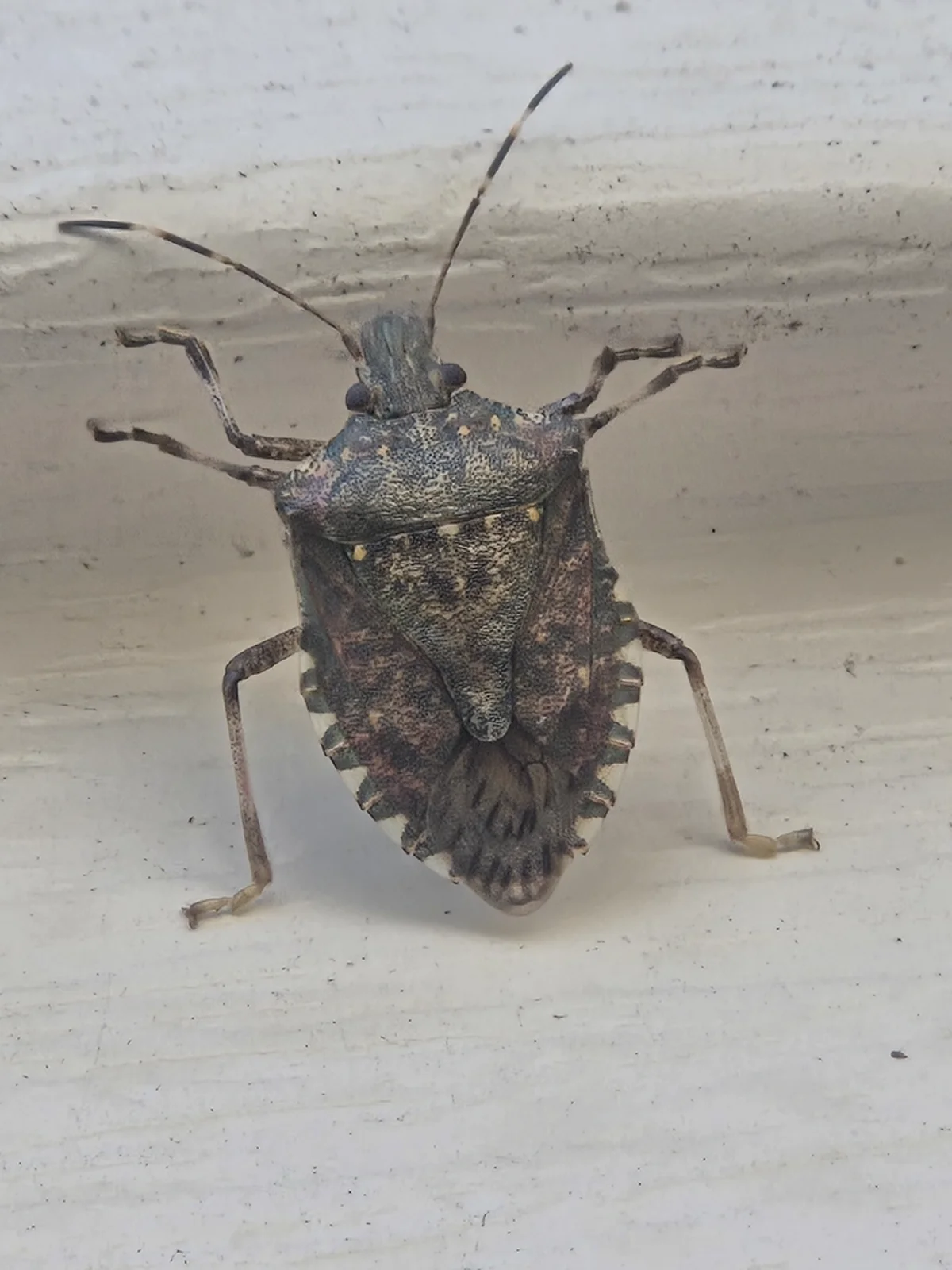
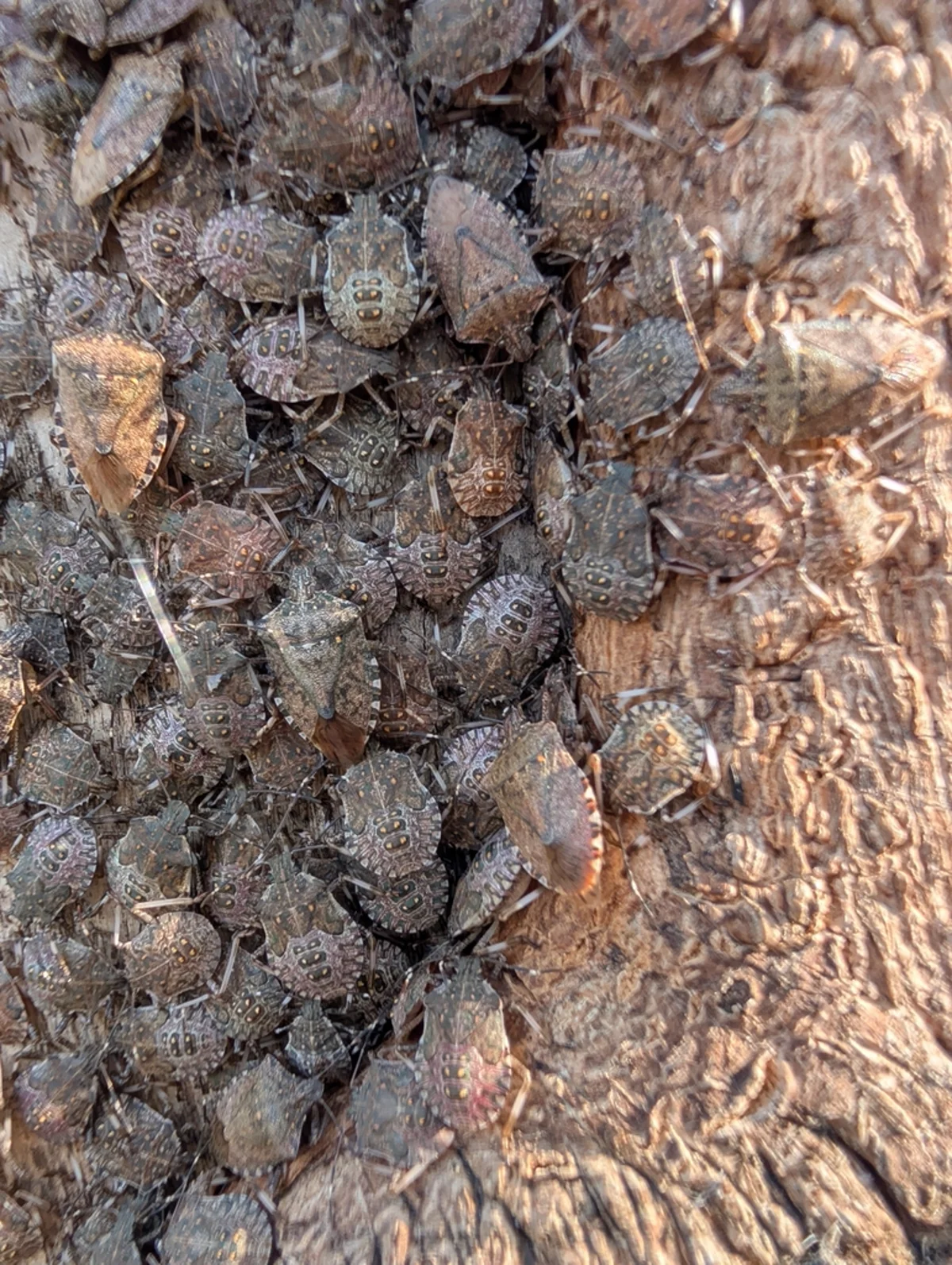
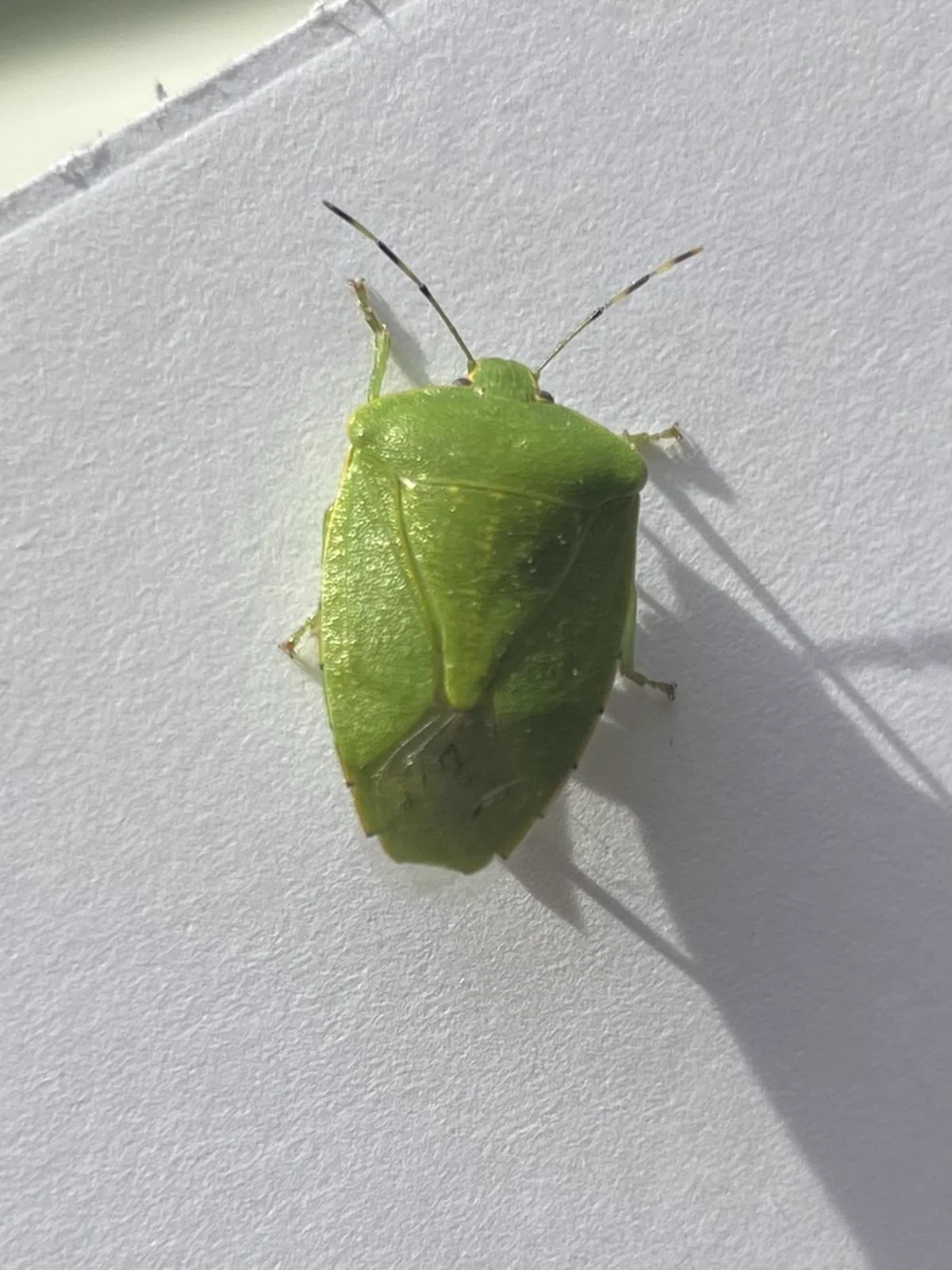

Where Shield Bugs Are Found
Hover over states to see their names. Green regions indicate where shield bugs have been reported.
Shield Bug Identification Guide
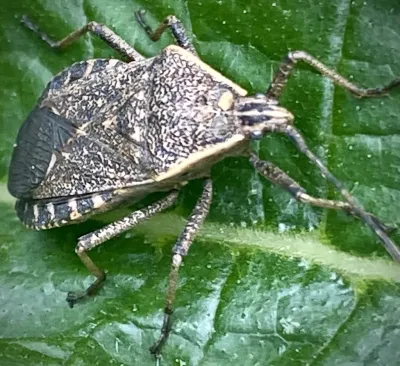
Shield bugs are easy to spot thanks to their wide, flat bodies shaped like a shield or pentagon. When viewed from above, their broad upper body (called the scutellum) extends back to cover most of the abdomen. Adults measure 10 to 19 millimeters long, making them one of the larger bugs you might find in or around your home.
Physical Characteristics
Here are the key features to look for when identifying shield bugs:
- Body shape: Wide, flat, and shield-shaped with straight sides and a pointed rear end
- Antennae: Five segments, easy to see
- Mouthparts: A needle-like beak tucked under the head, used for piercing plants
- Wings: Two pairs that fold flat over the body. The front wings are partly hardened.
- Color: Brown, gray, or bright green depending on the species. Many have mottled patterns.
Shield bugs have scent glands on the underside of their body. These glands make the foul smell that gives them the nickname “stink bugs.” While the odor keeps predators away, it becomes a problem when bugs are disturbed inside your home.
Common Species in North America
Several shield bug species live across North America:
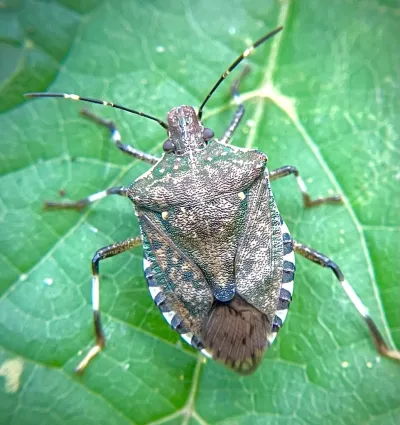
Brown Marmorated Stink Bug (Halyomorpha halys): This invasive pest from Asia is now the most common shield bug in the eastern United States. Adults have a marbled brown pattern with white bands on their antennae and abdomen edges.
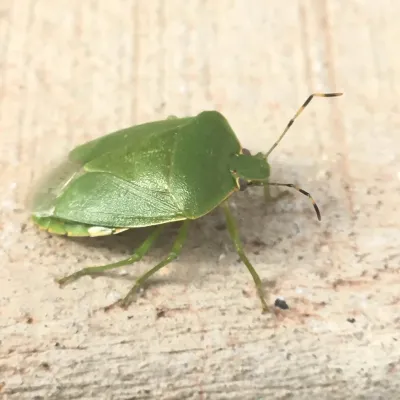
Green Stink Bug (Chinavia hilaris): Native to North America, this bright green species is common in gardens and farms. Adults are solid green with a thin yellow or orange border along the edge.
Southern Green Stink Bug (Nezara viridula): This species looks similar to the green stink bug. It lives throughout the southern United States and causes major crop damage.
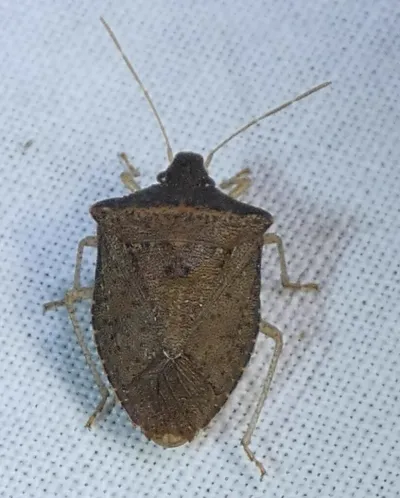
Brown Stink Bug (Euschistus servus): A native species found across North America. It has dull brown coloring and small curved spines on its shoulders.
Shield Bug Behavior and Biology
Learning about shield bug habits helps explain why these pests invade homes and how to manage them.
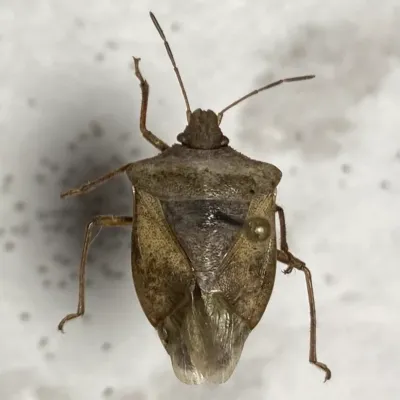
Habitat and Feeding A related species, Rough Stink Bug, shares similar characteristics.
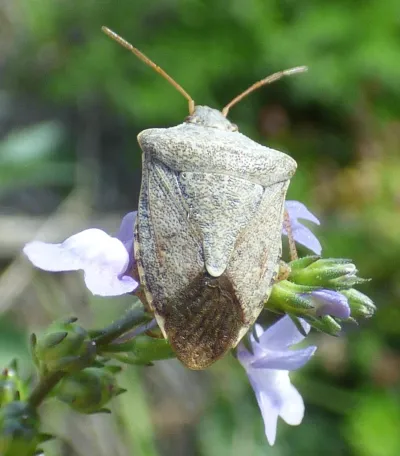
Shield bugs feed on plants. You can find them in gardens, farm fields, orchards, and forest edges. They use their needle-like mouthparts to pierce plants and suck out the juices. Common host plants include: A related species, One-Spotted Stink Bug, shares similar characteristics.
- Fruit trees like apples, peaches, and pears
- Vegetables like tomatoes, peppers, beans, and corn
- Soybeans and other legumes
- Trees and shrubs
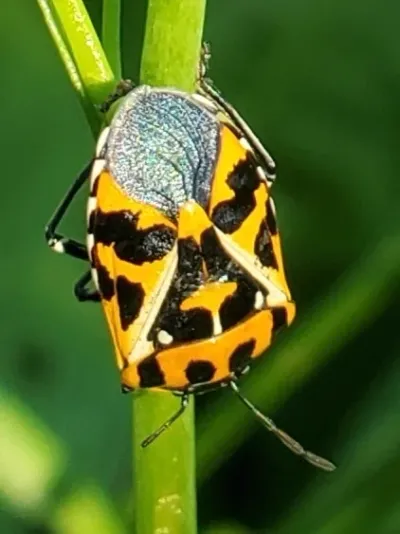
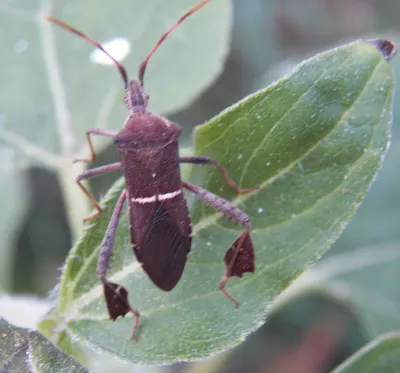
- Weeds and wild plants A related species, Harlequin Bug, shares similar characteristics.
When shield bugs feed, they inject digestive fluids into the plant and then suck out the contents. This feeding leaves dimples and scars on fruits, making them look damaged.
Reproduction and Life Cycle
Shield bugs go through three life stages: egg, nymph, and adult.
-
Eggs: Females lay barrel-shaped eggs in clusters of 20-30 on the underside of leaves. The eggs are pale green or cream-colored and lined up in neat rows.
-
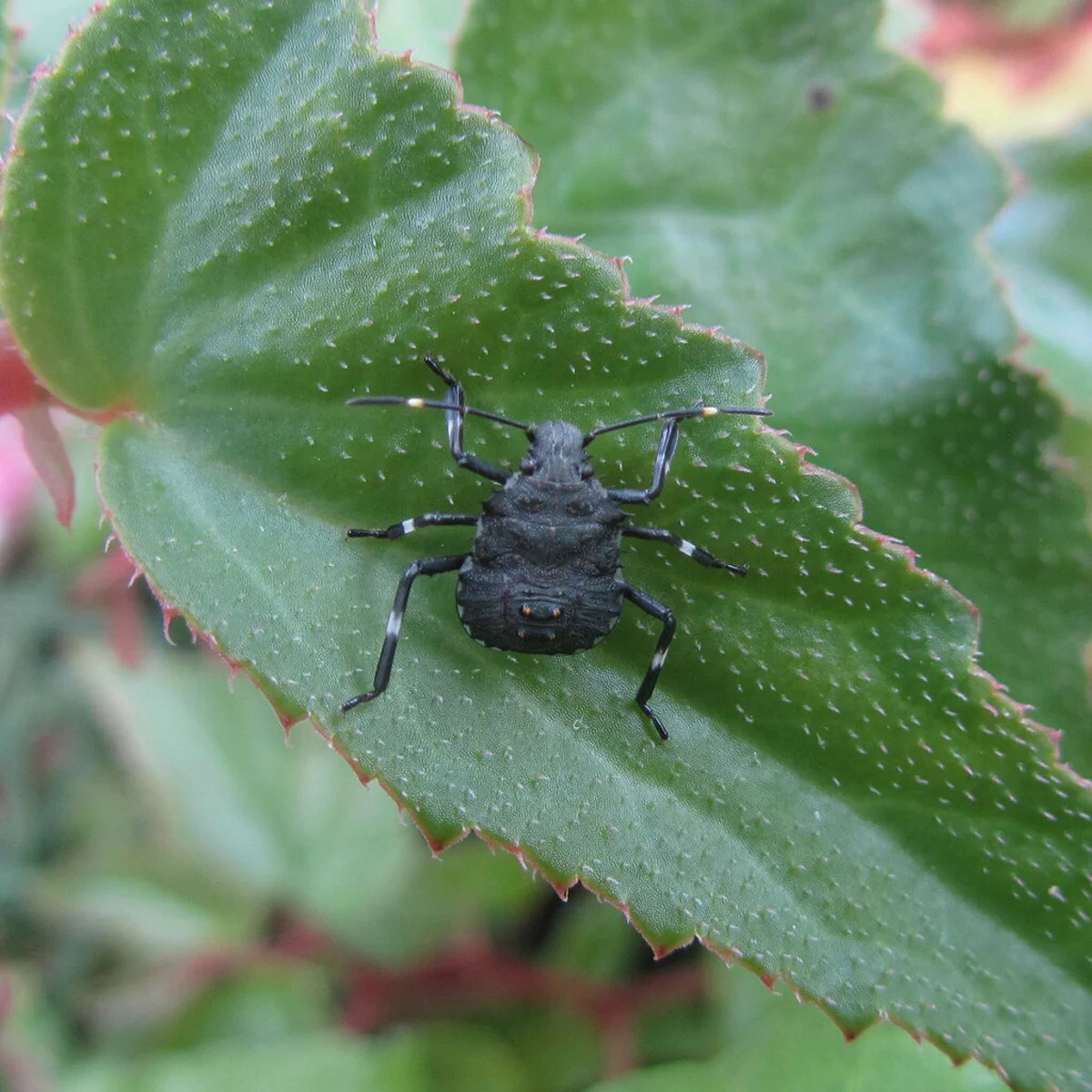
Nymphs: Young bugs hatch and grow through five stages over 4-6 weeks. Nymphs often look different from adults and stay near their egg cluster at first.
-
Adults: Fully grown adults live for several months. They can produce one to three generations per year, depending on the climate.
Overwintering Behavior
The biggest problem for homeowners is that shield bugs seek shelter indoors each fall. When temperatures drop, adults look for protected spots to survive winter in a dormant state. In nature, they hide under bark, in leaf litter, or in rock cracks.
Homes offer perfect shelter for these bugs. Warm walls that face south attract large groups of shield bugs. They squeeze through small gaps and cracks around windows, doors, and siding. Once inside wall voids or other hidden spaces, they stay dormant until spring.
On warm winter days, shield bugs may wake up and wander into living areas. This surprises homeowners who thought the bugs were gone. This activity is normal and shows that bugs are living inside your walls.
How We Treat for Shield Bugs
Shield bugs need a prevention-first approach. Spraying bugs that are already inside rarely works well. Dead bugs in wall voids can also create odor problems. The key is stopping them before they get in.
Exterior Prevention
The best shield bug control starts outside before fall arrives:
-
Sealing entry points: We close gaps around windows, doors, pipes, and siding. Weather stripping, door sweeps, and caulk are essential tools. Screens on vents and weep holes stop bugs from reaching wall voids.
-
Barrier treatments: We apply long-lasting products to outside walls, window frames, and door frames in early fall. This creates a barrier that stops bugs before they enter. South-facing walls need extra attention since they attract the most bugs.
-
Dust treatments: We apply dust products into wall voids, behind siding, around windows, and into weep holes. This provides lasting protection in the spaces where bugs hide.
Interior Management
For bugs already inside, we focus on removal without releasing their smell:
-
Physical removal: We remove visible bugs without crushing them. This prevents the odor from spreading through your home.
-
Light traps: Placing light traps where bugs gather can reduce numbers over time.
-
Crack and crevice treatment: Treating hiding spots and voids helps eliminate bugs that have settled in for the winter.
What to Expect
Shield bug control works best when we treat before fall, usually in September or October. You should see fewer bugs each year as the sealing work takes effect and fewer bugs make it inside. Homes with heavy infestations may take 2-3 seasons to fully resolve.
We suggest yearly treatments before fall to keep new bugs from building up again.
References
Other Stink Bugs
Explore other species in the stink bugs family
Commonly Confused With
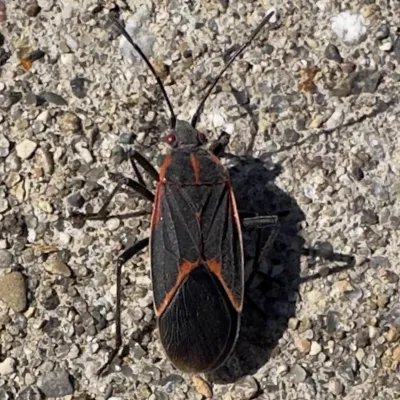
Shield Bugs are often mistaken for these similar pests
Where Shield Bugs Are Found
Hover over states to see their names. Green regions indicate where shield bugs have been reported.
Common Questions about Shield Bugs
Why are they called shield bugs?
+
Shield bugs get their name from their distinctive body shape, which resembles a heraldic shield when viewed from above. The broad, flattened thorax creates the characteristic five-sided outline that sets them apart from other true bugs.
Are shield bugs the same as stink bugs?
+
Yes, shield bugs and stink bugs are the same insects. Both terms refer to members of the family Pentatomidae. The name 'shield bug' describes their body shape, while 'stink bug' refers to the defensive odor they release when threatened or crushed.
Do shield bugs bite humans?
+
Shield bugs are not aggressive and rarely bite humans. While they have piercing mouthparts designed for feeding on plant sap, they may occasionally probe human skin if handled, causing minor irritation. They pose no significant health risk to people or pets.
Why do shield bugs come inside my house?
+
Shield bugs seek warm, protected shelter as temperatures drop in fall. Your home's sunny exterior walls attract them, and they enter through gaps around windows, doors, vents, and utility penetrations. Once inside, they may remain dormant in wall voids until spring.
What is the smell shield bugs release?
+
Shield bugs produce a pungent defensive chemical from glands in their thorax. The odor is often described as similar to cilantro, burnt rubber, or skunk spray. This smell deters predators and is released when bugs feel threatened or are crushed.
How do I get rid of shield bugs without the smell?
+
Avoid crushing or vacuuming shield bugs, as this releases their defensive odor. Instead, gently sweep them into a container of soapy water or use a shop vacuum with the bag removed, then empty it outdoors. Sealing entry points prevents future invasions.
Do shield bugs damage plants in my garden?
+
Yes, shield bugs are plant feeders that can damage fruits, vegetables, and ornamental plants. They insert their piercing mouthparts into plant tissue to extract sap, causing dimpling, discoloration, and distorted growth on affected produce.
When are shield bugs most active?
+
Shield bugs are most active from late spring through early fall during their breeding season. Home invasions peak in September and October when they seek overwintering sites. They may reappear on warm winter days and become active again in spring.

With five years of hands-on experience in the pest control industry, George Schulz is a registered technician with the Virginia Pest Management Association and a proud third-generation professional in a family business that's been protecting homes for over 57 years. He manages and trains a team of service pros while also leading internal research efforts—recently spearheading a deep-dive review of thousands of documents on pest control materials to hand-pick the most kid and pet friendly, most effective solutions tailored specifically for homes in the DC metro area.