Triangulate Cobweb Spider Identification Guide
Steatoda triangulosa
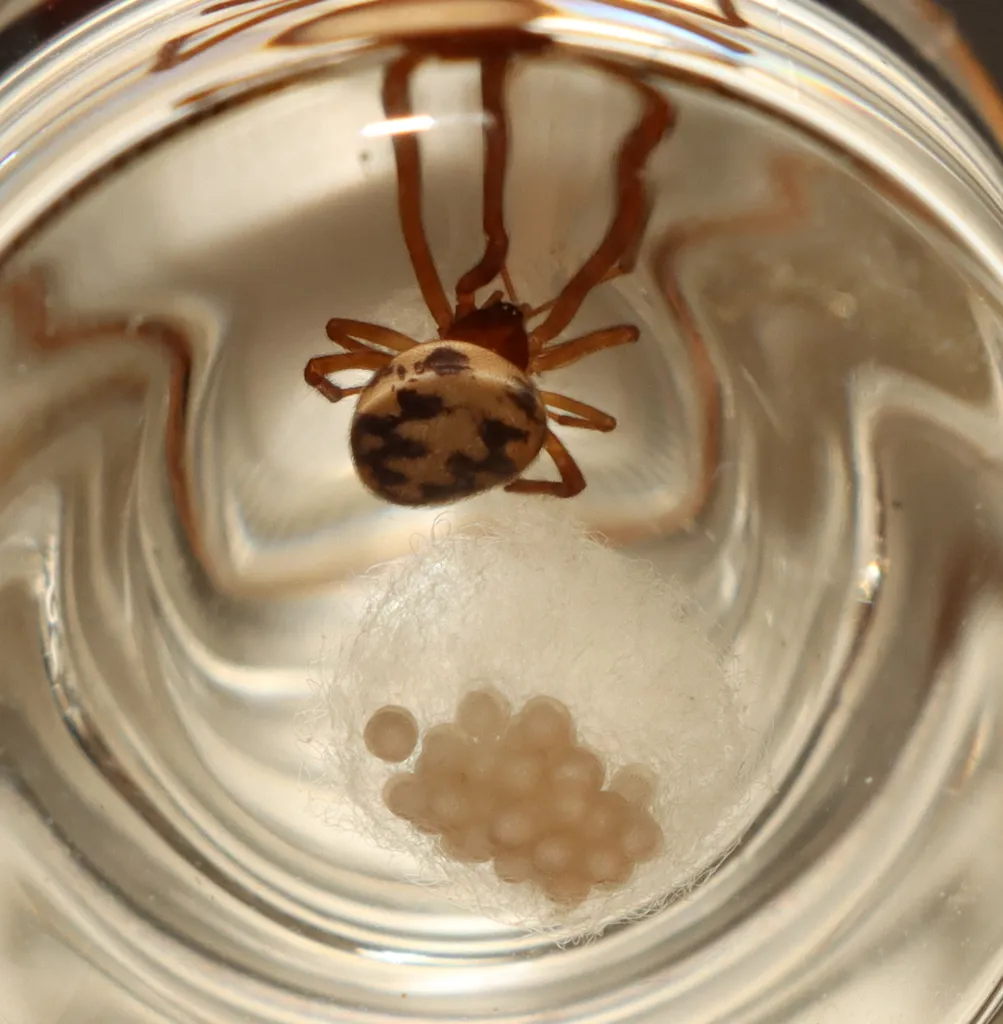
The triangulate cobweb spider is one of the most common house spiders in North America. Named for the triangular zigzag pattern on its abdomen, this small, harmless spider builds messy cobwebs in corners, basements, and garages.
Taxonomy
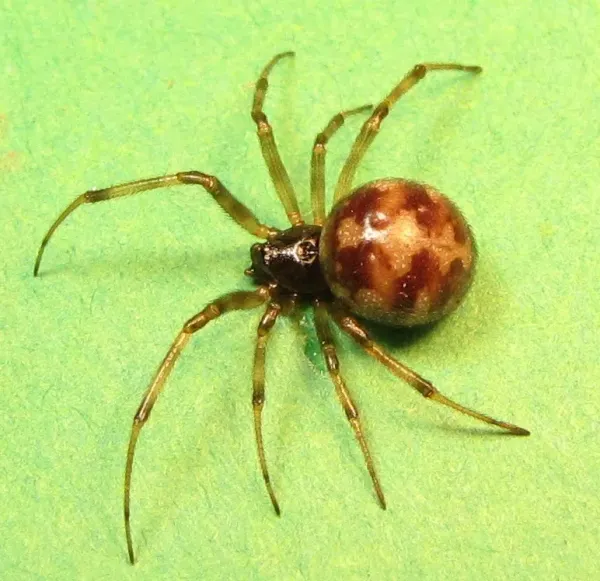
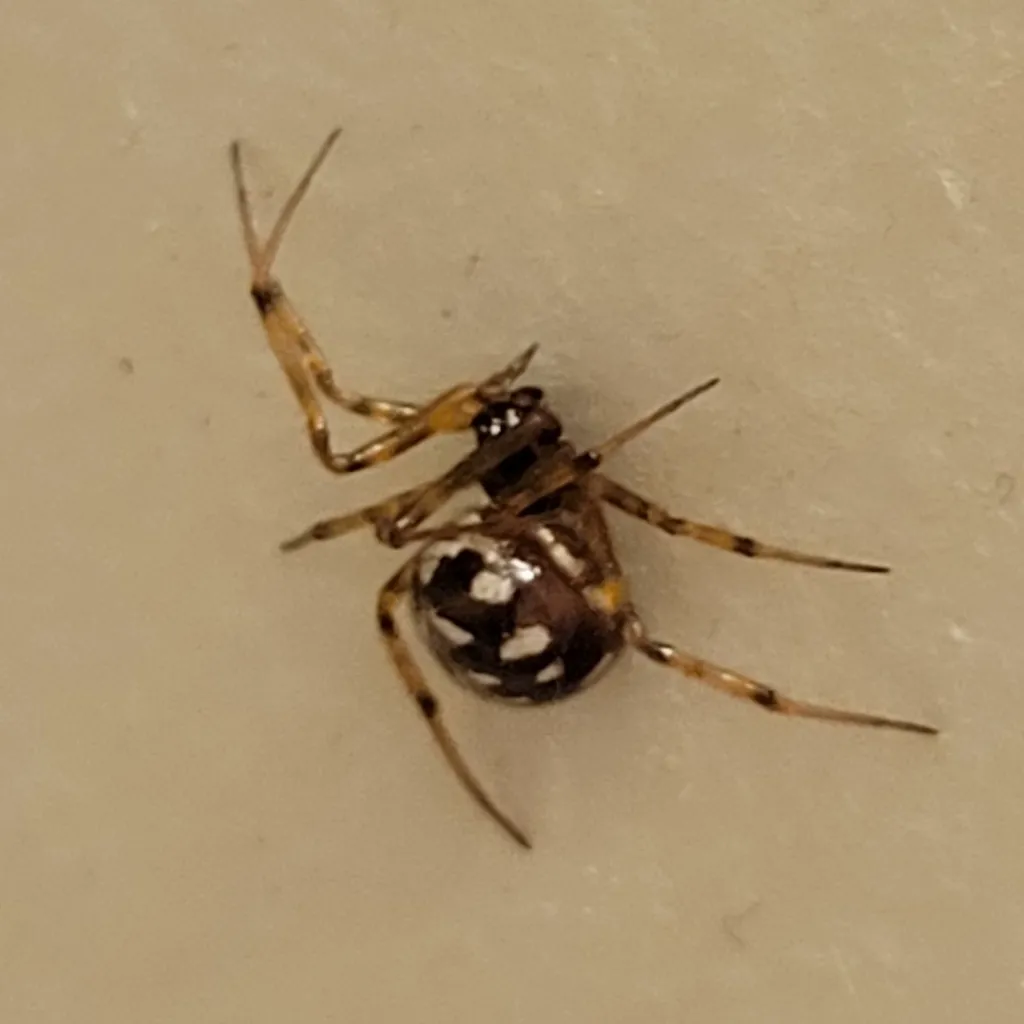
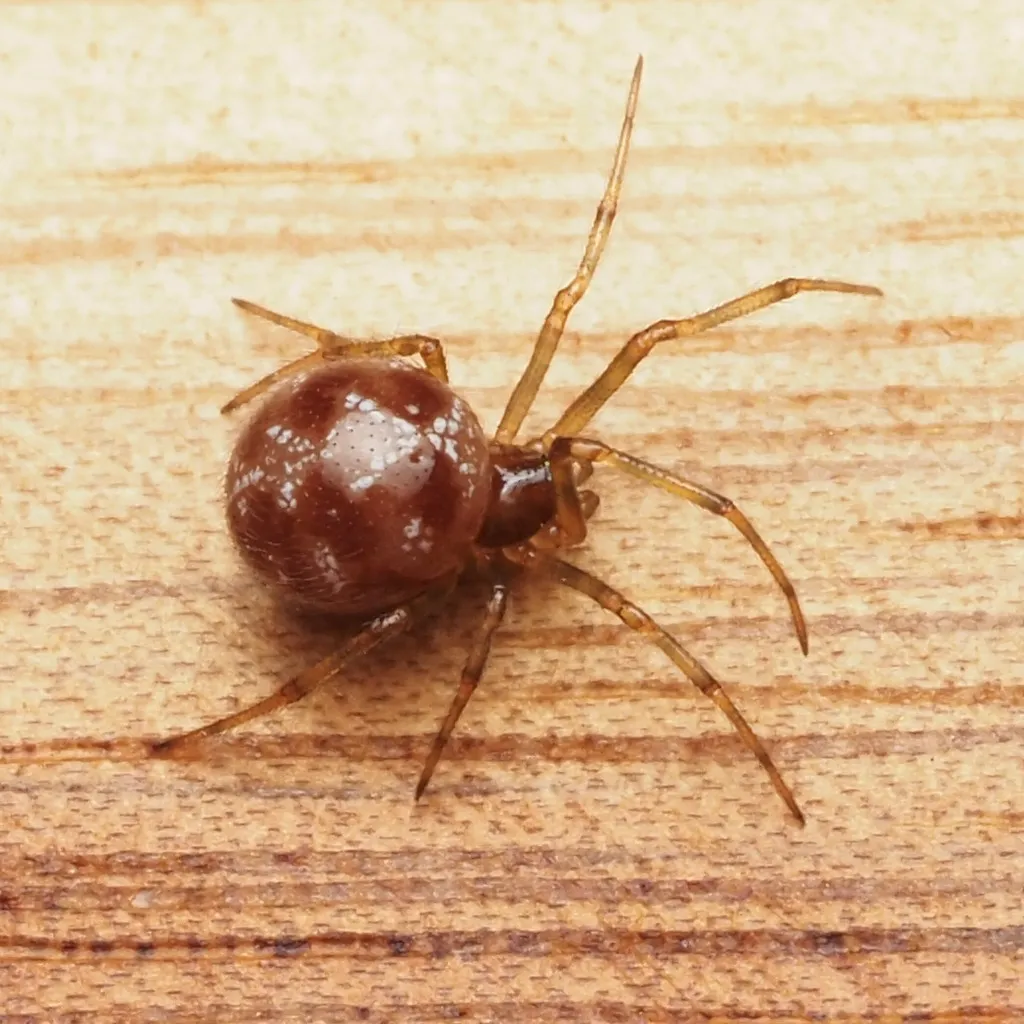
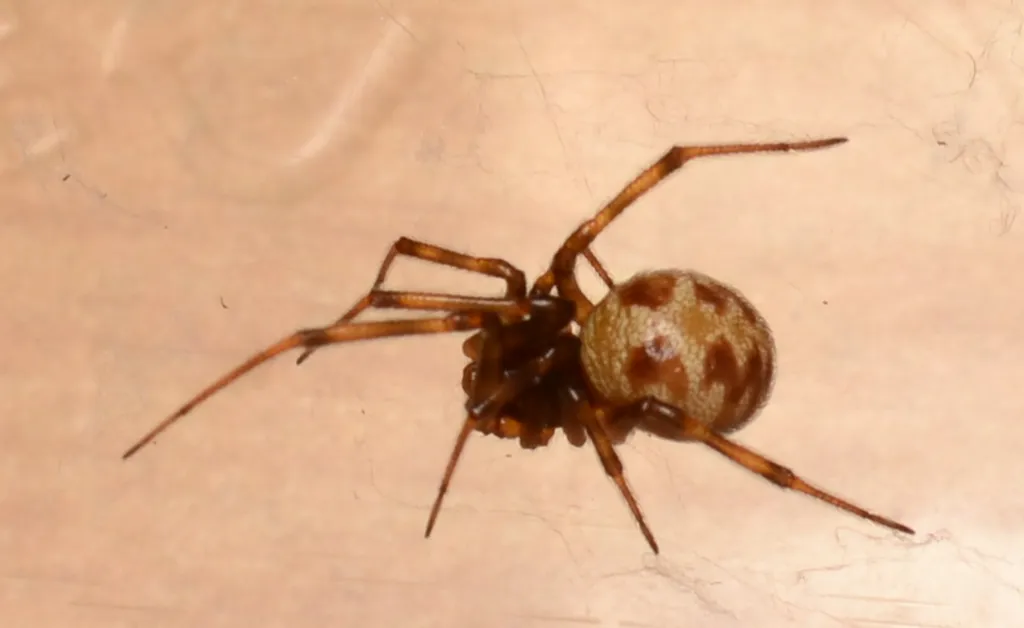
Triangulate Cobweb Spider Coloration
Common color patterns to help identify triangulate cobweb spider
Triangulate Cobweb Spider
Seasonal Activity
When triangulate cobweb spider are most active throughout the year

Where Triangulate Cobweb Spider Are Found
Hover over states to see their names. Green regions indicate where triangulate cobweb spider have been reported.
Triangulate Cobweb Spider Identification Guide
Physical Characteristics
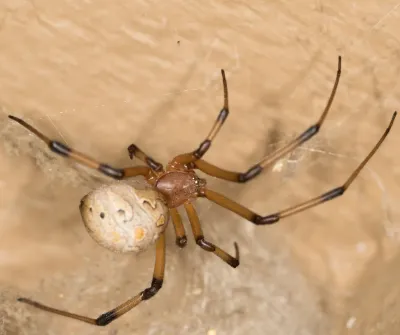
The triangulate cobweb spider (Steatoda triangulosa) is a small spider found in homes across North America. Females are 3 to 6 mm long. Males are a bit smaller at 3 to 5 mm. Most people do not notice them until they see their webs.
Here is what to look for:
- Round, plump abdomen with brownish-purple triangles or zigzag marks down the center. This pattern gives the spider its name.
- The front body section is brownish-orange to yellow-brown. It is smooth and a bit shiny.
- Legs are yellow to pale brown with darker bands at each joint. They are shorter than the legs of cellar spiders.
- Eight small eyes in two rows, hard to see without a magnifying glass.
- Tan to brown overall. The abdomen is often lighter with darker spots.
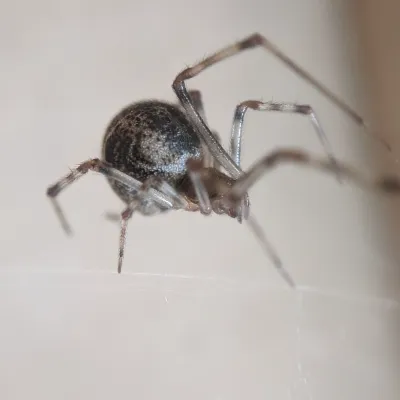
The zigzag pattern on the abdomen is the best way to tell this spider apart from the common house spider. House spiders have a blotchy, uneven look. The triangulate cobweb spider has a neat, repeating pattern instead.
Similar Species
People often confuse this spider with other cobweb spiders:
- Common House Spider (Parasteatoda tepidariorum) is a bit larger with a blotchy pattern instead of neat triangles. It builds webs in the same spots.
- Brown Widow Spider (Latrodea geometricus) has an hourglass mark on the bottom of its belly. Brown widows can bite, so knowing the difference matters.
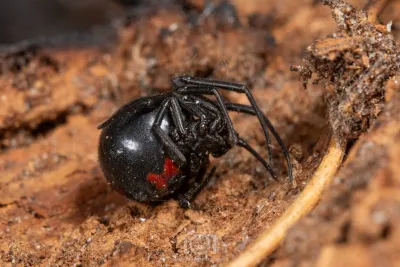
- Black Widow Spider (Latrodectus mactans) is larger and shiny black with a red hourglass mark. It is easy to tell apart up close. But many homeowners worry when they see any dark cobweb spider.
- False Widows (Steatoda grossa) are close relatives with a similar shape but no zigzag pattern. They are also harmless.
Triangulate Cobweb Spider Behavior and Biology
Habitat Preferences
Triangulate cobweb spiders live closely with people. They are one of the most common indoor spiders in North America. You will find them in:
- Basements and crawl spaces, especially corners and along joists
- Garages and sheds
- Window frames and door corners
- Under furniture and behind appliances
- Closets and storage areas
- Behind picture frames and wall hangings
They sometimes show up outside under rocks or in stone walls. But they are far more common inside homes where the heat and moisture stay steady.
Diet and Feeding Habits
These spiders eat whatever lands in their sticky webs. Their diet includes:
- Ants, ticks, and small beetles
- Flies and gnats
- Pill bugs and other small bugs
- Other spiders, including brown recluse spiders and black widow spiders
Studies have shown that Steatoda triangulosa catches and eats brown recluse spiders in homes. This makes them helpful at keeping more harmful spiders in check.
Reproduction and Lifecycle
Females make several egg sacs during their life. Each sac is small, round, and white. It sits in the web near where the spider rests.
- Each sac holds about 30 eggs.
- Eggs hatch in 2 to 3 weeks.
- Young spiders shed their skin several times over a few months before they reach full size.
- Females can live up to 2 years in good conditions.
- Males live only a few months and die soon after mating.
Young spiders leave the parent web a few days after hatching. Inside, they often set up close by. This is why you can see numbers grow fast in one area of the home.
Web Structure
This spider builds messy, tangled webs. These look nothing like the neat round webs of orb-weaver spiders or the sheet webs of funnel weavers. They are sticky webs with threads going in all directions.
The spider hangs upside down in the center of the web and waits for prey. When a bug hits the web, the spider runs over to wrap it in silk. Over time, these webs collect dust and dead bugs. That is what makes cobwebs so easy to spot in your home.
How We Treat for Triangulate Cobweb Spiders
Cobweb spiders are one of the most common spider groups found in homes. Our treatment plan targets them along with other indoor spider species.
Our Treatment Process
Step 1: Inspection
We start with a full inspection of your home to find areas with heavy spider activity. We also check for things that draw spiders in. Bright outdoor lights pull in bugs. Moisture issues and cluttered storage areas give spiders more places to hide.
Step 2: Exterior Treatment
We apply a spray to the outside of your home where spiders are most active. These products work well because spiders walk through treated areas without noticing them. We focus on:
- Window frames and doorways
- Eaves, soffits, and roof overhangs
- Foundation perimeter
- Areas where webs build up
Step 3: Interior Spot Treatment
Inside the home, we treat only the spots with the most activity. Broad sprays do not work well for spiders. We target corners where webs build up, entry points, basements, and crawl spaces. We may also apply dust in wall gaps.
Step 4: De-Webbing
We knock down spider webs around the eaves and front porch, up to about 6 to 8 feet high. Removing webs on a regular basis keeps spiders from rebuilding in the same places.
Step 5: Ongoing Maintenance
Spider control takes time. Our tri-annual service plan, which is three visits per year, includes trips to reapply the exterior barrier, remove new webs, and check on spider activity.
Customer Guidance
For the best results between visits, we suggest:
- Turn down outdoor lights or use yellow bug lights that draw fewer insects
- Close blinds at night so indoor lights do not attract bugs to windows
- Vacuum webs and spiders as you see them inside the home
- Cut down on clutter in basements, garages, and storage areas
- Fix moisture problems in basements and crawl spaces
- Seal cracks and gaps around windows, doors, and utility lines
References
- LSU AgCenter. Steatoda triangulosa, Triangulate Cobweb Spider (Araneae: Theridiidae). https://www.lsuagcenter.com
- GBIF. Steatoda triangulosa (Walckenaer, 1802). https://www.gbif.org/species/2157242
- University of California Agriculture and Natural Resources. Spider Management Guidelines. https://ipm.ucanr.edu/PMG/PESTNOTES/pn7442.html
- Penn State Extension. Common House Spiders. https://extension.psu.edu/common-house-spider
- Colorado State University Extension. Spiders in the Home. https://extension.colostate.edu/resource/spiders-in-the-home/
- University of Maryland Extension. Spiders in Maryland. https://extension.umd.edu/resource/spiders-maryland/
Other Spiders
Explore other species in the spiders family
Commonly Confused With
Triangulate Cobweb Spider are often mistaken for these similar pests
Where Triangulate Cobweb Spider Are Found
Hover over states to see their names. Green regions indicate where triangulate cobweb spider have been reported.
Common Questions about Triangulate Cobweb Spider
Are triangulate cobweb spiders dangerous?
+
No, triangulate cobweb spiders are not dangerous to humans. They can bite if handled roughly, but their venom is mild and not a medical concern. They prey on pest insects and even other spiders, including brown recluse spiders.
How do I identify a triangulate cobweb spider?
+
Look for a small spider (about 1/8 to 1/4 inch) with a round, bulbous abdomen that has a distinctive zigzag or triangular pattern of brownish-purple spots. The legs are yellowish with darker bands at the joints, and the cephalothorax (front body section) is brownish-orange.
Why are triangulate cobweb spiders in my house?
+
These spiders have adapted to live alongside humans in buildings. They are drawn to warm, sheltered spaces with a steady supply of prey insects near indoor lights. Basements, garages, and window frames are their favorite spots.
Do triangulate cobweb spiders build messy webs?
+
Yes. Like other cobweb spiders in the family Theridiidae, they build irregular, tangled webs rather than the neat circular webs of orb weavers. These sticky, three-dimensional webs are typically found in corners, under furniture, and along window sills.
Are triangulate cobweb spiders related to black widows?
+
Yes, they belong to the same family (Theridiidae), commonly called cobweb spiders. However, triangulate cobweb spiders are harmless to humans. Interestingly, they are known to prey on more dangerous spiders, including brown recluse and black widow spiders.
How do I get rid of triangulate cobweb spiders?
+
Regular web removal, reducing clutter, and sealing entry points are effective first steps. Lowering indoor lighting or using yellow bug lights reduces the insects that attract spiders. For persistent problems, professional treatment with targeted applications in high-activity areas provides the most reliable long-term control.
How fast do triangulate cobweb spiders reproduce?
+
Females produce multiple egg sacs, each containing around 30 eggs. The eggs hatch in about two to three weeks, and spiderlings disperse shortly after. Under favorable indoor conditions, populations can build up over time if left unchecked.

With five years of hands-on experience in the pest control industry, George Schulz is a registered technician with the Virginia Pest Management Association and a proud third-generation professional in a family business that's been protecting homes for over 57 years. He manages and trains a team of service pros while also leading internal research efforts—recently spearheading a deep-dive review of thousands of documents on pest control materials to hand-pick the most kid and pet friendly, most effective solutions tailored specifically for homes in the DC metro area.