Silver Garden Spiders Identification Guide
Argiope argentata
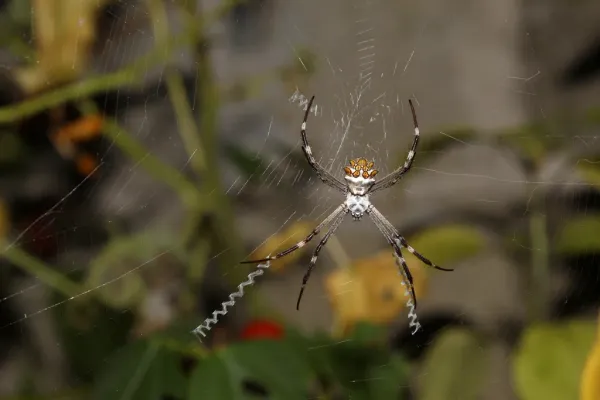
Silver garden spiders are orb-weaving spiders recognized by their reflective silvery cephalothorax and patterned abdomen. Found primarily in the southern United States and Mexico, these beneficial predators build large circular webs in gardens and shrubby areas to catch flying insects.
Taxonomy
Silver Garden Spiders Coloration
Common color patterns to help identify silver garden spiders
Silver Garden Spiders
Seasonal Activity
When silver garden spiders are most active throughout the year

Where Silver Garden Spiders Are Found
Hover over states to see their names. Green regions indicate where silver garden spiders have been reported.
Silver Garden Spider Identification Guide
Physical Characteristics
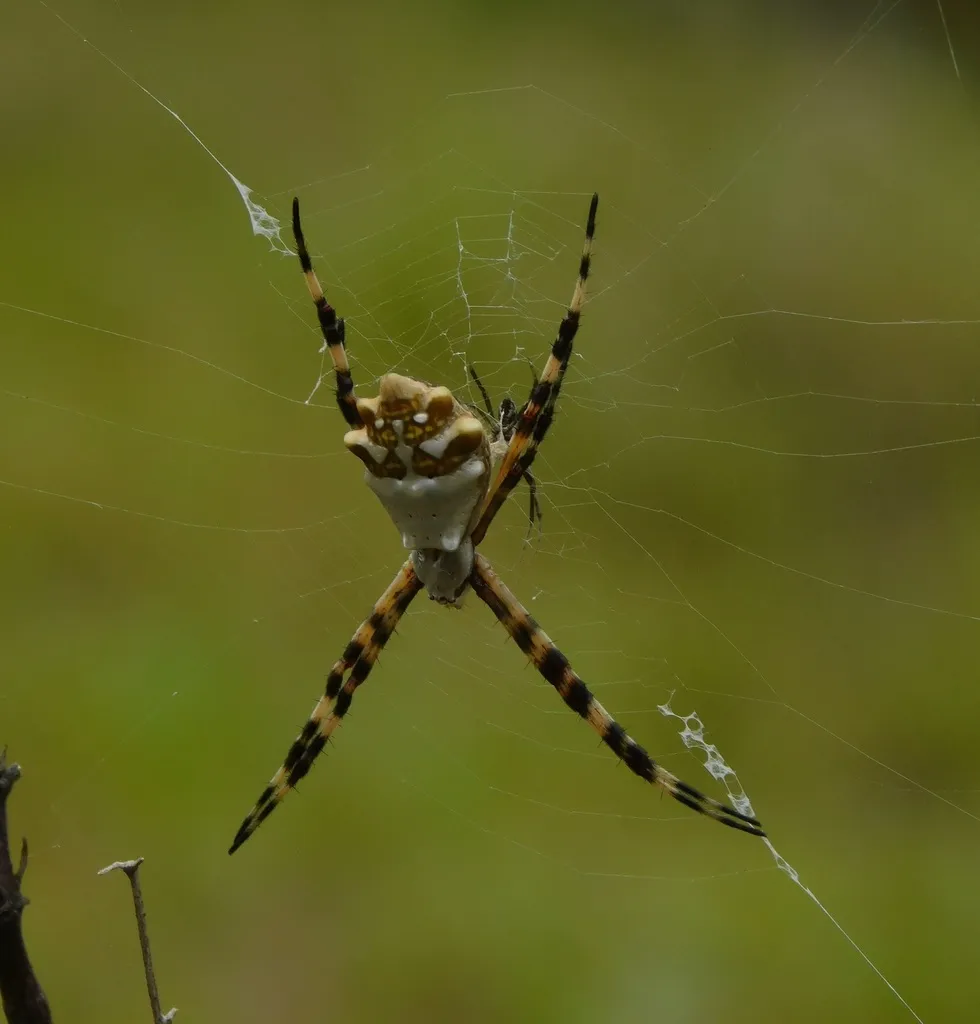
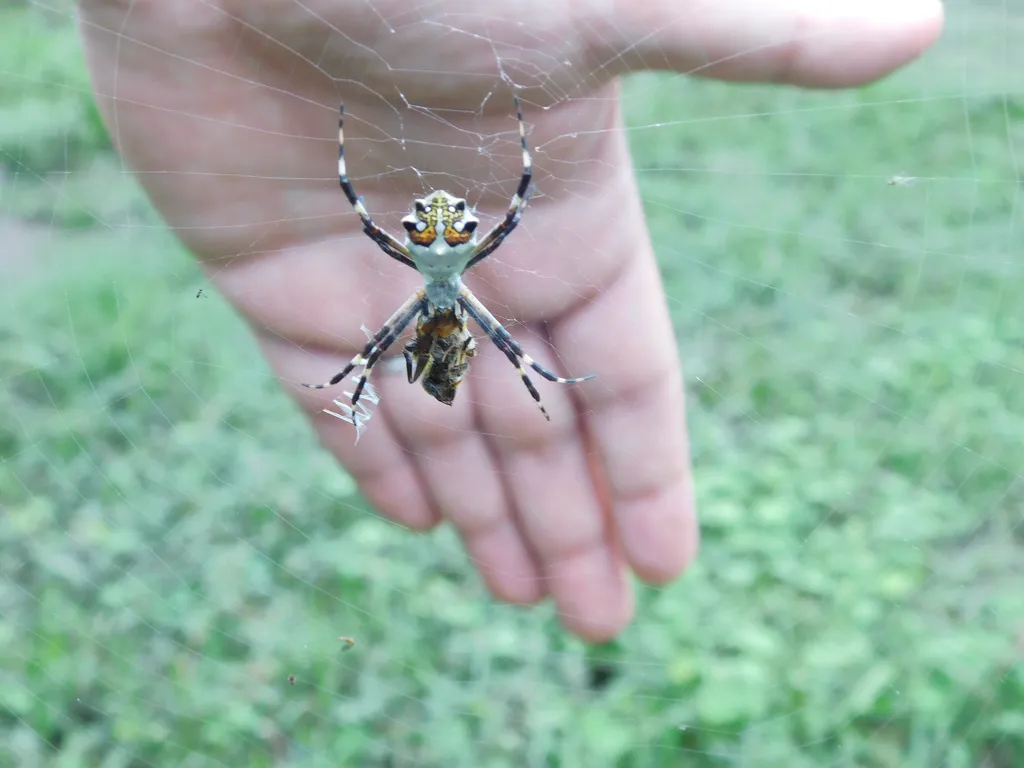
Silver garden spiders (Argiope argentata) belong to the family Araneidae, the orb weaver spiders. Their most distinctive feature is a reflective, silvery cephalothorax (the front body section) that appears metallic under natural light. This silver sheen is what sets them apart from other common garden spiders.
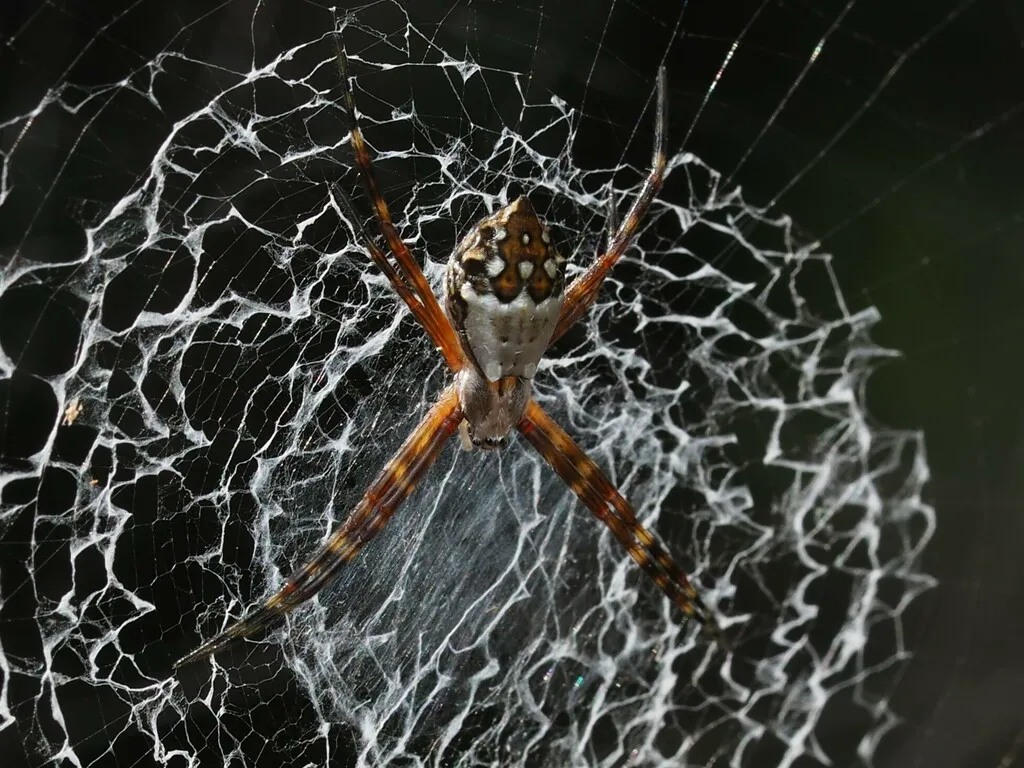
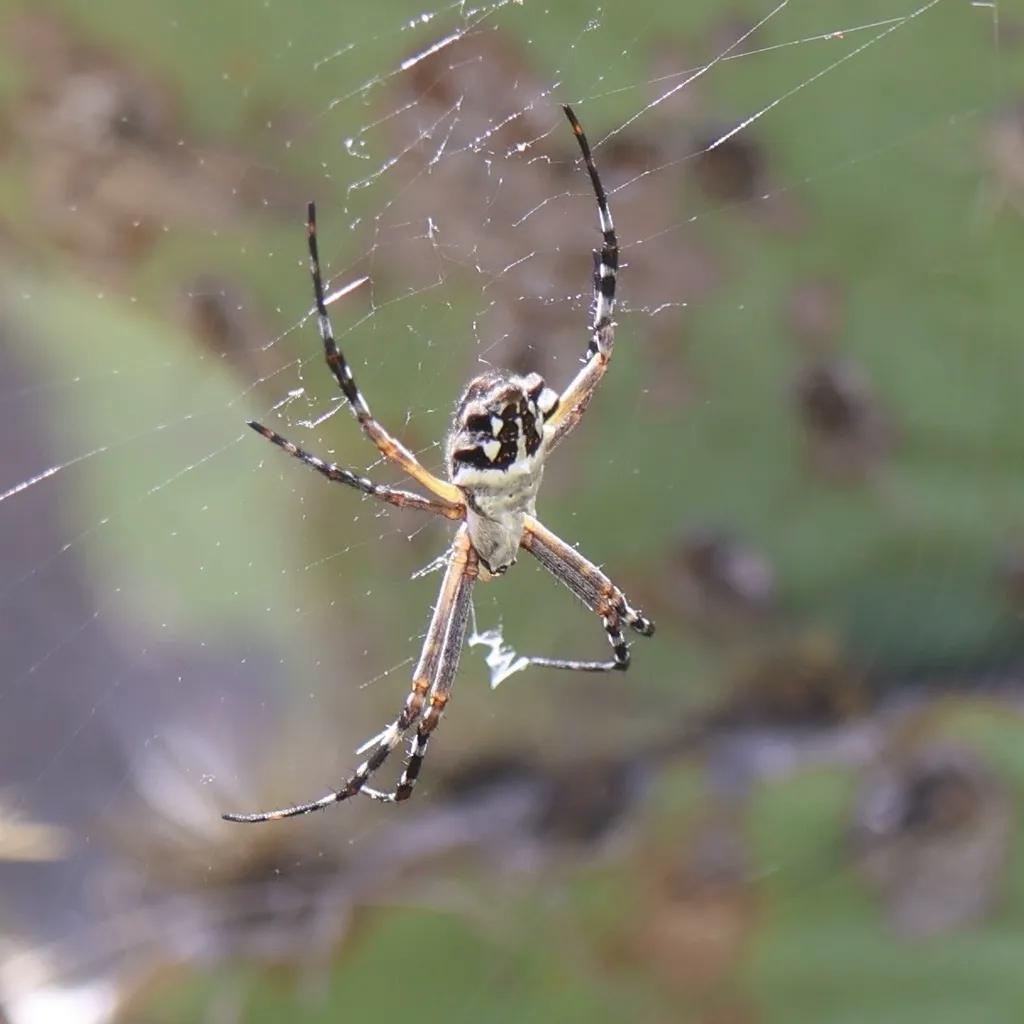
Females measure about 10 to 12 millimeters in body length, or roughly half an inch. Males are much smaller at just 3 to 4 millimeters. This extreme size difference between the sexes is common among Argiope spiders. The abdomen shows a complex pattern of cream, gray, black, and sometimes orange or reddish-brown markings. Leg banding is prominent, with alternating light and dark rings along the length of each leg.
Like all spiders, silver garden spiders have eight legs. They have no wings and cannot fly, although spiderlings disperse by “ballooning” on silk threads carried by the wind.
How to Tell Them Apart from Similar Spiders
Several orb-weaving spiders look similar to the silver garden spider:
-
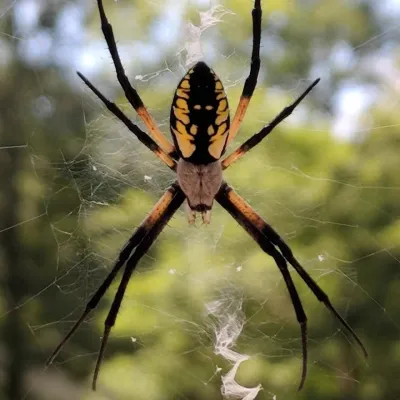
Yellow Garden Spiders (Argiope aurantia): Much bolder coloring with bright yellow and black markings on the abdomen. They are generally larger and found across a much wider range in North America, including the eastern United States.
-
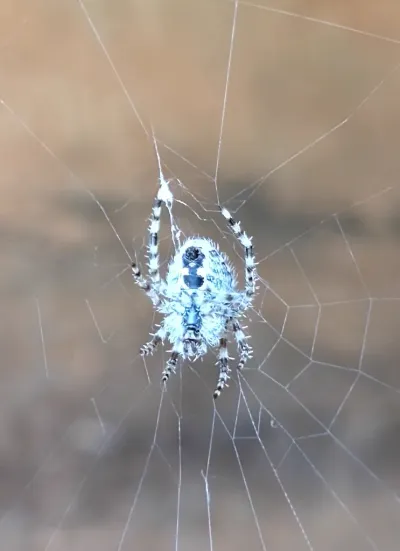
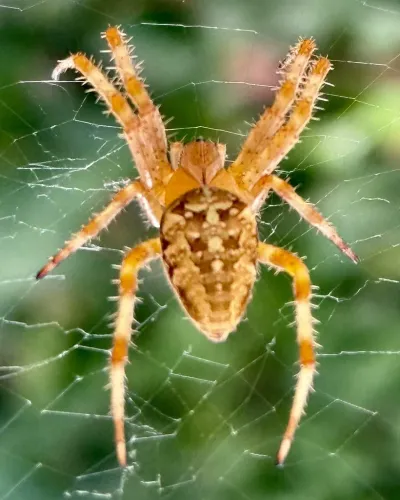
Cross Orbweavers (Araneus diadematus): Brown to orange-brown with a white cross-shaped pattern on the abdomen. They lack the silvery cephalothorax.
-
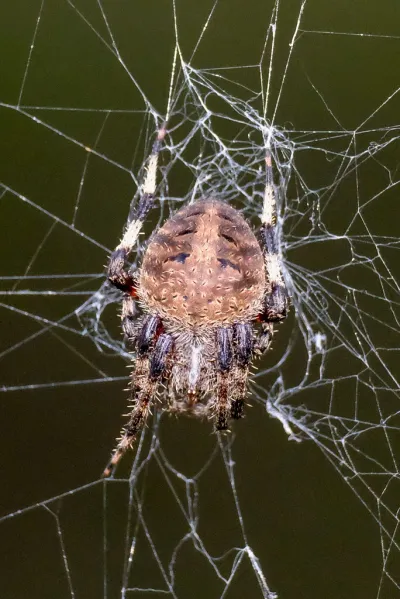
Spotted Orbweavers (Neoscona spp.): Hairy, brown to reddish-brown spiders with spotted or banded abdomens. They are smaller and lack the silver metallic sheen.
-
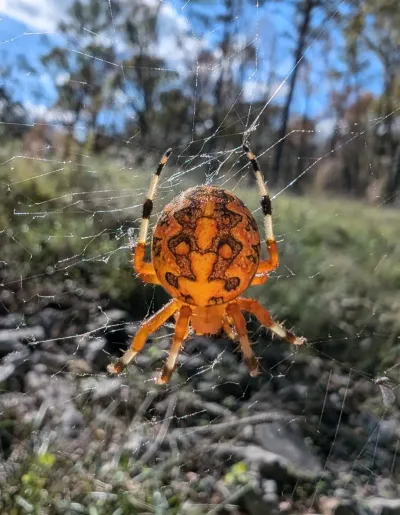
Marbled Orbweavers (Araneus marmoreus): Round-bodied spiders with bright orange or yellow markings. Their body shape is rounder and more compact than the elongated Argiope form.
The silver cephalothorax is the most reliable quick identification feature. If the front of the spider has a metallic, mirror-like quality, it is likely a silver garden spider.
Silver Garden Spider Behavior and Biology
Habitat and Range
Silver garden spiders are primarily subtropical and tropical spiders. In the United States, they are found in southern California (particularly the coastal counties), Florida, Texas, Arizona, and Louisiana. Their range extends south through Mexico and into Central and South America. They are not commonly found in the northern or mid-Atlantic states.
These spiders build their webs in open, sunny areas among shrubs, tall weeds, prickly pear cactus, agave plants, and garden vegetation. They prefer spots where flying insects are plentiful. Webs are usually anchored between plant stems or branches at heights ranging from a few inches to several feet above the ground.
Web Building
Silver garden spiders build large vertical orb webs, often a foot or more in diameter. The web consists of a spiral of sticky silk supported by non-sticky radial threads. Like other Argiope species, they frequently add a stabilimentum, a visible zigzag or X-shaped silk decoration near the center of the web. Scientists have debated the purpose of this structure, with theories including prey attraction through UV light reflection, bird warning signals, and camouflage for the spider.
Females typically sit head-down in the center of the web, waiting for vibrations that signal trapped prey. When disturbed, they may vibrate the web rapidly to appear larger or drop to the ground on a silk line.
Diet and Feeding
These spiders are generalist predators that catch whatever flying insects land in their webs. Their diet includes flies, moths, mosquitoes, small wasps, bees, and other flying arthropods. When prey hits the web, the spider quickly wraps it in silk and injects venom to subdue it. The venom liquefies the prey’s insides, which the spider then consumes.
Life Cycle and Reproduction
Silver garden spiders show extreme sexual dimorphism. Males are only about a third the size of females and must carefully approach a female’s web to mate. Males often die shortly after mating, sometimes consumed by the female.
Females produce one or more egg sacs in late summer or fall. Each sac contains hundreds of eggs wrapped in a tough silk covering. In temperate areas, the egg sacs overwinter and spiderlings emerge in spring. The young spiders disperse by ballooning, releasing tiny silk threads that catch the wind and carry them to new locations. In tropical portions of their range, the life cycle may be less strictly seasonal.
Treatment Methods for Silver Garden Spiders
Silver garden spiders typically build webs outdoors in gardens, on porches, and around exterior structures. Managing them involves a combination of physical removal, habitat changes, and targeted treatments when populations become a nuisance.
-
Web Removal: Removing webs with a broom or long-handled duster is a quick first step. Consistent removal encourages spiders to relocate to less-trafficked areas. This works well for individual webs on porches and walkways.
-
Exterior Perimeter Treatments: A residual insecticide applied around the foundation, eaves, window frames, and door frames can reduce spider activity on the exterior of the home. Products labeled for spider control are applied to areas where webs are commonly built.
-
Lighting Changes: Switching outdoor lights to yellow “bug light” bulbs or motion-activated lights reduces the flying insects that attract web-building spiders to porches and patios. Fewer prey insects means fewer spiders setting up nearby.
-
Habitat Modification: Trimming tall weeds, overgrown shrubs, and other dense vegetation near doors and walkways reduces the attachment points for webs. Keeping gardens tidy can steer spiders toward less-trafficked areas. Removing debris piles and stacked firewood from near the home also helps.
-
Exclusion: Sealing cracks around windows and doors, repairing torn screens, and closing gaps around utility lines prevents spiders from accidentally entering homes. Weatherstripping and door sweeps are simple additions that make a real difference.
For persistent problems, a pest control professional can apply targeted treatments to exterior surfaces where spiders anchor their webs. This is more effective than broad spraying and focuses on the areas where spiders are most active.
References
Other Spiders
Explore other species in the spiders family
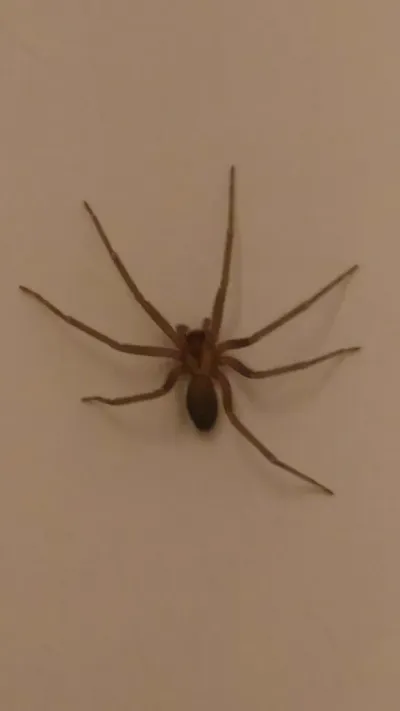
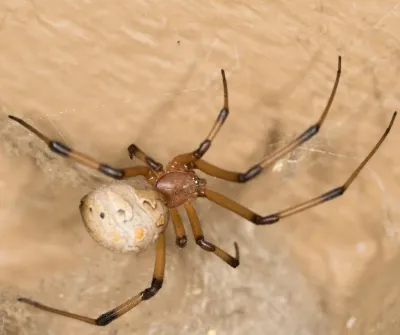
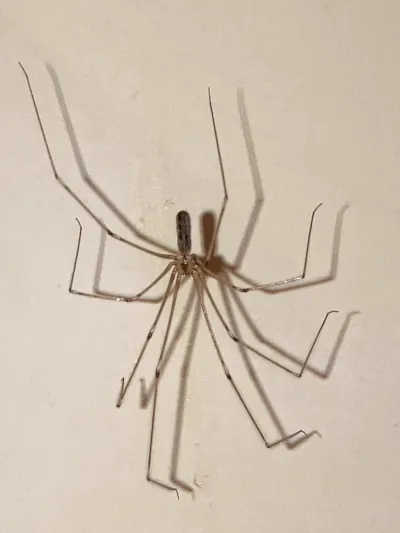
Commonly Confused With
Silver Garden Spiders are often mistaken for these similar pests
Where Silver Garden Spiders Are Found
Hover over states to see their names. Green regions indicate where silver garden spiders have been reported.
Common Questions about Silver Garden Spiders
Are silver garden spiders dangerous to humans?
+
No. Silver garden spiders are not dangerous. They can bite if handled roughly, but their venom is mild and not medically significant to humans. They are shy spiders that prefer to stay on their webs and avoid contact with people.
Where are silver garden spiders found in North America?
+
Silver garden spiders live mainly in the southern United States, including southern California, Florida, Texas, Arizona, and Louisiana. They are also widespread throughout Mexico and Central America. They are not commonly found in northern or mid-Atlantic states.
What does a silver garden spider look like?
+
Silver garden spiders have a distinctive reflective silvery cephalothorax that gives them their common name. Their abdomen has a mix of cream, gray, black, and sometimes orange or reddish-brown markings. Females are about 10 to 12 millimeters long, while males are much smaller at around 3 to 4 millimeters. Their legs show clear banding patterns.
What is the zigzag pattern in a silver garden spider's web?
+
The zigzag silk pattern is called a stabilimentum. Many Argiope species add this decoration to their webs. Scientists have proposed several theories for its purpose, including attracting prey by reflecting UV light, warning birds to avoid flying through the web, and providing camouflage for the spider.
Should I remove a silver garden spider from my garden?
+
There is usually no reason to remove silver garden spiders from your garden. They are beneficial predators that catch flies, mosquitoes, moths, and other pest insects. If a web is in an inconvenient spot, you can gently relocate the spider or simply remove the web. The spider will usually rebuild elsewhere.
How long do silver garden spiders live?
+
Silver garden spiders typically live for about one year. Females lay egg sacs containing hundreds of eggs in late summer or fall. The spiderlings hatch and disperse by ballooning on silk threads carried by the wind. In warmer climates, the life cycle may be less strictly annual.
How can I tell a silver garden spider from a yellow garden spider?
+
The easiest way to tell them apart is color. Yellow garden spiders have bold black and bright yellow markings on their abdomen. Silver garden spiders have a reflective silvery or grayish cephalothorax and more muted abdomen markings with cream, gray, and sometimes orange tones. Yellow garden spiders are also generally larger and are found across a much wider range in North America.

With five years of hands-on experience in the pest control industry, George Schulz is a registered technician with the Virginia Pest Management Association and a proud third-generation professional in a family business that's been protecting homes for over 57 years. He manages and trains a team of service pros while also leading internal research efforts—recently spearheading a deep-dive review of thousands of documents on pest control materials to hand-pick the most kid and pet friendly, most effective solutions tailored specifically for homes in the DC metro area.