Muskrat Identification Guide
Ondatra zibethicus
Muskrats are semi-aquatic rodents found throughout North America near marshes, ponds, lakes, and streams. While they play important roles in wetland ecosystems, their burrowing can damage dams, levees, and pond banks, making them a concern for property owners near water.
Taxonomy
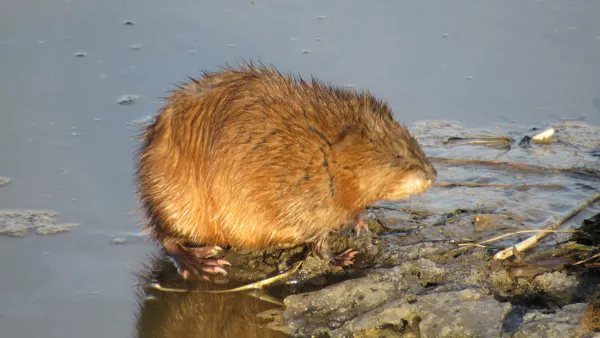
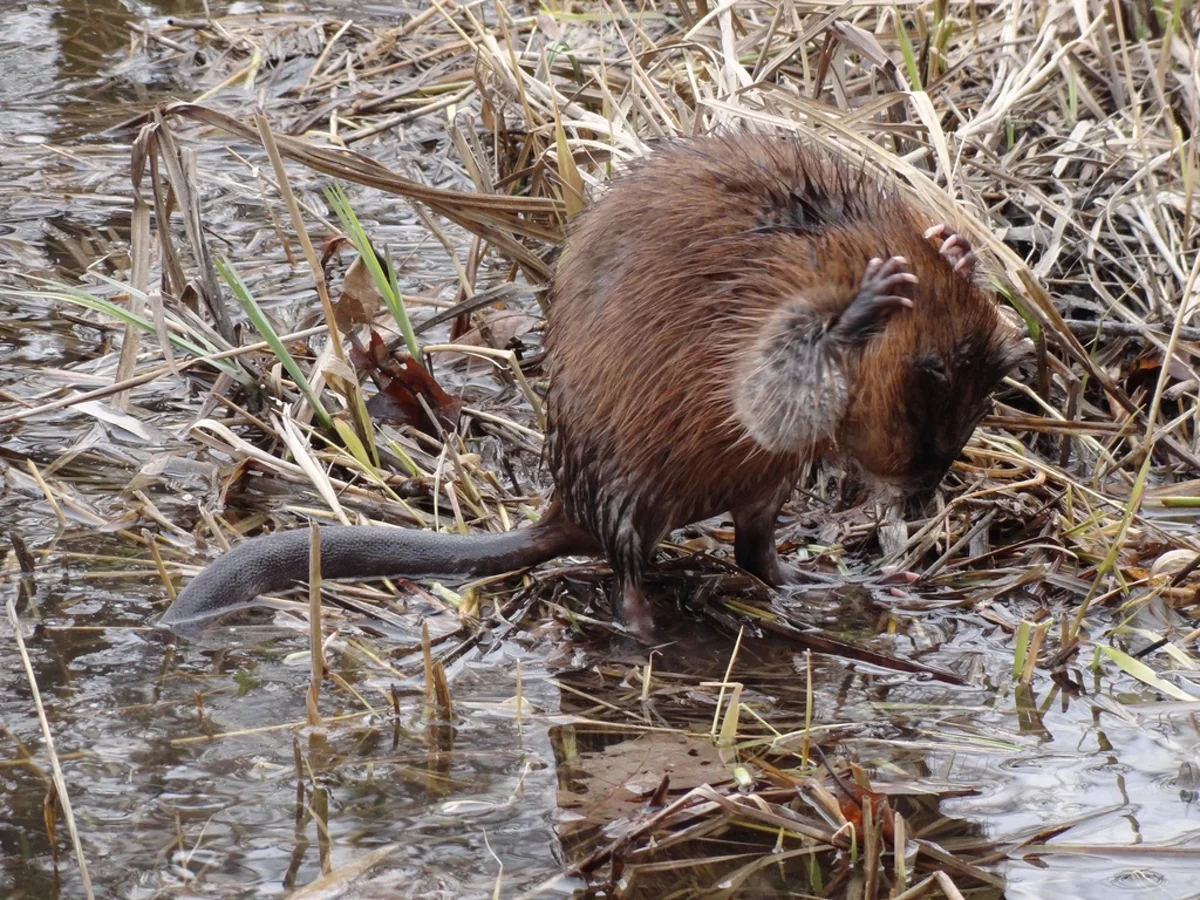
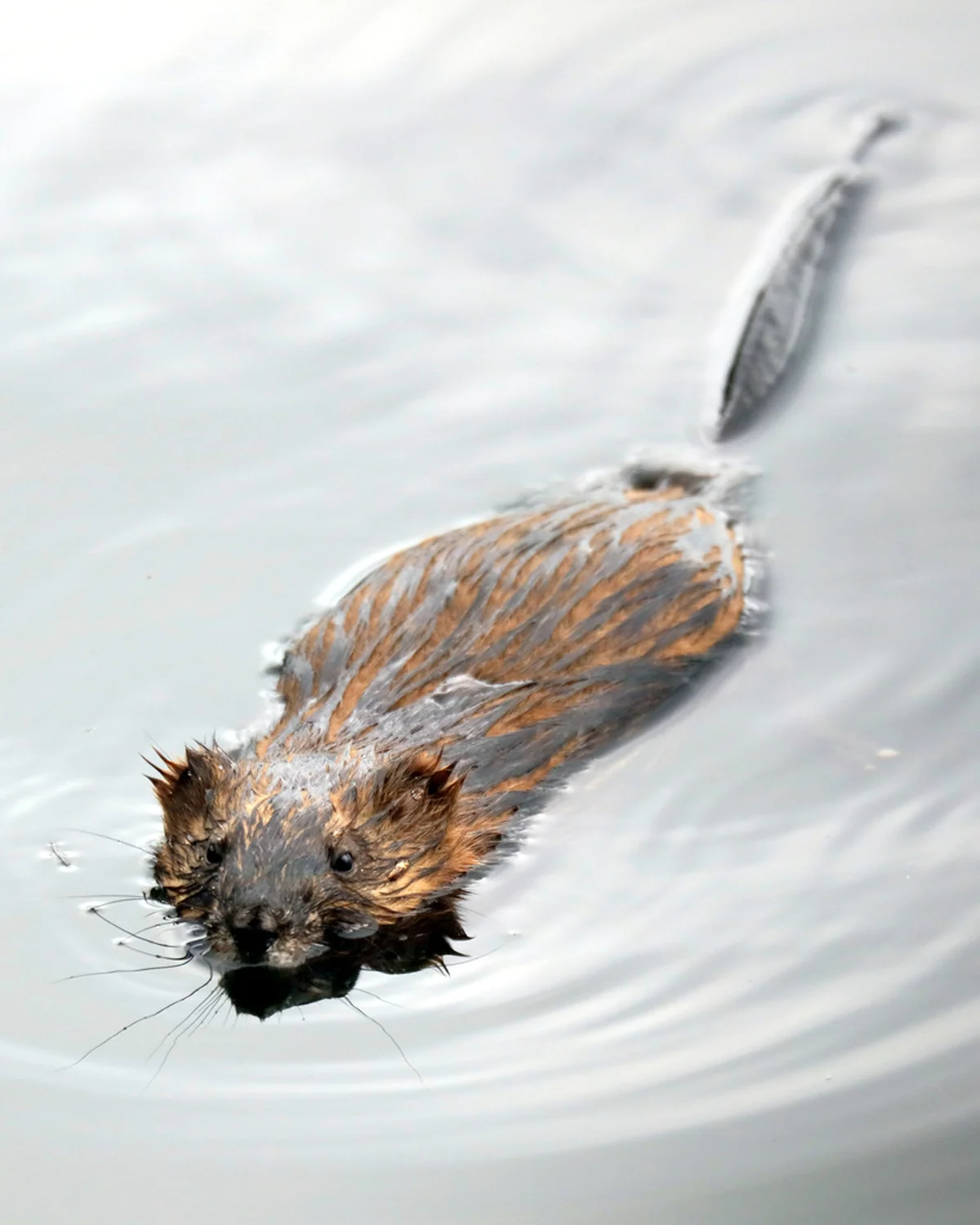
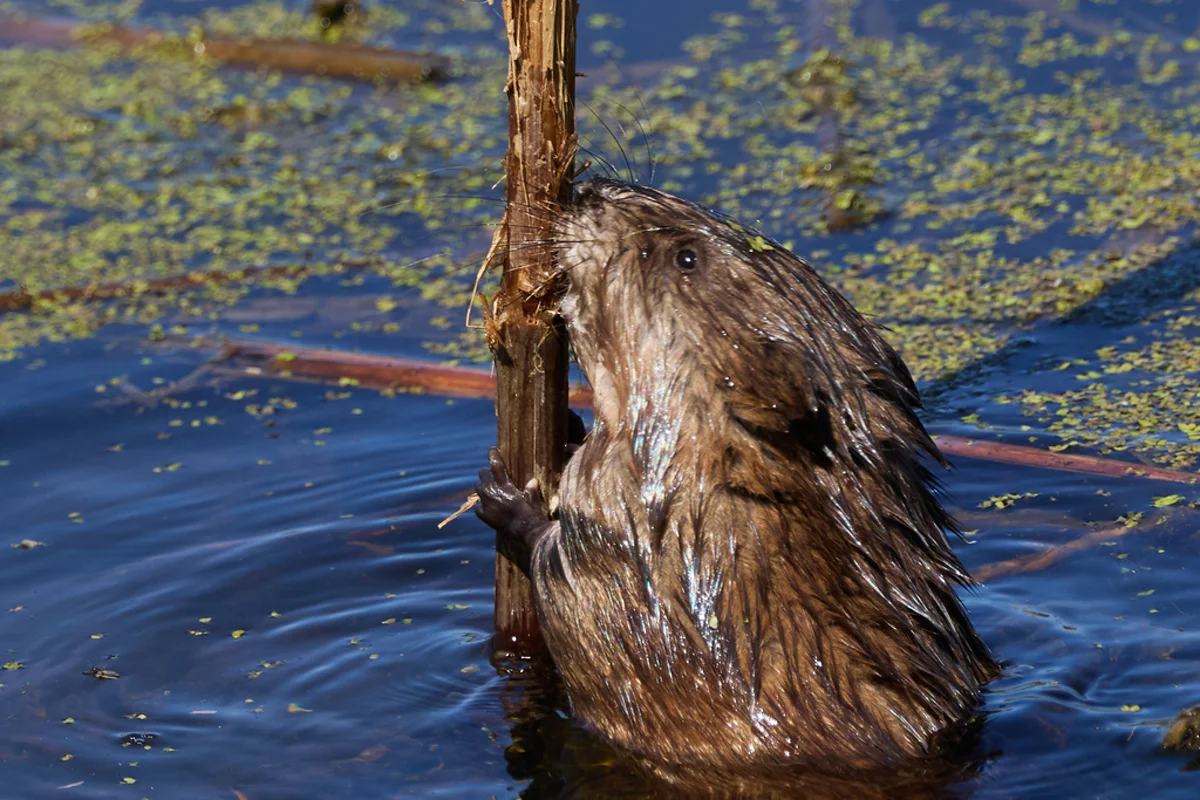
Muskrat Coloration
Common color patterns to help identify muskrat
Muskrat
Seasonal Activity
When muskrat are most active throughout the year

Where Muskrat Are Found
Hover over states to see their names. Green regions indicate where muskrat have been reported.
Muskrat Identification Guide
Physical Characteristics
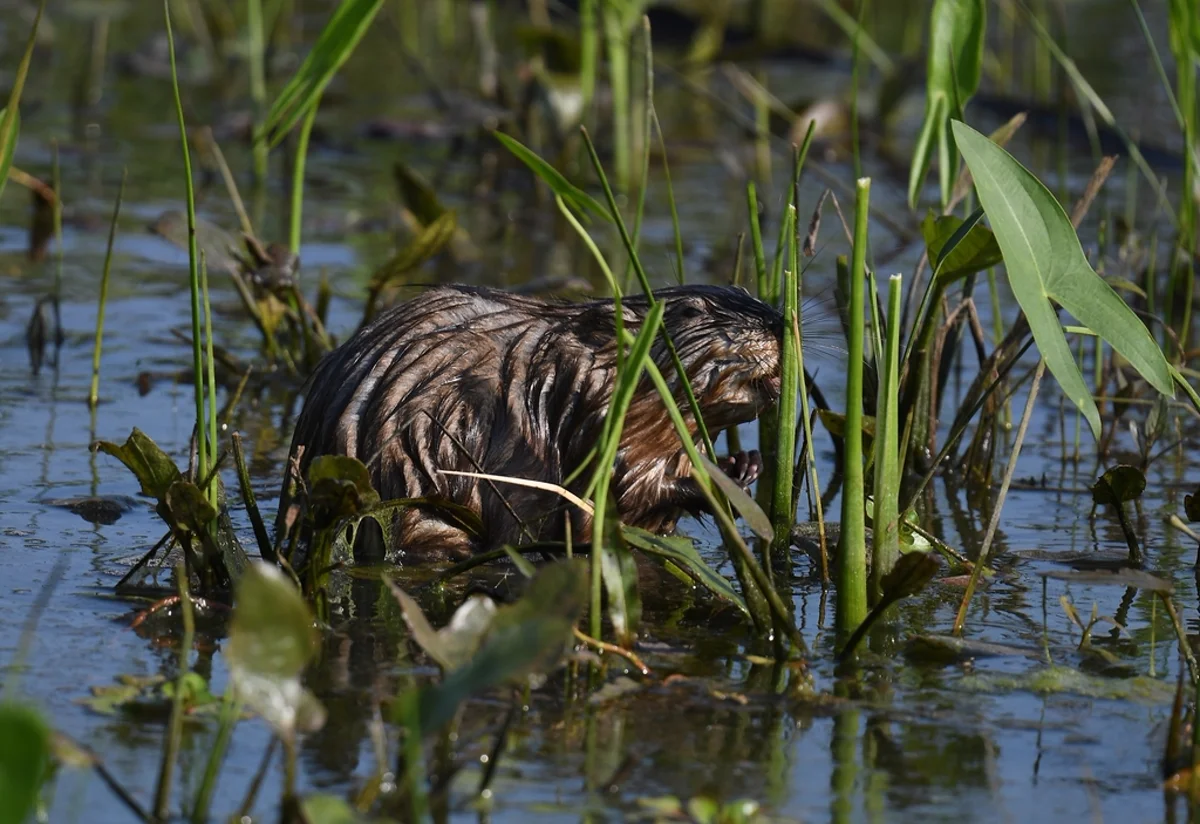
The muskrat (Ondatra zibethicus) is a medium-sized rodent that lives in and near water. Adults measure 16 to 28 inches in total length. About half of that length is the tail. They weigh between 1.5 to 4 pounds. That makes them about four times heavier than a common brown rat.
You can spot a muskrat by these features:
- Waterproof fur that is brown or black on top with a lighter belly
- Two-layered coat with soft underfur and longer outer hairs for warmth
- Flat, scaly tail that stands upright in the water and helps with steering
- Webbed back feet for swimming
- Small front feet with long toes for grabbing plants
- Small ears and eyes set high on the head
- Pointed snout with long whiskers
As muskrats get older, their fur may turn gray in spots. The name “muskrat” comes from the musky smell they make from glands near their tail. They use this smell to mark their territory.
How to Tell Muskrats from Similar Animals
Muskrat vs. Beaver: Beavers are much larger at 35 to 70 pounds. They have wide, flat, paddle-shaped tails. Muskrats have thin tails that stand upright in the water. Beavers build dams from sticks and logs. Muskrats build smaller homes from plants.
Muskrat vs. Nutria: Nutria weigh 10 to 20 pounds and have round tails, white whiskers, and orange front teeth. They came to North America for fur farming. Muskrats are smaller with dark whiskers and brown teeth.
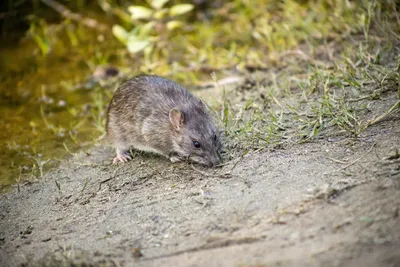
Muskrat vs. Rat: Norway rats and roof rats are much smaller with round, hairless tails. Muskrats are three to four times larger. You will almost always find muskrats near water.
Tracks and Signs
Muskrat tracks show five toes on the back feet and four toes on the front feet. Back footprints are 2 to 3 inches long. The tail often drags between footprints in mud or snow. Muskrat droppings are oval shaped, about 3/8 to 5/8 inch long. You can find them near the water or on feeding spots.
Muskrat Behavior and Biology
Habitat and Shelter
Muskrats live in wetland areas across North America. They do well in fresh and saltwater marshes, canals, ditches, ponds, lakes, rivers, and streams. They like areas with 4 to 6 feet of water and plenty of plants.
Muskrats build two types of homes:
Lodges: Dome-shaped mounds built from cattails, reeds, and small branches. These lodges sit in 15 to 40 inches of water on a solid base like a tree stump. The entrance stays underwater to keep predators out.
Bank burrows: Tunnels dug into the banks of ponds and streams. The entrance is at or below the water line. The nest area sits above water level inside the bank.
Activity Patterns
Muskrats are most active at dawn, dusk, and at night. They spend most of their time in the water and are strong swimmers. They can stay underwater for 12 to 17 minutes and swim at speeds up to 3 miles per hour.
Muskrats do not hibernate. They stay active all winter, often looking for food under the ice. Their thick, waterproof fur keeps them warm in cold water.
Diet and Feeding
Muskrats mostly eat plants. Their diet includes:
- Cattails (their favorite food)
- Water lilies and pond weeds
- Sedges and rushes
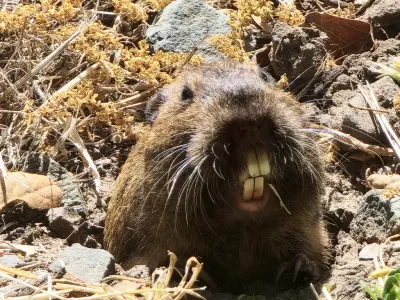
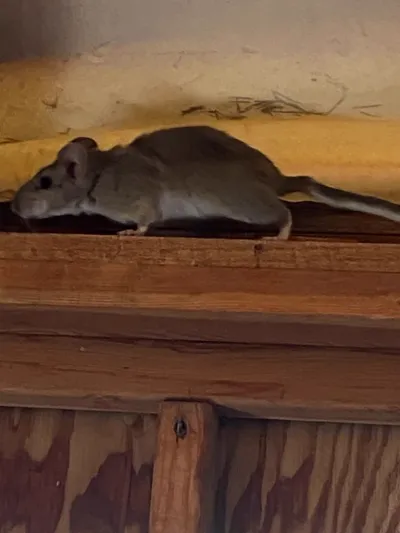
- Roots, stems, leaves, and fruits of water plants A related species, Pack Rats, shares similar characteristics.
When plants are hard to find, muskrats will also eat:
- Freshwater mussels and clams
- Crayfish
- Fish, frogs, and salamanders
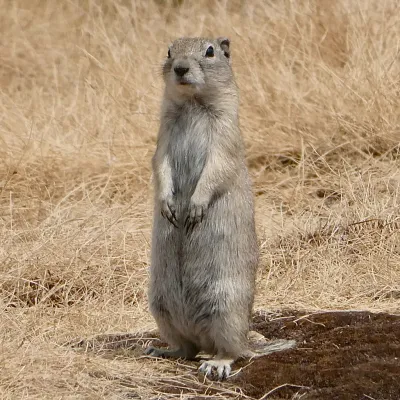
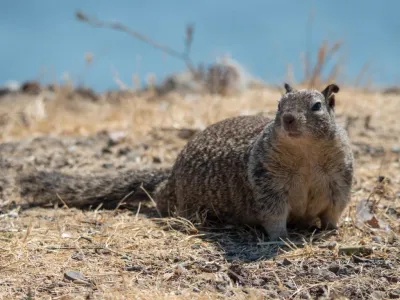
- Insects A related species, Thirteen-Lined Ground Squirrel, shares similar characteristics.
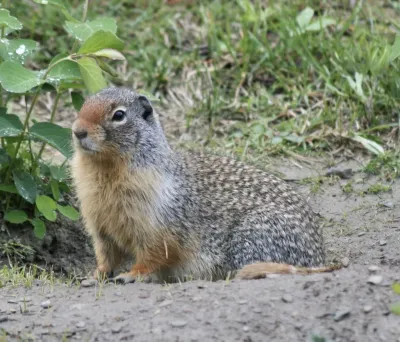
Muskrats build feeding platforms and push-ups (small plant shelters) where they eat during winter. A related species, Mice, shares similar characteristics.
Reproduction and Lifespan
Muskrats breed fast and have many babies each year:
- Breeding season runs from March to August in most areas
- Females have 2 to 3 litters per year
- Each litter has 6 to 8 young on average
- Pregnancy lasts 29 to 30 days
- Young muskrats stop nursing at about 4 weeks
- They can breed at about 1 year of age
In the wild, muskrats live about 3 to 4 years. Predators include mink, foxes, coyotes, raccoons, hawks, owls, and large fish. When there are too many muskrats in one area, disease and food shortages can kill many of them.
Signs of Muskrat Activity
If you have a pond, stream, or other water feature on your property, watch for these signs of muskrat presence:
Visual Signs
- Lodges: Dome-shaped mounds of vegetation rising 2 to 4 feet above the water surface
- Bank holes: Burrow entrances along the waterline or just below the surface
- Feeding platforms: Small piles of vegetation in shallow water where muskrats eat
- Push-ups: Small mounds of vegetation built over breathing holes in ice during winter
- Trails: Worn paths through vegetation leading to and from the water
Damage Signs
- Undermined banks: Soft spots, sinkholes, or collapsed areas near the water’s edge
- Damaged vegetation: Chewed or missing aquatic plants, especially cattails and water lilies
- Eroded levees or dams: Weakened earthen structures due to burrowing activity
Property Damage from Muskrats
Muskrats can cause major damage to properties near water. Their digging and burrowing is the main problem.
Structural Damage
Levees and dams: Muskrat burrows can weaken earthen dams and levees. Tunnels may run 15 feet or more into banks. This creates weak spots that can leak or fail during floods.
Pond banks: Bank burrows can make shorelines collapse, wash away land, and cause erosion. This is a big problem for backyard ponds and small water features.
Roads and pathways: Burrows near roads, driveways, or walking paths can make the surface cave in. This creates dangers for people and vehicles.
Agricultural Impact
Muskrats can cause big losses in:
- Rice farms by eating plants and cutting stems for their lodges
- Fish farms by burrowing through pond walls
- Irrigation systems by damaging canal banks and blocking water flow
Effects on the Environment
When too many muskrats live in one area, they may eat all the water plants. This hurts ducks and other wildlife that need those plants for food and shelter. Other semi-aquatic rodents like rice rats may share similar wetland habitats, and meadow voles are often found in the marshy edges around water features.
Management Methods for Muskrats
Muskrat control falls under wildlife management, not pest control. Unlike common rats that can be managed with standard rodent control methods, many states have rules about when and how you can remove muskrats. Here are common ways to manage them.
Habitat Changes
Making an area less attractive to muskrats can help prevent problems:
- Remove or thin plants like cattails and bulrushes near structures you want to protect
- Add large rocks along pond banks to stop burrowing
- Keep water levels below 3 feet deep if you can, since muskrats like deeper water
- Control water plants to reduce food sources
Barriers
Fences and other barriers can protect specific areas:
- Wire mesh buried 2 to 3 feet deep and going 3 feet up the bank stops burrowing
- Hardware cloth with 1/2 inch holes can protect dam faces and spillways
- Concrete or stone can reinforce weak sections of levees or dams
Trapping
Trapping works best when you need to lower the number of muskrats:
- Body-grip traps at burrow entrances or travel paths
- Live cage traps with apples, carrots, or other vegetables as bait
- Foothold traps near runways or feeding areas
Trapping works best in fall and winter when muskrats are storing food. Check local and state rules before trapping. You may need a permit.
Professional Wildlife Control
Muskrat problems often need a professional. Property owners should contact:
- Licensed wildlife control operators
- State wildlife agencies
- USDA Wildlife Services
These experts can check the problem, choose the best solution, and follow the law.
Health Considerations
Muskrats rarely attack people. However, they can carry diseases.
Tularemia: A bacterial infection you can get from touching sick animals or contaminated water. Signs include fever, skin sores, and swollen glands.
Leptospirosis: Spread through water with muskrat urine in it. This bacterial disease causes flu-like symptoms and can harm the liver and kidneys.
Rabies: Not common in muskrats, but any mammal can carry rabies.
If you must touch a muskrat, wear heavy gloves and wash your hands well after. See a doctor if you get bitten. Do not touch dead muskrats with bare hands. Call local health officials if you think wildlife in your area might be sick.
This information is for education only. It is not medical advice. Always talk to a doctor if you think you have been exposed to a disease from wildlife.
References
Other Rodents
Explore other species in the rodents family
Commonly Confused With
Muskrat are often mistaken for these similar pests
Where Muskrat Are Found
Hover over states to see their names. Green regions indicate where muskrat have been reported.
Common Questions about Muskrat
How do I identify a muskrat?
+
Muskrats are medium-sized rodents measuring 16 to 28 inches total length, with about half being their distinctive flattened tail. They have dense, waterproof brown fur, small ears and eyes, and partially webbed hind feet. Their vertically flattened tail is unique among North American rodents and helps distinguish them from beavers or nutria.
What problems do muskrats cause?
+
Muskrats cause damage primarily through their burrowing habits. They dig tunnels into pond banks, levees, dams, and dikes which can weaken these structures and cause erosion or collapse. They also eat aquatic plants and may damage ornamental water gardens, agricultural irrigation systems, and rice crops.
Are muskrats dangerous to humans?
+
Muskrats rarely attack people unless cornered or captured. However, they can carry diseases including tularemia and leptospirosis, which may be transmitted through contact with their urine, feces, or carcasses. Avoid handling muskrats directly and contact a wildlife professional if removal is needed.
Where do muskrats live?
+
Muskrats live in wetland habitats including marshes, ponds, lakes, rivers, streams, canals, and ditches. They prefer areas with 4 to 6 feet of water and abundant aquatic vegetation. They build dome-shaped lodges from cattails and vegetation or dig bank burrows near the waterline.
Do muskrats hibernate in winter?
+
No, muskrats do not hibernate. They remain active throughout winter, foraging under the ice and living in their lodges or bank burrows. Their thick, waterproof fur provides insulation against cold water temperatures.
What do muskrats eat?
+
Muskrats are primarily herbivores that feed on aquatic plants including cattails, water lilies, sedges, and pondweeds. They eat roots, stems, leaves, and fruits. When plant food is scarce, they may eat insects, fish, frogs, crayfish, and freshwater mussels.
How fast do muskrats reproduce?
+
Muskrats are prolific breeders. Females can have 2 to 3 litters per year with 6 to 8 young per litter. The gestation period is about 29 to 30 days. In favorable conditions, a single pair can produce 15 to 20 offspring annually.
How do I get rid of muskrats?
+
Muskrat control typically requires licensed wildlife management professionals. Common methods include live trapping, habitat modification by removing vegetation near waterways, and installing wire mesh barriers to protect vulnerable structures. Local regulations often govern muskrat removal, so check with your state wildlife agency.

With five years of hands-on experience in the pest control industry, George Schulz is a registered technician with the Virginia Pest Management Association and a proud third-generation professional in a family business that's been protecting homes for over 57 years. He manages and trains a team of service pros while also leading internal research efforts—recently spearheading a deep-dive review of thousands of documents on pest control materials to hand-pick the most kid and pet friendly, most effective solutions tailored specifically for homes in the DC metro area.