Sawtoothed Grain Beetle Identification Guide
Oryzaephilus surinamensis
The sawtoothed grain beetle is one of the most common stored product pests worldwide. These small, flattened beetles infest cereals, flour, dried fruits, and many other pantry items, contaminating food with their presence and waste.
Taxonomy
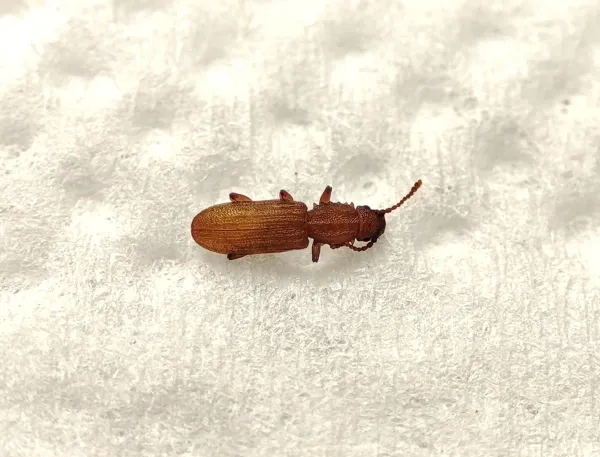
Sawtoothed Grain Beetle Coloration
Common color patterns to help identify sawtoothed grain beetle
Sawtoothed Grain Beetle
Seasonal Activity
When sawtoothed grain beetle are most active throughout the year

Where Sawtoothed Grain Beetle Are Found
Hover over states to see their names. Green regions indicate where sawtoothed grain beetle have been reported.
Sawtoothed Grain Beetle Identification Guide
Physical Characteristics
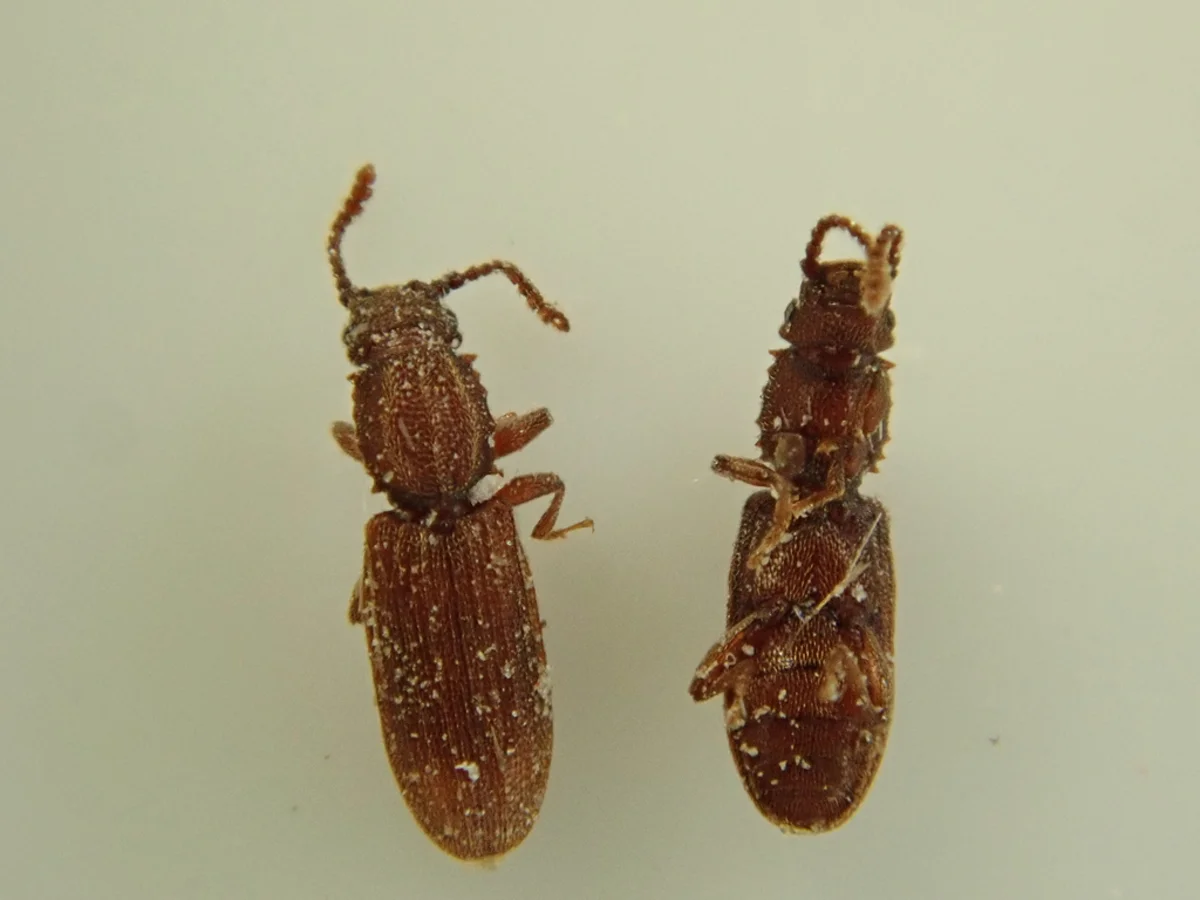
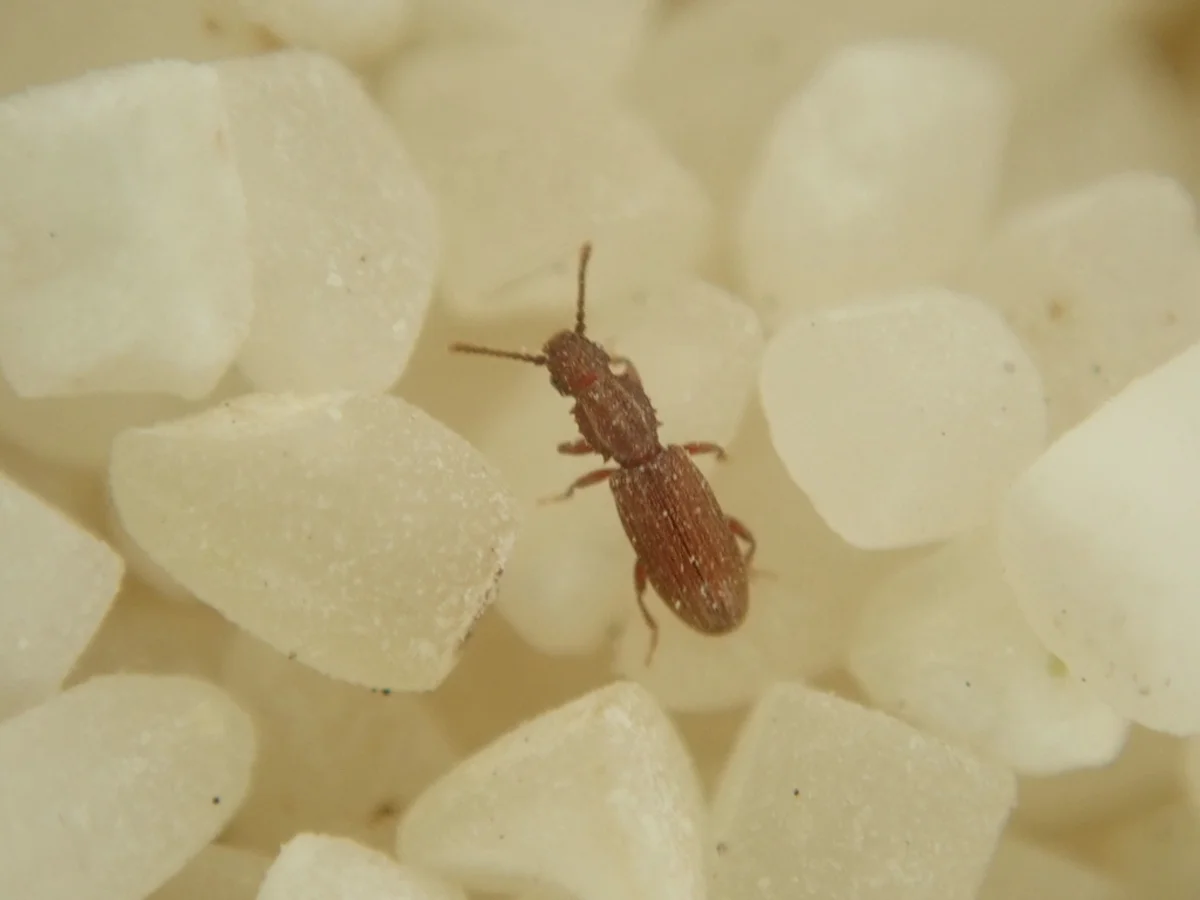
Sawtoothed grain beetles are small, slender insects about 2 to 3mm long. That is roughly the size of a grain of rice. Their bodies are very flat, which lets them squeeze through tiny gaps in food packaging. They range in color from dark brown to reddish-brown. Some look almost black.
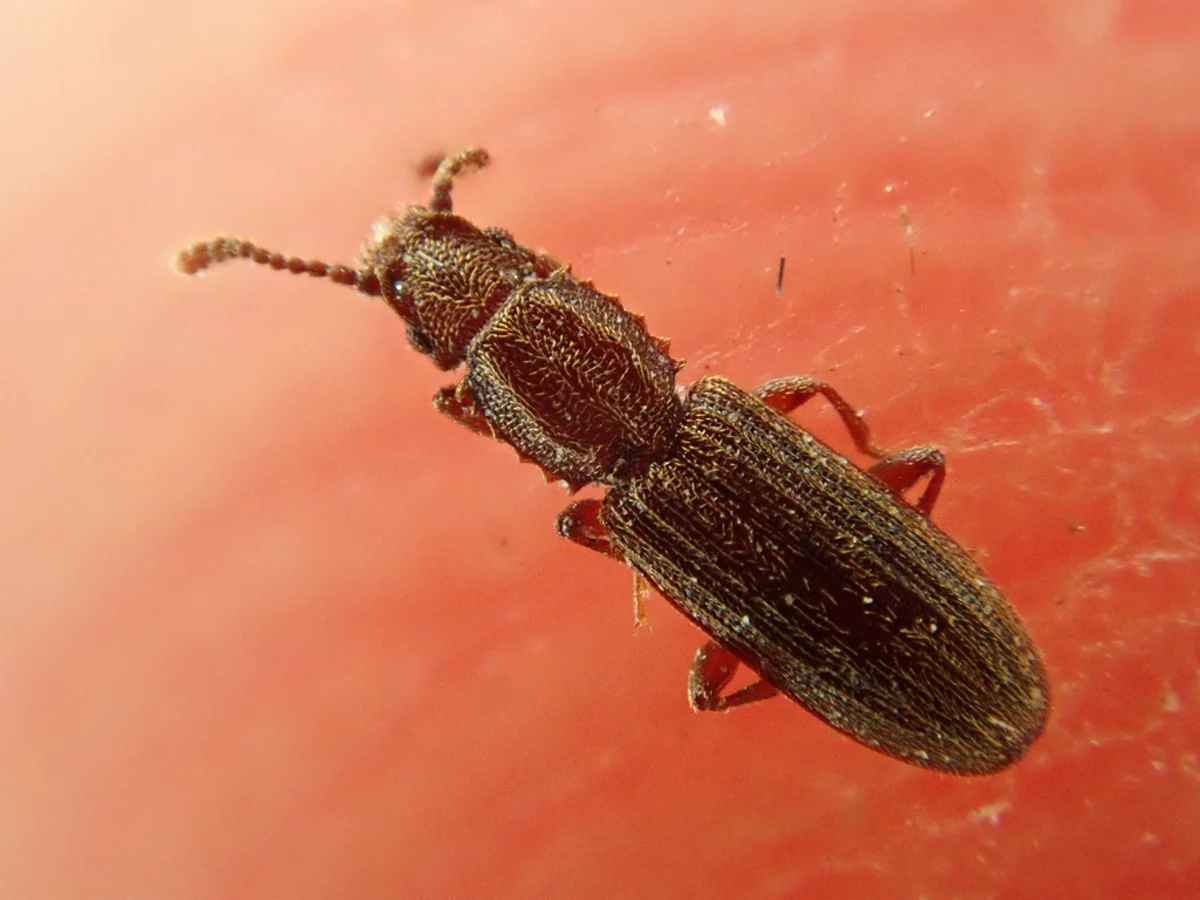
The most notable feature is the thorax. This is the middle section between the head and body. Each side of the thorax has six tooth-like points that look like saw teeth. This feature gives the beetle its common name. Three raised ridges also run down the top of the thorax.
The head is somewhat triangular and narrower than the thorax. Two clubbed antennae stick out from the head. Each antenna has eleven segments. The beetle has small eyes compared to its head size. Sawtoothed grain beetles have wings under their hard wing covers, but they rarely fly. They mostly move by crawling.
Sawtoothed Grain Beetle Larvae
The larvae are the young, feeding stage. They are small, yellowish-white grubs with brown heads. Full-grown larvae reach about 3mm long. Unlike moth larvae, beetle larvae do not spin silk webbing.
Larvae have three pairs of legs near the head. They crawl freely through food as they feed. They go through 2 to 5 growth stages before changing into pupae. The larval stage usually lasts 12 to 15 days in warm conditions. It can take several weeks in cooler temps.
When ready to pupate, larvae usually stay within the food source. They may build a rough cell from food particles stuck together. The pupal stage lasts 4 to 5 days before adult beetles come out.
Telling Them Apart from Similar Pests
Several pantry pests look similar to sawtoothed grain beetles. Here are the key differences:
Merchant grain beetles: These close relatives look almost the same. Merchant grain beetles have larger eyes. The area behind the eye is much shorter than the eye itself. Sawtoothed grain beetles have smaller eyes. The area behind the eye is about equal to the eye length.
Flour beetles: Red and confused flour beetles are similar in size but have a rounder body shape. They do not have the saw-toothed points on the thorax. Flour beetles are also more reddish in color.
Drugstore beetles: Drugstore beetles have a more rounded, humped look. Their antennae end in a three-part club. They also lack the sawtoothed thorax edges.
Cigarette beetles: Cigarette beetles are rounder and have comb-like antennae. They hold their head downward, giving them a humped look from the side. Homeowners dealing with Sawtoothed Grain Beetle may also encounter Pantry Pest, which can appear in similar environments.
Sawtoothed Grain Beetle Behavior and Biology
Lifecycle and Development
Sawtoothed grain beetles have four life stages: egg, larva, pupa, and adult. The full lifecycle takes as few as 20 days in warm conditions of 85 to 95 degrees Fahrenheit. In cooler temps, it may take 80 days or more.
Eggs: Females lay eggs one at a time or in small groups on or in food. A single female may lay 45 to 400 eggs in her lifetime. She lays about 6 to 10 eggs per day. Eggs are tiny, white, and hard to see without a magnifying glass. At 80 to 85 degrees Fahrenheit, eggs hatch in 3 to 5 days.
Larvae: After hatching, larvae start feeding right away on nearby food. They like processed grains, broken kernels, and fine food bits. Larvae cannot get into whole, intact grain kernels. The larval stage involves 2 to 5 molts over 12 to 15 days in warm conditions.
Pupae: Full-grown larvae pupate within the food source. They often build a loose cocoon from food bits. The pupal stage lasts 4 to 5 days. Pupae are white and slowly darken as they get close to becoming adults.
Adults: New adults are light brown and darken over several days. Adults live 6 to 10 months on average. Some can survive up to 3 years. Adults keep feeding their whole lives and can reproduce within days of coming out.
What Do Sawtoothed Grain Beetles Eat?
Sawtoothed grain beetles eat many types of dried and processed foods. Unlike rice weevils, they cannot bore into whole, undamaged grain kernels. They are one of the most common pantry pests worldwide. They feed on processed products, damaged grains, or grain already attacked by other insects.
Common food sources include:
- Flour, cornmeal, and baking mixes
- Breakfast cereals and oatmeal
- Pasta, rice, and grains
- Bread, crackers, and cookies
- Dried fruits such as raisins and dates
- Nuts and seeds
- Chocolate and candy
- Sugar and powdered milk
- Spices and dried herbs
- Pet food and birdseed
- Dried meat products
The beetles can also infest non-food items like tobacco products, some medicines, and dried museum specimens.
Where Do Sawtoothed Grain Beetles Hide?
These beetles do well in warm, humid places where food is stored. Their flat bodies let them fit through very small openings. They can get into sealed food packaging, cracks in cabinets, and gaps along shelves.
Common hiding spots include:
- Inside original food packaging
- In cracks and crevices of pantry shelves
- Behind and under appliances near food storage
- In spilled food debris in corners
- Inside wall voids near kitchens
- In accumulated crumbs and food particles
Infestations often go unnoticed until the beetle numbers grow large. A single infested product can spread beetles throughout a whole pantry. Adults may travel far while searching for new food sources.
Signs of a Sawtoothed Grain Beetle Problem
Early Warning Signs
- Live beetles: Small brown beetles crawling on shelves, in cabinets, or in food containers
- Dead beetles: Finding beetle bodies in stored products or on pantry floors
- Larvae: Tiny yellowish-white grubs in food products
- Shed skins: Cast larval skins left behind as larvae molt and grow
- Damaged packaging: Small holes in paper or cardboard food containers
- Unusual odors: Musty or off smells from infested products
- Clumping: Food products sticking together from beetle activity
Where to Inspect
If you think you have sawtoothed grain beetles, check these areas closely:
- All flour, meal, and grain products
- Breakfast cereals and oatmeal containers
- Pasta, rice, and baking ingredients
- Dried fruit and nut packages
- Spice containers, especially older ones
- Pet food bags and treats
- Birdseed and wildlife feed
- Chocolate, candy, and cookie packages
- Cracks and crevices in pantry shelving
- Areas behind and under appliances
Open each package and look at the contents closely. Check for live beetles, dead beetles, larvae, and shed skins. Pay extra attention to products that have been stored for a long time. These are more likely to have beetles.
Treatment Methods for Sawtoothed Grain Beetles
Effective control of sawtoothed grain beetles requires eliminating infested food sources and preventing reinfestation. These beetles respond well to treatment approaches that combine sanitation, exclusion, and monitoring.
-
Find and Remove Infested Food: The most important step is finding and removing all infested food products. Check every item in the pantry. Seal infested products in plastic bags and throw them away in outdoor trash bins. Also check products stored near infested items, even if they look fine.
-
Deep Cleaning: After removing infested food, clean all storage areas well. Vacuum shelves, drawers, and cabinets to remove food bits, larvae, and eggs from cracks. Wipe surfaces with soap and water to remove food residue that could feed future beetles.
-
Proper Food Storage: Move dry goods to airtight containers made of glass, metal, or heavy plastic. This keeps beetles from getting to the food. Original cardboard and paper packaging does not protect well. Store new products in sealed containers right after you buy them.
-
Temperature Treatment: Freezing can save products caught early. Put items at 0 degrees Fahrenheit for at least 7 days. This kills all life stages. You can also heat products to 130 degrees Fahrenheit for 30 minutes or more. These methods work best for newly bought products as a way to prevent problems.
-
Monitoring: Pheromone traps made for stored product beetles help find ongoing activity. These traps attract adult beetles and can show if an infestation is fully gone. Keep monitoring for several weeks after treatment to make sure the problem is solved.
Prevention Tips
Stopping sawtoothed grain beetles before they start is easier than getting rid of them later. These steps help lower your risk:
- Inspect purchases: Check packaging for holes, tears, or signs of damage before buying
- Use airtight containers: Transfer dry goods to glass jars or heavy plastic containers with tight-fitting lids
- Buy smaller quantities: Purchase amounts you will use within 2 to 4 months
- Rotate stock: Use older products first and check expiration dates regularly
- Freeze susceptible items: Place flour, grains, and dried fruit in the freezer for one week after purchase
- Clean regularly: Wipe down pantry shelves and vacuum crumbs from corners and crevices
- Seal entry points: Caulk cracks and gaps in pantry shelving and walls
- Control temperature: Store foods that attract beetles in cooler areas when you can. Beetle growth slows below 70 degrees Fahrenheit
- Monitor with traps: Place pheromone traps in storage areas to detect problems early
References and Further Reading
Other Pantry Pests
Explore other species in the pantry pests family
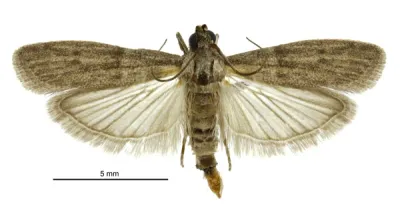
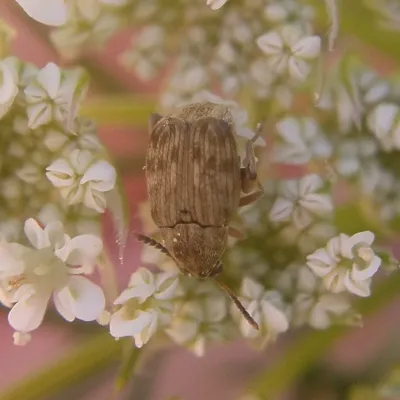
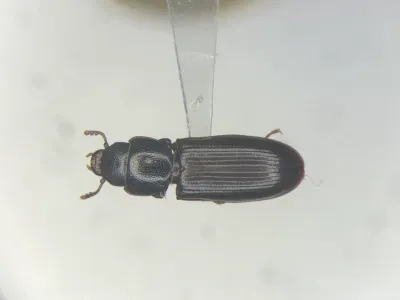
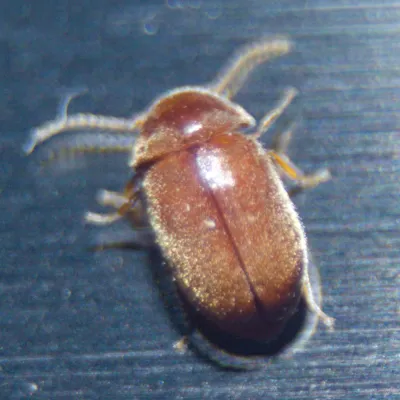
Commonly Confused With
Sawtoothed Grain Beetle are often mistaken for these similar pests
Where Sawtoothed Grain Beetle Are Found
Hover over states to see their names. Green regions indicate where sawtoothed grain beetle have been reported.
Common Questions about Sawtoothed Grain Beetle
What do sawtoothed grain beetles look like?
+
Sawtoothed grain beetles are small, slender beetles measuring 2 to 3mm long. They have a distinctly flat body that is dark brown to reddish-brown in color. The most identifying feature is the six saw-like tooth projections on each side of the thorax, giving them their name. They also have three raised ridges running lengthwise down the thorax.
Are sawtoothed grain beetles harmful to humans?
+
Sawtoothed grain beetles do not bite, sting, or transmit diseases to humans. However, their presence in food makes it unfit for consumption. Eating heavily infested products may cause digestive upset due to beetle waste, shed skins, and body fragments contaminating the food.
How do sawtoothed grain beetles get into my house?
+
Sawtoothed grain beetles usually enter homes inside infested food products purchased from stores or warehouses. Eggs, larvae, or adults may already be present in flour, cereals, pasta, or other grain products when you buy them. They can also migrate from neighboring infested areas in apartments or connected buildings.
What do sawtoothed grain beetles eat?
+
These beetles feed on a wide variety of dried foods including flour, cereals, bread, pasta, rice, dried fruits, nuts, chocolate, sugar, candy, cookies, spices, dried meat, and pet food. They cannot attack whole, undamaged grain kernels but readily infest processed or damaged grain products.
How do I know if I have sawtoothed grain beetles?
+
Look for small brown beetles crawling in or near stored food products. Check flour, cereal boxes, pasta, and other dry goods for live or dead beetles. You may also find small white larvae or shed skins. Infested products may have a musty or off odor.
How long do sawtoothed grain beetles live?
+
Adult sawtoothed grain beetles typically live 6 to 10 months, though some may survive up to 3 years under favorable conditions. Females can lay 45 to 400 eggs during their lifetime. The complete lifecycle from egg to adult takes about 3 to 4 weeks in warm conditions.
Can sawtoothed grain beetles fly?
+
While sawtoothed grain beetles have wings, they rarely fly. They primarily move by crawling and can squeeze through extremely small openings due to their flat body shape. This allows them to easily enter packaged foods through tiny gaps in packaging.
What is the difference between sawtoothed and merchant grain beetles?
+
These two species look nearly identical and infest similar foods. The main difference is in head shape and eye size. Sawtoothed grain beetles have smaller eyes and a more triangular head. Merchant grain beetles have larger eyes with the area behind the eye being noticeably smaller than the eye length.

With five years of hands-on experience in the pest control industry, George Schulz is a registered technician with the Virginia Pest Management Association and a proud third-generation professional in a family business that's been protecting homes for over 57 years. He manages and trains a team of service pros while also leading internal research efforts—recently spearheading a deep-dive review of thousands of documents on pest control materials to hand-pick the most kid and pet friendly, most effective solutions tailored specifically for homes in the DC metro area.