Green Lacewings Identification Guide
Chrysopidae
Green lacewings are delicate insects with transparent, lacy wings. Their larvae, known as aphid lions, are predators that feed on aphids, mites, and other soft-bodied insects.
Taxonomy
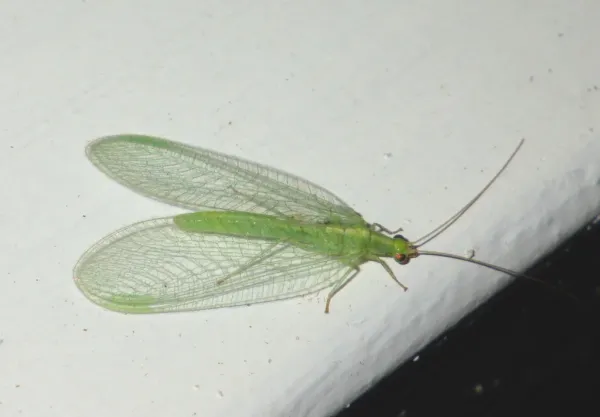
Green Lacewings Coloration
Common color patterns to help identify green lacewings
Green Lacewings
Seasonal Activity
When green lacewings are most active throughout the year

Where Green Lacewings Are Found
Hover over states to see their names. Green regions indicate where green lacewings have been reported.
Green Lacewing Identification Guide
Physical Characteristics
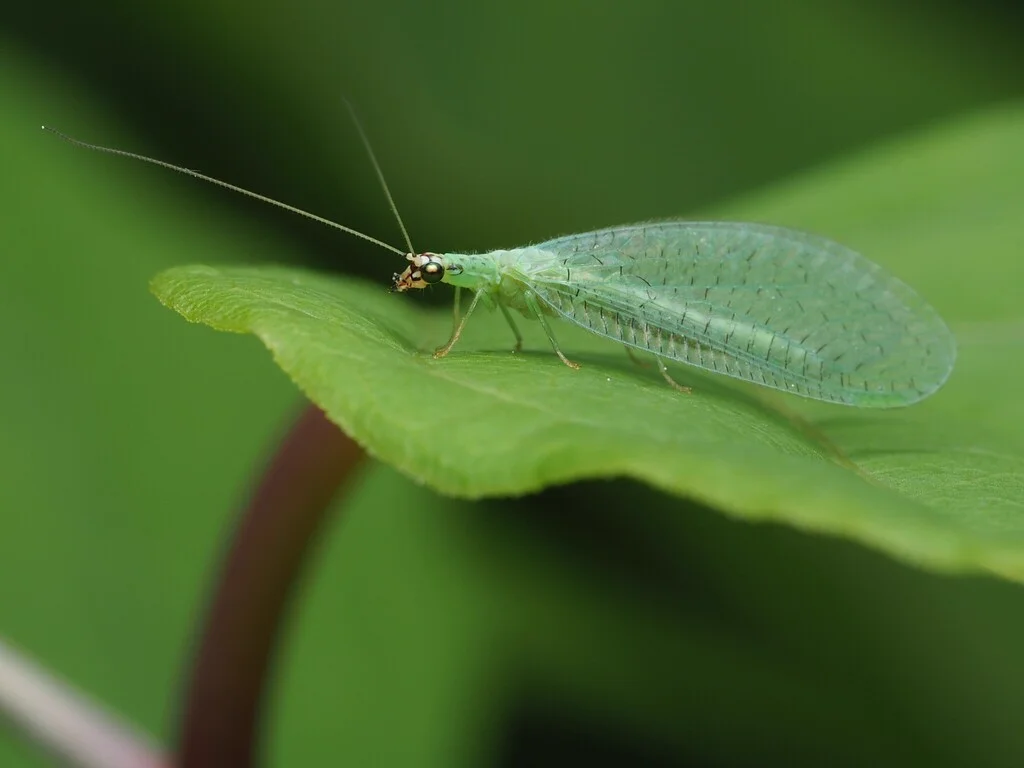
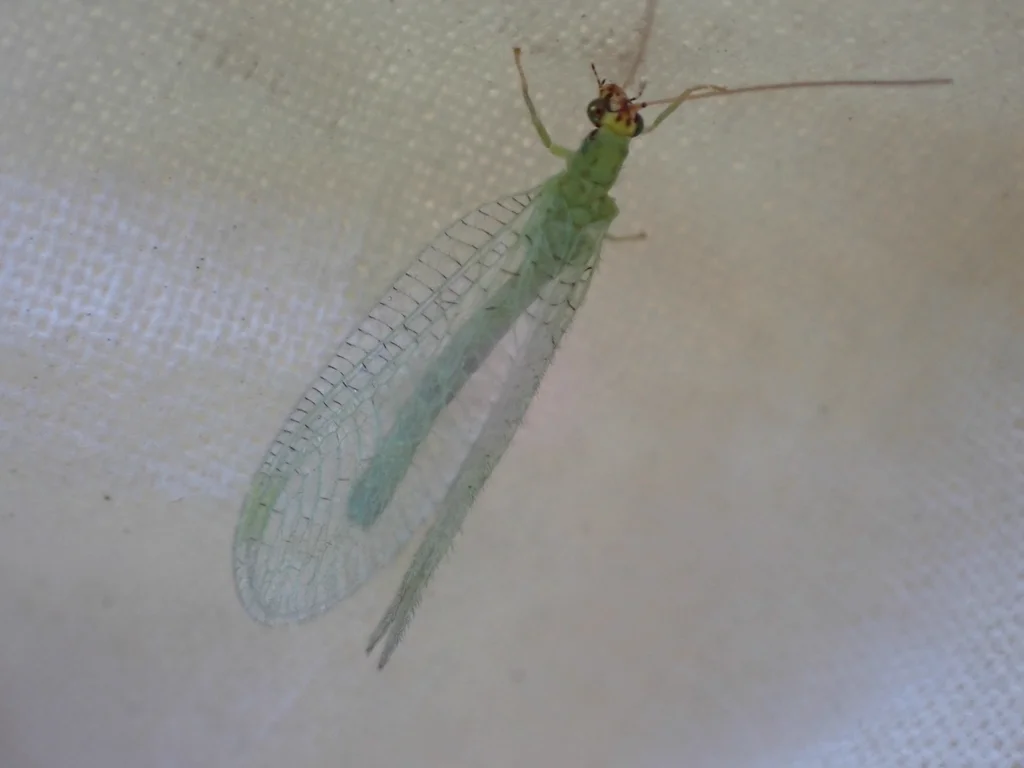
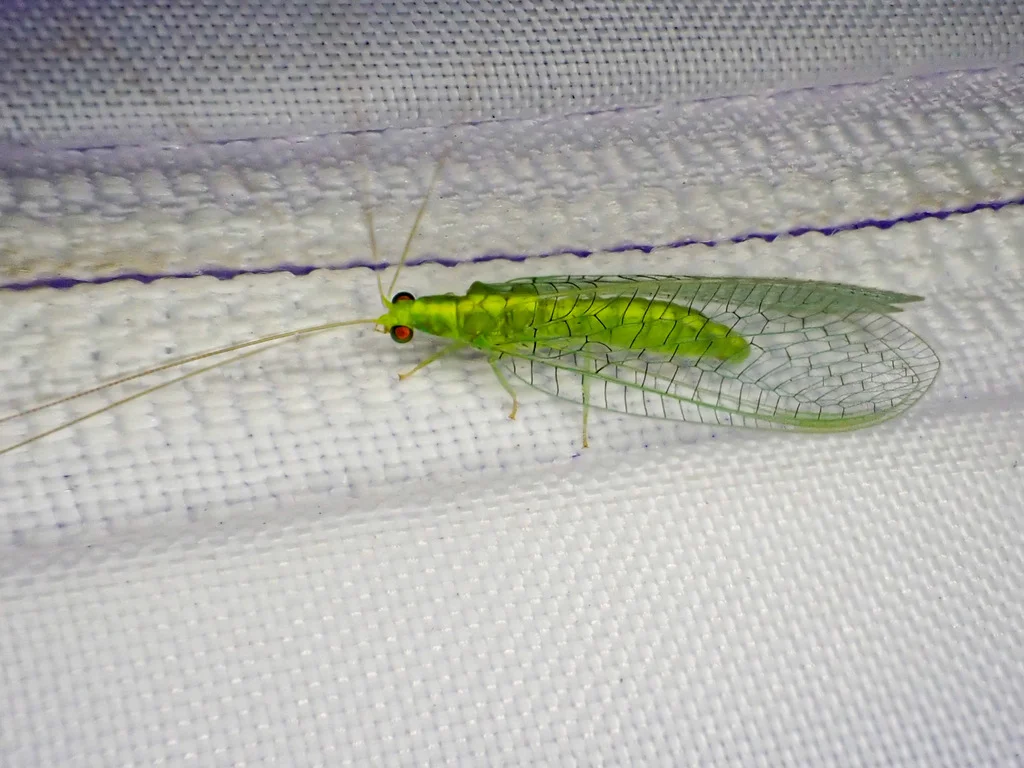
Green lacewings measure 12-20mm in length. Their most noticeable feature is their large, clear wings covered with fine veins. This pattern gives them a lacy, net-like look. When resting, the wings fold over the body like a tent. Adults have slender, pale green to yellow-green bodies. Their bright golden or copper-colored eyes have earned them the nickname “golden-eyes.”
Their long, thread-like antennae can be as long as their body. The head is small with metallic-looking compound eyes. Adult lacewings are active at night and are often drawn to lights. When bothered, some species release a mild, bad smell from glands on their thorax. This is why some people call them “stink flies.”
Eggs and Larvae
Green lacewing eggs are unique in the insect world. Each oval-shaped egg sits atop a thin, hair-like stalk about 3-12mm tall. This protects the eggs from predators and hungry siblings, since newly hatched larvae will eat each other. A single female can lay up to 200 eggs during her lifetime. Fresh eggs are pale green but turn gray just before hatching. Eggs hatch in 7-14 days depending on temperature.
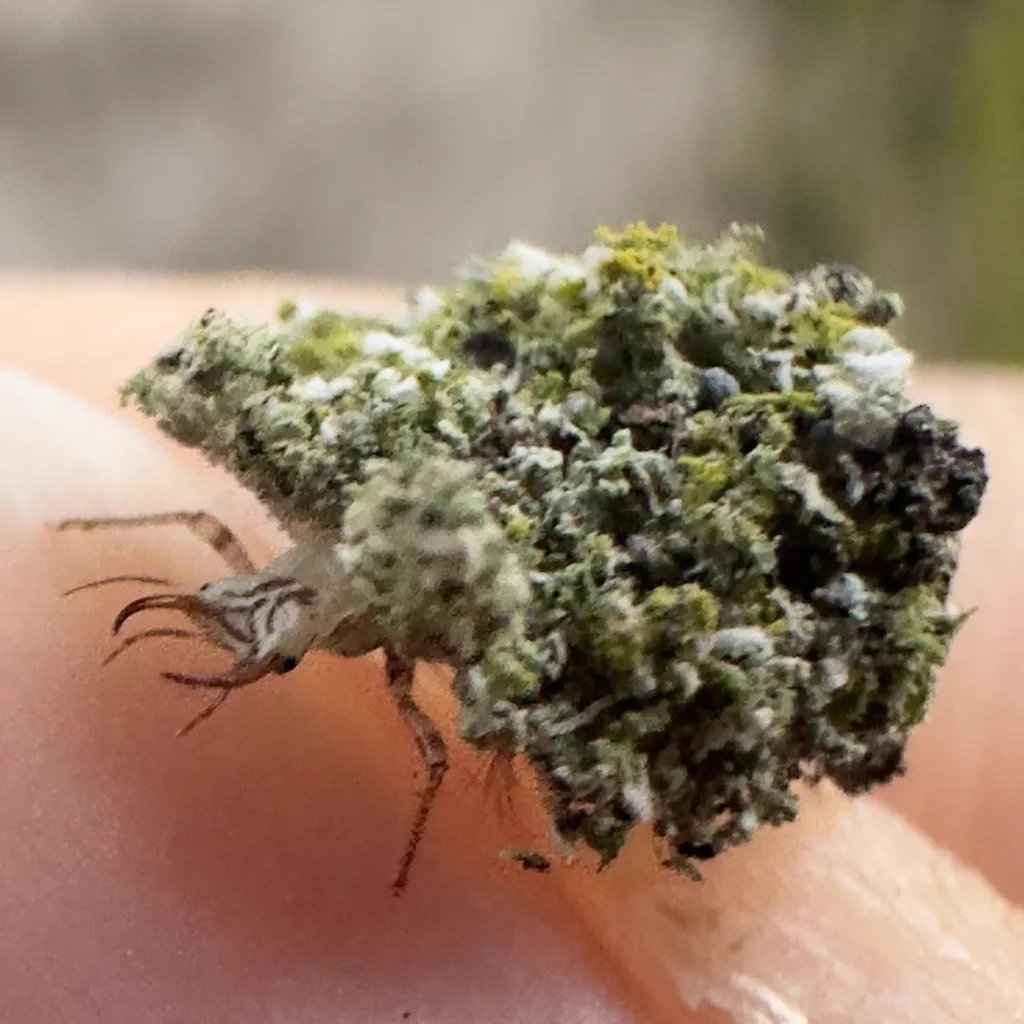
The larvae are known as “aphid lions” and look like tiny alligators. They are flat, narrow at the tail, and measure 3-20mm long. They have large, curved jaws that they use to pierce prey and suck out body fluids. Larvae are pale cream to light brown with darker markings. Some species carry debris, lichen, or dead prey on their backs for camouflage.
Common Species
Several species of green lacewings occur throughout North America:
-
Common Green Lacewing (Chrysoperla carnea) - Found across North America, most frequently seen in agricultural areas and gardens
-
Red-Lipped Green Lacewing (Chrysoperla rufilabris) - Native to North America, commonly used in biological pest control programs
-
Golden-Eyed Lacewing (Chrysopa oculata) - Widespread in eastern North America, recognized by its golden eyes
Green Lacewing Behavior and Biology
Feeding Habits
Adult green lacewings do not hunt prey. They feed only on nectar, pollen, and honeydew (the sweet liquid made by aphids). This diet gives them energy for flying and laying eggs. Adults look for areas with lots of prey insects when choosing where to lay eggs.
The larvae are active predators with huge appetites. A single larva can consume 100-600 aphids during its 2-3 week growth period. Studies show larvae can eat up to 50 aphids per day. They feed on soft-bodied insects like aphids, spider mites, thrips, whiteflies, mealybugs, leafhoppers, scale insects, and small caterpillars. They also eat insect eggs, including those of pest moth species.
Larvae grab prey from below and lift them with their strong jaws. They inject fluids that break down the prey’s insides, then suck out the contents. This leaves behind only empty husks.
Lifecycle
Green lacewings undergo complete metamorphosis with four life stages: egg, larva, pupa, and adult.
- Egg Stage - Eggs hatch in 7-14 days depending on temperature
- Larval Stage - Larvae go through three growth stages (instars) over 2-3 weeks, feeding actively throughout
- Pupal Stage - Mature larvae spin a small, round, silken cocoon and pupate for about 5 days
- Adult Stage - Adults live 4-6 weeks and are active primarily at night
In warm summer weather, the entire lifecycle takes about a month. This allows for several generations per year. In cold climates, lacewings spend winter as prepupae or pupae in cocoons. They hide in bark cracks, leaf litter, or other sheltered spots.
Natural Behaviors
Green lacewings are active at night and have interesting ways of defending themselves. Adults have hearing organs at the base of their wings. When they hear a bat hunting, they fold their wings and drop to the ground to escape. Lacewings also talk to each other through vibrations. They drum on surfaces during mating rituals.
Living with Green Lacewings
Green lacewings are not household pests. If you find one inside your home, it likely flew in by accident while chasing lights at night. You can capture them gently and release them outside.
Attracting Lacewings to Your Garden
Many gardeners want lacewings in their yards because the larvae eat common garden pests. To attract them:
- Plant flowers that produce nectar like yarrow, dill, fennel, coriander, and cosmos
- Limit broad-spectrum pesticide use since these can kill lacewings along with pests
- Allow a few aphids to remain, as they provide food for larvae
- Leave some leaf litter for lacewings to use as winter shelter
When Lacewings Gather Near Your Home
Sometimes large numbers of lacewings gather on walls or around lights on warm evenings. This is normal and does not last long. If lacewings keep getting inside your home, try these steps:
- Keep windows and doors closed at dusk
- Use yellow or sodium vapor outdoor lights, which attract fewer insects
- Check that window screens have no holes
Green lacewings do not breed indoors, damage property, or cause health problems. Seeing them near your home shows a healthy local ecosystem.
References
Other Other Pests
Explore other species in the other pests family
Where Green Lacewings Are Found
Hover over states to see their names. Green regions indicate where green lacewings have been reported.
Common Questions about Green Lacewings
Are green lacewings harmful to humans?
+
No, green lacewings are not harmful to humans. Adult lacewings do not bite, though their larvae can deliver a mild pinch if handled. They pose no health risks to people or pets.
Why are green lacewings in my house?
+
Green lacewings are attracted to lights at night and may fly into homes through open windows or doors. They are not seeking to infest your home and typically only enter accidentally. They cannot survive indoors long-term and pose no threat to your property.
What do green lacewing larvae look like?
+
Green lacewing larvae, called aphid lions, look like tiny alligators. They are 3-20mm long with flattened bodies, prominent curved jaws, and distinct legs. Some species carry debris and dead prey on their backs for camouflage. They are pale with dark markings.
Should I kill green lacewings?
+
Green lacewings are not considered pests. Their larvae consume hundreds of garden pests like aphids, mites, and whiteflies. If you find them indoors, you can release them outside. They do not damage homes or pose any health risks.
Do green lacewings bite?
+
Adult green lacewings do not bite. However, the larvae (aphid lions) can deliver a mild, harmless pinch if handled. This is not a true bite and is not medically significant. Adults feed only on nectar, pollen, and honeydew.
What do green lacewings eat?
+
Adult lacewings eat nectar, pollen, and honeydew. The larvae are predators that can consume 100-600 aphids during their development. They also eat spider mites, whiteflies, thrips, mealybugs, and small caterpillars.
What attracts green lacewings to my yard?
+
Green lacewings are attracted to gardens with abundant prey insects, nectar-producing flowers, and honeydew from aphids. Plants like yarrow, dill, fennel, and coriander attract adult lacewings. A pesticide-free environment helps support lacewing populations.

With five years of hands-on experience in the pest control industry, George Schulz is a registered technician with the Virginia Pest Management Association and a proud third-generation professional in a family business that's been protecting homes for over 57 years. He manages and trains a team of service pros while also leading internal research efforts—recently spearheading a deep-dive review of thousands of documents on pest control materials to hand-pick the most kid and pet friendly, most effective solutions tailored specifically for homes in the DC metro area.