Damsel Bugs Identification Guide
Nabidae
Damsel bugs are small, slender predatory insects that feed on aphids, caterpillars, and spider mites. They are common in gardens and agricultural fields across North America.
Taxonomy
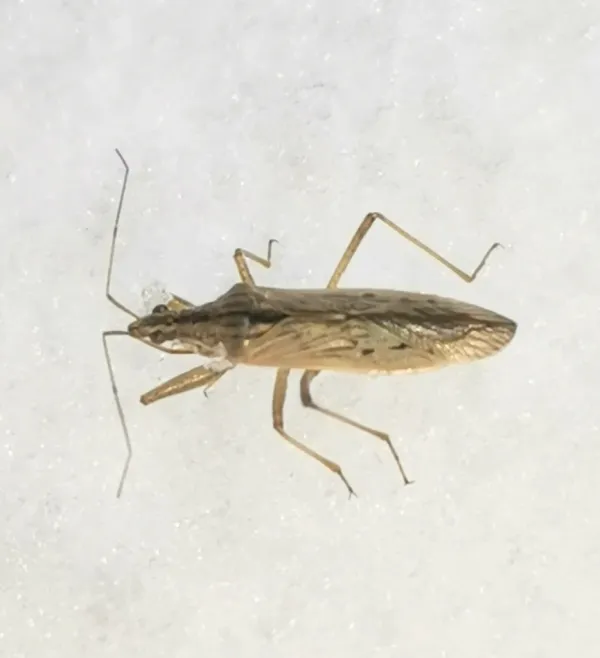
Damsel Bugs Coloration
Common color patterns to help identify damsel bugs
Damsel Bugs
Seasonal Activity
When damsel bugs are most active throughout the year

Where Damsel Bugs Are Found
Hover over states to see their names. Green regions indicate where damsel bugs have been reported.
Damsel Bug Identification Guide
Physical Characteristics
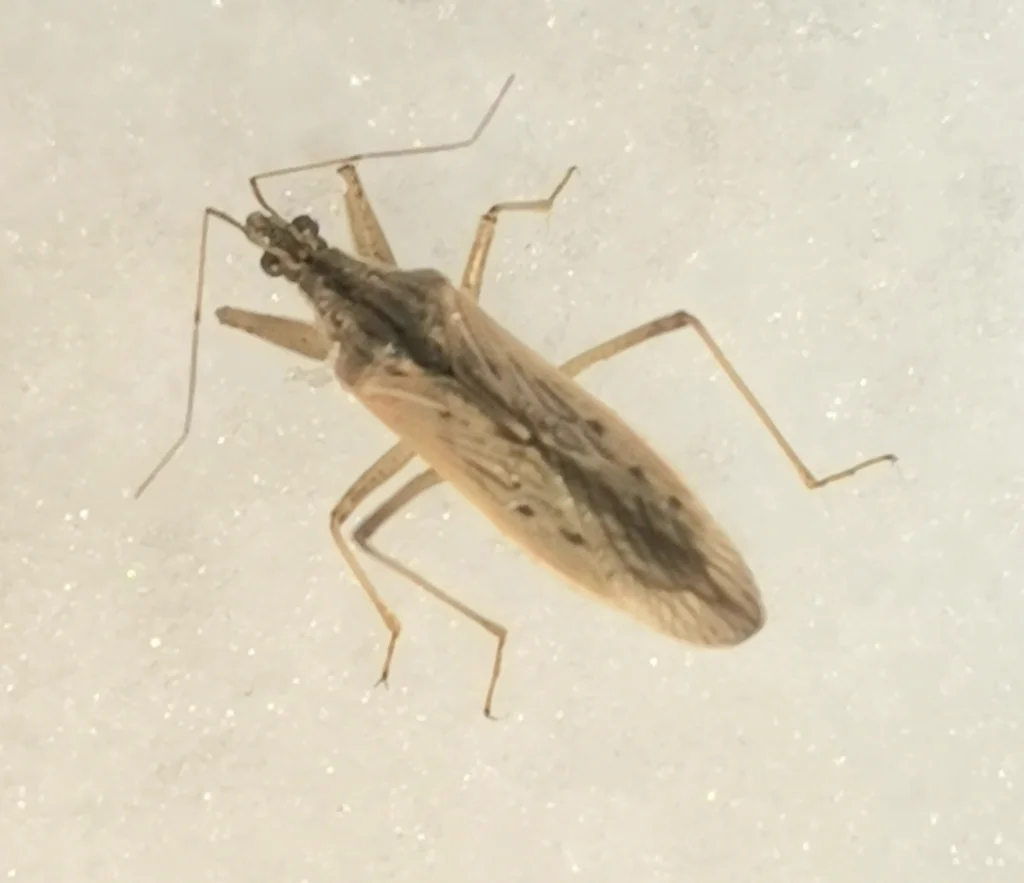
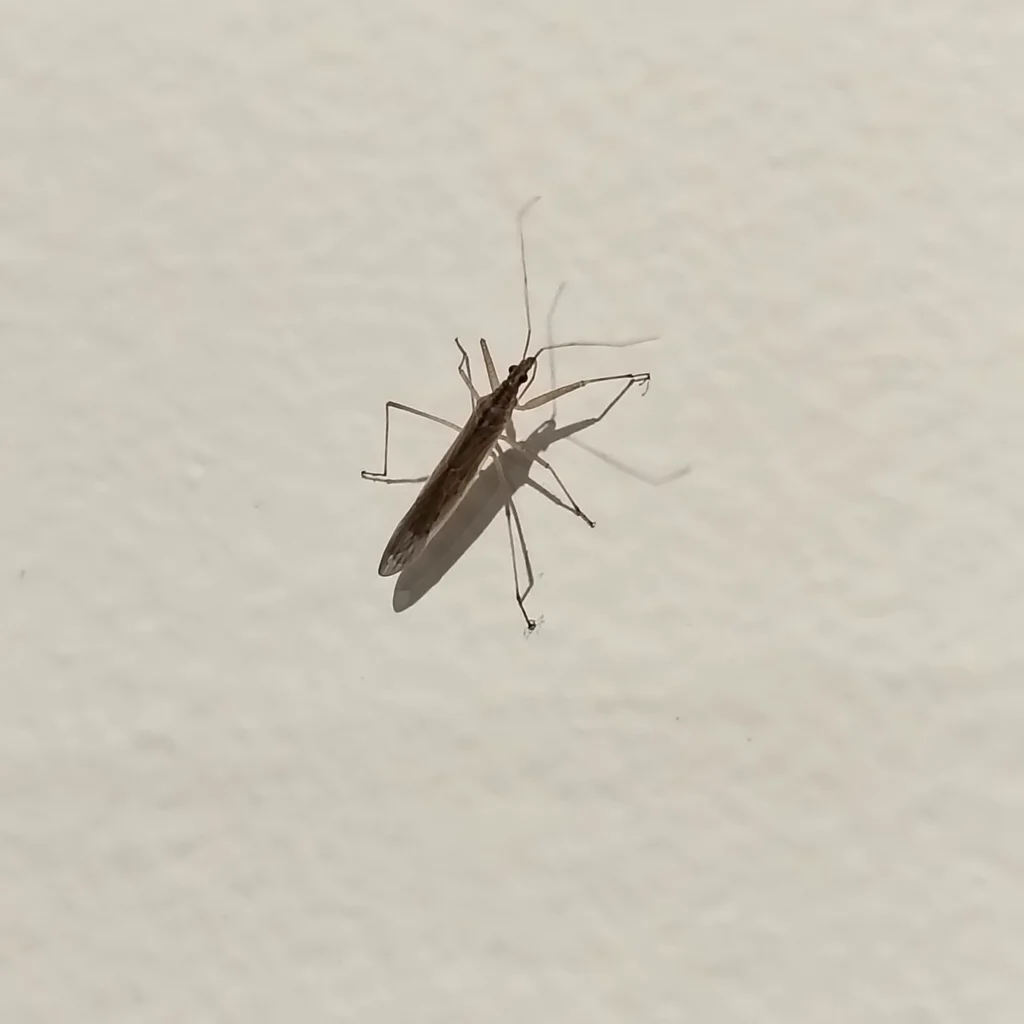
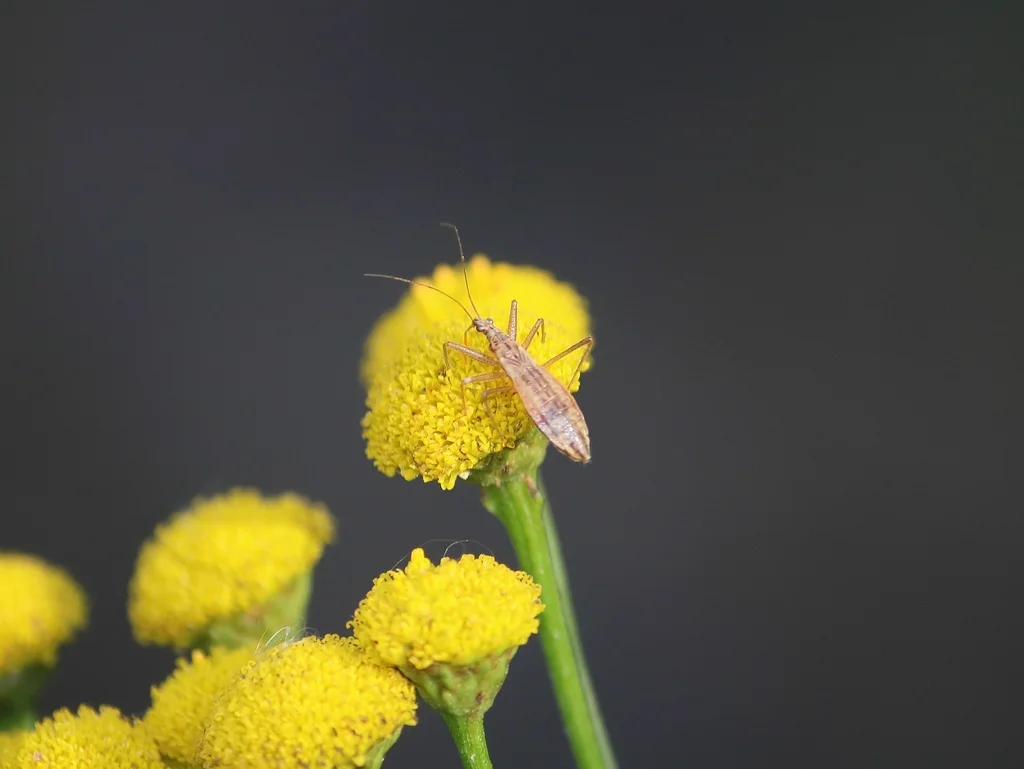
Damsel bugs are small, slender insects that measure 8 to 12 millimeters long. Their bodies are long and narrow, tapering toward the front. This gives them a shape that is easy to spot once you know what to look for.
The head is narrow with large, bulging eyes. They have long antennae with four segments. Their beak is tube-shaped and used for piercing prey. The beak also has four segments, which helps tell them apart from assassin bugs.
Colors range from tan to brown, gray, or reddish-brown. This helps them blend in with plant stems and leaves. The front legs are slightly thick with small spines. They use these to grab and hold prey. Look for many short, parallel veins at the wingtips. This is a key feature of all damsel bugs.
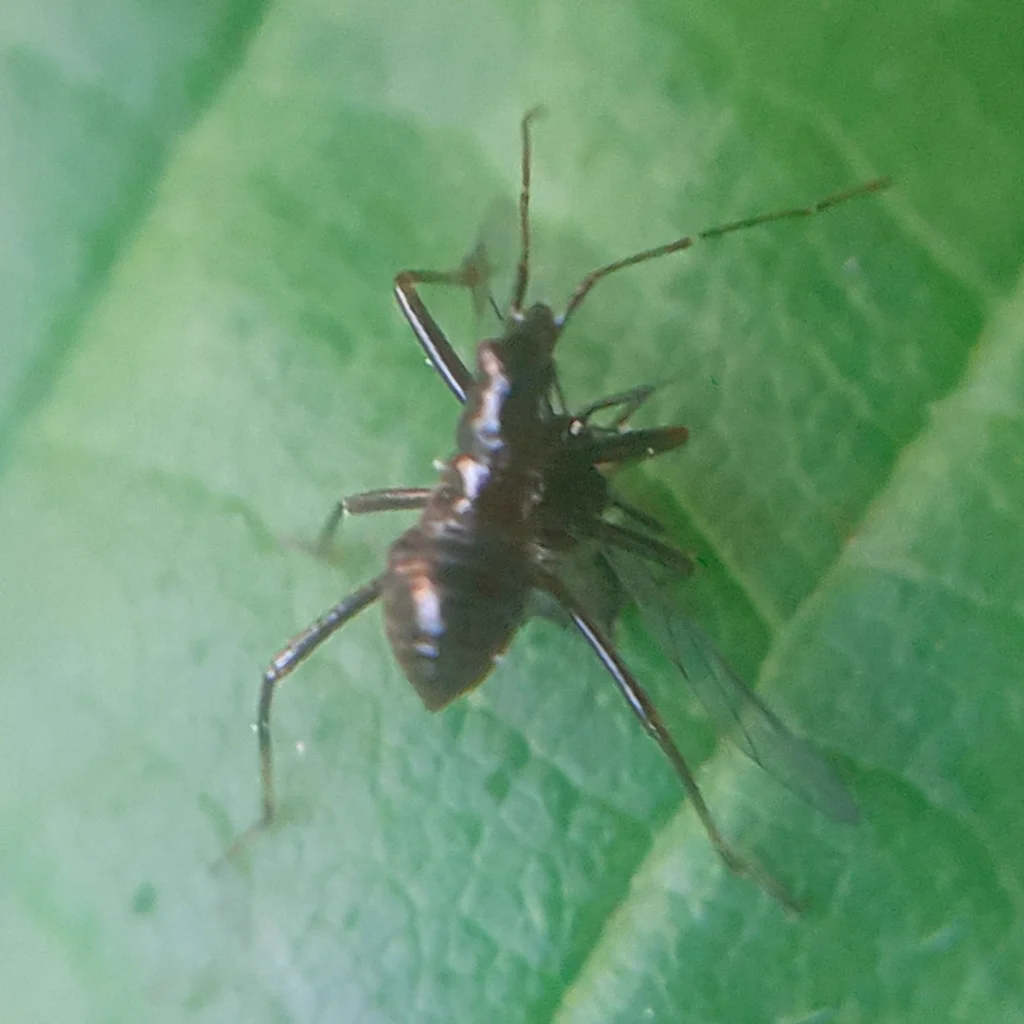
Young damsel bugs (nymphs) look like small adults but have no wings. As they grow, wing pads appear as small bumps on their backs.
Common Species
Several damsel bug species live across North America:
- Common Damsel Bug (Nabis americoferus): The most widespread species in gardens and farm fields
- Pale Damsel Bug (Nabis capsiformis): Found across North America, common in warm areas
- Pacific Damsel Bug (Nabis kinbergii): Lives along the West Coast
- Marsh Damsel Bug (Nabis limbatus): Found in wet areas and moist habitats A related species, Wood Wasps, shares similar characteristics.
Damsel Bug Behavior and Biology A related species, Daddy Long Legs, shares similar characteristics.
Habitat and Diet
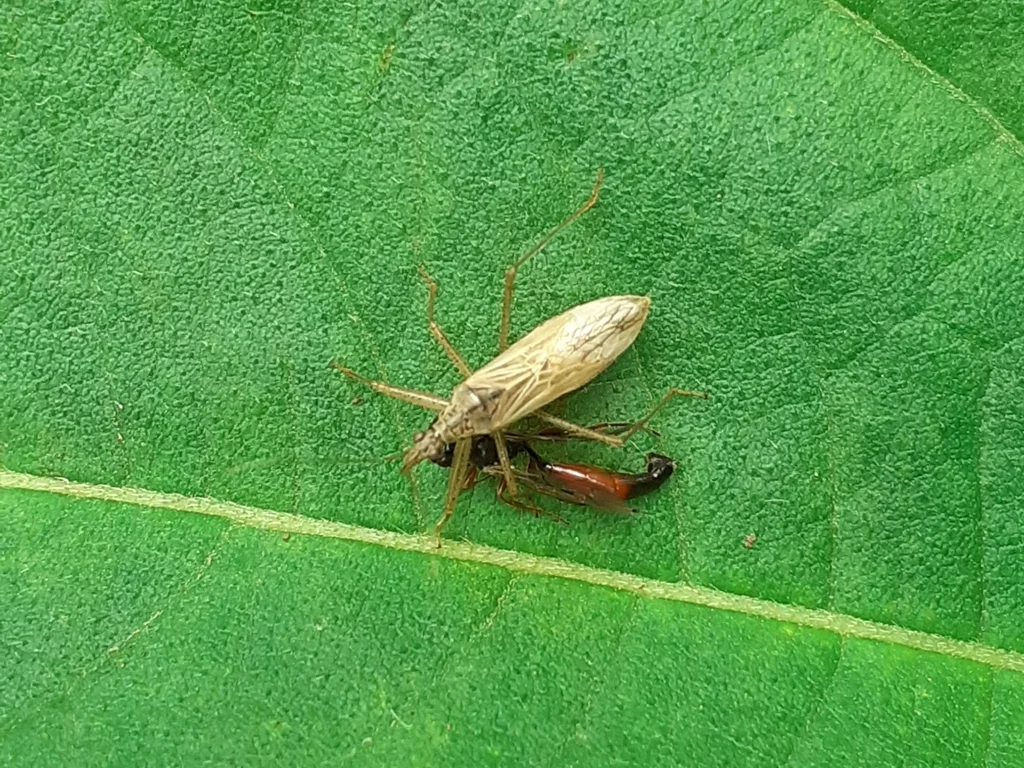
Damsel bugs live in gardens, orchards, meadows, and crop fields. They are common in cotton, soybeans, and alfalfa where there is plenty to eat. These predators feed on many soft-bodied insects. Their diet includes aphids, spider mites, leafhoppers, thrips, and plant bugs. They also eat the eggs and small larvae of caterpillars like corn earworm and cabbageworm.
Both young and adult damsel bugs hunt actively. They use needle-like mouthparts to stab prey. Then they inject enzymes that break down the insides of their prey. Finally, they suck out the fluids. They are small, so they do not eat huge amounts each day. But groups of them can lower pest numbers over time.
Reproduction and Lifecycle
Damsel bugs go through simple metamorphosis. This means they hatch from eggs, grow through five nymph stages, and become adults. There is no pupal stage like butterflies have.
Females lay oval-shaped eggs inside plant stems. The eggs are white at first. They turn yellow as the nymph inside grows. Just before hatching, two dark spots appear. These are the eyes of the developing nymph.
Eggs hatch in about 8 to 12 days, depending on how warm it is. Nymphs then grow for about 50 days. They start hunting right away after hatching. The whole process from egg to adult takes 1 to 2 months in warm weather.
Most areas see two or more generations per year. Adults survive winter by hiding in leaf litter, under bark, or in plant debris.
Managing Damsel Bugs
Damsel bugs are predatory insects that mostly stay outdoors in gardens and fields. They rarely enter homes. If you find them inside, they likely wandered in by accident.
When They Enter Homes
Damsel bugs may come indoors through open doors or windows, especially in late summer and fall. They do not breed indoors and cannot survive long inside homes. Simply removing them by hand or with a vacuum is usually enough.
Outdoor Populations
In yards and gardens, damsel bugs are one of many predatory insects that feed on other bugs. If you have concerns about any insect population in your landscape, a pest control professional can assess the situation and recommend the right approach.
References
Other Other Pests
Explore other species in the other pests family
Commonly Confused With
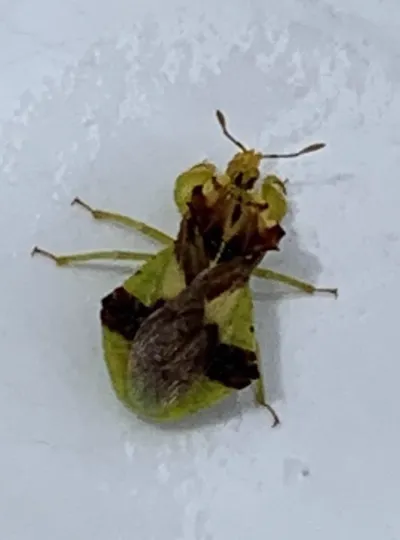
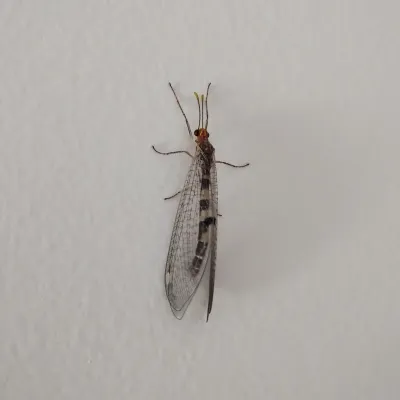
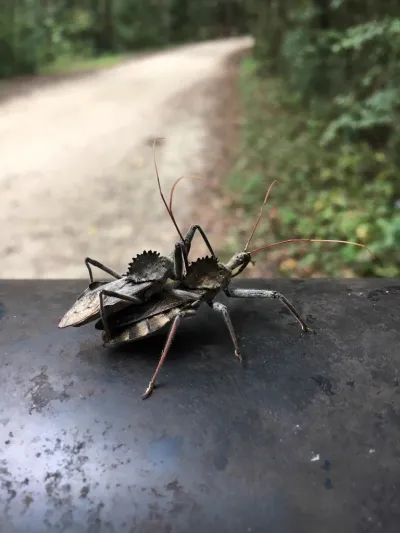
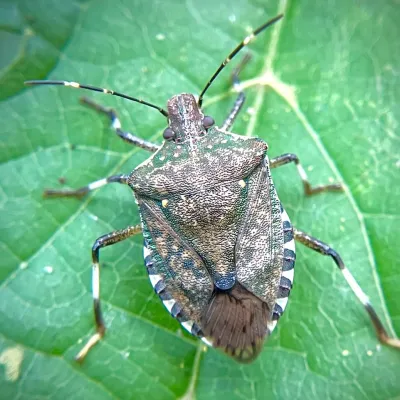
Damsel Bugs are often mistaken for these similar pests
Where Damsel Bugs Are Found
Hover over states to see their names. Green regions indicate where damsel bugs have been reported.
Common Questions about Damsel Bugs
Are damsel bugs harmful to humans?
+
No, damsel bugs are not harmful to humans. They do not bite people under normal conditions and pose no health risks. They are predatory insects that feed on other bugs.
What do damsel bugs eat?
+
Damsel bugs are predatory insects that feed on aphids, spider mites, small caterpillars, leafhoppers, thrips, and the eggs of various insects.
How do I tell the difference between damsel bugs and assassin bugs?
+
Damsel bugs are smaller and more slender than assassin bugs. The key difference is their beak. Damsel bugs have a four-segmented beak, while assassin bugs have only three segments. Damsel bugs also have many short parallel veins at the wingtips.
Do damsel bugs fly?
+
Yes, adult damsel bugs have fully developed wings and can fly. However, they spend most of their time walking on plants while hunting for prey.
When are damsel bugs most active?
+
Damsel bugs are most common from mid-June through mid-August. They have two or more generations per year. Adults spend the winter in protected places like leaf litter and plant debris.
Do damsel bugs bite?
+
Damsel bugs can bite if handled, but they rarely do so. Their bites are not dangerous to humans. They use their piercing mouthparts mainly to feed on other insects.
Where do damsel bugs live?
+
Damsel bugs live in gardens, orchards, meadows, and crop fields. They prefer areas with plenty of plant cover where they can find prey. They are found throughout North America.

With five years of hands-on experience in the pest control industry, George Schulz is a registered technician with the Virginia Pest Management Association and a proud third-generation professional in a family business that's been protecting homes for over 57 years. He manages and trains a team of service pros while also leading internal research efforts—recently spearheading a deep-dive review of thousands of documents on pest control materials to hand-pick the most kid and pet friendly, most effective solutions tailored specifically for homes in the DC metro area.