Tent Caterpillars Identification Guide
Malacosoma spp.
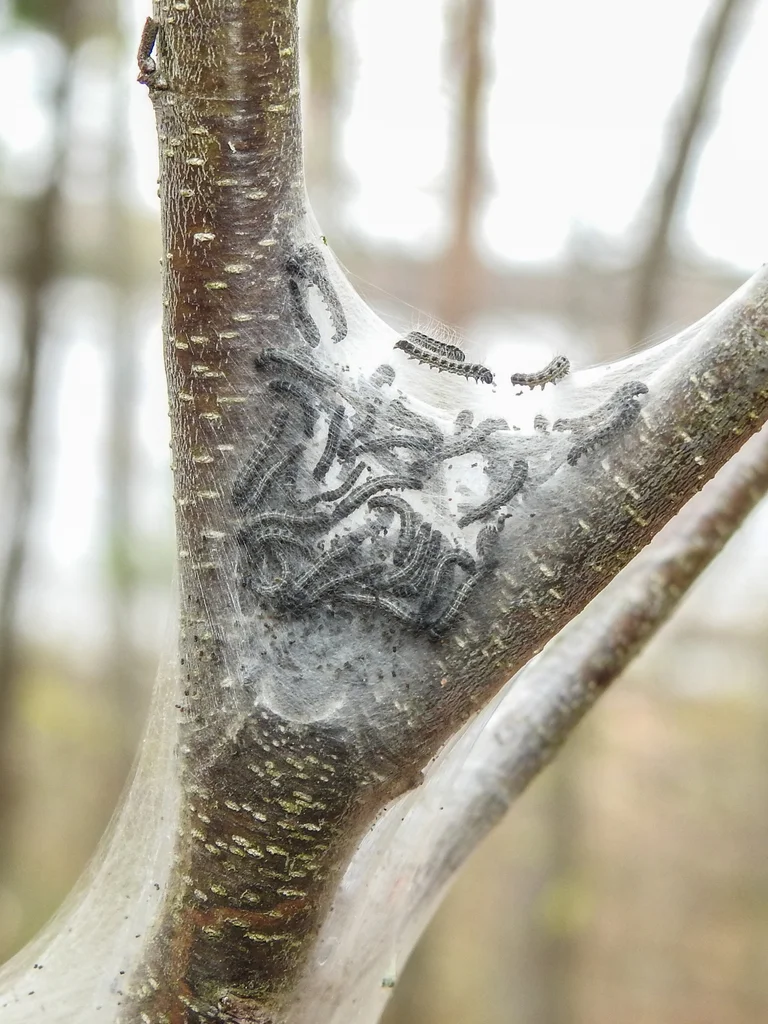
Tent caterpillars are hairy moth larvae known for building distinctive silk tents in tree branches. These colonial caterpillars can defoliate ornamental and fruit trees during spring infestations.
Taxonomy
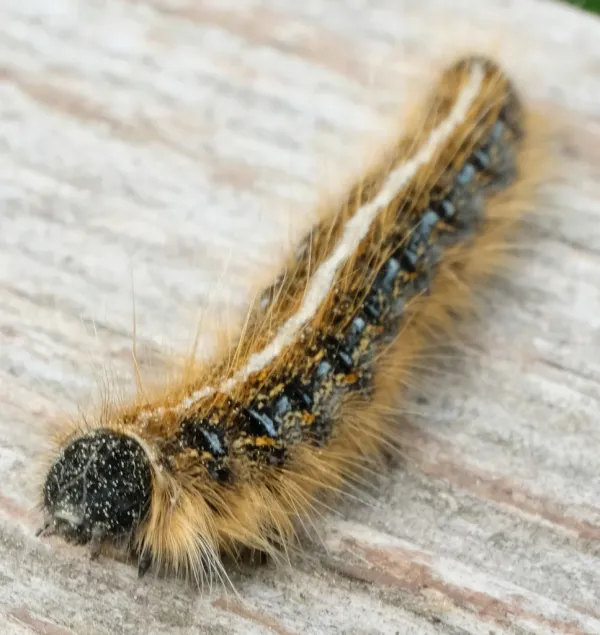
Tent Caterpillars Coloration
Common color patterns to help identify tent caterpillars
Tent Caterpillars
Seasonal Activity
When tent caterpillars are most active throughout the year
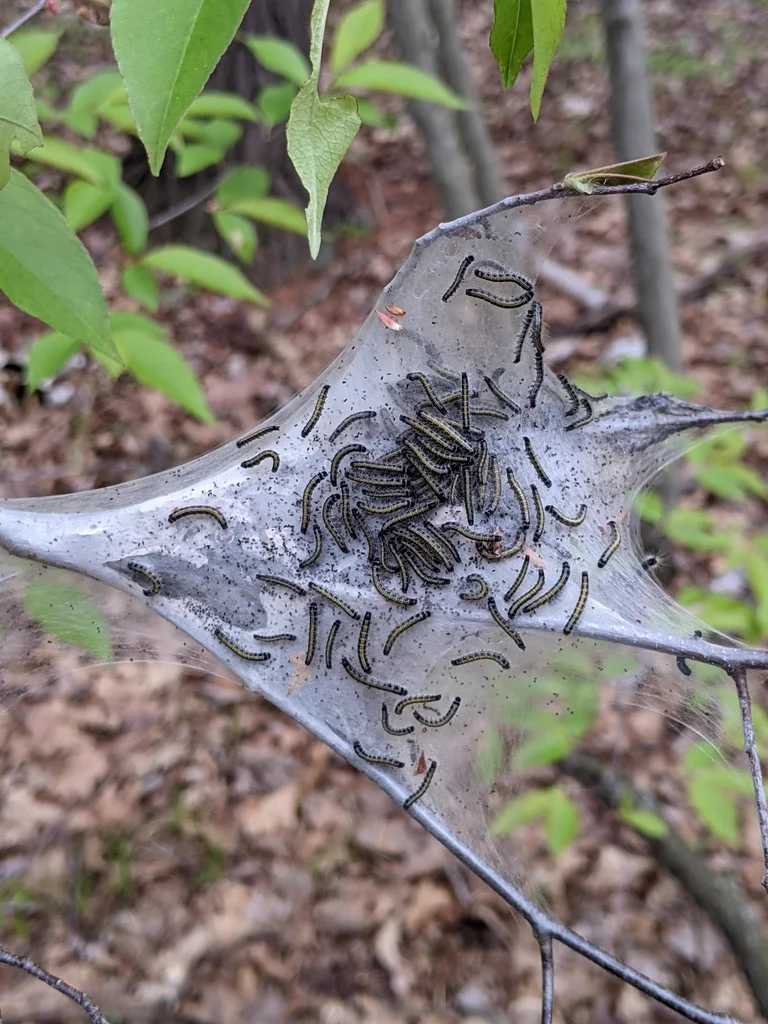
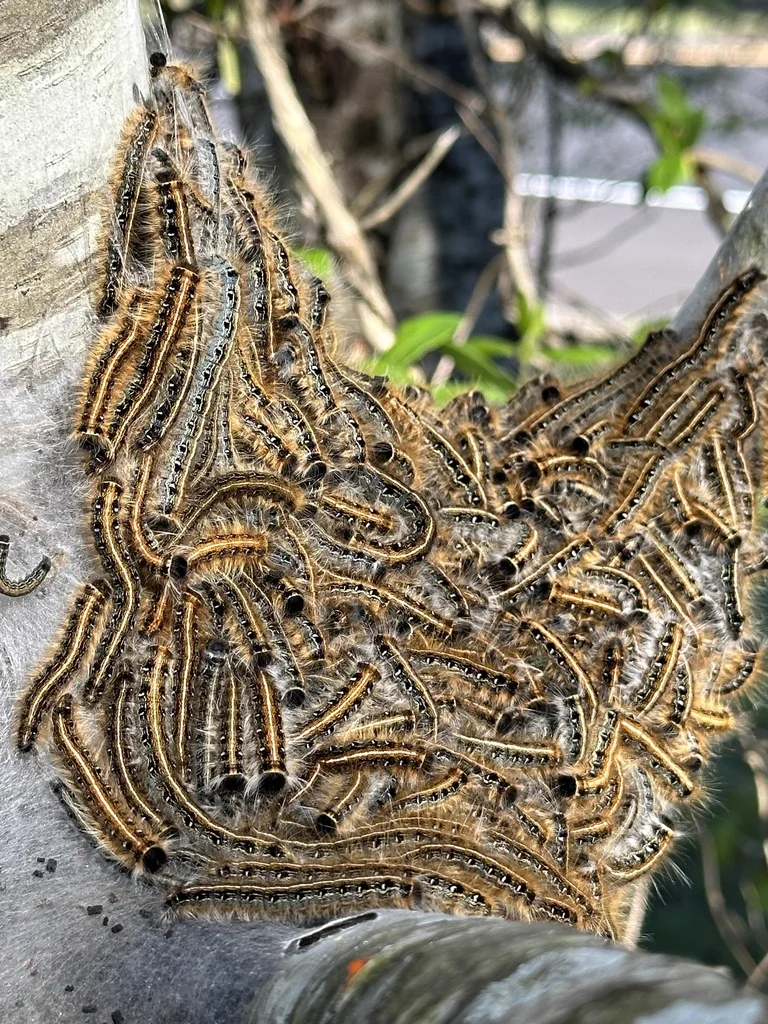
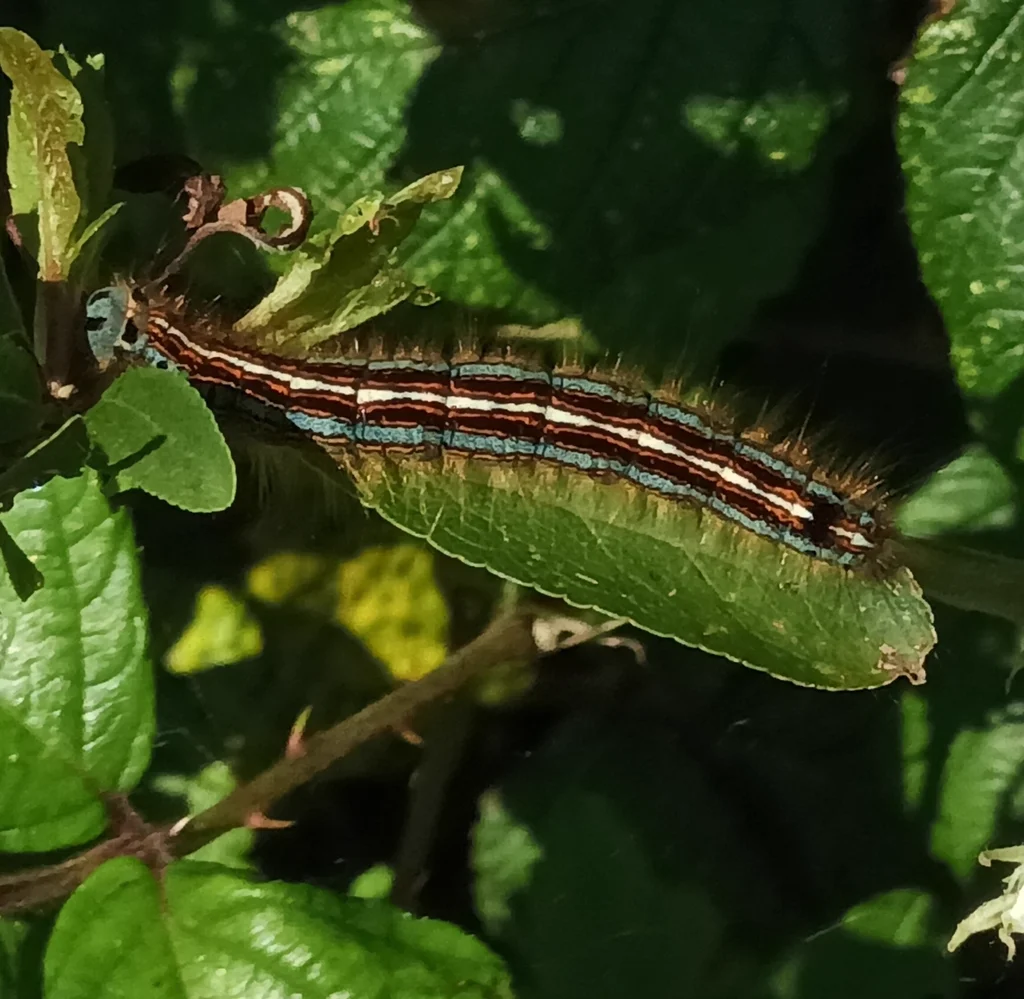

Where Tent Caterpillars Are Found
Hover over states to see their names. Green regions indicate where tent caterpillars have been reported.
Tent Caterpillar Identification Guide
Tent caterpillars are easy to spot in spring thanks to the silk tents they build in tree branches. These hairy moth larvae feed in groups. They can quickly strip leaves from fruit trees and yard trees if left alone.
Physical Characteristics
Eastern tent caterpillars (Malacosoma americanum) are the most common type in eastern North America. They are easy to identify by their coloring. They have black bodies with a bold white stripe down the center of the back. Brown and yellow lines run along their sides. A row of oval blue spots marks each body segment. Fine, fuzzy hairs cover their entire body.
Full-grown caterpillars reach 2 to 3 inches in length. The head is black and rounded. When mature, they leave their host tree to spin a cocoon and turn into moths.
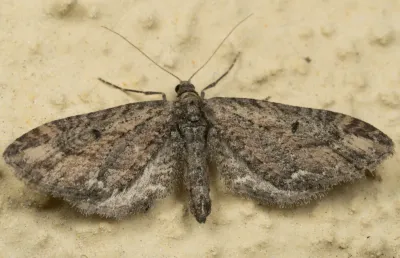
Adult tent caterpillar moths have thick bodies with warm brown wings marked by two white lines. They have a wingspan of about 1 to 1.5 inches. Adults live only a short time and do not feed.
Common Species in North America
Several tent caterpillar types live across the continent:
-
Eastern Tent Caterpillar (Malacosoma americanum) lives throughout the eastern and central United States. This is the type most homeowners see.
-
Forest Tent Caterpillar (Malacosoma disstria) lives across North America. It has keyhole-shaped white spots along its back instead of a solid stripe. It does not build tents but gathers in silky mats on tree trunks.
-
Western Tent Caterpillar (Malacosoma californica) lives along the Pacific coast and Rocky Mountain region. It builds tents like the eastern type.
Tent Caterpillar Behavior and Biology
Colony Formation and Silk Tents
Tent caterpillars are social insects. Caterpillars from a single egg mass stay together to form a colony of 150 to 400 members. Sometimes caterpillars from several egg masses join to create even larger groups.
The silk tent is key to their survival. Colonies build these tents in tree branch forks, usually on the east side where morning sun warms them. The tent works as both shelter and climate control. Caterpillars return to the tent when it’s cold, rainy, or during the heat of midday.
Feeding Behavior and Communication
Tent caterpillars leave their tent to feed on new leaves. They usually eat in early morning, late evening, or at night. As they crawl, they lay down silk trails. When a caterpillar finds a branch with good leaves, it keeps the trail so others can follow. If the branch has little food, the caterpillar breaks the trail to signal “don’t go this way.”
This group feeding behavior helps the colony find food fast. It is one of the more complex social behaviors seen in caterpillars.
Life Cycle
Tent caterpillars produce one generation per year. Female moths lay egg masses with 150 to 400 eggs on small twigs in midsummer. A shiny coating protects the eggs through winter.
Eggs hatch in early spring when tree buds open. The tiny caterpillars start building their tent right away and begin eating new leaves. After 4 to 6 weeks of feeding and growing, the caterpillars leave the colony to find sheltered spots to form cocoons.
Cocoons are white or yellowish. You may find them in bark cracks, under roof eaves, or in leaf litter. Adults come out about two weeks later, mate, and the females lay eggs to start the cycle again.
Host Trees
Tent caterpillars prefer trees in the rose family. Common hosts include:
- Wild cherry and chokecherry
- Apple and crabapple
- Plum and peach
- Hawthorn
They also feed on other trees like ash, birch, maple, oak, poplar, and willow when their favorite hosts aren’t available.
Tree Damage and Impact
Defoliation Effects
A single colony of tent caterpillars can strip all the leaves from small yard trees. Large infestations with many colonies can strip leaves from bigger trees too. The visible tents, masses of caterpillars, and bare branches look bad in your yard.
Despite how bad the damage looks, healthy trees usually recover. Trees grow new leaves after the caterpillars finish feeding. One year of leaf loss rarely causes lasting harm. But if trees lose their leaves year after year, they become weak. Weak trees are more likely to have problems with drought, disease, and wood-boring beetles. Other tree-damaging caterpillars such as fall webworms and bagworms may also target weakened trees. Sap-feeding garden pests like aphids and scale insects can further stress trees that are recovering from tent caterpillar defoliation.
Economic Concerns
Tent caterpillars cause major damage in commercial orchards. They reduce fruit quality and how much fruit trees produce. This has led to targeted control programs for these pests.
On horse farms, eastern tent caterpillars can cause Mare Reproductive Loss Syndrome (MRLS). When pregnant horses eat caterpillars or their shed hairs in hay or grass, it can cause late pregnancy loss. This led to big economic losses in Kentucky’s horse industry in 2001.
Treatment Methods for Tent Caterpillars
Good tent caterpillar control uses hands-on removal and well-timed treatments when needed.
Physical Removal
For small problems, removing tents by hand gives quick control without chemicals. The best time to remove nests is early morning or evening when caterpillars are inside the tent. Wind the webbing around a stick or gloved hand and drop it into a bucket of soapy water.
Pruning infested branches works well for small problems. It also removes the egg mass that started the colony. This works best before caterpillars spread out in late spring.
Population Cycles
Tent caterpillar numbers rise and fall over the years. Some years you may see heavy infestations. Other years you may see almost none. Wasps, birds, and diseases all help keep their numbers in check over time.
Treatment Options
When treatment is needed, Bacillus thuringiensis var. kurstaki (Btk) is a top choice. This natural bacteria makes proteins that kill caterpillars but pose little risk to other wildlife. Caterpillars must eat Btk for it to work. It works best on young larvae.
Spinosad, made from soil bacteria, is another low-risk option that works on caterpillars. Insecticidal soaps and neem products also work but must touch the pest directly.
Timing Tips
Early treatment works better. Young caterpillars are easier to kill. Treating before major leaf loss prevents ugly damage. Once caterpillars reach full size in late spring, they stop eating and treatments won’t help.
For yards with yearly tent caterpillar problems, check trees in late winter for egg masses. The dark, shiny egg masses wrap around small twigs. You can prune them off and throw them away before the caterpillars hatch.
Prevention Tips
Keep your trees healthy with proper watering, mulching, and feeding. Healthy trees handle leaf loss better and bounce back faster. If caterpillar or other pest problems persist, learn about how much pest control costs for professional treatment.
References
Other Moths
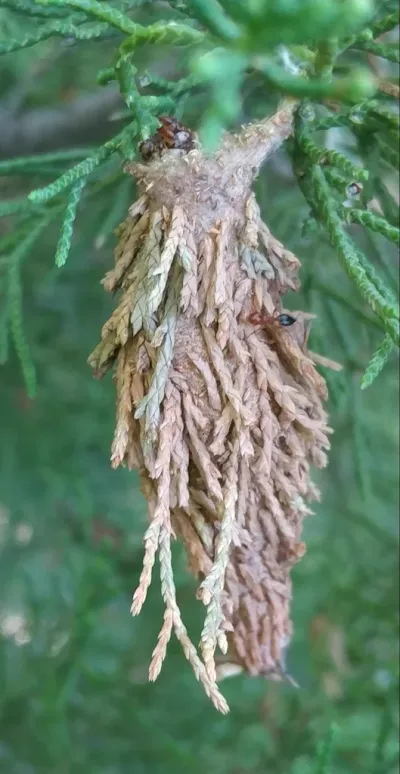
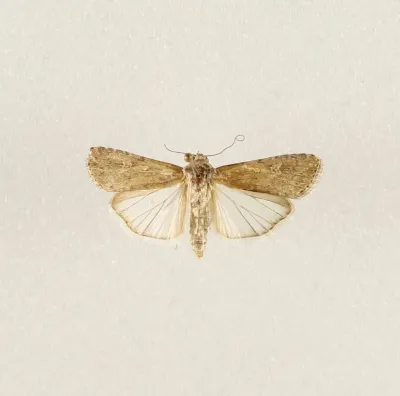
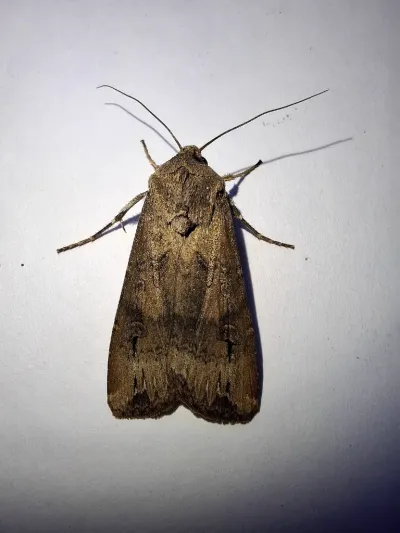
Explore other species in the moths family
Commonly Confused With
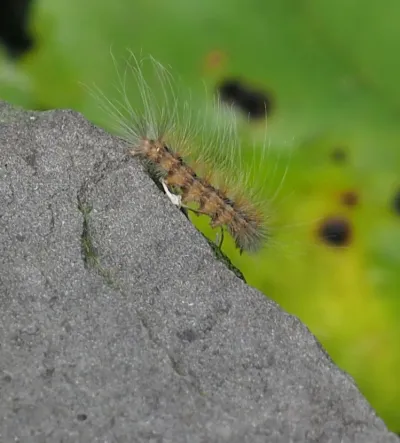
Tent Caterpillars are often mistaken for these similar pests
Where Tent Caterpillars Are Found
Hover over states to see their names. Green regions indicate where tent caterpillars have been reported.
Common Questions about Tent Caterpillars
What do tent caterpillars look like?
+
Tent caterpillars are hairy caterpillars that grow 2-3 inches long. Eastern tent caterpillars are black with a white stripe down the back, brown and yellow lines on the sides, and blue spots. They have fine, fuzzy hairs covering their bodies.
Are tent caterpillars dangerous to trees?
+
Tent caterpillars can defoliate trees, especially fruit trees like apple, cherry, and crabapple. While healthy trees usually recover, repeated defoliation can weaken trees already stressed by drought or disease. Heavy infestations are more of a nuisance than a serious threat to mature trees.
What is the difference between tent caterpillars and webworms?
+
Tent caterpillars appear in spring and build their silken tents in tree branch forks, leaving the tent to feed. Fall webworms appear in late summer and build webs at branch tips that enclose the leaves they eat. The timing and tent location are the easiest ways to tell them apart.
How do I get rid of tent caterpillar nests?
+
For small infestations, you can remove nests by hand in early morning or evening when caterpillars are inside. Use a stick to wind up the webbing and dispose of it in soapy water. Pruning out infested branches is also effective when done before caterpillars mature.
When are tent caterpillars most active?
+
Tent caterpillars hatch in early spring when tree buds begin to open, typically March through April. They feed for 4-6 weeks before pupating. Adults emerge as moths in midsummer and lay eggs that overwinter on twigs.
Do tent caterpillars bite or sting?
+
Tent caterpillars do not bite or sting. However, some people experience skin irritation from contact with their fuzzy hairs. The hairs can also cause respiratory issues if inhaled in large quantities. They are not considered harmful to humans or pets. If you experience a reaction, consult a healthcare provider for medical advice.
Will tent caterpillars come back every year?
+
Tent caterpillar populations are cyclical, with outbreaks lasting several years followed by population crashes. Natural enemies like parasitic wasps, predators, and diseases help control populations. You may see heavy infestations one year and almost none the next.

With five years of hands-on experience in the pest control industry, George Schulz is a registered technician with the Virginia Pest Management Association and a proud third-generation professional in a family business that's been protecting homes for over 57 years. He manages and trains a team of service pros while also leading internal research efforts—recently spearheading a deep-dive review of thousands of documents on pest control materials to hand-pick the most kid and pet friendly, most effective solutions tailored specifically for homes in the DC metro area.