Casemaking Clothes Moth Identification Guide
Tinea pellionella
The casemaking clothes moth is a fabric-damaging pest whose larvae create distinctive portable silk cases as they feed on wool, fur, and other natural fibers. These secretive insects avoid light and can cause significant damage to clothing and textiles before being detected.
Taxonomy
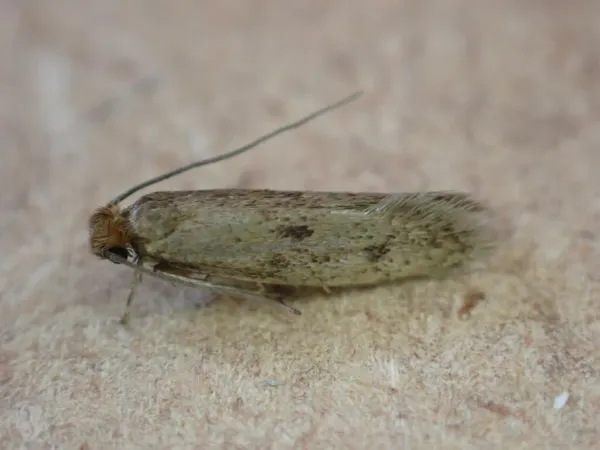
Casemaking Clothes Moth Coloration
Common color patterns to help identify casemaking clothes moth
Casemaking Clothes Moth
Seasonal Activity
When casemaking clothes moth are most active throughout the year

Where Casemaking Clothes Moth Are Found
Hover over states to see their names. Green regions indicate where casemaking clothes moth have been reported.
Casemaking Clothes Moth Identification Guide
Physical Characteristics
The casemaking clothes moth (Tinea pellionella) is a small insect in the moth family that damages natural fiber fabrics. Adults are about 6-8mm long with a wingspan of 9-16mm. Like other clothes moths, they avoid light and stay in dark, quiet areas.
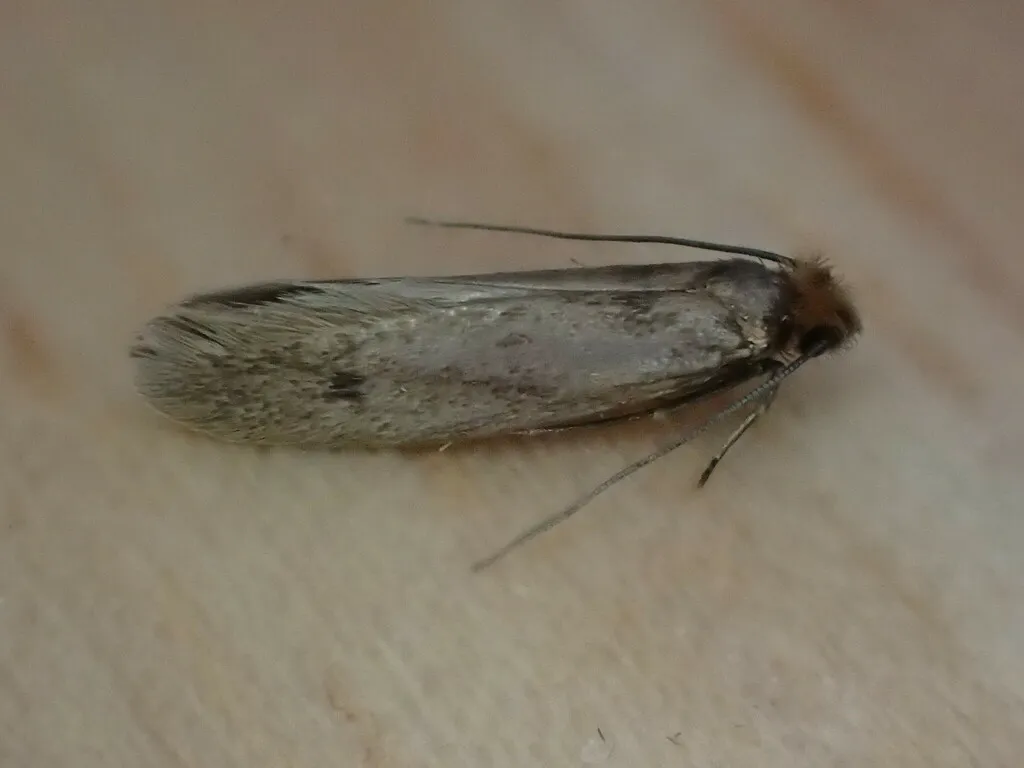
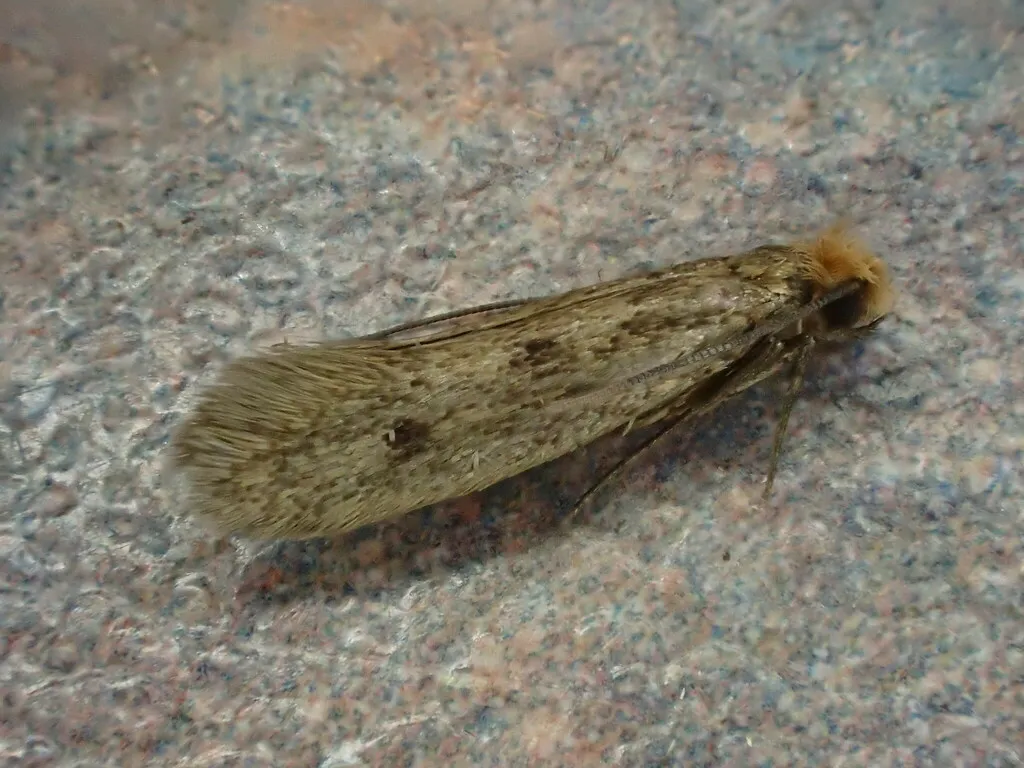
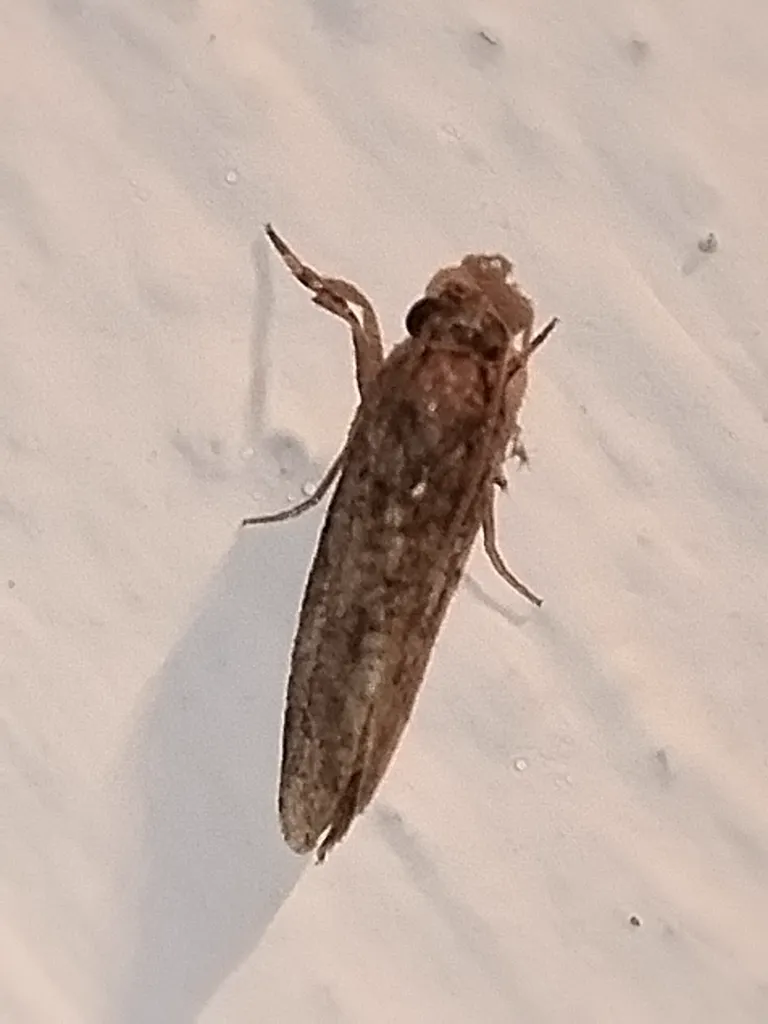
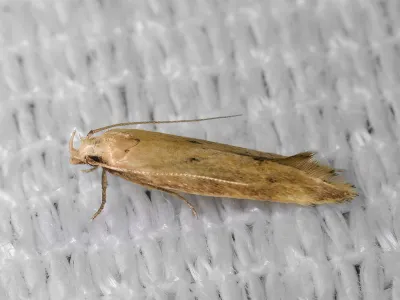
Adult moths have narrow wings with fringed edges. Their wings are grayish-brown to tan. Fresh moths show three faint dark spots on each forewing. These spots often rub off on older moths. The head has a tuft of light-colored hairs. This helps tell them apart from webbing clothes moths, which have reddish-golden head hairs. When scared, these weak fliers run or hop instead of flying.
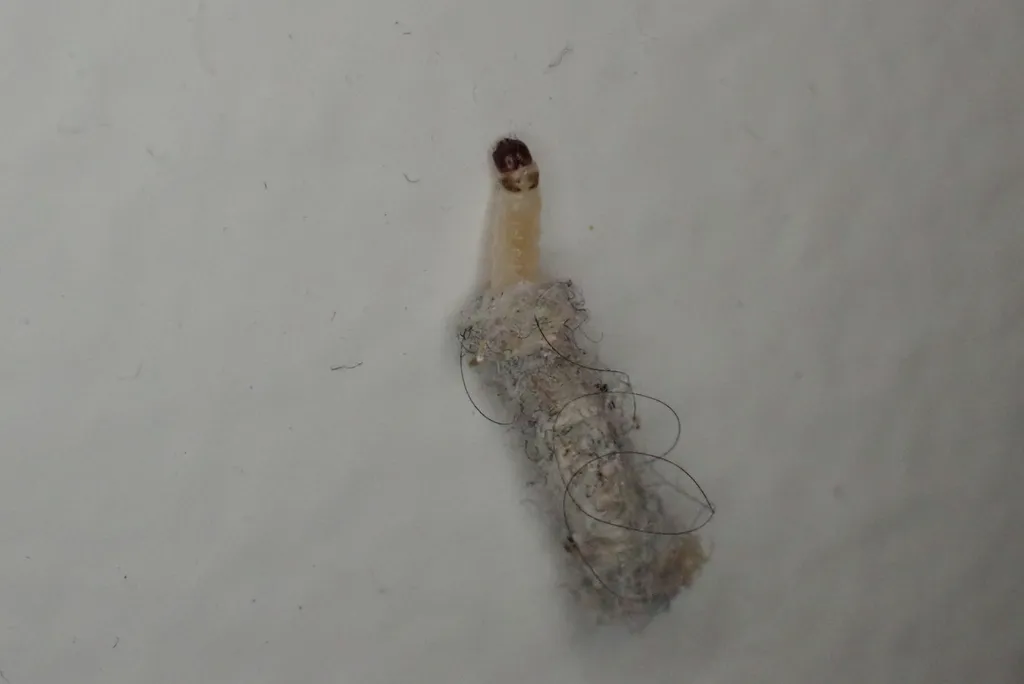
Larvae cause all the damage. They are creamy white with dark brown or black heads. They grow to about 10-13mm long. Each larva has one simple eye on each side of its head. The key feature is the portable silk case that every larva builds and carries as it grows.
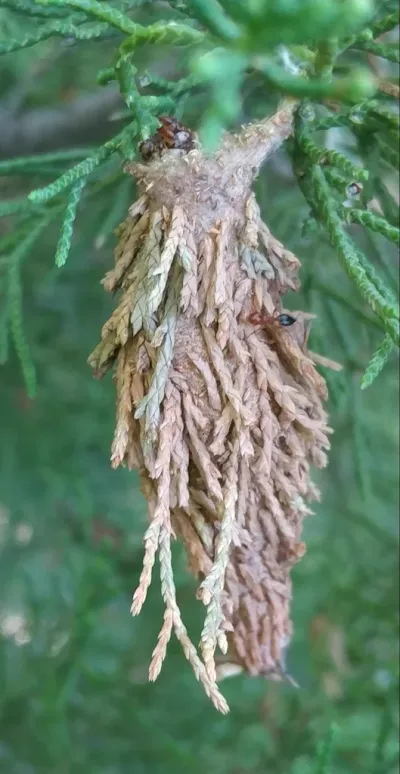
The larval case is a tube made from silk and fibers from the fabric being eaten. The case matches the color of the damaged fabric. This makes detection hard. The larva feeds from either end of the case and hides inside when scared. Cases are 6-13mm long. You often find them attached to fabrics or hanging from nearby surfaces.
Similar Species
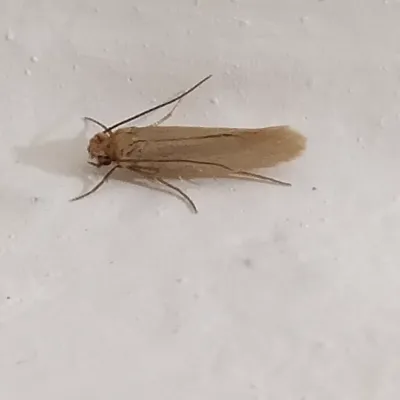
Webbing Clothes Moth (Tineola bisselliella) is the most common clothes moth. Adults have solid golden-tan wings without spots. Their larvae spin silk tubes over materials instead of making portable cases. Webbing moths cause more damage and are seen more often.
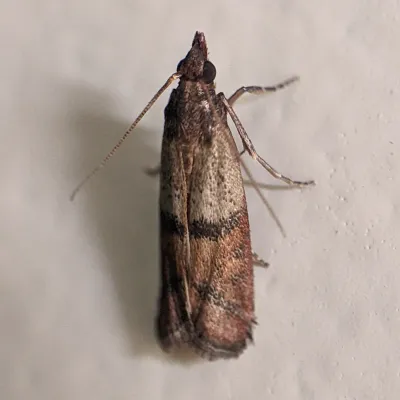
Indian Meal Moth (Plodia interpunctella) is a pantry pest, not a fabric pest. Adults are larger with copper-colored outer wing halves. They infest stored food like grains and cereals, not clothing.
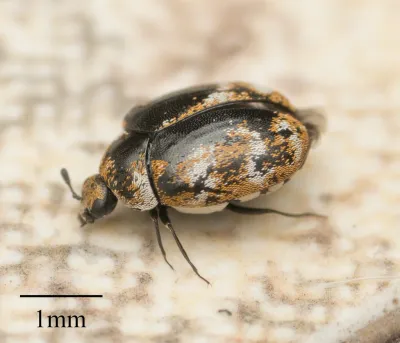
Carpet Beetles cause similar fabric damage but are beetles, not moths. Their larvae are fuzzy and carrot-shaped. Carpet beetles do not make silk webbing or cases.
Casemaking Clothes Moth Behavior and Biology
Lifecycle and Development
Casemaking clothes moths go through four life stages: egg, larva, pupa, and adult. The full cycle takes 2 months to over 2 years. This depends on the environment.
Eggs are oval, ivory-colored, and about 1mm long. Females lay 40-50 eggs on fabrics over several weeks. In warm weather, eggs hatch in 4-10 days. In cooler weather, hatching can take up to 30 days.
Larvae start building their case right after hatching. They feed and grow, making the case bigger as they develop. In good conditions, this stage takes 35 days. In poor conditions, it can take up to 30 months. Larvae hide in fabric folds and dark corners to avoid light.
Pupae form inside the silk case. You often find them on walls or under shelves and furniture. The pupal case may have colored fibers from the last material eaten. This stage lasts 8-40 days based on temperature.
Adults emerge to mate. They do not eat because their mouthparts do not work. Adults live 15-30 days. Females search for good spots to lay eggs. They start flying when temperatures rise above 55 degrees F.
Habitat and Food Preferences
Casemaking clothes moth larvae need keratin to grow. Keratin is a protein found in animal fibers. They eat a wider range of foods than webbing clothes moths:
- Wool clothing, sweaters, suits, and blankets
- Fur coats and animal pelts
- Feathers in pillows and down jackets
- Silk garments
- Leather goods and bookbindings
- Taxidermy mounts
- Hair and bristle materials
- Dried animal products and insect collections
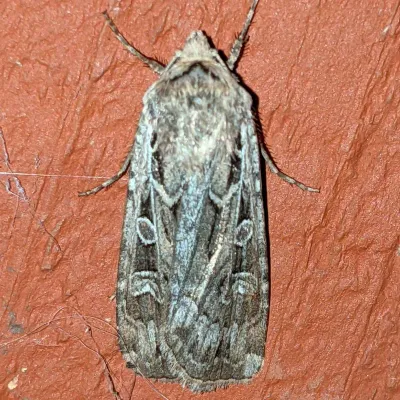
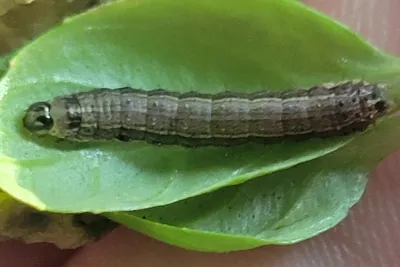
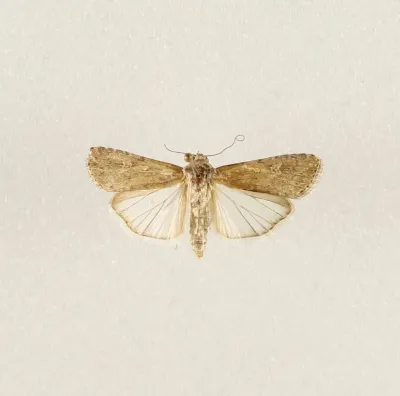
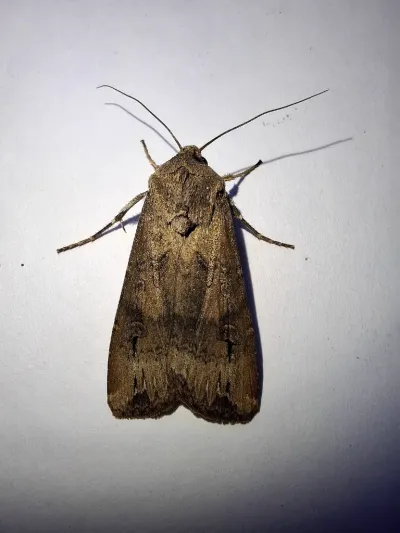
- Plant materials like tobacco, spices, and dried herbs A related species, Armyworms, shares similar characteristics.
Dirty fabrics are most at risk. Sweat, body oils, food stains, and urine give larvae extra nutrients. Clothing worn once and stored without washing faces the highest risk.
Environmental Needs
Casemaking clothes moths do best in certain conditions:
- Temperature: 70-85 degrees F for fastest growth. Activity slows below 55 degrees F.
- Humidity: 70-75% is ideal. Low humidity slows growth.
- Darkness: Both larvae and adults stay away from light.
- Quiet spaces: They prefer closets and storage boxes that are rarely opened.
Climate-controlled buildings give them stable conditions. This lets infestations last all year.
Signs of a Casemaking Clothes Moth Infestation
Detecting Larval Cases
The best sign of these moths is finding their larval cases:
- On fabrics: Small tube-shaped cases on damaged materials
- On walls and ceilings: Cases hanging from surfaces, often during pupation
- Under furniture: Cases in dark areas where larvae feed on lint and debris
- In closets: Cases on clothing, shelves, or baseboards
Cases match the color of the fabric being eaten. This gives them good camouflage. Look for small, cigar-shaped objects that match nearby fabric colors.
Damage Patterns
Look for these signs of moth damage:
- Irregular holes scattered across fabric surfaces
- Surface grazing where larvae eat only the top layer of fibers
- Damage in hidden spots like inside folds, under collars, and along seams
- Bald patches on fur where larvae ate through to the skin
- Discolored spots from fecal pellets left during feeding
Other Evidence
Other signs of an infestation include:
- Small fecal pellets about the size of ground pepper near damaged items
- Shed larval skins left behind when larvae molt
- Adult moths flying near the floor in dark storage areas
- Pupal cases on walls, shelves, or under furniture
Treatment Methods for Casemaking Clothes Moths
Good control requires treating all life stages and removing conditions that help them thrive.
Inspection and Finding the Source
A thorough inspection helps find where moths are hiding:
- Check all wool, silk, and fur items in closets and storage
- Look at carpets, especially under furniture and along edges
- Inspect old furniture with natural fiber padding
- Check air ducts and wall voids where lint builds up
- Look at taxidermy, insect collections, and feather items
- Go through stored boxes of clothing and blankets
Look for larval cases. Finding them confirms an active problem and shows where moths are feeding.
Non-Chemical Control Methods
Several methods work without chemicals:
Freezing: Put infested items in a freezer at 0 degrees F for at least 72 hours. This kills all life stages. It works well for items you cannot wash or dry clean.
Heat treatment: Temperatures above 120 degrees F for 30 minutes kill moths at all stages. Use hot dryer cycles or leave items in a hot car on summer days.
Dry cleaning: The solvents kill all moth stages and remove oils that attract them. Dry clean items before long-term storage for extra protection.
Washing: Hot water above 120 degrees F kills moths. Cold washing removes many eggs and larvae. The dryer cycle adds more heat.
Vacuuming: Regular vacuuming removes eggs, larvae, cases, and food like hair and lint. Focus on carpet edges, under furniture, and closet floors.
Chemical Treatment Options
When other methods do not work, these treatments can help:
Residual sprays: Products applied to carpet edges and closet floors keep working over time. They kill larvae as they travel.
Insect growth regulators: These stop larvae from becoming adults that can reproduce. This breaks the breeding cycle.
Pheromone traps: Traps for casemaking clothes moths attract male moths. They help track the problem. Use the right lure since webbing and casemaking moths have different scents.
Fumigation: Bad infestations in valuable items may need professional fumigation.
Prevention Tips
Protect your belongings from future damage:
- Clean before storing: Wash or dry clean woolens before putting them away for the season
- Use airtight containers: Store items in sealed plastic bins or vacuum bags
- Check secondhand items: Look over thrift store clothes and antique textiles before bringing them home
- Lower humidity: Keep storage areas below 70% humidity
- Vacuum often: Clean closets, carpets, and furniture regularly
- Rotate and check: Move stored items around and look for signs of moths
- Cedar and lavender: These may help deter moths as part of a broader plan. For help telling fabric moths from food moths, see our pantry moths vs clothes moths guide
References and Further Reading
Other Moths
Explore other species in the moths family
Commonly Confused With
Casemaking Clothes Moth are often mistaken for these similar pests
Where Casemaking Clothes Moth Are Found
Hover over states to see their names. Green regions indicate where casemaking clothes moth have been reported.
Common Questions about Casemaking Clothes Moth
What does a casemaking clothes moth look like?
+
Adult casemaking clothes moths are small, about 6-8mm long with a wingspan of 9-16mm. They have grayish-brown wings with three faint dark spots, though these spots may rub off on older moths. The hairs on their head are lighter colored than those of webbing clothes moths. Larvae are cream-colored with black head capsules and build distinctive silk cases that they carry with them.
How can I tell casemaking clothes moths apart from webbing clothes moths?
+
The key difference is in larval behavior. Casemaking clothes moth larvae always carry a portable silk case that they never leave. Webbing clothes moth larvae instead spin silken tubes over the fabric they feed on. Adult casemaking moths have brown-gray wings with dark spots, while webbing clothes moths have solid golden-tan wings without markings.
What do casemaking clothes moth larvae eat?
+
Larvae feed on animal-based materials including wool, fur, feathers, silk, leather, and hair. They also eat dried animal products, taxidermy mounts, and even some plant materials like tobacco, spices, and hemp. They prefer soiled fabrics because sweat and body oils provide essential nutrients they cannot get from clean fibers.
Why do casemaking clothes moth larvae make cases?
+
The silk case protects the larva from predators and helps regulate humidity around its body. The larva incorporates fibers from the material it feeds on into the case, so the case color matches the damaged fabric. The larva will die if separated from its case, as it cannot survive without this protective covering.
Where do casemaking clothes moths hide in homes?
+
These moths prefer dark, undisturbed areas. Look for them in closets with stored wool clothing, under furniture where lint and pet hair collect, in boxes of stored textiles, and near taxidermy or decorative feathers. The silk cases often hang from vertical surfaces or undersides of shelves during pupation.
How long does the casemaking clothes moth lifecycle take?
+
The complete lifecycle ranges from 2 months to over 2 years depending on conditions. Eggs hatch in 4-30 days. Larvae feed for 35 days to 30 months before pupating. Adults emerge in 8-40 days and live 15-30 days. Warm, humid conditions speed development while cool, dry conditions slow it significantly.
How do I know if I have casemaking clothes moths?
+
Look for small silk cases about 6-13mm long attached to fabrics or hanging from surfaces. These cases take on the color of the material being eaten. You may also find irregular holes in woolens, sandy fecal pellets, and small brown-gray moths fluttering near the floor in dark areas.
Can pheromone traps catch casemaking clothes moths?
+
Yes, but you need the correct trap. Casemaking and webbing clothes moths have different pheromones. Use traps specifically labeled for casemaking clothes moths (Tinea pellionella) or multi-species clothes moth traps. These attract male moths and help monitor infestations but do not eliminate them.

With five years of hands-on experience in the pest control industry, George Schulz is a registered technician with the Virginia Pest Management Association and a proud third-generation professional in a family business that's been protecting homes for over 57 years. He manages and trains a team of service pros while also leading internal research efforts—recently spearheading a deep-dive review of thousands of documents on pest control materials to hand-pick the most kid and pet friendly, most effective solutions tailored specifically for homes in the DC metro area.