House Millipedes Identification Guide
Oxidus gracilis
House millipedes are small, dark-colored arthropods that commonly invade homes seeking moisture. They are harmless to people but can appear in large numbers during wet weather or drought conditions.
Taxonomy
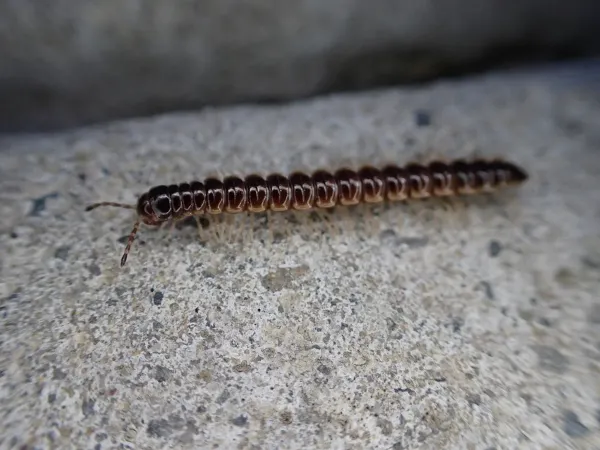
House Millipedes Coloration
Common color patterns to help identify house millipedes
House Millipedes
Seasonal Activity
When house millipedes are most active throughout the year
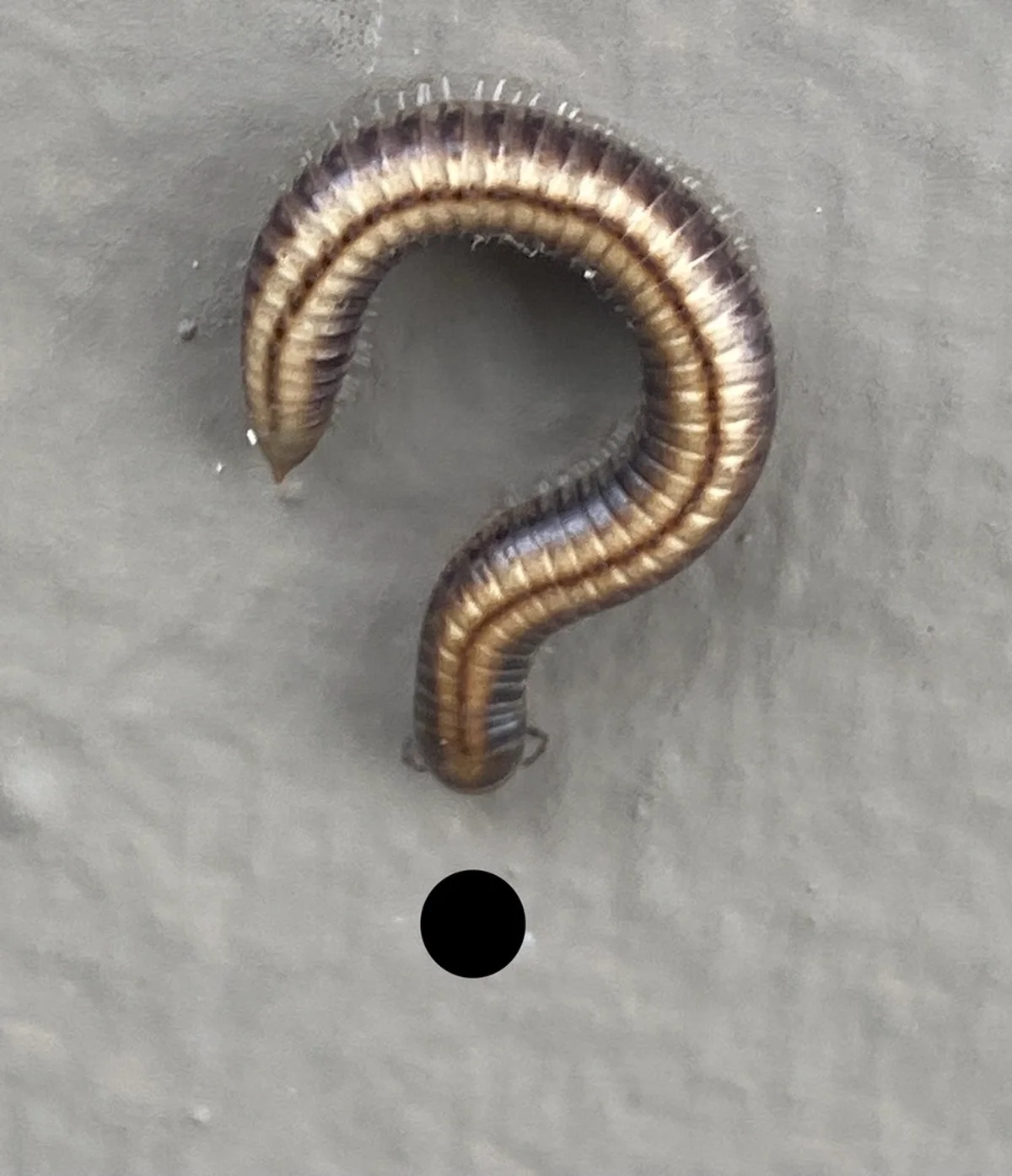
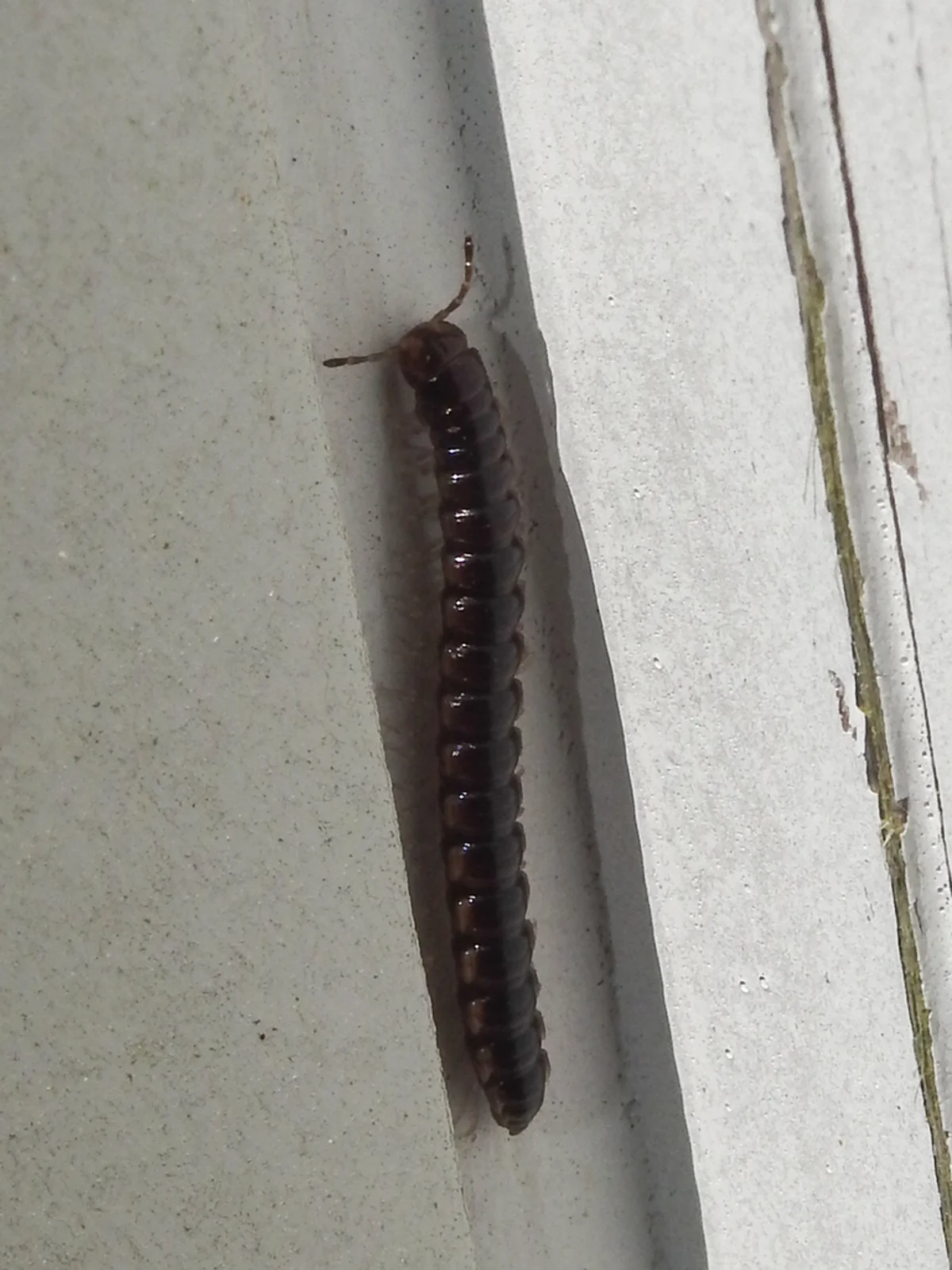
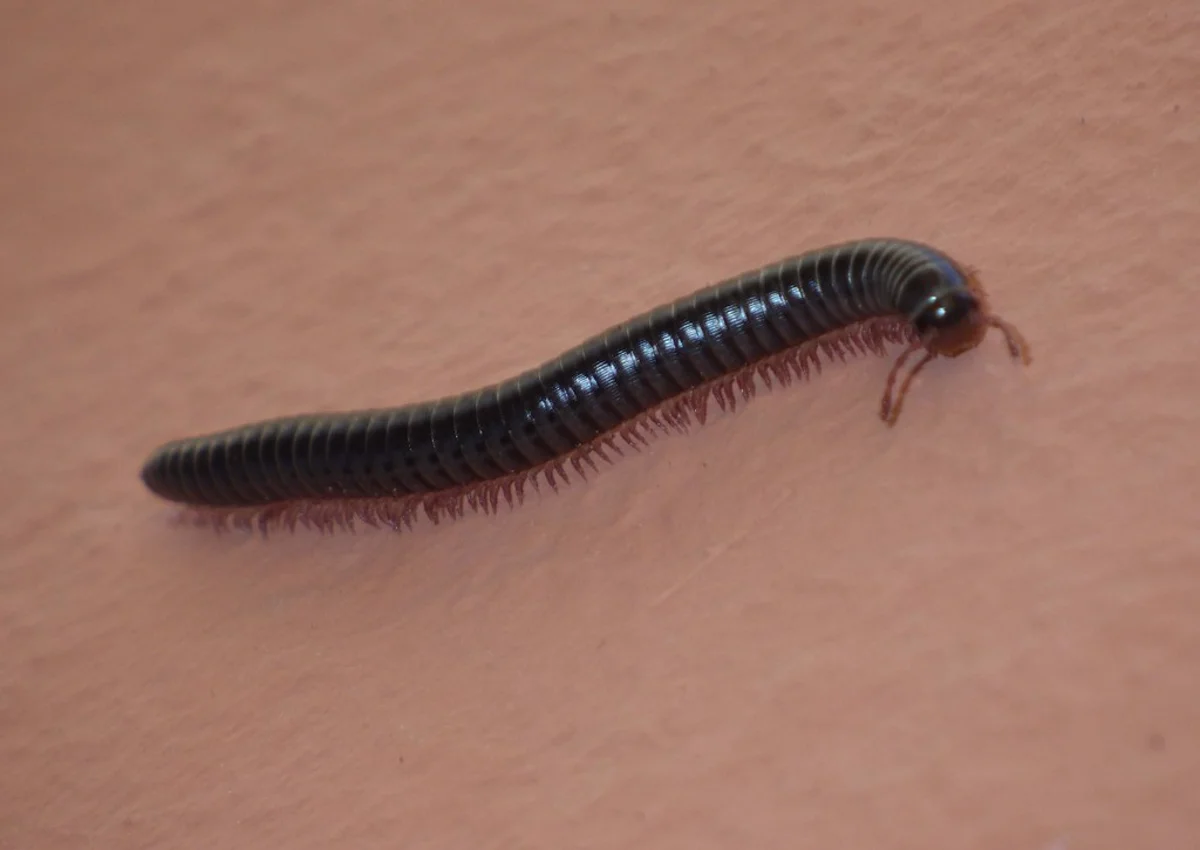

Where House Millipedes Are Found
Hover over states to see their names. Green regions indicate where house millipedes have been reported.
House Millipede Identification Guide
Physical Characteristics
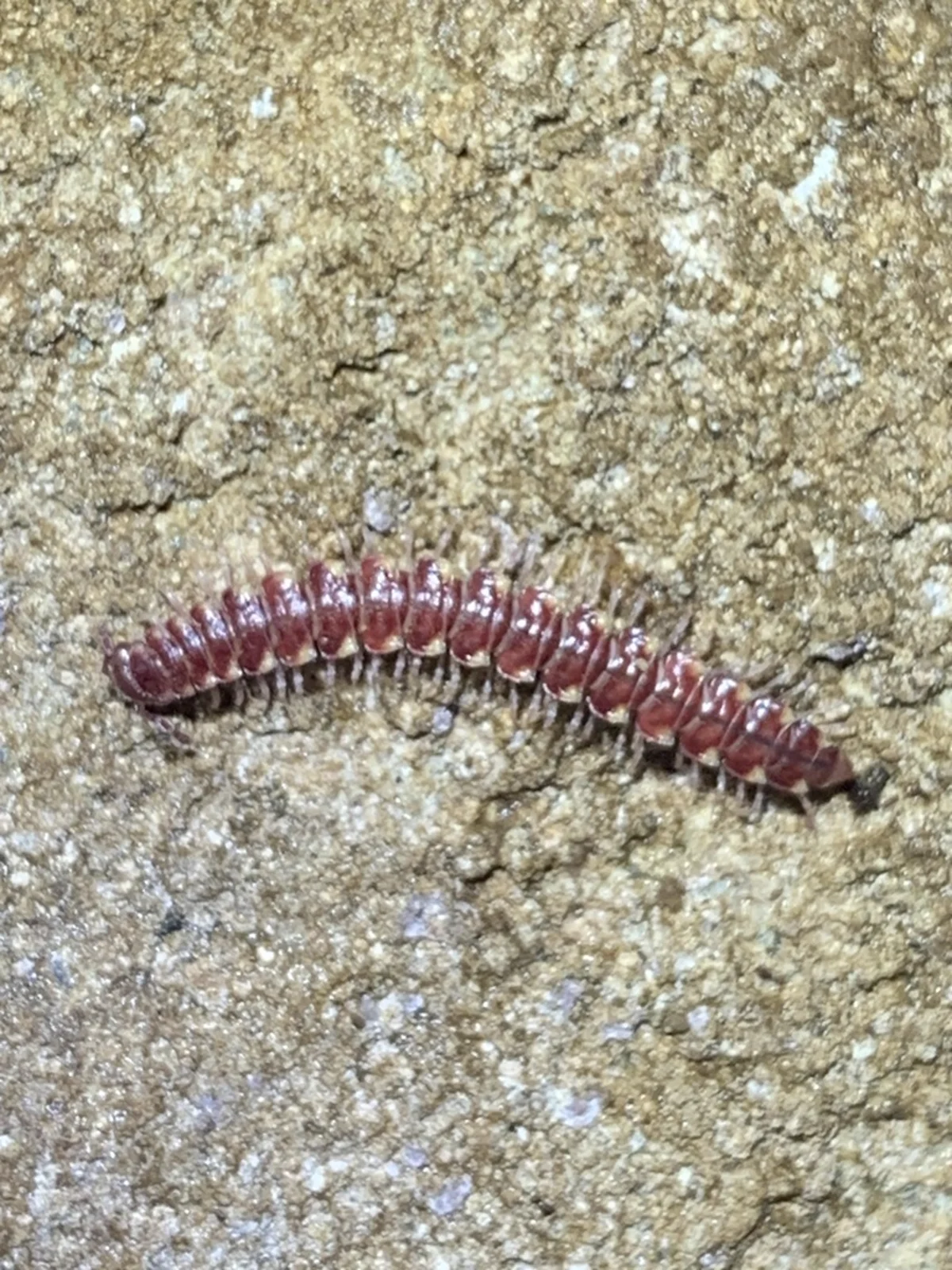
House millipedes are one of the most common millipede types found inside homes across North America. The greenhouse millipede (Oxidus gracilis) is the species you are most likely to see indoors. These bugs measure about half an inch to one inch long. Their bodies are made up of many segments, and each segment has two pairs of short legs.
Adult house millipedes are usually dark brown or grayish-brown. They often have lighter tan or yellow markings along their sides. You can see ridges running along the edges of their flat bodies. Unlike centipedes, millipedes have short antennae and move slowly. Their many legs move in a wave-like pattern from front to back.
Common Species Found in Homes
Several millipede species enter homes in North America:
-
Greenhouse Millipede (Oxidus gracilis): This is the most common indoor species. It came from Asia but now lives across North America. It is dark brown with pale legs.
-
Garden Millipede (Polydesmus spp.): These flat-backed millipedes often show up in gardens and basements. They are brown to gray with ridges on their sides.
-
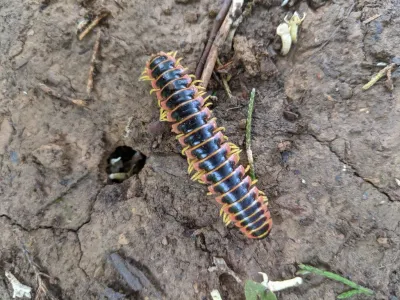
North American Millipede (Narceus americanus): This larger species can grow up to 4 inches long. It sometimes enters homes. It is dark brown to black with reddish-brown bands.
How to Tell Millipedes Apart from Similar Pests
Millipedes are often confused with other bugs that have many legs:
-
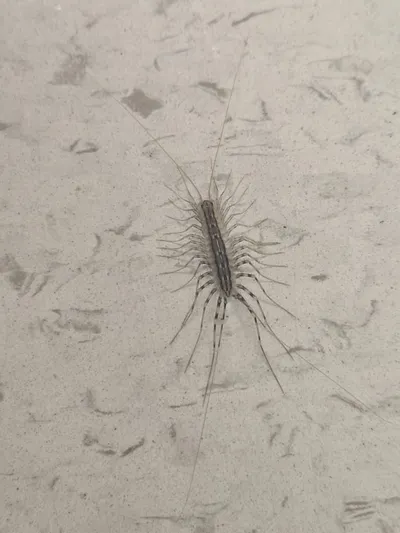
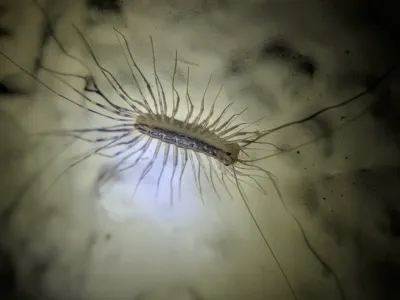
House Centipedes: Centipedes are fast hunters with one pair of very long legs per body segment. Millipedes move slowly and have two pairs of short legs per segment.
-
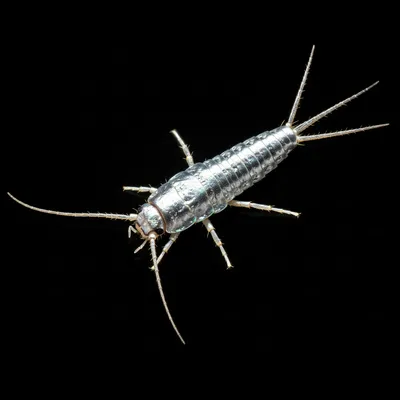
Silverfish: Silverfish have only six legs and a carrot-shaped body covered in silvery scales. Millipedes have many more legs and no scales.
House Millipede Behavior and Biology
Natural History
There are over 12,000 millipede species in the world. The greenhouse millipede came from Asia but spread around the globe through the plant trade. It was first found in North America in the early 1900s and now lives across the continent.
Where Millipedes Live
Millipedes need damp places to survive. They lose water quickly through their thin skin, so they stay in moist spots. Outside, you will find them in:
- Leaf piles and mulch beds
- Under rocks, logs, and wood piles
- Compost piles and rotting wood
- Thick ground cover and ivy beds
- Areas with lots of dead plant matter
When they come inside, they look for:
- Basements and crawl spaces
- Bathroom floors and showers
- Laundry rooms and utility areas
- Garages with concrete floors
- Any damp areas
What Millipedes Eat
House millipedes eat dead and rotting plants. They feed on dead leaves, rotting wood, and fungi. They help break down plant matter and put nutrients back into the soil. Unlike house centipedes, millipedes do not hunt or eat other bugs.
Life Cycle
Female millipedes lay groups of eggs in moist soil or rotting plant matter. They can lay 20 to 300 eggs at a time. The eggs hatch in a few weeks. Young millipedes start with just a few body segments and leg pairs. As they grow and shed their skin, they add more segments and legs. It takes one to two years for them to become adults.
Adult millipedes can live for several years. When conditions are good, their numbers can grow quickly. This can lead to large groups moving together during certain weather.
How Millipedes Defend Themselves
When scared, house millipedes curl into a tight coil to protect their soft bellies. Many types also release a smelly liquid. This liquid can have strong chemicals in it. It may cause mild skin irritation and can stain your skin or surfaces brown. The smell is often described as bad or like almonds.
Why House Millipedes Invade Homes
Millipedes enter homes when outdoor conditions change:
Too Much Rain: Heavy rains or flooding can soak the soil. This pushes millipedes to look for drier spots inside your home.
Dry Weather: Long dry spells can also send millipedes inside. They come in looking for moisture.
Seasonal Movement: In spring and fall, millipedes often move around in large groups. These movements can bring them toward buildings.
Yard Work: Raking leaves, moving mulch, or disturbing ground cover can force millipedes out of their hiding spots. They may then head toward your house.
Population Booms: Good weather can cause millipede numbers to grow fast. More millipedes outside means more likely to come inside.
How We Treat for House Millipedes
Our treatment plan tackles both the millipedes you see now and the conditions that draw them to your home.
Inside Your Home
Our technician will inspect your home closely. We focus on areas where millipedes are active or likely to hide. We look at:
- Basements, crawl spaces, and utility rooms
- Entry points like foundation cracks and gaps under doors
- Areas with moisture problems or poor airflow
- Signs of millipede activity, including live bugs and dead ones
We apply a treatment to baseboards, cracks, and other spots where millipedes travel. This creates a barrier that keeps millipedes from moving through these areas.
Outside Your Home
We also inspect the outside of your home. We focus on things that help millipedes thrive near your foundation:
- Mulch beds and landscaping within 3-4 feet of your house
- Ground cover, leaf piles, and dead plant matter
- Cracks and gaps in your foundation
- Drainage problems and wet spots
We apply a granular treatment around the outside of your home and in mulch beds. This targets millipedes where they live before they can get inside.
Moisture Control Tips
Millipedes need damp conditions to survive. We will give you tips to make your home less attractive to them:
- Fix plumbing leaks and improve drainage away from your foundation
- Use dehumidifiers in basements and crawl spaces
- Make sure bathrooms, kitchens, and laundry areas have good airflow
- Keep plants and mulch at least 3-4 feet from your foundation
- Clear away leaf piles and debris near your house
- Store firewood and yard waste away from the house
Ongoing Protection
Our tri-annual pest control plan includes regular visits to check for activity and reapply treatments as needed. This keeps millipedes from coming back. If you see millipedes between visits, we will come back at no extra cost.
References
Other Millipedes
Explore other species in the millipedes family
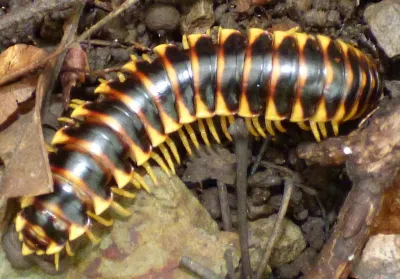
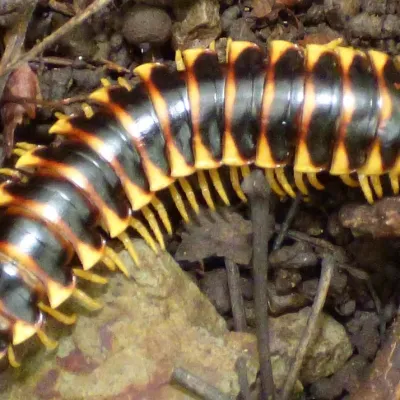
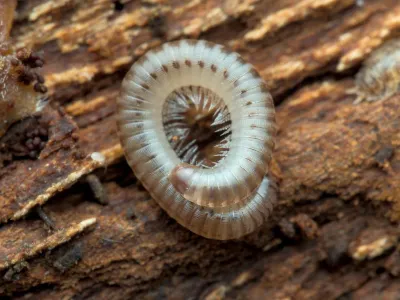
Commonly Confused With
House Millipedes are often mistaken for these similar pests
Where House Millipedes Are Found
Hover over states to see their names. Green regions indicate where house millipedes have been reported.
Common Questions about House Millipedes
Are house millipedes dangerous to humans?
+
No, house millipedes are completely harmless to people. They do not bite or sting. When threatened, they may release a defensive fluid that can cause mild skin irritation or staining, so it's best to avoid handling them directly.
Why are millipedes suddenly appearing in my house?
+
Millipedes typically invade homes when outdoor conditions become unfavorable. Heavy rain, flooding, or drought can drive them indoors seeking moisture or shelter. They often enter through foundation cracks, gaps under doors, and basement windows.
Do house millipedes cause damage to homes or belongings?
+
No, house millipedes do not damage structures, furniture, or fabrics. They feed exclusively on decaying organic matter like dead leaves and rotting wood. Their presence is a nuisance rather than a threat to your property.
How long do millipedes live indoors?
+
Millipedes cannot survive long in typical indoor environments because they require high humidity. In dry indoor conditions, they usually die within a few days. However, in damp basements or crawl spaces, they may survive longer.
What attracts millipedes to my home?
+
Millipedes are attracted to moisture, organic debris, and mulch near foundations. Heavy leaf litter, thick ground cover, and excessive mulch create ideal conditions for millipede populations to thrive near your home's exterior.
Will reducing moisture keep millipedes out?
+
Yes, moisture control is one of the most effective long-term strategies. Fixing drainage issues, reducing humidity in basements, and keeping mulch away from your foundation significantly reduces millipede activity both indoors and around your home.
What is the difference between millipedes and centipedes?
+
Millipedes have two pairs of legs per body segment, round bodies, and move slowly. Centipedes have one pair of legs per segment, flattened bodies, and move very quickly. Centipedes are predators that can bite, while millipedes are harmless detritivores.

With five years of hands-on experience in the pest control industry, George Schulz is a registered technician with the Virginia Pest Management Association and a proud third-generation professional in a family business that's been protecting homes for over 57 years. He manages and trains a team of service pros while also leading internal research efforts—recently spearheading a deep-dive review of thousands of documents on pest control materials to hand-pick the most kid and pet friendly, most effective solutions tailored specifically for homes in the DC metro area.