Black and Gold Flat Millipede Identification Guide
Apheloria virginiensis
The black and gold flat millipede is a striking flat-backed millipede native to eastern North America. Known for its bold yellow and black bands, it lives in forests and occasionally wanders into homes during wet weather.
Taxonomy
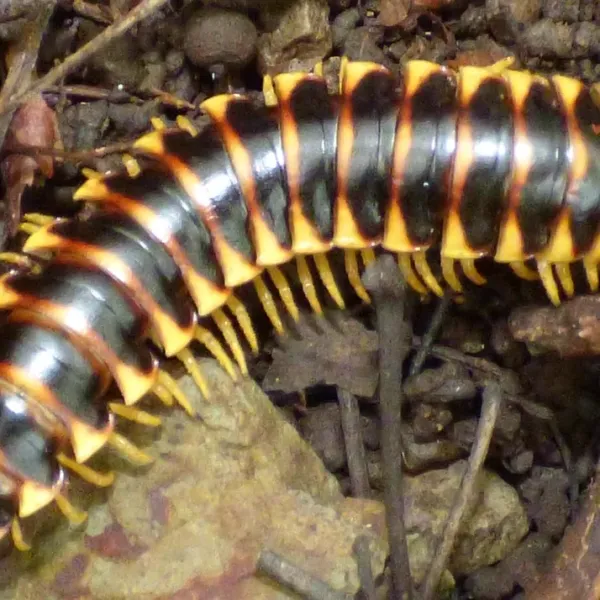
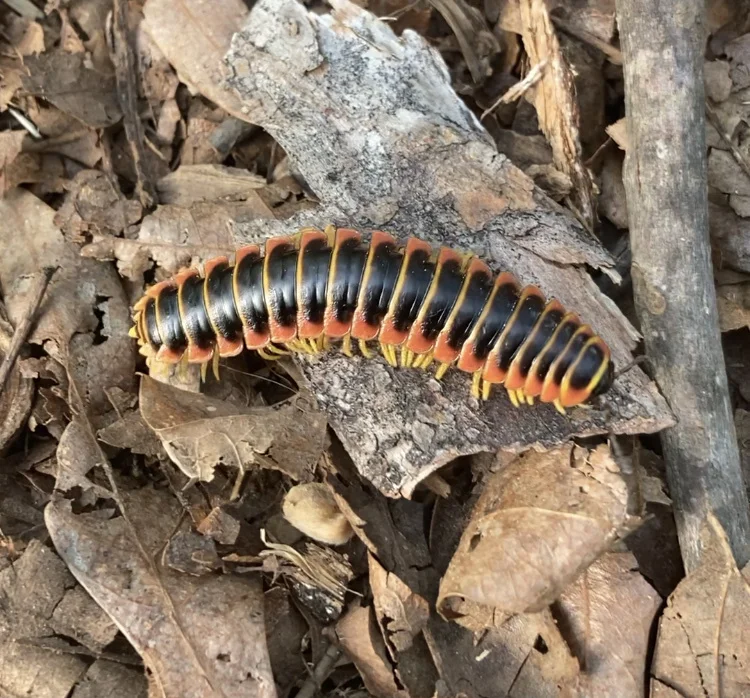
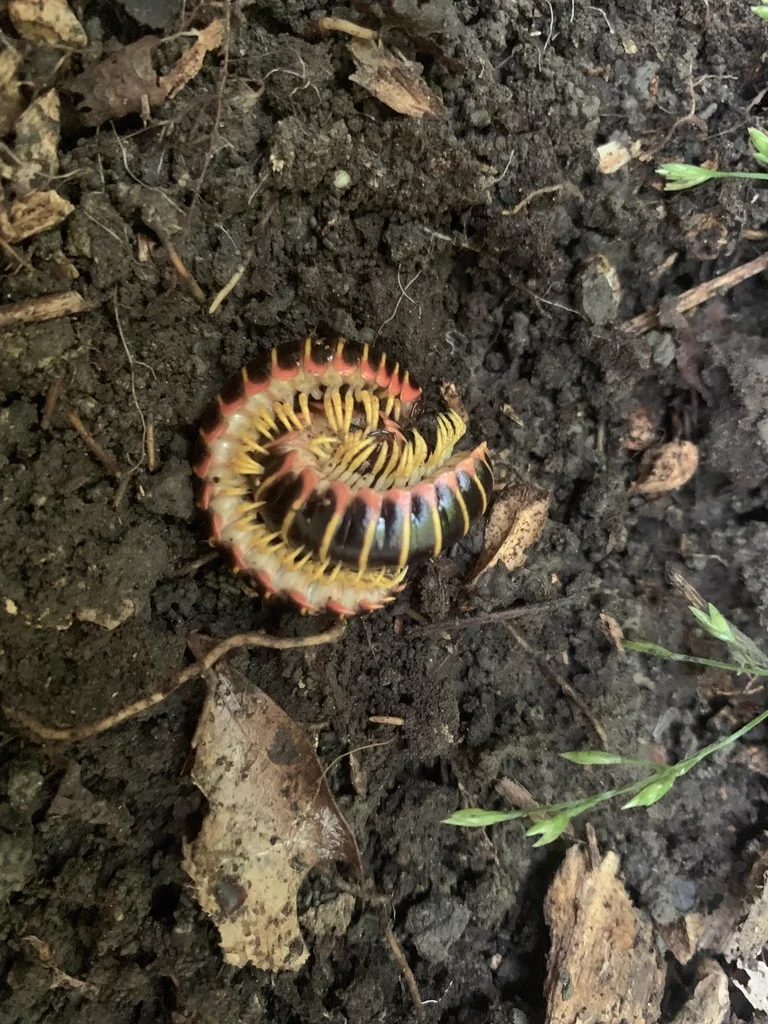
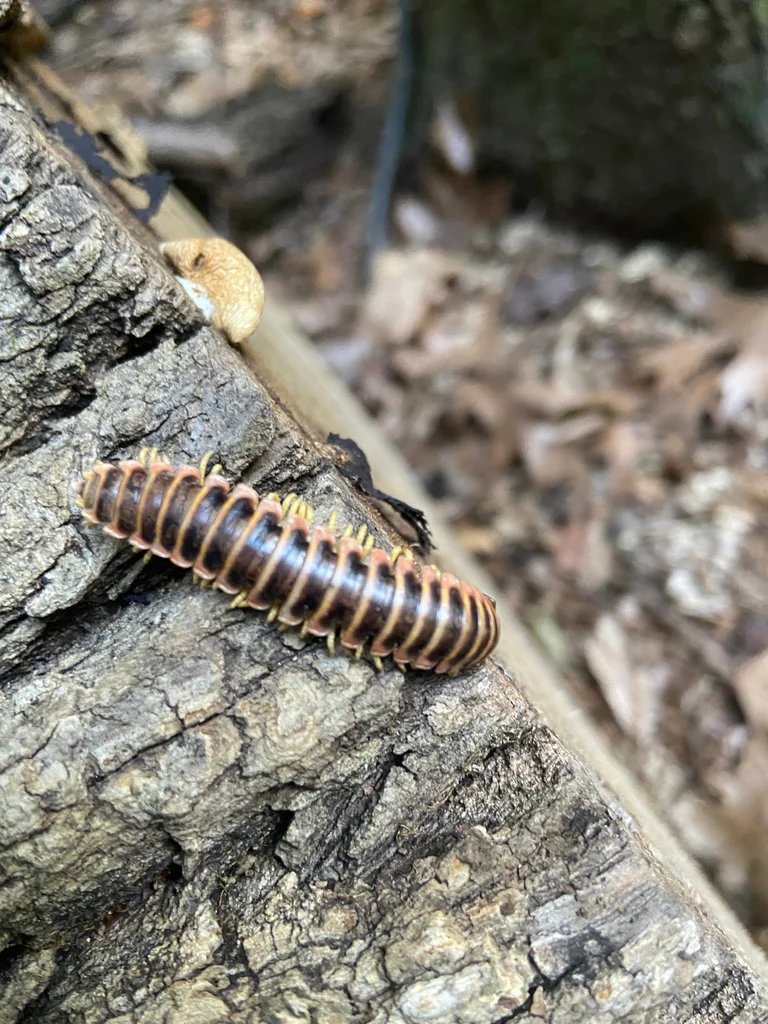
Black and Gold Flat Millipede Coloration
Common color patterns to help identify black and gold flat millipede
Black and Gold Flat Millipede
Seasonal Activity
When black and gold flat millipede are most active throughout the year

Where Black and Gold Flat Millipede Are Found
Hover over states to see their names. Green regions indicate where black and gold flat millipede have been reported.
Black and Gold Flat Millipede Identification Guide
Physical Characteristics
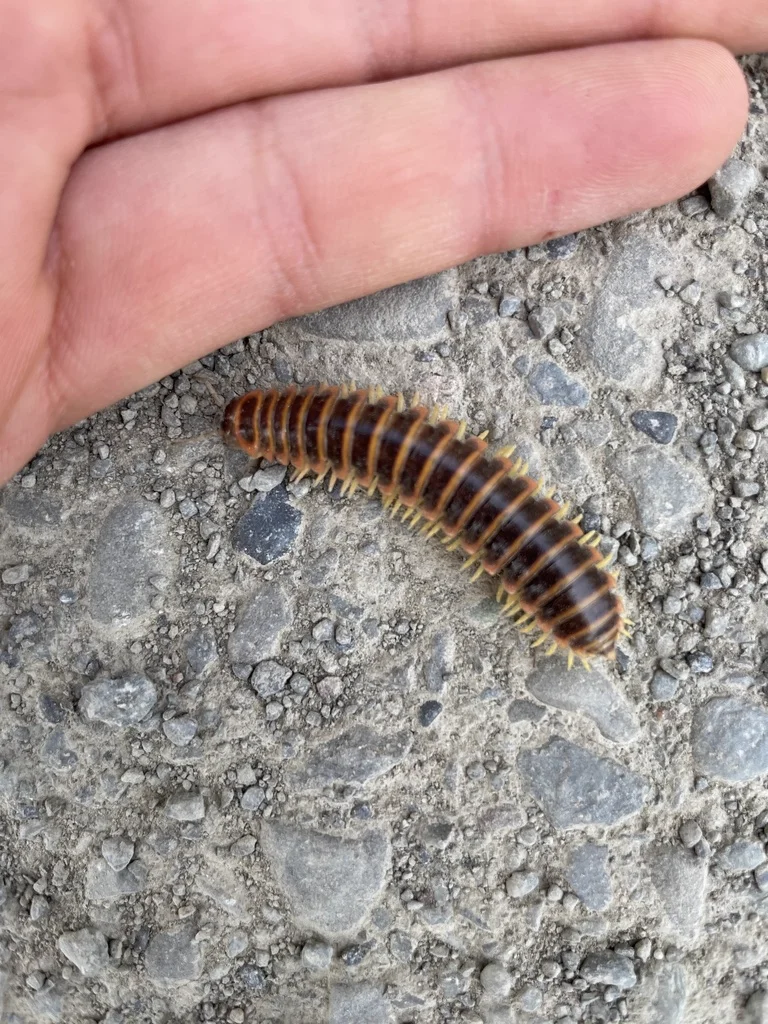
The black and gold flat millipede (Apheloria virginiensis) is easy to spot. Adults are 30 to 50 mm long. They have a bold color pattern with a black body and bright yellow or gold edges on each segment. These flat edges stick out from the sides, giving them a ridged look.
The body has about 20 segments. Each segment has two pairs of legs. This adds up to about 62 legs total. The head is round with short antennae. These millipedes move slowly. Their many legs move in a wave pattern.
The bright colors warn predators to stay away. When scared, black and gold flat millipedes give off chemicals that smell like almonds. These chemicals can cause mild skin rashes if you handle them.
Common Species and Relatives
The black and gold flat millipede belongs to a family of colorful millipedes called Xystodesmidae. Several related species look similar:
-
Apheloria virginiensis corrugata is a close relative found in the southern Appalachians. It has slightly different color patterns.
-
Apheloria montana lives at higher elevations in the Appalachian Mountains.
-
Other Xystodesmidae species include many yellow, orange, red, and black millipedes in eastern forests.
Telling Black and Gold Flat Millipedes Apart from Similar Pests
People sometimes mix up these millipedes with other bugs that have many legs:
-
Flat-Backed Millipedes include the black and gold flat millipede. Other flat-backed species are brown, gray, or plain colored. The bold yellow and black pattern sets this one apart.
-
Regular Millipedes have round, tube-shaped bodies. They lack the flat side edges. Most are brown or black without bright warning colors.
-
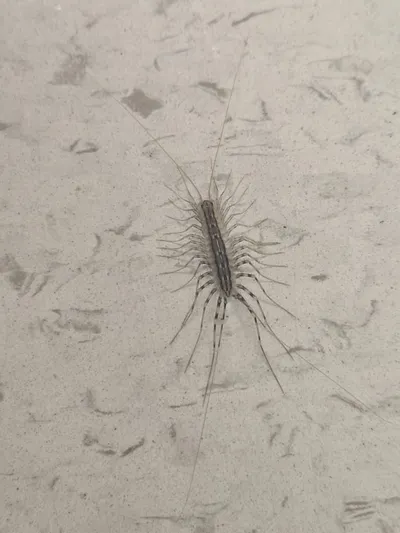
Centipedes have flat bodies but only one pair of legs per segment. They move fast and hunt other bugs. Millipedes move slowly and eat dead plants.
Black and Gold Flat Millipede Behavior and Biology
Habitat and Distribution
Black and gold flat millipedes live in the Appalachian region and nearby areas of eastern North America. You can find them from southern New York and Pennsylvania down through Virginia, West Virginia, the Carolinas, Tennessee, and Kentucky. They reach as far south as northern Georgia and Alabama. The Blue Ridge and Great Smoky Mountains have large numbers of them. A related species, North American Millipedes, shares similar characteristics.
These millipedes like older forests with lots of leaf litter. They come out mostly at night when the air is damp. During the day, they hide under logs, rocks, bark, and fallen leaves. They must stay moist to live and will die fast in dry spots. A related species, Bristly Millipedes, shares similar characteristics.
Diet and Role in the Ecosystem A related species, Greenhouse Millipedes, shares similar characteristics.
Black and gold flat millipedes eat only dead and rotting plant matter:
- Fallen leaves from oak, maple, and hickory trees
- Rotting wood and bark
- Fungi and mushrooms
- Dead plant roots and stems
They help forests stay healthy by breaking down dead plants. This returns nutrients to the soil. Forests with lots of millipedes often have richer soil.
Life Cycle and Reproduction
Female black and gold flat millipedes lay eggs in moist soil or rotting wood in spring and early summer. The young hatch with only a few body segments and leg pairs. They shed their skin many times as they grow. Each time, they add more segments and legs until they reach full size.
Growing up takes one to two years. Adults can live for several years after that. Mating happens in spring.
Defense Mechanisms
When scared, black and gold flat millipedes protect themselves in a few ways:
-
Chemical spray: They release smelly chemicals through tiny holes along their sides. The smell is like almonds. This warns predators that the millipede tastes bad.
-
Curling up: They curl into a loose coil to protect their soft belly and legs. They cannot roll into a tight ball like pill bugs do.
-
Bright colors: The yellow and black stripes tell predators to stay away. Many animals learn to avoid bugs with these colors.
These chemicals are not harmful to people in small doses. But they can cause skin rashes, staining, and eye irritation. Always wash your hands after touching one.
How We Treat for Black and Gold Flat Millipedes
Black and gold flat millipedes sometimes wander into homes. This happens most often during wet springs or dry summers. Our treatment plan tackles both the current problem and the things that draw these pests in.
Interior Inspection and Treatment
Our technician checks inside your home, looking at areas where millipedes have been seen. Common problem spots include:
- Basements and crawl spaces
- Rooms with moisture issues
- Gaps around basement windows and doors
- Areas near floor drains
We apply insecticide to baseboards and entry points where millipedes are active. This creates a barrier that keeps them from spreading through your home.
Exterior Perimeter Treatment
Outside, we look for conditions that attract millipedes to your foundation. We check:
- Mulch beds and plants near the foundation
- Piles of leaves
- Drainage problems and wet areas
- Cracks and gaps where millipedes can get in
For bad or ongoing problems, we put granular insecticide around the outside perimeter and in mulch beds. This stops millipedes at the source before they get inside.
Moisture Control Tips
Black and gold flat millipedes need moisture to live. Making your property drier helps keep them away:
- Fix drainage issues and move water away from the foundation
- Clean gutters and extend downspouts at least 4 feet from the house
- Use dehumidifiers in basements and crawl spaces
- Make sure damp areas have good airflow
Exclusion and Prevention
Sealing entry points helps with long-term control:
- Fill cracks and gaps in foundation walls with caulk
- Put door sweeps on all outside doors
- Seal around basement windows and pipes
- Keep mulch 6 to 12 inches away from foundation walls
- Move firewood and leaf piles away from the house
Ongoing Protection
Our triannual pest control plan (three visits per year) gives you regular check-ups and treatment. If millipedes come back between visits, we return at no extra cost. Ongoing care matters because outdoor millipede numbers can bounce back after heavy rains.
References
Other Millipedes
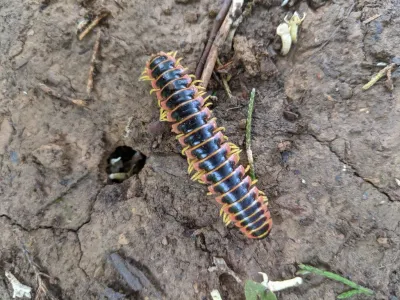
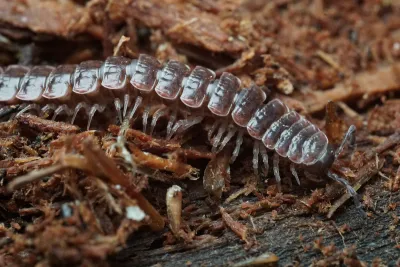
Explore other species in the millipedes family
Commonly Confused With
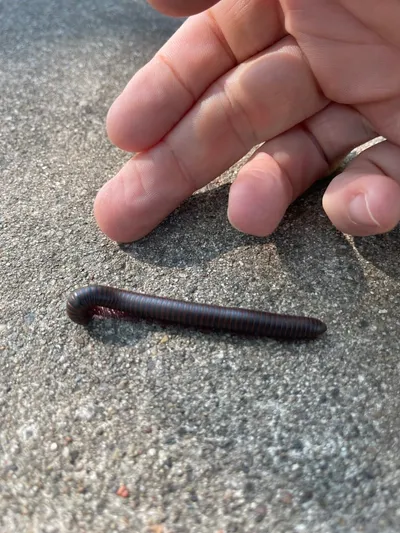
Black and Gold Flat Millipede are often mistaken for these similar pests
Where Black and Gold Flat Millipede Are Found
Hover over states to see their names. Green regions indicate where black and gold flat millipede have been reported.
Common Questions about Black and Gold Flat Millipede
Are black and gold flat millipedes dangerous?
+
No, black and gold flat millipedes do not bite or sting. However, they can release hydrogen cyanide and other chemicals when threatened, which may cause mild skin irritation or staining. Wash your hands after handling them and avoid touching your eyes or mouth.
Why do black and gold flat millipedes come inside my home?
+
They wander inside during heavy rain or very dry periods. When conditions outside become too wet or too dry, they seek shelter and moisture balance. They typically enter through foundation cracks, gaps under doors, and basement windows.
What do black and gold flat millipedes eat?
+
They eat dead leaves, rotting wood, fungi, and other decaying plant material. They are detritivores, meaning they help break down organic matter on the forest floor. They do not eat living plants or damage gardens.
Where do black and gold flat millipedes live?
+
They live in deciduous forests throughout the Appalachian region and eastern United States. You will find them under logs, rocks, leaf litter, and in moist soil. They are most common in mature forests with abundant fallen leaves.
How can I prevent black and gold flat millipedes from getting inside?
+
Reduce moisture near your foundation by fixing drainage issues and clearing debris. Seal cracks in the foundation with caulk. Install door sweeps on exterior doors. Move leaf litter, mulch, and woodpiles away from the house.
Will black and gold flat millipedes reproduce in my home?
+
No, they cannot reproduce indoors. They need specific forest floor conditions with proper moisture, temperature, and decaying plant matter to lay eggs. Those found inside are accidental visitors that will die within a few days without proper habitat.
Why are black and gold flat millipedes so brightly colored?
+
Their bright yellow and black bands serve as warning colors. This aposematic coloration tells predators that the millipede can release toxic or foul-smelling chemicals. The bold pattern makes them easy to remember and avoid.

With five years of hands-on experience in the pest control industry, George Schulz is a registered technician with the Virginia Pest Management Association and a proud third-generation professional in a family business that's been protecting homes for over 57 years. He manages and trains a team of service pros while also leading internal research efforts—recently spearheading a deep-dive review of thousands of documents on pest control materials to hand-pick the most kid and pet friendly, most effective solutions tailored specifically for homes in the DC metro area.