Sycamore Lace Bugs Identification Guide
Corythucha ciliata
Sycamore lace bugs are small, flat insects with delicate lace-like wings that feed on sycamore and plane tree leaves. They cause stippling damage and can become a nuisance when they invade homes seeking overwintering shelter.
Taxonomy
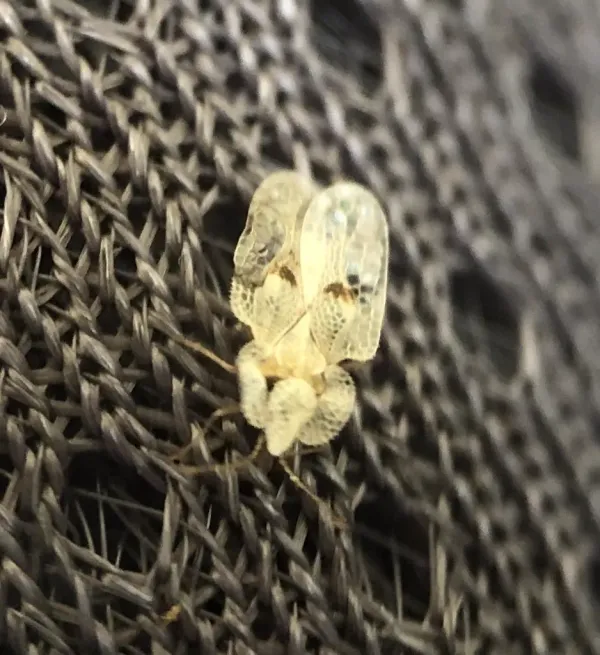
Sycamore Lace Bugs Coloration
Common color patterns to help identify sycamore lace bugs
Sycamore Lace Bugs
Seasonal Activity
When sycamore lace bugs are most active throughout the year

Where Sycamore Lace Bugs Are Found
Hover over states to see their names. Green regions indicate where sycamore lace bugs have been reported.
Sycamore Lace Bug Identification Guide
Physical Characteristics
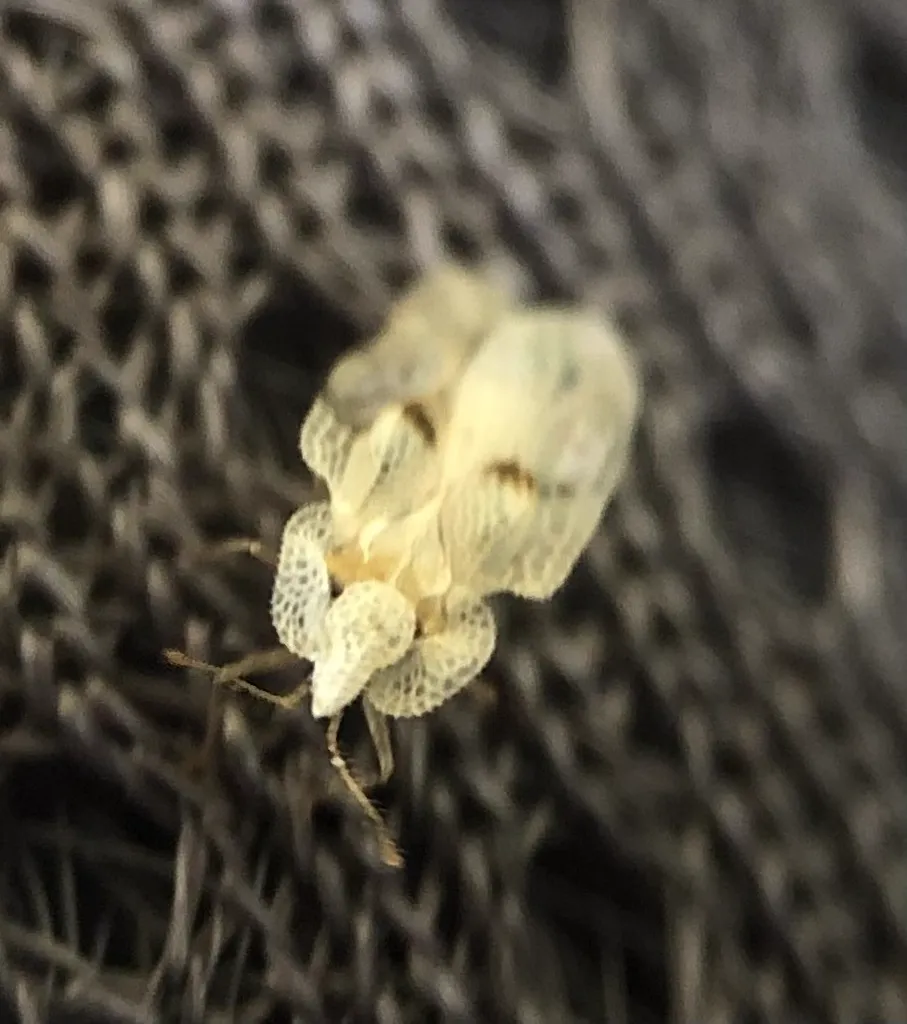
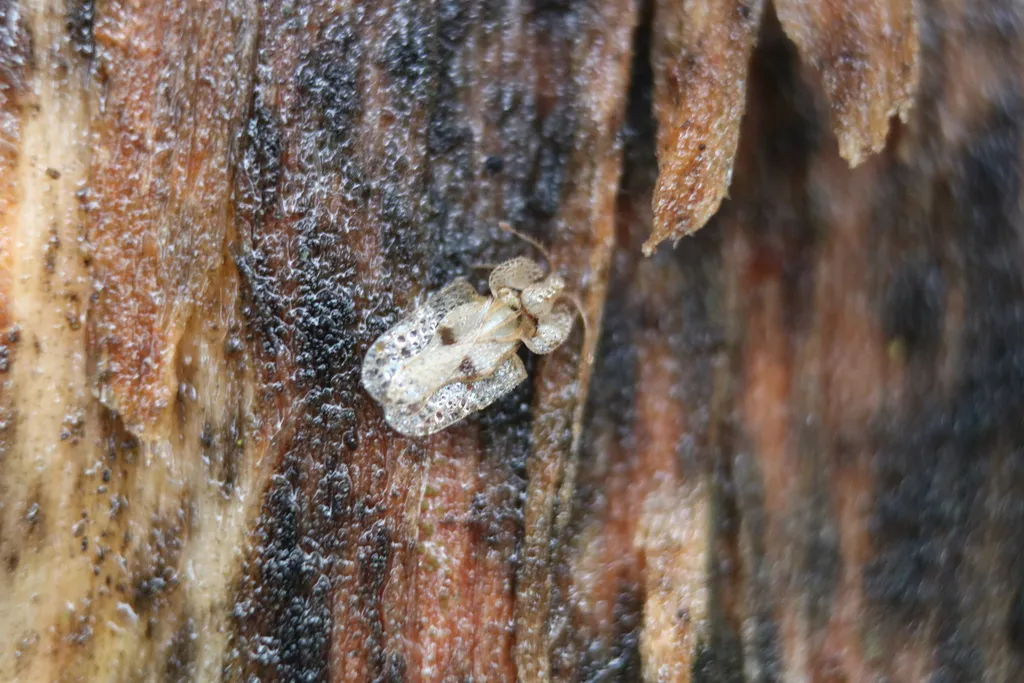
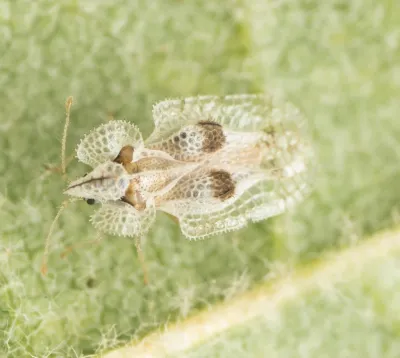
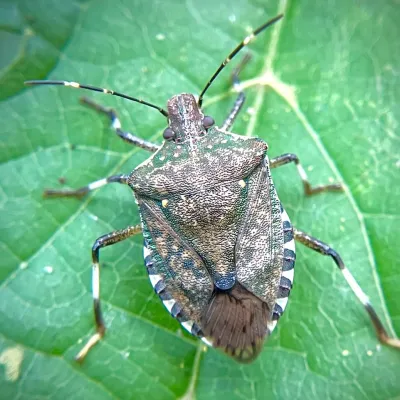
Sycamore lace bugs are small, flat insects about 3 to 4 millimeters long. Their most striking feature is their delicate wings that look like fine lace. The wings and body covering spread out wide, giving them a broad shape with vein patterns that look like lacework. Adults are mostly white or cream colored with black marks on their wings and a black spot on the thorax.
A hood-like structure extends forward and covers the head. Small spines line the outer edges of the wings and body. From above, the insect looks almost rectangular with a flat profile. This shape lets them hide in bark cracks.
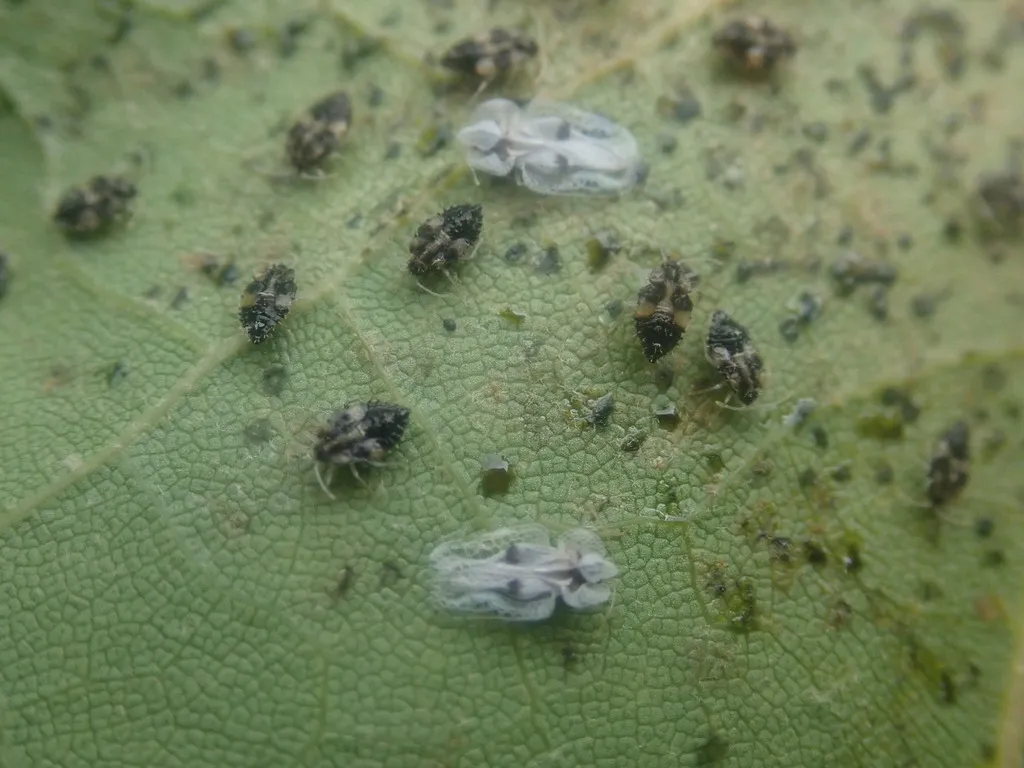
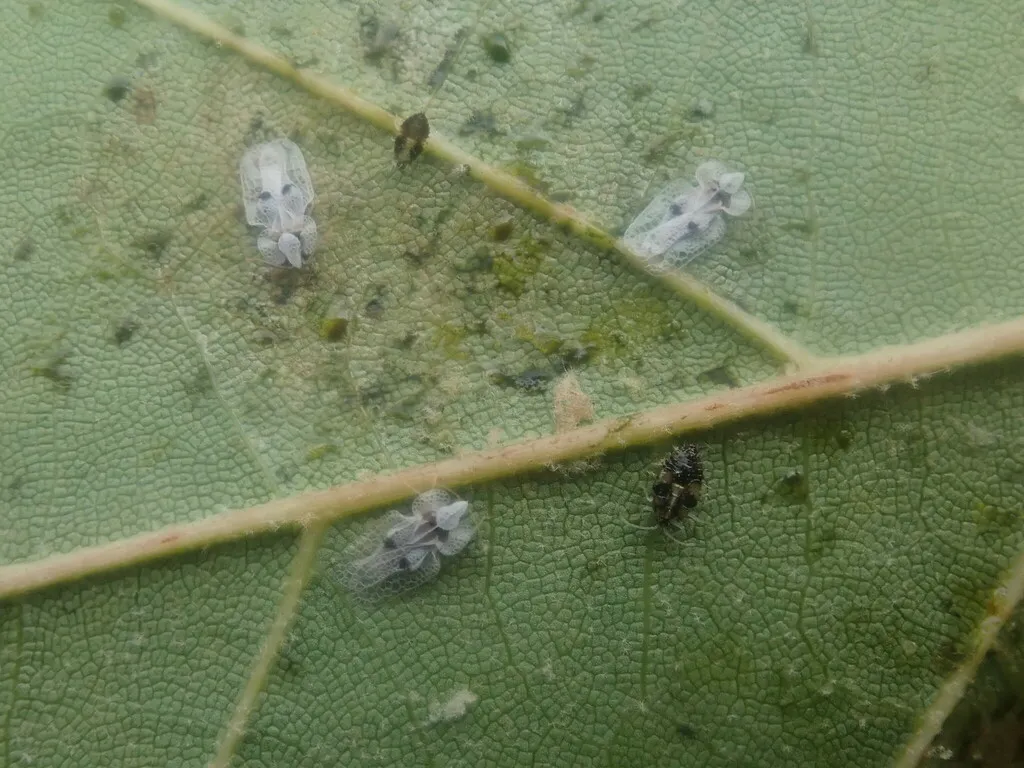
Nymphs look quite different from adults. They are smaller, darker, and covered with spiny bumps. Young nymphs are nearly black and have no wings. They slowly grow wing pads as they molt through five stages before becoming adults.
Common Species
-
Eastern Sycamore Lace Bug (Corythucha ciliata): The most common species in eastern North America. You find them wherever American sycamores grow. Closely related to oak lace bugs and hawthorn lace bugs, which share the same genus but feed on different host trees.
-
Western Sycamore Lace Bug (Corythucha confraterna): Found in western states on California sycamore and Arizona sycamore trees.
Sycamore Lace Bug Behavior and Biology
Sycamore lace bugs feed on sap and spend their active season on sycamore and plane trees. Adults spend winter in protected spots, usually under loose bark on their host trees. They may also hide in leaf litter, building cracks, or other sheltered areas nearby, making them one of several fall pests that may enter homes. A related species, Rhododendron Lace Bugs, shares similar characteristics.
In spring, when sycamore trees start growing new leaves, the adults come out and fly to the undersides of leaves. There they feed and lay eggs. Females attach eggs to the lower leaf surface with a sticky brown substance. They often hide eggs in the hairy parts of the leaf. One female can lay 250 to 350 eggs in her lifetime. Learn more about this pest family in our Lace Bug guide.
Eggs hatch within a few days. The young nymphs start feeding right away alongside the adults. Newly hatched nymphs stay together through their first three molts. After the fourth molt, nymphs may move to new leaves. The trip from egg to adult takes about 30 to 45 days, depending on temperature. For more information, read our guide on How To Kill Boxelder Bugs: Get Rid Of Them For Good.
Multiple generations occur each year. In cooler northern areas, two generations are typical. In warmer southern regions, populations may complete up to five generations per year. Numbers build throughout the growing season. The heaviest infestations happen in late summer.
Both nymphs and adults feed by poking their mouthparts into leaf cells and sucking out the contents. This removes the green color and creates a stippled or bleached look on leaves. Heavy feeding turns leaves yellow or bronze. Badly damaged leaves may drop early in late summer.
The insects also leave tar-like waste spots on leaf undersides. These dark spots, along with shed skins from molting nymphs, make it easy to spot a lace bug problem even without seeing the insects.
Treatment Methods for Sycamore Lace Bugs
Managing sycamore lace bugs takes a mix of good tree care, smart timing, and targeted treatments. These insects mainly attack trees rather than buildings. Control efforts aim to protect landscape trees and stop lace bugs from entering homes in large numbers.
Cultural and Preventive Approaches
Keeping trees healthy is the first step in lace bug control. Healthy, well-watered trees handle feeding damage much better than stressed trees. During dry spells, extra watering helps trees bounce back from lace bug injury. Avoid over-fertilizing too, since fast leaf growth can draw in more lace bugs.
If lace bugs are getting into your home in fall, seal entry points around windows, doors, and foundations. Weather stripping, caulk, and tight-fitting screens cut down on the number of bugs that make it inside. The same exclusion techniques also help prevent stink bugs and other overwintering pests from entering your home.
Monitoring and Assessment
Regular checks let you catch problems early, before populations get out of hand. Starting in late spring, look at the undersides of sycamore leaves for adults, nymphs, and black waste spots. Finding them early gives you the best chance to act before numbers explode.
Not every lace bug problem needs treatment. Healthy mature trees can usually handle moderate feeding without lasting harm. Before treating, think about the tree’s health, how bad the infestation is, and whether the damage is just ugly or truly hurting the tree.
Treatment Options
When control is warranted, several approaches can be effective:
-
Horticultural oils and insecticidal soaps work well when sprayed on leaf undersides. These contact materials do the best job when you catch infestations early and cover leaves fully.
-
Systemic insecticides can be applied as soil drenches or trunk injections. They give season-long protection for trees with heavy infestations. The product moves through the tree and kills lace bugs when they feed.
-
Contact insecticides knock down populations but need careful application to leaf undersides. Spraying when nymphs are young gives the best results.
References
- Sycamore Lace Bug - University of Florida IFAS Extension
- Corythucha ciliata - UMass Amherst Insect and Mite Guide mite
- Sycamore Lace Bug - NC State Extension
- Forest Pests of North America - Sycamore Lace Bug
Other Lace Bugs
Explore other species in the lace bugs family
Commonly Confused With
Sycamore Lace Bugs are often mistaken for these similar pests
Where Sycamore Lace Bugs Are Found
Hover over states to see their names. Green regions indicate where sycamore lace bugs have been reported.
Common Questions about Sycamore Lace Bugs
What do sycamore lace bugs eat?
+
Sycamore lace bugs feed exclusively on the sap of sycamore and plane trees. Both adults and nymphs pierce the leaf tissue from the underside and suck out cell contents, causing characteristic stippling damage on leaves.
Are sycamore lace bugs harmful to humans?
+
No, sycamore lace bugs do not bite, sting, or transmit diseases to humans. They are strictly plant feeders and pose no direct health risk to people or pets.
Why are sycamore lace bugs on my house?
+
In fall, adult sycamore lace bugs leave their host trees and seek protected overwintering sites. They often gather on sunny exterior walls and may enter homes through cracks around windows and doors.
Will sycamore lace bugs damage my trees?
+
Heavy infestations can cause leaves to turn yellow or bronze and drop prematurely. While healthy mature trees usually tolerate this damage, repeated severe infestations combined with other stress factors like drought can weaken trees over time.
How can I tell if my sycamore tree has lace bugs?
+
Look for yellow stippling on the upper leaf surface and check the undersides for small white adults, dark spiny nymphs, and black tar-like excrement spots. Damaged leaves may appear bleached or bronzed.
When are sycamore lace bugs most active?
+
Sycamore lace bugs are most active from late spring through early fall, with peak populations occurring in summer. They can complete two to five generations per year depending on climate.
Do sycamore lace bugs spread to other plants?
+
Sycamore lace bugs are host-specific and only feed on sycamore and plane trees. They will not damage other landscape plants, though other lace bug species like rhododendron lace bugs and hawthorn lace bugs may attack different host plants in your landscape.

With five years of hands-on experience in the pest control industry, George Schulz is a registered technician with the Virginia Pest Management Association and a proud third-generation professional in a family business that's been protecting homes for over 57 years. He manages and trains a team of service pros while also leading internal research efforts—recently spearheading a deep-dive review of thousands of documents on pest control materials to hand-pick the most kid and pet friendly, most effective solutions tailored specifically for homes in the DC metro area.