Two-Striped Grasshopper Identification Guide
Melanoplus bivittatus
The two-striped grasshopper is one of North America's most destructive grasshopper species, recognized by the pale yellow stripes running down its back. This large agricultural pest damages gardens, crops, and ornamental plants.
Taxonomy
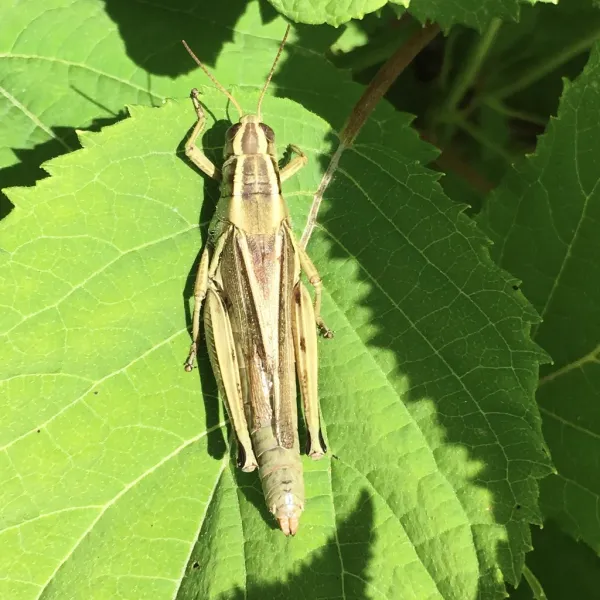
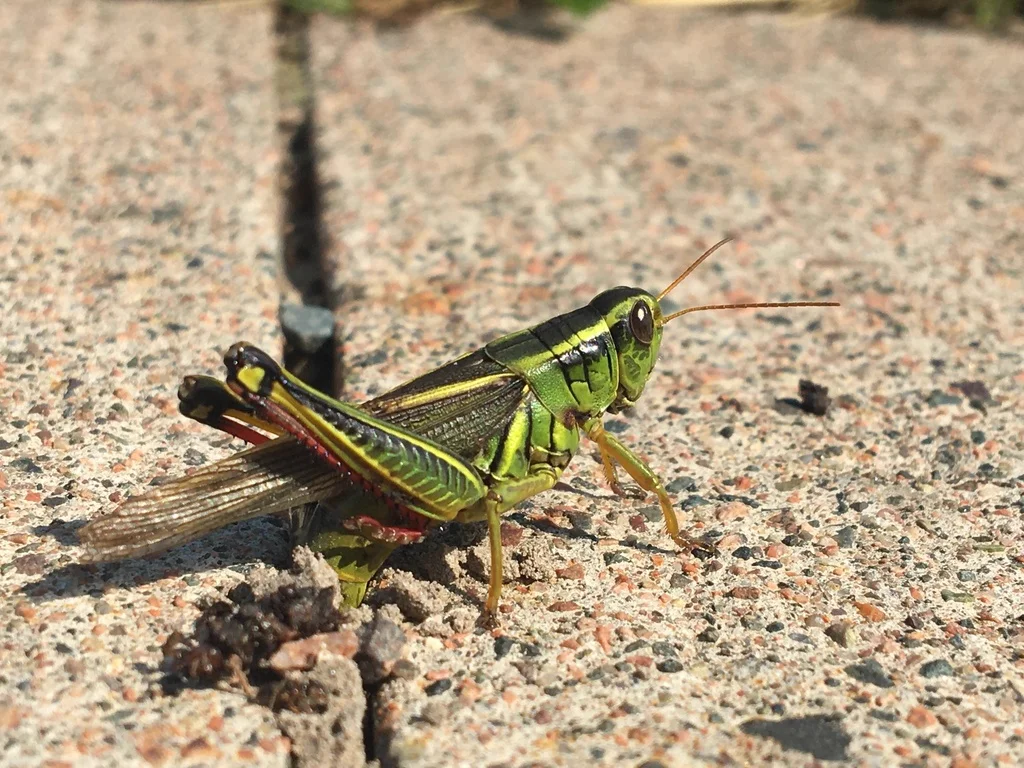
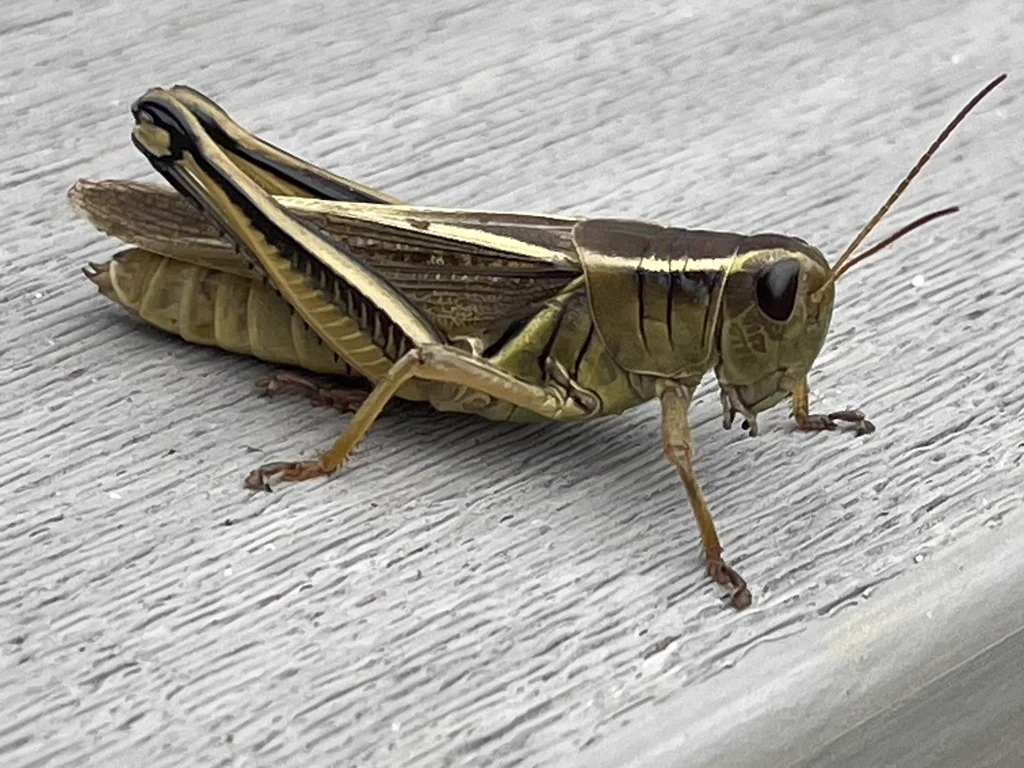
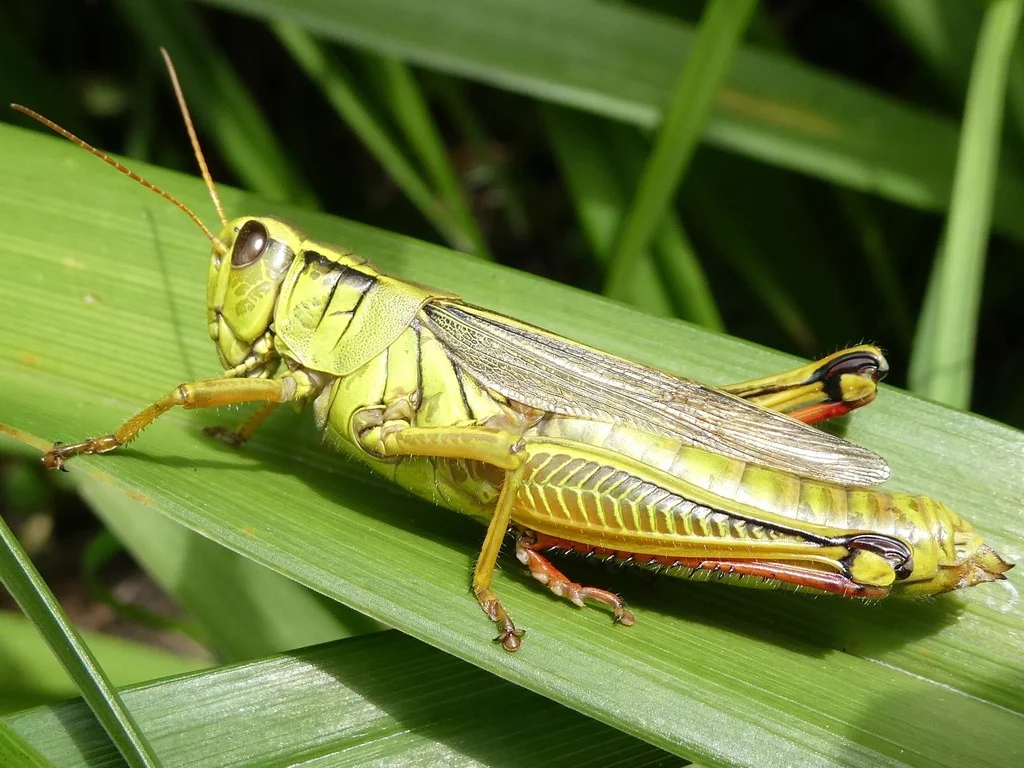
Two-Striped Grasshopper Coloration
Common color patterns to help identify two-striped grasshopper
Two-Striped Grasshopper
Seasonal Activity
When two-striped grasshopper are most active throughout the year

Where Two-Striped Grasshopper Are Found
Hover over states to see their names. Green regions indicate where two-striped grasshopper have been reported.
Two-Striped Grasshopper Identification Guide
Physical Characteristics
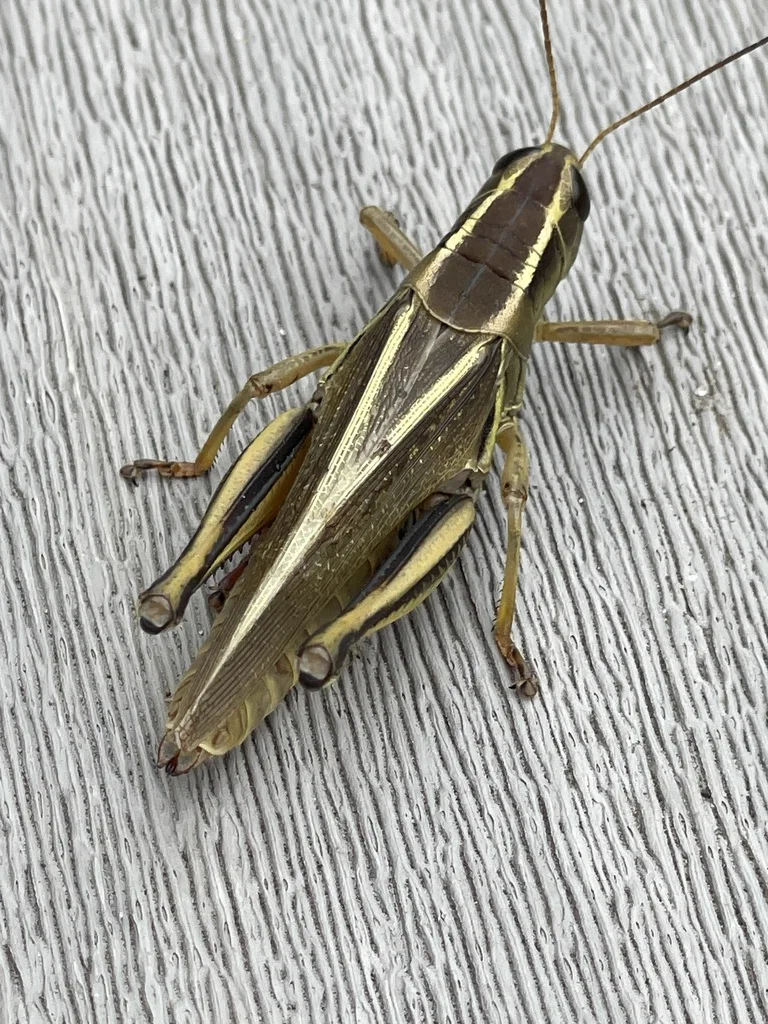
The two-striped grasshopper is one of the larger grasshopper species in North America. Adults measure one to two inches long. Females are larger than males. Their size and bold markings make them easy to spot among other grasshoppers.
The most obvious feature is a pair of pale yellow stripes. These stripes start behind the eyes, run along the back, and reach the wing tips. This is where the species gets its name. Body color ranges from bright green in young adults to brown or tan in older ones.
The back legs have black chevron markings on a yellow background. The lower back legs are usually blue-gray or pale. The antennae are short, much shorter than the body. This helps tell grasshoppers apart from crickets and katydids, which have long antennae.
Two-striped grasshoppers have two pairs of wings. The front wings are leathery and narrow with faint spots. The back wings are thin and clear to pale yellow. They fold like a fan under the front wings when at rest.
Common Species Variations
The two-striped grasshopper (Melanoplus bivittatus) is one species, but looks can vary. Young ones tend to be brighter green. Adults often darken to brown or olive as summer goes on. Grasshoppers from different areas may have stripes that look slightly different.
The Melanoplus genus has many similar-looking species. The differential grasshopper has chevron marks on the back legs but no stripes on its back. The red-legged grasshopper is smaller and has red back legs instead of pale ones.
Two-Striped Grasshopper Behavior and Biology
Life Cycle
Two-striped grasshoppers have one generation per year. Their life cycle has three stages: egg, nymph, and adult. Unlike butterflies, they do not go through a cocoon stage.
Females lay eggs in late summer and early fall. They drill into firm soil and lay 50 to 100 eggs in foam-like pods. One female may lay several pods in her lifetime. They prefer to lay eggs in undisturbed soil along field edges, roadsides, and weedy spots.
Eggs stay dormant through winter a few inches below the ground. They hatch in late spring when the soil warms up, usually from late April through June. The exact timing depends on the weather and can vary by weeks each year.
Newly hatched nymphs look like tiny adults but have no working wings. They molt five or six times as they grow. Wing buds appear early and get bigger with each molt. The nymph stage lasts about 50 to 60 days.
Adults emerge by midsummer and begin mating within a few weeks. Peak adult populations typically occur in July and August. Adults continue feeding and reproducing until killed by hard frosts in fall. A related species, High Plains Grasshopper, shares similar characteristics.
Feeding Habits A related species, Migratory Grasshoppers, shares similar characteristics.
Two-striped grasshoppers eat many types of plants. They consume leaves, flowers, stems, and seeds. Unlike some grasshoppers that only eat grass, these will feed on vegetables, fruits, flowers, shrubs, and farm crops. A related species, Packard Grasshopper, shares similar characteristics.
Favorite foods include alfalfa, clover, beans, lettuce, corn, and many garden vegetables. They also eat weeds and wild plants when crops are not around. Their willingness to eat almost anything green makes them very destructive. A related species, Bigheaded Grasshopper, shares similar characteristics.
Their feeding leaves ragged holes in leaves and notched edges. When numbers are high, they can strip plants bare. They often start at field and garden edges and move inward as food runs out.
Habitat and Distribution
Two-striped grasshoppers live across most of North America. They range from southern Canada through most of the United States into northern Mexico. They are only absent from the far southeastern coast and Alaska.
They prefer grasslands, prairies, farm fields, roadsides, and disturbed areas. They do well where weeds border farmland because these spots offer food and places to lay eggs. Gardens next to open fields are at high risk.
In dry years, grasshoppers may move from drying fields into watered yards where plants stay green. This can bring large numbers into gardens and yards almost overnight.
Treatment Methods for Two-Striped Grasshoppers
Controlling two-striped grasshoppers works best when you target them at the right time. Young nymphs are easier to control than flying adults. Watching for them early in the season makes treatment more effective.
Cultural Controls
Reducing favorable habitat near gardens helps lower grasshopper pressure. Keep weedy areas mowed along fence lines, ditches, and field edges where egg-laying commonly occurs. Removing tall grass and weeds eliminates both food sources and egg-laying sites.
Tilling soil in known egg-laying areas during fall or early spring exposes and destroys overwintering eggs. However, this approach works best in vegetable gardens or annual beds and should be avoided in established perennial plantings where it causes more harm than good.
Physical barriers such as row covers and garden netting can protect valuable plants during peak grasshopper season. While labor-intensive, exclusion is effective for small garden areas and high-value crops. Secure covers tightly at ground level to prevent grasshoppers from entering underneath.
Trap strips planted with attractive crops like clover or lettuce along garden borders can concentrate grasshoppers for easier treatment or removal. This technique sacrifices a small planting to protect the larger garden.
Biological Controls
Many animals feed on grasshoppers. Birds such as meadowlarks, sparrows, and hawks eat large numbers of them. Chickens and guinea fowl also provide grasshopper control in rural settings.
Nosema locustae is a biological control sold as bait. This parasite spreads through grasshopper groups when healthy ones eat dead infected ones. It works best on young nymphs and may take one or two seasons to cut numbers. This is better for large areas than for single gardens.
Certain fungi such as Beauveria bassiana and Metarhizium also kill grasshoppers. These are mostly used in large programs, but some products are sold for home use.
Chemical Controls
When grasshopper numbers are high and other methods fall short, insecticides may be needed. Carbaryl baits attract and kill grasshoppers well. These baits work best along field borders and gathering spots, not spread across whole gardens.
Contact sprays like pyrethrins and pyrethroids kill grasshoppers on plants quickly. Best results come from treating young nymphs before they grow wings and spread out. Adults are harder to kill and come back fast from untreated areas.
Treating when nymphs first appear gives the best results. Early sprays while nymphs are small and grouped together stop bigger problems later. Once adults fly off, control gets much harder and costs more.
Prevention Tips
Monitor your property in late spring for signs of hatching nymphs. Small grasshoppers gathering on plants near field edges signal the start of the season. Early detection allows for timely intervention before populations build.
A yard with varied plantings tends to support more birds and other animals that eat grasshoppers. This natural pressure on grasshopper numbers works alongside other control methods.
Keep plants healthy with proper watering and feeding. Strong plants handle some feeding damage and recover faster than weak ones. But avoid over-watering, which can turn your yard into a green spot that draws grasshoppers from dry areas around it.
Think about what is around your garden. Yards next to rangelands, hay fields, or weedy areas face more grasshoppers than those near forests or towns. In risky spots, use barriers and check often during summer.
References
Other Grasshoppers
Explore other species in the grasshoppers family
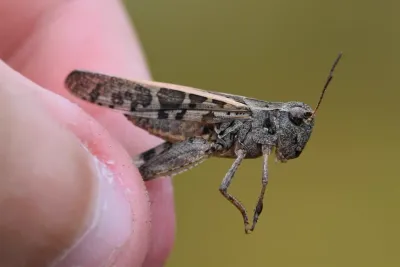
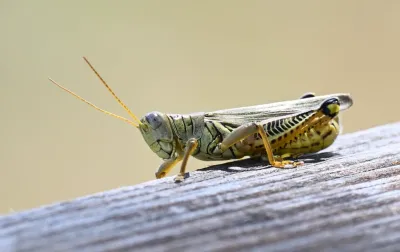
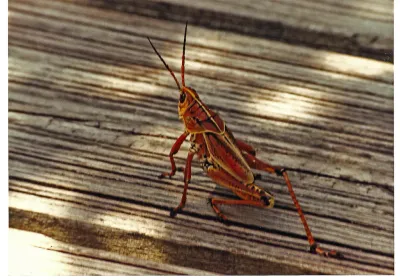
Commonly Confused With
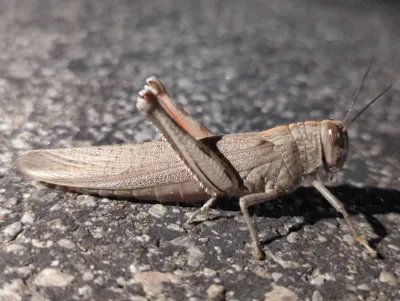
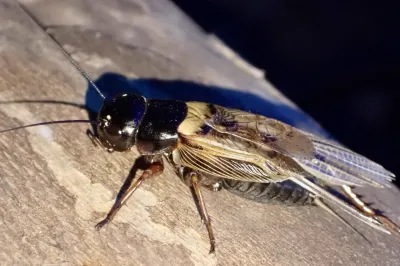
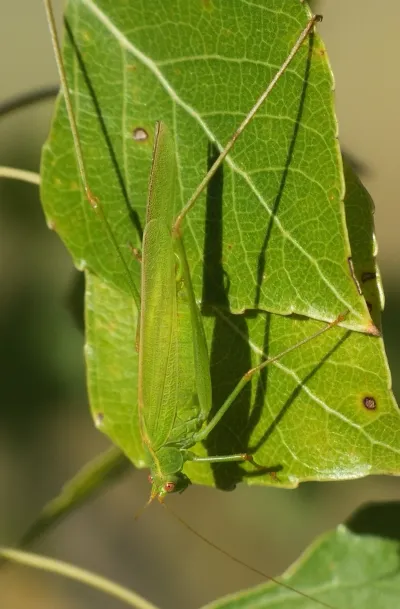
Two-Striped Grasshopper are often mistaken for these similar pests
Where Two-Striped Grasshopper Are Found
Hover over states to see their names. Green regions indicate where two-striped grasshopper have been reported.
Common Questions about Two-Striped Grasshopper
How can I identify a two-striped grasshopper?
+
Two-striped grasshoppers are large grasshoppers, typically one to two inches long, with two pale yellow or cream-colored stripes running from behind the eyes down the back to the wing tips. Their body color ranges from greenish-yellow to olive-brown, and they have black chevron markings on the hind femurs.
Are two-striped grasshoppers harmful to gardens?
+
Yes, two-striped grasshoppers are among the most destructive grasshopper species in North America. They feed on a wide variety of plants including vegetables, flowers, shrubs, and field crops. During outbreak years, they can cause severe damage to home gardens and agricultural fields.
When are two-striped grasshoppers most active?
+
Two-striped grasshoppers are most active from late June through September. Adults emerge in early summer after developing from eggs laid the previous fall. They feed most actively during warm, sunny days and become sluggish in cool or cloudy weather.
Do two-striped grasshoppers fly?
+
Yes, two-striped grasshoppers have fully developed wings and are strong fliers. They can fly considerable distances when searching for food or mates. However, they typically jump first and may use flight to escape predators or travel between feeding areas.
What attracts two-striped grasshoppers to my yard?
+
Two-striped grasshoppers are attracted to areas with abundant vegetation, especially lush gardens and green lawns adjacent to drier areas. They often move into irrigated landscapes from surrounding fields or grasslands when natural food sources dry out in summer.
How long do two-striped grasshoppers live?
+
The complete life cycle takes about one year. Eggs overwinter in the soil and hatch in late spring. Nymphs develop through five or six molts over about 60 days before becoming adults. Adults live through summer and fall, dying after the first hard frost.
What is the difference between two-striped grasshoppers and other grasshoppers?
+
The two-striped grasshopper is distinguished by the prominent pale stripes running down its back, larger size compared to many common species, and black chevron markings on the hind legs. Unlike some grasshoppers that prefer specific host plants, two-striped grasshoppers feed on almost any vegetation.

With five years of hands-on experience in the pest control industry, George Schulz is a registered technician with the Virginia Pest Management Association and a proud third-generation professional in a family business that's been protecting homes for over 57 years. He manages and trains a team of service pros while also leading internal research efforts—recently spearheading a deep-dive review of thousands of documents on pest control materials to hand-pick the most kid and pet friendly, most effective solutions tailored specifically for homes in the DC metro area.