Red-Legged Grasshoppers Identification Guide
Melanoplus femurrubrum
Red-legged grasshoppers are one of the most common and widespread grasshopper species in North America, recognized by their distinctive reddish-colored hind legs and known for causing damage to gardens, lawns, and agricultural crops.
Taxonomy
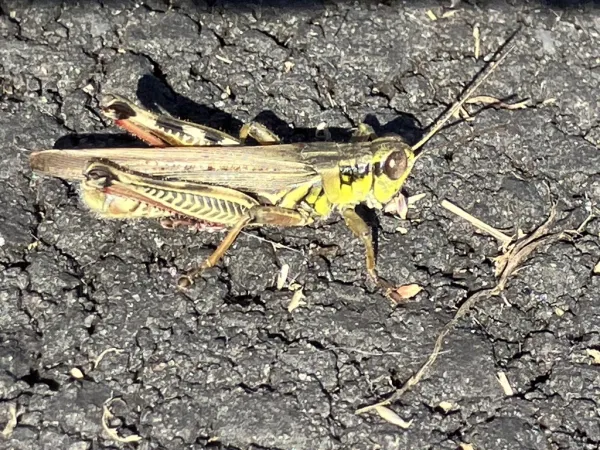
Red-Legged Grasshoppers Coloration
Common color patterns to help identify red-legged grasshoppers
Red-Legged Grasshoppers
Seasonal Activity
When red-legged grasshoppers are most active throughout the year

Where Red-Legged Grasshoppers Are Found
Hover over states to see their names. Green regions indicate where red-legged grasshoppers have been reported.
Red-Legged Grasshopper Identification Guide
Physical Characteristics
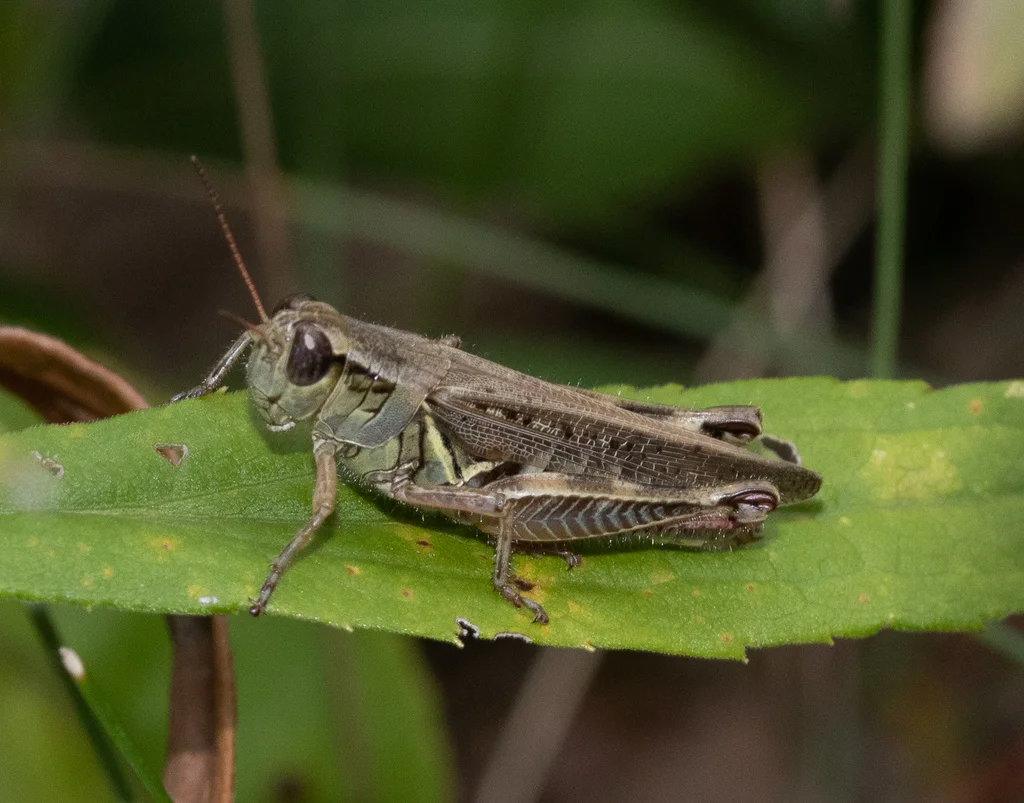
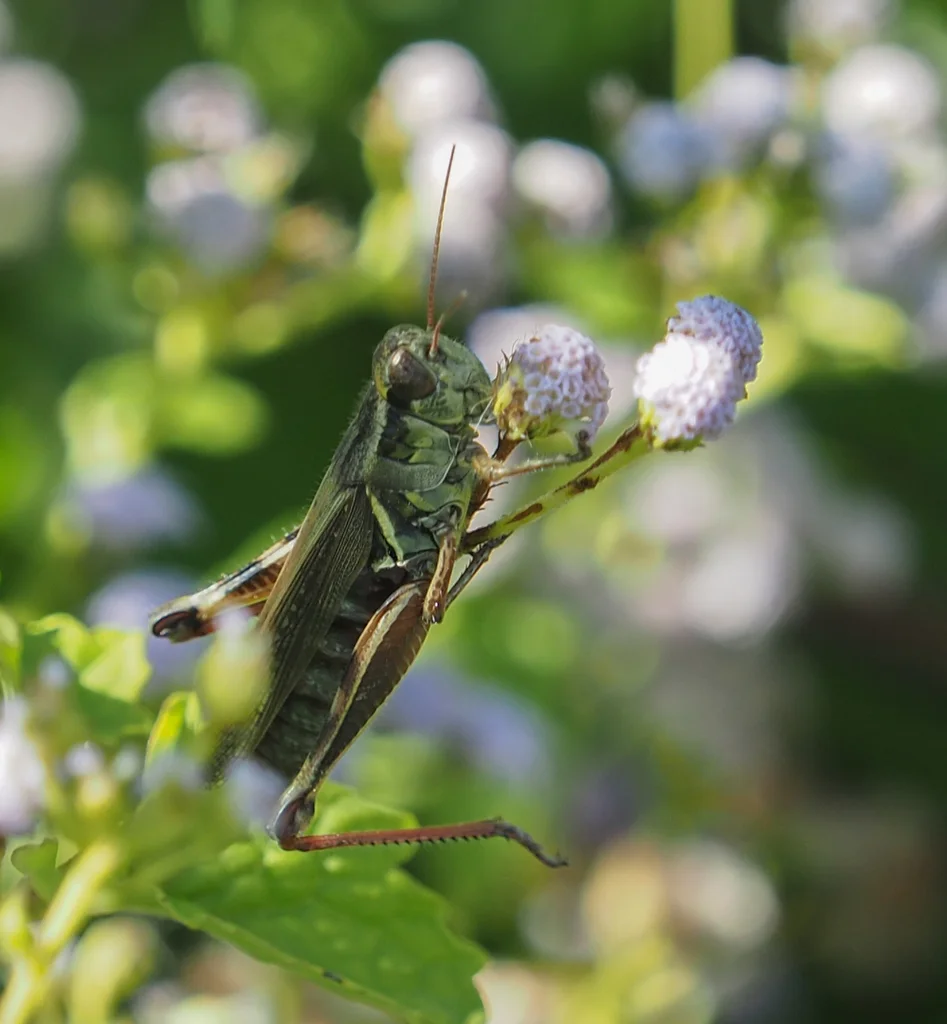
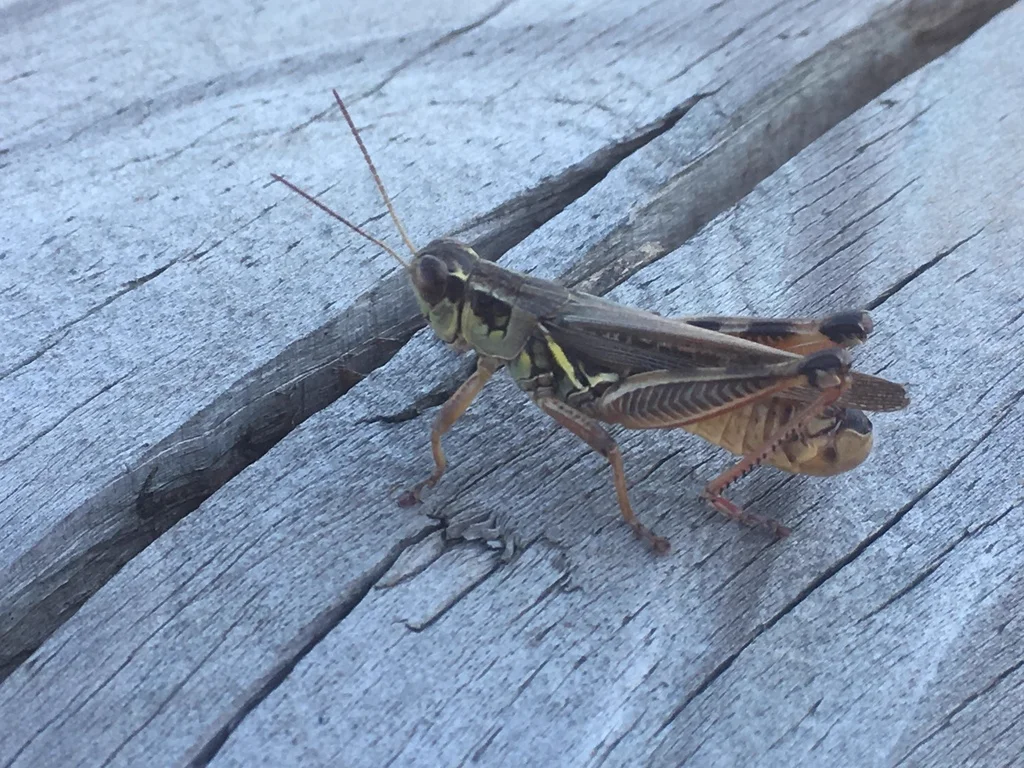
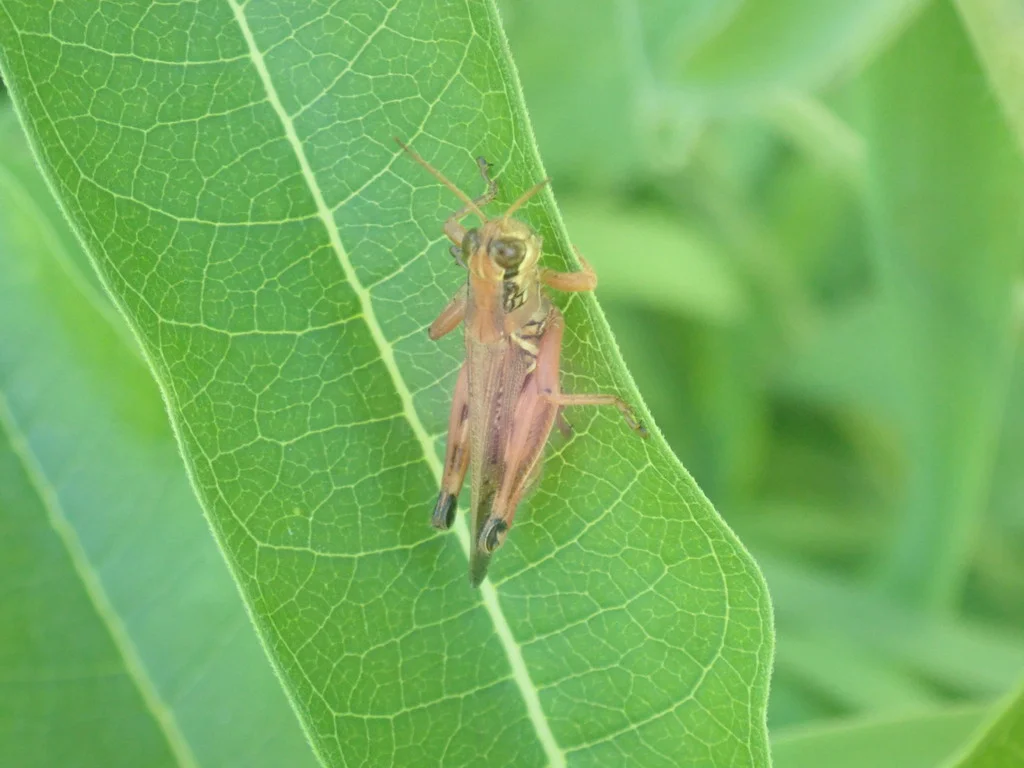
The red-legged grasshopper (Melanoplus femurrubrum) is a medium-sized grasshopper. Adults measure between 18 and 28 millimeters long. The most obvious feature is the bright red color on the lower part of their hind legs, called the tibiae. This red color can range from pale orange-red to deep red.
The body is usually yellowish-brown to olive-green, but the color can change based on what they eat. Two pale yellow stripes run down the back from behind the eyes to the wing bases. The underside of the body is yellow.
Males are smaller than females. Males measure 18 to 22 mm, while females are 22 to 28 mm. Both have fully developed wings that stick out past the abdomen when resting. The front wings are narrow and tough. They protect the larger back wings that fold underneath.
The head has large compound eyes on each side that give nearly 360-degree vision. Short antennae point forward and are always shorter than the body. This is one way to tell grasshoppers apart from crickets and katydids, which have much longer antennae.
Similar Species
Several grasshopper species can be confused with the red-legged grasshopper:
- Differential Grasshopper (Melanoplus differentialis): Larger with black chevron markings on the upper hind legs instead of red lower legs
- Two-striped Grasshopper (Melanoplus bivittatus): Has similar stripes but is larger and lacks red leg coloring
- Migratory Grasshopper (Melanoplus sanguinipes): A close relative with less red coloring, more common in western areas
The best way to identify this species is to look at the hind leg color. The bright red lower legs are the most reliable feature.
Red-Legged Grasshopper Behavior and Biology
Life Cycle
Red-legged grasshoppers go through three life stages: egg, nymph, and adult. The whole life cycle takes about one year. Most areas see only one generation per year.
In late summer and early fall, females lay eggs in the soil. They drill into firm soil and deposit clusters of 8 to 25 eggs. The eggs are wrapped in a foamy coating that hardens into a protective pod. Each female can lay several pods during her life, sometimes over 100 eggs total.
Eggs stay in the soil through winter, surviving freezing temperatures. When the soil warms in late spring, usually between late April and early June, the eggs hatch. In warmer southern areas, hatching happens earlier than in the north.
Newly hatched nymphs look like tiny adults but have no working wings. They are only a few millimeters long and start eating plants right away. Over the next few weeks, nymphs go through five or six growth stages. At each stage, they shed their outer skin and grow larger. Wing buds appear after several molts and get bigger each time. A related species, High Plains Grasshopper, shares similar characteristics.
The final molt into adulthood happens about 35 to 50 days after hatching. Adults can mate within one to two weeks. Most egg-laying takes place from mid-August through September. Adults live until the first hard frost, usually in October or November. A related species, Packard Grasshopper, shares similar characteristics.
Feeding Habits A related species, Bigheaded Grasshopper, shares similar characteristics.
Red-legged grasshoppers eat many types of plants. This flexible diet helps them thrive across North America. They have been seen eating over 100 different plant species, including grasses, weeds, vegetables, and garden plants.
Preferred food sources include:
- Grasses, especially young tender growth
- Clover and alfalfa
- Lettuce, beans, and other garden vegetables
- Dandelions and other broad-leaved weeds
- Corn, soybeans, and small grains
Their chewing mouthparts create ragged holes and notched edges on leaves. Heavy infestations can strip plants bare and eat stems and flowers too. One adult grasshopper can eat about half its body weight in plants each day.
Feeding is heaviest during warm, sunny weather. As cold-blooded insects, grasshoppers need heat from the sun to stay active. They warm up in the morning sun, then feed through midday and early afternoon. On cloudy or cool days, they eat much less.
Habitat Preferences
Red-legged grasshoppers live in open, sunny areas with mixed plants. They do well in grasslands, meadows, pastures, roadsides, and field edges. Lawns and gardens next to these areas often have grasshopper problems.
Preferred habitat characteristics include:
- Open areas with low to moderate vegetation
- Sunny exposure with warm microclimates
- Mix of grasses and broad-leaved plants for food
- Undisturbed soil areas for egg-laying
Females look for firm, well-drained soil with few plants to lay their eggs. Field edges, roadsides, ditch banks, and unmowed areas are common egg-laying spots. This is why grasshoppers often seem to come in from the edges of yards.
Treatment Methods for Red-Legged Grasshoppers
Good grasshopper control depends on timing. Young nymphs are much easier to kill than adults, so watching for them early in the season is key.
Cultural and Physical Controls
Changing the habitat can reduce grasshopper numbers over time. Keep grass mowed short to remove cover and make the area less appealing for feeding. Clear weedy borders and keep field edges tidy to reduce egg-laying spots.
Tilling soil where eggs are laid in late fall or early spring can destroy them. This works best for garden beds, not lawns or flower beds where tilling would cause damage.
Row covers and netting protect vegetable plants well. These barriers work best in small gardens where setup is easy. Make sure to secure the edges so grasshoppers cannot get under them.
Trap crops are another option. Planting a border of clover or wheat around the garden can draw grasshoppers to one area. You can then treat that area without touching the main garden.
Bait Treatments
Nosema locustae is a pathogen sold as grasshopper bait. When nymphs eat the infected bait, the pathogen grows inside them and kills them over time. This treatment works best when applied to young nymphs early in the season. It may take one to two seasons to see major results.
Carbaryl baits are another common option. These baits attract grasshoppers, which then eat the insecticide. Apply baits along field borders and areas where grasshoppers gather rather than across the whole property.
Chemical Control Options
When grasshopper numbers are high and damaging gardens, insecticide treatments may be needed. Contact insecticides with pyrethroids give quick results against grasshoppers on plants. These products need good coverage and work best on nymphs. Adults are harder to control with sprays because they can fly away and come back.
For best results, target young nymphs before they grow wings. Once adults can fly, control gets much harder. If possible, work with neighbors since grasshoppers move easily between yards.
Prevention Tips
Check your property in late spring for signs of hatching nymphs. Small grasshoppers gathering on plants near field edges or weedy areas signal the start of the season. Early action prevents larger problems later.
Keep grass mowed and weedy areas trimmed. This removes cover and makes your yard less appealing to grasshoppers looking for places to feed and lay eggs.
Water and fertilize plants to keep them healthy. Strong plants can handle some feeding damage and bounce back faster. Weak plants suffer more from grasshopper feeding.
References
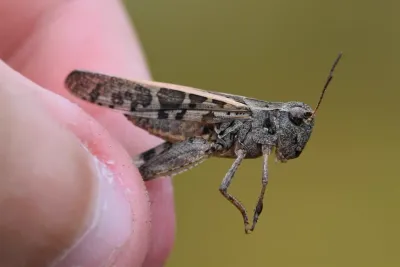
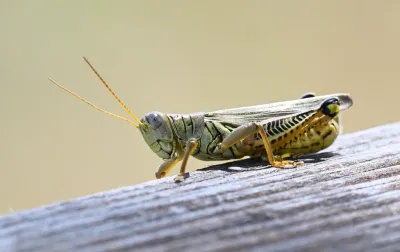
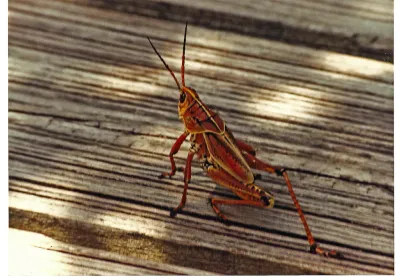
Other Grasshoppers
Explore other species in the grasshoppers family
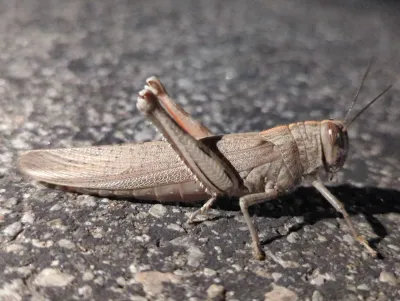
Commonly Confused With
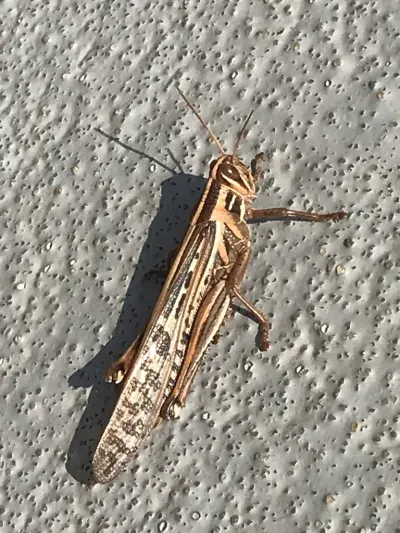
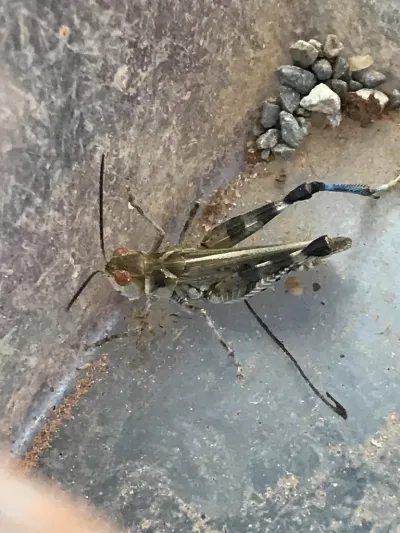
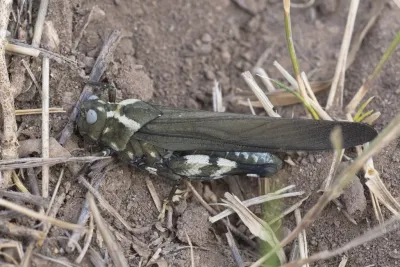
Red-Legged Grasshoppers are often mistaken for these similar pests
Where Red-Legged Grasshoppers Are Found
Hover over states to see their names. Green regions indicate where red-legged grasshoppers have been reported.
Common Questions about Red-Legged Grasshoppers
How do I identify a red-legged grasshopper?
+
Red-legged grasshoppers are medium-sized, ranging from 18 to 28 mm long. Their most distinctive feature is the red or reddish-orange coloring on the tibiae (lower portion) of their hind legs. The body is typically yellowish-brown to olive-green with a yellow underside. Look for two pale stripes running down the back from behind the eyes to the wing bases.
Are red-legged grasshoppers harmful to my garden?
+
Yes, red-legged grasshoppers are generalist feeders that consume a wide variety of plants. They can cause significant damage to vegetable gardens, ornamental plants, and lawns, especially during dry years when populations increase. A single grasshopper can eat half its body weight in plant material daily.
Do red-legged grasshoppers bite humans?
+
Red-legged grasshoppers do not bite humans in the traditional sense. While they have strong mandibles for chewing plants, they are not aggressive toward people. If handled, they may regurgitate a brown liquid (called 'tobacco juice') as a defense mechanism, which can stain skin and clothing but is not harmful.
Why are there so many red-legged grasshoppers in my yard?
+
Red-legged grasshoppers thrive in sunny, open areas with plenty of vegetation. Weedy areas, unmowed grass, and nearby agricultural fields can all serve as breeding grounds. Dry, warm summers tend to produce larger grasshopper populations because these conditions reduce fungal diseases that normally keep numbers in check.
What time of year are red-legged grasshoppers most active?
+
Red-legged grasshoppers are most active from late June through September. Nymphs hatch from soil-buried eggs in late spring, mature through summer, and adults reach peak numbers by midsummer. Activity decreases in fall as temperatures drop, and adults die off after the first hard frost.
Can red-legged grasshoppers fly?
+
Yes, red-legged grasshoppers have fully developed wings and can fly short distances. However, they typically prefer to jump using their powerful hind legs. When disturbed, they often make a quick jump followed by a short flight to escape. Flying becomes more common when searching for food or mates.
How do I control red-legged grasshoppers?
+
Keep grass mowed short to reduce egg-laying sites. Use row covers to protect garden plants. Apply insecticide baits to areas where grasshoppers gather. Target young nymphs in early summer for best results, as adults are harder to control.

With five years of hands-on experience in the pest control industry, George Schulz is a registered technician with the Virginia Pest Management Association and a proud third-generation professional in a family business that's been protecting homes for over 57 years. He manages and trains a team of service pros while also leading internal research efforts—recently spearheading a deep-dive review of thousands of documents on pest control materials to hand-pick the most kid and pet friendly, most effective solutions tailored specifically for homes in the DC metro area.