Pallid-Winged Grasshopper Identification Guide
Trimerotropis pallidipennis
The pallid-winged grasshopper is a widespread band-winged grasshopper native to western North American deserts. Known for its strong flight abilities and distinctive pale yellowish hindwings, this species thrives in arid and semi-arid habitats with sparse vegetation.
Taxonomy
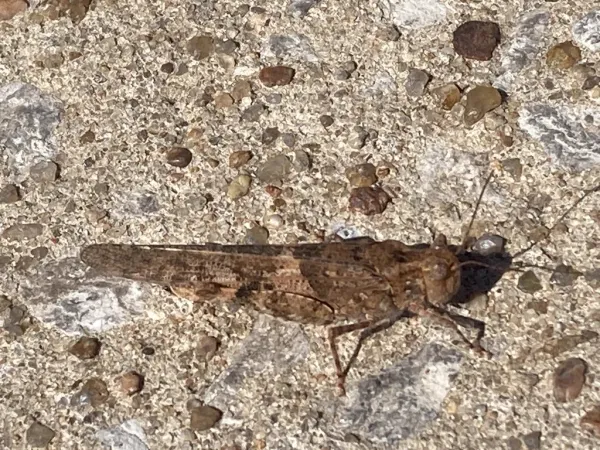
Pallid-Winged Grasshopper Coloration
Common color patterns to help identify pallid-winged grasshopper
Pallid-Winged Grasshopper
Seasonal Activity
When pallid-winged grasshopper are most active throughout the year
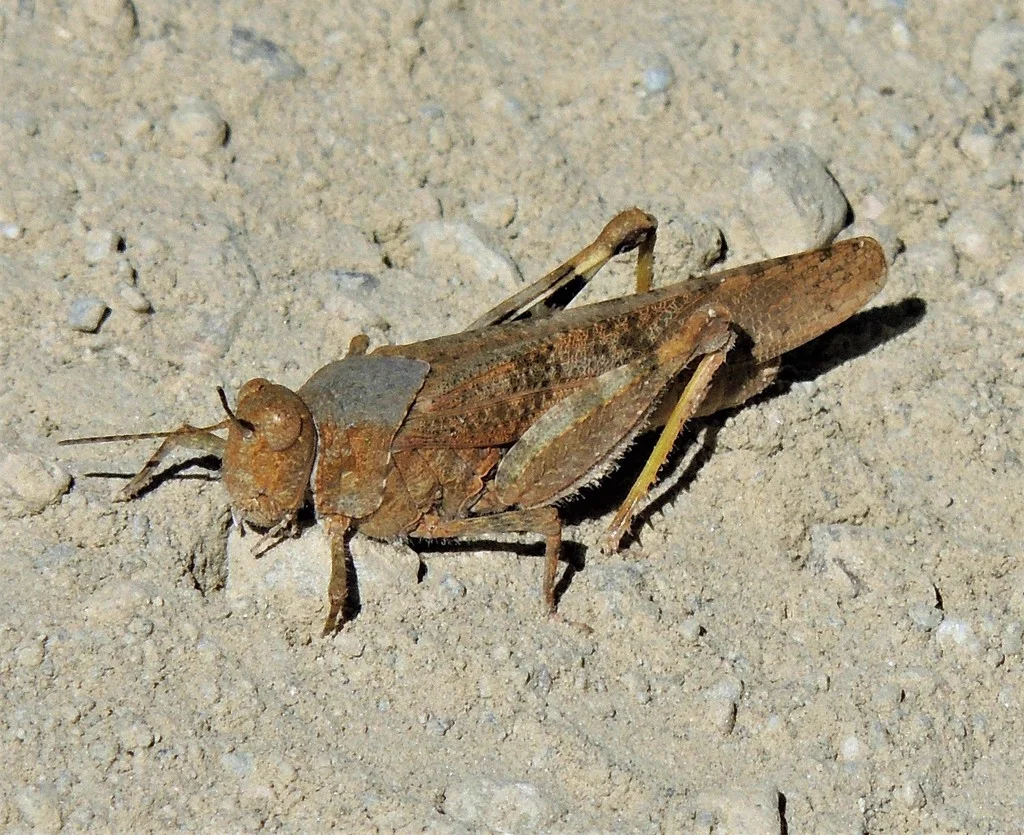
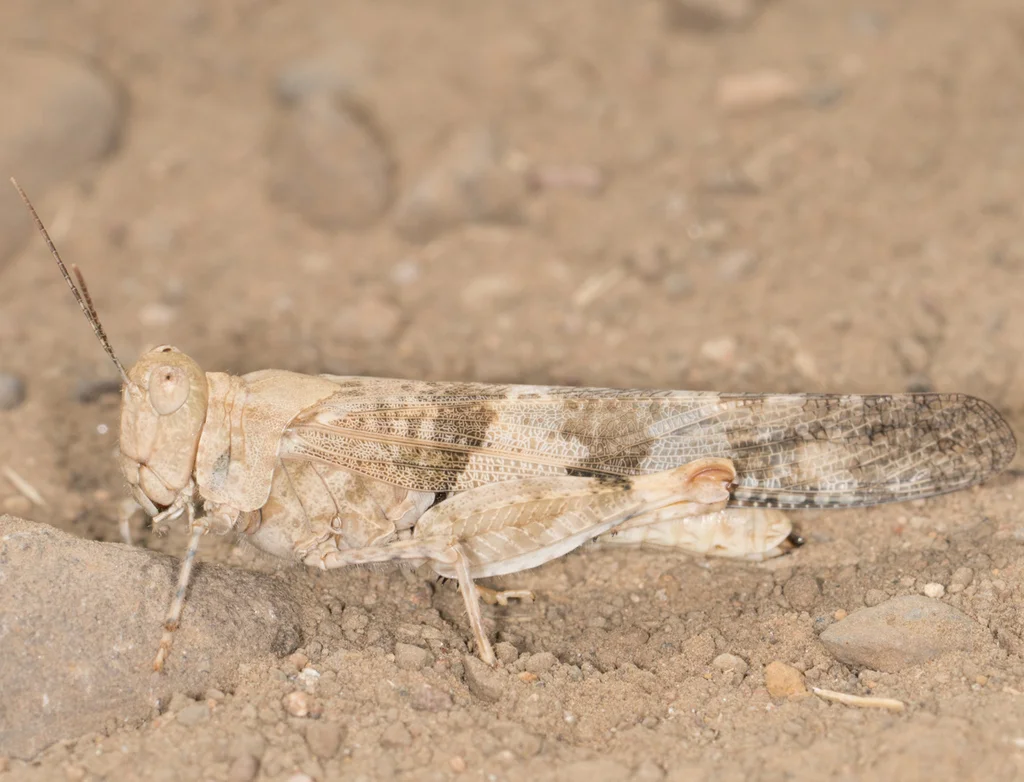
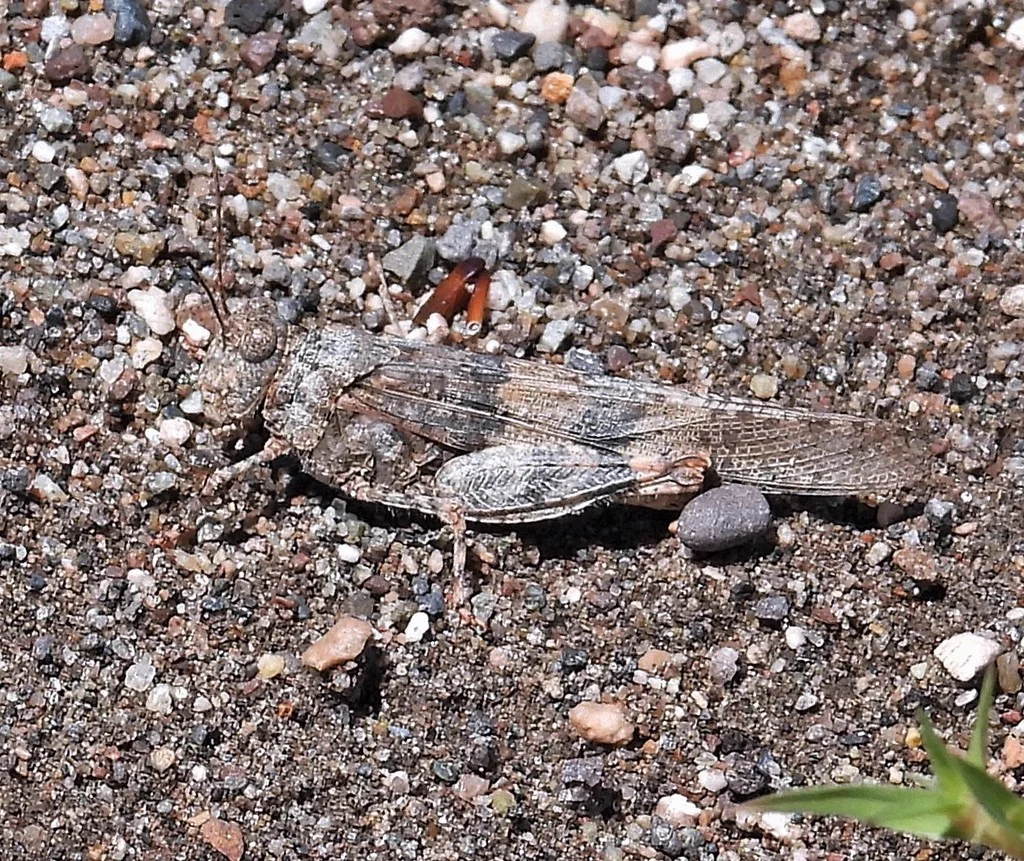

Where Pallid-Winged Grasshopper Are Found
Hover over states to see their names. Green regions indicate where pallid-winged grasshopper have been reported.
Pallid-Winged Grasshopper Identification Guide
Physical Characteristics
The pallid-winged grasshopper is a medium-sized insect found mainly in deserts across western North America. Males measure 25 to 35 mm long. Females are larger at 30 to 45 mm. Both have wings that extend past the tip of the abdomen.
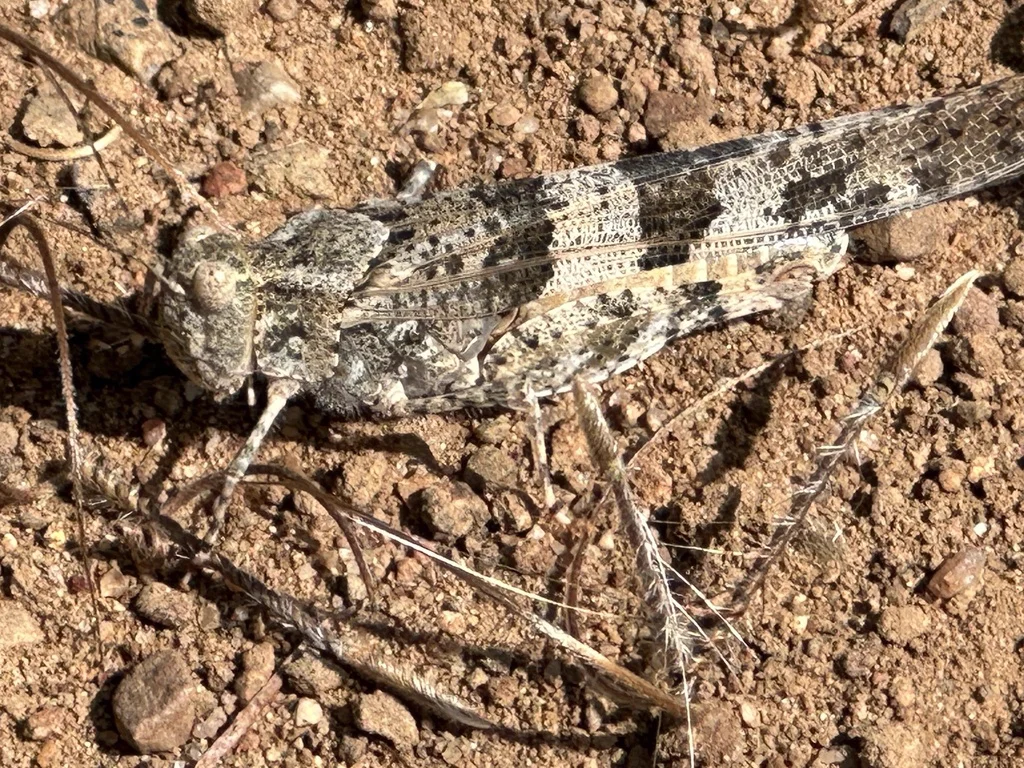
The forewings show mottled patterns of tan, gray, or brown. These colors help the grasshopper blend in with bare ground and gravel. Two dark bands cross each forewing, and brown spots dot the wing tips. This coloring makes resting grasshoppers hard to see on desert soils.
The hindwings are the best way to identify this species. They range from white to pale yellow, which gives the grasshopper its name. A narrow black band runs through the center of each hindwing. The outer part of the wing is see-through. When the grasshopper flies, these pale wings flash against its darker body.
The pronotum is the plate covering the middle body section. It has a ridge down the center that is cut twice near the front. Body color varies to match local soils. Grasshoppers in sandy areas tend to be light tan. Those in rocky terrain are often darker gray or brown.
Similar Species
Several other grasshoppers live in the same areas and look similar:
-
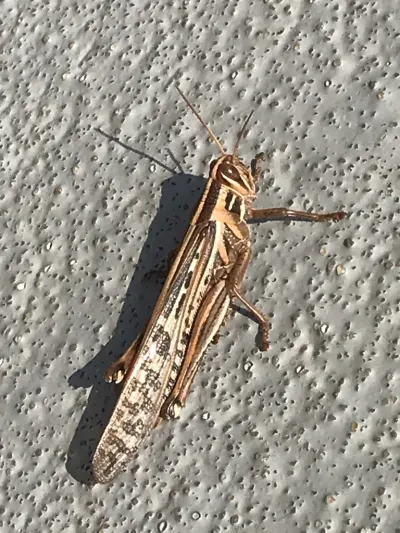
Carolina Grasshopper (Dissosteira carolina): Has black hindwings with a yellow border instead of pale wings with a black band. It is larger and lives across a wider range.
-
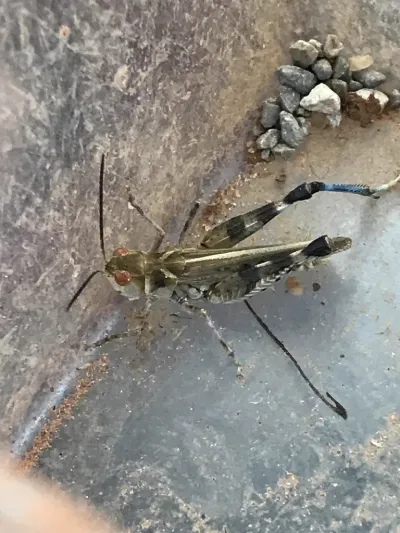
Clear-winged Grasshopper (Camnula pellucida): Smaller with fully clear hindwings that have no dark band. More common in grasslands.
-
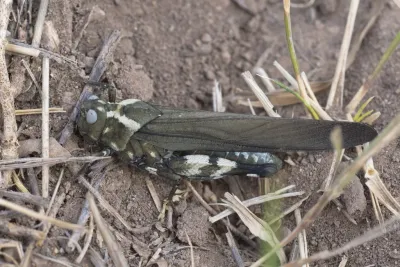
Three-banded Grasshopper (Hadrotettix trifasciatus): Has several dark bands on the hindwings instead of just one.
The pallid-winged grasshopper belongs to a group of over 40 related species. Many look alike, which makes them hard to tell apart. Check the hindwing color, band pattern, and body shape to identify this species.
Pallid-Winged Grasshopper Behavior and Biology
Flight and Movement
The pallid-winged grasshopper is a strong flier. This lets it travel far across desert areas and leave places where plants have dried up. Adults often fly several hundred meters when startled or looking for food.
Males make short flights and snap their hindwings to create crackling sounds. These sounds help attract females. The noise combined with the flashing pale wings catches the attention of mates.
After landing, a male walks straight toward a resting female. He then rubs pegs on his hind leg against a vein on his forewing. This makes a trilling sound you can hear if you are close by. A related species, High Plains Grasshopper, shares similar characteristics.
Habitat Preferences A related species, Two-Striped Grasshopper, shares similar characteristics.
These grasshoppers live mainly in western North American deserts. Their numbers sometimes grow large enough to cause damage. They prefer areas with scattered shrubs and grasses along with plenty of bare ground. The grasshoppers rest and sun themselves on open soil and gravel. Their colors help them hide from predators. A related species, Migratory Grasshoppers, shares similar characteristics.
Pallid-winged grasshoppers do well in places with thin plant cover. Sandy washes, rocky slopes, desert flats, and bare areas all support them. They avoid thick vegetation and shaded spots. They need bare ground for resting and loose soil for laying eggs. A related species, Differential Grasshopper, shares similar characteristics.
Watered areas in the desert often draw these grasshoppers, especially during dry spells. Gardens, farm fields, and yard plants near desert land may see damage when grasshoppers move in looking for green plants and water.
Life Cycle and Reproduction
Females lay eggs in the soil during late summer and fall. The female uses prongs on her body to drill into the ground. She places eggs in a protective pod that hardens around them. They prefer to lay eggs in sandy or gravelly soil with few plants.
Eggs stay dormant through winter. Warmth and moisture in spring trigger hatching. The timing depends on location. In southern Arizona, adults may appear as early as mid-April. In cooler areas like Colorado, Utah, and Wyoming, adults usually show up in early June.
Young grasshoppers go through five to six growth stages before becoming adults. At each stage, their wing buds get larger. After the final molt, they have working wings. This growth period lasts about 40 to 60 days based on how warm it is.
Adults stay active from late spring through fall. Most are seen from early June to October. Hard frosts kill the adults, but their eggs survive in the soil through winter.
Diet and Feeding
Pallid-winged grasshoppers eat many types of desert plants. Common foods include creosote bush, mesquite, saltbush, native grasses, and flowering plants. They eat whatever plants are around and change their diet based on what is available.
Their feeding leaves ragged holes and notched edges on leaves. During years when numbers are high, they can cause major plant damage in certain areas. Their strong flying ability lets grasshoppers from nearby places gather on watered plants and gardens.
Treatment Methods for Pallid-Winged Grasshoppers
Pallid-winged grasshoppers sometimes cause damage when their numbers spike in desert areas. Most years, populations stay low and cause little harm.
Cultural and Habitat Management
Changing the environment around your property helps control grasshoppers. These insects like bare ground and thin plant cover. Planting more densely makes areas less appealing for resting and egg laying.
Watered yards next to desert land face the most risk during dry times. Grasshoppers move in looking for green plants. Keeping a buffer of less appealing plants between the desert and your garden can slow their movement.
Tilling the soil in fall or early spring destroys eggs before they hatch. Focus on sandy or gravelly spots with few plants where females are likely to lay eggs.
Biological Control Approaches
Natural predators help keep grasshopper numbers down. Birds, lizards, rodents, and predatory insects all eat grasshoppers. Areas with varied wildlife tend to have fewer grasshopper problems.
Nosema locustae is a disease organism that works against young grasshoppers when applied as bait. It works best early in the season before the nymphs grow wings. Results may take one or two seasons to show as the disease spreads.
Certain fungi also kill grasshoppers and are used in some large-scale control programs.
Chemical Control Options
When grasshopper numbers get high enough to cause damage, insecticide baits can help. Products with carbaryl attract grasshoppers. They eat the bait and die from the active ingredient. Apply baits along field edges and where grasshoppers gather rather than across entire properties.
Contact insecticides kill grasshoppers quickly when sprayed on plants. These work best on young nymphs. Adults are harder to kill because of their size and ability to fly away. You need to cover plants well for good results.
For best results, treat early in the season when nymphs are small and cannot fly yet. Once grasshoppers grow wings, control gets much harder because new ones keep flying in from nearby areas.
Prevention Strategies
Watch desert edges and bare areas in late spring for young grasshoppers. Small nymphs gathering on plants mean the season has started. This is your best chance to act before numbers grow.
Keep your plants healthy with proper watering and care. Healthy plants handle some feeding damage better and bounce back faster than stressed ones.
Think about your location when planning gardens in desert areas. Yards right next to wild desert land will likely see more grasshoppers than those farther away or blocked by buildings and thick plants.
References
- Pallidwinged Grasshopper - University of Wyoming Grasshopper Field Guide
- Pallidwinged Grasshopper Species Fact Sheet - USDA Agricultural Research Service
- Pallid-winged Grasshopper - Wikipedia
- Trimerotropis pallidipennis - Grasshoppers of the Western U.S.
- Pallid-winged Grasshopper - Montana Field Guide
- Pallid-winged Grasshopper - iNaturalist
Other Grasshoppers
Explore other species in the grasshoppers family
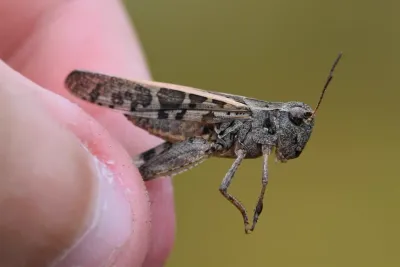
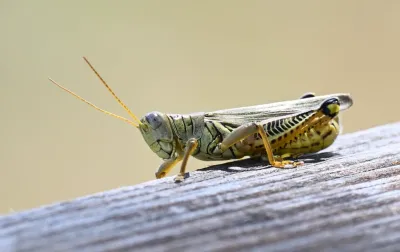
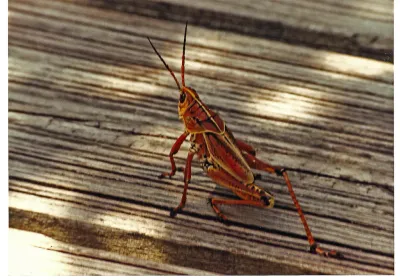
Commonly Confused With
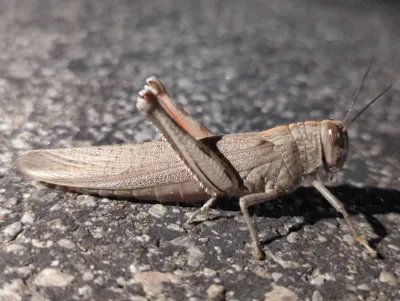
Pallid-Winged Grasshopper are often mistaken for these similar pests
Where Pallid-Winged Grasshopper Are Found
Hover over states to see their names. Green regions indicate where pallid-winged grasshopper have been reported.
Common Questions about Pallid-Winged Grasshopper
How do I identify a pallid-winged grasshopper?
+
Pallid-winged grasshoppers are medium-sized, measuring 25 to 45 mm long. They have tan or gray mottled forewings with two dark transverse bands. Their hindwings are pale yellow to white with a narrow but conspicuous black band through the center. The pronotum has a median carina that is cut twice near the front.
Where are pallid-winged grasshoppers found?
+
Pallid-winged grasshoppers are the most widely distributed band-winged grasshopper in the New World. They range from southwestern Canada through the western United States and Mexico to Argentina. Their primary habitats are deserts and semi-arid regions with sparse vegetation and bare ground.
What do pallid-winged grasshoppers eat?
+
Pallid-winged grasshoppers are generalist feeders that consume a variety of desert shrubs, forbs, and grasses. Common food plants include creosote bush, mesquite, saltbush, and various grasses. They prefer tender new growth and will feed on whatever vegetation is available in their habitat.
Are pallid-winged grasshoppers harmful?
+
Pallid-winged grasshoppers can cause agricultural damage during population outbreaks, though they are typically considered minor pests. In desert habitats, they occasionally damage irrigated crops and gardens when dry conditions push them into green areas seeking food and moisture.
What sound do pallid-winged grasshoppers make?
+
Males produce crepitation sounds during flight by snapping their hindwings rapidly. This crackling or buzzing sound accompanies courtship flights. They also stridulate by rubbing their hind legs against their forewings, producing a trilling sound that attracts females.
When are pallid-winged grasshoppers most active?
+
Adults typically appear from mid-spring to fall, with timing varying by location. In southern Arizona, adults emerge in mid-April, while in Colorado, Utah, and Wyoming they appear in early June. Peak activity occurs during warm, sunny days when they bask on bare ground and make frequent short flights.
Why are they called pallid-winged grasshoppers?
+
The name refers to their hindwings, which are pale yellow to white in color. The word pallid means pale or lacking in color. When the grasshopper flies, these light-colored hindwings flash, contrasting with the black central band and creating a distinctive visual display.

With five years of hands-on experience in the pest control industry, George Schulz is a registered technician with the Virginia Pest Management Association and a proud third-generation professional in a family business that's been protecting homes for over 57 years. He manages and trains a team of service pros while also leading internal research efforts—recently spearheading a deep-dive review of thousands of documents on pest control materials to hand-pick the most kid and pet friendly, most effective solutions tailored specifically for homes in the DC metro area.