Bigheaded Grasshopper Identification Guide
Aulocara elliotti
The bigheaded grasshopper is a medium-sized rangeland pest recognized by its proportionally large head and distinctive X-pattern on its back. Common across western North America, it causes significant damage to grasslands and rangelands.
Taxonomy
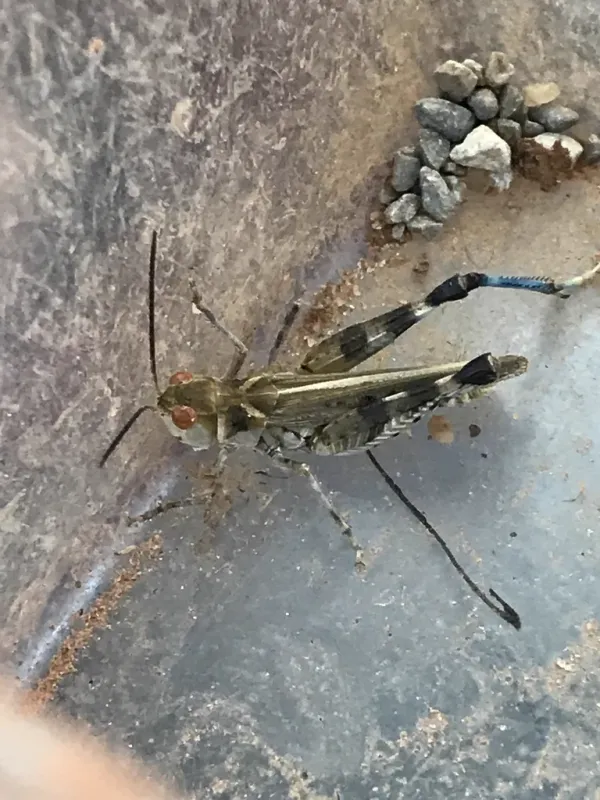
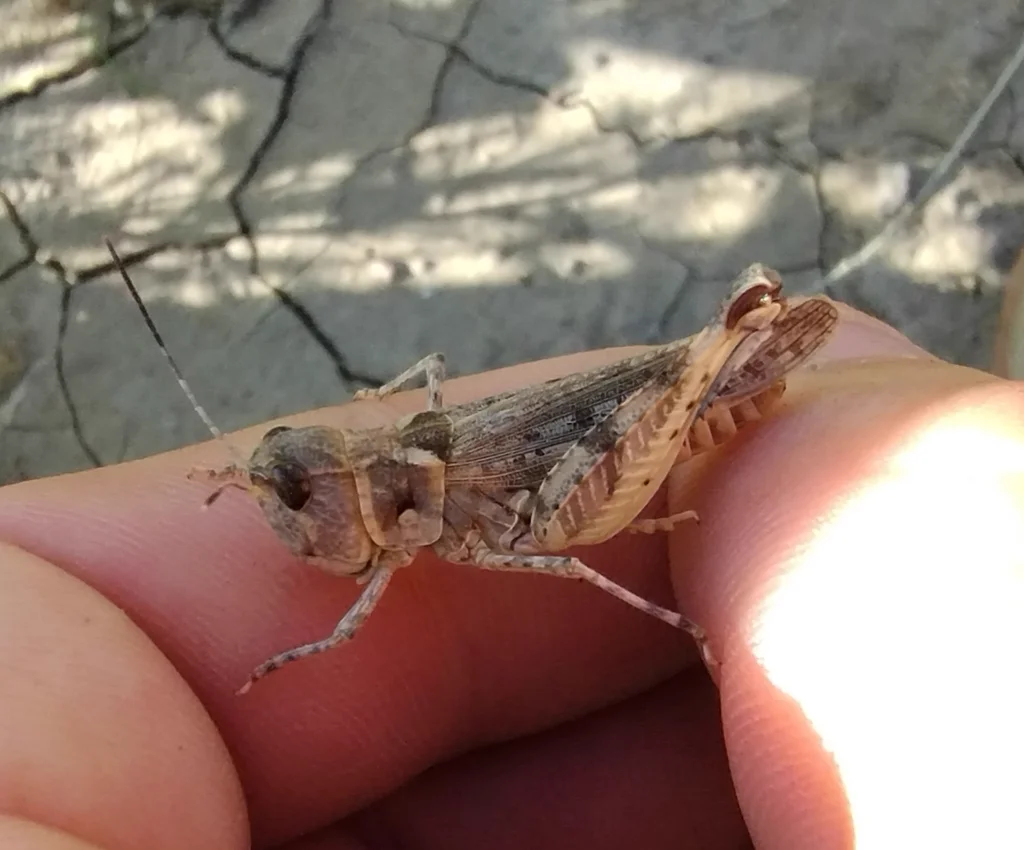
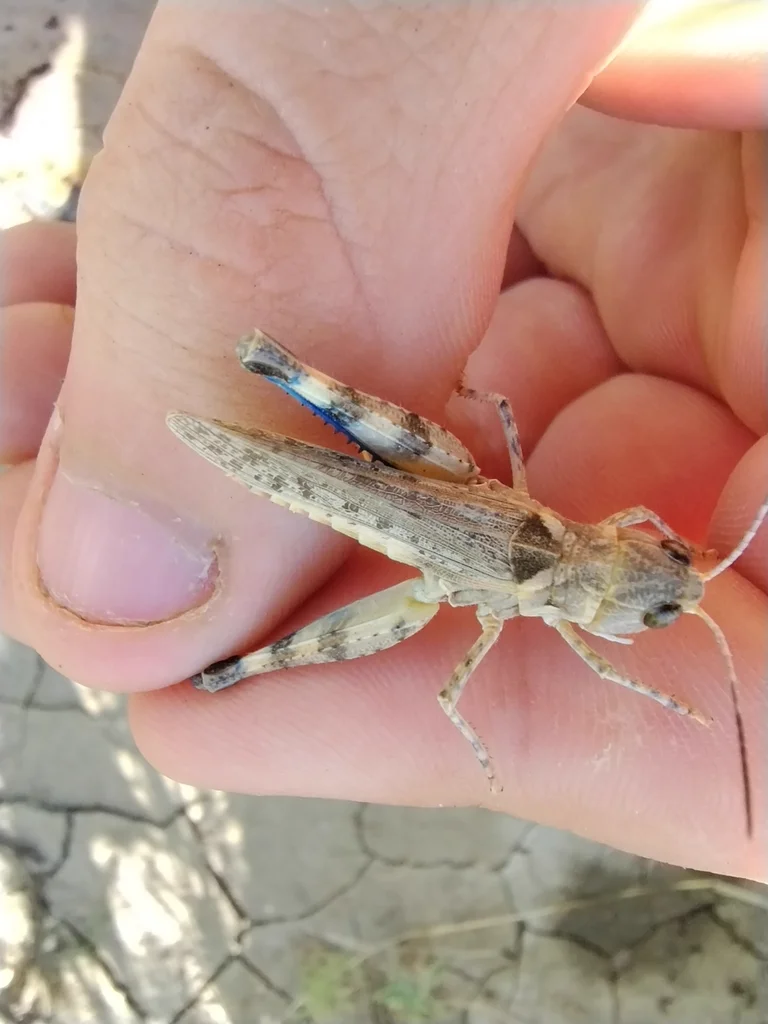
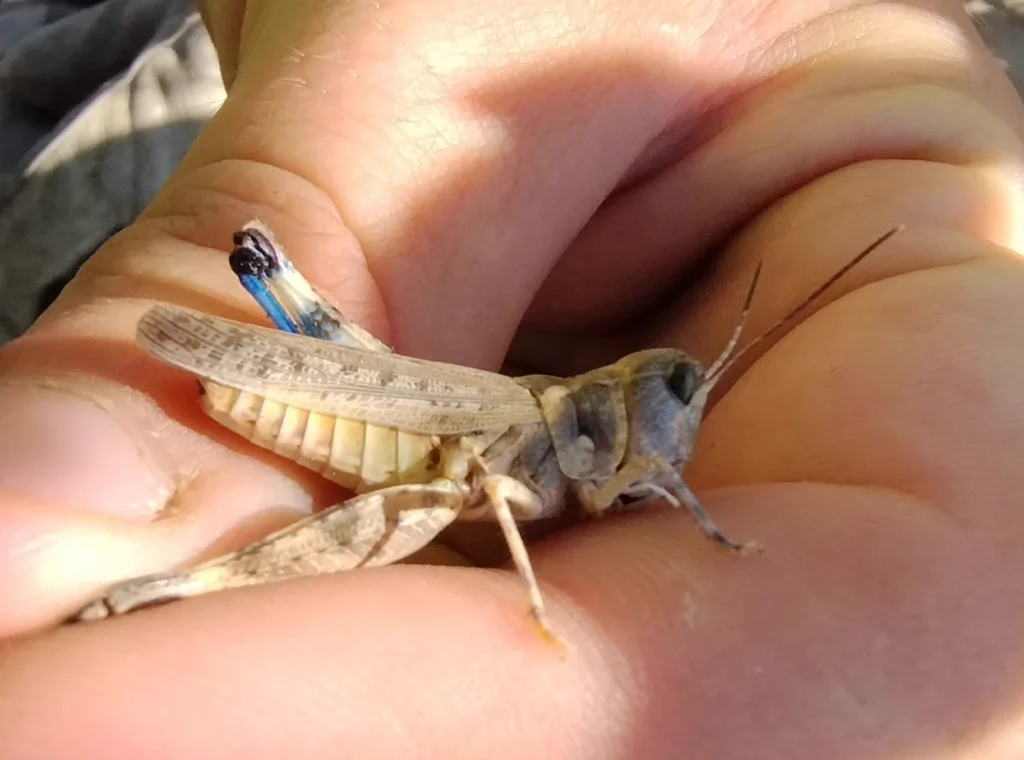
Bigheaded Grasshopper Coloration
Common color patterns to help identify bigheaded grasshopper
Bigheaded Grasshopper
Seasonal Activity
When bigheaded grasshopper are most active throughout the year

Where Bigheaded Grasshopper Are Found
Hover over states to see their names. Green regions indicate where bigheaded grasshopper have been reported.
Bigheaded Grasshopper Identification Guide
Physical Characteristics
Bigheaded grasshoppers are medium-sized insects named for their large heads. Males measure 17 to 20 mm long. Females are slightly larger at 20.5 to 22 mm. Males weigh about 189 mg on average. Females average 476 mg, with some reaching over 660 mg.
The body is gray with darker markings across the surface. The easiest way to identify this species is by its large head with a slightly slanted face. From above, you can see light-colored lines on the back plate that form an X-shaped pattern.
The hind legs have key features for identification. The upper leg has two black bars that wrap around to the inner side. The knee is black. The lower leg is medium blue, which stands out against the gray body. The spotted front wings extend just past the tip of the abdomen.
Young grasshoppers (nymphs) look like small adults but lack full wings. They share the same color pattern as adults. The blue lower legs with three dark bands show up even in young nymphs. This helps tell them apart from other grasshopper species.
Similar Species
Bigheaded grasshoppers look similar to the greenstriped grasshopper (Aulocara femoratum). You can tell adult females apart by looking at the underside of the abdomen. Bigheaded grasshoppers have a smooth edge. Greenstriped grasshoppers have two deep notches.
Other grasshoppers that live in similar areas include:
- Migratory Grasshopper (Melanoplus sanguinipes): Found over a wider area. Has different leg markings and no X-pattern on its back.
- Two-striped Grasshopper (Melanoplus bivittatus): Has pale stripes down its back instead of an X-pattern.
- Clear-winged Grasshopper (Camnula pellucida): Smaller with a straw color. Does not have an oversized head.
To confirm you have a bigheaded grasshopper, look for these features together: large head, X-pattern on the back, black bars on the upper hind legs, and medium-blue lower hind legs.
Bigheaded Grasshopper Behavior and Biology
Life Cycle
Bigheaded grasshoppers complete one generation per year. Females lay eggs in early summer. They drill into bare soil patches and deposit 7 to 9 pale yellow eggs in the top half inch of soil. The eggs are protected by a tough casing called a pod.
The embryos develop about halfway before going dormant for winter. This dormant state is called diapause. Hatching occurs in mid-spring, mostly during morning hours. Eggs need about 450 day-degrees of heat above 50 degrees Fahrenheit to hatch.
Young grasshoppers go through four to five growth stages over 36 to 42 days. Males usually have four stages. Females have five before becoming adults. During this time, wing buds grow larger with each molt. The final molt reveals working wings. A related species, High Plains Grasshopper, shares similar characteristics.
Female adults are ready to mate at six to eight days old. Males attract females using visual signals. They tip their hind legs up and wave their antennae. Mating lasts 40 to 70 minutes. Females start laying eggs at 12 to 20 days old. Most adults live about 20 days in the wild. A related species, Differential Grasshopper, shares similar characteristics.
Feeding Habits
Bigheaded grasshoppers eat mainly grasses. Their favorite foods include blue grama, western wheatgrass, needleandthread, and crested wheatgrass. In spring, they eat a lot of cheatgrass while it is still green. They switch to other grasses when cheatgrass dries out.
Unlike many grasshoppers, this species shows little interest in broad-leafed plants. They also avoid sagebrush. This makes them less likely to invade gardens with mixed plantings.
These grasshoppers have a distinct feeding style. They climb grass blades and chew into leaves at different spots. They often cut through leaves completely. Studies show they sample about 2 to 3 grass species per insect rather than sticking to just one.
Their feeding causes major damage to rangelands. Research shows that one grasshopper per square yard cuts grass yield by about 20 pounds per acre. This is a big loss when typical yearly grass production is only around 600 pounds per acre.
Daily Activity and Movement
Bigheaded grasshoppers spend most of their time on the ground. Their activity depends on temperature. They start basking one to two hours after sunrise to warm up. Normal feeding and movement begin when air hits about 70 degrees Fahrenheit and soil reaches 95 degrees.
When it gets too hot, these grasshoppers change their behavior. If air temperature goes above 90 degrees or soil above 120 degrees, some hide in the shade. Others lift their bodies off the hot ground by standing on straight legs. This is called stilting.
Most adults stay in the same area where they hatched. But they can move to new spots when needed. When startled, they fly short hops of 2 to 7 feet. They fly low, just 4 to 12 inches off the ground, in a straight, quiet path.
Some grasshoppers travel much farther. Records show migrations of one to seven miles in Arizona. Remains found on Grasshopper Glacier in Montana suggest mass migrations happened in the past. These long trips likely occur when food runs out or conditions change.
Population Dynamics
Bigheaded grasshopper numbers change a lot from year to year. In good conditions, populations can double each year for three to four years. During outbreak years, they may grow three to four times larger. High numbers can last five years or more before dropping.
During outbreaks, you might find 20 grasshoppers per square yard in prairies. Desert grasslands can have up to 40 per square yard. At these levels, they strip rangeland bare. This destroys grazing value for livestock and can cause soil erosion.
Population crashes happen for several reasons. Disease plays a big role, especially infection by the parasite Nosema. More predators also help reduce numbers. Bad weather that kills eggs or young grasshoppers also brings populations down.
Treatment Methods for Bigheaded Grasshoppers
Bigheaded grasshoppers mainly affect rangelands, not homes or yards. You rarely see them in cities or suburbs. Control efforts focus on protecting grazing lands for livestock.
Cultural and Habitat Management
Keeping rangeland healthy helps reduce grasshopper damage. Well-managed grasslands with the right grazing pressure support more natural predators. They also create conditions that limit grasshopper population growth.
On smaller properties, you can try reducing bare ground. Females like to lay eggs in open soil. But removing all bare patches is not practical on large ranches.
Watch for grasshoppers in spring when young nymphs first appear. Nymphs stay near where they hatched before spreading out. This makes spring the best time to spot growing problems early.
Biological Control
Many natural enemies help keep grasshopper numbers in check. Ground beetles, robber flies, and birds eat lots of nymphs and adults. Parasitic wasps and flies also attack grasshopper populations.
The parasite Nosema locustae causes disease in grasshoppers. You can buy it as bait for use on rangelands. Infected grasshoppers get weak and die over several weeks. The disease spreads from sick grasshoppers to healthy ones. It works best when applied to young nymphs before they spread out.
Fungal diseases also kill grasshoppers naturally. Species like Entomophaga and Beauveria can cause die-offs. This happens more often in wet weather when fungi grow well.
Chemical Control Considerations
When grasshopper numbers reach damaging levels, insecticide treatments may be needed. Carbaryl-based baits are common for grasshopper control on rangelands. Grasshoppers eat the bait along with the grain it is mixed with.
Treatments work best on young nymphs before they grow wings and spread. Border treatments can stop grasshoppers from moving into valuable areas. This approach treats less land while still protecting important grazing resources.
Large-scale programs often coordinate treatments across many properties or whole regions. Working together gives better results than treating one property at a time.
References
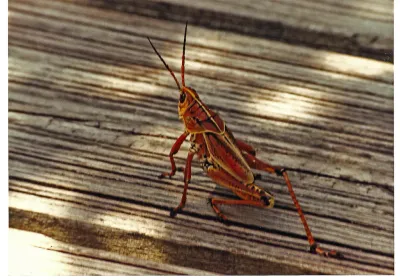
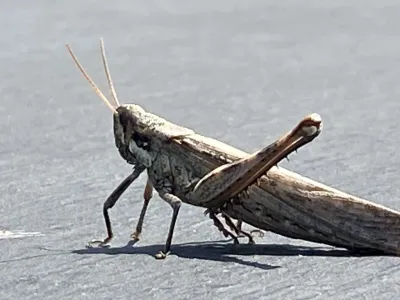
Other Grasshoppers
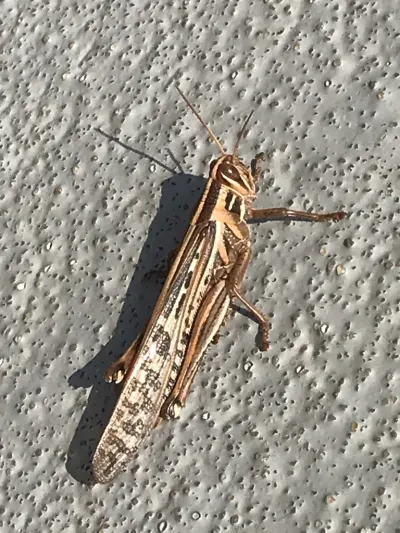
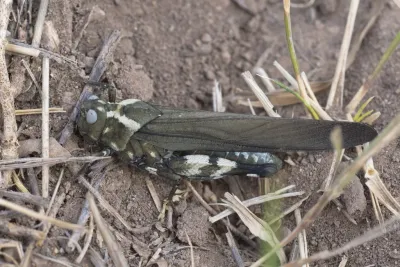
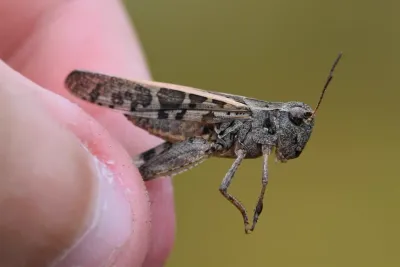
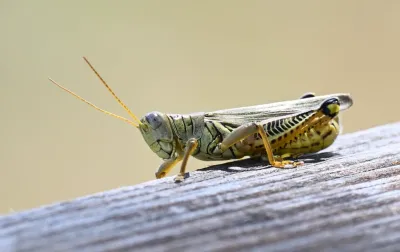
Explore other species in the grasshoppers family
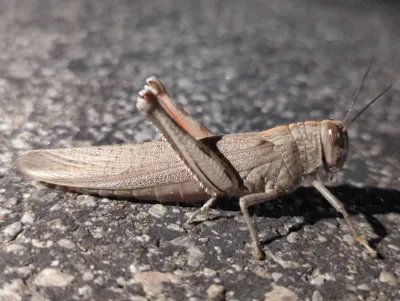
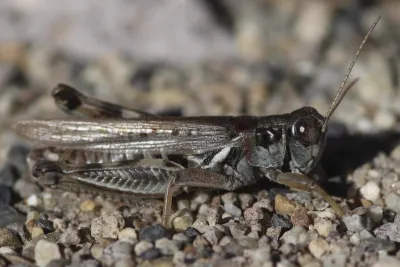
Commonly Confused With
Bigheaded Grasshopper are often mistaken for these similar pests
Where Bigheaded Grasshopper Are Found
Hover over states to see their names. Green regions indicate where bigheaded grasshopper have been reported.
Common Questions about Bigheaded Grasshopper
How do I identify a bigheaded grasshopper?
+
Bigheaded grasshoppers are medium-sized, about 17 to 22 mm long. They are gray with darker markings. Their large head and slanted face are the easiest features to spot. Look for an X-shaped pattern on the back, two black bars on the upper hind leg, and blue lower hind legs.
Where are bigheaded grasshoppers found?
+
These grasshoppers live in grasslands across western North America. Their range goes from southern Canada to central Mexico. You find them most often in desert grasslands and prairies. They are common on rangelands in the Great Plains and mountain west states.
Are bigheaded grasshoppers harmful?
+
Yes, they are serious pests on rangelands. They mainly eat grasses and can swarm to 20 to 40 per square yard during outbreaks. At these numbers, they can destroy grazing land for cattle. Heavy feeding can leave soil bare and lead to erosion.
What do bigheaded grasshoppers eat?
+
They eat mainly grasses like blue grama, western wheatgrass, and crested wheatgrass. In spring they eat lots of cheatgrass. As that dries, they move to other grasses. They do not like broad-leafed plants or sagebrush.
When are bigheaded grasshoppers most active?
+
Adults are most active from late spring through early fall. They start moving around when air hits 70 degrees Fahrenheit. When it gets above 90 degrees, they slow down and look for shade or lift up off the hot ground.
How long do bigheaded grasshoppers live?
+
They have one generation per year. Adults live about 20 days in the wild. Eggs laid in early summer spend the winter in the soil. They hatch the next mid-spring. Young grasshoppers grow for 36 to 42 days before becoming adults.
Can bigheaded grasshoppers fly?
+
Yes, they can fly short distances of 2 to 7 feet when startled. They fly low and quiet, just 4 to 12 inches off the ground. Some have been known to migrate much farther, up to seven miles in some cases.

With five years of hands-on experience in the pest control industry, George Schulz is a registered technician with the Virginia Pest Management Association and a proud third-generation professional in a family business that's been protecting homes for over 57 years. He manages and trains a team of service pros while also leading internal research efforts—recently spearheading a deep-dive review of thousands of documents on pest control materials to hand-pick the most kid and pet friendly, most effective solutions tailored specifically for homes in the DC metro area.