Spotted Wing Drosophila Identification Guide
Drosophila suzukii
The spotted wing drosophila is an invasive fruit fly from Asia that attacks ripening soft fruits like berries and cherries before harvest, causing significant agricultural damage across North America.
Taxonomy
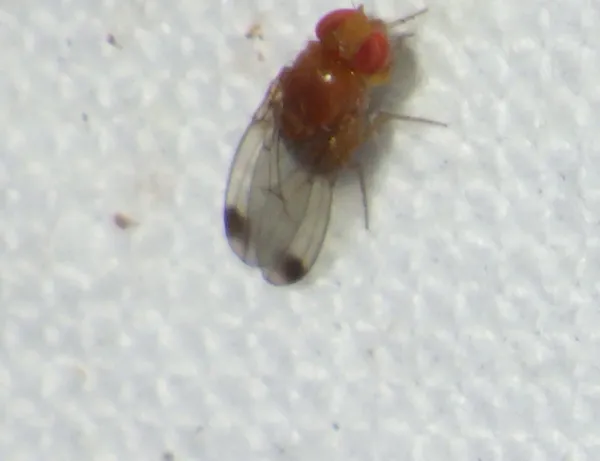
Spotted Wing Drosophila Coloration
Common color patterns to help identify spotted wing drosophila
Spotted Wing Drosophila
Seasonal Activity
When spotted wing drosophila are most active throughout the year

Where Spotted Wing Drosophila Are Found
Hover over states to see their names. Green regions indicate where spotted wing drosophila have been reported.
Spotted Wing Drosophila Identification Guide
Physical Characteristics
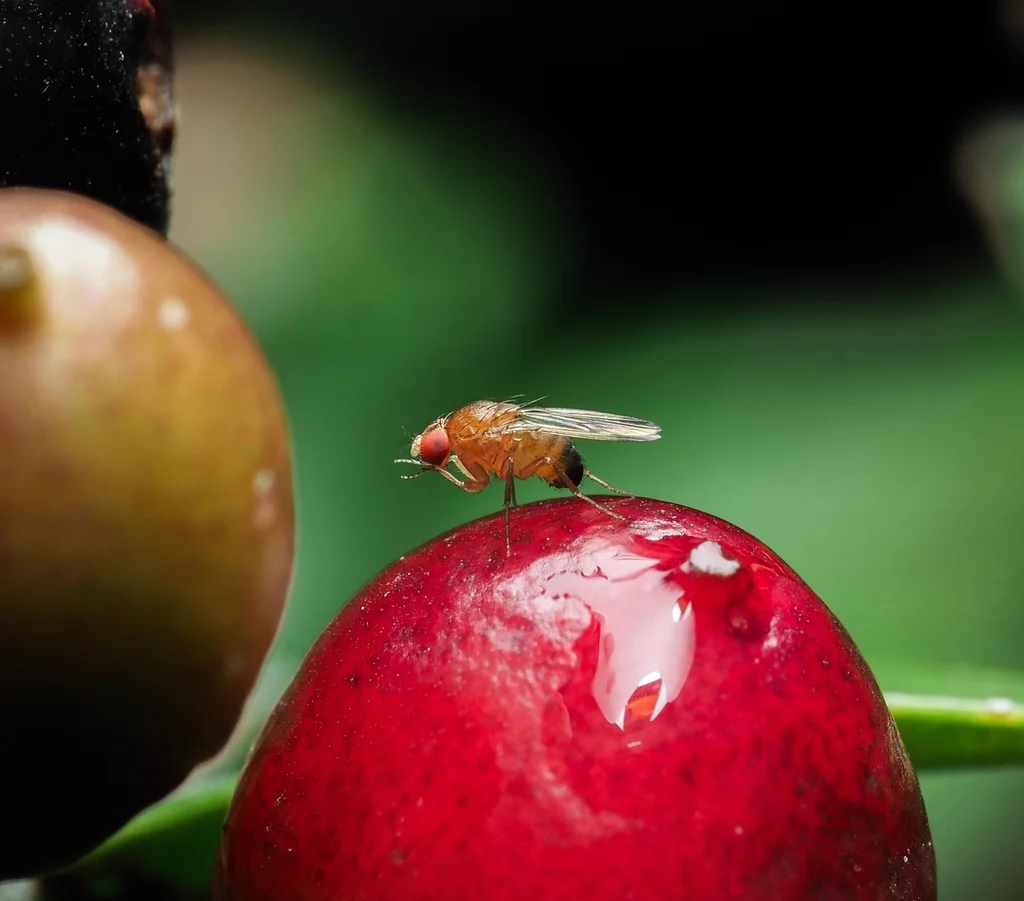
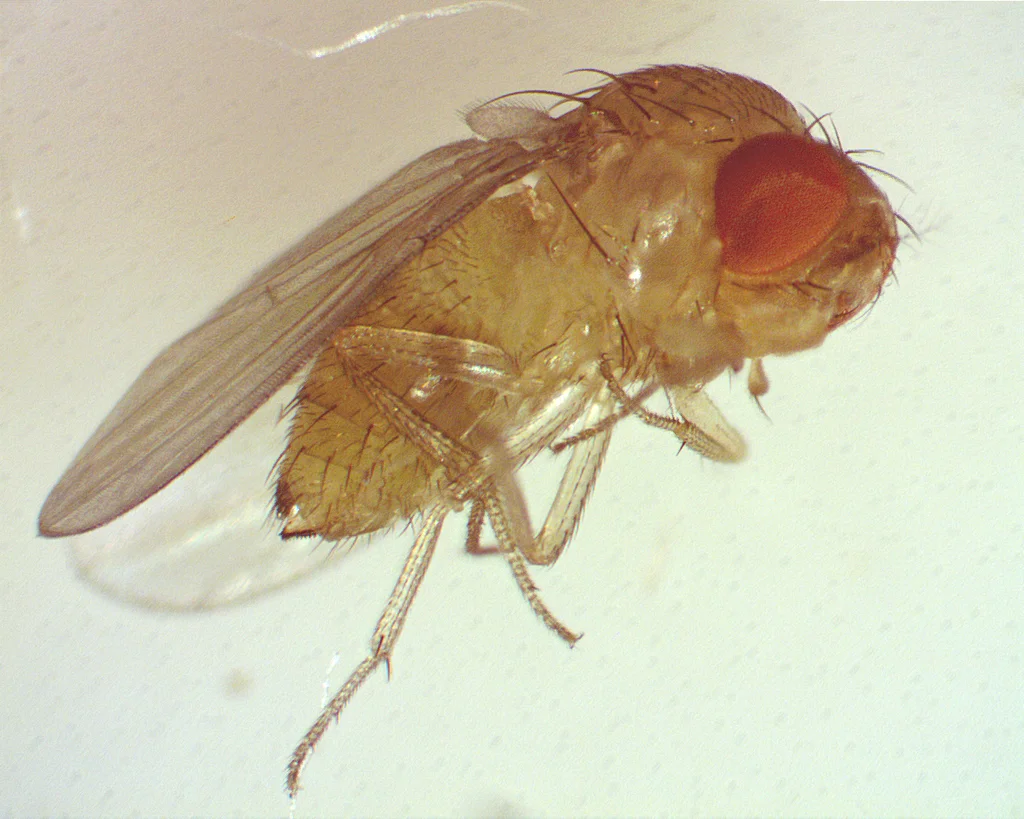
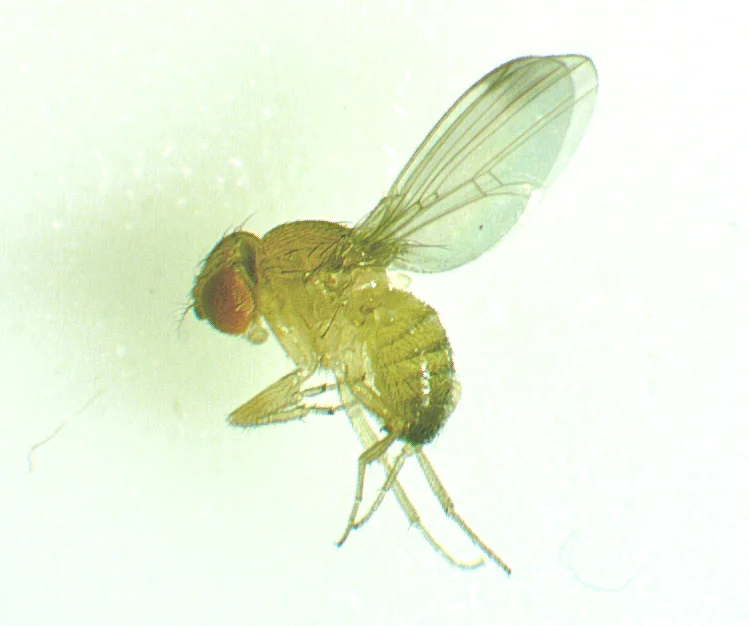
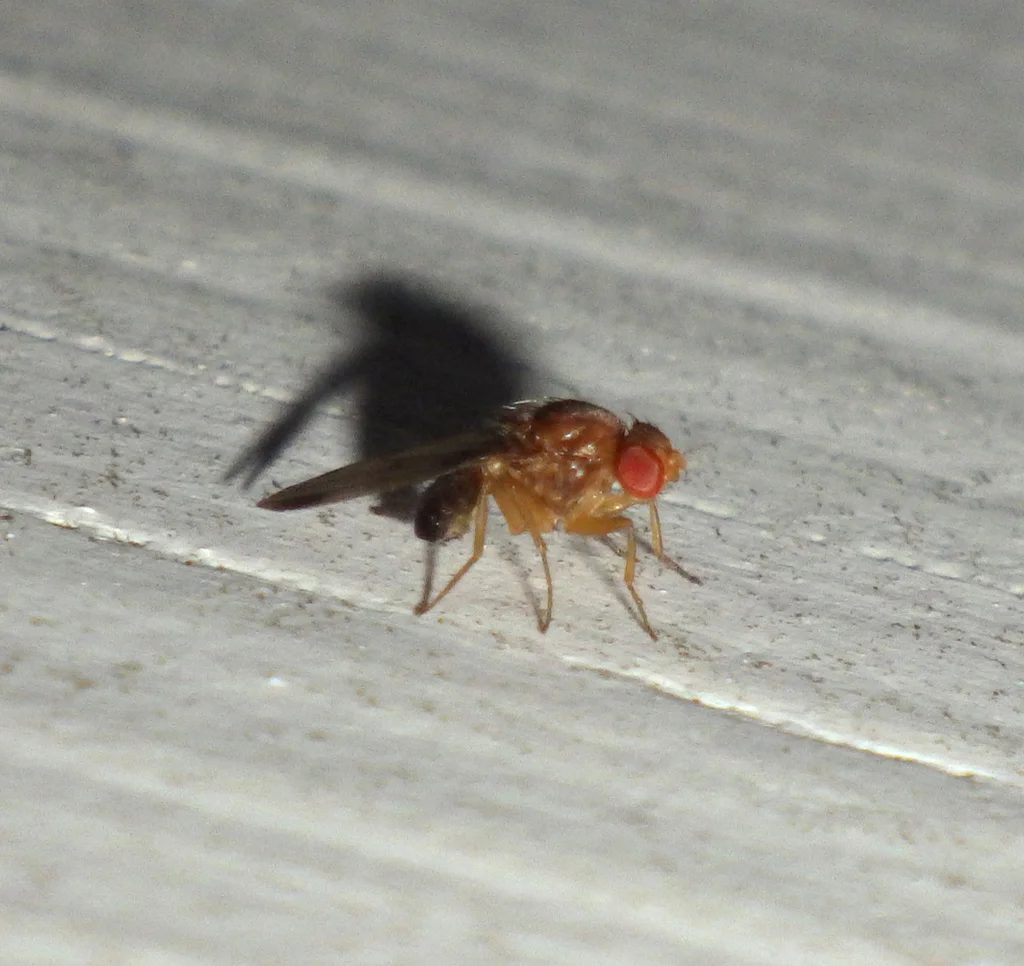
The spotted wing drosophila (Drosophila suzukii) is a small fruit fly measuring 2 to 4 millimeters in length, roughly the size of a common vinegar fly. Its body ranges from yellowish-tan to light brown, with darker bands visible on the abdomen. Like other fruit flies, SWD has prominent red compound eyes that appear large relative to its body size.
The most distinctive identification feature is found only on males: a dark spot located near the tip of each wing. This marking is clearly visible to the naked eye and gives the species its common name. Males also display dark bands on the first two segments of their front legs.
Females lack the wing spots but possess an important anatomical feature that sets this species apart from other fruit flies. Their ovipositor, the egg-laying organ, is heavily serrated and saw-like, allowing them to cut through the skin of intact, ripening fruit. This serrated ovipositor is larger and more prominent than those of related fruit fly species.
Related Species
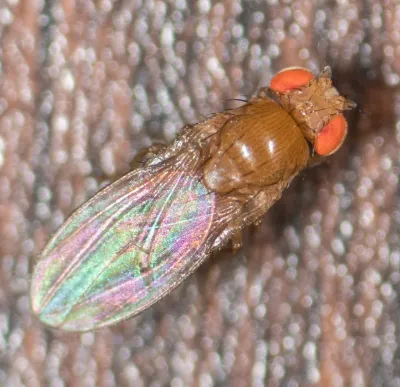
While the common fruit fly (Drosophila melanogaster) is the most frequently encountered Drosophila species in homes, several characteristics distinguish spotted wing drosophila. Browse our fly identification guide to learn how SWD compares with other household fly species.
- Common fruit fly: Feeds on overripe and rotting fruit; males lack wing spots; cannot pierce intact fruit skin
- Dark-eyed fruit fly: Similar size but with darker eyes; prefers decaying vegetables
- Immigrant fruit fly: Slightly larger; may have subtle wing markings but lacks the distinct dark spots of male SWD
Spotted Wing Drosophila Behavior and Biology
Feeding Preferences
What makes spotted wing drosophila particularly destructive is its preference for healthy, ripening fruit rather than damaged or rotting produce. The female’s serrated ovipositor allows her to slice through the skin of thin-skinned fruits as they approach harvest ripeness. This unique ability means SWD attacks marketable fruit that other fruit flies would ignore.
Primary host fruits include cherries, blueberries, raspberries, blackberries, strawberries, peaches, nectarines, apricots, plums, and grapes. The pest has been documented on over 150 different wild and cultivated fruit species across North America.
Life Cycle
Spotted wing drosophila go through four life stages: egg, larva, pupa, and adult. How fast they develop depends heavily on temperature and humidity. They grow fastest when temperatures are between 71 and 82 degrees Fahrenheit and humidity is 80 to 90 percent.
Egg stage: Females deposit eggs just beneath the fruit skin. Each female may lay 100 to 600 eggs during her lifetime, inserting one to three eggs per fruit. Eggs hatch in 1 to 3 days. A related species, House Flies, shares similar characteristics.
Larval stage: The white, legless larvae feed within the fruit flesh for 3 to 13 days, passing through three growth stages. Larval feeding causes the fruit to soften, collapse, and become susceptible to secondary fungal and bacterial infections. A related species, Biting Midges, shares similar characteristics.
Pupal stage: Mature larvae exit the fruit and pupate either inside the fruit or in the soil below. The pupal stage lasts approximately 4 to 15 days depending on temperature. A related species, Coffin Flies, shares similar characteristics.
Adult stage: Newly emerged adults can begin mating within 48 hours. Adult lifespan ranges from 2 to 9 weeks during the growing season, though individuals that emerge in fall may survive longer by overwintering.
Under ideal summer conditions, SWD can complete its entire life cycle in as little as 7 to 11 days, allowing populations to explode rapidly. In temperate growing regions like the Pacific Northwest, populations may produce 5 to 10 generations per season.
Seasonal Activity
Adults are the primary overwintering life stage, surviving cold months in protected locations such as leaf litter, under bark, and in structures. In the Northeast and mid-Atlantic regions, overwintered adults become active in mid-June to early July.
Populations remain low in early summer, then build steadily as temperatures warm and fruit becomes available. Peak activity occurs in August and September when late-season berries and stone fruits are ripening. Adults are most active during dawn and dusk hours when temperatures hover between 59 and 70 degrees Fahrenheit.
Activity decreases significantly when temperatures exceed 90 degrees Fahrenheit, which can temporarily suppress populations during midsummer heat waves. In regions with mild winter climates, adults can be captured in monitoring traps year-round.
Invasion History
Spotted wing drosophila is native to Southeast Asia, where it was first scientifically described in Japan in 1931 by researcher Shonen Matsumura. For decades, it remained confined to its native range in countries including Japan, China, and Korea.
The pest arrived in Hawaii sometime during the 1980s. Its first detection on the continental United States came in August 2008 in California, where it was found infesting commercial cherries and caneberries. The discovery sparked significant concern among fruit growers and agricultural agencies.
Within just a few years, SWD spread rapidly across North America. By 2009, it had been detected in Oregon, Washington, Florida, and British Columbia. By 2010, reports came from Utah, North Carolina, South Carolina, Michigan, and Louisiana. In 2011, the pest reached Virginia, Maryland, Pennsylvania, New Jersey, and several other states. Today, spotted wing drosophila is established across most fruit-growing regions of the United States and Canada.
Treatment Methods for Spotted Wing Drosophila
Managing spotted wing drosophila requires an integrated approach combining monitoring, cultural practices, and targeted controls. This pest has proven very difficult to control with standard pesticides alone due to its rapid reproduction and the need to protect fruit approaching harvest.
Monitoring
Early detection is critical for effective management. Apple cider vinegar traps are commonly used to monitor SWD populations. Effective traps combine apple cider vinegar with a small amount of whole wheat flour as bait. Traps should be placed in shaded areas as soon as the first fruit sets and checked weekly through harvest.
When checking traps, look for the distinctive dark wing spots on males to confirm SWD presence. Increased trap catches indicate rising populations and the need for more intensive management.
Cultural Control
Sanitation is fundamental to reducing SWD populations:
- Harvest frequently: Pick fruit as soon as it ripens to reduce exposure time to egg-laying females
- Remove infested fruit: Collect and dispose of fallen, overripe, or damaged fruit promptly
- Proper disposal: Place infested fruit in sealed plastic bags and dispose in garbage, or freeze for at least 48 hours to kill larvae
- Reduce habitat: Keep areas around fruit plants clear of debris that could shelter overwintering adults
Exclusion Methods
Fine mesh netting over fruit plants can physically prevent SWD from reaching ripening fruit. This approach is most practical for home gardeners with small plantings of berries or cherries. Netting must have a mesh size small enough to exclude the 2 to 4 millimeter flies.
Chemical Control
For commercial fruit production, several insecticide options have shown effectiveness against SWD. Spinosad, derived from a naturally occurring soil bacterium, is widely used in both conventional and organic berry production and is considered one of the most effective options. Applications must be timed carefully to target adult flies before they lay eggs, as larvae inside fruit are protected from contact insecticides.
Biological Control
Research into biological control options is ongoing. The USDA has approved the release of Ganaspis brasiliensis, a tiny parasitic wasp from Asia that specifically targets SWD larvae. Scientists have also discovered that some natural enemy wasps have established on their own in parts of North America and may help reduce SWD populations over time.
References
- Spotted Wing Drosophila - National Invasive Species Information Center
- Biology and Life Cycle - Cornell Fruit Resources
- Spotted Wing Drosophila - University of Minnesota Extension
- Spotted Wing Drosophila Part 2: Natural History - Penn State Extension
- Biological Control of Spotted-Wing Drosophila - Journal of Integrated Pest Management
- Drosophila suzukii - Wikipedia
Other Flies
Explore other species in the flies family
Commonly Confused With
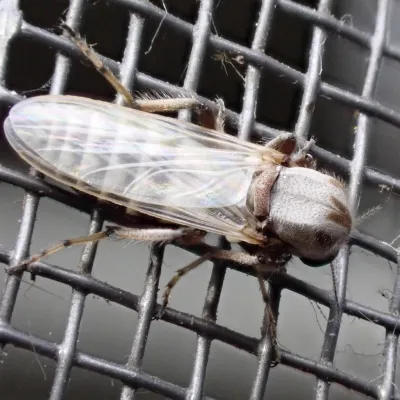
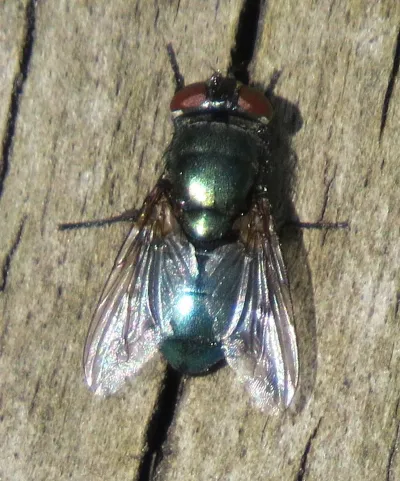
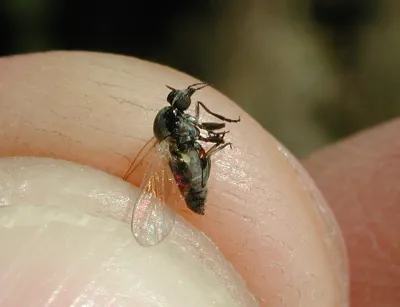
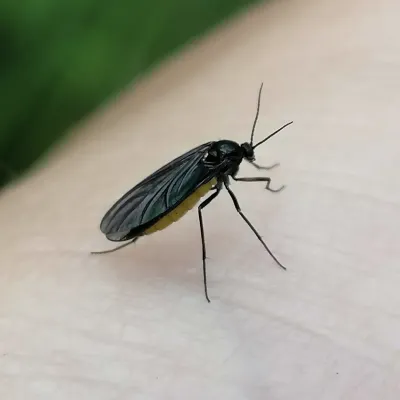
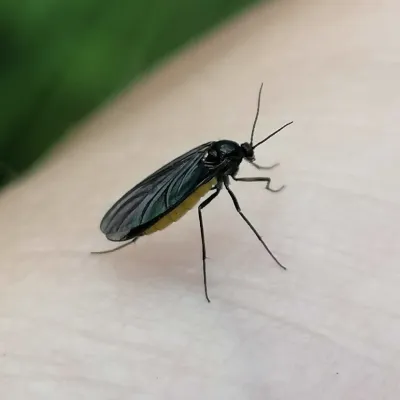
Spotted Wing Drosophila are often mistaken for these similar pests
Where Spotted Wing Drosophila Are Found
Hover over states to see their names. Green regions indicate where spotted wing drosophila have been reported.
Common Questions about Spotted Wing Drosophila
How can I tell if my fruit has spotted wing drosophila?
+
Look for small, soft spots or indentations on the fruit surface where females have laid eggs. Infested fruit may appear sunken, have oozing areas, or collapse when handled. Cutting open suspect fruit may reveal small white larvae inside the flesh.
What fruits do spotted wing drosophila attack?
+
SWD prefers soft-skinned fruits including cherries, blueberries, raspberries, blackberries, strawberries, peaches, nectarines, plums, and grapes. Unlike common fruit flies, they target ripening fruit that is still on the plant, not overripe or rotting fruit.
Where did spotted wing drosophila come from?
+
Spotted wing drosophila is native to Southeast Asia and was first described in Japan in 1931. It arrived in Hawaii in the 1980s and was first detected on the continental United States in California in 2008. It has since spread across most of North America.
Why are spotted wing drosophila such a problem?
+
Unlike other fruit flies that only lay eggs in damaged or rotting fruit, SWD females have a serrated ovipositor that allows them to pierce the skin of healthy, ripening fruit. This means they attack marketable produce before harvest, causing an estimated $500 million in annual damage to U.S. fruit crops.
How do I identify a male spotted wing drosophila?
+
Male SWD have a distinctive dark spot near the tip of each wing, which gives this species its common name. They also have dark bands on the first two segments of their front legs. Females lack these wing spots but have a prominent serrated egg-laying organ.
What time of year are spotted wing drosophila most active?
+
SWD populations build throughout summer and typically peak in August and September. They are most active at temperatures around 70 degrees Fahrenheit and become less active in extreme heat above 90 degrees or cold below 50 degrees. In mild climates, they can be active year-round.
Can spotted wing drosophila survive winter?
+
Adult SWD can survive winter by finding protected shelter. In regions with mild winters, adults may be trapped year-round. In colder areas, populations start very low in spring and increase as temperatures warm, typically becoming active in mid-June to early July.
How fast do spotted wing drosophila reproduce?
+
Very rapidly. Under optimal conditions, SWD can complete their life cycle from egg to adult in just 8 to 11 days. A single female can lay 100 to 600 eggs during her lifetime, and populations can produce 5 to 13 generations in a single growing season.

With five years of hands-on experience in the pest control industry, George Schulz is a registered technician with the Virginia Pest Management Association and a proud third-generation professional in a family business that's been protecting homes for over 57 years. He manages and trains a team of service pros while also leading internal research efforts—recently spearheading a deep-dive review of thousands of documents on pest control materials to hand-pick the most kid and pet friendly, most effective solutions tailored specifically for homes in the DC metro area.