Dark-Eyed Fruit Flies Identification Guide
Drosophila repleta
Dark-eyed fruit flies are small vinegar flies distinguished by their dark red to brown eyes, commonly found around decaying vegetables, garbage, and fermenting organic matter in homes.
Taxonomy
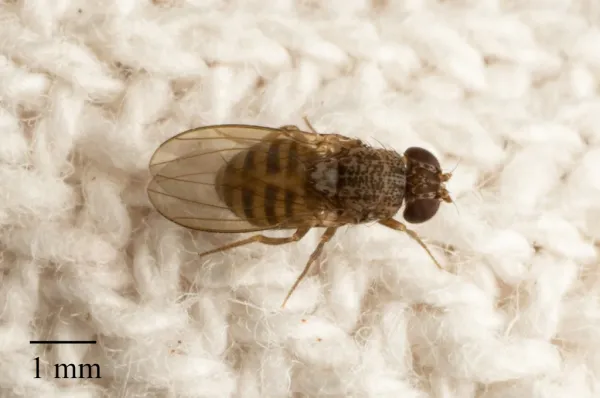
Dark-Eyed Fruit Flies Coloration
Common color patterns to help identify dark-eyed fruit flies
Dark-Eyed Fruit Flies
Seasonal Activity
When dark-eyed fruit flies are most active throughout the year

Where Dark-Eyed Fruit Flies Are Found
Hover over states to see their names. Green regions indicate where dark-eyed fruit flies have been reported.
Dark-Eyed Fruit Fly Identification Guide
Physical Characteristics
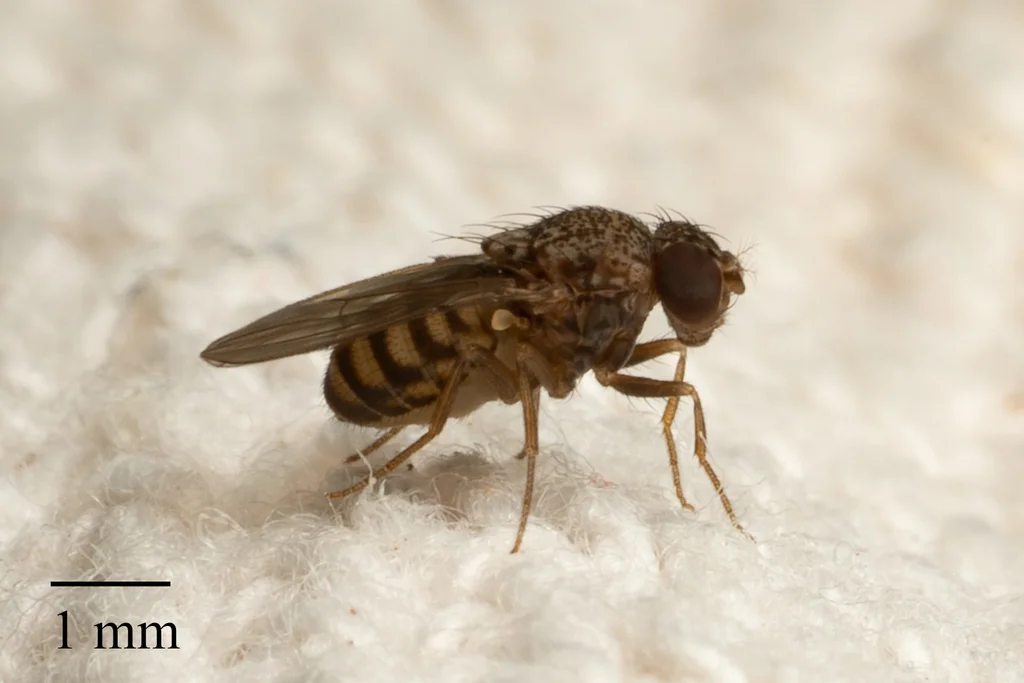
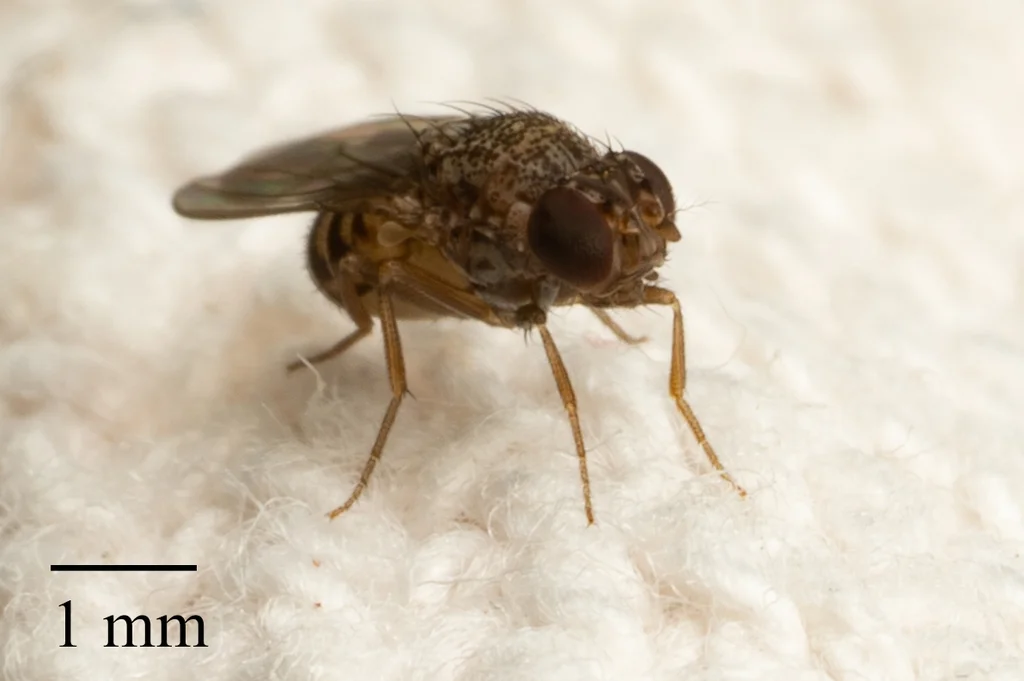
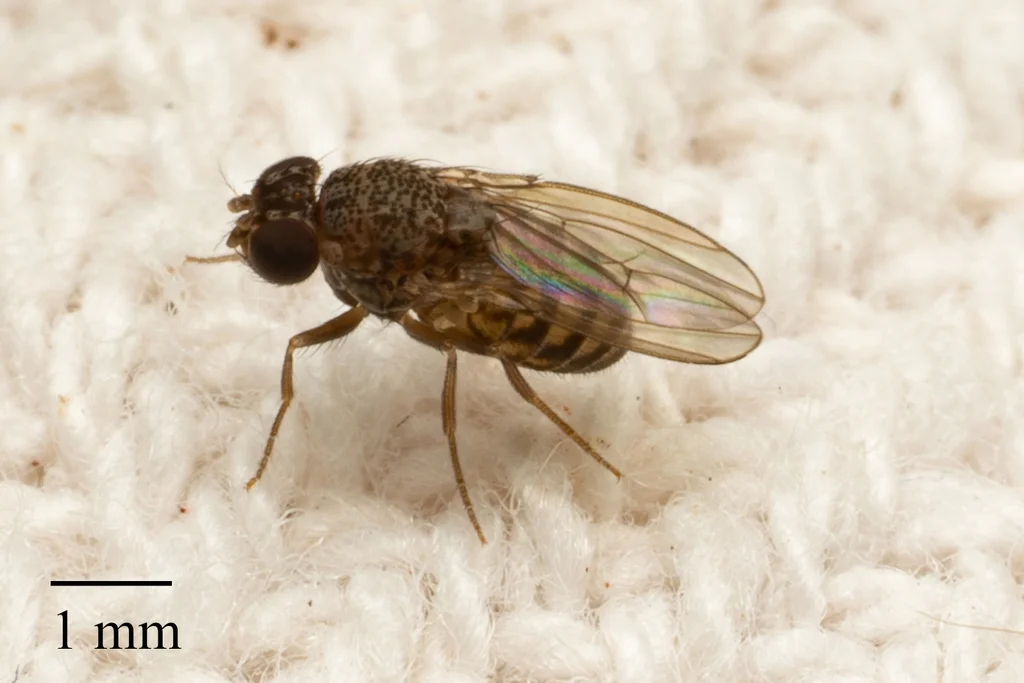
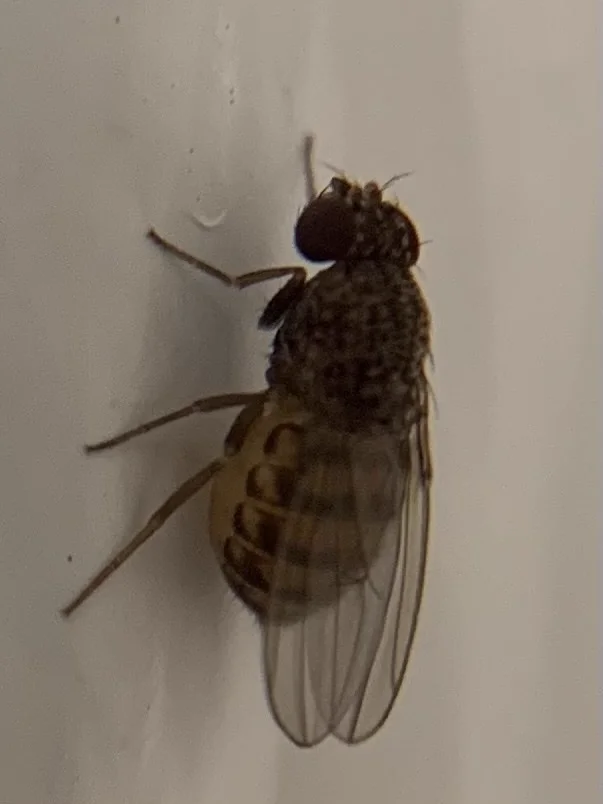
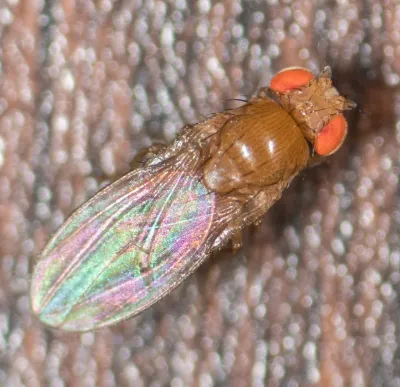
Dark-eyed fruit flies are small flies that measure 3 to 4 millimeters long. This makes them a bit larger than the common red-eyed fruit fly. The easiest way to tell them apart is by looking at their eyes. Common fruit flies have bright red eyes, while dark-eyed fruit flies have dark red to brown eyes. This darker eye color is how they got their name.
The body is tan to light brown with darker brown stripes across the belly. The middle section is grayish-brown with small bristles. Their wings are clear and stick out past the body when at rest. Like all flies in their family, they have one pair of working wings. Their back wings have shrunk into small knobs called halteres that help them balance when flying.
Males are a bit smaller than females and have a rounded belly tip. Females have a more pointed belly for laying eggs and often look larger, especially when carrying eggs.
Common Species
The dark-eyed fruit fly (Drosophila repleta) is part of a group with many related species. Scientists have found over 100 species in this group. However, D. repleta is the one you will most often find in homes across North America.
Related species you might see include:
- Cactus fruit flies (Drosophila mojavensis). Found in the southwestern U.S. and Mexico. They breed mainly in rotting cacti.
- Mullerian fruit fly (Drosophila mulleri). Lives in the same places as D. repleta. Hard to tell apart without a microscope.
- Common fruit fly (Drosophila melanogaster). The well-known red-eyed fly often found near ripe fruit.
- Spotted wing drosophila (Drosophila suzukii). An invasive species that attacks fruit still on the vine.
The entire family is also called vinegar flies because they are attracted to the acetic acid released during fermentation.
Dark-Eyed Fruit Fly Behavior and Biology
Dark-eyed fruit flies like different foods than their red-eyed cousins. Common fruit flies go after ripe fruit and sweet drinks. Dark-eyed fruit flies prefer rotting vegetables and decaying plant matter. This is why you often find them near stored potatoes, onions, or garbage instead of fruit bowls.
Life Cycle
Dark-eyed fruit flies go through four life stages: egg, larva, pupa, and adult. In warm, humid conditions, the whole cycle takes just 10 to 14 days.
Females lay their tiny eggs right on rotting food. One female can lay 300 to 400 eggs in her lifetime. She places them in groups on good food sources. The eggs hatch in 24 to 30 hours when it is warm. A related species, House Flies, shares similar characteristics.
The larvae that hatch are small, white maggots without legs. They start feeding on the rotting matter around them right away. This stage lasts about 5 to 6 days. During this time, the larvae shed their skin twice as they grow. They eat the yeasts and bacteria growing on the rotting material, not the plant itself. A related species, Biting Midges, shares similar characteristics.
When done growing, the larva forms a brown, barrel-shaped case called a pupa. The pupa stage lasts 4 to 5 days. Inside this case, the fly changes into its adult form. New adults can start mating within 24 to 48 hours. This fast cycle lets populations grow quickly when conditions are right.
Habitat and Behavior
Dark-eyed fruit flies do well anywhere rotting vegetables pile up. In homes, you will often find them breeding in these places:
- Garbage cans and recycling bins
- Compost containers and piles
- Dirty mops and cleaning equipment
- Floor drains with organic buildup (also a breeding site for drain flies)
- Stored root vegetables showing decay
- Spilled liquids beneath appliances
These flies are strong fliers for their size. They can smell rotting food from far away. When they find a food source, they give off scents that bring in more flies. This is why a small fly problem can turn into a big one fast.
Dark-eyed fruit flies are most active during the day, especially when it is warm. They rest on walls, ceilings, and other surfaces when not feeding or looking for places to lay eggs. You will see the most flies in late summer and fall. This is when warm weather meets lots of organic matter from the harvest.
Treatment Methods for Dark-Eyed Fruit Flies
Getting rid of dark-eyed fruit flies means finding and removing their breeding sources. These flies breed fast and can go from egg to adult in under two weeks. Killing adult flies will not solve the problem if rotting material remains for new flies to breed in.
Source Identification and Elimination
The first step is to find where the flies are breeding:
-
Stored vegetables. Check potatoes, onions, garlic, and other root vegetables for rot. One bad potato can make hundreds of flies. Throw out any rotting produce. Store root vegetables in cooler spots or use them faster.
-
Garbage. Empty kitchen trash daily during bad fly problems. Clean trash cans well to remove stuck-on gunk that flies need to breed. Use cans with tight lids and think about double-bagging food waste.
-
Drains. Dark-eyed fruit flies can breed in the slimy buildup inside drain pipes, much like filter flies do. Scrub drains with a stiff brush to remove the gunk. Then use an enzyme drain cleaner to break down what is left.
-
Compost. Indoor compost bins make great breeding spots for flies. Keep compost covered and add dry material to soak up moisture. Empty bins often. You can also freeze food scraps before adding them.
Sanitation Practices
Keeping things clean stops dark-eyed fruit flies from setting up shop:
- Wipe down surfaces where food is prepared or stored
- Clean beneath and behind appliances where spills may accumulate
- Wash mops and cleaning supplies regularly
- Address moisture issues in kitchens and storage areas
- Store produce appropriately based on ripeness and condition
Trapping Methods
Traps can catch adult flies while you clean up their breeding spots:
Vinegar traps. Fill a small container with apple cider vinegar. Add a drop of dish soap to break the surface tension. The vinegar draws in flies, and the soap makes them sink and drown. Put traps near problem areas.
Funnel traps. Put some rotting vegetable in a jar. Make a paper cone with a small hole at the tip and set it in the jar opening. Flies go in through the cone but have trouble getting out. Empty the trap and replace the bait often.
Store-bought traps. Many fly traps sold in stores use scents that work well against dark-eyed fruit flies. These can help, but they should not be your only control method.
Preventing Future Infestations
Once you get rid of the flies, these steps help keep them from coming back:
- Inspect produce before bringing it indoors and remove any items showing damage or decay
- Store root vegetables in cool, dry locations with good air circulation
- Establish a routine of cleaning drains weekly
- Keep garbage and recycling areas clean and well-managed
- Address any moisture problems that could support fly breeding
References
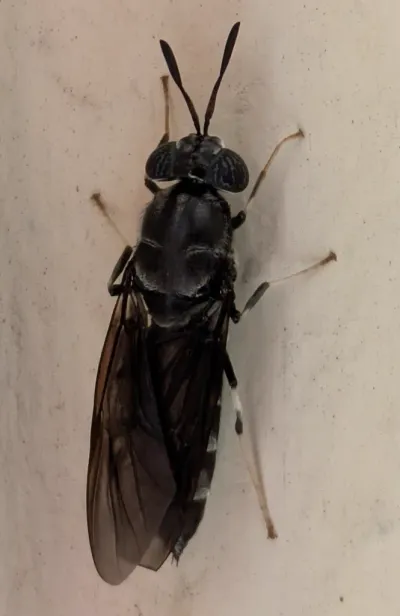
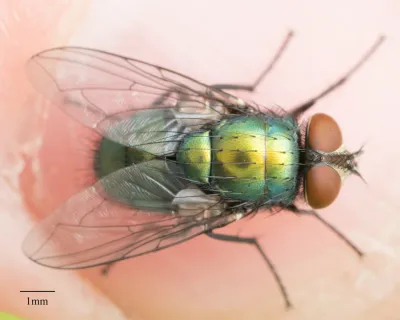
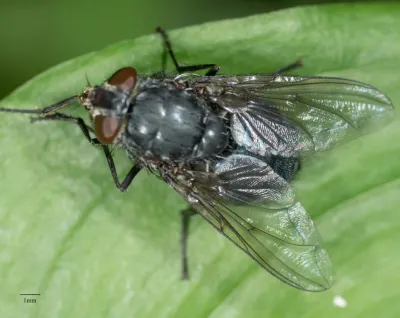
Other Flies
Explore other species in the flies family
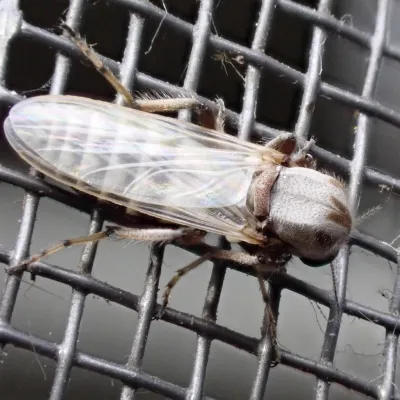
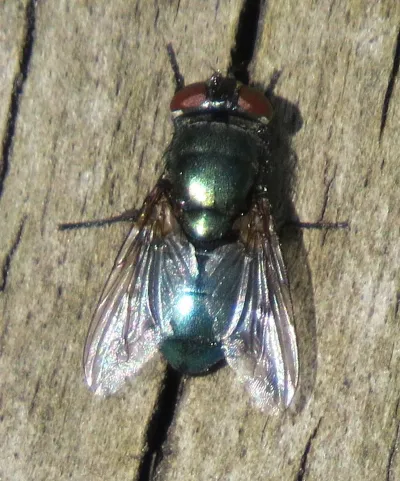
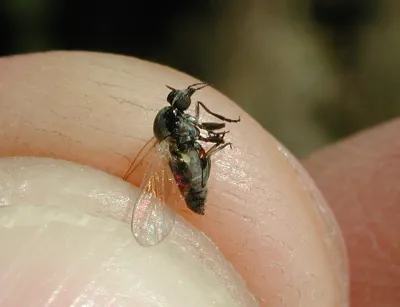
Commonly Confused With
Dark-Eyed Fruit Flies are often mistaken for these similar pests
Where Dark-Eyed Fruit Flies Are Found
Hover over states to see their names. Green regions indicate where dark-eyed fruit flies have been reported.
Common Questions about Dark-Eyed Fruit Flies
What is the difference between dark-eyed fruit flies and common fruit flies?
+
The most noticeable difference is eye color. Common fruit flies (Drosophila melanogaster) have bright red eyes, while dark-eyed fruit flies (Drosophila repleta) have dark red to brown eyes. Dark-eyed fruit flies are also slightly larger, measuring 3 to 4 millimeters compared to 2 to 3 millimeters for common fruit flies. They also prefer different food sources, with dark-eyed fruit flies favoring decaying vegetables over fermenting fruit.
What attracts dark-eyed fruit flies to my home?
+
Dark-eyed fruit flies are attracted to decaying organic matter, particularly rotting vegetables, potatoes, onions, and garbage. They are also drawn to compost bins, dirty mops, and drains where organic residue accumulates. Unlike common fruit flies that prefer fermenting fruit, dark-eyed fruit flies gravitate toward vegetables and other decomposing plant material.
How do I get rid of dark-eyed fruit flies?
+
Eliminating dark-eyed fruit flies requires removing their breeding sources. Inspect stored vegetables like potatoes and onions for decay, clean garbage cans thoroughly, and sanitize drains where organic matter may accumulate. Apple cider vinegar traps can help capture adult flies while you address the underlying source of the infestation.
Where do dark-eyed fruit flies lay their eggs?
+
Female dark-eyed fruit flies deposit eggs on decaying organic matter, particularly rotting vegetables. They favor moist environments with decomposing plant material. Common egg-laying sites include garbage cans, compost containers, dirty drain traps, and forgotten produce in pantries or root cellars.
How long do dark-eyed fruit flies live?
+
Adult dark-eyed fruit flies typically live 30 to 50 days under favorable conditions. The complete life cycle from egg to adult takes approximately 10 to 14 days in warm environments, allowing populations to grow rapidly when food sources are available. A single female can produce several hundred eggs during her lifetime.
Are dark-eyed fruit flies harmful?
+
Dark-eyed fruit flies are primarily nuisance pests rather than health threats. However, they can transfer bacteria from contaminated surfaces like garbage to food preparation areas. Their presence often indicates sanitation issues or decaying organic matter that should be addressed to maintain a hygienic home environment.
Can dark-eyed fruit flies come from drains?
+
Yes, dark-eyed fruit flies can breed in drains where organic matter has accumulated. The slime layer inside drain pipes provides an ideal breeding environment. If you notice flies emerging near sinks, cleaning the drains with a stiff brush and using enzymatic drain cleaners can help eliminate this breeding source.
Why do I have dark-eyed fruit flies in winter?
+
Dark-eyed fruit flies can persist indoors year-round because homes provide warm temperatures and food sources regardless of season. Winter infestations often trace to stored vegetables like potatoes, onions, or squash that have begun to decay. Indoor compost bins and garbage areas can also sustain populations through cold months.

With five years of hands-on experience in the pest control industry, George Schulz is a registered technician with the Virginia Pest Management Association and a proud third-generation professional in a family business that's been protecting homes for over 57 years. He manages and trains a team of service pros while also leading internal research efforts—recently spearheading a deep-dive review of thousands of documents on pest control materials to hand-pick the most kid and pet friendly, most effective solutions tailored specifically for homes in the DC metro area.