All About Fire Ants
Aggressive Stinging Ants That Build Large Mounds in Your Yard
Quick Facts about Fire Ants

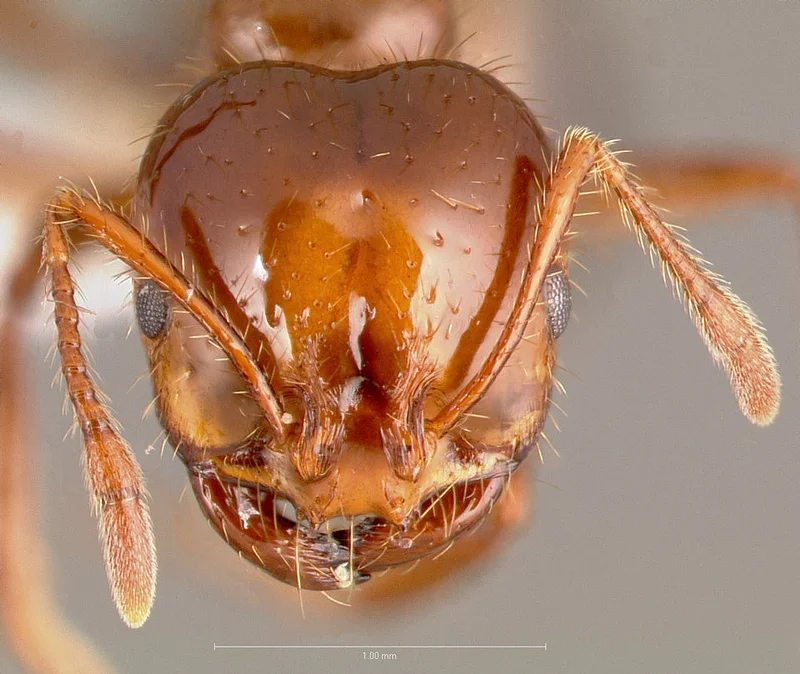
Fire ant head showing powerful mandibles
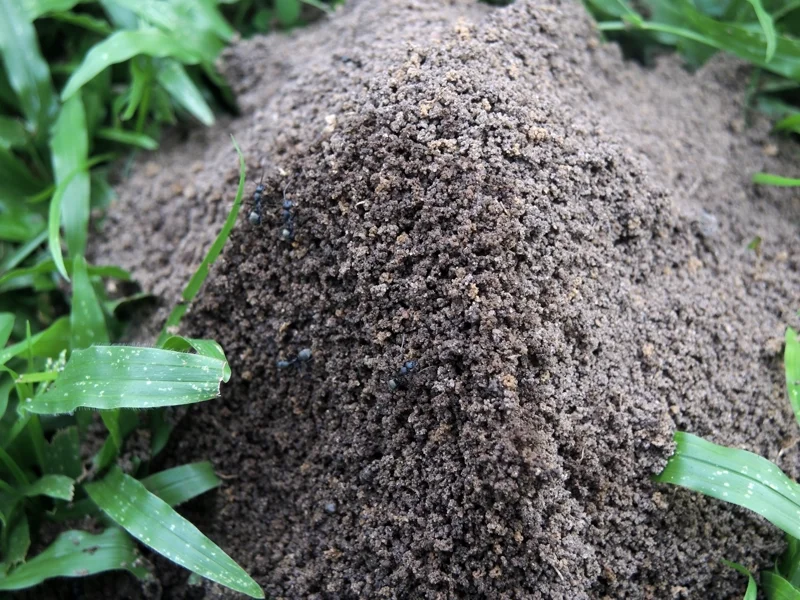
Typical fire ant mound in a yard
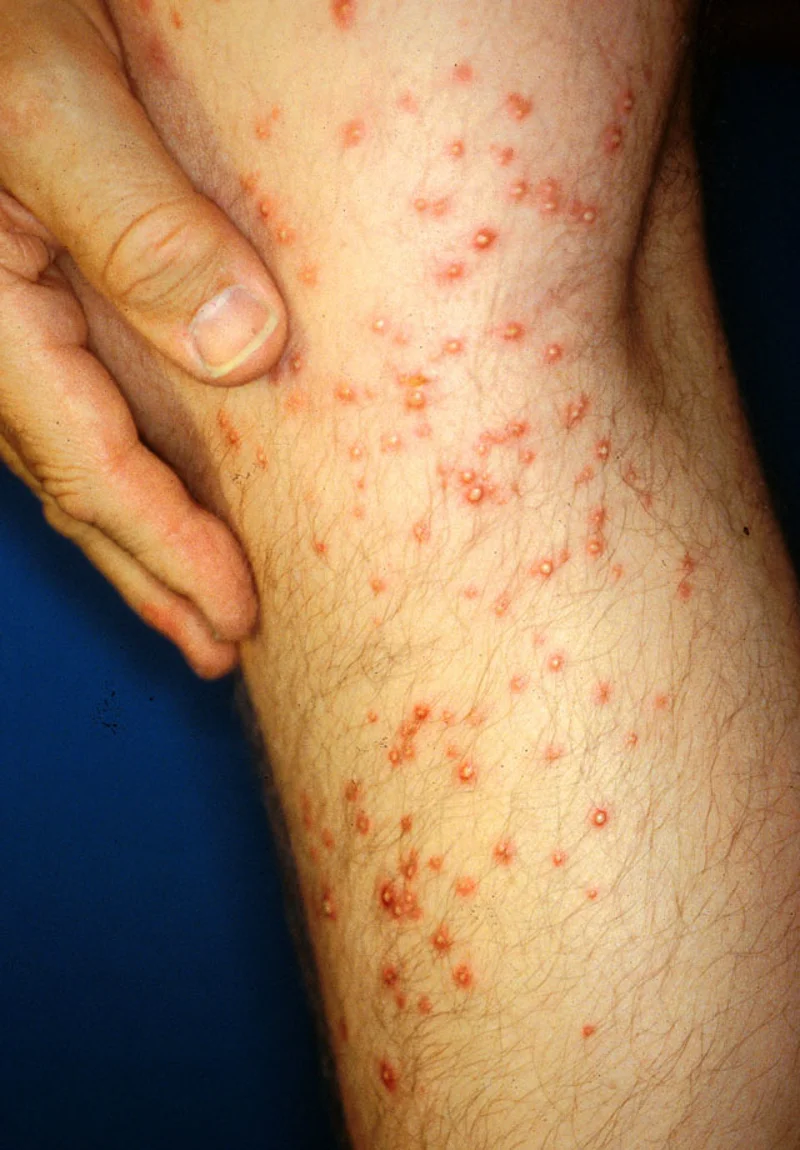
Fire ant stings form distinctive white pustules
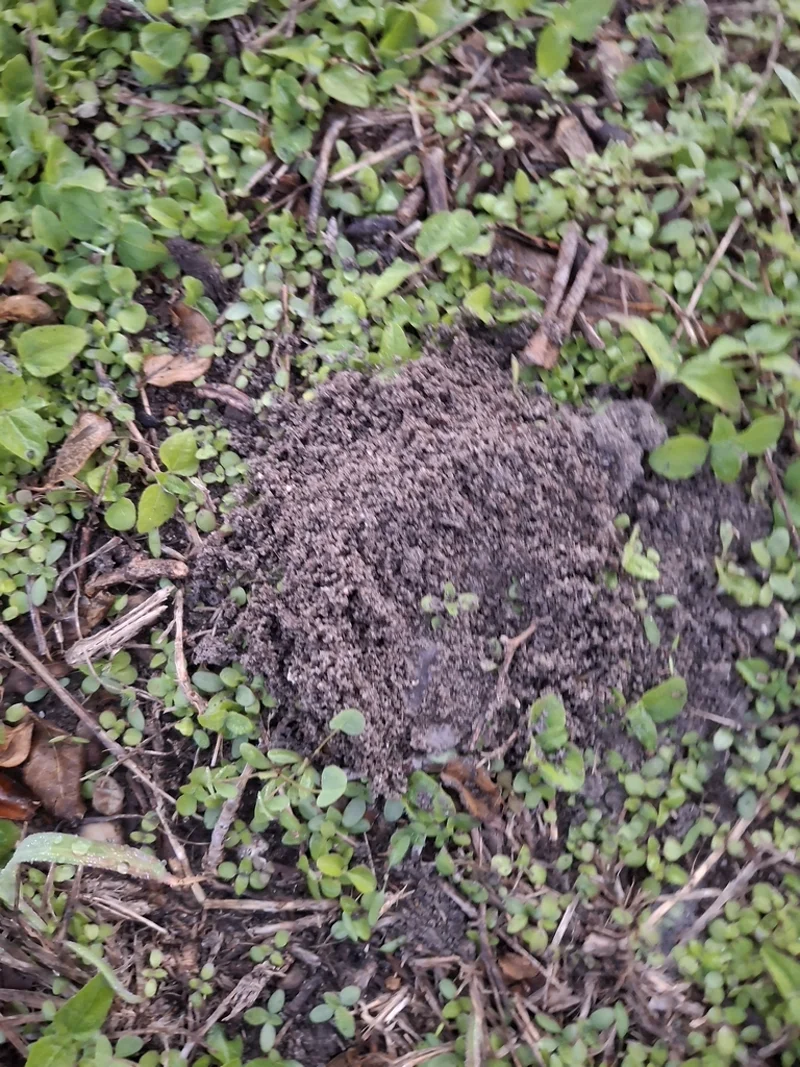
Fire ant colony mound in outdoor setting

Fire Ants Identification Guide
Physical Characteristics
Fire ants are small, aggressive ants known for their painful stings. Workers range from 1/16 to 1/4 inch long, and you’ll often see multiple sizes of ants within the same colony. Their bodies are reddish-brown to dark reddish, with a darker abdomen. Fire ants have a distinctive two-segmented waist (called a pedicel) and 10-segmented antennae with a 2-segmented club at the end.
The easiest way to identify fire ants is by their behavior. When their mound is disturbed, they respond aggressively and swarm out to attack. Unlike most ant species that bite, fire ants anchor themselves with their mandibles and then swing their abdomen to inject venom through a stinger multiple times.
Common Species
Red Imported Fire Ant (Solenopsis invicta) - The most common and problematic species in our region. Originally from South America, these ants were accidentally introduced through the port of Mobile, Alabama in the 1930s. They have since spread throughout the southeastern United States and continue expanding northward into Virginia and Maryland.
Southern Fire Ant (Solenopsis xyloni) - A native species that is less aggressive than imported fire ants. They build smaller mounds and are generally found in drier, sandier soils. Their stings are painful but typically less severe than red imported fire ants.
Fire Ants Behavior and Biology
Fire ants are social insects that live in large colonies with one or more queens. A mature colony can contain 100,000 to 500,000 workers and produce winged males and females (called alates) that fly out to mate and start new colonies. These mating flights typically occur in spring and summer, especially after rainfall.
Fire ant mounds are the visible part of an extensive underground tunnel network that can extend several feet deep. The mounds themselves are dome-shaped, made of excavated soil, and can reach 18 inches or more in height. Unlike other ant mounds, fire ant mounds lack a central opening on top. The ants enter and exit through underground tunnels that open away from the mound.
Fire ants are omnivores that feed on insects, seeds, and almost any food source they can find. They’re attracted to electrical equipment and have been known to damage air conditioning units, electrical boxes, and outdoor lighting by nesting inside them. They also kill ground-nesting birds, small wildlife, and can damage crops and garden plants.
In the DC metro area, fire ant activity typically peaks in spring and fall when temperatures are moderate. During hot summer days, they forage early in the morning and late in the afternoon. In winter, they burrow deeper into the soil but can remain active on warm days.
How We Treat for Fire Ants
We use a two-step approach that targets both visible mounds and the hidden colony underground:
Broadcast Bait Treatment - First, we apply a granular bait across your lawn and landscape areas. Fire ant workers pick up the bait and carry it back to feed the colony, including the queens. This approach is effective because it targets the entire colony, not just the ants you can see. The bait we use is selected by our research team and is designed to be slow-acting, giving workers time to distribute it throughout the colony before it takes effect.
Individual Mound Treatment - For active mounds, we apply a direct treatment that quickly knocks down the visible population. This provides faster relief while the bait works its way through the colony. We use non-repellent products so ants don’t detect the treatment and simply relocate.
Ongoing Protection - Fire ants can reinvade from neighboring properties, and new colonies can establish from mating flights. That’s why we recommend seasonal treatments to maintain control. Our pest control plans include quarterly visits that target fire ants along with other common pests. And if you ever spot new mounds between treatments, we’ll come back at no extra cost.
Our approach is based on integrated pest management principles. We target the problem at its source while using products that our research team has vetted. These are the same products we would use in our own yards around our own families.
Common Questions about Fire Ants
How do I know if I have fire ants?
+
The most obvious sign is dome-shaped mounds in your yard, typically 6 to 18 inches wide. Unlike other ant mounds, fire ant mounds have no visible entry hole on top. If you disturb the mound, hundreds of aggressive ants will swarm out and sting repeatedly. Fire ants are reddish-brown and vary in size within the same colony.
Are fire ants dangerous?
+
Yes, fire ants can be dangerous. Their stings cause intense burning pain, and each ant can sting multiple times. Stings typically form itchy white pustules that last for days. For most people, stings are painful but not serious. However, about 1-2% of people may experience severe allergic reactions that require immediate medical attention.
Can I get rid of fire ants myself?
+
DIY treatments like pouring boiling water on mounds or using store-bought sprays often just cause the colony to relocate. Fire ant colonies can have multiple queens and extend several feet underground, making complete elimination difficult without professional-grade products and proper application techniques.
How long does fire ant treatment take to work?
+
Results depend on the treatment method. Mound treatments can kill visible ants within hours, but eliminating the entire colony takes longer. Bait treatments typically take 2-4 weeks to work because ants must carry the bait back to feed the queens. We recommend a combination approach for fastest results.
What products do you use for fire ants?
+
We use a combination of EPA-registered baits and mound treatments selected by our research team. These include products designed to be shared throughout the colony, reaching the queens deep underground. Our products are ones we would use in our own yards around our own families.
Will fire ants come back after treatment?
+
Fire ants can reinfest treated areas from neighboring properties or through mating flights that occur in spring and summer. That's why we recommend ongoing seasonal treatments as part of a pest control plan. If you spot new activity between visits, we provide free unlimited callbacks to address the issue.
When are fire ants most active?
+
Fire ants are most active when soil temperatures are between 70-90°F. In the DC metro area, this means spring through fall. They typically forage in the early morning and late afternoon, avoiding the hottest part of the day. They can remain active year-round in warmer months.
Are fire ants spreading in Virginia and Maryland?
+
Yes, fire ants have been steadily expanding their range northward. While they were historically limited to the Deep South, warmer winters have allowed them to establish populations in Virginia and parts of Maryland. They are now a growing concern in the DC metro area.
More Resources About Fire Ants
Explore our guides and articles for more information about fire ants.
Find Local Fire Ant Control Services
We provide professional fire ants control throughout Virginia, Maryland, and the DC Metro area.