Squash Bees Identification Guide
Peponapis pruinosa
Native specialist pollinators that nest in the ground near squash, pumpkin, and gourd plants.
Taxonomy
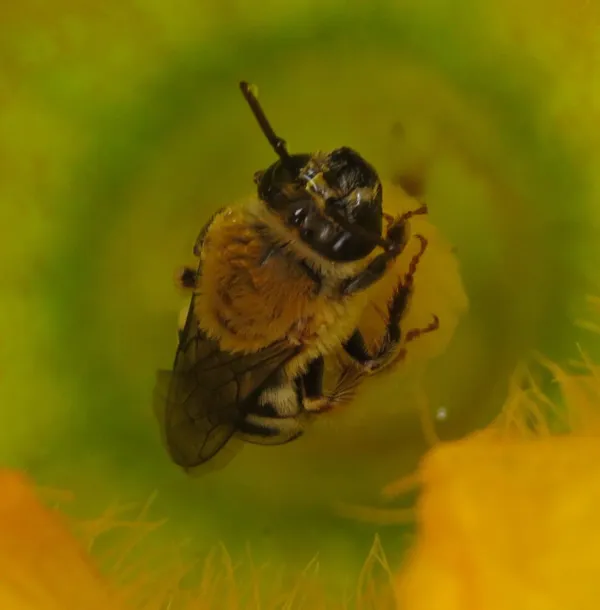
Squash Bees Coloration
Common color patterns to help identify squash bees
Squash Bees
Seasonal Activity
When squash bees are most active throughout the year

Where Squash Bees Are Found
Hover over states to see their names. Green regions indicate where squash bees have been reported.
Squash Bees Identification Guide
Physical Characteristics
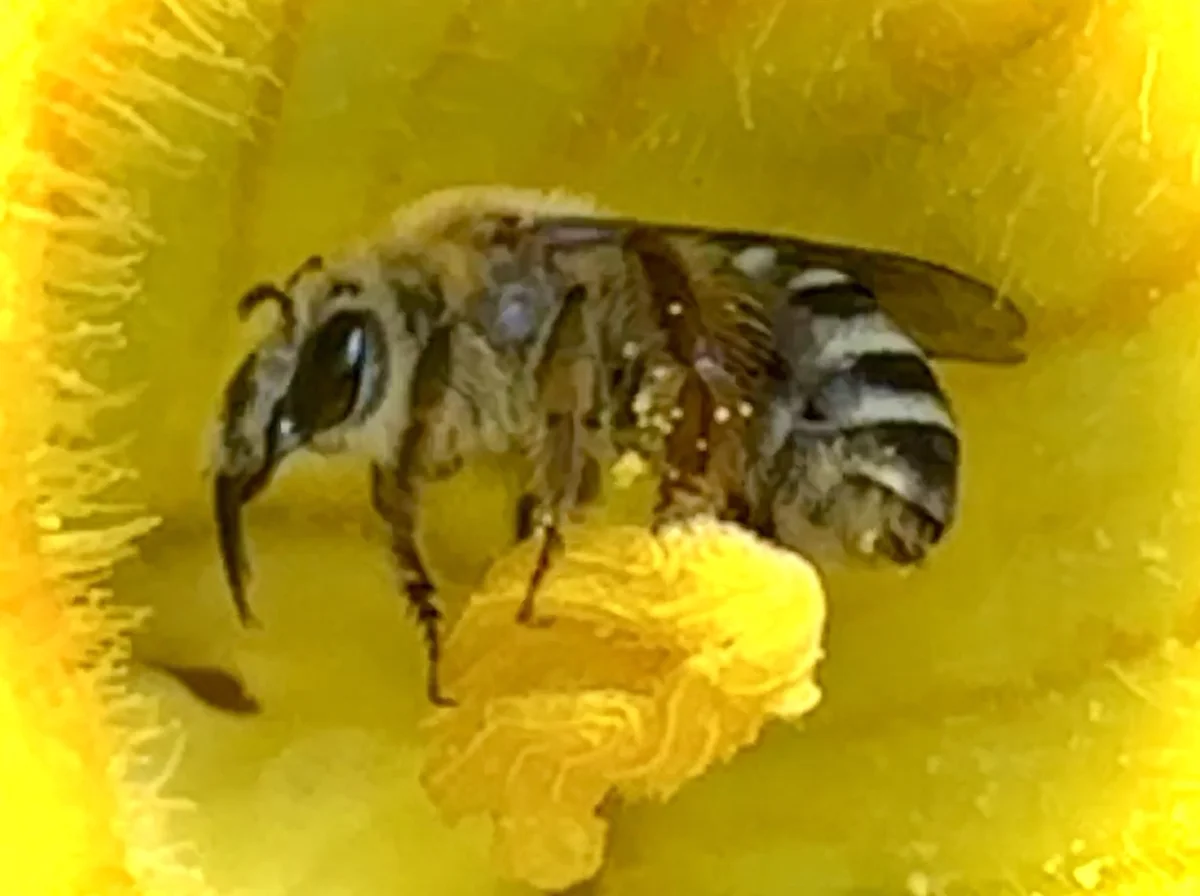
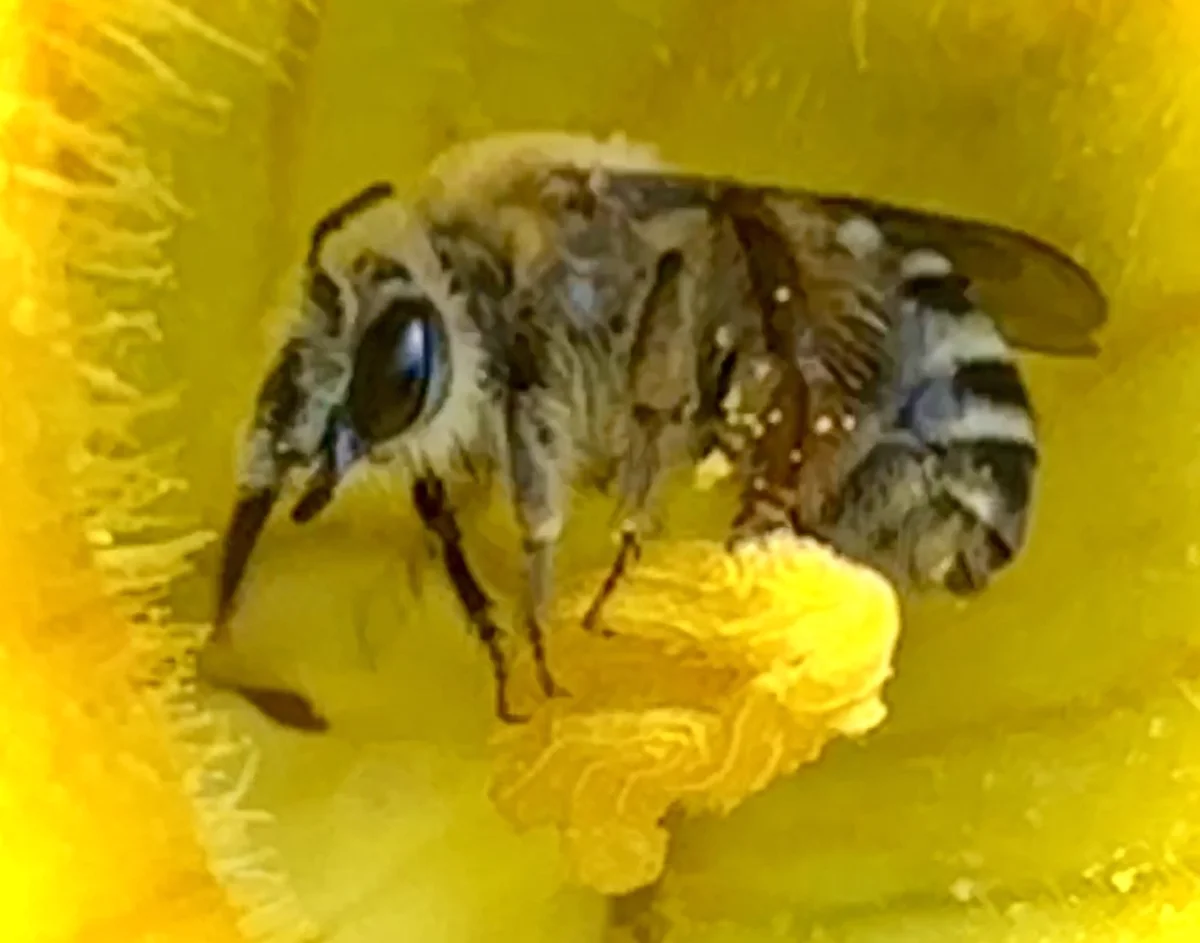
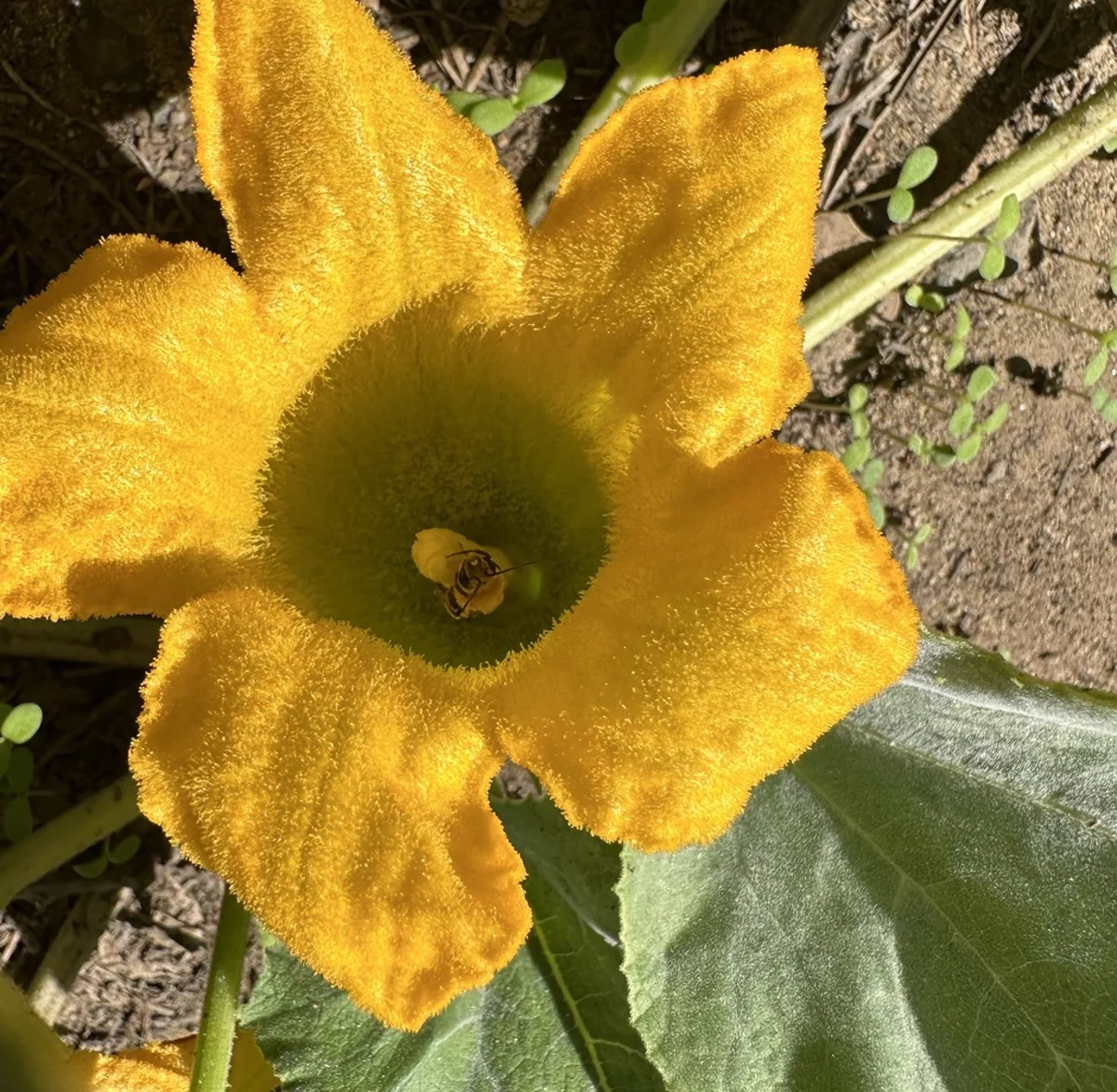
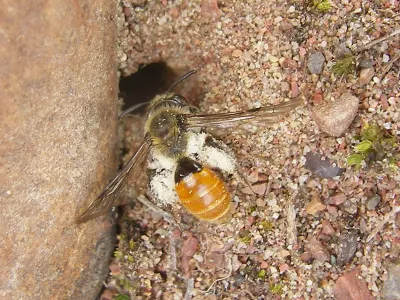
Squash bees are medium-sized bees, measuring 11 to 14 millimeters in length. They are slightly larger and bulkier than honey bees with longer antennae and rounder faces. Their bodies are black with distinctive pale cream or whitish bands on the abdomen. The thorax is covered in dense yellowish hairs that help them collect pollen.
One key identification feature is their leg structure. Squash bees have thin hairs on their legs called scopae for carrying pollen. These hairs are noticeably thinner than those of similar-looking bees. Males have an enlarged clypeus (the plate above the mouth) with a yellow rim.
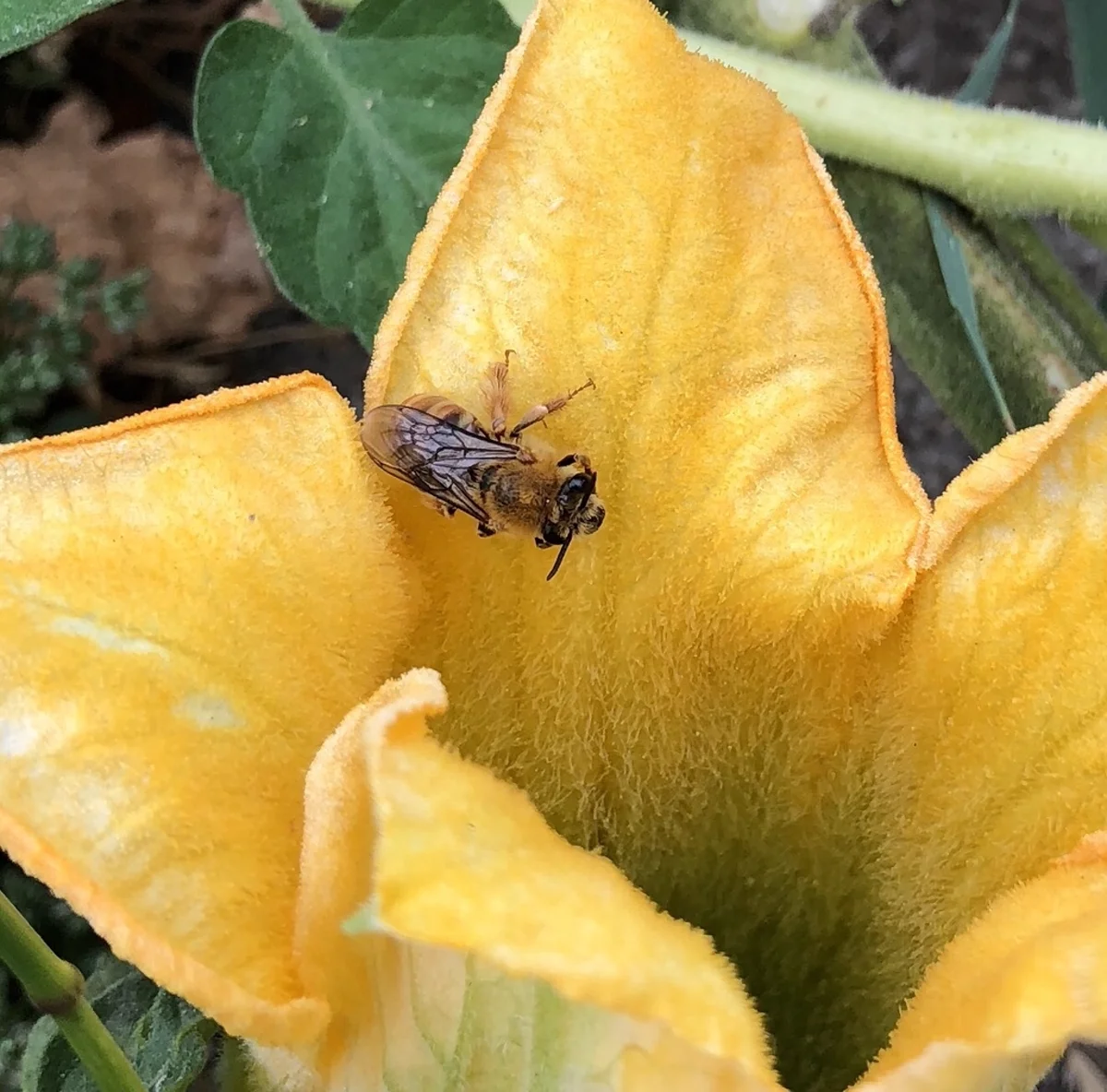
The easiest way to confirm you have squash bees is by observing where they forage. These bees visit only plants in the genus Cucurbita, which includes squash, pumpkins, zucchini, and gourds. If you see bees that look like honeybees but are only visiting your squash blossoms in the early morning, they are almost certainly squash bees.
Common Species in North America
Pruinose Squash Bee (Peponapis pruinosa): The most widespread squash bee species in North America. It ranges from Quebec to Mexico and from California to the eastern seaboard. This is the species most gardeners encounter.
Hoary Squash Bee (Peponapis crassidentata): Found primarily in the southwestern United States and Mexico. Similar in appearance to the pruinose squash bee but with slightly different facial markings.
Xenoglossa species: A related group of long-horned bees that includes the Texas squash bee. Some species in this genus have enlarged ocelli (simple eyes) that allow them to fly in near-darkness before sunrise.
Squash Bees Behavior and Biology
Squash bees have evolved a remarkable relationship with squash plants that dates back thousands of years. These bees are oligolectic, meaning they specialize in collecting pollen from a single plant family. Squash bees depend entirely on Cucurbita flowers for the pollen they feed their offspring.
Early Morning Activity A related species, Masked Bees, shares similar characteristics.
Squash flowers open in the early morning and close by midday. Squash bees have adapted their daily schedule to match. They begin foraging before sunrise and are often the first pollinators active in the garden. By noon, when the flowers have closed, the bees have completed their foraging for the day. A related species, Cuckoo Bees, shares similar characteristics.
Male squash bees spend their time patrolling squash patches looking for mates. They dart between flowers throughout the morning. When the flowers close in the afternoon, males often crawl inside the wilted blossoms to sleep until the next morning. This behavior makes them vulnerable to disturbance if gardeners remove spent flowers. A related species, Digger Bees, shares similar characteristics.
Ground Nesting Habits A related species, Small Carpenter Bees, shares similar characteristics.
Squash bees are solitary ground-nesting bees. Each female digs her own nest rather than sharing a hive with other bees. The nest is a vertical tunnel about 12 to 18 inches deep, ending in individual chambers where she lays her eggs.
Females prefer to nest close to their food source. Nests are often found right in the garden, within a few hundred feet of squash plants. They favor irrigated soils and areas cleared by tilling. Some squash bees even nest in lawns adjacent to vegetable gardens.
After provisioning a chamber with pollen and nectar, the female lays an egg and seals the cell. She may create several chambers in a single season. The larvae develop underground, feeding on the stored pollen through summer and fall. They spend the winter as pupae and emerge as adults the following year when squash plants begin to bloom.
Agricultural Importance
Squash bees are remarkably efficient pollinators of cucurbit crops. Studies comparing squash bees to honeybees have found that squash bees transfer more pollen per flower visit. A garden with a healthy squash bee population often does not need honeybees for pollination at all.
This matters for commercial growers and home gardeners alike. Squash yield depends entirely on insect pollination. Without bees visiting the flowers, plants produce few or no fruit.
Managing Squash Bees in Your Garden
Squash bees are beneficial insects that rarely cause problems for homeowners. Unlike some ground-nesting insects, they are not aggressive and their small burrows do not damage lawns or garden beds.
When Treatment is Not Needed
In most cases, squash bees should be left alone. They provide valuable pollination services and pose minimal risk to humans. Their short active season (typically June through September in most areas) means any disruption from their presence is temporary.
If you are concerned about squash bees nesting near a high-traffic area, consider that:
- Female squash bees sting only if directly handled
- Male squash bees cannot sting at all
- The bees focus on foraging and nesting, not on humans
- Activity is limited to early morning hours
Conservation Considerations
Squash bee populations have declined in some areas due to agricultural practices. Tilling soil can destroy nests, reducing local populations by as much as two-thirds. Pesticide exposure, particularly during morning hours when bees are active, also affects these pollinators.
To support squash bees in your garden:
- Avoid tilling soil near squash plants after the growing season
- Reduce or eliminate pesticide use, especially before noon
- Leave some bare soil near squash plants for nesting
- Plant additional cucurbit crops to provide food sources
When Professional Assessment May Help
If you are unsure whether you have squash bees or a more problematic ground-nesting insect, identification can help. Yellowjackets, for example, also nest in the ground but are aggressive and require different management. A professional can distinguish between these species and recommend appropriate action.
References
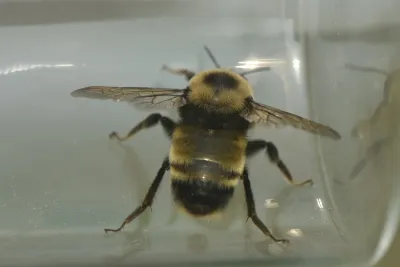
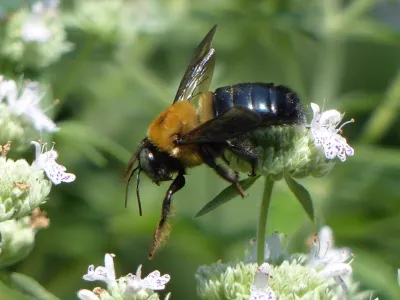
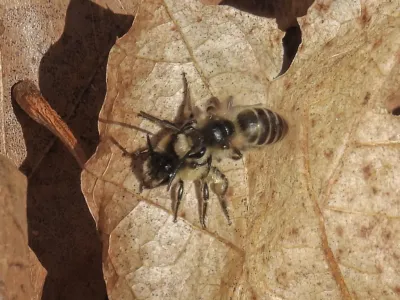
Other Bees
Explore other species in the bees family
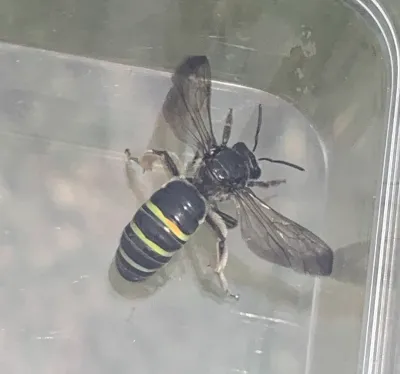
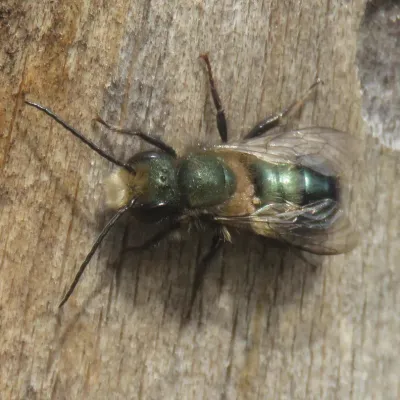
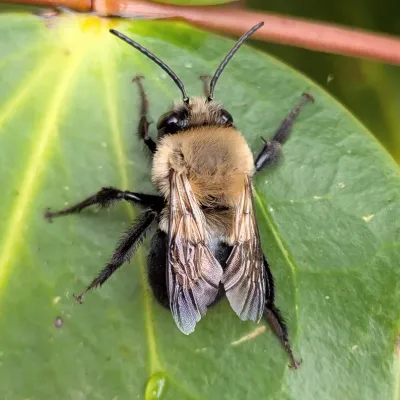
Commonly Confused With
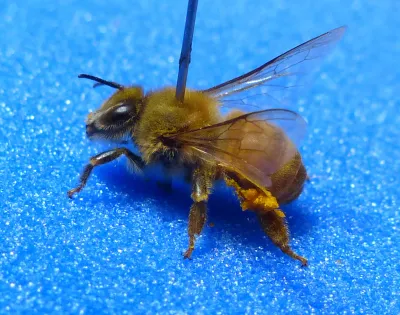
Squash Bees are often mistaken for these similar pests
Where Squash Bees Are Found
Hover over states to see their names. Green regions indicate where squash bees have been reported.
Common Questions about Squash Bees
Are squash bees dangerous?
+
Squash bees are not aggressive and rarely sting. Female squash bees can sting if directly handled or stepped on, but they do not defend their nests. Male squash bees cannot sting at all. These bees are focused entirely on foraging from squash flowers and pose little risk to humans.
How do I identify squash bees?
+
Squash bees are similar in size to honeybees but slightly larger and bulkier. They have black bodies with pale cream or whitish bands on their abdomen and yellowish hairs on their thorax. You will only find them on or near squash, pumpkin, zucchini, or gourd plants.
Where do squash bees nest?
+
Squash bees nest in the ground, usually within a few hundred feet of squash plants. Each female digs her own burrow about 12 to 18 inches deep in the soil. They prefer irrigated or recently tilled soil and may nest right in the garden near their host plants.
Why are squash bees only active in the morning?
+
Squash bees have evolved to match the opening schedule of squash flowers, which bloom early in the morning and close before noon. They begin foraging before sunrise and complete their work by midday. Male bees often sleep inside the closed flowers during the afternoon.
Do squash bees help pollinate my garden?
+
Yes, squash bees are among the most effective pollinators of squash, pumpkins, zucchini, and gourds. A healthy population of squash bees can completely pollinate a squash patch without any help from honeybees or other pollinators.
Will squash bees damage my lawn or garden?
+
Squash bees do not damage plants or lawns. Their small ground nests actually help aerate the soil. The bees only dig small burrows and do not create large underground colonies or mounds.
How can I attract more squash bees to my garden?
+
To encourage squash bees, avoid tilling the soil around squash plants after the growing season, as this destroys their nests. Reduce pesticide use, especially during morning hours when bees are foraging. Planting more squash family crops provides additional food sources.
What is the difference between squash bees and honeybees?
+
Squash bees are larger and bulkier than honeybees with longer antennae and rounder faces. Unlike honeybees, squash bees are solitary and only visit plants in the squash family. Honeybees live in hives and forage from many different flowers throughout the day.

With five years of hands-on experience in the pest control industry, George Schulz is a registered technician with the Virginia Pest Management Association and a proud third-generation professional in a family business that's been protecting homes for over 57 years. He manages and trains a team of service pros while also leading internal research efforts—recently spearheading a deep-dive review of thousands of documents on pest control materials to hand-pick the most kid and pet friendly, most effective solutions tailored specifically for homes in the DC metro area.