Southern Carpenter Bees Identification Guide
Xylocopa micans
Large, metallic blue-black carpenter bees native to the southeastern United States that bore into dead wood to create nests.
Taxonomy
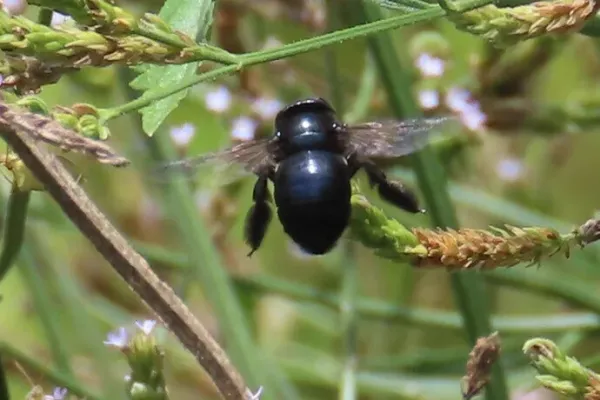
Southern Carpenter Bees Coloration
Common color patterns to help identify southern carpenter bees
Southern Carpenter Bees
Seasonal Activity
When southern carpenter bees are most active throughout the year

Where Southern Carpenter Bees Are Found
Hover over states to see their names. Green regions indicate where southern carpenter bees have been reported.
Southern Carpenter Bee Identification Guide
Physical Characteristics
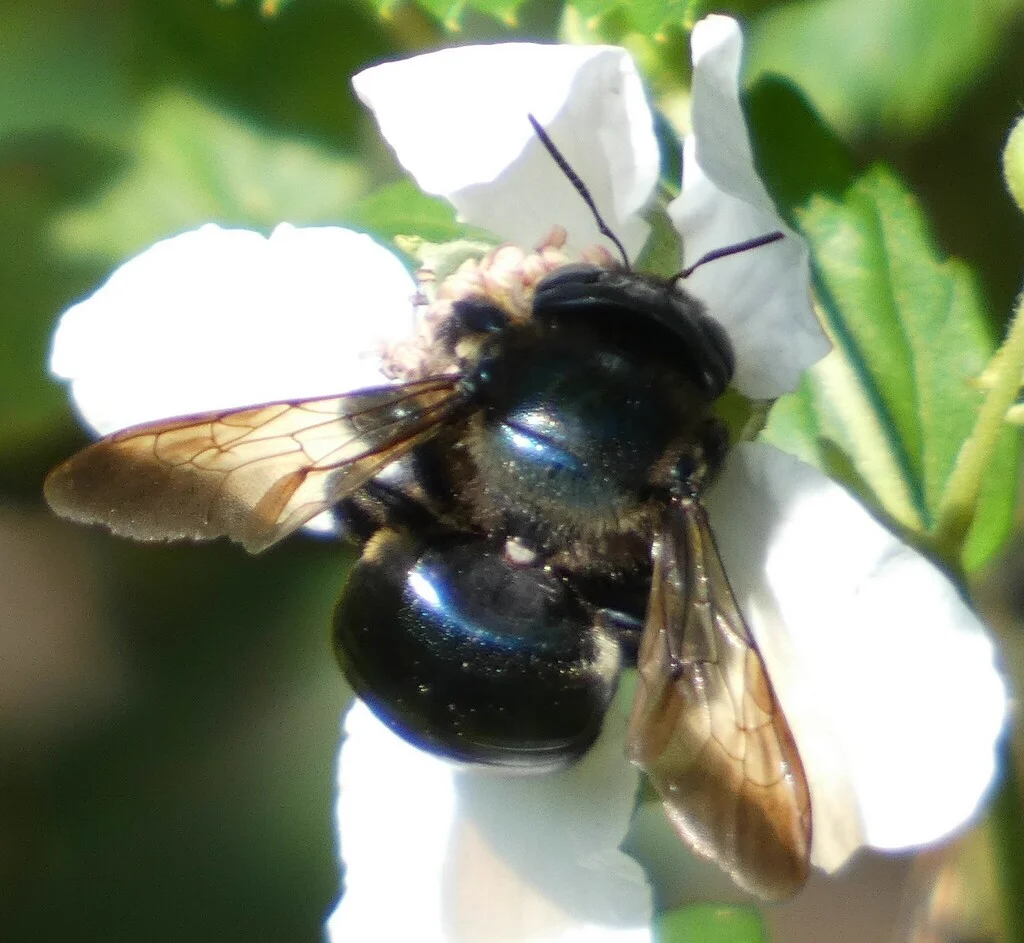
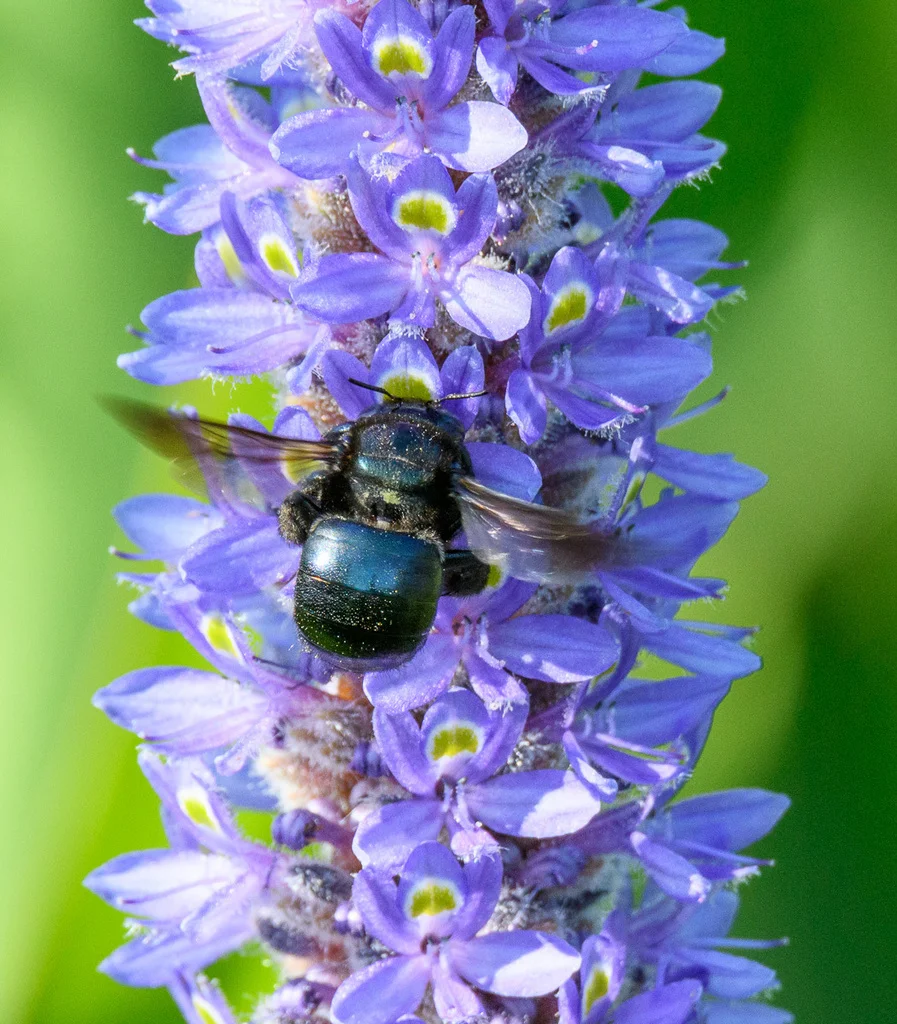
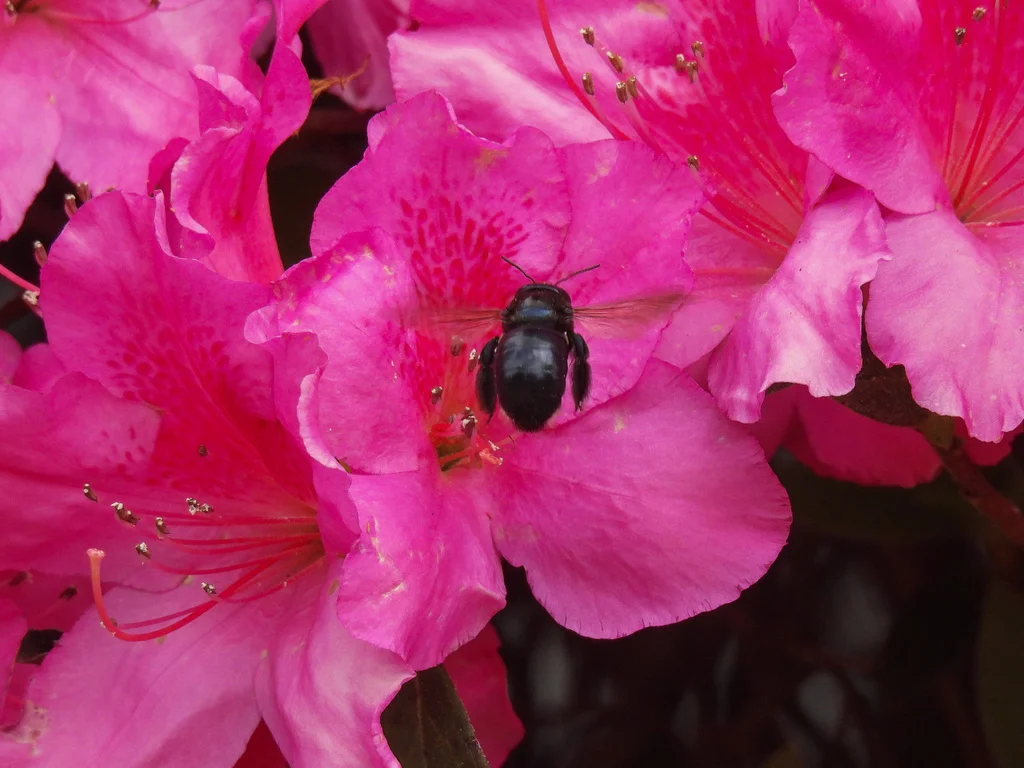
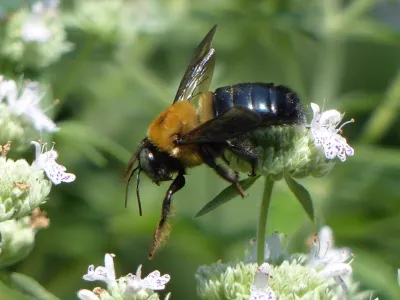
Southern carpenter bees are large bees. They measure 15 to 19 millimeters long, which is about 5/8 to 3/4 inch. Their most notable feature is a metallic blue-black body that shines in the light. The species name “micans” comes from Latin for “shining.”
These bees look like eastern carpenter bees and bumble bees at first glance. A closer look shows key differences. The abdomen is smooth and hairless with a metallic sheen. Eastern carpenter bees have a dull black abdomen instead.
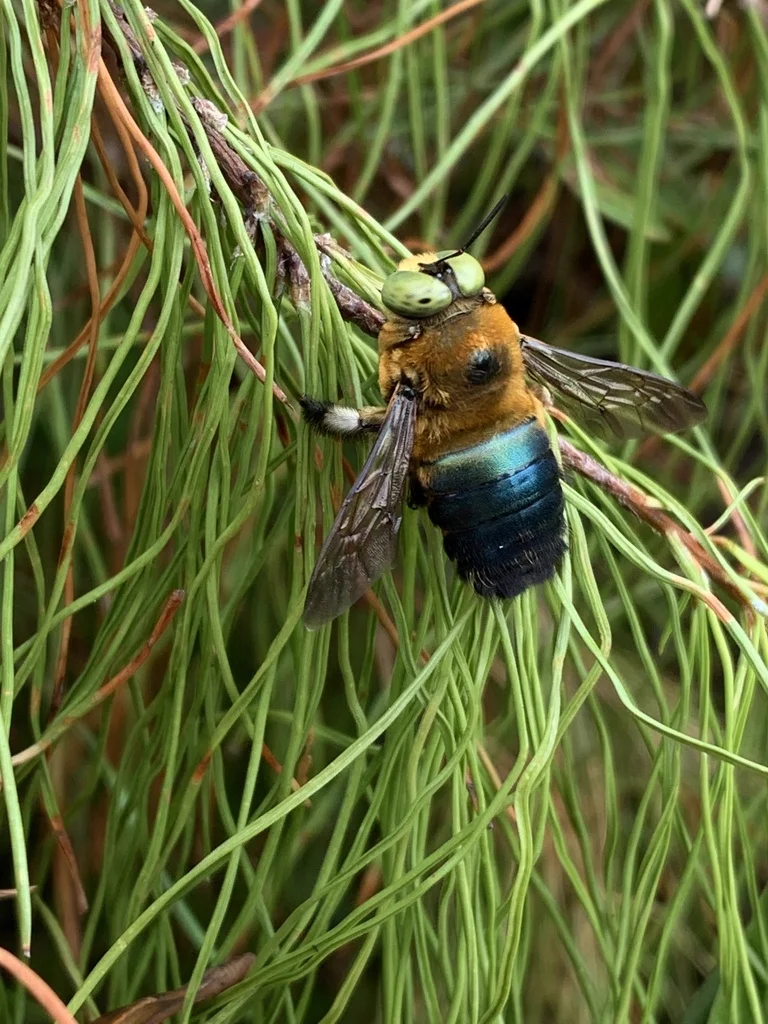
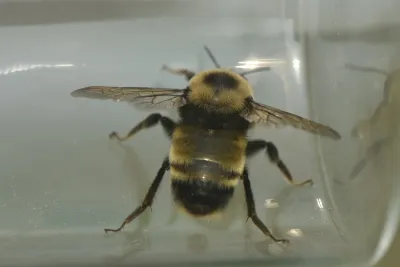
Males and females look quite different from each other. Males have bright yellow fuzzy hair on their thorax and the front of their abdomen. The back of their abdomen shows a blue-green metallic color. Females are mostly black with sparse dark hair on the thorax. They have white tufts of hair on the rear segments of their abdomen.
Both males and females have a flat face and shorter jaws than some other carpenter bee species.
Common Species and Range
The southern carpenter bee is one of several large carpenter bee species in North America.
-
Southern Carpenter Bee: Found along the Atlantic and Gulf coasts from Virginia through Florida and west to Texas. Also lives in Mexico and Guatemala. Prefers coastal areas and wetlands.
-
Eastern Carpenter Bee: The most common species in the eastern United States. Larger than the southern species. Lacks the metallic blue-green sheen.
-
Valley Carpenter Bee: Found in the western United States. Females are solid black. Males are golden-brown.
In the Southeast where ranges overlap, you can tell these species apart. Southern carpenter bees have a metallic sheen and males have yellow fuzzy hair.
Southern Carpenter Bee Behavior and Biology
Southern carpenter bees are solitary insects. They do not form colonies or make honey like honey bees do. Each female builds and supplies her own nest on her own.
Nesting Habits
Like all bees in the genus Xylocopa, southern carpenter bees dig nests in wood. But they differ from eastern carpenter bees in one key way. Southern carpenter bees do not nest in building materials like decks and porches. Instead, they prefer dead tree branches, stumps, and fallen woody debris. A related species, Masked Bees, shares similar characteristics.
Females use strong jaws to chew holes into wood. The entrance hole is about 8 millimeters wide, roughly the size of a pencil. The tunnel goes about 12 centimeters deep (nearly 5 inches). Inside are several cells lined up along the tunnel. The female fills each cell with pollen and nectar, lays one egg, then seals it with chewed wood pulp. A related species, Cuckoo Bees, shares similar characteristics.
These bees prefer to reuse old tunnels rather than dig new ones. This saves energy but makes good nesting sites valuable. A related species, Long-Horned Bees, shares similar characteristics.
Life Cycle A related species, Digger Bees, shares similar characteristics.
Southern carpenter bees live for about one year. Adults spend winter inside old nest tunnels. Both males and females shelter together during cold months. They come out in early spring when it warms up.
Males come out first and claim territories. In early spring, males set up territories near flowers where females feed. Later in summer, from July through August, males move to landmarks like small hills and tall plants.
After mating, females look for good nesting sites. They stock cells with food and lay eggs. The eggs hatch into larvae that grow through summer. New adults emerge in late summer. They stay in the nest through fall and winter, then come out the next spring.
Feeding Habits
Southern carpenter bees collect pollen from many types of plants. They visit native shrubs and wildflowers like asters, hibiscus, bee balm, goldenrod, and ironweed. They can perform buzz pollination, where they shake their bodies to knock pollen loose from flowers.
Treatment Methods for Carpenter Bees
Southern carpenter bees rarely cause structural damage. They nest in dead woody plants rather than buildings. When any carpenter bees target wooden structures, pest control follows these methods.
Inspection:
The first step is to identify which carpenter bee species is present. All active nest holes should be located. The extent of damage is then assessed.
Direct Treatment:
For carpenter bees nesting in structures, insecticide dust is applied directly into nest holes. The dust coats tunnel walls and kills bees as they move through. Treatment works best in early spring before eggs are laid. Late evening also works well when bees have returned to their tunnels.
Sealing and Prevention:
After treatment takes effect, sealing entrance holes stops reuse. Steel wool pushed into the hole followed by wood putty makes a good seal. Painting or staining bare wood deters future nesting. Carpenter bees prefer untreated wood, so treated surfaces are less appealing to them.
Signs of Southern Carpenter Bee Activity
Watch for these signs that southern carpenter bees may be present:
-
Metallic blue-black bees: Large bees with a shiny, iridescent look visiting flowers. Most common in coastal areas of the Southeast.
-
Yellow and black males: Males have bright yellow fuzzy hair on their thorax. They stand out as they hover near plants.
-
Round holes in dead wood: Entrance holes about 8mm wide (pencil-sized) in fallen branches, stumps, or dead shrubs.
-
Sawdust near holes: Coarse sawdust piles below entrance holes show active digging.
-
Hovering behavior: Males hover near certain spots. In spring they stay near flowers. In summer they move to tall plants and landmarks.
Southern Carpenter Bees vs. Similar Species
Southern carpenter bees are often confused with other large bees.
Bumble Bees: Bumble bees have fuzzy abdomens with yellow bands. Southern carpenter bees have smooth, shiny abdomens with a metallic sheen. Bumble bees nest in the ground, not wood.
Eastern Carpenter Bees: Eastern carpenter bees are larger (19-25mm vs 15-19mm). They have dull black abdomens without the metallic sheen. Eastern carpenter bees often nest in decks and porches. Southern carpenter bees prefer dead plant material.
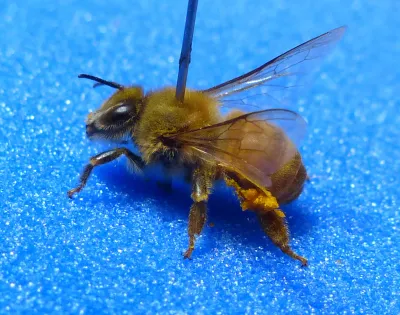
Honey Bees: Honey bees are much smaller. They have brown and gold striped abdomens. They live in large colonies and do not bore into wood.
References
Other Bees
Explore other species in the bees family
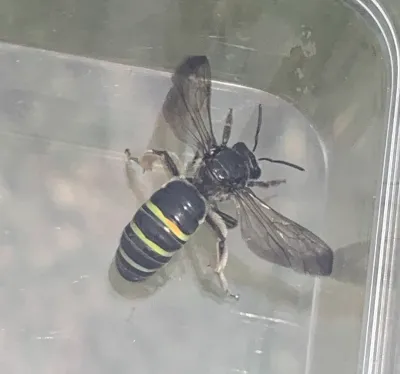
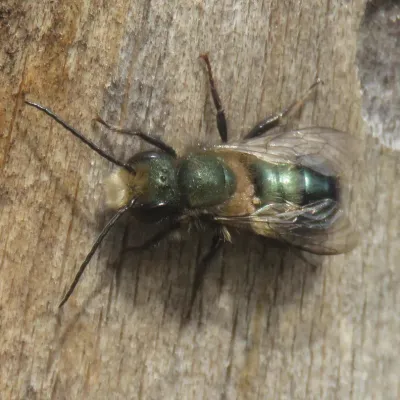
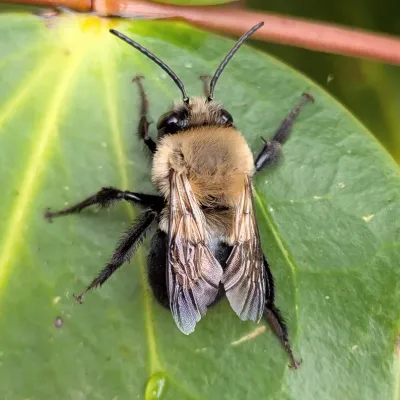
Commonly Confused With
Southern Carpenter Bees are often mistaken for these similar pests
Where Southern Carpenter Bees Are Found
Hover over states to see their names. Green regions indicate where southern carpenter bees have been reported.
Common Questions about Southern Carpenter Bees
How do I tell southern carpenter bees apart from eastern carpenter bees?
+
Southern carpenter bees have a distinctive metallic blue-green sheen on their abdomen, while eastern carpenter bees appear solid black. Males of the southern species have bright yellow pubescence on their thorax and the first two abdominal segments, making them more colorful than eastern males.
Do southern carpenter bees damage homes like eastern carpenter bees?
+
Southern carpenter bees rarely bore into structural wood on buildings. Unlike eastern carpenter bees, they prefer to nest in dead woody plant material like fallen branches and stumps rather than painted or unpainted lumber. They pose less of a structural pest concern.
Are southern carpenter bees aggressive?
+
No. Southern carpenter bees are not aggressive. Males may hover near you to investigate movement, but they cannot sting. Females can sting but rarely do so unless directly handled or stepped on. They are generally docile bees.
Where do southern carpenter bees live?
+
Southern carpenter bees are found along the southeastern United States coast from Virginia to Florida and west along the Gulf Coast to Texas. They also range into Mexico and Guatemala. They prefer coastal lowlands and areas near wetlands.
When are southern carpenter bees most active?
+
Southern carpenter bees are active year-round in warmer regions like Florida and the Gulf Coast. In areas with cooler winters like Virginia, they emerge in early April and remain active through fall. Peak activity occurs during spring mating season.
What do southern carpenter bees eat?
+
Southern carpenter bees feed on nectar and pollen from a wide variety of flowering plants. They visit native shrubs as well as wildflowers including asters, goldenrod, hibiscus, and salvia species. They can perform buzz pollination to access tightly held pollen.
Do southern carpenter bees live in colonies?
+
No. Like other carpenter bees, southern carpenter bees are solitary. Each female creates and maintains her own nest. Both males and females may overwinter together in old nest tunnels, but they do not form social colonies like honey bees.
Can southern carpenter bees sting multiple times?
+
Yes. Unlike honey bees, female southern carpenter bees can sting more than once because their stinger is smooth and does not detach. However, they rarely sting unless directly threatened or handled. Males cannot sting at all.

With five years of hands-on experience in the pest control industry, George Schulz is a registered technician with the Virginia Pest Management Association and a proud third-generation professional in a family business that's been protecting homes for over 57 years. He manages and trains a team of service pros while also leading internal research efforts—recently spearheading a deep-dive review of thousands of documents on pest control materials to hand-pick the most kid and pet friendly, most effective solutions tailored specifically for homes in the DC metro area.