Small Carpenter Bees Identification Guide
Ceratina spp.
Tiny metallic bees that nest in plant stems and twigs rather than structural wood. Unlike their larger relatives, small carpenter bees rarely cause property damage.
Taxonomy
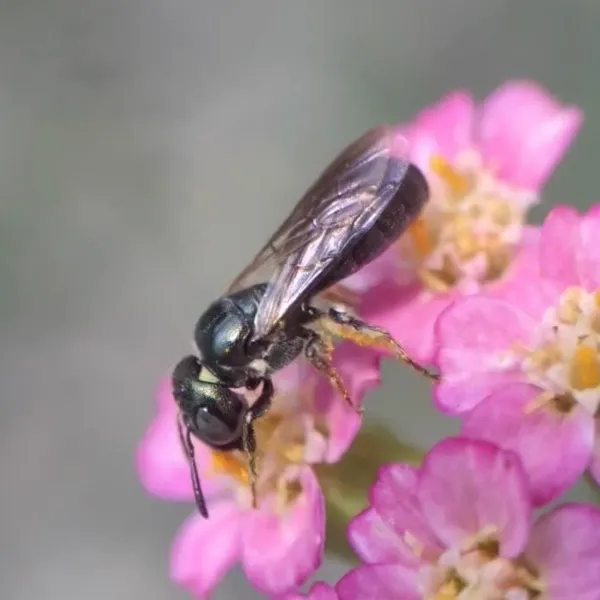
Small Carpenter Bees Coloration
Common color patterns to help identify small carpenter bees
Small Carpenter Bees
Seasonal Activity
When small carpenter bees are most active throughout the year

Where Small Carpenter Bees Are Found
Hover over states to see their names. Green regions indicate where small carpenter bees have been reported.
Small Carpenter Bee Identification Guide
Physical Characteristics
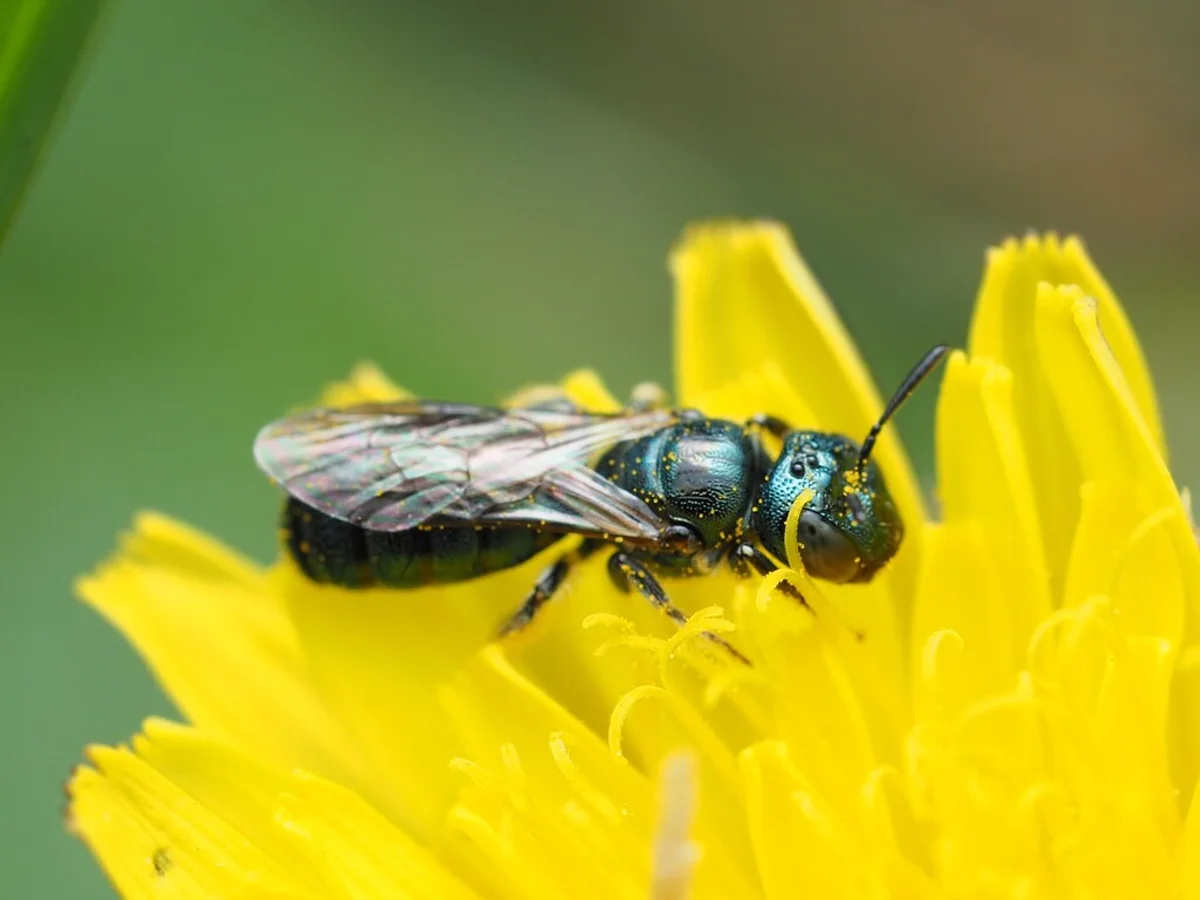
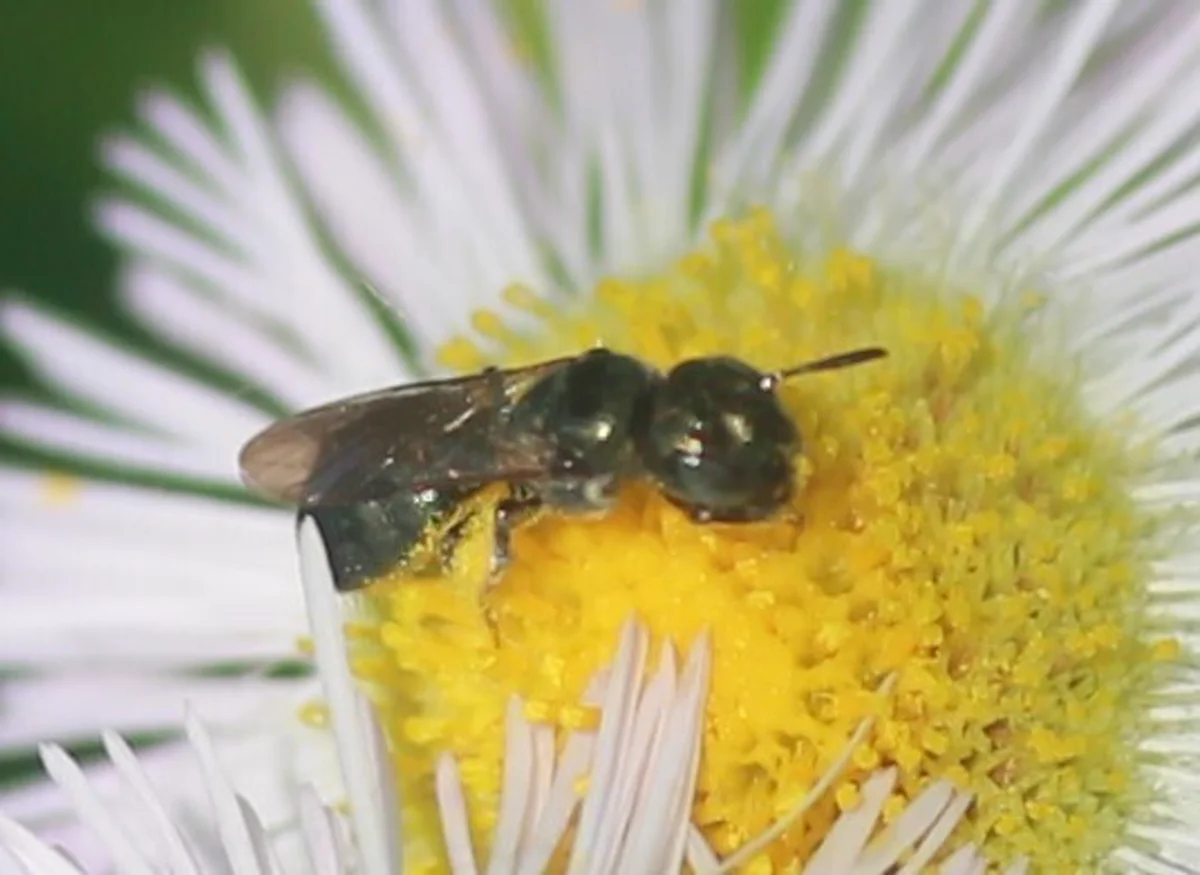
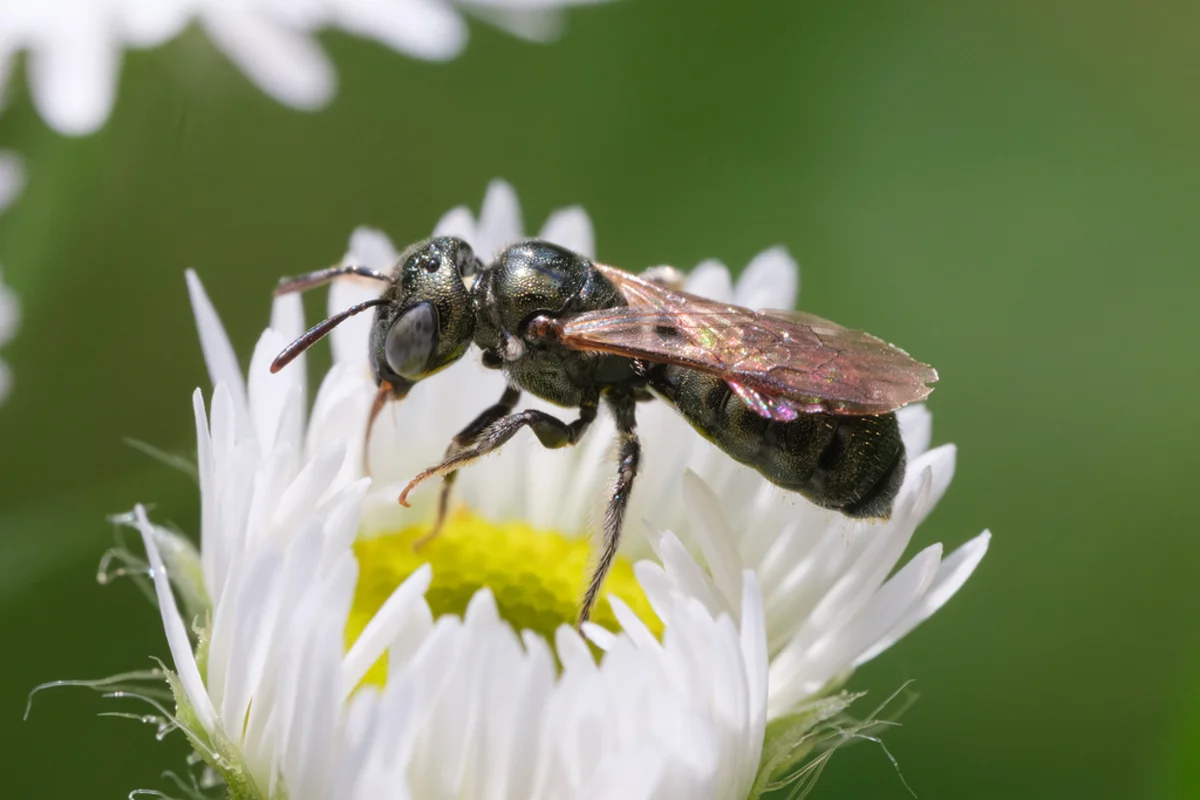
Small carpenter bees are among the tiniest bees you might see. Adults measure just 3 to 8 millimeters long. That is roughly the size of a grain of rice. Despite their small size, these bees stand out because of their metallic sheen.
Most small carpenter bees look dark and shiny. They often have a blue, green, or blue-black metallic color. The body is slender with little hair compared to other bees. This smooth, shiny surface makes them look almost ant-like at first glance. The abdomen tapers to a rounded, swollen tip.
The head is large compared to the body. Many species have pale yellow or ivory markings on the face. These marks appear on the clypeus, which is the plate above the mouth. These facial markings help tell them apart from similar bees.
Small carpenter bees have a long tongue that lets them feed from small flowers. Larger bees cannot reach into these tiny blooms. Females carry pollen on brushes on their hind legs. These brushes are smaller than the pollen baskets seen on honey bees.
Common Species in North America
-
Spurred Ceratina (Ceratina calcarata): The most common species in eastern North America. Found in Virginia, Maryland, and the DC area. Males have a spur on the hind leg.
-
Doubled Carpenter Bee (Ceratina dupla): Common across eastern states. Looks very similar to other Ceratina species. Hard to tell apart without a magnifying glass.
-
Mikmaq Little Carpenter Bee (Ceratina mikmaqi): Named in 2011 and now known to be common in the Northeast. Looks nearly the same as the Doubled Carpenter Bee.
-
Nimble Carpenter Bee (Ceratina strenua): A smaller species found mainly in the Southeast. Females have white marks on the front leg. This is unique among North American Ceratina.
-
Blue Small Carpenter Bee (Ceratina cyanea): Found in the Southwest and Mexico. Has a bright blue metallic color.
Small Carpenter Bee Behavior and Biology A related species, Masked Bees, shares similar characteristics.
Small carpenter bees are solitary insects. Unlike honey bees, they do not form large colonies. Each female creates and fills her own nest. However, some species show early social behaviors. A related species, Cuckoo Bees, shares similar characteristics.
These bees nest in the soft pith of dead plant stems and broken twigs. Unlike large carpenter bees that dig into solid wood, small carpenter bees can only bore into soft materials. Their small jaws cannot handle hard wood. Common nesting sites include raspberry canes, elderberry stems, sumac branches, rose stems, and other pithy plants. A related species, Long-Horned Bees, shares similar characteristics.
In spring, adults that spent the winter in their nests come out. Both males and females spend the cold months inside old tunnels. After coming out, they mate. Females then search for good nesting sites. A related species, Digger Bees, shares similar characteristics.
The female chews out the soft pith to make a tunnel inside the plant stem. She collects pollen and nectar, forming a ball of food called “bee bread.” She places an egg on the food ball and seals the cell with chewed plant bits. She repeats this process, making a row of cells stacked end to end inside the stem.
A typical nest has 4 to 8 cells. The egg nearest the entrance hatches last. This lets the bees deeper in the tunnel come out first. Young bees grow through summer, eating the food their mother left. They change to adults in late summer but stay in the nest through winter.
Some small carpenter bee species share nests. One female goes out to gather food while another guards the entrance. This teamwork is rare among solitary bees.
Some Ceratina species can have young without mating. This is called parthenogenesis. Scientists have confirmed this in Ceratina dallatorreana. Some populations may be entirely female.
Small Carpenter Bees vs. Large Carpenter Bees
Homeowners often confuse small carpenter bees with their larger relatives. Knowing the differences helps you decide if action is needed.
Size: Large carpenter bees measure 19 to 25 mm, roughly an inch long. Small carpenter bees measure just 3 to 8 mm. That is about one quarter of an inch or less. A large carpenter bee is the size of a bumblebee. A small carpenter bee is closer to the size of a fruit fly.
Appearance: Large carpenter bees have a fuzzy yellow middle section and a shiny black rear. Small carpenter bees look entirely metallic with little hair. Large carpenter bees look thick and bulky. Small carpenter bees look thin and almost wasp-like.
Nesting behavior: Large carpenter bees bore into solid wood. They make tunnels in decks, porches, fascia boards, and outdoor furniture. Learn more about eastern carpenter bees and the damage they cause. Small carpenter bees nest only in soft plant pith. They cannot dig into solid wood and pose no threat to wooden structures.
Property damage: Large carpenter bees cause damage that gets worse over time as tunnels grow year after year. Small carpenter bees cause no property damage.
Treatment Considerations
Small carpenter bees differ from large carpenter bees in one key way. They do not bore into wooden structures. They nest only in plant stems and twigs, so they pose no threat to homes, decks, or fences.
If you see small, metallic bees around your property, get proper identification first. A pest control professional can determine whether the bees you are seeing are small carpenter bees or a species that requires treatment. Correct identification saves time and ensures the right approach.
If bees are nesting in unwanted areas, removing the plant stems that contain nests is often enough. Do this during winter when the bees are dormant inside. Pruning dead canes from raspberries, roses, or other pithy plants eliminates nesting sites.
For properties where small bees are a concern near outdoor living spaces, reducing available nesting habitat is the most direct solution. Remove dead plant material regularly. Keep shrubs trimmed. Clear broken stems from garden beds. These steps limit areas where small carpenter bees can establish nests.
Signs You Have Small Carpenter Bees
-
Small holes in dead stems: Look for tiny entrance holes in broken twigs or cut plant stems. Check pithy plants like raspberries, roses, or elderberry.
-
Metallic bees on flowers: Watch for small, shiny bees with little hair visiting garden flowers. They favor small blooms.
-
Bees entering plant stems: A tiny metallic bee going into the broken end of a plant stem is a sure sign.
-
Large heads and slender bodies: Up close, the large head and long thin body set these bees apart from other small bees.
References
Other Bees
Explore other species in the bees family
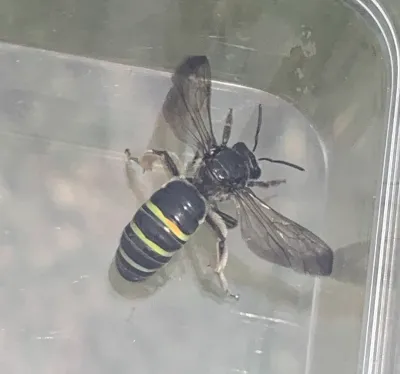
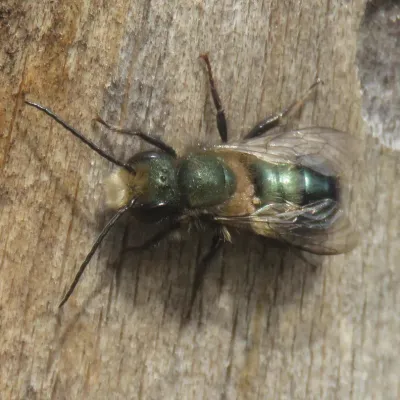
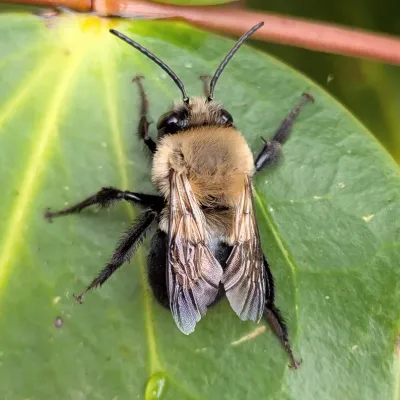
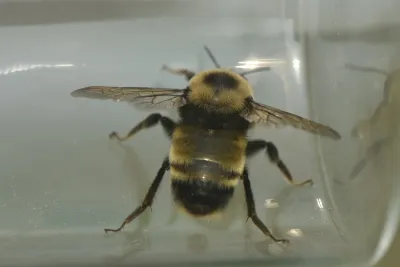
Commonly Confused With
Small Carpenter Bees are often mistaken for these similar pests
Where Small Carpenter Bees Are Found
Hover over states to see their names. Green regions indicate where small carpenter bees have been reported.
Common Questions about Small Carpenter Bees
Are small carpenter bees the same as carpenter bees?
+
No. Small carpenter bees (Ceratina) and large carpenter bees (Xylocopa) are in the same family but are very different. Small carpenter bees are about the size of a grain of rice, while large carpenter bees are the size of a bumblebee. Most importantly, small carpenter bees nest in plant stems, not wooden structures.
Do small carpenter bees damage homes?
+
No. Unlike their larger relatives, small carpenter bees do not bore into wooden structures. They excavate nests in the soft pith of broken twigs and dead plant stems. They pose no threat to decks, porches, or other wooden components of homes.
Can small carpenter bees sting?
+
Female small carpenter bees have stingers, but they are not aggressive and rarely sting unless handled directly. Males cannot sting at all. These bees are considered docile and not a threat to people.
Why do I see small carpenter bees in my garden?
+
Small carpenter bees are attracted to gardens because they feed on flower nectar and pollen. They visit many flowering plants and nest in dead plant stems. Gardens with pithy plants like raspberries or roses provide ideal habitat for these bees.
How do I tell small carpenter bees from sweat bees?
+
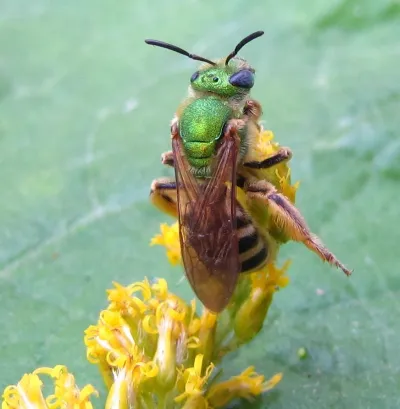
Both are small and often metallic-colored, which causes confusion. Look at the body shape. Small carpenter bees have a more slender, elongated body with a distinctly swollen abdomen tip. Sweat bees tend to be rounder. Small carpenter bees also have larger heads relative to their body size.
Where do small carpenter bees nest?
+
Small carpenter bees nest in the hollow or pithy centers of dead plant stems and broken twigs. Common nesting sites include raspberry canes, elderberry stems, sumac branches, and other soft-centered plants. They do not nest in solid wood like large carpenter bees.
Should I get rid of small carpenter bees?
+
Small carpenter bees do not damage property or pose health risks. If you have concerns about bees near your home, contact a pest professional for identification. Proper identification is important since small carpenter bees are often confused with other bee species that may require different approaches.
When are small carpenter bees most active?
+
Small carpenter bees are most active from late spring through early fall, with peak activity in June and July. They overwinter as adults inside their stem nests and emerge in spring when temperatures warm.

With five years of hands-on experience in the pest control industry, George Schulz is a registered technician with the Virginia Pest Management Association and a proud third-generation professional in a family business that's been protecting homes for over 57 years. He manages and trains a team of service pros while also leading internal research efforts—recently spearheading a deep-dive review of thousands of documents on pest control materials to hand-pick the most kid and pet friendly, most effective solutions tailored specifically for homes in the DC metro area.