Polyester Bees Identification Guide
Colletidae
Solitary ground-nesting bees that line their nest cells with a waterproof, cellophane-like secretion. These beneficial pollinators are docile and rarely sting.
Taxonomy
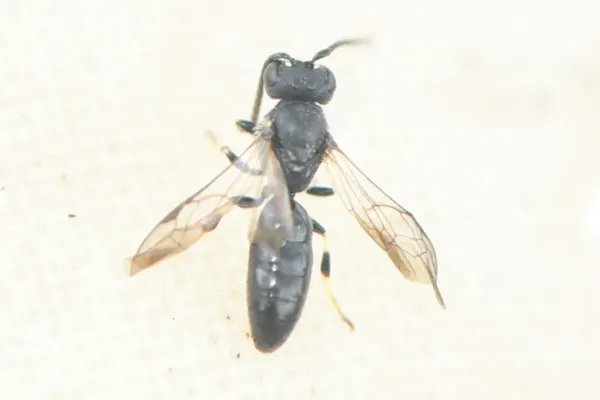
Polyester Bees Coloration
Common color patterns to help identify polyester bees
Polyester Bees
Seasonal Activity
When polyester bees are most active throughout the year
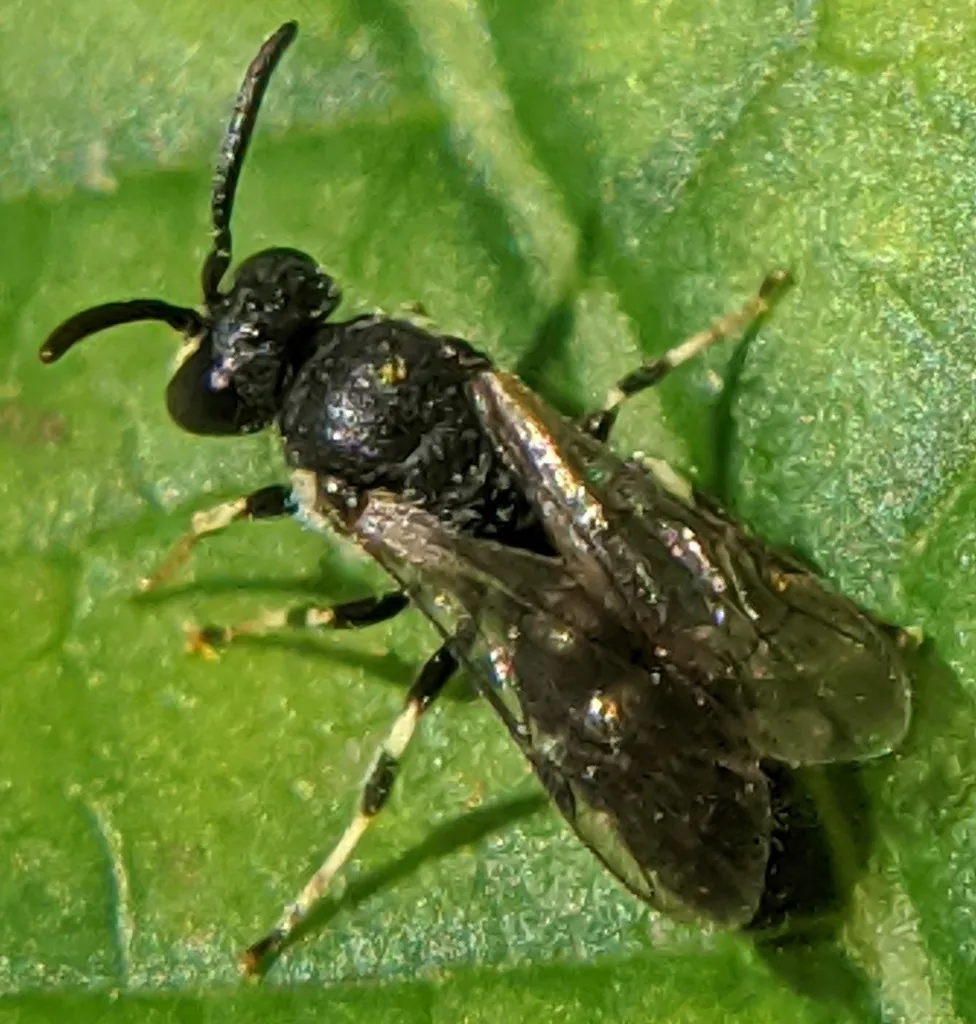
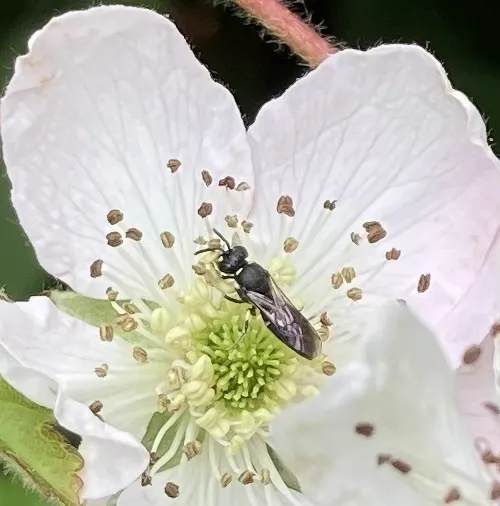
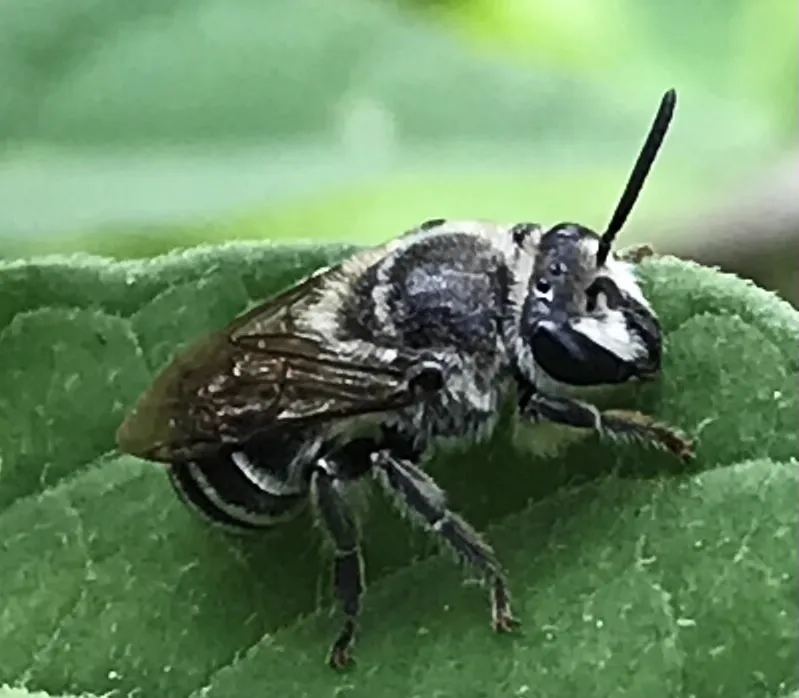

Where Polyester Bees Are Found
Hover over states to see their names. Green regions indicate where polyester bees have been reported.
Polyester Bee Identification Guide
Physical Characteristics
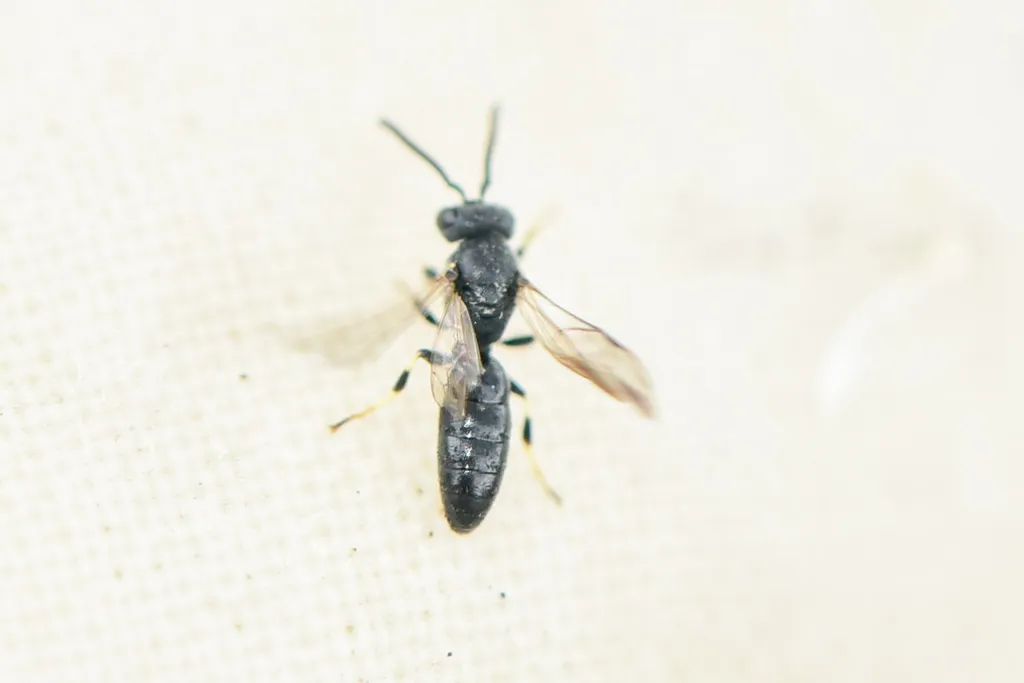
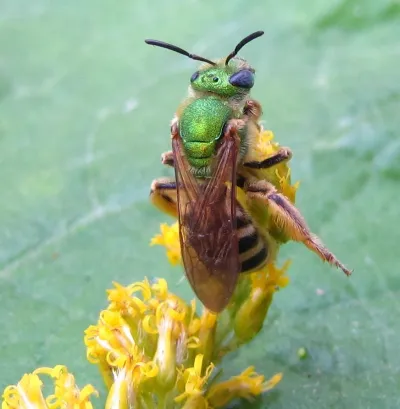
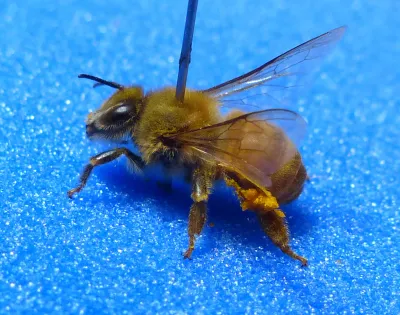
Polyester bees are slender, medium-sized bees ranging from 8 to 15 millimeters in length. They have a distinctive heart-shaped or triangular face that helps distinguish them from other bee species. Most polyester bees are black or dark gray with pale hair forming bands across their abdomen.
These bees have short tongues that are uniquely split at the tip. Their bodies are less fuzzy than honey bees or bumble bees, giving them a somewhat sleeker appearance. Many species have bare, shiny areas on their face and thorax between patches of pale hair.
The wings of polyester bees are translucent with a slight iridescent sheen. When at rest, the wings fold flat over the abdomen. Their compound eyes are large and positioned on the sides of their head, and their antennae are moderately long and gently curved.
Common Species in North America
-
Unequal Cellophane Bee (Colletes inaequalis): One of the most common species in eastern North America. These bees are about 10-13mm long with pale bands on a dark abdomen. They emerge very early in spring and are important pollinators of red maple, willow, and fruit trees.
-
Plasterer Bees (Colletes species): A diverse genus with approximately 100 species in North America. They are named for the plaster-like substance they create to line their nest cells.
-
Yellow-faced Bees (Hylaeus species): Small, nearly hairless bees with distinctive yellow or white facial markings. They are common in gardens and urban areas throughout North America.
-
Large Cellophane Bees (Caupolicana species): Found primarily in the southwestern United States and Florida. These are larger members of the family, often with striking coloration.
Polyester Bee Behavior and Biology A related species, Cuckoo Bees, shares similar characteristics.
Polyester bees are solitary insects, meaning each female constructs and provisions her own nest without help from other bees. Unlike honey bees or bumble bees, there is no queen, no workers, and no division of labor. Every female is fertile and capable of reproducing.
The life cycle begins in early spring when adults emerge from their underground nests. Males typically emerge first and patrol nesting areas looking for females. After mating, each female selects a nesting site in well-drained, sandy soil that receives morning sun. She digs a tunnel several inches deep, creating branching chambers off the main shaft.
What makes polyester bees unique is how they waterproof their nest cells. The female secretes a substance from her Dufour’s gland that she spreads across the cell walls using her short, split tongue. This secretion dries into a thin, cellophane-like membrane that is remarkably similar to synthetic polyester in its molecular structure. The waterproof lining protects the developing larvae from moisture, fungi, and soil bacteria.
After preparing a cell, the female provisions it with a mixture of pollen and nectar, forms it into a ball, and lays a single egg on top. She then seals the cell and begins work on the next one. A single female may create 10 to 15 brood cells over her short adult life of 4 to 6 weeks.
The eggs hatch into larvae that feed on the stored pollen. They develop through several stages before pupating inside the waterproof cell. The new adults remain underground through summer, fall, and winter, emerging the following spring to repeat the cycle.
Polyester bees have one generation per year. This is different from some other bee species that produce multiple generations during the warm months. Their synchronized emergence in early spring creates what appears to be a sudden swarm of activity in certain areas.
Ecological Importance
Polyester bees are valuable early-season pollinators. They emerge when few other insects are active, making them critical for spring-blooming plants. Many fruit trees, including apples, cherries, and blueberries, depend on early pollinators like polyester bees for successful fruit set.
The genus Colletes in particular pollinates:
- Red maple trees
- Willow trees
- Spring wildflowers
- Early vegetable crops
- Fruit tree blossoms
Because polyester bees are solitary and do not form defensive colonies, they are not a threat to people. Walking near their nests will not trigger an attack because they lack the alarm pheromones and defensive behaviors of social bees and wasps. A sting is possible only if a bee is stepped on or physically handled.
Managing Polyester Bees
Polyester bees are active for only 4-6 weeks each spring. Their small burrows help aerate compacted soil and they do not cause structural damage. Since they are solitary and not aggressive, they rarely pose problems for most homeowners.
When Management May Be Needed:
- Nesting in high-traffic areas where people walk barefoot
- Large aggregations near playgrounds or swimming pools
- Family members with severe bee sting allergies
Habitat Modification Strategies:
If polyester bees are nesting in an unwanted area, these changes can make the location less attractive:
- Water regularly: These bees prefer dry soil. Frequent watering makes the area less suitable for nesting.
- Thicken the lawn: Fill in bare patches and maintain dense grass coverage.
- Add mulch: Cover bare soil in garden beds with 2-3 inches of organic mulch.
Professional Assessment:
If you are unsure whether you have polyester bees or a more aggressive stinging insect like yellowjackets, contact a pest control professional. Proper identification is important because treatment approaches vary significantly between solitary bees and social wasps. A professional can assess your situation and recommend the best course of action for your specific needs.
References
Other Bees
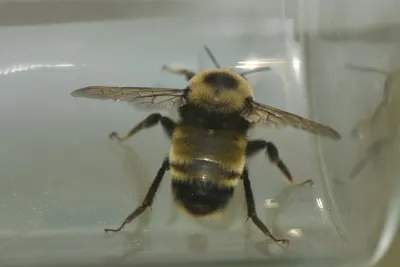
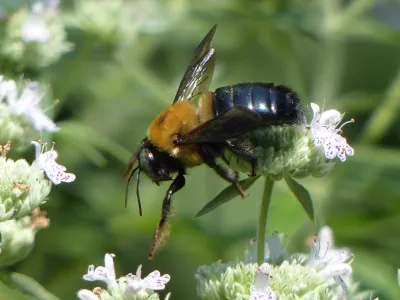
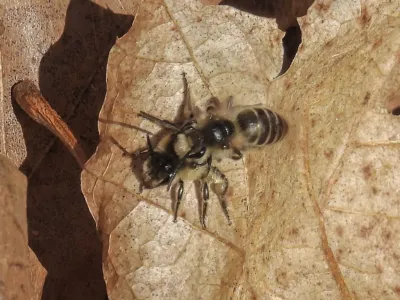
Explore other species in the bees family
Commonly Confused With
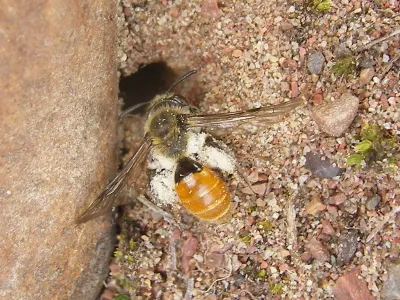
Polyester Bees are often mistaken for these similar pests
Where Polyester Bees Are Found
Hover over states to see their names. Green regions indicate where polyester bees have been reported.
Common Questions about Polyester Bees
What are polyester bees?
+
Polyester bees are solitary ground-nesting bees in the family Colletidae. They get their name from the cellophane-like material they secrete to line their underground nest cells. This waterproof lining protects their eggs and food stores from moisture and fungal growth.
Are polyester bees dangerous?
+
Polyester bees are not dangerous. They are extremely docile and rarely sting. Female polyester bees can sting if stepped on or physically threatened, but they do not have the defensive instincts of social bees or wasps. Male polyester bees cannot sting at all.
How do I identify polyester bees?
+
Polyester bees are slender bees, typically 8-15mm long, with a heart-shaped or triangular face. Most species are black or dark-colored with pale hair bands on their abdomen. They have short, split tongues and often appear similar to small honey bees but are less hairy.
Where do polyester bees nest?
+
Polyester bees dig burrows in well-drained, sandy soil with minimal vegetation. Each female excavates her own nest, creating tunnels several inches deep with individual brood cells. Look for small mounds of soil with a hole in the center, often in sunny areas of lawns or gardens.
Do polyester bees damage lawns or gardens?
+
Polyester bees do not damage lawns or gardens. Their small burrows actually help aerate the soil. These bees are beneficial pollinators that help your garden plants produce fruit and seeds. Their nesting activity is temporary and the holes naturally fill in over time.
When are polyester bees most active?
+
Polyester bees are most active in early spring, typically from March through May in most of North America. They emerge when spring flowers begin blooming and temperatures warm. The adults are only active for 4-6 weeks before dying off.
Should I remove polyester bees from my yard?
+
In most cases, polyester bees should not be removed. They are valuable pollinators of spring crops and wildflowers, and their presence indicates a healthy ecosystem. Since they are solitary and non-aggressive, they pose little risk to people or pets.
How can I discourage polyester bees from nesting?
+
If you want to discourage nesting, maintain a thick, well-watered lawn. Polyester bees prefer bare, dry, sandy soil with sparse vegetation. Adding mulch to garden beds and filling in bare patches can make your yard less attractive to nesting bees.

With five years of hands-on experience in the pest control industry, George Schulz is a registered technician with the Virginia Pest Management Association and a proud third-generation professional in a family business that's been protecting homes for over 57 years. He manages and trains a team of service pros while also leading internal research efforts—recently spearheading a deep-dive review of thousands of documents on pest control materials to hand-pick the most kid and pet friendly, most effective solutions tailored specifically for homes in the DC metro area.