Mining Bees Identification Guide
Andrena spp.
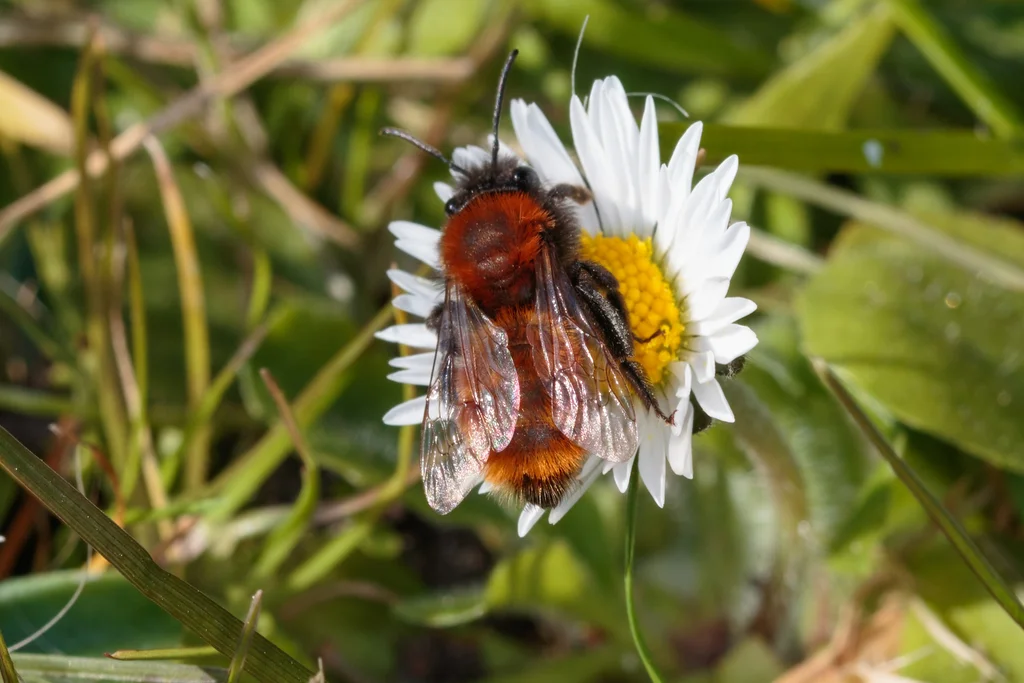
Solitary ground-nesting bees with fuzzy bodies that emerge in early spring. Mining bees rarely sting and are active for only 4-6 weeks each year.
Taxonomy
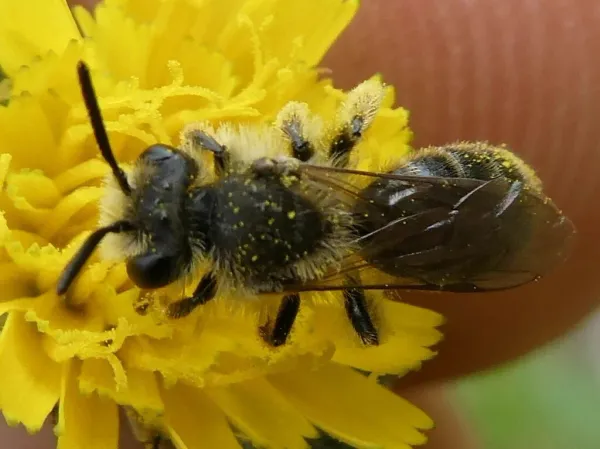
Mining Bees Coloration
Common color patterns to help identify mining bees
Mining Bees
Seasonal Activity
When mining bees are most active throughout the year
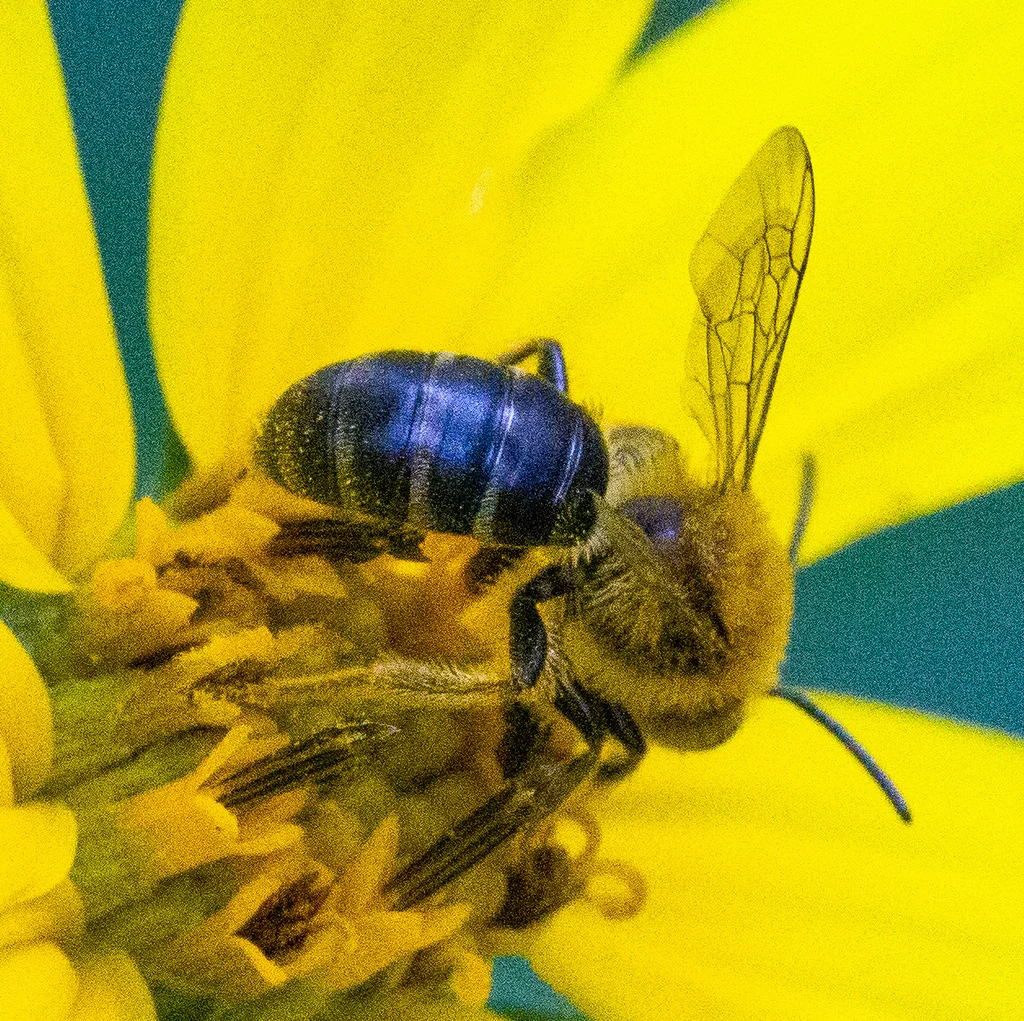
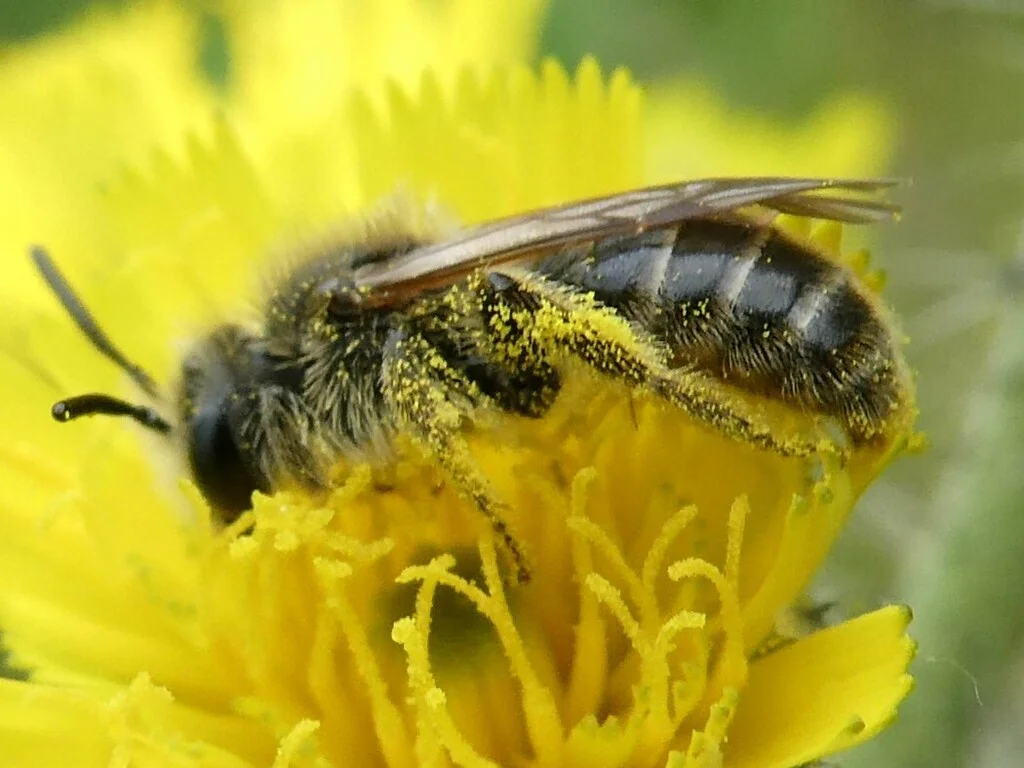
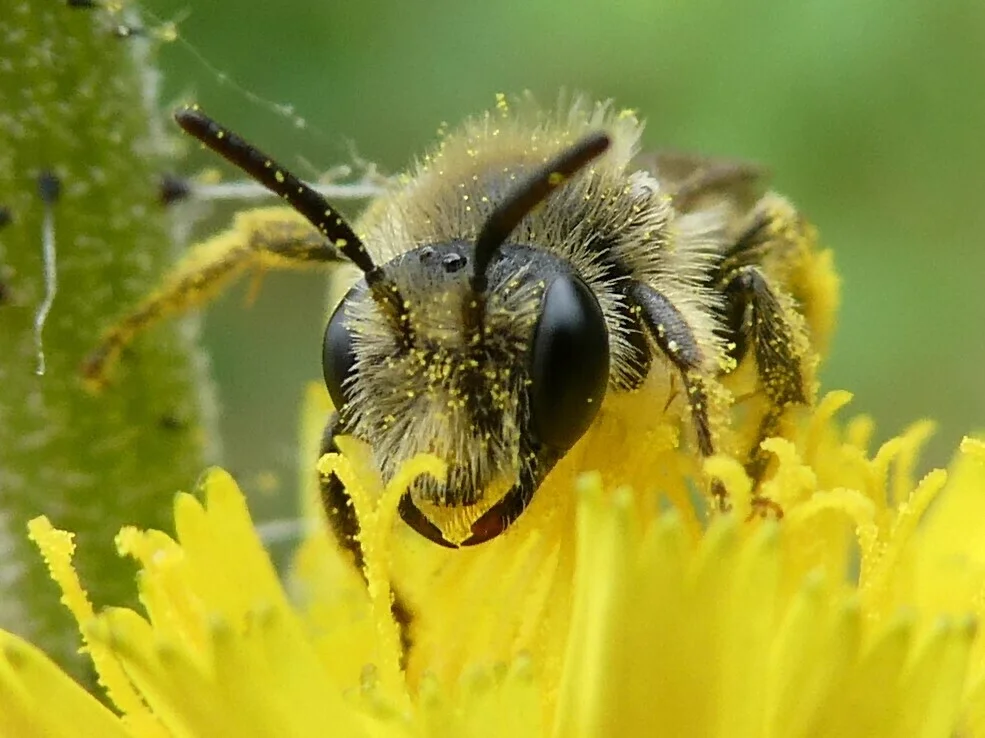

Where Mining Bees Are Found
Hover over states to see their names. Green regions indicate where mining bees have been reported.
Mining Bee Identification Guide
Physical Characteristics
Mining bees are medium-sized bees, ranging from 8 to 17 millimeters in length. Males are typically smaller and more slender than females. Most mining bees have fuzzy bodies covered in fine hairs that help them collect pollen.
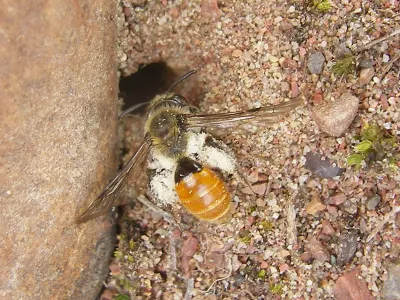
Coloring varies by species but commonly includes combinations of black, brown, orange, tan, and yellow. Many species have a fuzzy thorax in one color with a striped or banded abdomen. The body hair often gives them a soft, muted appearance compared to the brighter stripes of honey bees.
A key identifying feature of mining bees is the facial foveae. These are broad, velvety grooves that run along the inner edge of each compound eye. Pale hairs emerge from these grooves, creating visible bands on each side of the face. This feature distinguishes mining bees from other ground-nesting bees.
Mining bees carry pollen on specialized hairs called scopae located on their hind legs and thorax. Some species also have a propodeal corbicula, a pollen-collecting structure on their mid-body. Their wings have either two or three submarginal cells, which entomologists use for species identification.
Common Species in North America
The genus Andrena includes about 500 species in North America. Here are some of the most common:
-
Tawny Mining Bee (Andrena fulva): A striking species with a bright orange-red fuzzy thorax. Common in gardens and orchards in early spring.
-
Ashy Mining Bee (Andrena cineraria): Black body with distinctive gray-white hair bands. Often nests on sloped ground or hillsides.
-
Early Mining Bee (Andrena haemorrhoa): One of the first bees to appear in spring. Has an orange thorax and gray-banded abdomen.
-
Willow Mining Bee (Andrena vaga): A larger species associated with willow trees. Gray-haired with a distinctive appearance.
-
Hawthorn Mining Bee (Andrena chrysosceles): Common in the eastern United States. Often found visiting fruit tree blossoms.
Mining Bee Behavior and Biology
Solitary Nesting Habits
Despite their name suggesting group activity, mining bees are solitary. Each female digs and provisions her own nest without help from other bees. There is no queen, no workers, and no communal hive structure.
However, mining bees often nest in aggregations. Dozens or even hundreds of females may dig burrows in the same patch of suitable soil. This creates the appearance of a colony, but each bee is working independently. They choose the same area because it offers the right conditions, including dry, sandy soil with good drainage and sun exposure. A related species, Masked Bees, shares similar characteristics.
Nest Construction A related species, Cuckoo Bees, shares similar characteristics.
Female mining bees dig vertical tunnels into the soil, typically 6 to 12 inches deep. At the bottom of the main tunnel, they excavate horizontal side chambers called cells. Each cell will hold one egg.
The entrance to a mining bee nest is a small hole about the diameter of a pencil. A tiny mound of excavated soil often surrounds the hole, resembling a miniature volcano or anthill. These mounds are temporary and wash away with rain.
Inside each brood cell, the female packs a ball of pollen mixed with nectar. This provision, sometimes called bee bread, serves as the sole food source for the developing larva. After laying a single egg on the pollen ball, she seals the cell with soil and moves on to prepare the next one.
Lifecycle and Seasonality
Mining bees have one generation per year in most regions. Their lifecycle follows the seasons:
Early Spring (March-April): Adult bees emerge from underground as temperatures rise and early flowers bloom. Males emerge first and patrol the nesting area, waiting for females. Mating occurs shortly after the females emerge.
Mid-Spring (April-May): After mating, females begin digging nests and gathering provisions. They visit early-blooming flowers including fruit trees, willows, maples, and spring wildflowers. Each female may create 5 to 10 brood cells during her short adult life.
Late Spring (May-June): Adult mining bees die after completing their nesting activities. The entire adult active period lasts only 4 to 6 weeks.
Summer and Fall: Eggs hatch underground. Larvae consume their pollen provisions and develop through several stages. By late summer, they pupate within their cells.
Winter: Mining bees overwinter as fully developed adults still inside their pupal cells, insulated beneath the soil. They remain dormant until spring warmth triggers their emergence.
Foraging Habits
Mining bees are active during daylight hours, especially on warm, sunny days. They become less active on cloudy or cool days. Many species are active in early spring when few other insects are flying.
Some mining bee species are generalists that visit many types of flowers. Others are specialists that focus on specific plant families. For example, certain Andrena species only visit willows, while others prefer members of the rose family. Their short flight season coincides with the bloom period of their preferred plants.
How We Treat for Mining Bees
Mining bees rarely sting and do not damage property. However, there are situations where treatment makes sense. If someone in your household has a bee sting allergy, nests in high-traffic areas, or large numbers of bees are a concern, we can help.
Treatment Approach
We apply a residual insecticide to the soil around active nest entrances. This approach targets the bees using the area. Treatment works best in the evening when bees have returned to their burrows for the night.
Because mining bees are solitary, each nest must be treated one at a time. Standard colony treatments used for social insects do not apply here. Clearing a large group of nests may require multiple visits.
Habitat Modification
For long-term results, we recommend making the nesting area less attractive to mining bees:
- Increase watering: Mining bees avoid wet soil. Regular irrigation discourages nesting.
- Thicken the lawn: Fill bare patches with grass seed to cover the exposed soil they need.
- Add mulch: Cover bare soil in garden beds with 2 to 3 inches of mulch.
- Improve drainage: Fix areas where soil dries out quickly, as these become prime nesting spots.
Is It Mining Bees or Yellowjackets?
If you are not sure whether you have mining bees or a more aggressive species like yellowjackets, contact us for identification. Yellowjackets also nest in the ground but behave very differently. They are aggressive and can sting many times. Mining bees are fuzzy and slow-moving. Yellowjackets are smooth and fast. Yellowjackets require immediate treatment.
Mining Bees vs. Similar Species
Mining bees are often confused with other ground-nesting bees. Here is how to tell them apart:
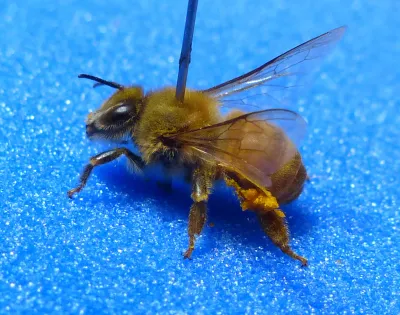
Mining Bees vs. Honey Bees: Honey bees are social insects that live in large colonies. They have smooth, shiny bodies with distinct yellow and brown stripes. Mining bees are fuzzier, often duller in color, and nest individually in the ground rather than in hives.
Mining Bees vs. Bumble Bees: Bumble bees are larger and rounder with more robust fuzzy bodies. They nest in cavities like abandoned rodent burrows and live in small colonies with a queen. Mining bees are smaller, more slender, and nest individually.
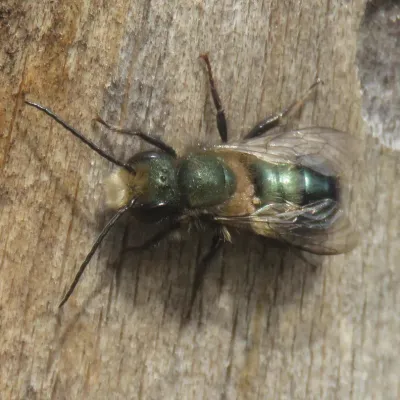
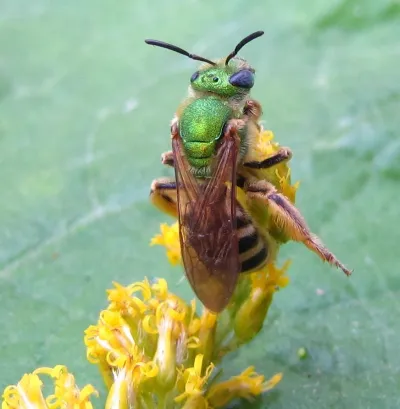
Mining Bees vs. Sweat Bees: Sweat bees are usually smaller than mining bees and many have metallic green or blue coloring. They are attracted to human sweat for its salt content. Mining bees lack metallic coloring and do not seek out perspiration.
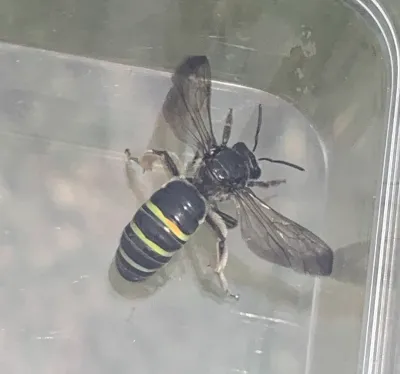
Mining Bees vs. Yellowjackets: Yellowjackets are wasps, not bees. They have smooth, hairless bodies with bright yellow and black patterns. Yellowjackets are aggressive and nest in large colonies that will defend their nest. Mining bees are fuzzy, gentle, and solitary.
References
Other Bees
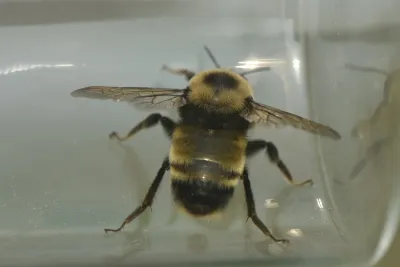
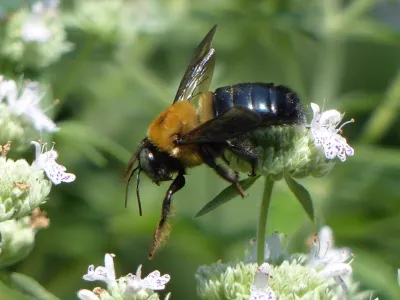
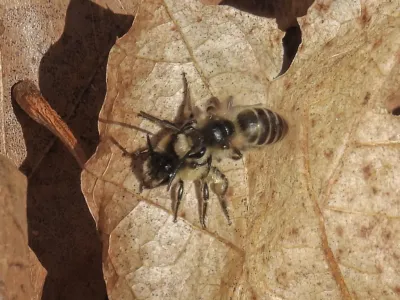
Explore other species in the bees family
Commonly Confused With
Mining Bees are often mistaken for these similar pests
Where Mining Bees Are Found
Hover over states to see their names. Green regions indicate where mining bees have been reported.
Common Questions about Mining Bees
What are mining bees?
+
Mining bees are solitary bees in the genus Andrena that nest in the ground. They get their name from the tunnels they dig in soil. With over 1,500 species worldwide and about 500 in North America, they are one of the largest groups of native bees.
Are mining bees dangerous?
+
Mining bees are not aggressive and rarely sting. Female mining bees can sting if handled directly or stepped on, but they do not defend their nests like social bees. Male mining bees cannot sting at all. Most people can walk through areas with mining bee nests without any issues.
How do I identify mining bees?
+
Mining bees are medium-sized bees, about 1/4 to 3/4 inch long. They have fuzzy bodies, often with orange, brown, tan, or black coloring. A key feature is a band of pale hairs along each side of their face, emerging from a groove between their eyes. They are often confused with honey bees but are usually smaller and fuzzier.
Why do I have mining bees in my lawn?
+
Mining bees prefer bare, dry, sandy soil with good sun exposure for nesting. Thin patches of lawn, garden borders, and areas with sparse grass are attractive nesting sites. They often return to the same area year after year because their offspring emerge nearby.
How long do mining bees stay active?
+
Mining bees are typically active for only 4 to 6 weeks in early spring, usually from March through May. After the females lay their eggs and provision the nests with pollen, they die. The next generation develops underground and emerges the following spring.
Do mining bees make honey?
+
No, mining bees do not make honey. They are solitary bees, not social bees like honey bees. Each female mining bee collects pollen and nectar to provision her individual nest cells for her offspring, but she does not produce honey stores.
Will mining bees damage my lawn or garden?
+
Mining bees do not damage lawns or gardens. Their small burrows are temporary. The tiny mounds of dirt around nest entrances fill in naturally over time or wash away with rain.
How can I discourage mining bees from nesting?
+
To discourage mining bees, keep your lawn thick and well-watered since they prefer dry, bare soil. Fill in thin or bare patches with grass seed. Add mulch to garden beds to cover exposed soil.

With five years of hands-on experience in the pest control industry, George Schulz is a registered technician with the Virginia Pest Management Association and a proud third-generation professional in a family business that's been protecting homes for over 57 years. He manages and trains a team of service pros while also leading internal research efforts—recently spearheading a deep-dive review of thousands of documents on pest control materials to hand-pick the most kid and pet friendly, most effective solutions tailored specifically for homes in the DC metro area.