Metallic Green Sweat Bees Identification Guide
Augochlora pura
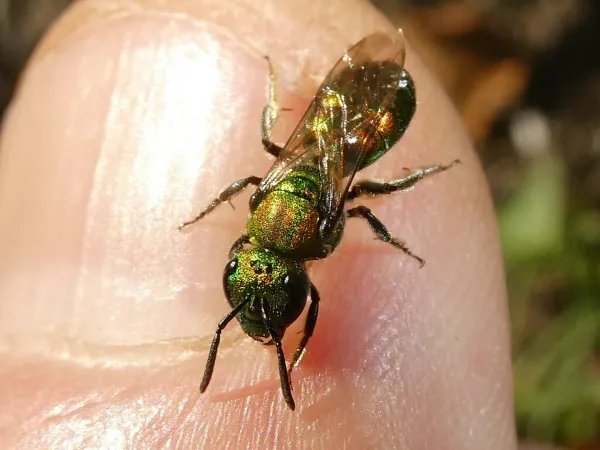
Small bees with iridescent green bodies that are attracted to human perspiration. They nest in rotting wood rather than soil.
Taxonomy
Metallic Green Sweat Bees Coloration
Common color patterns to help identify metallic green sweat bees
Metallic Green Sweat Bees
Seasonal Activity
When metallic green sweat bees are most active throughout the year

Where Metallic Green Sweat Bees Are Found
Hover over states to see their names. Green regions indicate where metallic green sweat bees have been reported.
Metallic Green Sweat Bee Identification Guide
Physical Characteristics
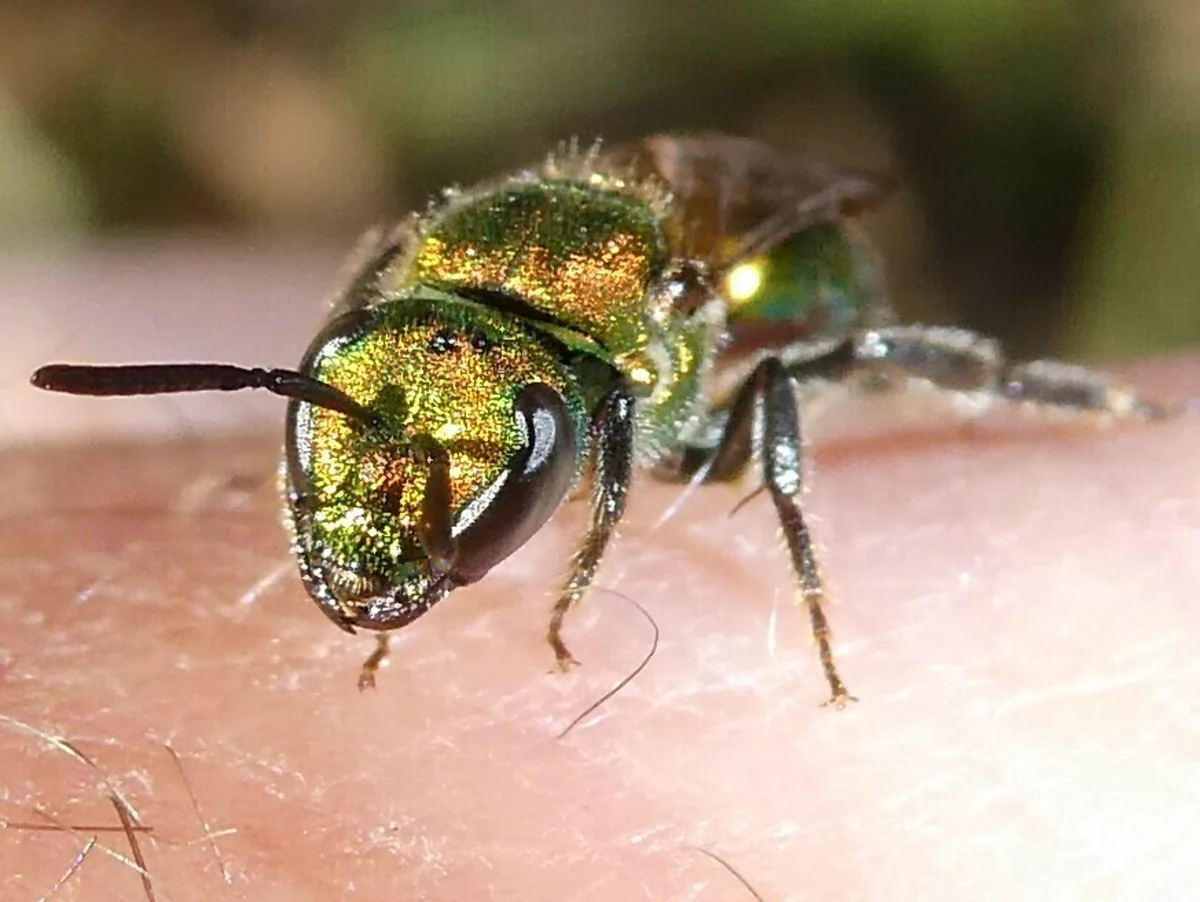
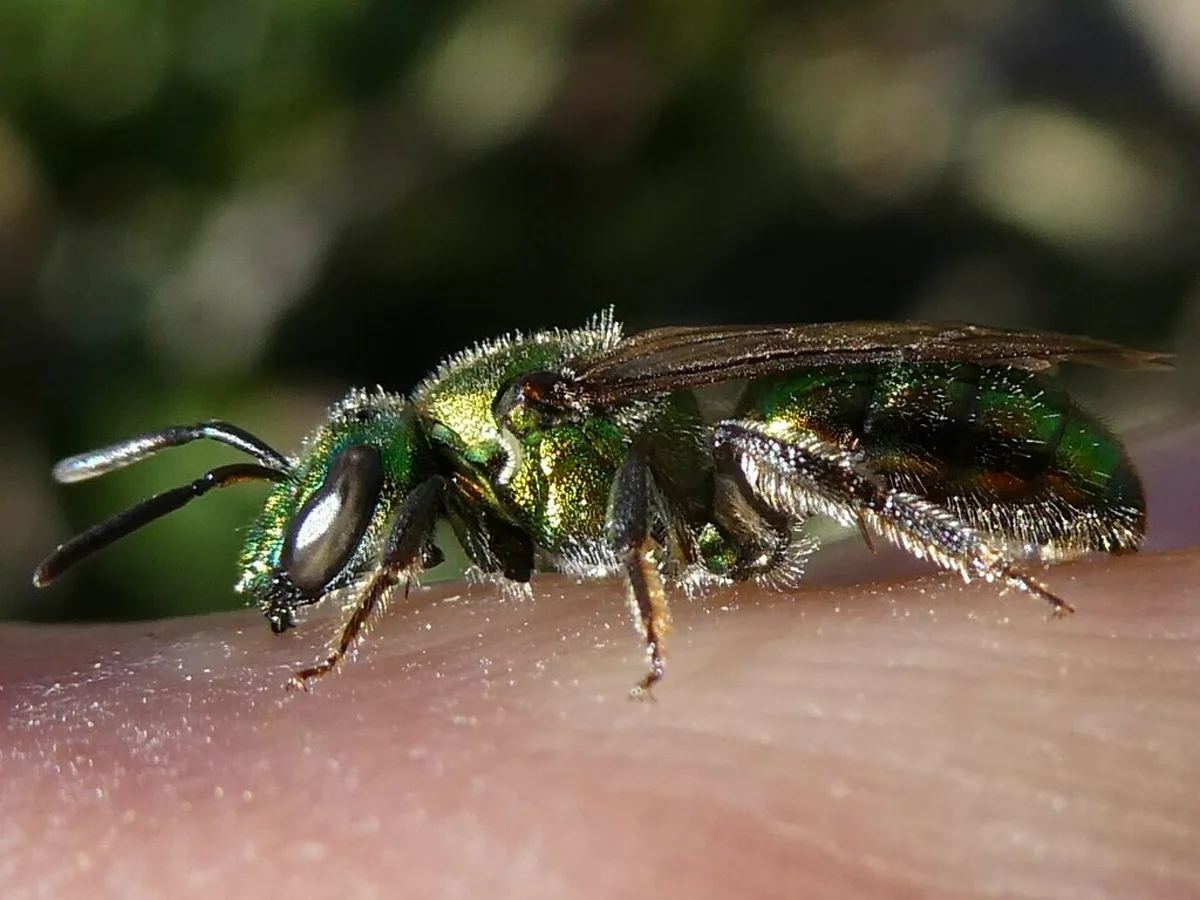
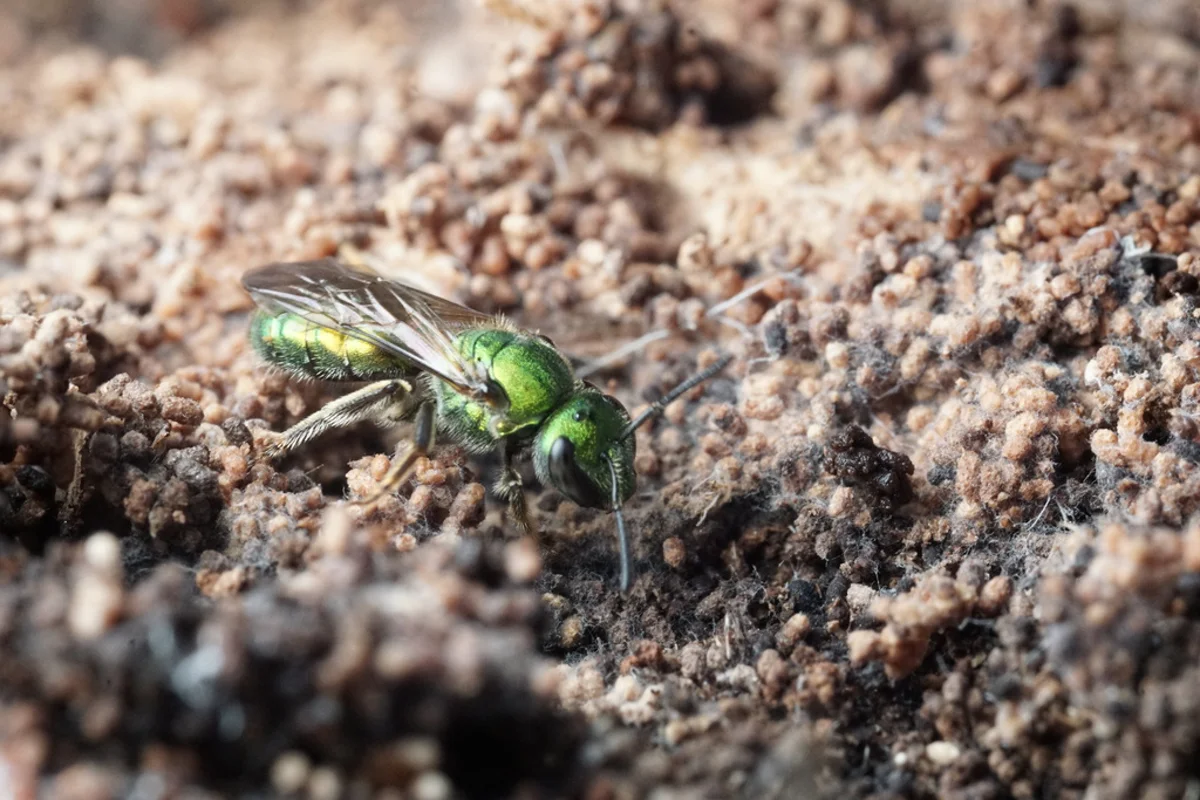
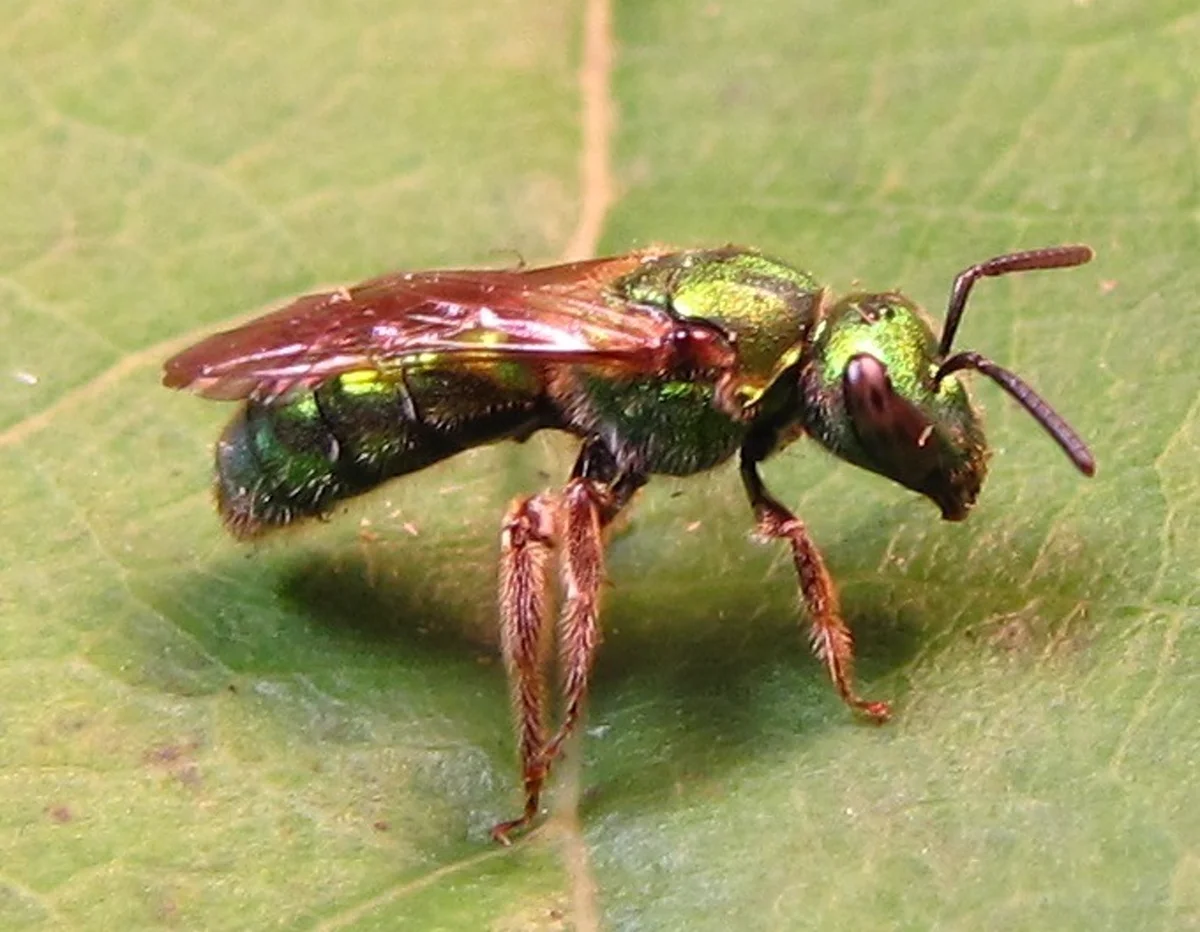
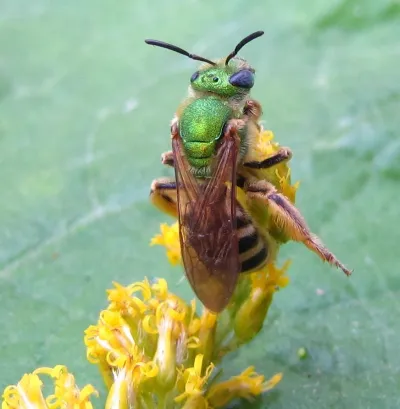
Metallic green sweat bees are small bees with striking iridescent coloring. Their entire body shimmers with bright metallic green. In certain light, they may appear coppery, golden, or even deep blue-green. This vivid coloring makes them easy to spot and identify.
Adults measure about 8mm (roughly 1/3 inch) long. Males and females look similar in size and color. Males may have slightly darker mandibles and a more bluish tint. In Florida, both sexes often appear deep blue rather than green.
Their wings are brown-tinted and translucent. Like all bees, they have two pairs of wings and six legs. Their bodies are covered in short hairs that help them collect pollen. The Greek name Augochlora means “intensified gold-green,” which describes their appearance well.
Common Species in North America
The pure green sweat bee (Augochlora pura) is the most common species in this group in eastern North America. It belongs to the tribe Augochlorini, which contains bees that are typically brilliant green but can also be purple, blue, brassy, red, or black.
Related species in North America include:
- Augochlora pura pura is the typical subspecies found throughout most of the eastern range.
- Augochlora pura mosieri is a subspecies found in Florida with deeper blue coloring.
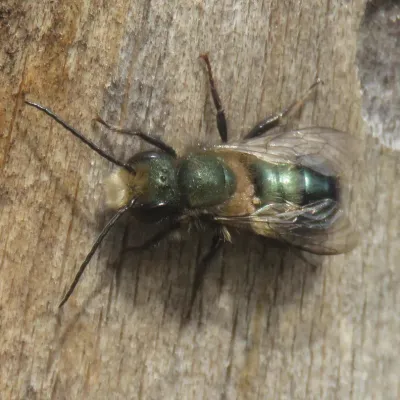
- Augochloropsis metallica is the metallic epauletted-sweat bee, a related species with similar coloring.
- Augochlorella species are small metallic bees that can be confused with Augochlora but have different nesting habits.
Metallic Green Sweat Bee Behavior and Biology
Unique Nesting Habits
Unlike most sweat bees that dig burrows in soil, metallic green sweat bees nest in rotting wood. They find fallen logs, decaying stumps, and trees with loose bark. The female builds her nest in the space between bark and wood.
She constructs cells from mud and debris found under the bark. These cells are lined with a thin, waterproof membrane that she produces from glands on her body. Each cell is provisioned with a mixture of pollen, nectar, and her own saliva. Scientists believe her saliva has antiseptic properties that keep the food fresh and protect the eggs.
Depending on available space, nests can take different forms. Cluster nests have superimposed horizontal layers. Platform nests keep all cells in one plane. Tunnel nests have single or chainlike rows of cells. Many nests are combinations of these three types.
Solitary Lifestyle
Metallic green sweat bees are strictly solitary. Each female builds, provisions, and defends her own nest. There is no worker caste. Females do not cooperate or share labor.
These bees are territorial about their nests. A female will attack any bee that tries to enter her nest, including her own offspring once they mature. If two nests happen to meet while expanding, the females quickly build a wall between them.
Lifecycle and Seasonality A related species, Masked Bees, shares similar characteristics.
The flight season runs from early April through September, but nests are active only from early May to early August. There are two to three generations per year. A related species, Cuckoo Bees, shares similar characteristics.
In spring, females that spent winter in a state of dormancy emerge in April. They survived underground in moist soil beneath rotting logs. Now they search for suitable nesting sites and begin building. A related species, Long-Horned Bees, shares similar characteristics.
In early summer, the first generation of adults emerges in June. These bees immediately begin founding their own nests.
During summer, development from egg to adult takes 17 to 40 days depending on conditions. Multiple generations overlap during peak summer months.
In fall, reproductive females emerge in August and September. They mate and then enter dormancy. All males die before winter. Unlike other sweat bees, Augochlora pura does not respond to warm fall days with increased flight activity.
Foraging and Diet
Female metallic green sweat bees start their day searching for nectar in the morning. They switch to pollen foraging as the day progresses into afternoon. Late afternoon hours are reserved for nest building and defense.
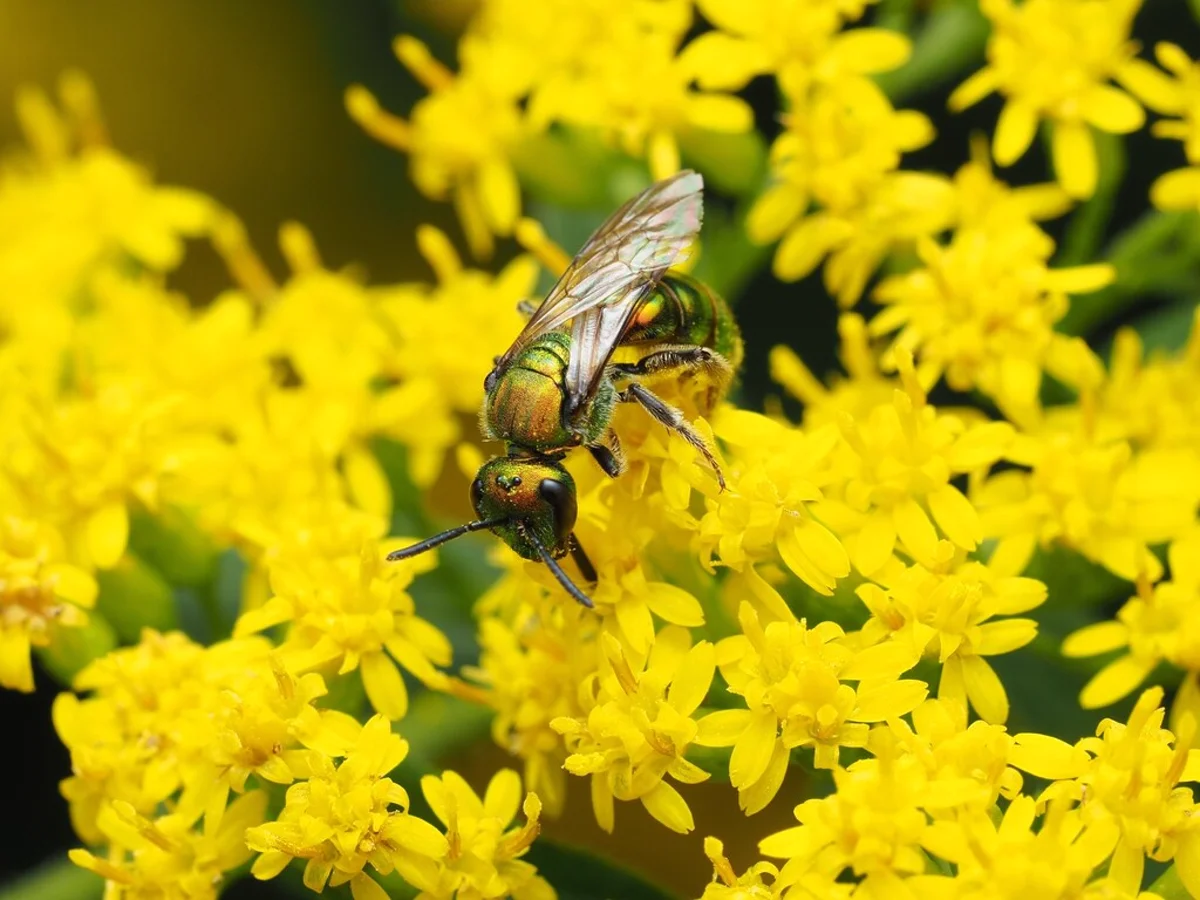
These bees collect pollen from over 40 different plant species. They are generalists, not specialists. Common food sources include:
- Spring beauties
- False rue anemones
- Dimpled trout lilies
- Slender toothworts
- Star chickweeds
- Goldenrod
- Sunflowers
- Various wildflowers
Mating Behavior
Males fly in loose swarms and hover near flowers. They land on any similarly sized insect on a flower, checking if it is a receptive female. Rather than chasing females in flight, males wait for them to land.
When a male finds a receptive female, mating lasts from three seconds to two minutes. Males stroke the female’s head with their antennae before and during mating. Other males may stack themselves on top of a mating pair, attempting to mate with the same female.
Males return to the same sleeping spots each night. When sleeping sites are limited, up to six males may sleep together, all facing the same direction.
Managing Metallic Green Sweat Bees
Metallic green sweat bees do not damage property or structures. Their nests in rotting wood do not spread to healthy trees or wood in homes. They rarely sting and are not aggressive.
When They Become a Concern
There are situations where their presence might be unwanted:
- If someone in your household has a severe allergy to bee stings, any bee activity nearby can be concerning.
- Large numbers of sweat bees during outdoor gatherings may be annoying when they land on guests to drink sweat.
- Children playing near nesting sites may accidentally disturb bees.
Prevention and Habitat Management
Since metallic green sweat bees need rotting wood for nesting, habitat management can reduce their numbers:
- Clearing fallen logs, old stumps, and rotting debris eliminates nesting sites.
- Store firewood away from patios and play areas.
- Remove dead or dying trees near high-traffic areas.
Personal Protection
To minimize encounters with these bees:
- Wear light-colored clothing rather than bright colors.
- Avoid strong perfumes, colognes, and scented lotions when working outdoors.
- Wipe away sweat regularly on hot days.
- If a bee lands on you, stay calm. Let it fly away or gently brush it off. Sudden movements or swatting may provoke a defensive sting.
Metallic Green Sweat Bees vs. Similar Species
These bees can be confused with other small, colorful bees:
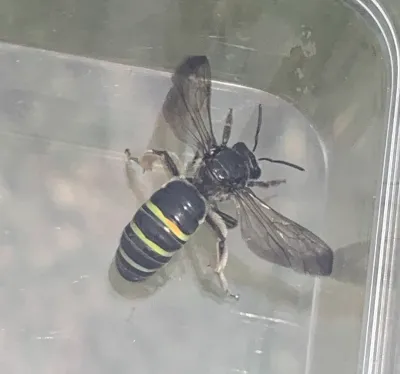
Striped Sweat Bees (Agapostemon) have a metallic green head and thorax but a striped yellow and black abdomen. Metallic green sweat bees are entirely green.
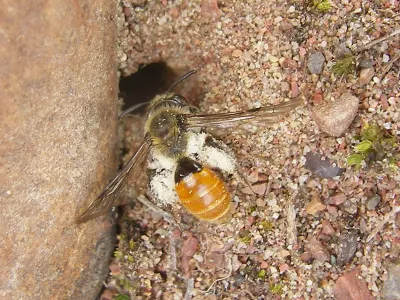
Ground Bees nest in soil and create visible mounds. Metallic green sweat bees nest in rotting wood with no visible soil disturbance.
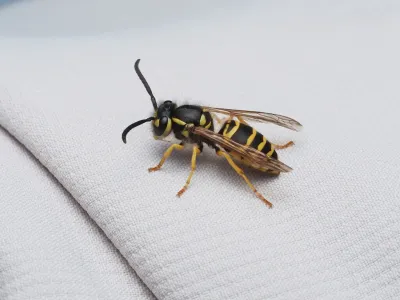
Yellowjackets are wasps with smooth, hairless bodies and bright yellow and black stripes. They are aggressive and can sting repeatedly. Metallic green sweat bees are fuzzy, metallic green, and rarely sting.
Understanding Metallic Green Sweat Bees in Your Landscape
These bees visit a wide variety of flowering plants and transfer pollen as they forage. Unlike honey bees, which are not native to North America, metallic green sweat bees evolved alongside native plants.
Their presence often indicates rotting wood nearby. If you find them frequently in one area of your property, check for fallen logs, decaying stumps, or dead trees that may be providing nesting habitat.
References
Other Bees
Explore other species in the bees family
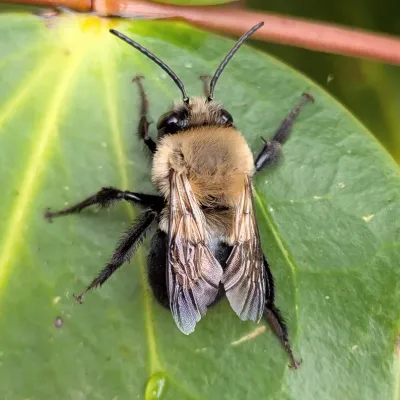
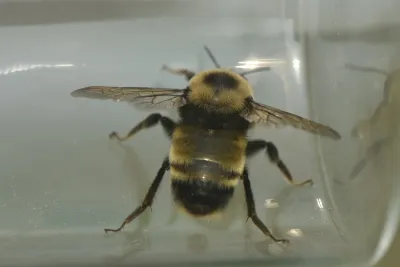
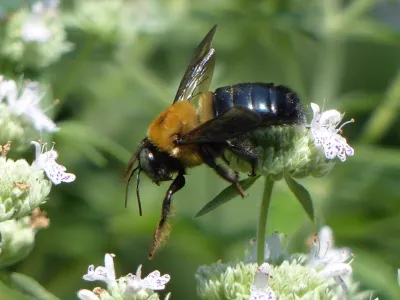
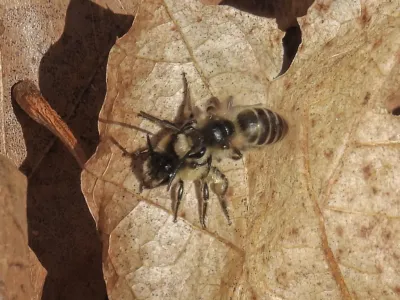
Commonly Confused With
Metallic Green Sweat Bees are often mistaken for these similar pests
Where Metallic Green Sweat Bees Are Found
Hover over states to see their names. Green regions indicate where metallic green sweat bees have been reported.
Common Questions about Metallic Green Sweat Bees
Why do metallic green sweat bees land on me?
+
These bees are attracted to human perspiration because they need the salt and minerals it contains. They land on skin to drink sweat. This behavior is harmless. The bee will fly away on its own after a few moments.
Do metallic green sweat bees sting?
+
Female metallic green sweat bees can sting, but they rarely do. They are not aggressive and only sting if pressed against the skin or trapped. The sting is very mild. Male bees cannot sting at all.
Where do metallic green sweat bees nest?
+
Unlike most sweat bees that nest in soil, metallic green sweat bees nest in rotting wood. They build their nests under loose bark on fallen logs and decaying stumps. Each female creates her own individual nest.
What do metallic green sweat bees eat?
+
They feed on nectar and pollen from flowers. They visit over 40 different plant species including wildflowers, vegetables, and fruit trees. They are generalists and do not focus on just one type of flower.
How can I tell metallic green sweat bees apart from other bees?
+
Their brilliant metallic green color makes them easy to identify. The entire body shimmers with iridescent green, sometimes with coppery or golden tones. They are small, about 8mm long, and have brown-tinted wings.
When are metallic green sweat bees most active?
+
They fly from early April through September. Peak activity occurs during summer months. Females start searching for nectar in the morning and collect pollen into the afternoon. Late afternoon is spent building and protecting nests.
Should I be concerned about metallic green sweat bees in my yard?
+
They do not damage property. Their nests in rotting wood do not affect healthy trees or structures. They rarely sting. If someone in your household has bee allergies, you may want to address nesting areas near high-traffic zones.

With five years of hands-on experience in the pest control industry, George Schulz is a registered technician with the Virginia Pest Management Association and a proud third-generation professional in a family business that's been protecting homes for over 57 years. He manages and trains a team of service pros while also leading internal research efforts—recently spearheading a deep-dive review of thousands of documents on pest control materials to hand-pick the most kid and pet friendly, most effective solutions tailored specifically for homes in the DC metro area.