Mason Bees Identification Guide
Osmia spp.
Small, solitary bees that use mud to construct their nests in pre-existing cavities. Mason bees rarely sting and do not cause structural damage.
Taxonomy
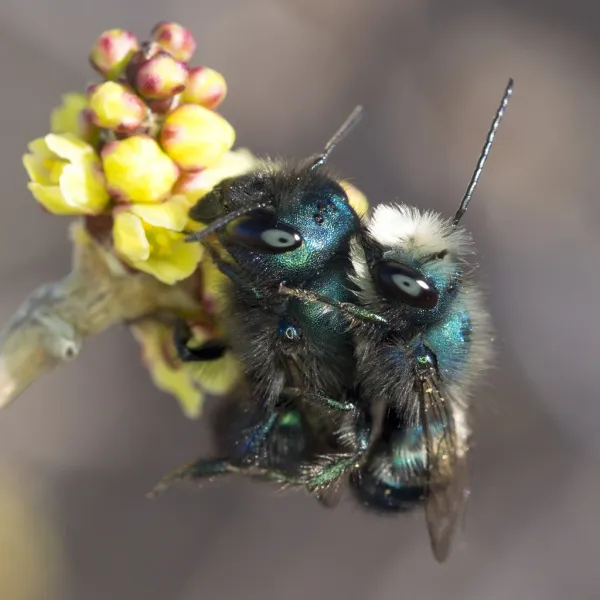
Mason Bees Coloration
Common color patterns to help identify mason bees
Mason Bees
Seasonal Activity
When mason bees are most active throughout the year

Where Mason Bees Are Found
Hover over states to see their names. Green regions indicate where mason bees have been reported.
Mason Bee Identification Guide
Physical Characteristics
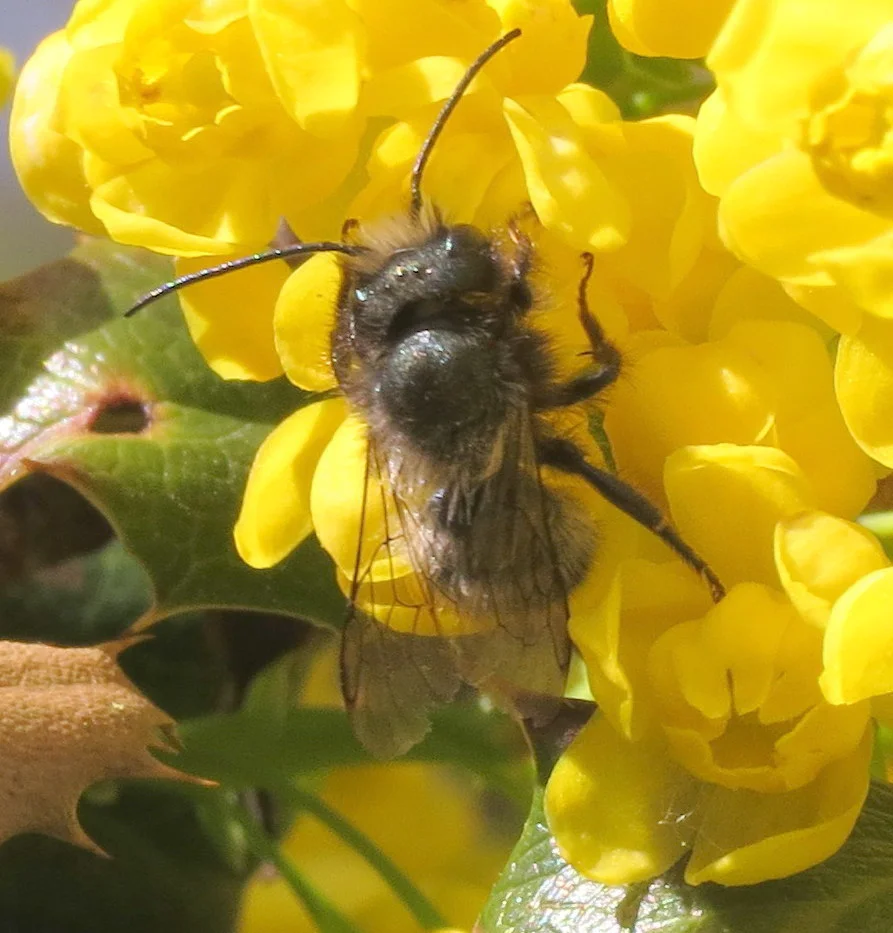
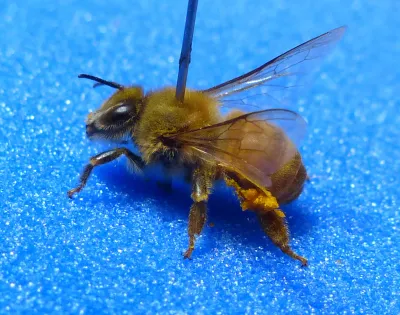
Mason bees are small to medium-sized bees, measuring 1/4 to 5/8 inch long. Many North American species have a striking metallic blue, green, or black coloring that sets them apart from other bees. The blue orchard bee, one of the most common species, has a dark metallic blue body that shimmers in sunlight.
Like all bees, mason bees have three main body segments: head, thorax, and abdomen. Their heads feature two large compound eyes, three small simple eyes called ocelli, and a pair of antennae. Female mason bees have two small horn-like projections on their lower face, while males often have longer antennae and a tuft of light-colored hair on their face.
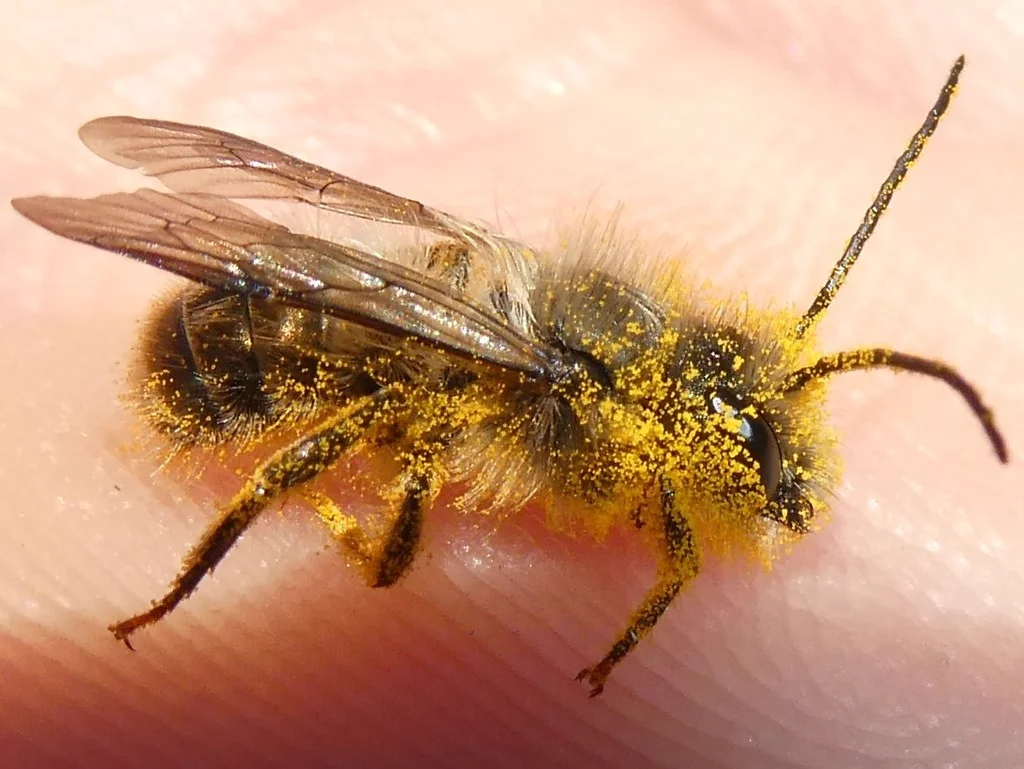
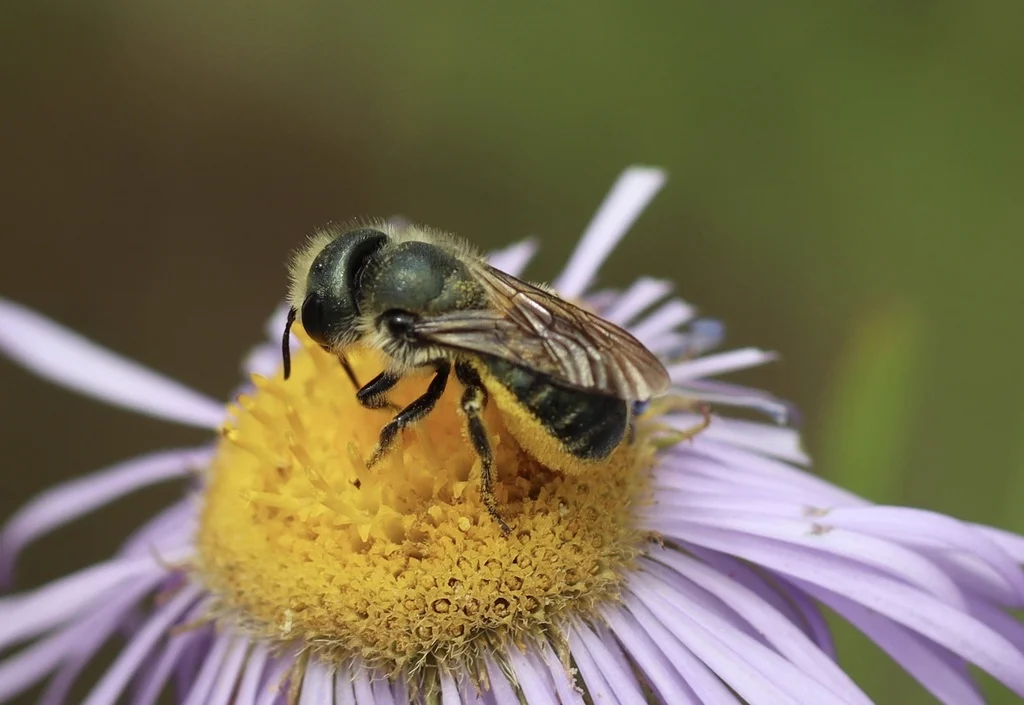
The key feature for identification is the scopa, a brush of stiff hairs on the underside of the female’s abdomen. Unlike honey bees that pack pollen into smooth baskets on their legs, mason bees carry pollen loosely in this belly brush. When foraging, females are often covered in bright yellow or orange pollen, making them look fuzzy and disheveled.
Mason bees are slightly smaller than honey bees and much smaller than carpenter bees. Their bodies are more compact and less elongated than many other bees. Both males and females have functional wings and are strong fliers, though males tend to be slightly smaller than females.
Common Species in North America
-
Blue Orchard Bee (Osmia lignaria): The most widely known mason bee in North America. Dark metallic blue coloring. Native across most of the continent and commonly raised for orchard pollination. The eastern subspecies (O. l. lignaria) is found from the East Coast through the Great Plains, while the western subspecies (O. l. propinqua) lives west of the Rockies.
-
Horn-faced Mason Bee (Osmia cornifrons): Introduced from Japan for pollination. Reddish-brown coloring with noticeable facial horns on females. Now established throughout the eastern United States.
-
Red Mason Bee (Osmia bicornis): Originally from Europe but now found in parts of North America. Reddish-brown coloring with orange hair on the thorax.
-
California Mason Bee (Osmia californica): Native to western North America. Often raised alongside blue orchard bees for almond and fruit tree pollination.
There are roughly 140 Osmia species in North America, making this one of the most diverse bee genera on the continent.
Mason Bee Behavior and Biology
Mason bees are solitary bees. Unlike honey bees and bumble bees, there are no workers, no queens, and no hive. Every female mason bee is fertile and builds her own nest. There is no social structure, no communication between individuals, and no shared labor.
Despite being solitary, mason bees are gregarious. They prefer to nest near other mason bees. When one female finds a good nesting site, others often settle nearby. This is why bee houses can attract dozens of mason bees even though each female works alone.
Nesting Behavior
Mason bees are cavity nesters. They do not dig burrows or bore into wood like some other bees. Instead, they search for pre-existing holes of the right size. In nature, they use hollow plant stems, beetle tunnels in dead wood, rock crevices, and similar small cavities. Around homes, they may use old nail holes, gaps in siding, weep holes in brick, or holes left by other insects. A related species, Masked Bees, shares similar characteristics.
Once a female finds a suitable tunnel, she memorizes its location, then begins construction. She flies to a nearby source of mud, usually damp soil with high clay content. She collects the mud in her jaws and carries it back to the nest. She builds a mud wall at the back of the tunnel, then provisions the cell with pollen and nectar. She lays a single egg on the food mass, seals the cell with another mud wall, and repeats the process until the tunnel is full. The final cell near the entrance gets a thick mud plug for protection. A related species, Cuckoo Bees, shares similar characteristics.
A female mason bee creates about one or two cells per day during good weather. She may provision 15 to 30 cells during her short adult life. Females place female eggs in the back cells and male eggs in the front cells. Since males develop faster and emerge first, this arrangement helps the next generation exit the nest in the proper order.
Lifecycle
Mason bees have one generation per year. Adults emerge in early spring when temperatures consistently reach about 55 degrees Fahrenheit. Males emerge first, hovering around nest sites waiting for females. Mating occurs quickly after females emerge. Males die within a few weeks, having served their only purpose.
Females spend their remaining four to six weeks building nests, gathering pollen, and laying eggs. By early summer, the adults are gone. Inside the sealed nest cells, the eggs hatch into larvae. Each larva consumes its pollen provision over about two weeks, going through five growth stages. By midsummer, the larvae spin cocoons and pupate. By fall, they have developed into fully formed adult bees, but they remain dormant in their cocoons through winter.
When spring arrives and temperatures warm, the cycle begins again. Males chew through the mud plugs first and wait for females to emerge.
Treatment Approaches for Mason Bees
Mason bees rarely require any treatment. They cause no structural damage, do not form aggressive colonies, and almost never sting. Most pest control situations involving mason bees result from misidentification. Homeowners often confuse them with carpenter bees, which do bore into wood and can cause damage over time.
When Treatment May Be Considered
In rare cases, mason bee activity creates concerns:
-
High-traffic nesting sites: If bees are nesting in holes near doorways, play areas, or outdoor seating where people regularly pass, some homeowners prefer to discourage nesting.
-
Large numbers in siding: While mason bees do not damage wood, large populations using gaps in siding may indicate underlying issues like rotting wood or pest damage from wood-boring beetles.
-
Allergies: Individuals with severe bee sting allergies may want to minimize any bee activity near their home, though mason bee stings are extremely rare.
Management Options
The most effective approach is exclusion. Since mason bees use existing holes rather than creating new ones, sealing potential nesting sites prevents future use. This should be done in fall or winter after adult bees have died and before the next generation emerges in spring. Use caulk, wood filler, or similar materials to close gaps and holes.
If bees have already nested in an inconvenient location, the nesting material can sometimes be carefully relocated in winter. Move the entire nest structure to a suitable location away from high-traffic areas. The dormant bees inside will emerge from the new location in spring.
Providing alternative nesting sites also helps. Bee houses placed in a sunny, sheltered spot give mason bees options away from siding and structures.
Professional Treatment Options
When mason bees are nesting in problem areas and exclusion is not practical, pest control professionals can apply targeted treatments. Insecticidal dusts applied directly into nesting holes can eliminate active populations. Residual sprays around entry points deter new nesting activity.
Timing matters for treatment. The best time to treat is early spring when adults are active, or late winter before emergence. Treating in summer is less effective because the larvae are sealed inside protective cocoons.
For most mason bee situations, a combination of treatment and exclusion works best. After treating active nests, seal the holes to prevent reuse the following year.
Mason Bees vs. Other Bees
Understanding the differences between bee species helps you identify what you have and decide if any action is needed.
Mason Bees vs. Carpenter Bees
This is the most common confusion. Both may be seen around wood structures, but their behavior differs completely.
Carpenter bees are larger, measuring 3/4 to 1 inch long. They have a shiny, hairless black abdomen. Carpenter bees drill perfectly round holes into wood to create their nests. Over time, their tunnels can weaken deck rails, fascia boards, and other wooden structures.
Mason bees are smaller and often have metallic blue or green coloring. They never drill into wood. They only use existing holes. Mason bees cause no structural damage.
If you see a bee entering a clean, round hole in unpainted wood with fresh sawdust below, that is a carpenter bee. If you see smaller bees using old nail holes or gaps sealed with mud, those are mason bees.
Mason Bees vs. Sweat Bees
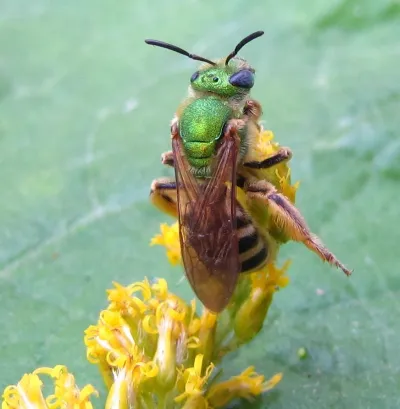
Both are small bees, and some sweat bees also have metallic green or blue coloring. Sweat bees are attracted to human perspiration and may land on skin, which mason bees do not do. Sweat bees also nest in the ground rather than in cavities. If small metallic bees are visiting your skin on hot days, they are sweat bees, not mason bees.
Mason Bees vs. Honey Bees
Honey bees are tan to golden brown with darker stripes. They are slightly larger than most mason bees and lack metallic coloring. Honey bees live in large colonies with thousands of members and produce honey. Mason bees are solitary, produce no honey, and die off each summer while their offspring develop in sealed cells.
References
Other Bees
Explore other species in the bees family
Commonly Confused With
Mason Bees are often mistaken for these similar pests
Where Mason Bees Are Found
Hover over states to see their names. Green regions indicate where mason bees have been reported.
Common Questions about Mason Bees
How do I know if I have mason bees?
+
Mason bees are small, often metallic blue or black bees that nest in small holes and tunnels. You may see them entering and exiting holes in wood, hollow stems, or bee houses. Unlike carpenter bees, they do not drill new holes. They use mud to seal their nest cells, which you may see as plugged holes with dried mud.
Are mason bees dangerous?
+
Mason bees are among the gentlest bees. They are solitary and have no colony to defend, so they almost never sting. A sting is only possible if a female is roughly handled or trapped. Even then, their sting is mild compared to honey bees. Males cannot sting at all.
What is the difference between mason bees and carpenter bees?
+
The main difference is nesting behavior. Carpenter bees drill new holes into wood and can cause structural damage over time. Mason bees use existing holes and cavities and do not bore into wood at all. Mason bees also tend to be smaller and many species have a metallic blue or green sheen that carpenter bees lack.
Do mason bees make honey?
+
No, mason bees do not produce honey. They collect pollen and nectar to provision their nest cells for their larvae, but they do not store surplus honey like honey bees do. Each cell receives a ball of pollen and nectar, then an egg is laid on top before the cell is sealed with mud.
When are mason bees active?
+
Mason bees are active in early spring, typically emerging when temperatures reach about 55 degrees Fahrenheit. Their activity peaks during March through May in most areas. By early summer, the adults have completed their nesting and die off. The next generation develops inside the sealed nest cells throughout summer and winter.
Should I remove mason bees from my property?
+
Mason bees do not cause structural damage and rarely sting. If they are nesting in an inconvenient location, the best approach is to wait until fall or winter when adults are gone, then seal the holes or relocate the nesting material. For immediate concerns, a pest control professional can assess the situation and recommend options.
Why are mason bees nesting in my siding or deck?
+
Mason bees look for existing holes that are the right diameter for nesting, typically 5/16 inch wide. Old nail holes, gaps in siding, weep holes in brick, and weathered wood with beetle holes all attract them. Sealing these openings in fall or winter, after adults have died, prevents future nesting.
How efficient are mason bees at pollination?
+
Mason bees are very efficient at spreading pollen. A single mason bee can visit hundreds of flowers daily. They carry pollen loosely on their belly hairs rather than in packed baskets, which spreads more pollen from flower to flower. They are commonly used in orchards for fruit tree pollination.

With five years of hands-on experience in the pest control industry, George Schulz is a registered technician with the Virginia Pest Management Association and a proud third-generation professional in a family business that's been protecting homes for over 57 years. He manages and trains a team of service pros while also leading internal research efforts—recently spearheading a deep-dive review of thousands of documents on pest control materials to hand-pick the most kid and pet friendly, most effective solutions tailored specifically for homes in the DC metro area.