Masked Bees Identification Guide
Hylaeus spp.
Masked bees are small, wasp-like solitary bees with yellow or white facial markings. They nest in hollow stems and plant cavities and rarely sting humans.
Taxonomy
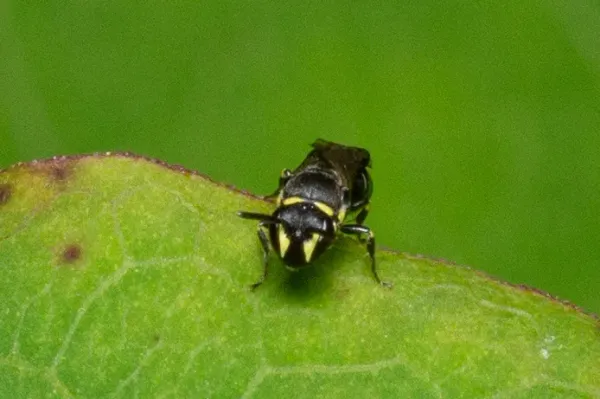
Masked Bees Coloration
Common color patterns to help identify masked bees
Masked Bees
Seasonal Activity
When masked bees are most active throughout the year

Where Masked Bees Are Found
Hover over states to see their names. Green regions indicate where masked bees have been reported.
Masked Bees Identification Guide
Physical Characteristics
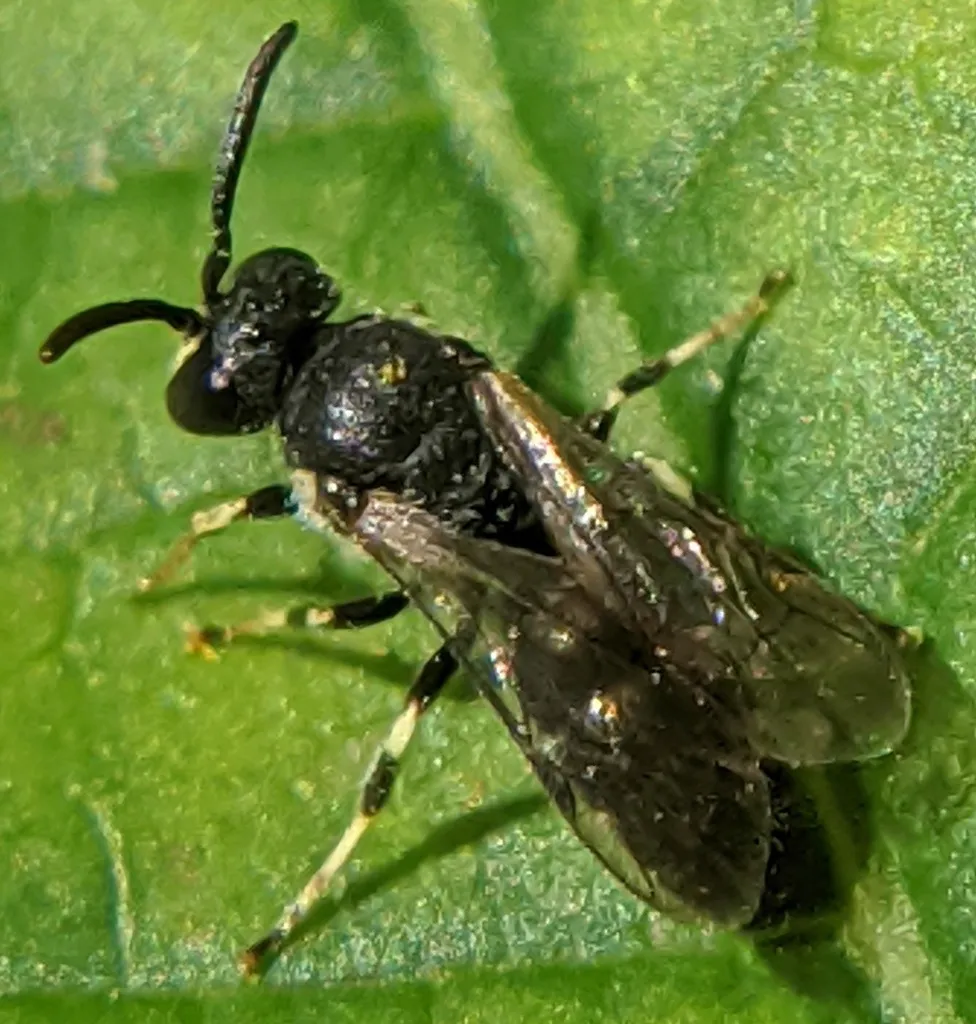
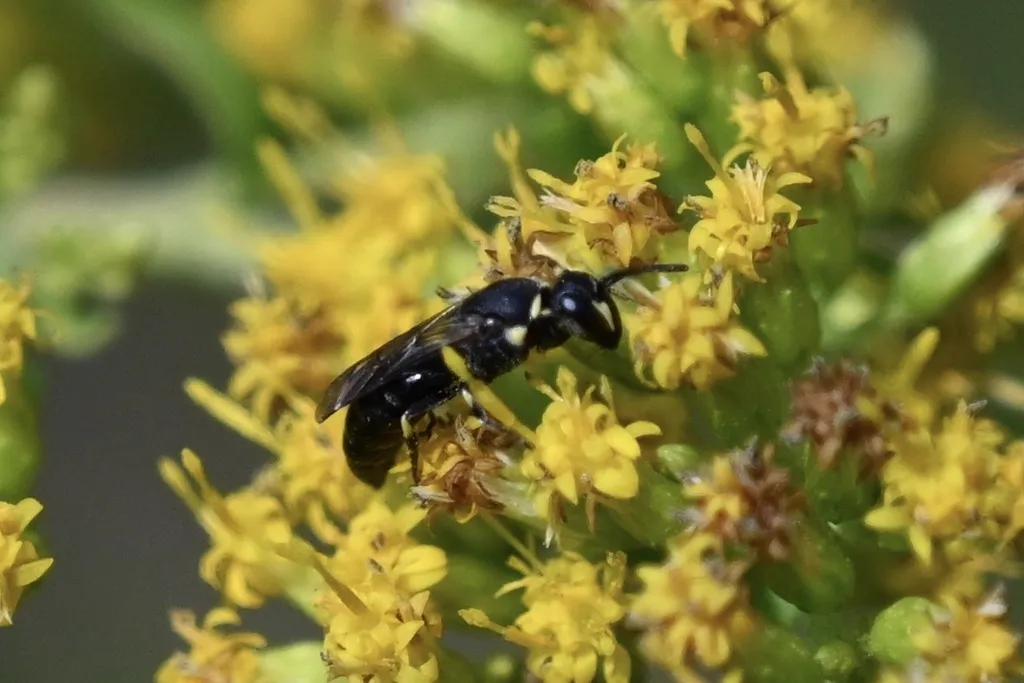
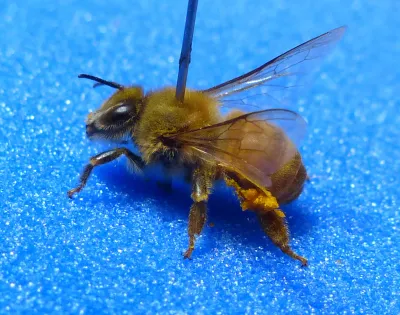
Masked bees are very small, usually measuring just 4 to 8 millimeters long. They have shiny black bodies with almost no hair, which makes them look like tiny wasps. The yellow or white markings on their faces give them their common name. Males have more yellow on their faces, often filling the space between their eyes. Females have smaller triangle-shaped marks near their eyes.
Most bees have fuzzy bodies and leg hairs to carry pollen. Masked bees do not. They look sleek and polished instead. They have two pairs of clear wings, six legs with yellow markings at the joints, and bent antennae. People often mistake them for small wasps because of their slender build and dark color.
Common North American Species
There are about 130 species of masked bees in North America. Here are some you might see:
-
Hylaeus annulatus (Ringed Masked Bee): Common in the Mid-Atlantic and Appalachian regions. Often found on flat-topped flowers like Queen Anne’s lace.
-
Hylaeus modestus (Modest Masked Bee): One of the most widespread species in eastern North America.
-
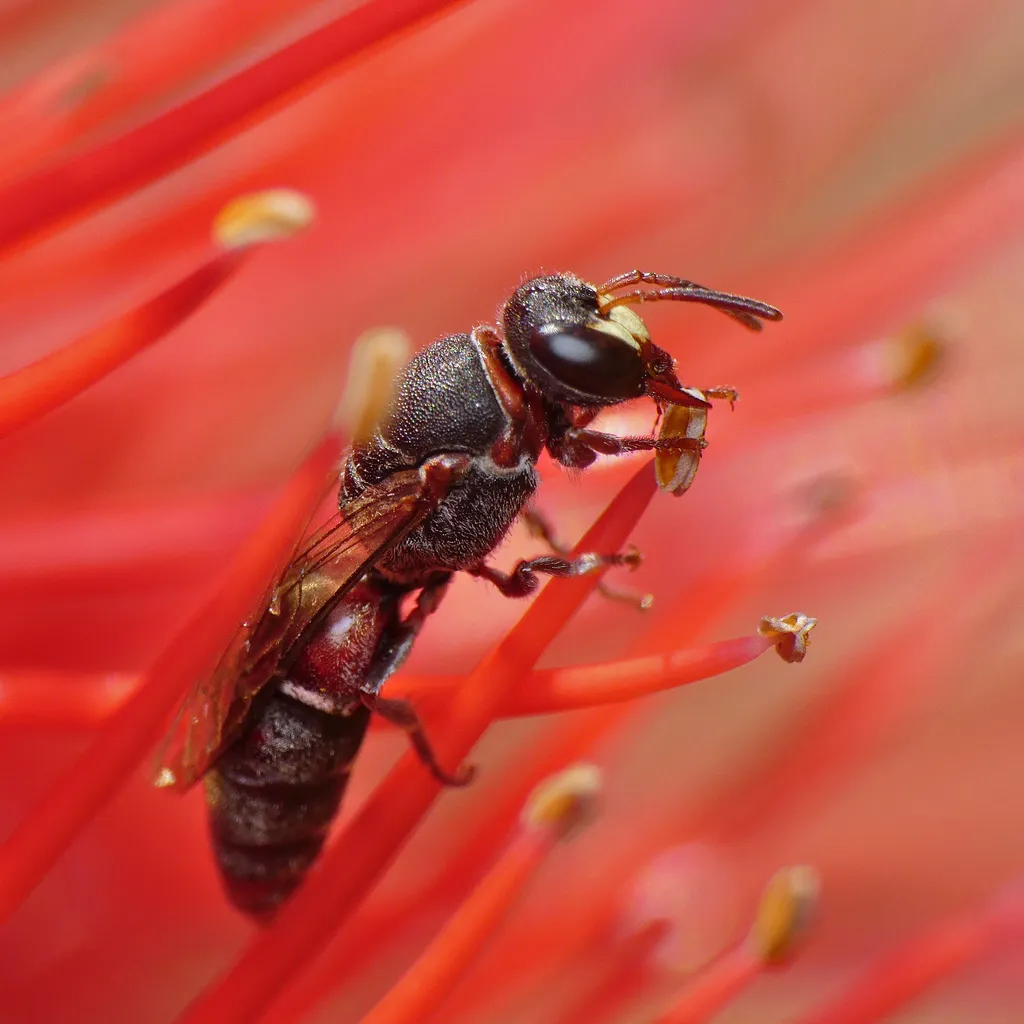
Hylaeus ornatus (Ornate Masked Bee): Found in wetland areas. May show red coloring on some body segments.
-
Hylaeus leptocephalus: A European species that now lives throughout much of the United States and Canada.
-
Hylaeus mesillae: A common western species found in gardens and meadows. A related species, Cuckoo Bees, shares similar characteristics.
Masked Bees Behavior and Biology A related species, Long-Horned Bees, shares similar characteristics.
Solitary Lifestyle A related species, Digger Bees, shares similar characteristics.
Honey bees and bumble bees live in colonies. Masked bees do not. They are solitary insects. Each female builds her own nest, gathers food, and lays eggs without help. There are no queens, workers, or drones like in honey bee hives. Males only focus on finding mates. They do not help build nests or care for young.
Unique Pollen Transport
Masked bees carry pollen in an unusual way. Most bees have special leg hairs to hold pollen. Masked bees swallow the pollen instead and store it in their crop, a stomach-like organ. When they return to the nest, they spit up this pollen mixed with nectar. This becomes food for their larvae. Since pollen stays inside their bodies, scientists find it hard to know which plants they visit.
Nesting Behavior
Masked bees look for holes and tunnels that already exist. They do not dig their own. Common nesting spots include hollow plant stems, old beetle holes in wood, rock cracks, gaps in mortar, and abandoned wasp nests. Inside these spaces, they build 5 to 20 cells for their young. They line each cell with a special liquid from their mouths. This dries into a thin, clear, waterproof coating. This lining can protect larvae even if the nest floods with water.
Foraging Preferences
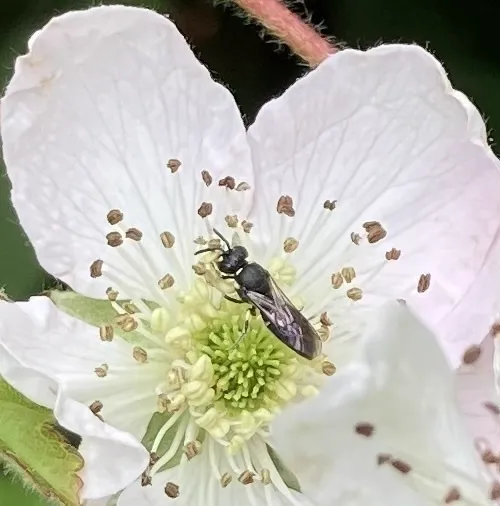
Masked bees have short tongues but can reach into deep flowers because of their small size. They visit many types of flowering plants. They especially like small flowers such as goldenrod, Queen Anne’s lace, yarrow, milkweed, blackberries, roses, and asters. They often live near woodland edges and in gardens with many plant types.
Treatment Information for Masked Bees
Masked bees are docile, solitary insects that rarely cause problems. They pose no threat to people, pets, or property. They do not form aggressive colonies like yellowjackets. They cannot sting through clothing and will only sting if you squeeze or handle them directly. Their sting is mild compared to other stinging insects.
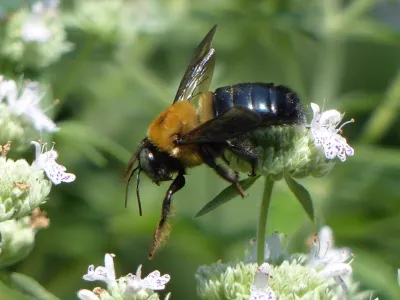
Unlike carpenter bees, these bees do not build visible nests on structures or bore into wood. They use small holes in stems and wood that already exist. Most homeowners never notice them. If you see masked bees in your yard, they are simply foraging on flowers or looking for nesting sites.
Living with Masked Bees
Masked bees cause no damage and need no treatment. Here are some facts about sharing your yard with them:
-
Low sting risk: They rarely sting and are not aggressive. Only direct handling causes stings.
-
No property damage: They use existing holes. They do not chew wood or create new cavities.
-
Garden helpers: They move pollen between flowers, which helps plants produce fruit and seeds.
-
Minimal presence: You may see a few at a time, not large swarms or colonies.
References and Additional Reading
Other Bees
Explore other species in the bees family
Commonly Confused With
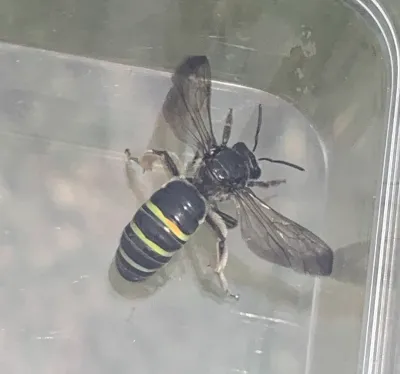
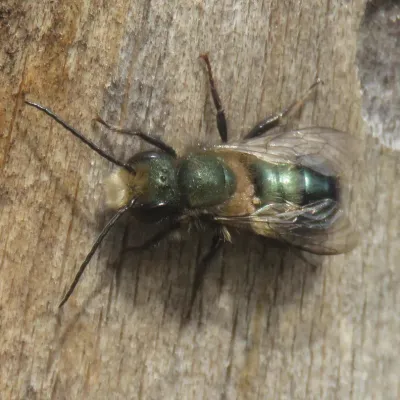
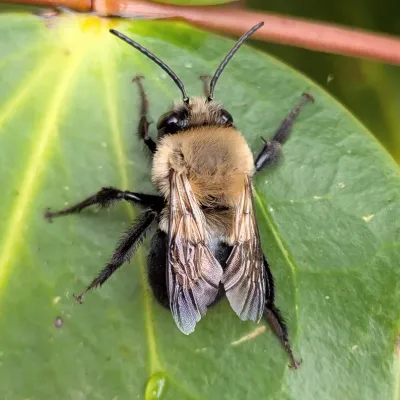
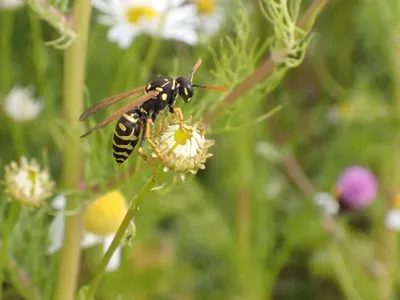
Masked Bees are often mistaken for these similar pests
Where Masked Bees Are Found
Hover over states to see their names. Green regions indicate where masked bees have been reported.
Common Questions about Masked Bees
Are masked bees dangerous?
+
No, masked bees are not dangerous. They are solitary bees that rarely sting and only do so if directly handled or trapped against skin. Their stings are mild and pose no significant threat to humans.
Why are they called masked bees?
+
Masked bees get their name from the distinctive yellow or white markings on their faces, which resemble a mask. Males typically have more extensive facial markings than females, who often have smaller triangular markings near their eyes.
Do masked bees make honey?
+
No, masked bees do not make honey. They are solitary bees that collect nectar and pollen to provision individual brood cells for their larvae, but they do not store honey like honey bees do.
How do masked bees carry pollen?
+
Unlike most bees that carry pollen externally on their legs or bodies, masked bees swallow pollen and carry it internally in a stomach compartment called the crop. They regurgitate this pollen mixed with nectar into their nest cells.
Where do masked bees nest?
+
Masked bees nest in pre-existing cavities such as hollow plant stems, old beetle holes in wood, rock crevices, and even abandoned insect nests. They line their nest cells with a clear, waterproof secretion instead of bringing in outside materials.
Should I remove masked bees from my property?
+
Masked bees pose no threat to humans and do not cause property damage. They rarely sting unless handled directly, and their presence often helps garden plants produce more fruit and seeds.
How can I attract masked bees to my garden?
+
To attract masked bees, plant small-blossomed flowers like Queen Anne's lace, goldenrod, and yarrow. Leave dead plant stems standing over winter and provide brush piles or bee hotels with hollow tubes for nesting sites.

With five years of hands-on experience in the pest control industry, George Schulz is a registered technician with the Virginia Pest Management Association and a proud third-generation professional in a family business that's been protecting homes for over 57 years. He manages and trains a team of service pros while also leading internal research efforts—recently spearheading a deep-dive review of thousands of documents on pest control materials to hand-pick the most kid and pet friendly, most effective solutions tailored specifically for homes in the DC metro area.