Mallow Bees Identification Guide
Diadasia spp.
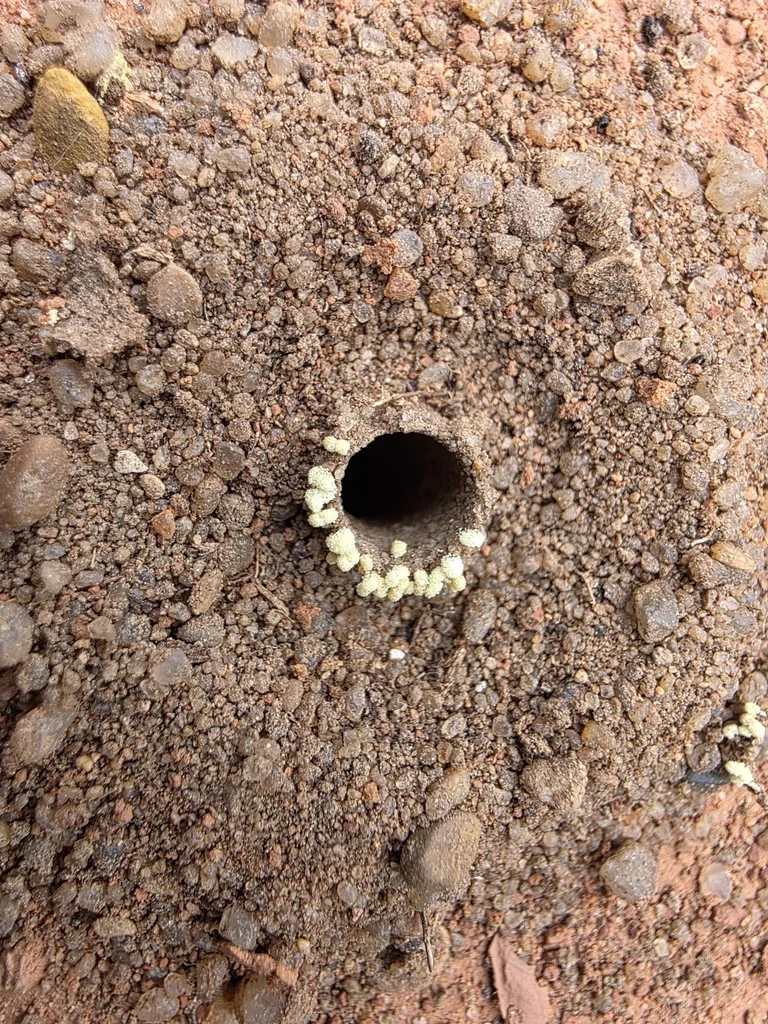
Solitary ground-nesting bees that feed on mallow plants. Known for building chimney-like turrets around nest entrances in dry, compacted soil.
Taxonomy
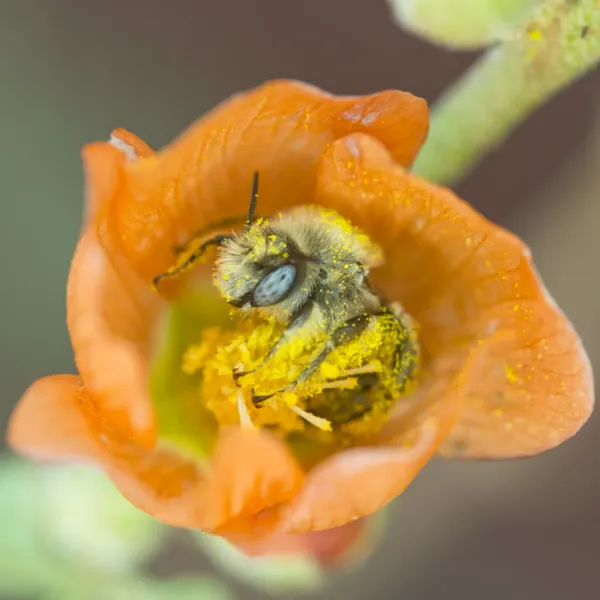
Mallow Bees Coloration
Common color patterns to help identify mallow bees
Mallow Bees
Seasonal Activity
When mallow bees are most active throughout the year

Where Mallow Bees Are Found
Hover over states to see their names. Green regions indicate where mallow bees have been reported.
Mallow Bees Identification Guide
Physical Characteristics
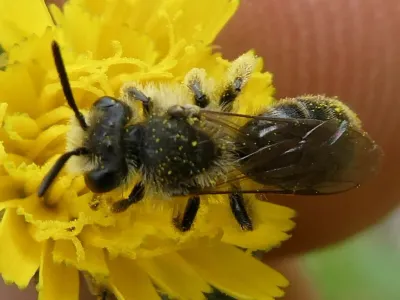
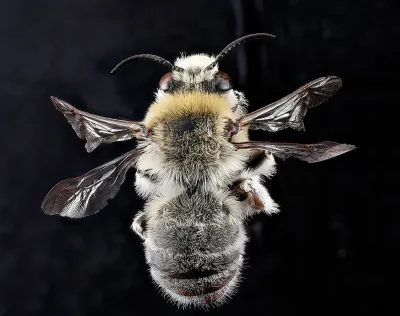
Mallow bees are small to medium-sized solitary bees. They are also called chimney bees because of how they build their nests. These bees belong to the genus Diadasia and measure 7 to 15 millimeters long. That makes them a bit smaller than honey bees. Their bodies are covered with thick, pale hairs that help them collect pollen.
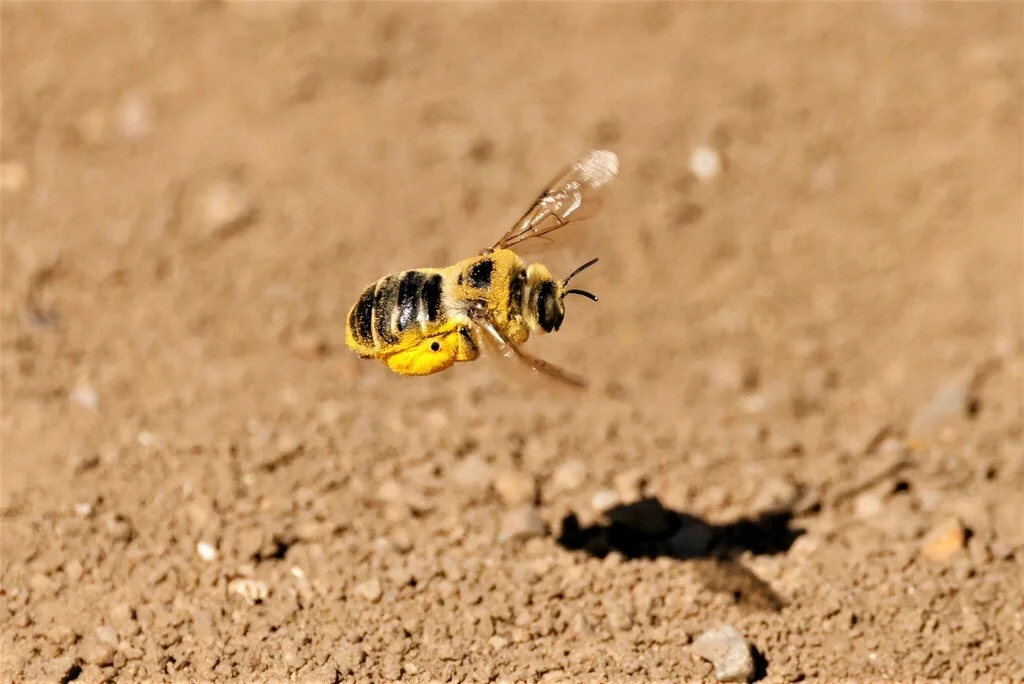
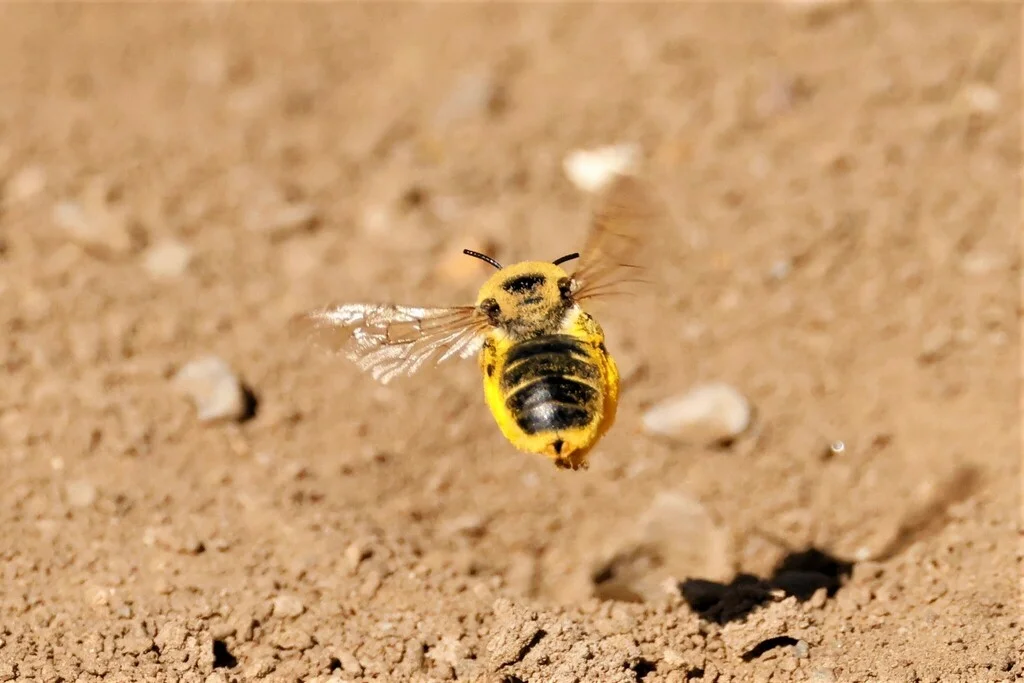
Most mallow bees have tan, beige, or light brown coloring. Some species show yellow and black stripes on the abdomen. Females have blue-gray eyes. Males also have blue eyes but with lighter body colors. One way to identify these bees is by the thick brush of long hairs on the female’s front leg.
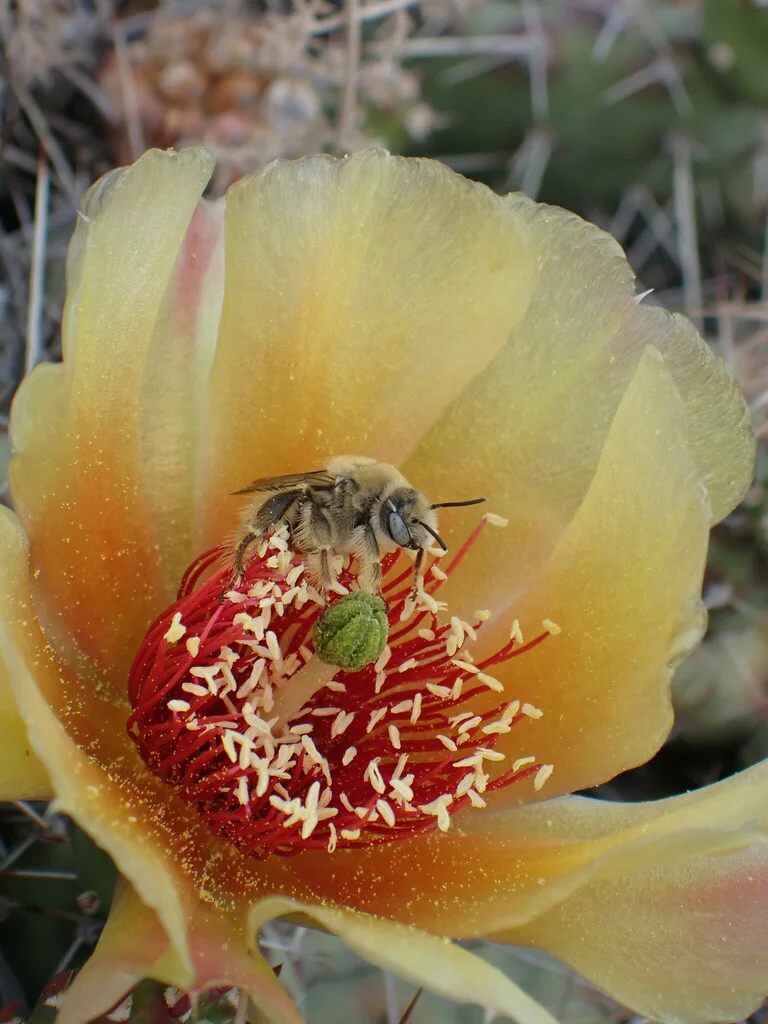
Species that feed on mallow and evening primrose tend to be smaller. They have uniform, pale hair on their abdomens. Species that feed on cactus or sunflowers are usually larger. These have banded abdomens with clear stripes.
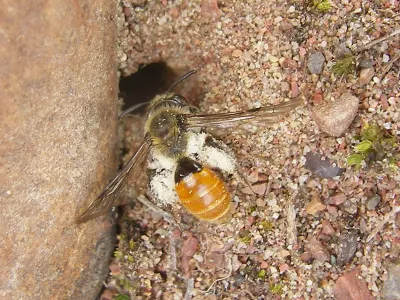
Female mallow bees have feathery hairs on their hind legs. These hairs trap large pollen grains from their host plants. When full of pollen, these hairs look like bright yellow clumps on the bee’s legs.
Common Species in North America
-
Globe Mallow Bee (Diadasia diminuta): The most common species. It measures 7 to 9 millimeters and lives throughout the western United States and southern Canada. It feeds mainly on globe mallow plants.
-
Cactus Bee (Diadasia rinconis): A larger species found in the Sonoran Desert. It feeds on prickly pear cactus flowers.
-
Sunflower Chimney Bee (Diadasia enavata): Visits sunflowers and related plants. Has a banded abdomen with clear stripes.
-
Ochraceous Mallow Chimney Bee (Diadasia ochracea): A mallow feeder with ochre-colored body hairs. A related species, Masked Bees, shares similar characteristics.
-
Bindweed Turret Bee (Diadasia bituberculata): Feeds on bindweed and morning glory plants. A related species, Cuckoo Bees, shares similar characteristics.
Mallow Bees Behavior and Biology A related species, Long-Horned Bees, shares similar characteristics.
Mallow bees are solitary bees. Each female builds and stocks her own nest without help from other bees. However, they like to nest near each other. A good site may hold hundreds or thousands of nests grouped together. A related species, Small Carpenter Bees, shares similar characteristics.
These bees come out in late spring and early summer. This timing matches when their host plants bloom. Males emerge first and patrol nesting areas while waiting for females. Male mallow bees sometimes form “bee balls” where many males pile onto a single female. The female breaks free seconds later with one male riding on her back. A related species, Eastern Carpenter Bees, shares similar characteristics.
After mating, females pick nest sites in dry, hard-packed soil, much like ground bees and digger bees. They like areas along dirt roads, bare spots in yards, or sandy soil in grasslands and deserts. Females dig burrows several inches deep using their jaws and legs.
The most notable feature of mallow bee nests is the turret or chimney built around the entrance. These structures are made from mud and soil. They rise above ground level like tiny tubes. Scientists still debate why they build these chimneys. Ideas include rain protection, helping bees find their own nest, or keeping parasites out.
Inside the nest, females create separate cells for their young. They coat each cell with a waterproof lining. Then they fill it with a ball of pollen and nectar. After laying an egg on this food ball, the female seals the cell and starts the next one. One female may build 10 to 20 cells before she dies.
Mallow bees feed on a narrow range of plants. Most species in this genus eat only from plants in the mallow family. This includes globe mallow, hibiscus, and hollyhock. Their feathery leg hairs can trap large, spiny pollen grains that other bees cannot collect well.
Treatment Methods for Mallow Bees
Mallow bees are not aggressive and pose little threat to people or property. Their nests do not cause structural damage. However, if they nest in a busy area or someone nearby has a bee allergy, treatment may be needed.
When Treatment May Be Needed:
Treatment is most often considered when mallow bees nest in high-traffic areas. This includes spots where people walk barefoot or children play. Homes with someone who has a severe bee sting allergy may also need treatment.
Habitat Modification:
The best approach is to make the area less appealing for nesting:
- Water the soil more often: Mallow bees need dry, hard soil to nest. Keeping the soil moist stops them from digging.
- Add mulch or ground cover: Covering bare soil with mulch, gravel, or plants removes nesting sites.
- Grow thicker grass: Filling in bare patches with grass or other plants makes the area unsuitable for nests.
Direct Treatment:
For active nest sites that require removal, a pest control company can apply insecticide dust to nest entrances. This is typically done in late afternoon when bees have returned to their burrows. Since mallow bees are solitary, each nest must be treated on its own.
What to Expect:
Mallow bees are active for 6 to 10 weeks during their nesting season. After this period, adults die off and the area will be quiet until the next year. In many cases, waiting out the season is a practical option.
If you are not sure whether you have mallow bees or a more aggressive stinging insect, contact a pest control company for identification.
References
Other Bees
Explore other species in the bees family
Commonly Confused With
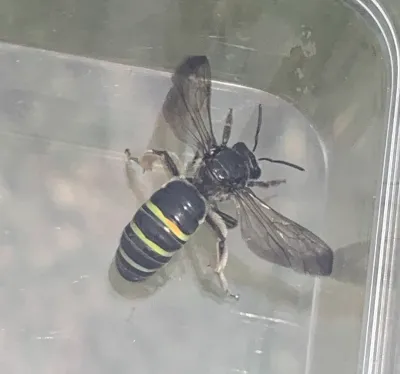
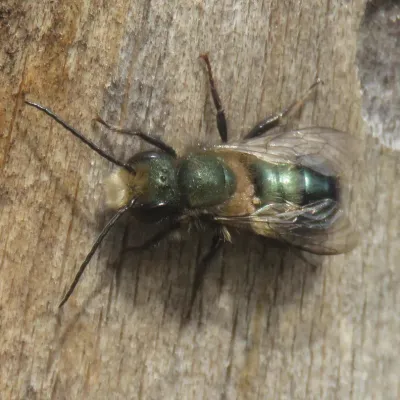
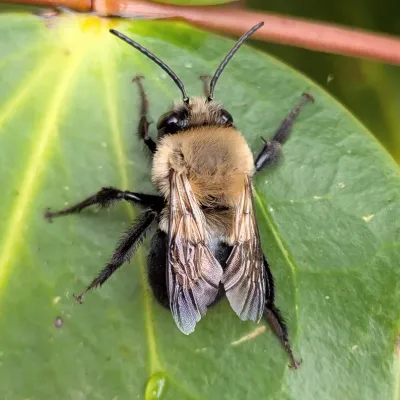
Mallow Bees are often mistaken for these similar pests
Where Mallow Bees Are Found
Hover over states to see their names. Green regions indicate where mallow bees have been reported.
Common Questions about Mallow Bees
How do I know if I have mallow bees?
+
Look for small holes in dry, compacted soil with distinctive turret or chimney-like structures around the entrances. These chimneys are made of mud and look like tiny tubes rising from the ground. Mallow bees are most active from late spring through summer and are often found near mallow, cactus, or sunflower plants.
Are mallow bees dangerous?
+
No, mallow bees are not aggressive and rarely sting. They are solitary bees without a colony to defend. Females can sting if directly handled or stepped on, but they generally ignore people. Males cannot sting at all.
Why are mallow bees called chimney bees?
+
Mallow bees construct distinctive turret or chimney-like structures around their nest entrances using mud. The purpose of these chimneys is debated among scientists, with theories including rain protection, nest recognition, and predator deterrence.
Will mallow bees damage my property?
+
No. Mallow bee nests are shallow and do not harm lawns, gardens, or structures. The small holes and chimneys they create actually help aerate soil. These bees are temporary visitors that disappear after their nesting season ends.
What plants attract mallow bees?
+
Mallow bees prefer plants in the mallow family, including globe mallow, hibiscus, and hollyhock. Some species also visit cacti, sunflowers, and bindweed. They have a specialized diet, which is why scientists call them oligolectic bees.
How long do mallow bees stay?
+
Mallow bees are typically active for 6 to 10 weeks during late spring and summer, coinciding with when their preferred host plants bloom. After mating and provisioning their nests, adult bees die off. Larvae develop underground and emerge the following year.
Do mallow bees live in colonies?
+
No, mallow bees are solitary. Each female builds and provisions her own nest independently. However, they often nest in aggregations, meaning many individual nests may be clustered together in favorable locations. This can create the appearance of a colony, but each bee works alone.
Should I remove mallow bees from my yard?
+
Mallow bees pose no threat to people or property and are not aggressive. If nesting activity is in a high-traffic area or someone has a bee allergy, treatment options are available. Otherwise, marking the spot and avoiding it until the season ends is often sufficient.

With five years of hands-on experience in the pest control industry, George Schulz is a registered technician with the Virginia Pest Management Association and a proud third-generation professional in a family business that's been protecting homes for over 57 years. He manages and trains a team of service pros while also leading internal research efforts—recently spearheading a deep-dive review of thousands of documents on pest control materials to hand-pick the most kid and pet friendly, most effective solutions tailored specifically for homes in the DC metro area.