Long-Horned Bees Identification Guide
Eucerini (Tribe)
Native solitary bees named for the males' long antennae. These ground-nesting bees are common in gardens and lawns across North America.
Taxonomy
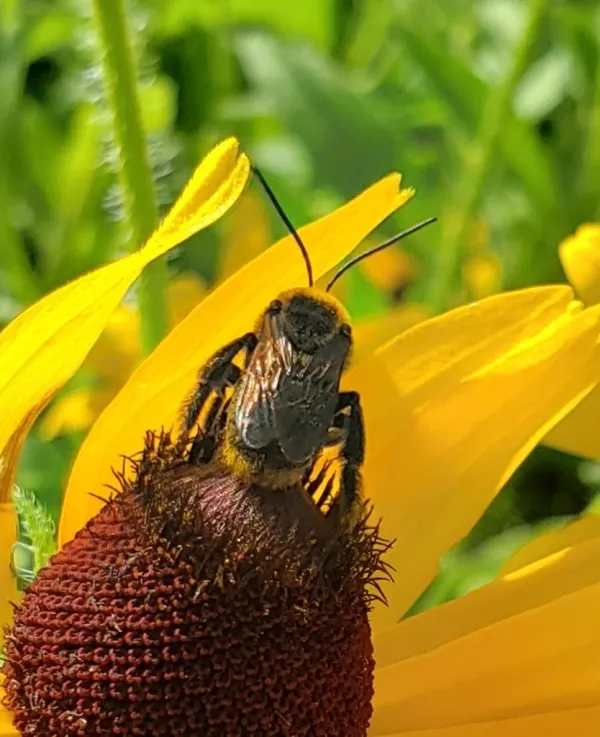
Long-Horned Bees Coloration
Common color patterns to help identify long-horned bees
Long-Horned Bees
Seasonal Activity
When long-horned bees are most active throughout the year

Where Long-Horned Bees Are Found
Hover over states to see their names. Green regions indicate where long-horned bees have been reported.
Long-Horned Bees Identification Guide
Physical Characteristics
Long-horned bees are medium to large bees. They measure 10 to 20 millimeters in length. The most notable feature is the long antennae on males. These antennae can reach nearly the length of their body. Female antennae are shorter but still longer than those of many other bee species.
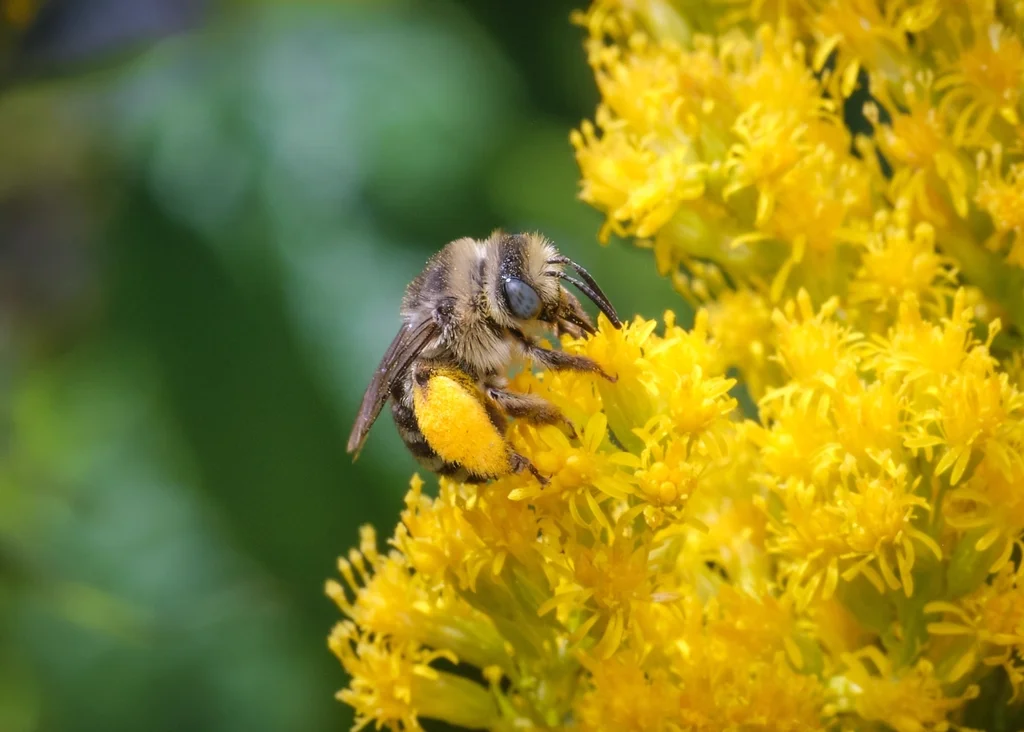
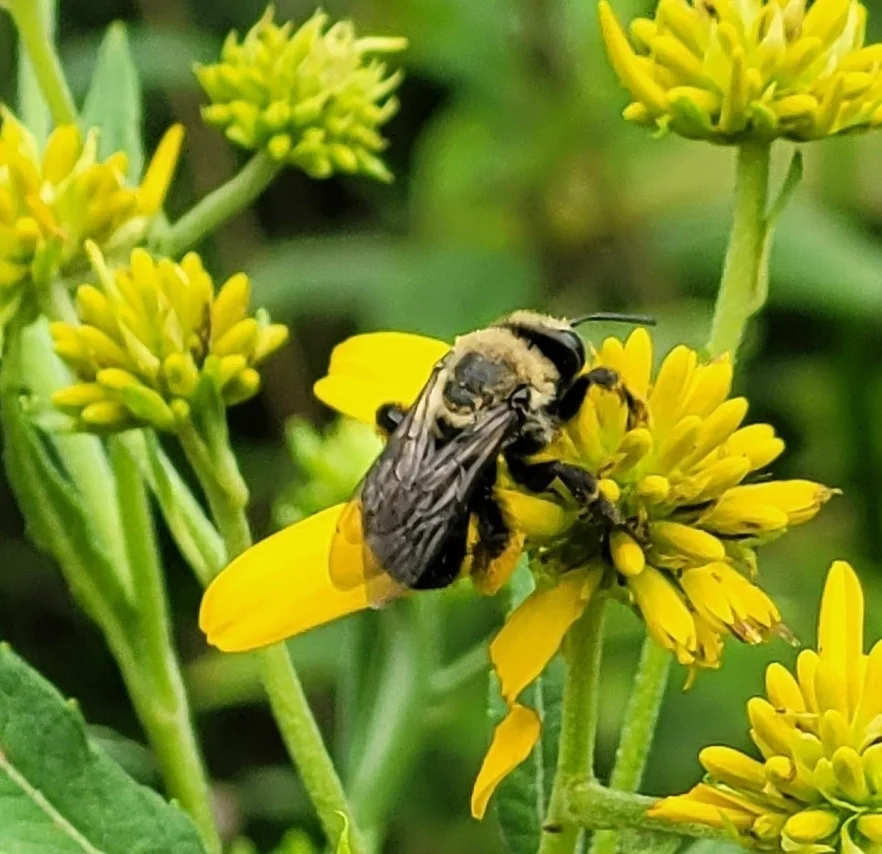
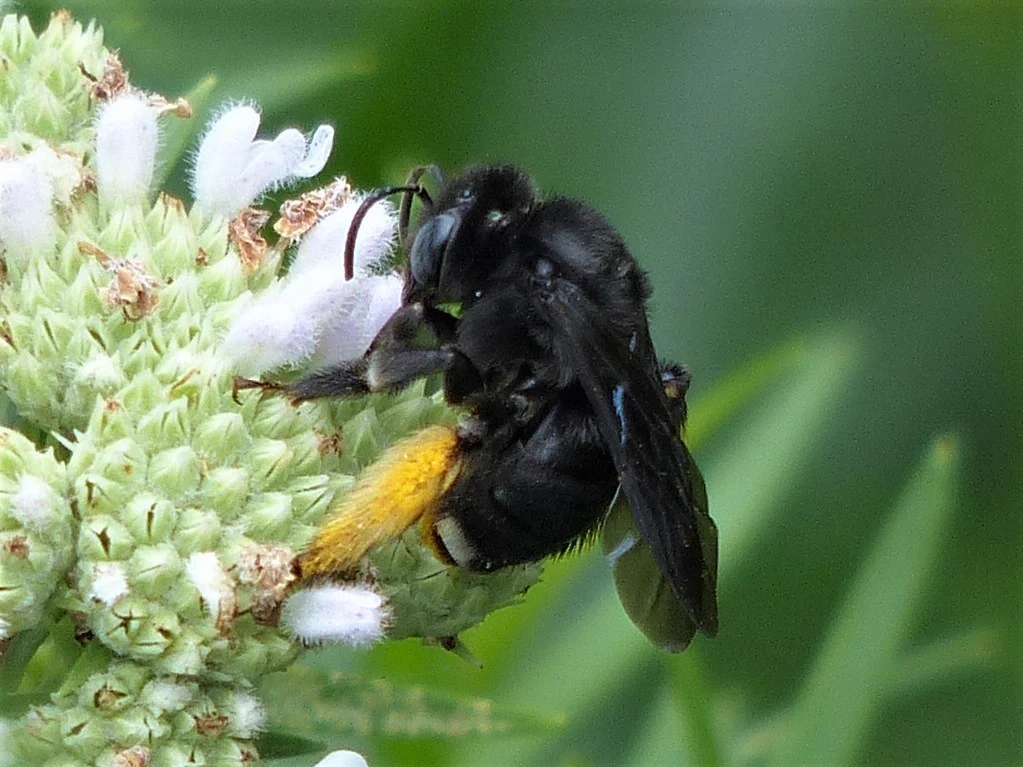
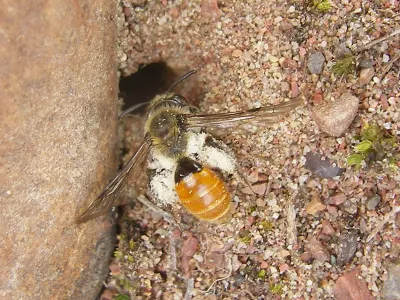
These bees have fuzzy bodies covered in fine hairs. Most species are black or dark brown with bands of lighter hair on the thorax and abdomen. Hair color ranges from tan and gray to golden yellow. Their hind legs are often thick with fur and look swollen when loaded with pollen.
Long-horned bees have striking eye colors that help with identification. Many species have bright green, blue-gray, or pale eyes. These stand out against their darker bodies. This feature, along with their fuzzy look and long antennae, makes males easy to recognize.
Common Species in North America
The long-horned bee tribe (Eucerini) includes several genera found throughout North America:
-
Two-Spotted Long-Horned Bee (Melissodes bimaculatus): One of the most common species in eastern North America. Females have dense orange-brown hair on the thorax and light bands on the abdomen.
-
Squash Bees (Peponapis and Xenoglossa species): Specialists that pollinate squash, pumpkins, and gourds. They emerge before dawn to forage in squash blossoms.
-
Sunflower Bees (Svastra species): These bees focus on sunflowers. They are active in late summer when sunflowers bloom.
-
Long-Horned Bees (Eucera species): Spring-flying species that specialize in legumes and other early-blooming plants. A related species, Masked Bees, shares similar characteristics.
Long-Horned Bees Behavior and Biology A related species, Cuckoo Bees, shares similar characteristics.
Long-horned bees are solitary. Each female builds and stocks her own nest without help from other bees. Even though they nest alone, many females often dig burrows in the same area of soil. A related species, Digger Bees, shares similar characteristics.
Female long-horned bees dig burrows in bare or lightly vegetated ground, similar to ground bees. They prefer well-drained soil with good sun. The burrow goes several inches underground and branches into cells where eggs are laid. Each cell contains a ball of pollen mixed with nectar for the larva to eat. A related species, Small Carpenter Bees, shares similar characteristics.
Males emerge from the ground before females, often by a week or more. They patrol nesting areas and flowering plants looking for mates. Males may be seen swarming over nest sites or hovering around flowers. Male bees cannot sting, even though they can appear aggressive.
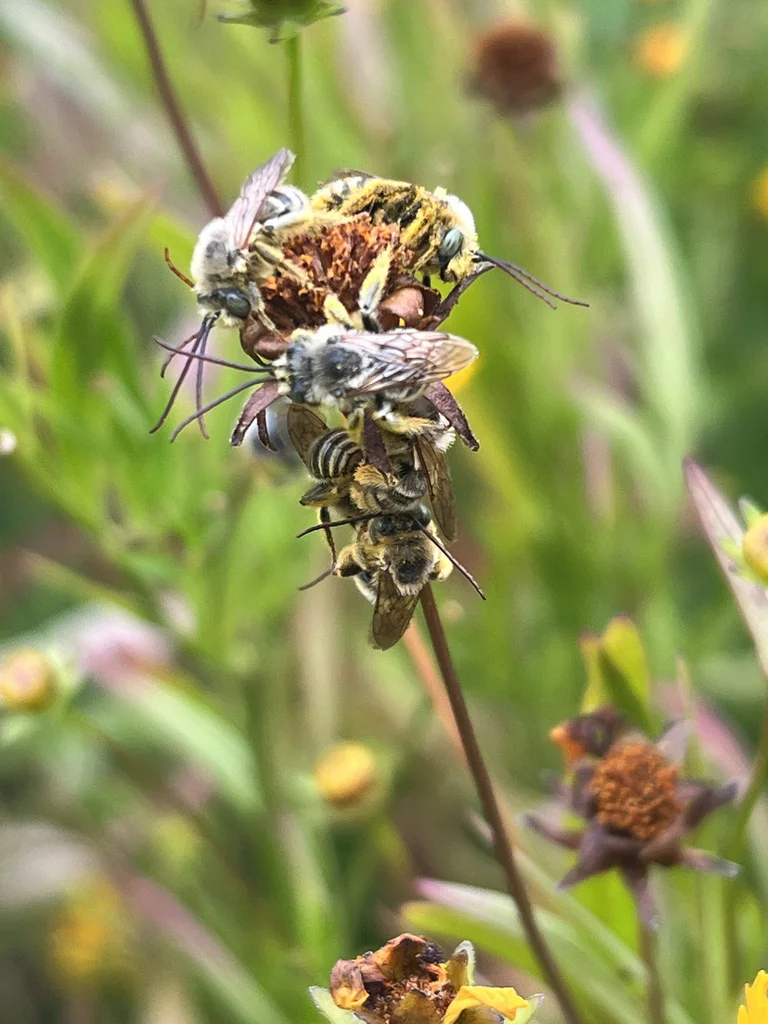
One unusual behavior is how males sleep. At dusk, males gather on plant stems and grip tightly with their jaws. These groups can include dozens of bees clinging to a single stem. Some return to the same plants night after night.
Many long-horned bee species focus on certain plant families. Squash bees only visit plants in the squash family. Other species focus on sunflowers, asters, legumes, or other plant groups.
Long-horned bees are active from late spring through fall. The timing depends on the species. Spring species forage on early blooming legumes. Summer and fall species emerge when asters and sunflowers bloom.
Treatment Options for Long-Horned Bees
Long-horned bees are solitary ground-nesting bees. They do not cause property damage and their ground nests are temporary. However, treatment may be needed in certain situations.
Common Reasons for Treatment:
- Nests in high-traffic areas where bare feet are common
- A household member has a severe bee sting allergy
- Large aggregations near playgrounds, patios, or pool areas
- Nests close to building foundations or entry points
How Treatment Works:
For ground-nesting bees like long-horned bees, treatment typically involves applying a residual insecticide to the soil around nest entrances. This method works best in the early evening when bees have returned to their burrows. Follow-up visits may be needed for large aggregations.
Habitat Modification:
Long-horned bees prefer bare, dry soil for nesting. Changing the habitat can prevent future nesting:
- Watering: Regular irrigation makes soil less attractive
- Ground cover: Adding mulch or ground cover plants removes bare soil
- Thick turf: Dense, healthy lawn grass discourages nest building
Proper Identification:
If you are not sure whether you have long-horned bees, ground bees, or yellowjackets, identification is the first step. Yellowjackets are aggressive wasps that nest in large colonies and need different treatment. A pest control professional can identify the species and recommend the right approach.
References
Other Bees
Explore other species in the bees family
Commonly Confused With
Long-Horned Bees are often mistaken for these similar pests
Where Long-Horned Bees Are Found
Hover over states to see their names. Green regions indicate where long-horned bees have been reported.
Common Questions about Long-Horned Bees
Why are they called long-horned bees?
+
Long-horned bees get their name from the exceptionally long antennae found on males. The name Eucera comes from Greek meaning 'well horned.' Male antennae can be nearly as long as their entire body, making them easy to identify.
Are long-horned bees dangerous?
+
Long-horned bees are not aggressive and rarely sting. As solitary bees, they have no colony to defend. Females can sting if directly handled or stepped on, but they do not pursue or attack people. Males cannot sting at all.
Do long-horned bees make honey?
+
No, long-horned bees do not make honey. They are solitary bees that collect pollen and nectar only to provision their individual nest cells for their offspring. Only social bees like honey bees produce and store honey.
Where do long-horned bees nest?
+
Long-horned bees nest in the ground, similar to ground bees. Females dig burrows in bare or sparsely vegetated soil, often in gardens, lawns, or sunny patches of dirt. Each female creates and maintains her own nest.
What do long-horned bees eat?
+
Adult long-horned bees feed on nectar from flowers. Many species specialize in particular plant families. For example, some species focus on sunflowers and asters, while squash bees (a type of long-horned bee) specialize in squash and pumpkin blossoms.
Why do male long-horned bees sleep in groups?
+
At night, male long-horned bees gather on plant stems and grip tightly with their jaws until morning. These sleeping aggregations can include dozens of males. Scientists believe this behavior may provide protection from predators or help conserve body heat.
What plants do long-horned bees visit?
+
Long-horned bees visit many flowering plants. Some species focus on specific crops like squash, pumpkins, and melons. Others visit sunflowers, asters, and legumes. They often begin foraging early in the morning before other bees are active.
How long do long-horned bees live?
+
Adult long-horned bees live for about 4 to 6 weeks during their active season. They spend most of their lives developing underground as larvae. New adults emerge in late spring or summer depending on the species.

With five years of hands-on experience in the pest control industry, George Schulz is a registered technician with the Virginia Pest Management Association and a proud third-generation professional in a family business that's been protecting homes for over 57 years. He manages and trains a team of service pros while also leading internal research efforts—recently spearheading a deep-dive review of thousands of documents on pest control materials to hand-pick the most kid and pet friendly, most effective solutions tailored specifically for homes in the DC metro area.