Eastern Carpenter Bees Identification Guide
Xylocopa virginica
The most common carpenter bee species in eastern North America, known for boring into unpainted wood structures and hovering territorially near homes.
Taxonomy
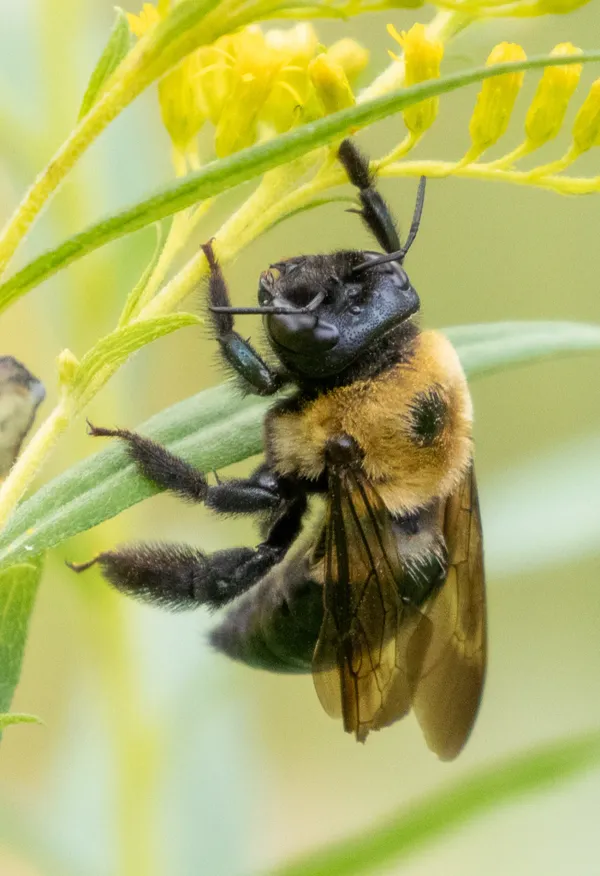
Eastern Carpenter Bees Coloration
Common color patterns to help identify eastern carpenter bees
Eastern Carpenter Bees
Seasonal Activity
When eastern carpenter bees are most active throughout the year
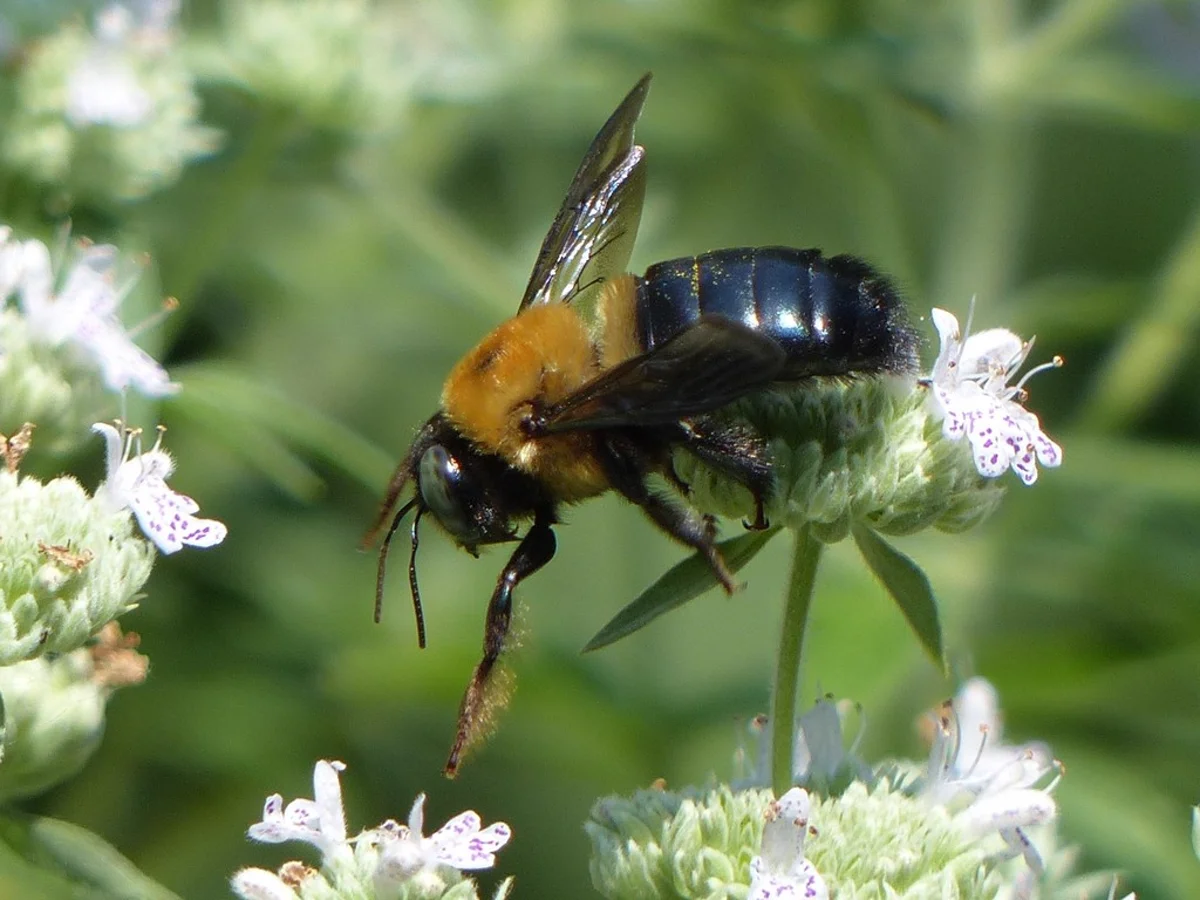
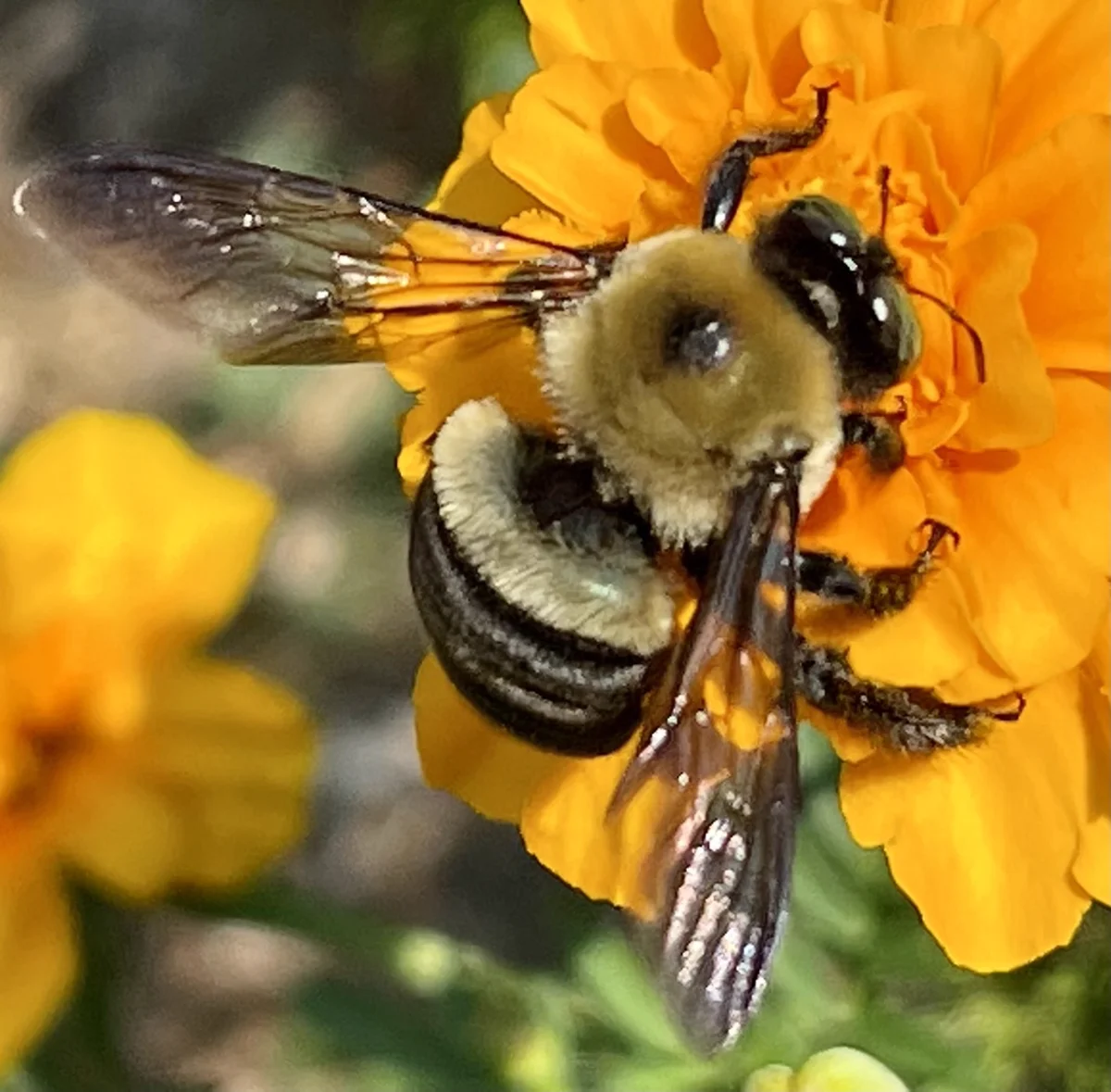
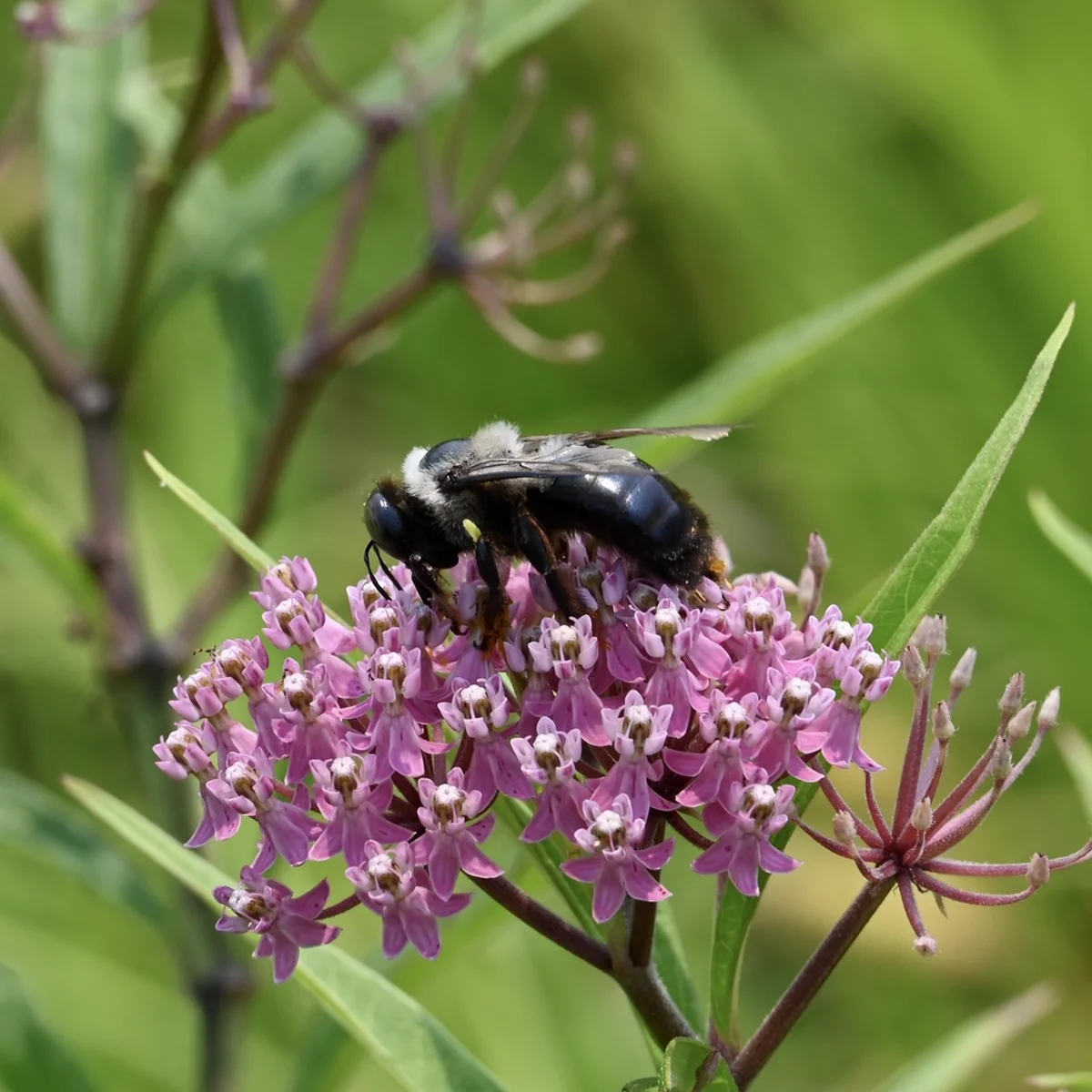

Where Eastern Carpenter Bees Are Found
Hover over states to see their names. Green regions indicate where eastern carpenter bees have been reported.
Eastern Carpenter Bee Identification Guide
Physical Characteristics
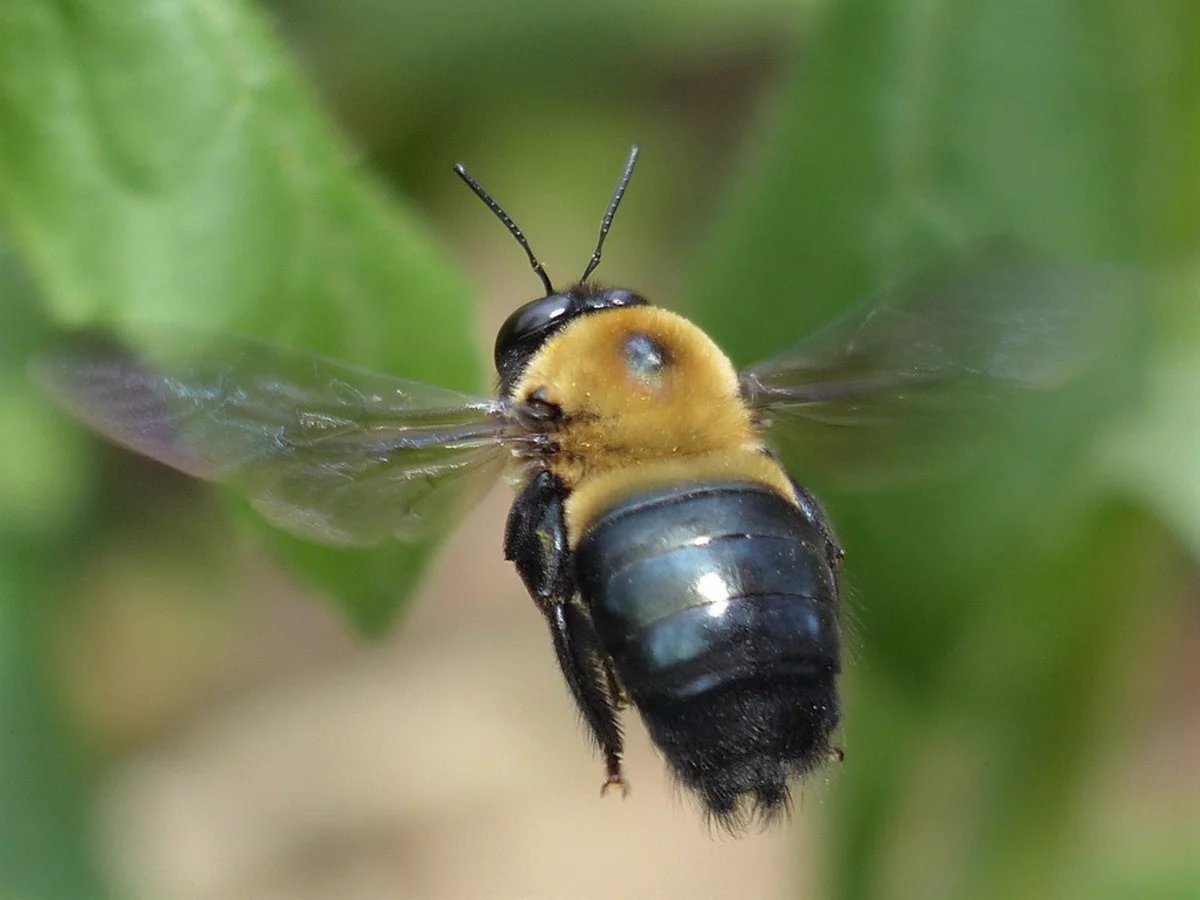
The eastern carpenter bee (Xylocopa virginica) is one of the largest bees in eastern North America. Adults are about 3/4 to 1 inch long. They look like large bumble bees at first glance. Their loud buzzing makes them easy to spot around homes.
The best way to tell an eastern carpenter bee from a bumble bee is to look at the abdomen. Carpenter bees have a shiny, hairless black abdomen. Bumble bees have fuzzy abdomens with yellow stripes. The carpenter bee’s rear end looks smooth and almost polished.
The middle section (thorax) is covered in thick yellow or golden hairs. This makes a clear contrast between the fuzzy yellow center and the shiny black rear. The head is black. The wings have a slight brown tint.
Males and females look a bit different. Males have a white or yellow spot on their face. Females have all-black faces. This spot makes it easy to tell them apart.
Similar Species
Several bees look like eastern carpenter bees:
-
Bumble Bees: Have fuzzy abdomens with yellow stripes. They nest in the ground, not in wood.
-
Southern Carpenter Bee (Xylocopa micans): Lives in southeastern states. Has a blue-black metallic shine.
-
Valley Carpenter Bee (Xylocopa sonorina): Lives in western states. Males are golden-brown all over.
-
Small Carpenter Bees (Ceratina species): Much smaller at only 1/4 inch long. They nest in plant stems, not in wood structures.
Eastern Carpenter Bee Behavior and Biology
Nesting Habits
Eastern carpenter bees live alone. They do not form colonies like honey bees. They also do not make honey. Each female builds and stocks her own nest by herself.
In spring, females look for wood to bore into. They prefer soft, bare, weathered wood. Common spots include deck railings, porch ceilings, fascia boards, window trim, wood siding, and outdoor furniture. They tend to avoid painted or stained wood.
The female uses her strong jaws to chew a round hole about 1/2 inch wide. The hole goes straight in for about an inch, then turns to follow the wood grain. Inside, she makes several small rooms. Each room holds a ball of pollen and nectar with one egg.
Life Cycle
The life cycle takes about one year: A related species, Masked Bees, shares similar characteristics.
-
Spring (March-April): Adult bees come out of tunnels where they spent the winter. A related species, Cuckoo Bees, shares similar characteristics.
-
Mating (April-May): Males fly around nesting areas looking for mates. After mating, males die within a few weeks. A related species, Long-Horned Bees, shares similar characteristics.
-
Nest building (April-June): Females dig new tunnels or make old ones bigger. Each female makes 6-8 rooms for eggs. A related species, Digger Bees, shares similar characteristics.
-
Egg laying: Females put one egg in each room along with pollen and nectar for food. They seal each room with chewed wood.
-
Summer: Larvae hatch and eat the stored food as they grow.
-
Late summer: Larvae become pupae and then turn into adult bees.
-
Fall and winter: New adults stay inside the tunnels and go dormant until next spring.
Territorial Behavior
Male eastern carpenter bees hover near nesting areas to guard their territory. They will fly toward anything that moves nearby, including people. This can be scary since males may hover just a few feet from your face.
But male carpenter bees cannot sting. They do not have a stinger. All they can do is bump into things they see as threats. Female carpenter bees can sting but rarely do. They only sting if you touch them or step on them.
Signs of Eastern Carpenter Bee Activity
Look for these signs that carpenter bees may be present:
-
Round holes: Perfectly round holes about 1/2 inch wide drilled into wood. Often found on the underside of boards.
-
Sawdust piles: Coarse, light-colored sawdust below the holes. Fresh sawdust is light; old sawdust turns gray.
-
Yellow-brown stains: Stains running down from the holes. This is waste from bees inside the tunnels.
-
Hovering bees: Large bees that hover in one spot near wood, especially in spring. Males fly toward anything that moves.
-
Woodpecker damage: Long gouges or holes in wood near the bee tunnels. Woodpeckers dig into the wood to eat the larvae.
How We Treat for Eastern Carpenter Bees
Our treatment gets rid of active bees and helps stop future problems.
Inspection:
Our technicians check your property to find all active nest holes. We look at deck railings, porch ceilings, fascia boards, window frames, and any bare wood.
Direct Treatment:
We put an insecticide dust into each nest hole. The dust sticks to the tunnel walls. Bees pick it up as they move through. The dust stays active for weeks. It kills bees that come back to the nest and any that hatch later.
Sealing Holes:
After treatment works, we suggest sealing the holes to stop bees from using them again. Steel wool and wood putty make a strong seal. This also stops water damage to the wood.
Prevention Tips:
We help you find what draws carpenter bees to your home. The best long-term fix is to paint or stain all bare wood. Carpenter bees avoid painted wood. For spots you cannot paint, wood treatments can help keep them away.
We offer free callbacks if the bees come back between services.
Preventing Eastern Carpenter Bee Damage
These steps can help keep carpenter bees away:
-
Paint or stain wood: Put exterior paint or stain on all bare wood. This is the best way to prevent carpenter bees.
-
Fill old holes: Plug old nest holes with steel wool and wood putty so bees cannot use them again.
-
Use tough materials: When building decks or porches, use hardwood, treated lumber, or composite boards.
-
Keep up with repairs: Fix spots where paint has worn off. Carpenter bees look for weathered areas.
-
Cover bare wood: Replace wood trim with vinyl or aluminum where you can.
References
Other Bees
Explore other species in the bees family
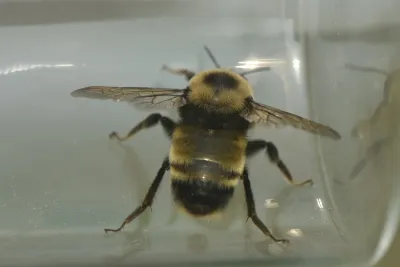
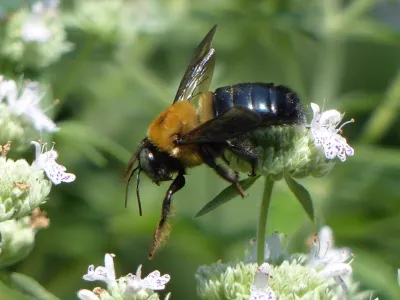
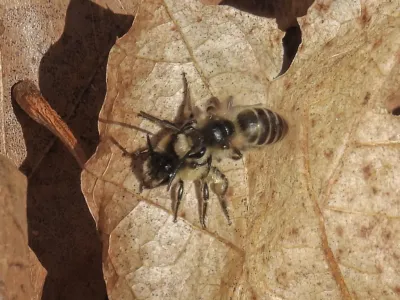
Commonly Confused With
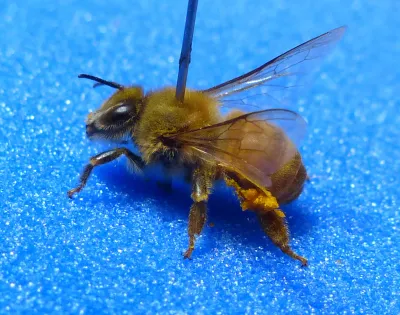
Eastern Carpenter Bees are often mistaken for these similar pests
Where Eastern Carpenter Bees Are Found
Hover over states to see their names. Green regions indicate where eastern carpenter bees have been reported.
Common Questions about Eastern Carpenter Bees
What is the difference between eastern carpenter bees and bumble bees?
+
The easiest way to tell them apart is by looking at the abdomen. Eastern carpenter bees have a shiny, hairless black abdomen, while bumble bees have a fuzzy abdomen with yellow bands. Carpenter bees are also more likely to hover in one spot near wooden structures.
Do eastern carpenter bees sting?
+
Female eastern carpenter bees can sting but rarely do unless directly handled or threatened. Male carpenter bees cannot sting at all, even though they may hover aggressively near people to defend their territory. They are generally considered non-aggressive.
Why do eastern carpenter bees hover near my porch?
+
Male carpenter bees hover to defend their territory during mating season. They patrol areas near nesting sites looking for females and will investigate anything that moves nearby. Despite appearing aggressive, males cannot sting.
What kind of damage do eastern carpenter bees cause?
+
Eastern carpenter bees bore perfectly round holes about half an inch in diameter into soft, unpainted wood. Inside, they create tunnels that can extend several inches. Over many years of reuse, these tunnels can weaken structural wood. Woodpeckers feeding on larvae cause additional damage.
When are eastern carpenter bees most active?
+
Eastern carpenter bees are most active from April through June in most regions. Adults emerge from overwintering in early spring, mate, and begin excavating or expanding nest tunnels. Activity decreases significantly by late summer.
How can I prevent eastern carpenter bees?
+
Paint or stain all exposed wood surfaces. Carpenter bees strongly prefer bare, weathered wood. Fill existing holes with steel wool and wood putty after treatment. Consider using hardwoods or composite materials for outdoor construction projects.
Will eastern carpenter bees return to the same spot?
+
Yes. Eastern carpenter bees often return to the same nesting sites year after year. Female bees may reuse their mother's tunnels and expand them further. Without treatment, the same wood structures can be attacked repeatedly, leading to significant damage over time.
Do eastern carpenter bees live in colonies?
+
No, eastern carpenter bees are solitary insects. Each female creates and maintains her own nest. However, daughters may nest near their mothers, and multiple females sometimes share a single entrance hole while maintaining separate tunnels inside.

With five years of hands-on experience in the pest control industry, George Schulz is a registered technician with the Virginia Pest Management Association and a proud third-generation professional in a family business that's been protecting homes for over 57 years. He manages and trains a team of service pros while also leading internal research efforts—recently spearheading a deep-dive review of thousands of documents on pest control materials to hand-pick the most kid and pet friendly, most effective solutions tailored specifically for homes in the DC metro area.