Cuckoo Bees Identification Guide
Nomada spp.
Parasitic bees that lay their eggs in other bees' nests. These wasp-like bees do not sting and pose no threat to homeowners.
Taxonomy
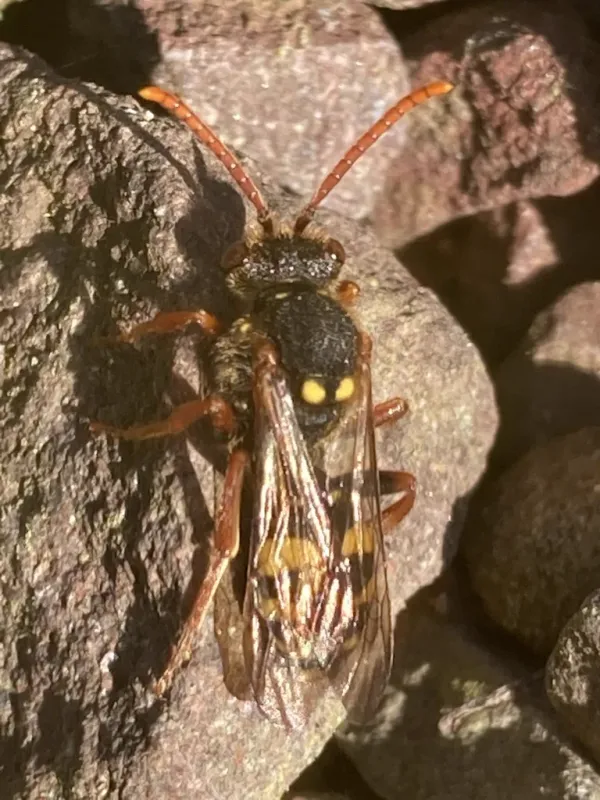
Cuckoo Bees Coloration
Common color patterns to help identify cuckoo bees
Cuckoo Bees
Seasonal Activity
When cuckoo bees are most active throughout the year
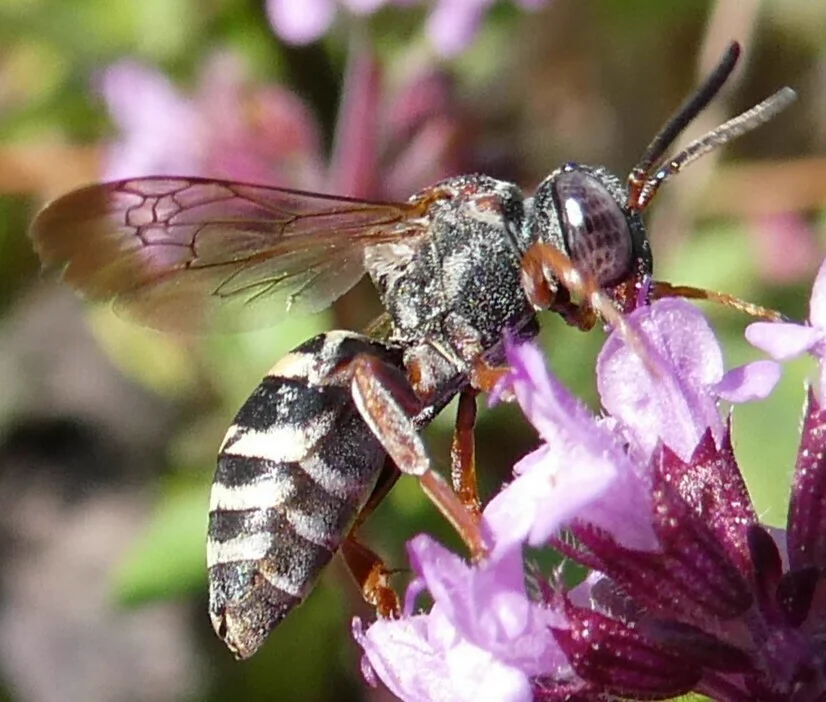
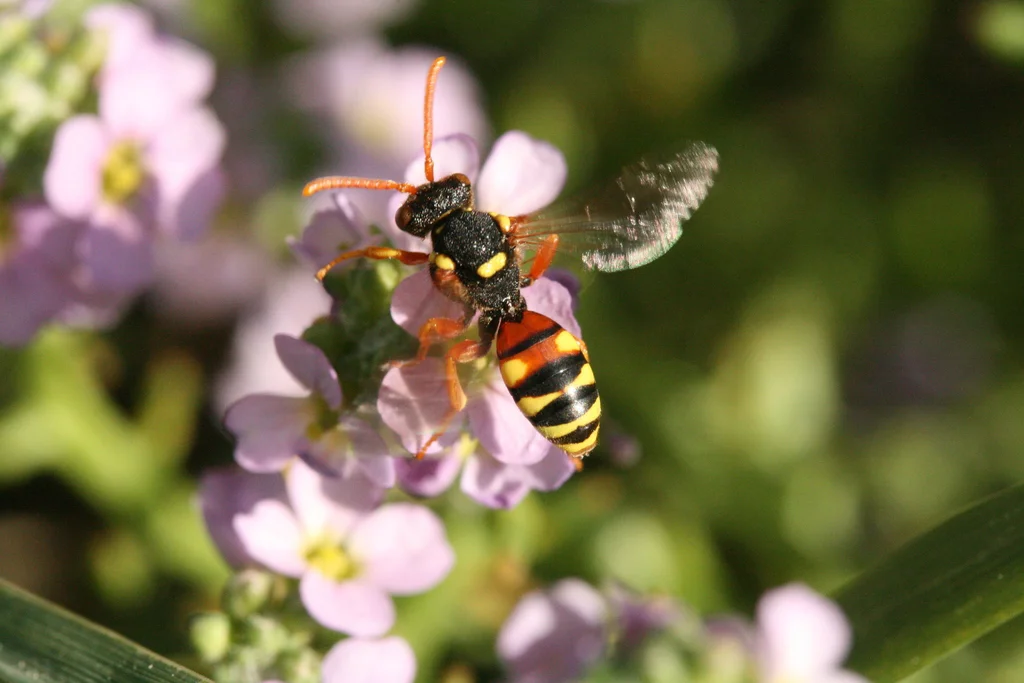
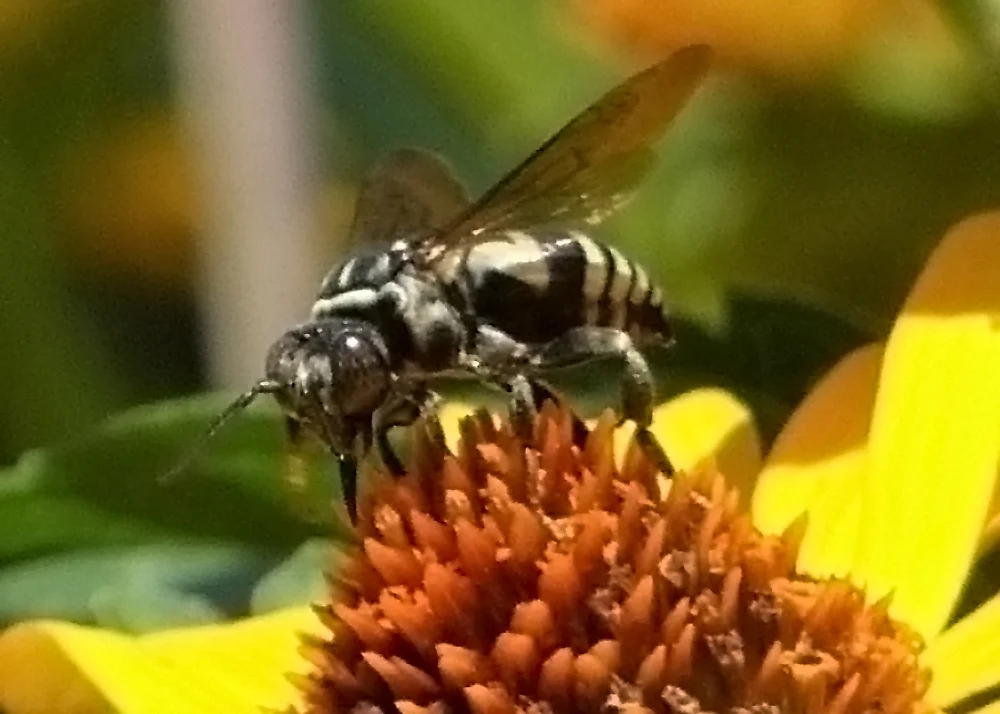

Where Cuckoo Bees Are Found
Hover over states to see their names. Green regions indicate where cuckoo bees have been reported.
Cuckoo Bee Identification Guide
Physical Characteristics
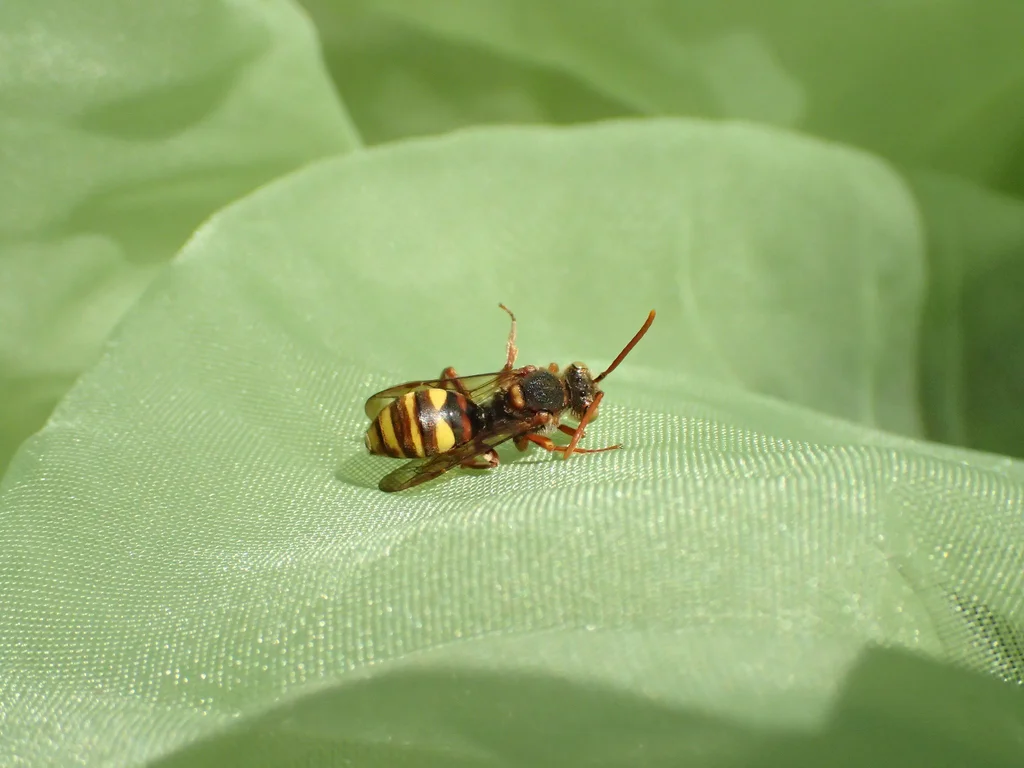
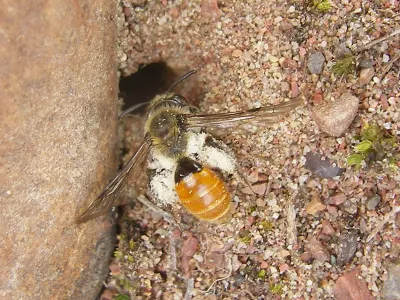
Cuckoo bees look more like wasps than typical bees. Their bodies are mostly smooth and hairless. This makes sense when you understand their biology. Unlike other bees, cuckoo bees do not collect pollen. They have no need for the fuzzy hair that helps pollen-collecting bees carry their loads.
Most cuckoo bees are between 1/4 and 1/2 inch long. Their coloring includes combinations of red, black, yellow, and orange. Many species have banded abdomens that add to their wasp-like appearance. Their wings often have a smoky or dark tint at the tips.
One feature that helps identify cuckoo bees is their thick antennae. They also have heavily pitted thoraxes and a thick cuticle that protects them during conflicts with host bees. Their mandibles are sharp and blade-like, adapted for combat rather than nest-building.
Common Species in North America
There are nearly 300 species of nomad bees (Nomada) in North America alone. The genus Nomada is one of the largest groups of cuckoo bees worldwide.
-
Nomad Bees (Nomada species): The most common cuckoo bees. They primarily parasitize ground-nesting mining bees. Their name comes from the Greek word for “roaming” or “wandering.”
-
Sharptail Bees (Coelioxys species): These cuckoo bees target leafcutter bees. They have pointed abdomens that help them pierce through the leaf wrappings of their hosts’ nests.
-
Blood Bees (Sphecodes species): Small, mostly black and red bees that parasitize sweat bees and mining bees. Their dark coloring makes them easy to overlook.
-
Cuckoo Bumble Bees (Psithyrus species): Large cuckoo bees that invade bumble bee colonies. The female kills or subdues the bumble bee queen and takes over her workers.
Cuckoo Bee Behavior and Biology
The Parasitic Lifestyle
Cuckoo bees are kleptoparasites. This means they steal resources that other bees have collected. A female cuckoo bee enters a host nest while the host is away foraging. She lays her egg inside the host’s brood cell, which contains food the host gathered for her own offspring.
The cuckoo bee egg hatches before or around the same time as the host egg. The cuckoo larva has large, specialized mandibles. It uses these to kill the host larva and any competing cuckoo larvae. The surviving cuckoo larva then eats all the stored pollen and nectar meant for the host’s offspring. A related species, Masked Bees, shares similar characteristics.
Because they never collect pollen or build nests, female cuckoo bees lack the specialized body parts other bees have. They have no scopa (the hairy pollen-carrying structure). They do not produce wax. Their entire adult life focuses on finding and parasitizing host nests.
How They Avoid Detection
Cuckoo bees have evolved several strategies to invade nests without getting caught:
Chemical Mimicry: Research shows that cuckoo bees produce chemical compounds similar to those made by their host species. This helps them avoid detection. The host bee may not recognize the cuckoo as an intruder because it smells familiar.
Timing: Female cuckoo bees observe host nest activity. They wait for the host to leave on a foraging trip before entering. This minimizes the chance of a direct confrontation.
Egg Hiding: Some cuckoo bees bury their eggs at angles into the cell wall. This makes the eggs harder for the host to detect. They may also secrete waterproof compounds around the egg to further conceal it.
Armor: The thick cuticle and heavily sculptured exoskeleton of cuckoo bees protect them during attacks. If caught by an angry host, they are better equipped to survive stings and bites than most other bees.
Lifecycle and Seasonality
Cuckoo bees emerge in spring, usually a few weeks after their host species become active. This timing ensures that host nests are available but not yet sealed. In the DC metro area, you can expect to see cuckoo bees from March through June, with peak activity in April and May.
After mating, female cuckoo bees spend their time searching for host nests. They fly low over the ground, especially in areas with bare or sandy soil where ground bees nest. A single female may parasitize many nests during her adult life.
The cuckoo bee larva develops inside the host nest, feeding on the provisions meant for the host’s offspring. It pupates underground and emerges the following spring as an adult bee ready to continue the cycle.
Cuckoo Bees and Your Yard
Why You See Them
If you notice wasp-like bees flying low over your lawn in early spring, you likely have both cuckoo bees and their hosts present. Cuckoo bees are searching for the ground bee nests hidden in your soil. Seeing cuckoo bees is actually a sign that you have a healthy population of ground-nesting bees like mining bees or sweat bees.
The presence of cuckoo bees does not indicate a pest problem. These bees:
- Do not build nests in structures
- Do not form aggressive colonies
- Rarely sting humans
- Cause no property damage
Their Role in the Ecosystem
Cuckoo bees are a natural part of pollinator communities. In some regions, up to 23% of all bee species are cuckoo bees. They help regulate populations of other solitary bees. This keeps any one species from becoming too dominant.
Cuckoo bee populations depend entirely on their hosts. Any decline in host bee populations directly affects cuckoo bee numbers. Habitat loss and pesticide use threaten both cuckoo bees and the bees they parasitize.
When to Be Concerned
Cuckoo bees do not build nests in structures or form aggressive colonies. They pose no threat to people or property. If you are seeing large numbers of ground-nesting bees near high-traffic areas, the issue is with the host bees (like mining bees), not the cuckoo bees that parasitize them.
If you have questions about the bees in your yard or want help identifying what species you are seeing, we are happy to help. Give us a call at 703-683-2000 and we can help you understand what is living in your landscape.
Cuckoo Bees vs. Similar Insects
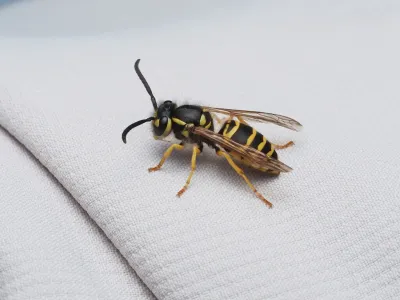
Cuckoo Bees vs. Yellowjackets: Cuckoo bees fly low to the ground searching for nests, while yellowjackets fly more directly. Cuckoo bees have longer antennae and a more slender build. Most importantly, cuckoo bees are solitary and docile, while yellowjackets are colonial and aggressive.
Cuckoo Bees vs. Ground Bees: Ground bees are fuzzy and collect pollen. Cuckoo bees are smooth and hairless. Ground bees create visible nest holes with small soil mounds. Cuckoo bees do not build nests at all.
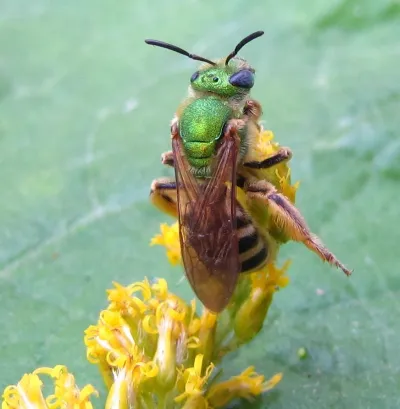
Cuckoo Bees vs. Sweat Bees: Sweat bees are often metallic green and attracted to human sweat. Cuckoo bees are typically red, black, and yellow without metallic coloring. Sweat bees build their own nests while cuckoo bees parasitize others.
References
Other Bees
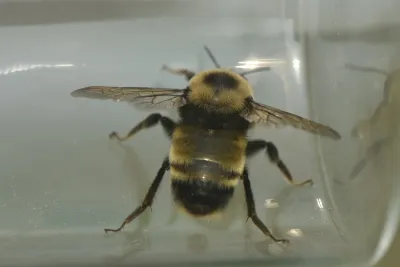
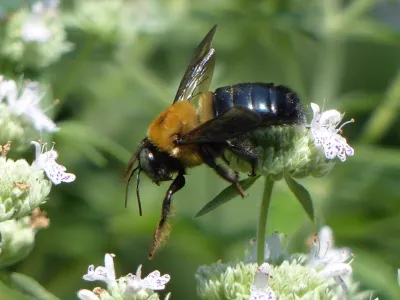
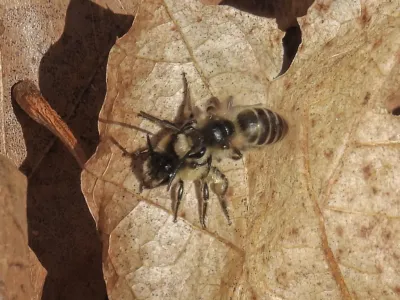
Explore other species in the bees family
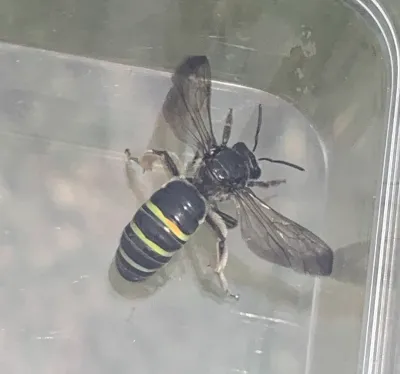
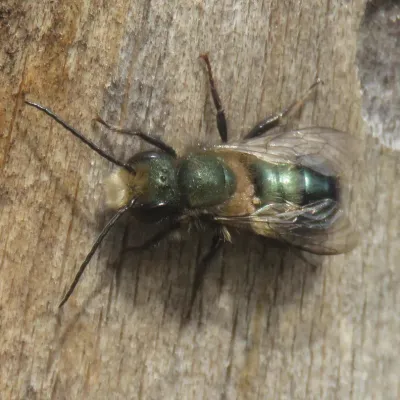
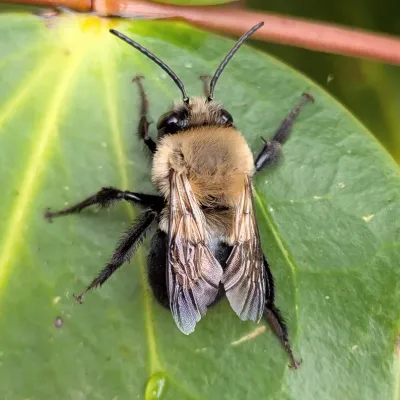
Commonly Confused With
Cuckoo Bees are often mistaken for these similar pests
Where Cuckoo Bees Are Found
Hover over states to see their names. Green regions indicate where cuckoo bees have been reported.
Common Questions about Cuckoo Bees
What is a cuckoo bee?
+
Cuckoo bees are parasitic bees that lay their eggs in the nests of other bee species. Like cuckoo birds, they do not build their own nests or collect pollen. Instead, their larvae eat the food stored by the host bee and kill the host's offspring.
Do cuckoo bees sting?
+
Cuckoo bees rarely sting humans. Female cuckoo bees have stingers but are not aggressive toward people. They save their stingers for defending against host bees that catch them invading nests. You would have to handle one roughly to provoke a sting.
Are cuckoo bees harmful?
+
Cuckoo bees are not harmful to humans or property. They do not build nests in structures, sting people, or cause any damage. They are a natural part of the ecosystem and help regulate populations of other solitary bees.
Why do I see wasp-like bees in my yard?
+
Cuckoo bees look remarkably similar to wasps because they have smooth, hairless bodies with red, black, and yellow markings. If you see small wasp-like insects flying low over your lawn in early spring, they may be cuckoo bees searching for ground bee nests to parasitize.
What bees do cuckoo bees parasitize?
+
In North America, cuckoo bees primarily target mining bees (Andrena species) that nest in the ground. They also parasitize sweat bees, digger bees, and other solitary bee species. Each cuckoo bee species typically specializes in one or a few host species.
How do cuckoo bees find host nests?
+
Female cuckoo bees use visual cues to locate nest entrances by flying low over the ground. They also use chemical signals to identify suitable hosts. Studies show they can detect when a host bee has left to forage and time their nest invasion accordingly.
Should I be concerned about cuckoo bees in my yard?
+
No. Cuckoo bees do not pose any threat to people, pets, or property. Seeing them is actually a sign of a healthy ecosystem with active populations of ground-nesting bees. They do not form colonies or aggressive swarms.
How can I tell a cuckoo bee from a yellowjacket?
+
Cuckoo bees fly low to the ground searching for nests, while yellowjackets fly more directly toward food sources. Cuckoo bees have longer antennae and a more slender body than yellowjackets. Most importantly, cuckoo bees are solitary and non-aggressive, while yellowjackets are colonial and can be very aggressive.

With five years of hands-on experience in the pest control industry, George Schulz is a registered technician with the Virginia Pest Management Association and a proud third-generation professional in a family business that's been protecting homes for over 57 years. He manages and trains a team of service pros while also leading internal research efforts—recently spearheading a deep-dive review of thousands of documents on pest control materials to hand-pick the most kid and pet friendly, most effective solutions tailored specifically for homes in the DC metro area.