Blueberry Bees Identification Guide
Habropoda laboriosa
A solitary, ground-nesting bee that specializes in pollinating blueberry flowers through buzz pollination. Blueberry bees resemble small bumble bees and are not aggressive toward people.
Taxonomy
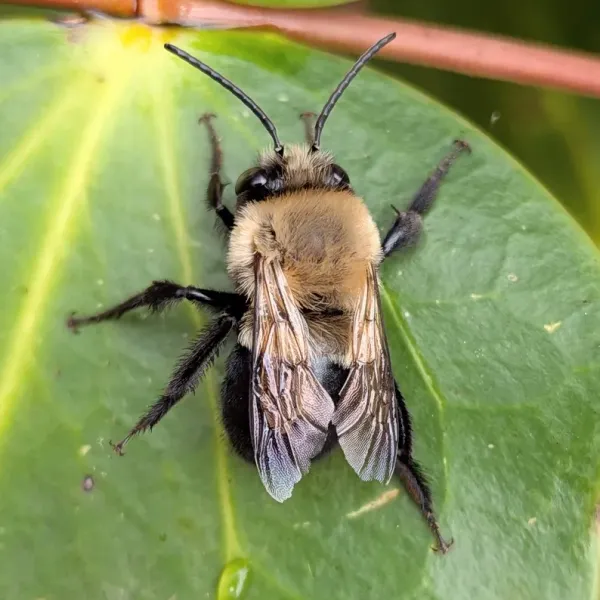
Blueberry Bees Coloration
Common color patterns to help identify blueberry bees
Blueberry Bees
Seasonal Activity
When blueberry bees are most active throughout the year
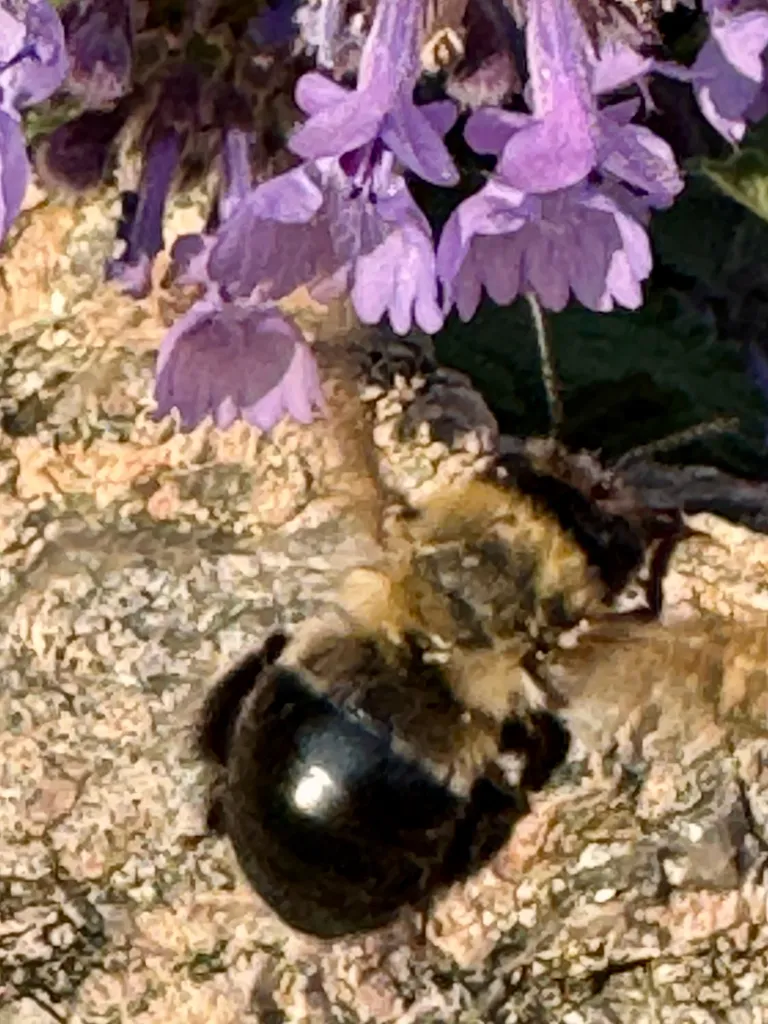

Where Blueberry Bees Are Found
Hover over states to see their names. Green regions indicate where blueberry bees have been reported.
Blueberry Bee Identification Guide
Physical Characteristics
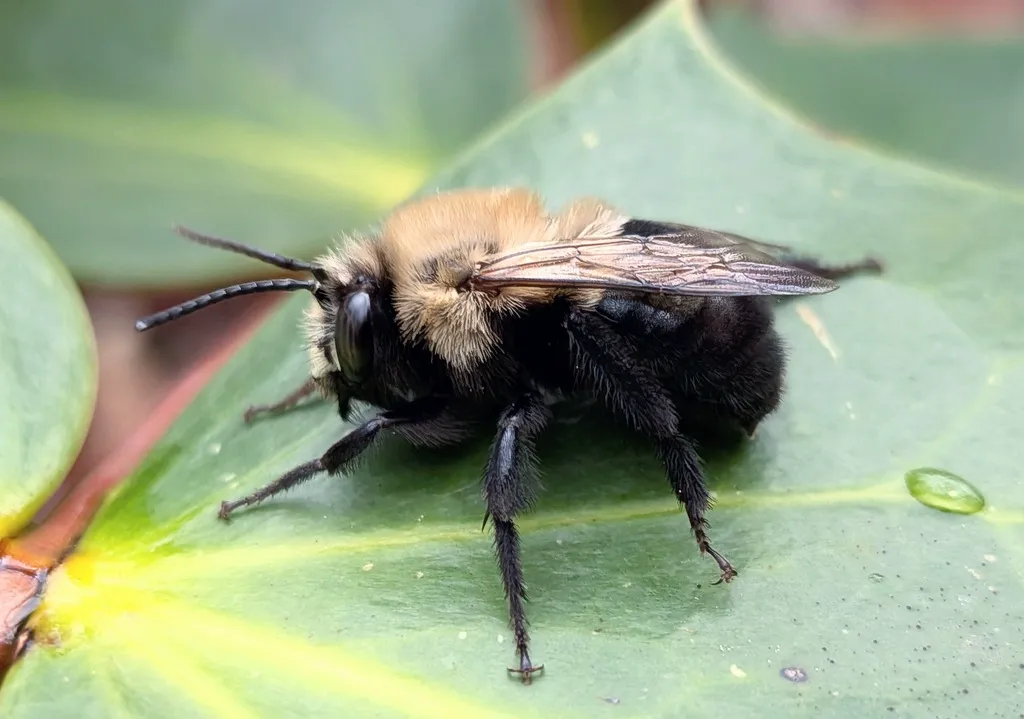
Blueberry bees are about 1/2 to 5/8 inch long. They are a bit smaller than most bumble bees but close in size to a honey bee. Their body is thick and fuzzy, which leads many homeowners to mistake them for small bumble bees.
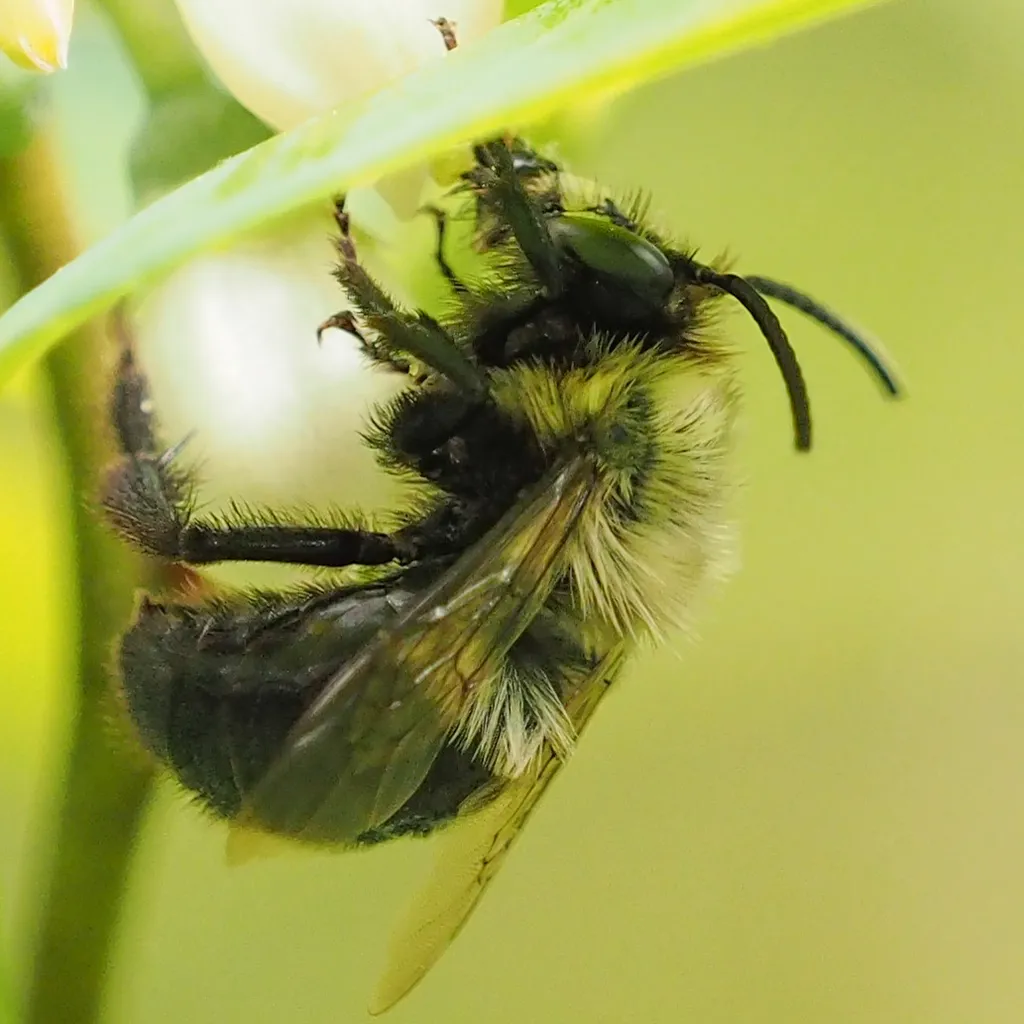
The easiest way to tell them apart is by color. The thorax, or middle body section, is covered in tan or light yellow hair. The abdomen is mostly black and fairly bare compared to bumble bees. A band of light yellow hair sits on the first segment of the abdomen. This creates a clear contrast between the fuzzy front and the darker rear. Males tend to be a bit smaller than females. They often show cream or pale yellow patches on the face.
Blueberry bees have six legs, two pairs of wings, and a pair of antennae. Females have stiff hairs on their back legs called scopal hairs. They use these to carry pollen. Bumble bees pack pollen into smooth leg baskets, but blueberry bees carry loose pollen in their leg hairs instead.
How to Tell Blueberry Bees Apart from Similar Species
Blueberry bees are often confused with bumble bees and carpenter bees. Here are the key differences:
- Bumble bees are larger and have a hairy abdomen with bold color bands, usually yellow and black stripes. Bumble bees live in colonies, while blueberry bees are solitary.
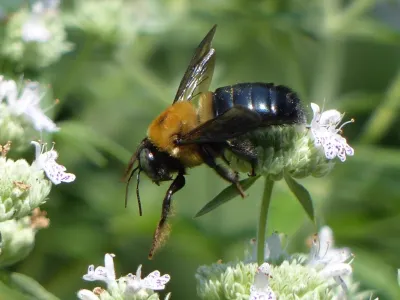
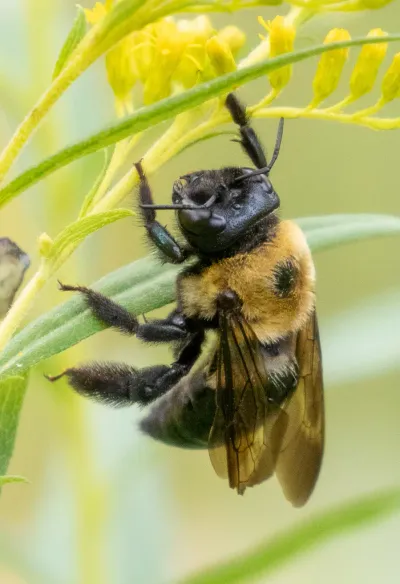
- Carpenter bees are bigger and often have a shiny, hairless black abdomen. They nest in wood, not in the ground. If you see a large bee going into a round hole in wood, that is a carpenter bee.
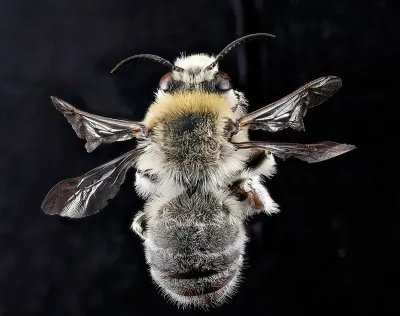
- Digger bees in the genus Anthophora look very similar and are closely related. Telling them apart usually requires a close look at facial features and hair patterns.
Blueberry Bee Behavior and Biology
Blueberry bees are solitary bees. There is no queen, no worker caste, and no shared nest. Each female builds her own underground nest on her own. Even so, they tend to nest in groups. Dozens or hundreds of females may dig their nests in the same patch of bare ground. This can look like a colony, but each bee is working alone.
Nesting Habits
Females dig tunnels in bare, well-drained, sandy or loose soil. They favor sunny field edges, bare spots along paths, sandy banks, and sometimes mulched garden beds. Each tunnel holds a row of brood cells packed with pollen and nectar. The female lays one egg per cell, seals it, and moves on to the next. She repeats this process through her short adult life.
These nesting groups can return to the same spot for years if the soil stays undisturbed. The small entrance holes are about the width of a pencil and are the most obvious sign of nesting.
Diet and Feeding
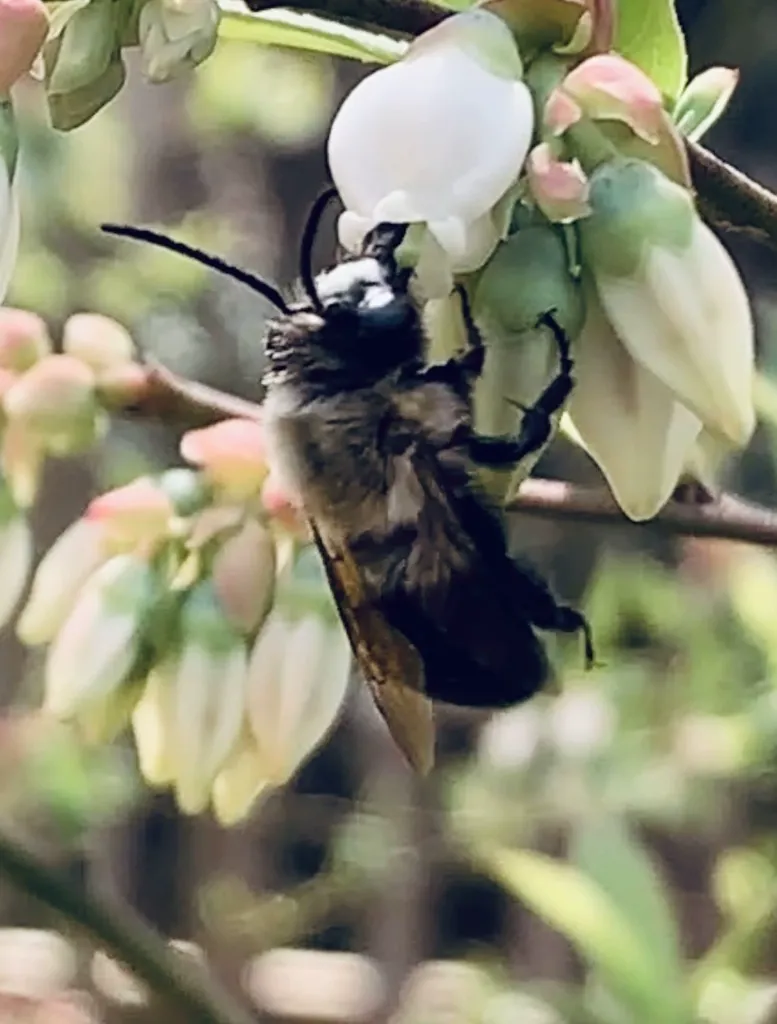
Blueberry bees collect pollen mostly from blueberry plants, both wild and farmed. They may visit a few other early-spring flowers like redbud for nectar, but blueberries are their main food source.
These bees use a feeding method called buzz pollination. The bee grabs a blueberry flower and vibrates its flight muscles at high speed. This shakes pollen loose from inside the flower. Blueberry flowers need this vibration to release their pollen, which is why these bees are closely tied to blueberry plants.
Lifecycle
Blueberry bees produce one generation per year. Most of their life is spent underground as larvae, pupae, or resting adults. The flying adult stage lasts only a few weeks each spring.
Males come out first and fly around nest sites looking for females. After mating, females start digging nests and stocking brood cells. All adults die by late spring. The larvae eat their pollen stores, grow through several stages, and then rest underground through summer, fall, and winter. When the soil warms up the next spring, the cycle starts over.
Treatment Methods for Blueberry Bees
Blueberry bees are solitary, ground-nesting bees that cause no structural damage. They rarely sting and are not aggressive. Still, nesting groups near walkways, patios, or play areas can be a concern for homeowners.
When Treatment May Be Needed
Blueberry bee nesting groups sometimes show up in places that cause problems:
- Walkways and doorways: Nest holes in garden paths or near entries can worry homeowners.
- Play areas: Parents may want to keep bees away from spots where children play on the ground.
- Lawns: Groups of nest holes in a maintained lawn can be unsightly.
Common Treatment Options
Most treatment plans for ground-nesting bees focus on changing the habitat to make the area less attractive for nesting:
- Soil covering: After nesting season ends in late spring, cover the area with landscape fabric, thick mulch, gravel, or a hard surface. This discourages bees from returning the next year.
- Watering: Blueberry bees prefer dry, well-drained soil. Keeping the soil moist through regular watering can push nesting activity elsewhere.
- Insecticidal dust: When applied directly into nest openings, dust products can reduce bee activity in a targeted area. This is best done by a licensed pest control professional who can choose the right product and timing.
- Residual sprays: A pest control professional may apply a residual product around nest entrances to deter new nesting. Timing matters, as treatments work best in early spring when adults are active.
For situations where bees are nesting too close to living spaces, a pest control professional can evaluate the site and recommend the best plan of action.
References
- Southeastern Blueberry Bee: Native Blueberry Pollinator, University of Georgia Extension
- Species Habropoda laboriosa, BugGuide
- Foraging Ecology of the Bee Habropoda laboriosa, Cane and Payne, University of Nebraska
- NatureServe: Distribution Maps of Five Pollinator Species
- Land-use Change and Specialist Bee Ecology, Landscape Ecology, 2024
- Blueberry Bee, Wikipedia
Other Bees
Explore other species in the bees family
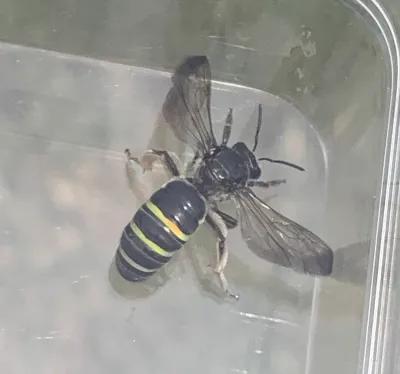
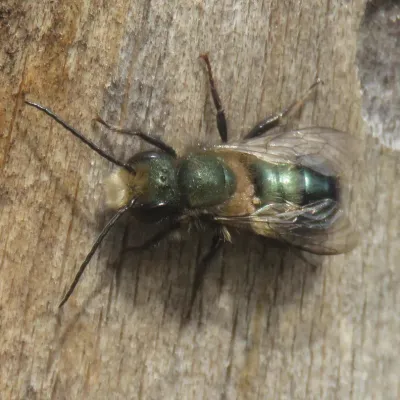
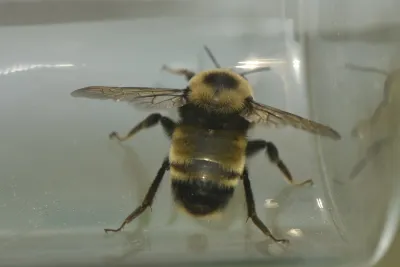
Commonly Confused With
Blueberry Bees are often mistaken for these similar pests
Where Blueberry Bees Are Found
Hover over states to see their names. Green regions indicate where blueberry bees have been reported.
Common Questions about Blueberry Bees
Are blueberry bees dangerous?
+
Blueberry bees are solitary and non-aggressive. They do not guard a colony and will only sting if directly handled or trapped against skin. Males cannot sting at all. Their temperament makes them one of the least threatening bees homeowners might encounter.
How do I identify a blueberry bee?
+
Blueberry bees are roughly the size of a honey bee but fuzzier, resembling a small bumble bee. They have a tan or light yellow thorax, a mostly black and relatively bare abdomen, and a light yellow band of hair on the first abdominal segment. Males often have distinctive cream-colored patches on their face.
Where do blueberry bees nest?
+
Blueberry bees are ground nesters. Females dig tunnels into bare, well-drained, sandy or loose soil. You may find small holes in garden paths, field edges, or bare patches of lawn. Many females often nest close together in aggregations, but each bee works independently.
When are blueberry bees active?
+
Blueberry bees are active for a short window in early spring, typically March through May depending on your region. Their emergence is timed to coincide with blueberry bloom. Adults live only a few weeks, and the rest of the year the next generation develops underground.
Do blueberry bees make honey?
+
No, blueberry bees do not produce honey. They are solitary bees that collect pollen and nectar to provision individual brood cells for their larvae. Unlike honey bees, they do not store surplus food or live in social colonies.
Should I remove blueberry bees from my yard?
+
Blueberry bees pose very little risk to people or property. If nests are in a spot that causes concern, such as a walkway or play area, the simplest fix is to cover the area with mulch, fabric, or gravel after nesting season ends in late spring. A pest control professional can assess the situation and suggest the best approach.
What is the difference between blueberry bees and bumble bees?
+
While they look similar at first glance, blueberry bees are smaller and have a mostly bare black abdomen, while bumble bees have a hairier abdomen with distinct color bands. Bumble bees are social insects that live in colonies, while blueberry bees are solitary. Bumble bees also carry pollen in smooth baskets on their legs, while blueberry bees carry it in scopal hairs.
Why are blueberry bees found near blueberry plants?
+
Blueberry bees rely almost entirely on blueberry flowers for pollen. They use a technique called buzz pollination, where they vibrate their flight muscles to shake pollen loose from the flower. Blueberry flowers need this vibration to release pollen, which is why these bees are so closely tied to blueberry bushes.

With five years of hands-on experience in the pest control industry, George Schulz is a registered technician with the Virginia Pest Management Association and a proud third-generation professional in a family business that's been protecting homes for over 57 years. He manages and trains a team of service pros while also leading internal research efforts—recently spearheading a deep-dive review of thousands of documents on pest control materials to hand-pick the most kid and pet friendly, most effective solutions tailored specifically for homes in the DC metro area.