Blue Orchard Bees Identification Guide
Osmia lignaria
Blue orchard bees are solitary native bees prized for their exceptional pollination abilities, particularly in orchards. These metallic blue-green bees are gentle, rarely sting, and are increasingly used in commercial agriculture as an alternative to honey bees.
Taxonomy
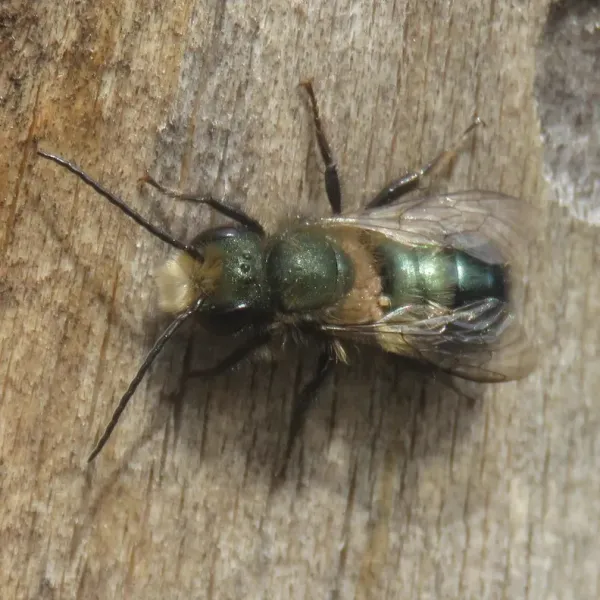
Blue Orchard Bees Coloration
Common color patterns to help identify blue orchard bees
Blue Orchard Bees
Seasonal Activity
When blue orchard bees are most active throughout the year
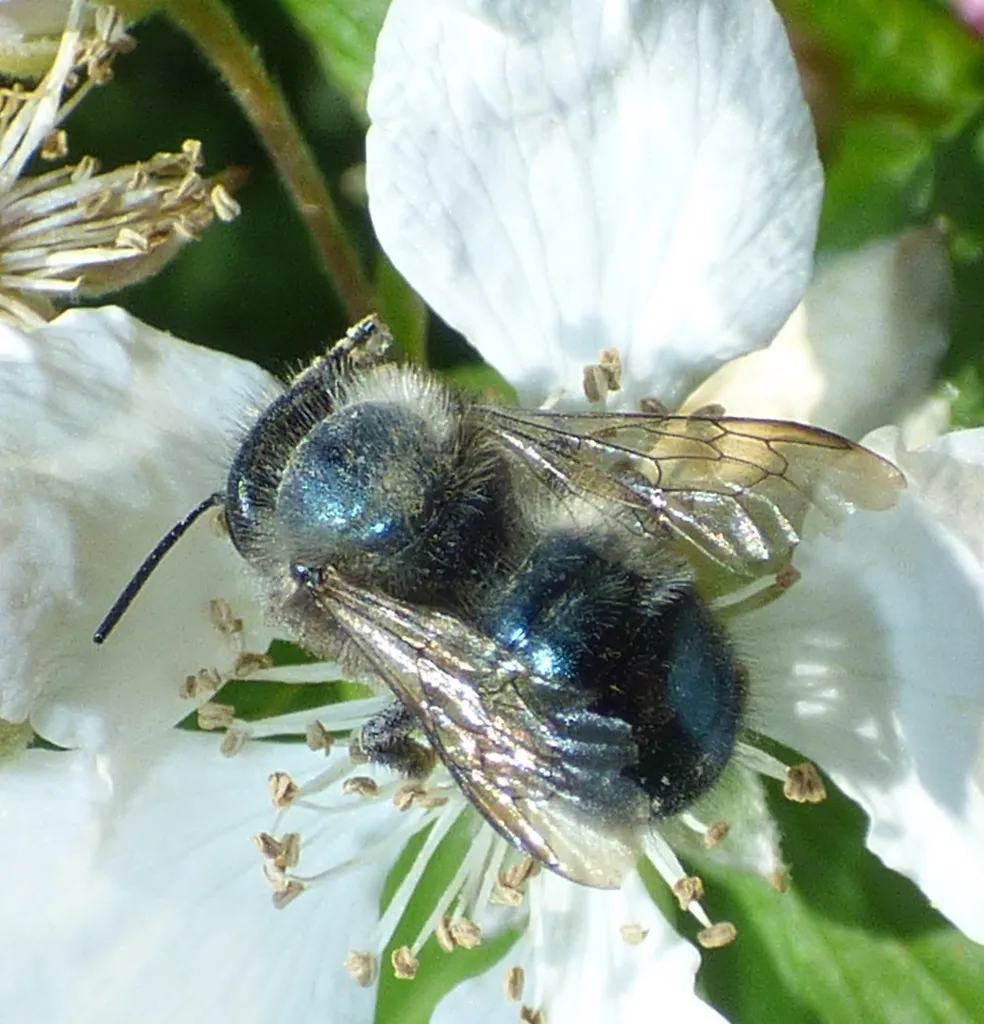
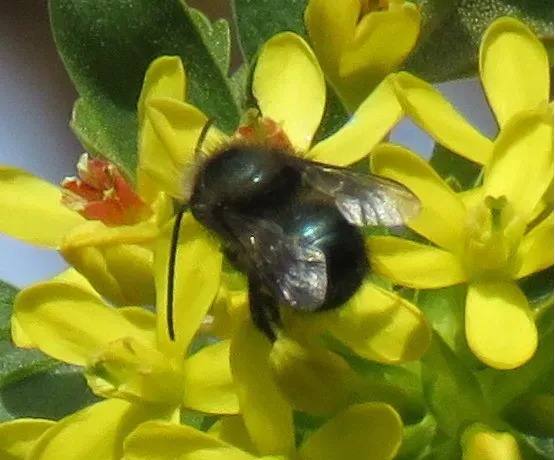
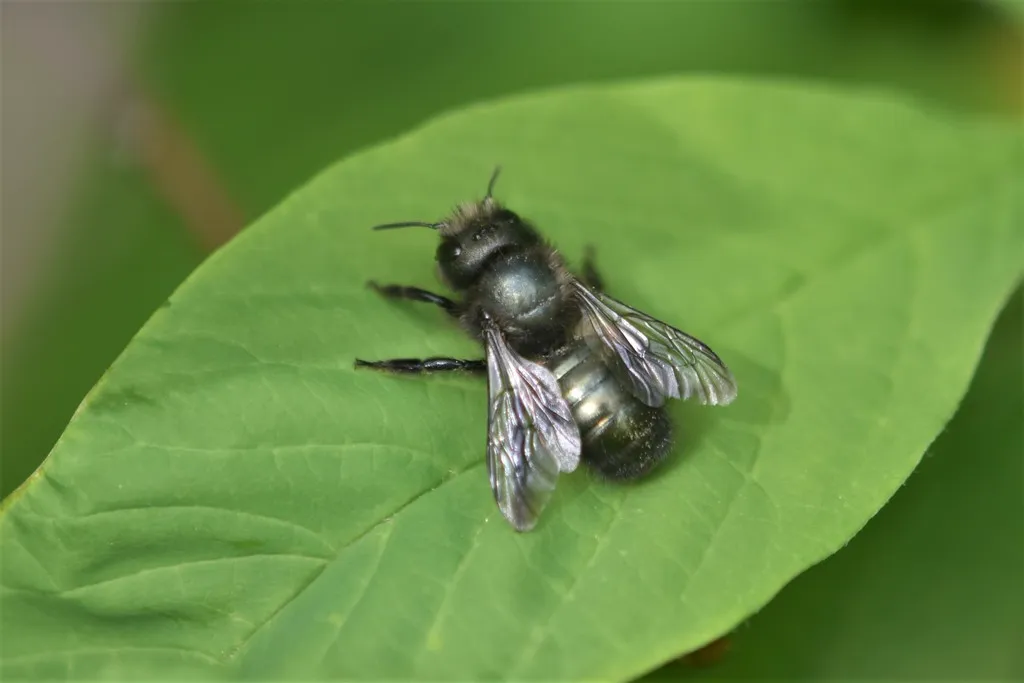

Where Blue Orchard Bees Are Found
Hover over states to see their names. Green regions indicate where blue orchard bees have been reported.
Blue Orchard Bee Identification Guide
Physical Characteristics
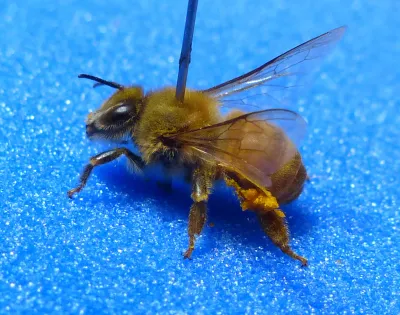
Blue orchard bees are about the same size as honey bees, measuring 11-14mm in length. Their most striking feature is their metallic blue-green color, which covers their entire body and shimmers in sunlight. Unlike honey bees with their familiar striped pattern, blue orchard bees look uniformly dark with a blue shine. Fine hairs cover their bodies to help them collect pollen, and they have two pairs of clear wings.
Female blue orchard bees carry pollen on the underside of their belly in a brush-like area called a scopa, similar to leafcutter bees. This is different from honey bees, which carry pollen in “baskets” on their back legs. Males are a bit smaller than females and have white or pale markings on their faces, along with longer antennae.
Common Species
The blue orchard bee species is divided into two subspecies across North America:
-
Eastern Blue Orchard Bee (Osmia lignaria lignaria) - Found throughout eastern North America, from the Atlantic coast to the Rocky Mountains. This subspecies is common in the Mid-Atlantic region including Virginia, Maryland, and DC.
-
Western Blue Orchard Bee (Osmia lignaria propinqua) - Native to western North America, from the Rocky Mountains to the Pacific coast. This subspecies is particularly important for pollinating almond orchards in California.
Blue Orchard Bee Behavior and Biology
Blue orchard bees live alone rather than in colonies. Each female builds and stocks her own nest without help from other bees. There is no queen or worker system like you find with honey bees. Even so, these bees often nest near each other when good nesting spots are available.
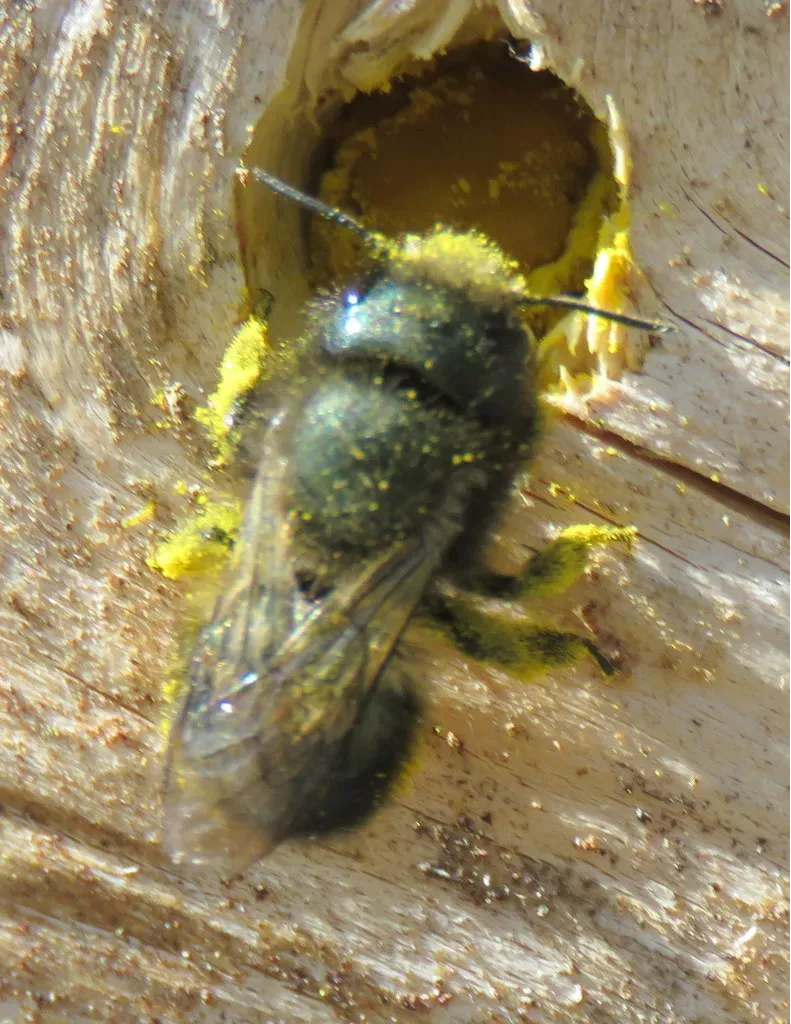
Nesting Behavior A related species, Masked Bees, shares similar characteristics.
These bees nest in holes that already exist rather than making their own. They look for hollow plant stems, old beetle tunnels in dead wood, and holes in cliffs or dirt banks. Blue orchard bees collect mud to build walls between their egg cells, which is why people sometimes call them “mason bees.” A related species, Cuckoo Bees, shares similar characteristics.
When a female finds a good nesting hole, she flies around the entrance to memorize what it looks like so she can find it again. Then she builds a row of cells inside the hole. In each cell, she places a ball of pollen mixed with nectar, lays one egg on top, and seals it with a mud wall before starting the next cell. A single female may fill four to six tubes during her life, with about eight eggs in each tube. A related species, Long-Horned Bees, shares similar characteristics.
Lifecycle
Blue orchard bees have just one generation per year. Adults are active for only 4-6 weeks in early spring, coming out when daytime temperatures reach about 55 to 57 degrees Fahrenheit. This timing matches up perfectly with when many fruit trees bloom, which makes these bees very valuable for pollination.
After mating, females start building nests and laying eggs. Inside each sealed cell, the egg hatches into a larva that eats the stored pollen over several weeks. By early summer, the larva spins a cocoon and changes into an adult bee. These new adults stay inside their cocoons all winter, living off stored body fat. They come out the next spring to start the cycle again.
Pollination Efficiency
Blue orchard bees are amazingly good at pollinating plants. They are “messy” foragers, which means they drop pollen everywhere as they move from flower to flower. According to the USDA Agricultural Research Service, one blue orchard bee can do the pollination work of 50-80 honey bees in an orchard. They also fly and gather food in cooler, cloudier weather when honey bees stay in their hives, making them extra helpful for early spring crops.
Why Blue Orchard Bees Are Beneficial
Blue orchard bees play an important role in nature and farming. As native bees, they have evolved alongside North American plants and are well-suited to local conditions. Their early spring activity makes them key pollinators for:
- Fruit trees - Apples, cherries, plums, pears, peaches, and almonds
- Berry bushes - Blueberries and other early-blooming berries
- Native wildflowers - Many spring ephemeral flowers depend on early-season pollinators
Unlike honey bees, which came from Europe and are managed by beekeepers, blue orchard bees are part of our natural pollinator community. Helping their numbers grow keeps our ecosystem in balance. This is especially important as honey bee populations struggle with diseases, parasites, and pesticides.
How to Support Blue Orchard Bees
Because blue orchard bees are beneficial native pollinators, we encourage homeowners to support rather than eliminate them. Here are ways to create habitat for these valuable insects:
-
Install bee houses - Commercial mason bee houses with paper tubes or drilled wood blocks provide excellent nesting habitat. Place them facing east or southeast to catch morning sun.
-
Provide mud sources - Blue orchard bees need mud to construct their nest cells. A small area of bare, moist soil near their nesting site helps them thrive.
-
Plant early-blooming flowers - Include native plants and fruit trees that bloom in early spring when blue orchard bees are active.
-
Avoid pesticides during bloom - If using any pesticides in your garden, avoid applying them while flowers are blooming to protect foraging bees.
If you find blue orchard bees nesting around your home and have concerns, please contact us for guidance. We can help you understand their behavior and suggest ways to coexist with these gentle, beneficial insects rather than removing them.
References and Additional Reading
Other Bees
Explore other species in the bees family
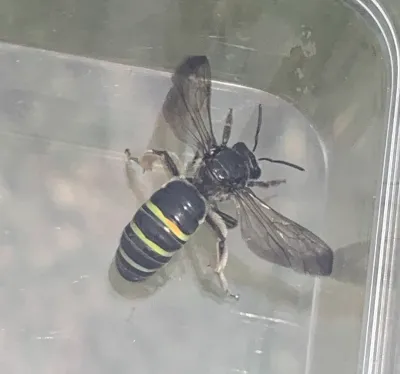
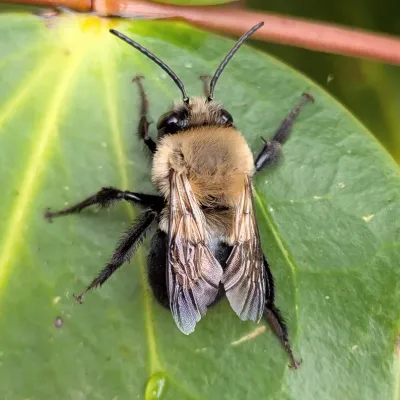
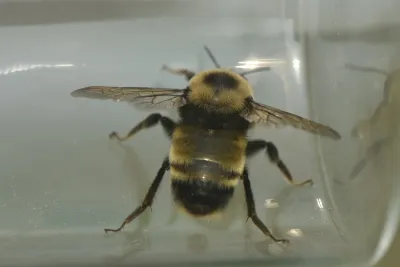
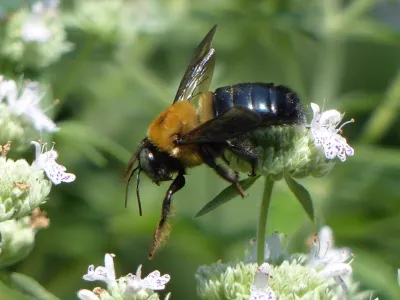
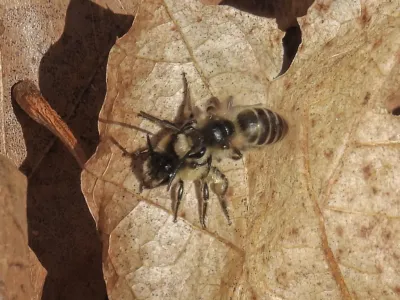
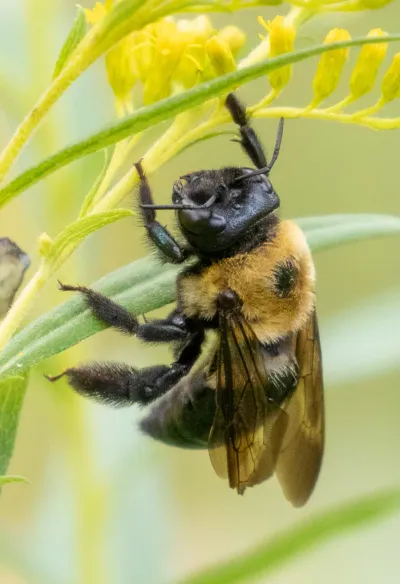
Commonly Confused With
Blue Orchard Bees are often mistaken for these similar pests
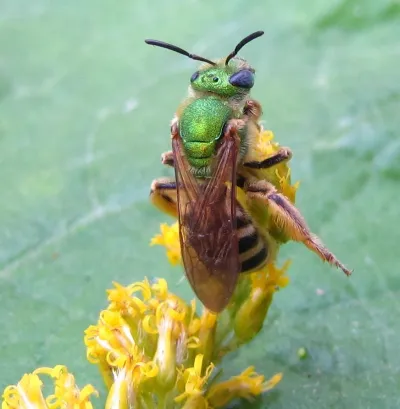
Where Blue Orchard Bees Are Found
Hover over states to see their names. Green regions indicate where blue orchard bees have been reported.
Common Questions about Blue Orchard Bees
Are blue orchard bees dangerous?
+
Blue orchard bees are extremely gentle and rarely sting. Unlike honey bees, they are solitary and do not have a colony to defend, so they pose very little threat to humans. Even when handled, they typically do not sting unless squeezed or stepped on.
How can I tell a blue orchard bee from a carpenter bee?
+
Blue orchard bees are smaller (about 11-14mm) with a metallic blue-green sheen covering their entire body. Carpenter bees are larger (19-25mm) with a shiny, hairless black abdomen, while their thorax may be fuzzy and yellow. Carpenter bees also bore into wood, while blue orchard bees nest in existing holes.
Do blue orchard bees make honey?
+
No, blue orchard bees do not produce honey. They are solitary bees that collect pollen and nectar only to provision individual cells for their offspring, not to create honey stores like social honey bees.
Why are blue orchard bees beneficial?
+
Blue orchard bees are exceptional pollinators, far more efficient than honey bees for fruit tree crops. A single blue orchard bee can pollinate the equivalent of what takes 50-80 honey bees to accomplish, making them invaluable for orchards growing apples, cherries, almonds, and other fruit trees.
Can I attract blue orchard bees to my garden?
+
Yes, you can attract blue orchard bees by providing nesting habitat such as bee houses with tubes or drilled wood blocks, and by planting early-blooming flowers and fruit trees. They are active in early spring when temperatures reach about 55 degrees Fahrenheit.
Do blue orchard bees damage structures?
+
No, blue orchard bees do not damage structures. Unlike [carpenter bees](/pests/bees/carpenter-bees/), they cannot drill holes in wood. They use existing cavities, hollow stems, or pre-made bee houses for nesting and seal their cells with mud rather than excavating.
How long do blue orchard bees live?
+
Adult blue orchard bees are active for only 4-6 weeks in early spring. Females spend this time mating, foraging, and laying eggs. The larvae develop inside their cells over summer, pupate, and then overwinter as adults inside their cocoons until the following spring.

With five years of hands-on experience in the pest control industry, George Schulz is a registered technician with the Virginia Pest Management Association and a proud third-generation professional in a family business that's been protecting homes for over 57 years. He manages and trains a team of service pros while also leading internal research efforts—recently spearheading a deep-dive review of thousands of documents on pest control materials to hand-pick the most kid and pet friendly, most effective solutions tailored specifically for homes in the DC metro area.