Water Boatmen Identification Guide
Corixidae
Water boatmen are small aquatic insects that swim right-side up in pools, ponds, and lakes. Unlike their look-alike relatives the backswimmers, water boatmen feed on algae and do not bite humans.
Taxonomy
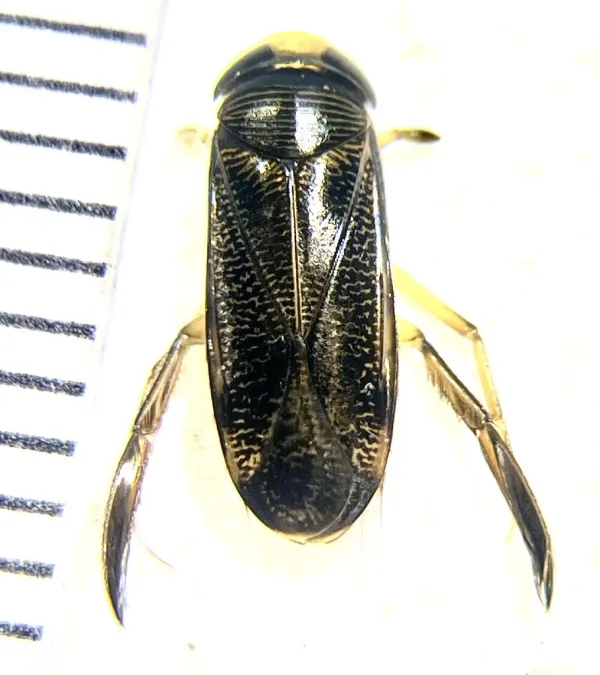
Water Boatmen Coloration
Common color patterns to help identify water boatmen
Water Boatmen
Seasonal Activity
When water boatmen are most active throughout the year
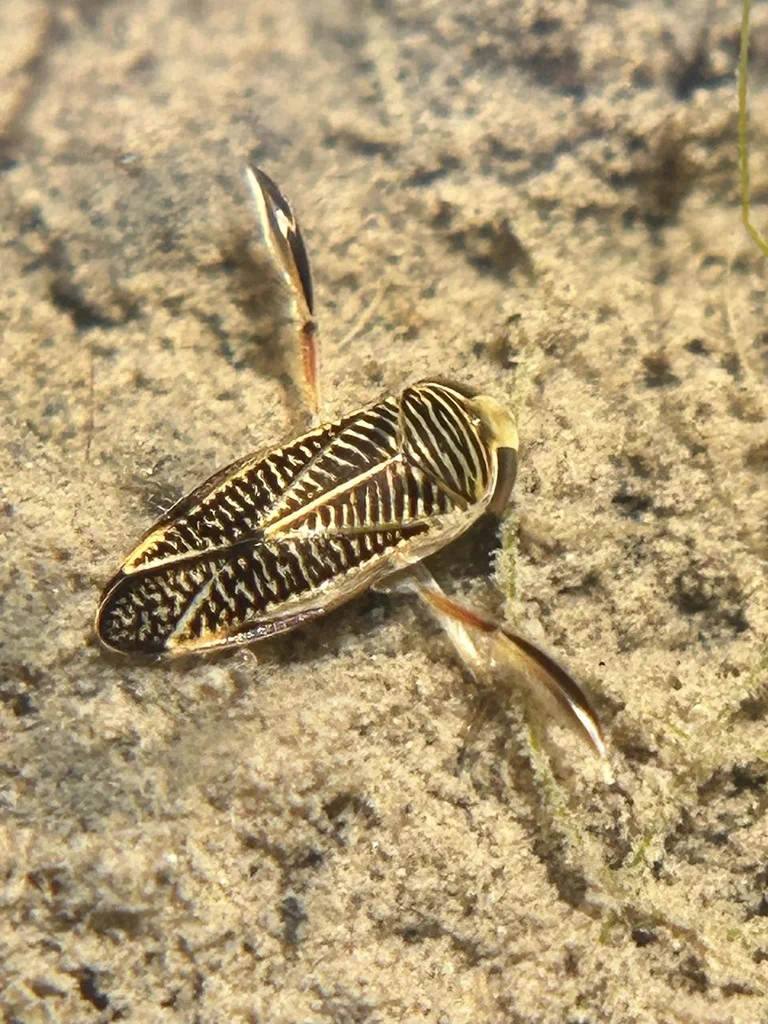
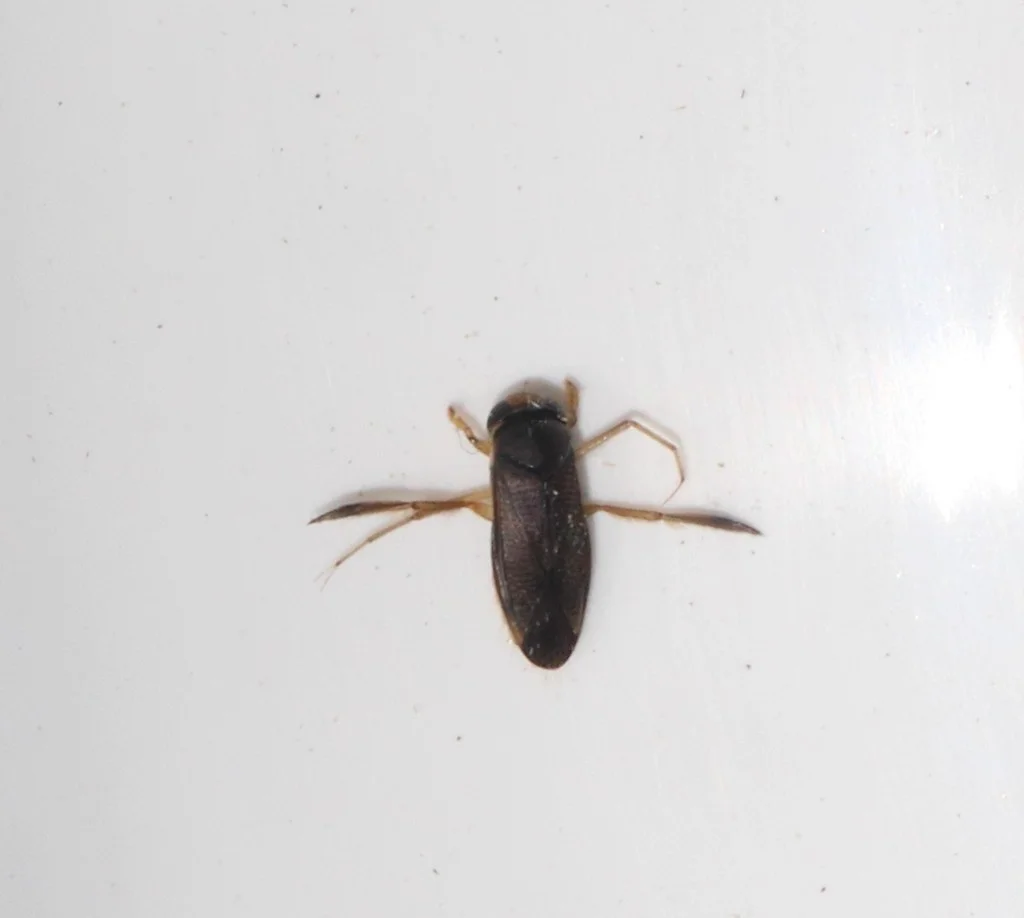
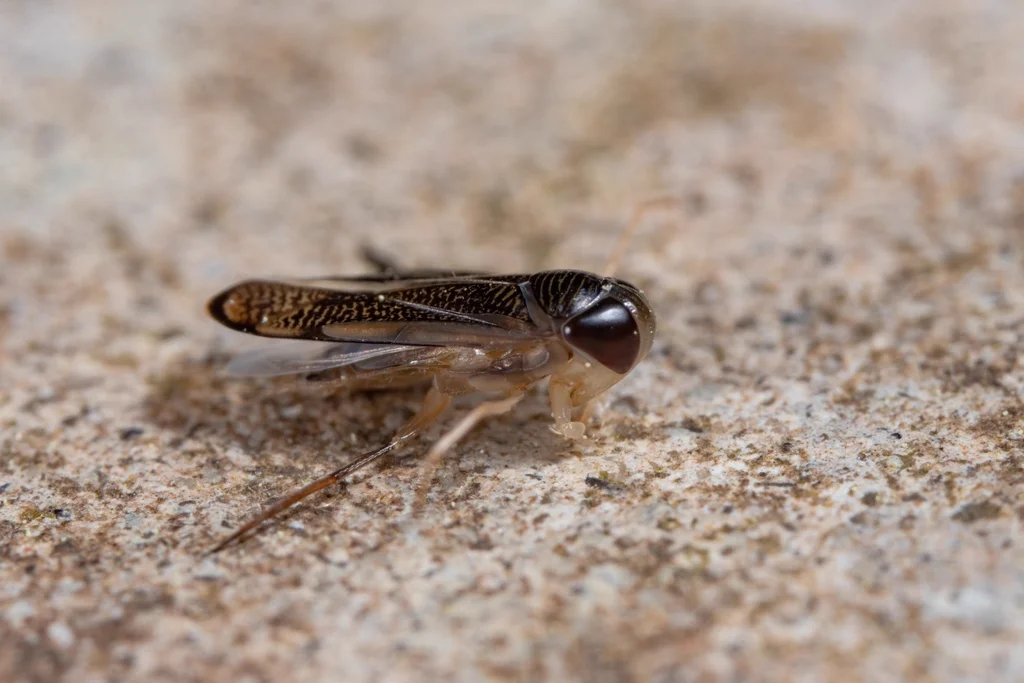

Where Water Boatmen Are Found
Hover over states to see their names. Green regions indicate where water boatmen have been reported.
Water Boatmen Identification Guide
Physical Characteristics
Water boatmen are small aquatic insects that measure between 3 and 12 millimeters long. Their bodies are oval and somewhat flattened, shaped like a tiny boat. This shape, combined with their rowing motion through water, gives them their common name.
The coloring of water boatmen is mostly brown or tan with darker markings. Many species have fine lines or patterns across their wings that look like tiny stripes. Their heads are broad and blunt. Unlike many insects, their eyes do not bulge out much from the head.
Water boatmen have three pairs of legs, each designed for a different job. The front legs are short and scoop-shaped, used to gather food. The middle legs are longer and help them hold onto surfaces underwater. The back legs are the longest. They are flat with fringes of tiny hairs that work like oars to push them through the water.
One key feature sets water boatmen apart from the similar backswimmers: water boatmen swim right-side up with their dark back facing the sky. They also carry an air bubble along their underside that gives them a silvery look underwater.
Common Species
Over 300 species of water boatmen live in North America. The genus Sigara contains many of the most common species found in pools and ponds across the United States and Canada. Hesperocorixa is another common genus, with species found throughout eastern North America.
Corisella species are common in the western states. Trichocorixa species are often found in brackish or salty water, making them common along coastal areas. Most water boatmen that homeowners encounter in pools belong to one of these common groups.
All species share the same general body shape and swimming style. Size and exact color patterns vary between species, but the differences are subtle. For practical purposes, all water boatmen behave the same way and respond to the same control methods.
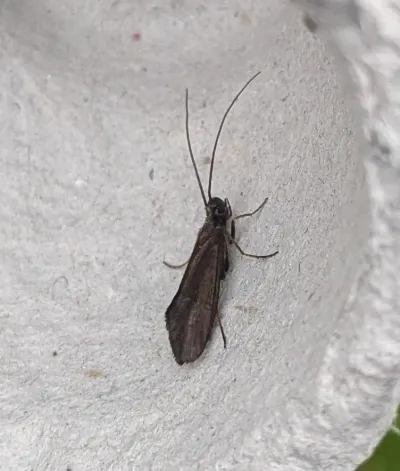
Water Boatmen Behavior and Biology A related species, Caddisflies, shares similar characteristics.
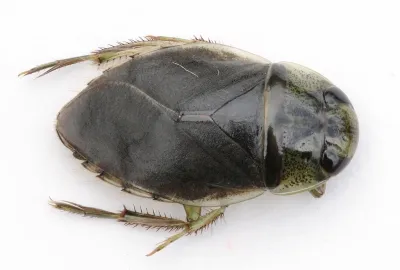
Water boatmen spend nearly all their lives in water. They live in ponds, lakes, streams, ditches, and any standing water with plant growth. They also frequently show up in swimming pools, birdbaths, and water features around homes. A related species, Water Scorpions, shares similar characteristics.
Unlike their predatory relatives the backswimmers, water boatmen are primarily vegetarians. They feed on algae, diatoms, and decaying plant matter. They use their scoop-shaped front legs to rake food from surfaces and bring it to their mouths. Some species also eat mosquito larvae and other tiny organisms. A related species, Creeping Water Bugs, shares similar characteristics.
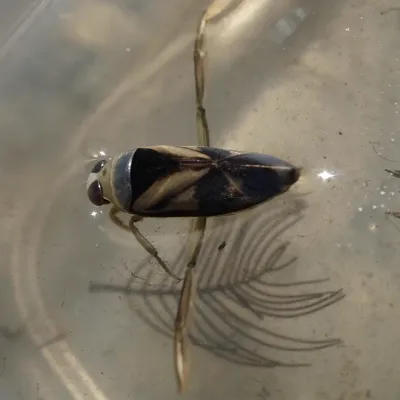
Water boatmen breathe air but spend most of their time underwater. They trap a bubble of air under their wings and against their body. This bubble acts like a scuba tank, letting them stay submerged for long periods. The silvery appearance of water boatmen swimming underwater comes from this air layer. They must return to the surface regularly to refresh their air supply. A related species, Giant Water Bugs, shares similar characteristics.
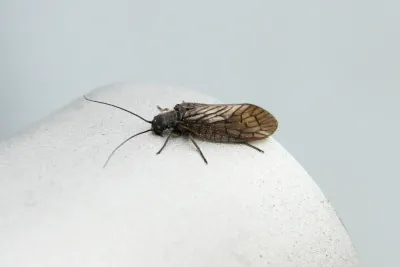
These insects are strong fliers. They leave the water, usually at night, to find new habitats. They navigate by the reflection of moonlight on water. Artificial lights near pools and ponds attract them. This flight ability explains why water boatmen can appear suddenly in a clean pool overnight. A related species, Alderflies, shares similar characteristics.
Life Cycle A related species, Mayflies, shares similar characteristics.
Water boatmen go through incomplete metamorphosis with three life stages: egg, nymph, and adult. Females lay eggs on underwater plants or other submerged surfaces in spring and early summer. A single female may lay several hundred eggs over her lifetime.
Eggs hatch within one to two weeks depending on water temperature. The nymphs look like small versions of adults but lack fully developed wings. They go through five molts over several weeks before reaching adult size. Adults can live for several months up to a year.
In warmer climates, water boatmen may produce multiple generations per year. In northern areas, they typically have one or two generations. Adults can survive cold winters by staying in deeper water or mud at the bottom of ponds where temperatures stay above freezing.
Treatment Approaches for Water Boatmen
Water boatmen are pool pests, not household pests. They do not enter homes or cause property damage. They are harmless to humans since they do not bite. The goal is to make your pool unappealing to them and remove those already present.
Effective approaches for reducing water boatmen include:
-
Eliminate algae: Water boatmen come to pools to eat algae. Even a thin layer of algae invisible to your eye can attract them. Brush pool walls and floors regularly. Shock the pool to kill algae. Use algaecide as directed to prevent regrowth. Without food, water boatmen will leave.
-
Maintain proper chemistry: Keep chlorine levels between 1 and 3 parts per million. Maintain pH between 7.2 and 7.6. Test water at least twice per week during summer. Balanced chemistry prevents algae and makes the pool less hospitable to aquatic insects.
-
Run the filter: Run your pool filter for 8 to 12 hours daily during summer. This circulates water and prevents stagnation that algae need to grow. Clean or backwash the filter regularly to keep it working well.
-
Skim daily: Use a pool skimmer to remove water boatmen from the surface. Check the pool each morning and evening. Regular skimming removes insects before they can reproduce or attract predators like backswimmers.
-
Reduce nighttime lighting: Water boatmen fly toward lights reflecting on water. Turn off pool lights when not using the pool. Move landscape lighting away from the pool area. Consider motion-activated lights instead of ones that stay on all night.
-
Use a pool cover: A cover keeps water boatmen out when you are not using the pool. It also blocks light and slows algae growth. Solid covers work better than mesh covers for keeping insects out.
-
Vacuum the pool: Regular vacuuming removes algae and debris that water boatmen feed on. It also removes any eggs or nymphs present. Pay special attention to corners and areas with poor circulation.
In natural ponds, water boatmen eat algae and feed on mosquito larvae. If they are not causing a nuisance, removal may not be needed in these settings.
References
Other Aquatic Insects
Explore other species in the aquatic insects family
Commonly Confused With
Water Boatmen are often mistaken for these similar pests
Where Water Boatmen Are Found
Hover over states to see their names. Green regions indicate where water boatmen have been reported.
Common Questions about Water Boatmen
Why are water boatmen in my pool?
+
Water boatmen are attracted to pools because they feed on algae and microscopic organisms. A pool with algae growth, even small amounts not visible to the eye, will attract them. They also fly at night and are drawn to the reflection of lights on water. Keeping your pool properly chlorinated and algae-free reduces their attraction.
Do water boatmen bite?
+
No, water boatmen do not bite humans. Unlike their look-alike relatives the backswimmers, water boatmen feed on algae and plant material rather than other insects. They are harmless and will not sting or bite you while swimming.
What is the difference between water boatmen and backswimmers?
+
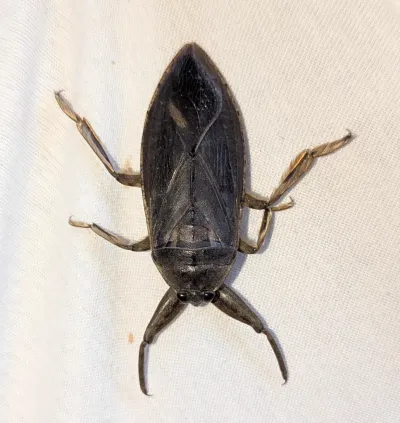
Water boatmen swim right-side up with their dark back facing upward, while backswimmers swim upside down with their light belly facing up. Water boatmen feed on algae and do not bite, while backswimmers are predators that can deliver a painful bite similar to a bee sting.
Are water boatmen harmful to my pool?
+
Water boatmen are not harmful to pools or pool equipment. They do not damage pool liners, filters, or pumps. However, their presence often indicates algae growth that you should address. They are mostly a nuisance rather than a real problem.
How do I get rid of water boatmen in my pool?
+
Remove their food source by eliminating algae. Brush pool walls and vacuum regularly. Maintain proper chlorine and pH levels. Skim the surface daily to remove the insects themselves. Turn off pool lights at night to reduce attraction. Using an algaecide can help eliminate the algae they feed on.
Can water boatmen fly?
+
Yes, water boatmen are strong fliers. They typically fly at night to find new water sources and are attracted to lights reflecting off water surfaces. This is why they often appear suddenly in pools, especially newly filled ones or pools with nearby lighting.
What do water boatmen eat?
+
Water boatmen feed on algae, aquatic plants, and decaying organic matter. They use their scoop-shaped front legs to gather food from the bottom and sides of pools and ponds. Some species also eat mosquito larvae and other tiny organisms.

With five years of hands-on experience in the pest control industry, George Schulz is a registered technician with the Virginia Pest Management Association and a proud third-generation professional in a family business that's been protecting homes for over 57 years. He manages and trains a team of service pros while also leading internal research efforts—recently spearheading a deep-dive review of thousands of documents on pest control materials to hand-pick the most kid and pet friendly, most effective solutions tailored specifically for homes in the DC metro area.