Pavement Ants Identification Guide
Tetramorium immigrans
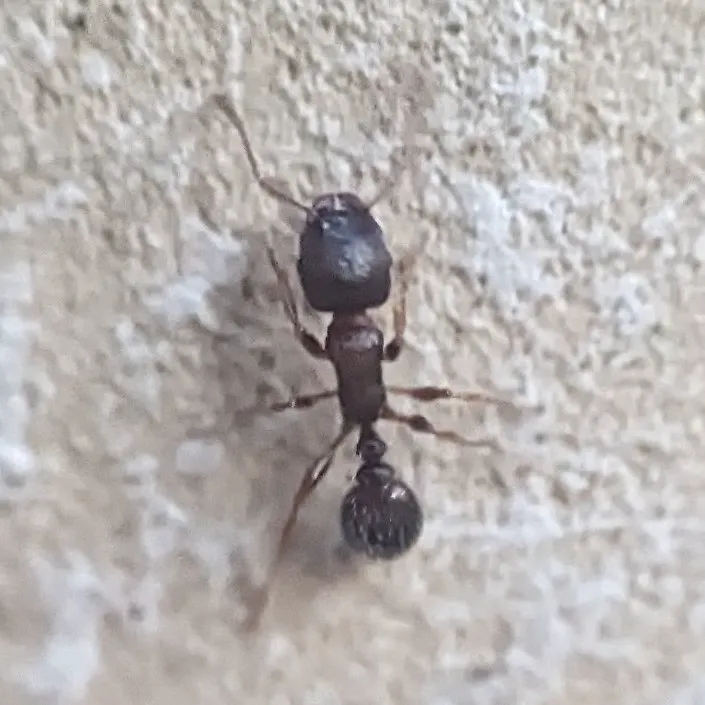
Pavement ants are small dark brown to black ants commonly found nesting under sidewalks, driveways, and foundations. They create distinctive crater-like mounds of excavated soil and are known for their territorial battles in late spring. One of the most common ant pests in urban and suburban areas across North America.
Taxonomy
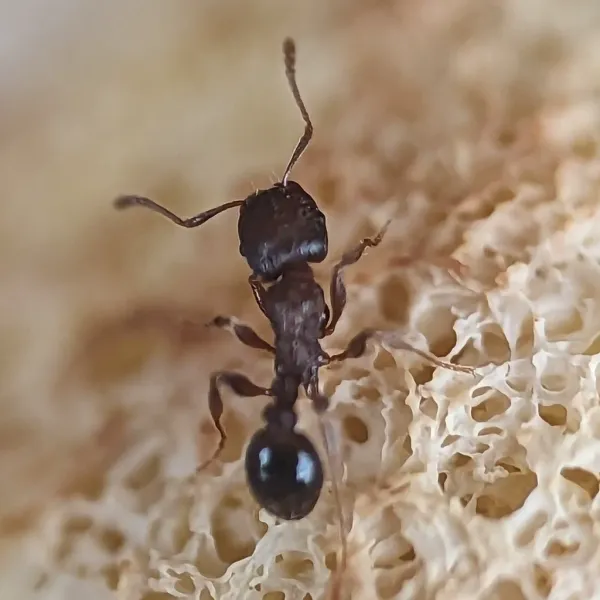
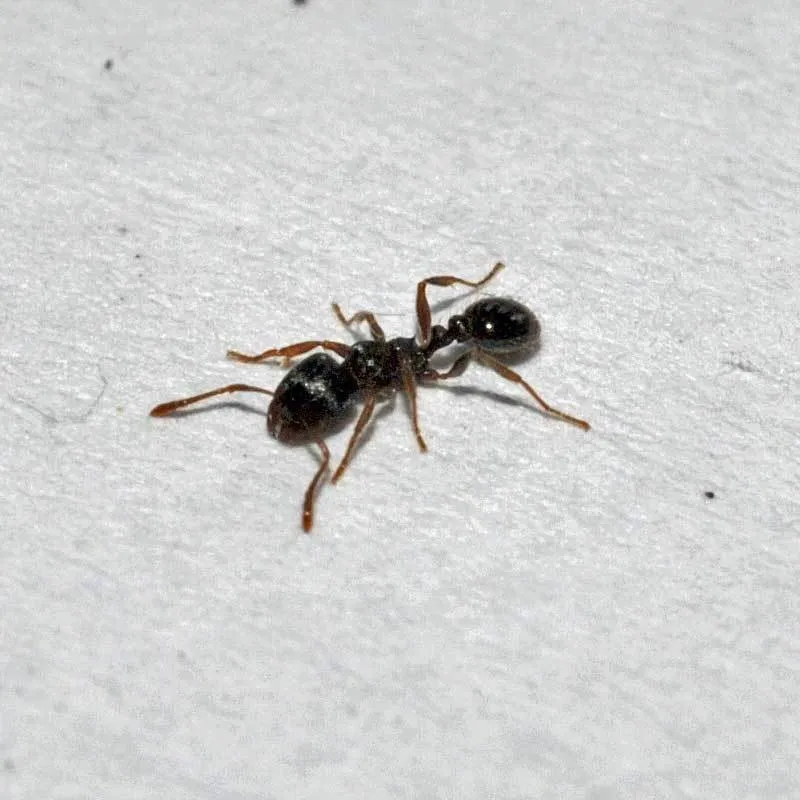
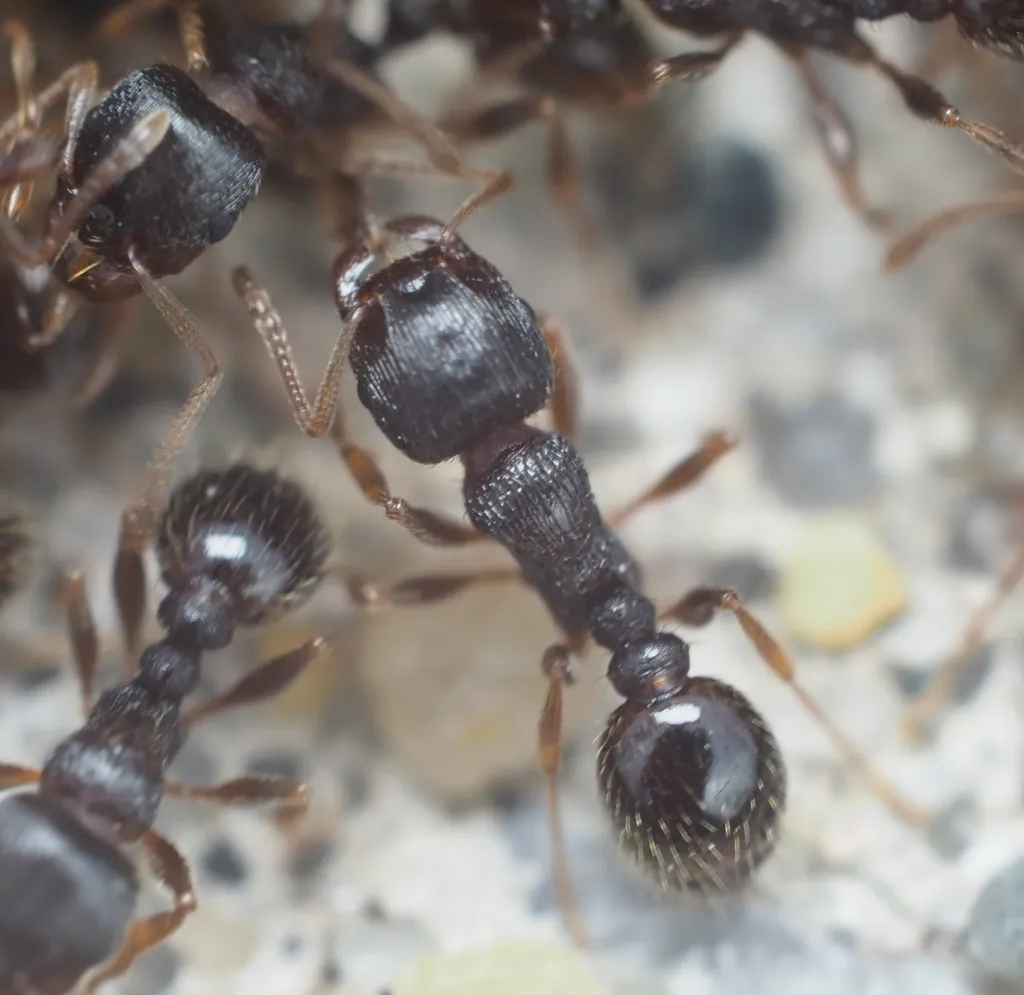
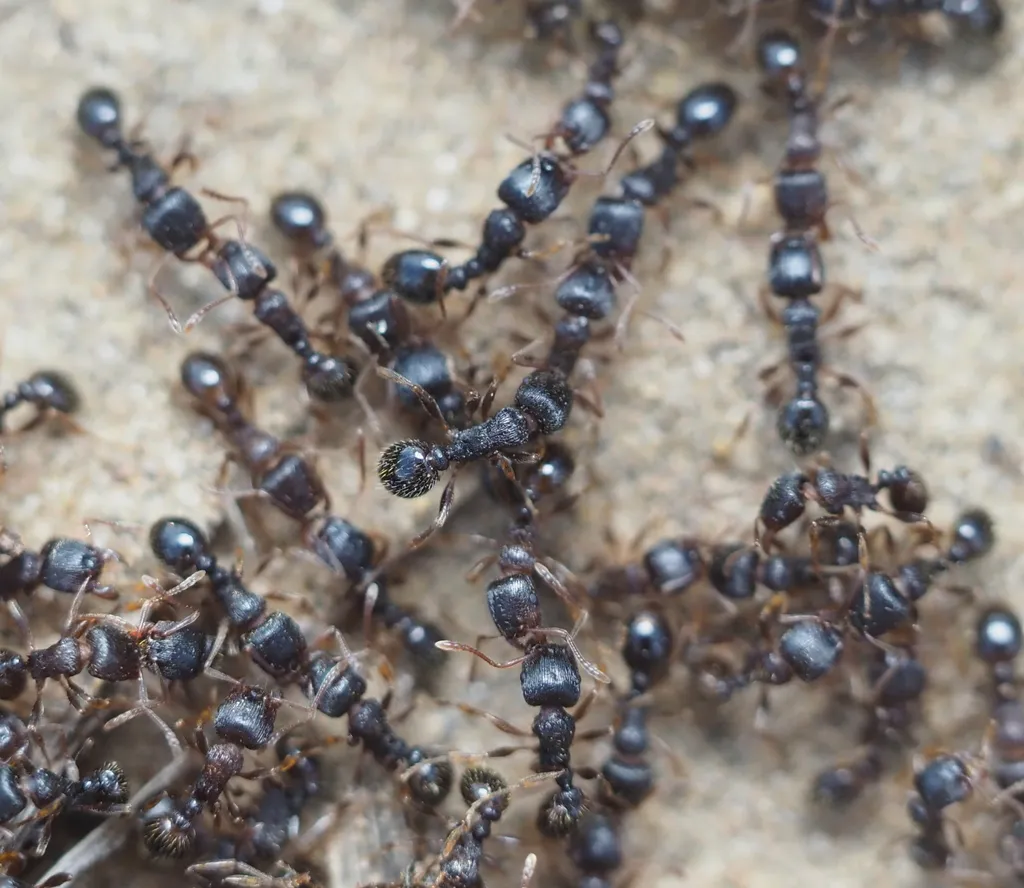
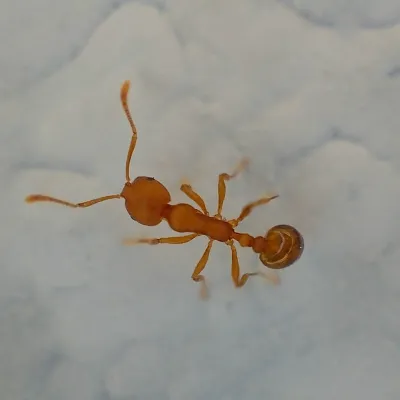
Pavement Ants Coloration
Common color patterns to help identify pavement ants
Pavement Ants
Seasonal Activity
When pavement ants are most active throughout the year

Where Pavement Ants Are Found
Hover over states to see their names. Green regions indicate where pavement ants have been reported.
Pavement Ants Identification Guide
Pavement ants are among the most common ant pests in urban and suburban areas across North America. Named for their habit of nesting under sidewalks, driveways, and patios, these small ants are easily recognized by the distinctive dirt mounds they create along pavement cracks and foundation edges.
Recent taxonomic research has identified the pavement ant in North America as Tetramorium immigrans, a species introduced from Europe. You may still see older references using Tetramorium caespitum, but modern studies confirm that the pavement ant established across the United States and Canada is T. immigrans.
Physical Characteristics
Pavement ants are small. Workers measure about 2.5 to 4 mm (roughly 1/8 inch) long. Their bodies range from dark brown to nearly black, with slightly lighter legs and antennae. Queens are considerably larger, reaching 7-8 mm.
Under magnification, pavement ants have several distinctive features:
- Parallel grooves (rugae) on the head and thorax that look like fine lines or ridges
- A pair of small spines on the back of the thorax (propodeum)
- Two nodes (small bumps) between the thorax and abdomen
- 12-segmented antennae ending in a 3-segmented club
These features distinguish pavement ants from other common household ants like odorous house ants or little black ants.
Common Look-Alikes
Several ant species are confused with pavement ants:
- Odorous House Ants (Sugar Ants) - Similar size and color, but lack the parallel grooves and thoracic spines. They also produce a distinctive rotten coconut smell when crushed.
- Little Black Ants - Smaller and jet black, lacking the propodeal spines and head ridges.
- Argentine Ants - Have only one node instead of two and no spines on the thorax.
- Carpenter Ants - Much larger (workers 6-13 mm) and create wood damage.
- Cornfield Ants (Lasius neoniger) - Similar size and also soil-nesting, but lighter brown in color and lack the parallel grooves on the head and thoracic spines that distinguish pavement ants. Cornfield ants also build small crater mounds in lawns.
Pavement Ants Behavior and Biology
Colony Structure
Pavement ants are social insects that live in colonies typically containing thousands of workers. Colonies usually have a single queen (monogynous), though some may develop multiple queens. A mature colony can contain 3,000 to 10,000 workers, and some established nests grow even larger.
Nesting Habits
True to their name, pavement ants prefer to nest under hard surfaces. Common nesting sites include:
- Under sidewalks and driveways
- Along building foundations
- Under patios and concrete slabs
- In gaps between paving stones
- Under rocks and landscaping features
- In soil adjacent to structures
Workers excavate soil to expand the colony, pushing the displaced material to the surface. This creates the characteristic crater-like ant hill mounds that homeowners notice in sidewalk cracks and along foundation edges.
Diet and Foraging
Pavement ants are opportunistic omnivores. Their diet includes:
- Dead insects and other small arthropods
- Seeds and plant material
- Honeydew from aphids and scale insects
- Greasy and protein-rich human foods
- Sweet foods and liquids
Foragers can travel up to 30 feet from the nest following pheromone trails to food sources. Once a scout finds food, it lays a chemical trail back to the colony, recruiting other workers to the source.
Territorial Battles
One of the most dramatic behaviors of pavement ants occurs in late spring and early summer. When neighboring colonies establish territories, they engage in large-scale battles. Thousands of ants from competing colonies wrestle and fight along territorial boundaries. These “ant wars” can cover several feet of sidewalk.
While these battles look violent, casualties are relatively low. Most encounters involve wrestling and grappling rather than lethal combat. The battles typically resolve within a few days as colonies establish stable boundaries.
Seasonal Activity
In Northern Virginia and the Mid-Atlantic region, pavement ant activity follows a predictable pattern:
- Winter (December-February) - Activity is minimal outdoors. Colonies in heated structures may remain active at low levels.
- Early Spring (March-April) - Workers begin foraging as temperatures rise. Colonies start expanding.
- Late Spring/Summer (May-August) - Peak activity during ant season. Territorial battles occur. Winged reproductives (alates) emerge for mating flights, typically in late May through July.
- Fall (September-November) - Foraging continues but decreases. Ants may enter homes seeking food and warmth before winter. For tips on how to keep ants away during seasonal transitions, see our prevention guide.
How We Treat for Pavement Ants
Our approach eliminates pavement ant colonies at their source. Since nests are often located under concrete and foundations, effective treatment requires professional methods and products.
Initial Treatment
A licensed technician begins with a thorough inspection to locate activity and nesting areas. We check foundation perimeters, sidewalk cracks, patio edges, and areas where you’ve noticed ant trails or dirt mounds.
For interior activity, we apply a non-repellent insecticide to cracks, crevices, and areas where ants are traveling. Since ants are social creatures, non-repellents are effective because the ants spread the material among their population naturally, rather than just repelling them. Workers carry the product back to the nest, where it spreads through contact and grooming to eliminate the entire colony.
On the exterior, we treat the foundation perimeter and identified nesting areas. For nests under concrete or in hard-to-reach locations, we may use specialized dust formulations that penetrate into voids and soil. We also identify conducive conditions (moisture problems, gaps in foundations, or debris piled against structures) and advise on corrections to prevent future infestations.
Ongoing Protection
Most ant control products remain effective for several months. We return three times per year to retreat the perimeter and inspect for new activity. This ongoing protection maintains the barrier around your home and addresses any new colonies before they become established.
If you see pavement ants between scheduled visits, contact us. We’ll return at no additional charge to address the issue. That’s part of our Better Promise.
Why Professional Treatment Works
Pavement ant nests can extend deep under concrete slabs and foundations, making them impossible to reach with consumer products. DIY sprays kill the ants you see but don’t reach the queen or the majority of workers. The colony simply recovers and sends out new foragers.
Our non-repellent products work differently. Ants cannot detect these materials, so they walk through treated areas normally. They carry the product back to the nest on their bodies, spreading it through the colony as they interact with nestmates. This transfer effect eliminates colonies that would be impossible to reach with direct treatment.
Other Ants
Explore other species in the ants family

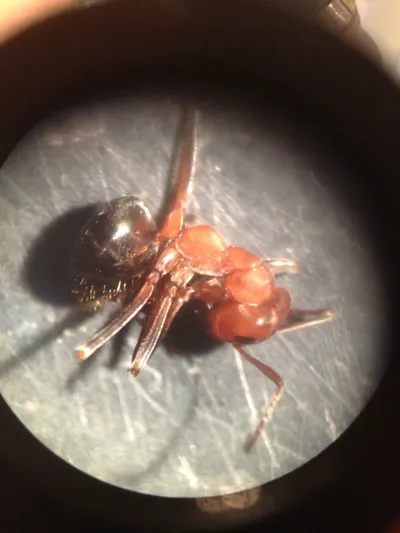
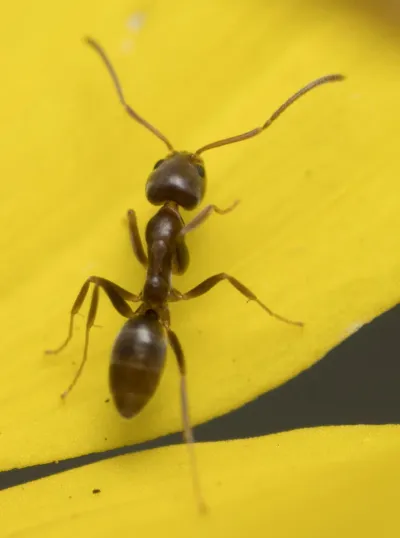
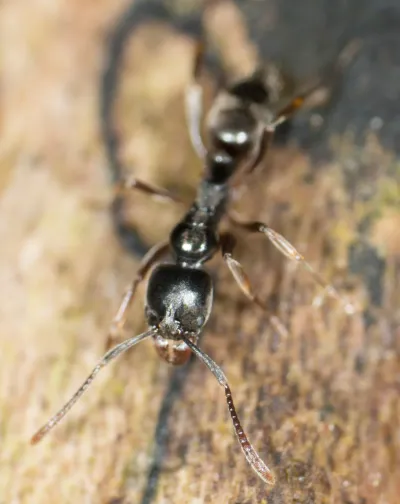
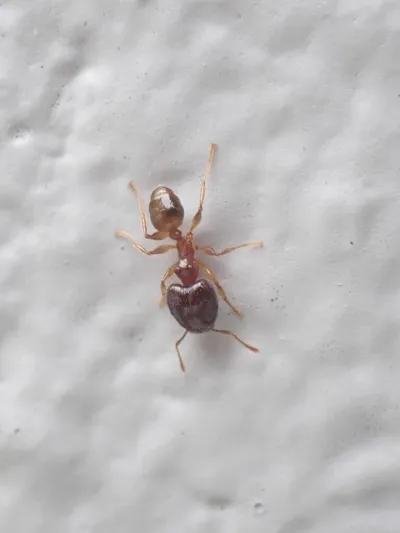
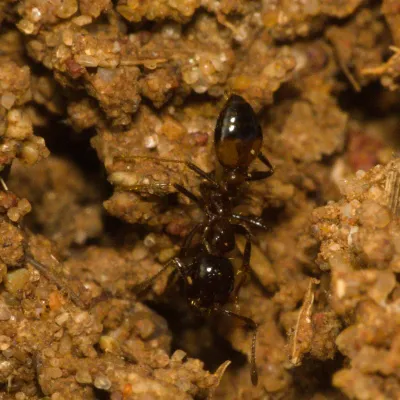
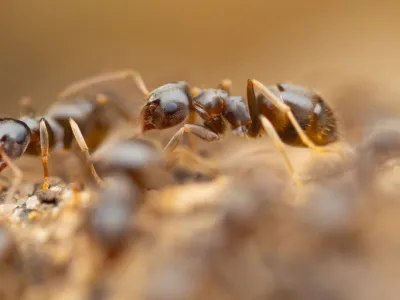
Commonly Confused With
Pavement Ants are often mistaken for these similar pests
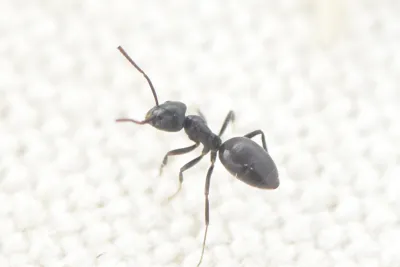
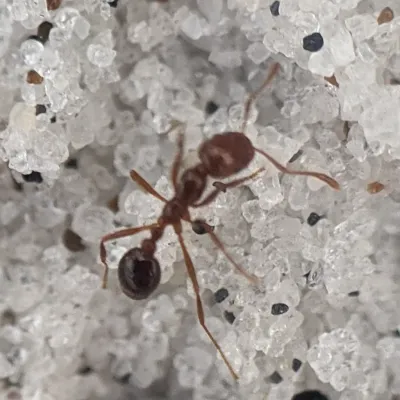
Where Pavement Ants Are Found
Hover over states to see their names. Green regions indicate where pavement ants have been reported.
Common Questions about Pavement Ants
How do I know if I have pavement ants?
+
Look for small piles of sand or soil along sidewalk cracks, foundation edges, or between patio pavers. These crater-like mounds are created as workers excavate their underground nests. You'll also see trails of small dark brown to black ants, about 1/8 inch long, foraging near the mounds or along foundations.
What are those piles of dirt near my driveway?
+
Those small, crater-like mounds of fine soil are a classic sign of pavement ants. Workers push excavated dirt out of their underground tunnels, creating these distinctive piles. You'll often see them in sidewalk cracks, expansion joints, and along foundation edges.
Why are pavement ants fighting on my sidewalk?
+
In late spring and early summer, neighboring pavement ant colonies engage in large-scale territorial battles. These 'ant wars' can involve thousands of ants wrestling and fighting along territory boundaries. While dramatic to watch, these battles are a natural behavior and usually resolve within a few days.
Are pavement ants dangerous?
+
Pavement ants can sting, but they rarely do so unless directly handled. They're primarily a nuisance pest. The main concerns are food contamination when they [invade kitchens](/ants-in-the-kitchen/) and the unsightly dirt mounds they create on driveways and patios. They don't cause structural damage like carpenter ants.
Why do pavement ants come inside my house?
+
Pavement ants enter homes looking for food, especially greasy, sweet, and protein-rich foods. They're particularly active in spring when colonies expand and in winter when outdoor food becomes scarce. Entry points include cracks in foundations, gaps around pipes, and spaces under doors.
Can I get rid of pavement ants with DIY products?
+
Over-the-counter sprays may kill foraging ants but won't eliminate the colony. Pavement ant nests can extend deep under concrete and foundations, making them difficult to reach with consumer products. Professional treatments use non-repellent products that workers carry back to the nest, eliminating the entire colony.
How long does pavement ant treatment take?
+
You may continue seeing ant activity for 1-2 weeks after treatment as workers spread the product throughout the colony. Complete elimination typically occurs within 2-3 weeks. For nests under slabs or in difficult-to-reach areas, full control may take slightly longer.
Will pavement ants damage my concrete or foundation?
+
While pavement ants excavate soil to build their nests, they don't actually damage concrete or foundations. However, their excavation activity can cause minor settling or shifting of pavers over time. The dirt mounds are cosmetic issues rather than structural concerns.

With five years of hands-on experience in the pest control industry, George Schulz is a registered technician with the Virginia Pest Management Association and a proud third-generation professional in a family business that's been protecting homes for over 57 years. He manages and trains a team of service pros while also leading internal research efforts—recently spearheading a deep-dive review of thousands of documents on pest control materials to hand-pick the most kid and pet friendly, most effective solutions tailored specifically for homes in the DC metro area.