Allegheny Mound Ants Identification Guide
Formica exsectoides
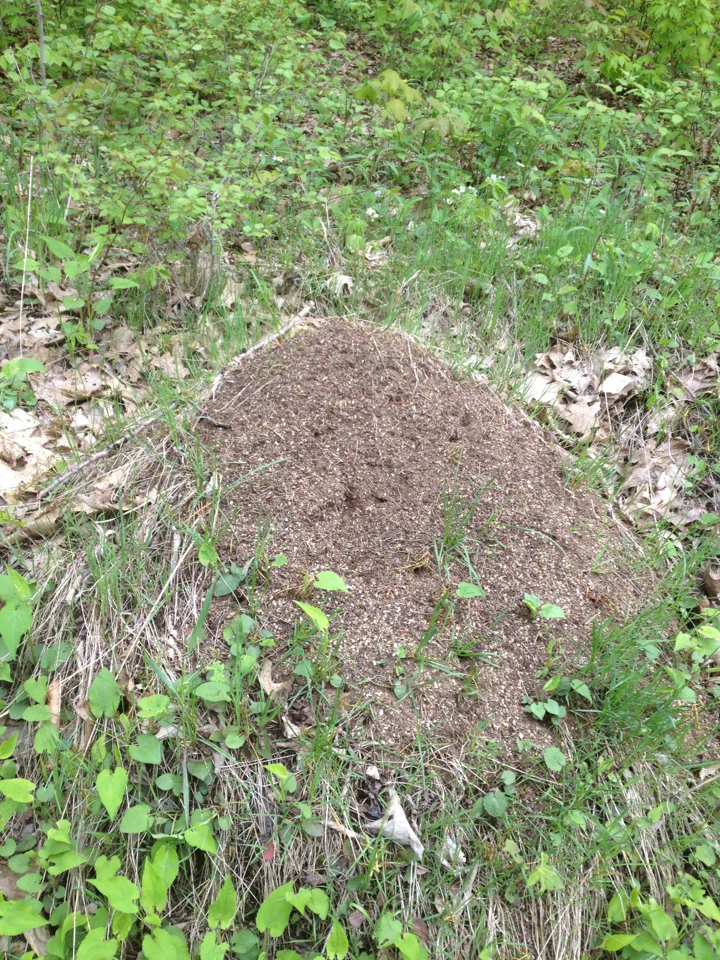
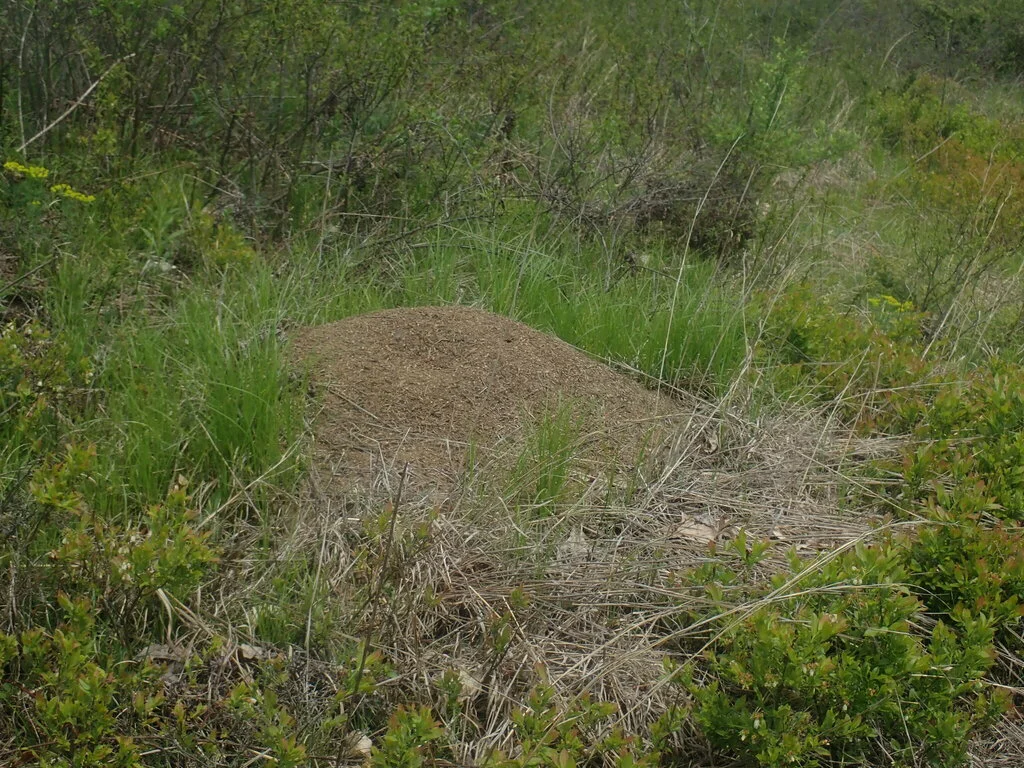
Allegheny mound ants are one of North America's largest mound-building ants. They construct massive dirt mounds up to 3 feet tall and 6 feet wide. These ants kill surrounding vegetation by injecting formic acid, creating bare zones around their nests.
Taxonomy
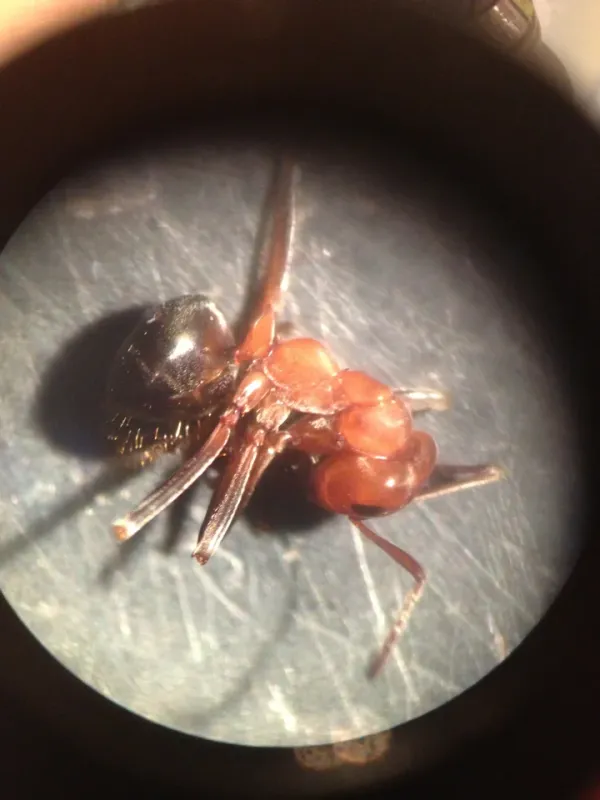
Allegheny Mound Ants Coloration
Common color patterns to help identify allegheny mound ants
Allegheny Mound Ants
Seasonal Activity
When allegheny mound ants are most active throughout the year

Where Allegheny Mound Ants Are Found
Hover over states to see their names. Green regions indicate where allegheny mound ants have been reported.
Allegheny Mound Ant Identification Guide
Allegheny mound ants are among the most impressive mound-building ants in North America. Their massive dirt nests can dominate landscapes, reaching heights of over 2 feet and spanning 6 feet across. These ants are known for killing vegetation around their mounds by injecting formic acid into plants.
If you spot large dome-shaped mounds surrounded by dead grass or dying shrubs, you’re likely dealing with Allegheny mound ants. Understanding their behavior helps explain why these ants create such dramatic changes to your landscape. Our guide to ant hills and mounds covers how to identify different mound-building species in the region.
Physical Characteristics
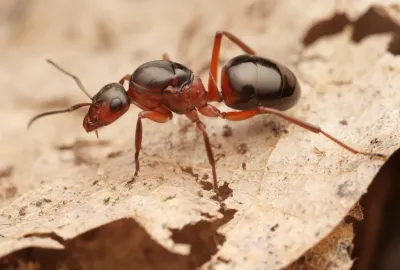
Allegheny mound ant workers measure 3 to 7 mm long (about 1/8 to 1/4 inch). Queens are larger, ranging from 9 to 12 mm. Their distinctive two-toned coloring makes them relatively easy to identify.
Key identification features:
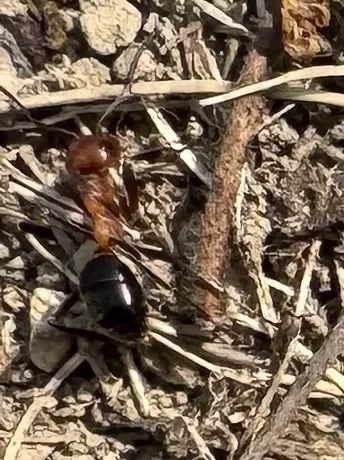
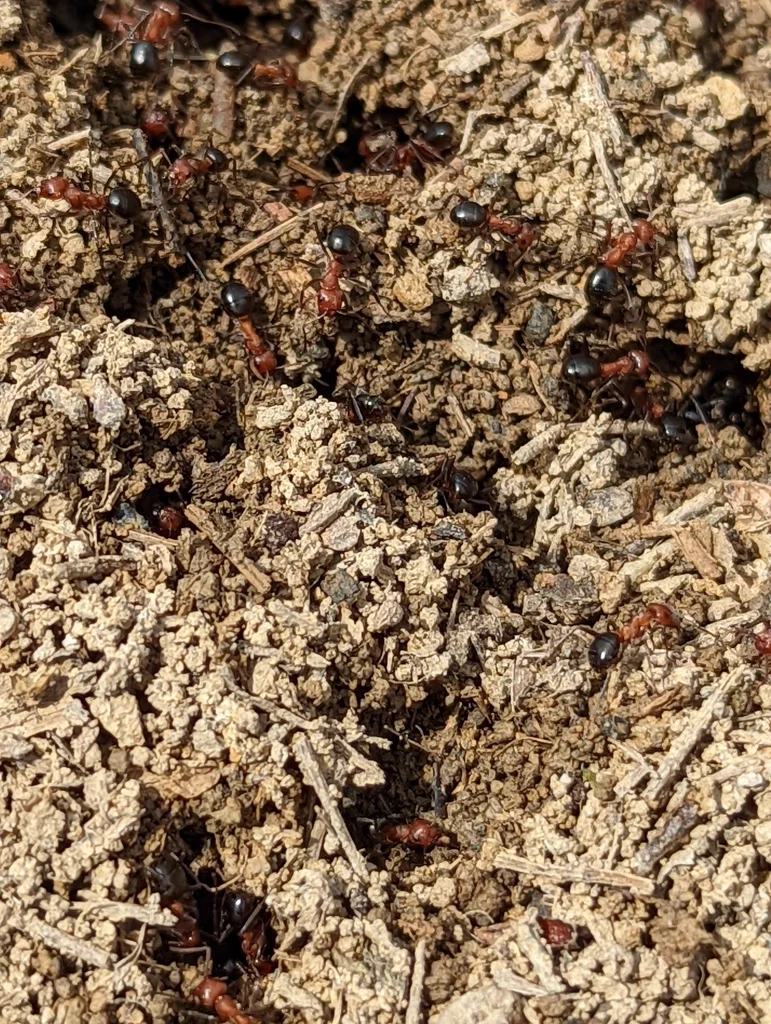
- Reddish-brown head and thorax - The front half of the body has a rusty orange to reddish-brown color
- Black gaster - The rear body section (abdomen) is distinctly black
- Concave head margin - When viewed from the front, the back edge of the head curves inward in a crescent shape
- Single node - One segment connects the thorax to the gaster
- No stinger - They bite and spray formic acid but cannot sting
- 12-segmented antennae - Standard ant antenna structure
The concave rear margin of the head is a key feature that distinguishes Allegheny mound ants from other similar species in the Formica genus.
Common Look-Alikes
Several ant species build mounds or share similar coloring:
Field Ants - The broader Formica genus includes many field ant species. Most lack the strongly concave head margin of Allegheny mound ants. Their mounds are typically smaller and they don’t systematically kill surrounding vegetation.
Carpenter Ants - Similar size but with a smooth, rounded thorax profile. Carpenter ants nest in wood rather than building dirt mounds. They lack the distinct two-toned coloring.
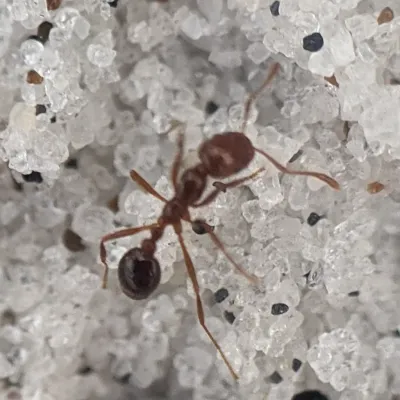
Fire Ants - Much smaller (2-6 mm) with a painful sting. Fire ants build mounds but have two nodes between the thorax and gaster. They’re primarily found in southern states.
Thatching Ants - Related species that also cover mounds with plant material. They can be distinguished by head shape and regional distribution. Our ant identification chart can help compare these look-alike species.
Allegheny Mound Ant Behavior and Biology
Colony Structure
Allegheny mound ant colonies operate on a massive scale. Established colonies can include:
- Over 250,000 workers in a single supercolony
- More than 1,000 egg-laying queens spread across multiple mounds
- Dozens of interconnected mounds functioning as one supercolony
- Territories spanning large areas in ideal habitat
This polygynous structure (multiple queens) allows colonies to grow continuously. Queens are selectively adopted from within the colony and can live for decades, contributing to the colony’s ant lifespan. New mounds form through budding, where workers split off with queens to establish satellite nests connected to the main colony.
Life Cycle
The complete life cycle from egg to adult takes 2 to 3 months, depending on soil temperature:
- Egg - Queens lay eggs in protected chambers deep in the mound
- Larva - Worm-like larvae are fed and groomed by workers
- Pupa - Transformation stage where the adult form develops
- Adult - Emerges as worker, queen, or male depending on colony needs
Workers adjust brood location throughout the mound based on temperature. They move eggs and larvae to warmer or cooler zones as needed.
Seasonal Patterns
In the mid-Atlantic region:
- Winter (November-April) - Workers and queens hibernate in deep burrows below the frost line
- Spring (May) - Colonies become active as temperatures rise. Workers repair mounds and begin vegetation removal
- Summer (June-August) - Peak ant season activity. Winged reproductive forms (alates) emerge in July for mating flights
- Fall (September-October) - Activity decreases. Colonies prepare for winter dormancy
The Mound as a Solar Collector
Allegheny mound ant nests function as sophisticated temperature regulators. The dome shape captures solar heat, creating warmer conditions inside the mound than the surrounding environment. Key features include:
- Coarse sand construction that absorbs and retains heat
- Thatch layer of plant material (1-2 inches) on top that insulates against temperature extremes
- Gallery system extending 1-3 meters below ground for temperature regulation
- Brood relocation as workers move young to optimal temperature zones
This thermal regulation explains why these ants aggressively remove shade-producing vegetation around their nests.
Vegetation Killing Behavior
The most distinctive behavior of Allegheny mound ants is their deliberate killing of nearby plants. Workers:
- Chew a small hole through plant bark
- Inject formic acid directly into the wound
- Repeat the process until the plant dies
This creates characteristic “dead zones” around active mounds where grass, shrubs, and even small trees are killed. The cleared area can extend several feet from the mound edge. This behavior serves to maximize sun exposure on the mound surface.
Diet and Foraging
Allegheny mound ants are omnivorous foragers:
- Honeydew - Primary food source collected from aphids and other sap-feeding insects
- Predation - They actively hunt small arthropods and are effective pest controllers
- Scavenging - Dead insects, vertebrates, and other protein sources
- Seeds and plant materials - Supplement their diet with plant-based foods
Workers follow chemical trails that can extend far from the mound. They’re considered beneficial in some contexts because they prey on forest pest insects like pine sawflies, budworms, and gypsy moth larvae. Learn more about how different ant species play roles in their ecosystems.
Ecological Importance
Despite their reputation for killing plants, Allegheny mound ants play important ecological roles:
- Bioturbation - Their digging aerates soil and improves drainage
- Pest control - Predation on harmful forest insects
- Wildlife habitat - Their warm mounds provide overwintering sites for snakes and other animals
- Nutrient cycling - Moving organic material underground enriches soil
Treatment Methods for Allegheny Mound Ants
Allegheny mound ant colonies present unique challenges for control. Their massive size, multiple queens, and deep underground galleries make elimination difficult. Here’s what works for treating these ants.
Why DIY Methods Often Fail
Store-bought ant treatments typically don’t work against Allegheny mound ants because:
- Colony depth - Nests extend several feet underground, far beyond spray penetration
- Multiple queens - Even if some ants die, surviving queens rebuild the colony
- Supercolony structure - Connected mounds mean treatment must address the entire network
- Colony size - With hundreds of thousands of workers, surface treatments barely make a dent
Effective Treatment Approaches
Professional treatment for Allegheny mound ants typically involves:
- Bait-based products - Materials that workers carry back to the colony and share with queens and other ants through normal feeding behavior
- Non-repellent treatments - Products that ants contact and spread through the colony through grooming
- Perimeter applications - Treatments around structures to prevent foraging near buildings
- Direct mound treatment - For mounds close to structures, targeted applications can reduce local populations
Treatment success requires reaching the queens. Because these colonies can have over 1,000 queens spread across multiple mounds, complete elimination may require multiple treatments or ongoing management.
Prevention and Management
For properties with Allegheny mound ants nearby:
- Monitor for new mound establishment, especially in sunny, open areas. For general ant prevention, see our tips on how to keep ants away
- Address mounds when they’re small rather than waiting for large colonies to develop
- Consider whether treatment is necessary since these ants rarely enter homes and provide some ecological benefits
- Focus treatment efforts on mounds near structures or high-use landscape areas
When Treatment Makes Sense
Consider professional treatment when:
- Mounds are located near your home’s foundation
- Vegetation killing threatens valuable landscaping
- Mounds are in high-traffic areas where bites are a concern
- Multiple mounds indicate a spreading supercolony
For mounds in remote areas of large properties, treatment may not be necessary since these ants provide beneficial pest control in natural settings.
References and Further Reading
- Allegheny Mound Ants - Ohio State University BYGL - Comprehensive identification and behavior guide
- Allegheny Mound Ant - U.S. Fish & Wildlife Service - Federal species profile
- Allegheny Mound Ant - Maryland Biodiversity Project - Regional distribution data
- Mound Ants - Michigan State University Extension - Control recommendations
- Beneficial Insect Series: Allegheny Mound Ant - University of Maine Extension - Ecological benefits in agricultural settings
- Formica exsectoides - AntWiki - Scientific reference and taxonomy
Other Ants
Explore other species in the ants family



Commonly Confused With
Allegheny Mound Ants are often mistaken for these similar pests
Where Allegheny Mound Ants Are Found
Hover over states to see their names. Green regions indicate where allegheny mound ants have been reported.
Common Questions about Allegheny Mound Ants
Why are Allegheny mound ants killing trees and plants near their nest?
+
These ants deliberately kill vegetation around their mounds. They chew small holes in plant bark and inject formic acid into the wound. This kills plants and keeps shade off the mound. The ants need warm, sunny conditions to regulate their colony's temperature.
How big can Allegheny mound ant nests get?
+
Mature mounds can reach over 30 inches tall and 6 feet wide. The underground tunnels extend up to 6 feet deep. Large colonies may have dozens of interconnected mounds covering a wide area, with millions of individual ants.
Do Allegheny mound ants bite?
+
Yes, they can bite and will spray formic acid from their rear end when disturbed. While painful, their bites aren't dangerous to most people. Workers become aggressive when their mound is disturbed, so avoid stepping on or near active nests.
Are Allegheny mound ants the same as fire ants?
+
No, they're different species. Fire ants sting using a true stinger and inject venom. Allegheny mound ants bite and spray acid but cannot sting. Fire ants are also much smaller (2-6mm) compared to Allegheny mound ants (3-7mm) and are typically found in southern states.
Will Allegheny mound ants invade my house?
+
These ants almost never enter homes. Their massive ground nests require specific outdoor conditions. They prefer sunny, open areas like fields, meadows, and lawns. You might see occasional foragers near your home, but they won't establish indoor colonies.
How long do Allegheny mound ant colonies live?
+
Colonies can persist for many decades. Some documented colonies have lasted over 50 years. The mounds grow larger each year as the colony expands. Multiple queens help colonies survive even if some queens die.
When are Allegheny mound ants most active?
+
These ants are most active from late spring through early fall. Peak activity occurs from May through August. Workers emerge on warm days to forage and maintain the mound. Winged ants fly from nests to mate in July.
What do Allegheny mound ants eat?
+
They're omnivorous and eat honeydew from aphids, dead insects, small arthropods, and seeds. During summer, they're voracious predators that help control pest insects in surrounding vegetation. Workers can travel far from the mound to collect food.

With five years of hands-on experience in the pest control industry, George Schulz is a registered technician with the Virginia Pest Management Association and a proud third-generation professional in a family business that's been protecting homes for over 57 years. He manages and trains a team of service pros while also leading internal research efforts—recently spearheading a deep-dive review of thousands of documents on pest control materials to hand-pick the most kid and pet friendly, most effective solutions tailored specifically for homes in the DC metro area.