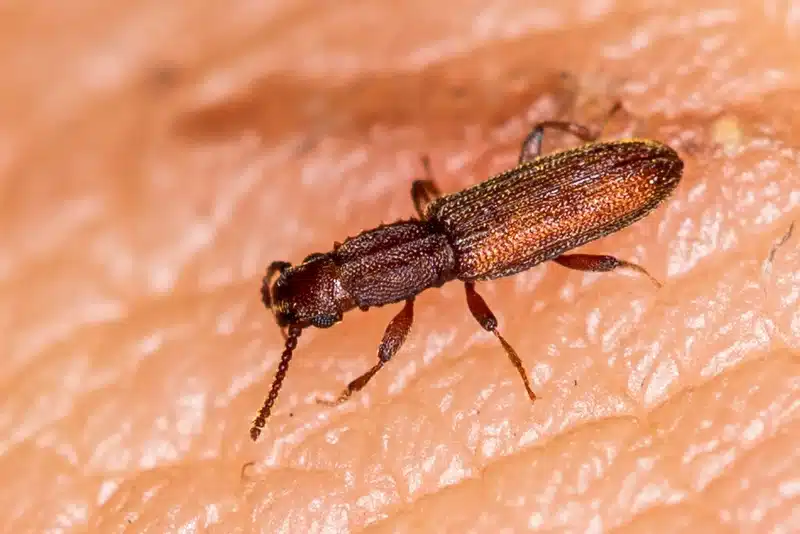

Finding tiny brown beetles crawling through your pantry can be alarming, especially when they’re in your favorite chocolate bars or expensive nuts. The merchant grain beetle is one of the most persistent pantry pests we see in the DMV area. Over four years as a registered technician, I’ve seen these flying beetles spread fast through homes and food processing facilities.
Unlike their close cousin the sawtoothed grain beetle, merchant grain beetles can fly between cabinets and prefer processed foods over whole grains. This makes them especially troublesome because they can quickly infest multiple areas of your kitchen.
Identifying the Merchant Grain Beetle
The merchant grain beetle looks very similar to the sawtoothed grain beetle, but there are important differences. Both beetles measure about 3mm long and have that dark brown, flattened look. However, the merchant grain beetle has noticeably larger eyes compared to the short temple area behind them.
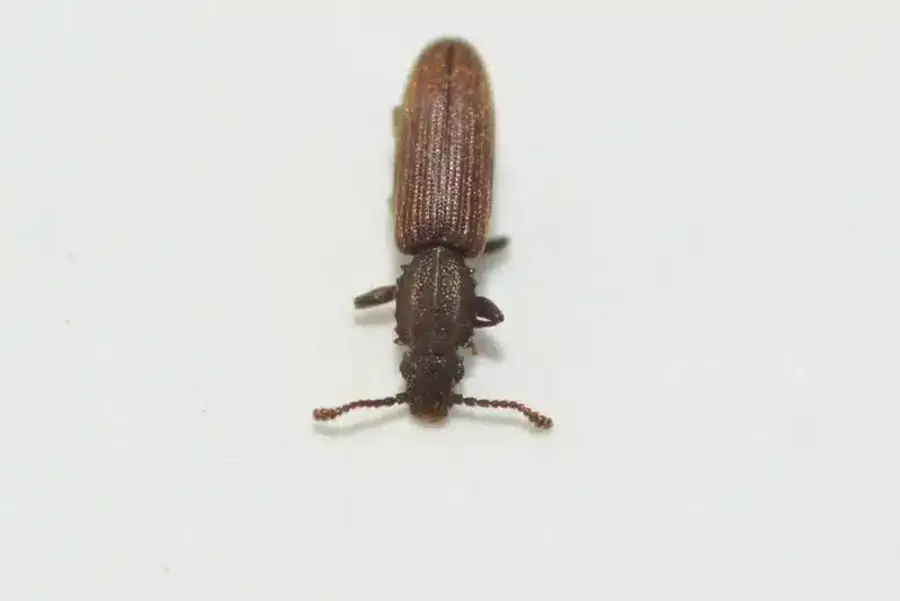
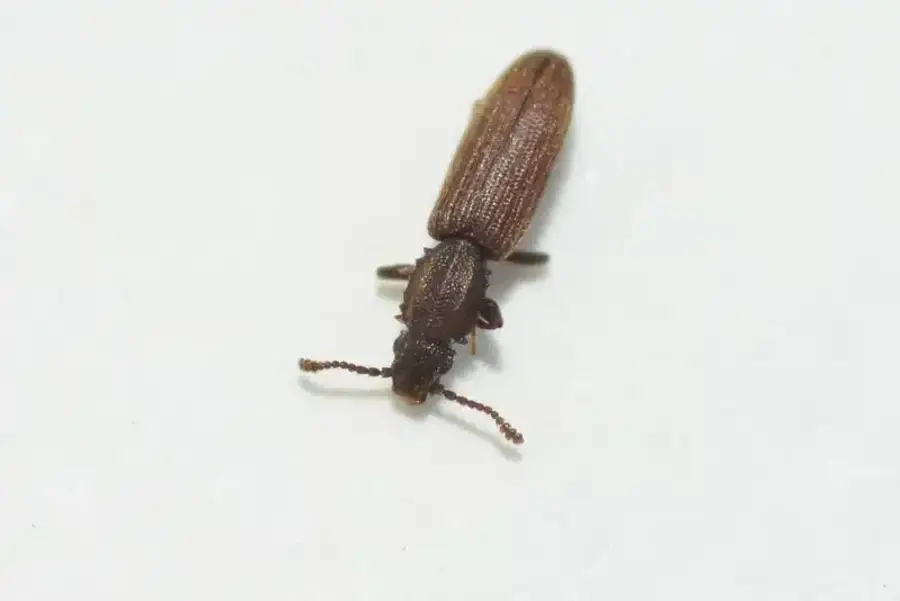
When checking a suspected merchant grain beetle, look for these features:
- Six saw-tooth bumps on each side of the midsection (pronotum)
- Large eyes that extend beyond the rectangular head shape
- Sharp, pointed angles at the back of the head
- Strongly flattened body that lets them squeeze into tiny cracks
The biggest behavioral difference is their ability to fly. While sawtoothed grain beetles cannot fly, merchant grain beetles have working wings. This flight ability explains why problems can suddenly pop up in multiple pantry areas within days.
Where Merchant Grain Beetles Are Found
These beetles show up in places that might surprise you. Based on our experience serving families in the DMV for over 50 years, merchant grain beetles commonly infest:
- Chocolate bars with nuts or puffed rice
- Mixed nuts and trail mix
- Rolled oats and granola
- Rice flour and cake mixes
- Cookies and crackers
- Coconut flakes
- Dried fruit and seeds
Unlike many other pantry pests, merchant grain beetles prefer processed, high-oil foods over whole grains. They cannot attack sound, intact kernels but will readily infest cracked or broken grain products.
Life Cycle
Temperature plays a huge role in how quickly these beetles reproduce. At typical indoor temps of 72 degrees F or higher, the full life cycle takes about 30-40 days. Below 68 degrees F, this timeline can stretch to over a year.
Egg Stage (3-5 Days)
Females lay eggs directly on or near food sources. A single female can lay up to 200 eggs during her lifetime. At warm indoor temps, eggs hatch in just 3-5 days.
Larval Stage (About 14 Days)
Larvae feed externally on the food source for about 14 days at good temps. They’re small, white, and hard to spot without close inspection.
Pupal Stage (About 7 Days)
Pupae form in a debris-coated cocoon. This stage lasts about 7 days before the adult beetle emerges.
Adult Stage (6-10 Months)
Adults typically live 6-10 months, though some can survive up to 3 years. One female introduced in September can produce 4-6 complete generations before spring. The growth potential is huge when you think about the numbers.
This fast reproduction cycle is why a small pantry beetle problem can turn into a big one in just a few weeks if you don’t act.
Signs of a Merchant Grain Beetle Problem
Early detection is key for controlling these pests before they spread throughout your pantry.
Warning Signs
Visible beetles: Adult beetles crawling in package seams, cabinet corners, or around food containers. They often look like “crawling dust” due to their small size and brown color.
Greasy odor and clumping: Infested foods develop a bad smell as moisture increases. Dry goods may start clumping together, and secondary mold growth often follows.
Fine debris in packages: Look for frass (insect waste), shed larval skins, and small holes in packaging. The beetles leave behind a powdery residue as they feed.
Because merchant grain beetles can fly, you might notice beetles in areas far from the original food source. This is different from other pantry pests that typically stay close to where they breed.
Merchant Grain Beetle vs Pantry Moths
| Merchant Grain Beetle | Pantry Moths | |
|---|---|---|
| Flight | Strong fliers | Weak fliers |
| Preferred Foods | Processed foods, chocolate | Grains, cereals |
| Size | 3mm long | 6-20mm wingspan |
| Webbing | None | Silk webbing in food |
| Larvae Location | In/on food surface | Throughout food package |
How to Get Rid of Merchant Grain Beetles
Finding the source and removing it is the most effective treatment. Chemical sprays are not recommended in food storage areas.
Step 1: Empty the Pantry
Remove everything of plant origin from your pantry. This includes cereals, pasta, nuts, spice blends, dry pet food, bird seed, and even items like corn wreaths. Don’t forget secondary spots like toaster crumb trays and utility drawers.
Step 2: Inspect Each Package
Check each package carefully with a flashlight. Focus on seams, folds, and any areas where the packaging might be damaged. Look for live beetles, larvae, or the fine frass they leave behind.
Step 3: Test Suspect Items
For packages you’re unsure about, dump contents onto a white tray or plate. Live beetles or larvae will start moving within 30 seconds. This simple test can quickly find infested items that look normal from the outside.
Step 4: Clean and Treat
Seal heavily infested packages in bags and remove them from your home. Vacuum all shelves, focusing on cracks, peg holes, and corner joints. Follow up with warm, soapy water. Avoid using insecticides in food storage areas.
To save valuable items: Heat to 130 degrees F for 30 minutes, or freeze at 0 degrees F for at least 4 days. These proven methods kill all life stages.
Similar to controlling foreign grain beetles, moisture management plays a key role in prevention. Address any humidity issues in your pantry area during the cleaning process.
Prevention
Preventing merchant grain beetle problems requires a different approach than other pantry pests because of their flying ability. Sealing packages alone isn’t enough. You need to think about room-level prevention.
- Container Storage: Use airtight glass, metal, or heavy plastic containers with rubber gasket lids
- Temperature Control: Keep storage areas below 50 degrees F when possible to slow beetle growth
- Humidity Management: Keep relative humidity under 60% in pantry areas
- Regular Checks: Inspect stored items twice monthly during peak season (May through September)
- Entry Points: Seal pantry windows with tight-fitting screens since adults can fly in
Research backs up the importance of environmental controls for managing these pests long-term.
According to North Carolina State Extension research, maintaining proper storage conditions can prevent most stored product pest issues. Studies show that merchant grain beetles cannot finish development at temps below 60 degrees F, and relative humidity below 40% greatly extends development time. The research shows that environmental controls are often more effective than chemical treatments for long-term beetle management.
Monitoring and Preventing Return
Long-term success requires ongoing watchfulness. You may also find our guide on merchant grain beetles helpful for additional details.
Inspect your pantry twice monthly during peak activity periods (May through September in the Mid-Atlantic region). Mark purchase dates on stored items and rotate stock regularly. Consider using commercially available pheromone traps placed on shelf backs to catch any early signs of a return.
Regional Tips for the DMV Area
Living in Virginia, Maryland, or DC presents specific challenges for merchant grain beetle control. Our warm, humid summers speed up the 30-day generation time, leading to peak complaint periods from July through September.
Many area homes store bird seed and decorative corn over winter months. These items are perfect breeding grounds for merchant grain beetles and should be checked regularly.
Local extension offices recommend avoiding spray treatments in kitchen areas. This matches our family business approach of using the most appropriate methods for each situation rather than defaulting to chemical treatments.
If you’re dealing with persistent merchant grain beetle problems or want professional help with ID and treatment, our registered technicians have the experience to quickly find the source and develop an effective plan. Call us at 703-683-2000 or email info@bettertermite.com.