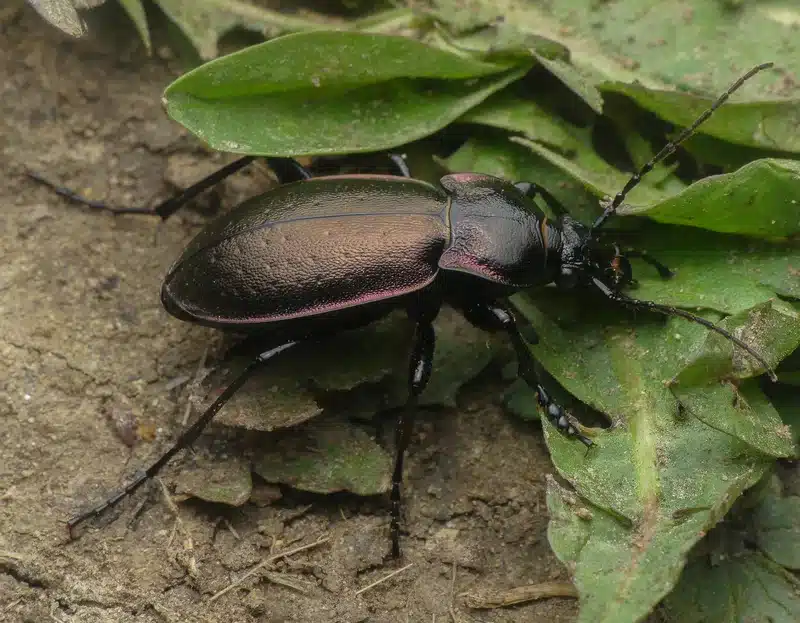
Finding a dark, fast-moving insect scurrying across your floor can be alarming. Many homeowners in the DMV area immediately assume they’ve spotted a cockroach, but there’s a good chance it might actually be a ground beetle. In my four years as a registered technician, I’ve seen countless situations where homeowners confuse these two very different insects.
Understanding the difference between ground beetle vs cockroach is crucial because your response should be completely different. While cockroaches signal a potential infestation requiring immediate action, ground beetles are beneficial insects that accidentally wandered indoors and should simply be released outside.
Key Physical Differences Between Beetles and Cockroaches
The easiest way to tell ground beetle vs cockroach apart is by examining their physical features. These insects have distinctly different body structures that become obvious once you know what to look for.
Wing Cover Structure
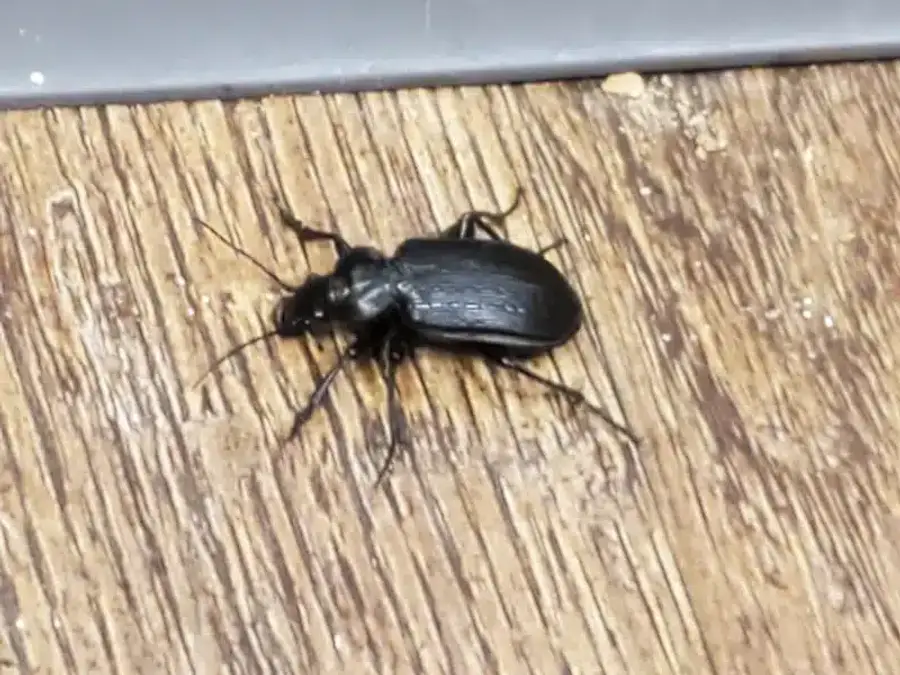
Ground beetles have hard, rigid wing covers called elytra that meet in a perfectly straight line down their back. These wing covers often show grooves or ridges and appear almost armor-like.
What does the science say?
According to the University of California IPM program, most ground beetles have fused wing covers (elytra) that prevent them from flying. This anatomical adaptation allows them to function as ground-dwelling predators with enhanced protection for their hindwings and flight muscles that have been repurposed for powerful running.
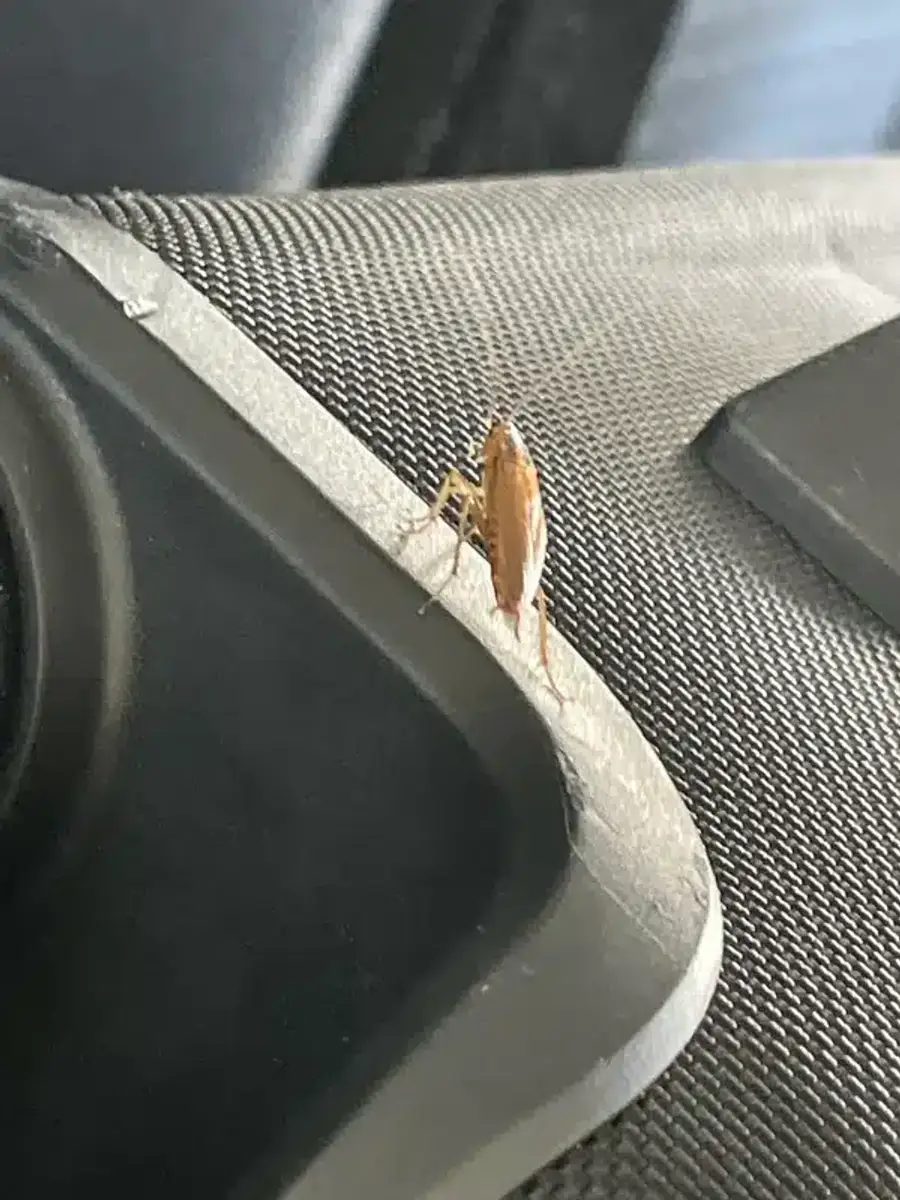
Cockroaches carry leathery front wings that overlap slightly at the back. Their wings are flexible and allow some species to glide short distances when needed.
Head Position and Visibility
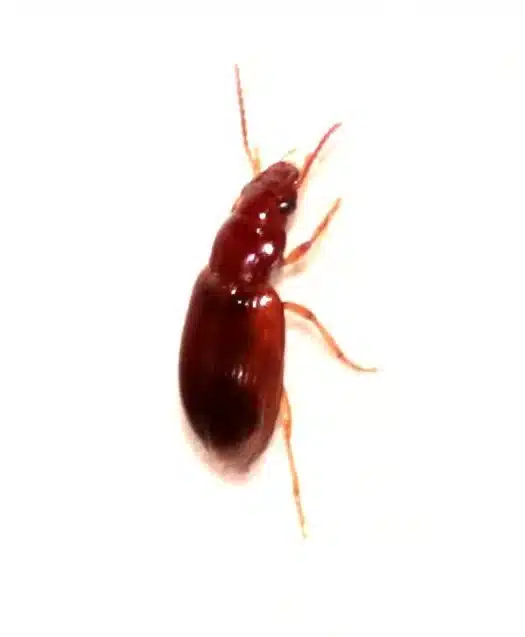
When viewing ground beetle vs cockroach from above, the head position provides the clearest identification marker. Ground beetles have narrow heads that clearly project forward from their body. You can easily see their head and prominent antennae.
Cockroaches hide their heads beneath a large, shield-like pronotum. Looking down at a cockroach, you’ll barely see the head because it’s tucked under this protective covering.
| Feature | Ground Beetle | Cockroach |
|---|---|---|
| Head Visibility | Clearly visible, projects forward | Hidden under shield-like cover |
| Wing Covers | Hard, meet in straight line | Leathery, overlap at back |
| Color | Black or dark brown | Tan to reddish-brown |
| Movement | Direct, straight-line running | Erratic, scuttling motion |
| Infestation Risk | None - cannot reproduce indoors | High - rapid reproduction |
Color and Size Distinctions: Beetle vs Cockroach
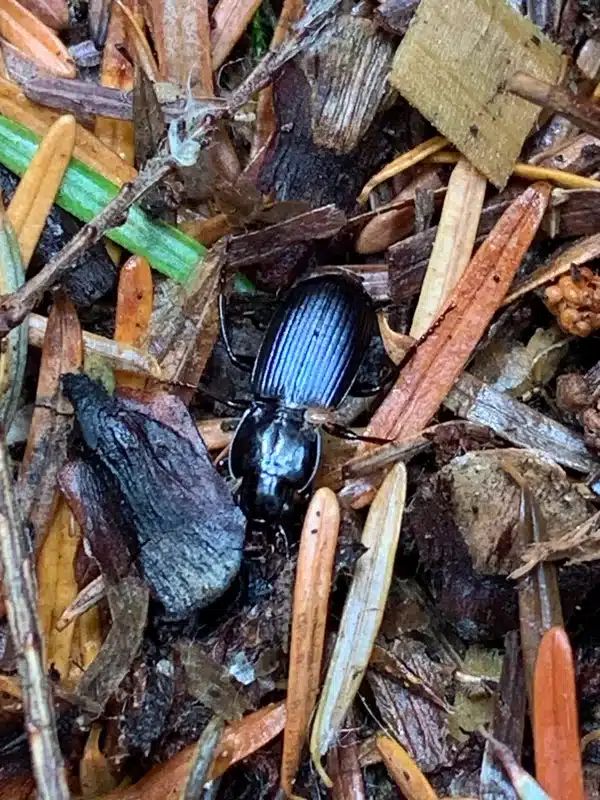
Color provides another reliable way to distinguish ground beetle vs cockroach. Most ground beetles in our region are jet black or very dark brown. Some species display beautiful iridescent blue, green, or bronze coloring that shimmers in the light.
Cockroaches typically appear tan to reddish-brown. German cockroaches show distinctive brown stripes behind their head, while American cockroaches appear mahogany-colored.
Size varies considerably in both groups. Ground beetles range from about ⅛ inch to over 1 inch long. Most cockroaches measure between ½ inch (German) to 2 inches (American roaches).
Movement Patterns: How These Bugs Behave Differently
Observing how these insects move helps identify ground beetle vs cockroach in real-time situations. Ground beetles run in straight lines toward the nearest hiding spot. They’re fast runners but move predictably when startled.
Cockroaches exhibit more erratic movement patterns. They frequently change direction and can run up to 3.4 miles per hour. Their movement appears more “scuttling” compared to the direct sprint of ground beetles.
Additionally, cockroaches avoid well-lit areas and immediately seek dark hiding spots. Ground beetles may pause in the open or show less urgency about finding cover.
Habitat Preferences and Why These Pests Enter Homes
Understanding where these insects prefer to live explains why you might find them indoors and helps differentiate ground beetle vs cockroach encounters.
Ground Beetle Habitats
Ground beetles thrive in outdoor environments with moist soil, mulch, and leaf litter. They live under logs, rocks, and in garden areas where they hunt for prey. These beneficial predators prefer staying outside and only enter homes accidentally.
Peak ground beetle invasions occur during July through September, especially after heavy evening rains. They’re sometimes attracted to porch lights and wander through door thresholds by mistake.
Cockroach Habitats
Cockroaches seek warm, humid indoor environments with access to food and water. They prefer kitchens, bathrooms, and areas near plumbing. Unlike ground beetles, cockroaches actively try to establish indoor colonies.
These pests enter homes year-round through grocery bags, used appliances, or gaps around pipes. They’re specifically looking for indoor shelter and resources.
Infestation Risk: Critical Ground Beetle vs Cockroach Difference
The most important distinction in ground beetle vs cockroach identification relates to infestation potential. This difference determines whether you’re dealing with a minor inconvenience or a serious pest problem.
Ground beetles cannot establish indoor populations. They don’t mate or lay eggs inside homes and typically die within a few days if trapped indoors. Finding one or two ground beetles represents isolated incidents, not developing infestations.
Cockroaches present serious infestation risks. These pests reproduce rapidly indoors, with populations exploding without immediate professional treatment.
What does the science say?
According to EPA research on cockroaches, female German cockroaches produce 4-8 egg cases (oothecae) during their 200-day lifespan, with each case containing approximately 40 eggs. With optimal indoor temperatures (75-85°F), development from egg to reproductive adult takes just 30-60 days, creating exponential population growth that can reach thousands of individuals within months.
Critical Response Actions
- Ground Beetle Found: Gently capture with a cup and paper, then release outdoors - these are beneficial insects
- Cockroach Spotted: Contact pest control immediately - populations multiply rapidly without treatment
- Uncertain Identification: Take a photo from above showing the head area, then call for professional identification
- Multiple Sightings: This typically indicates cockroaches, as ground beetles enter homes individually
Our family business has served the DMV area for over 50 years, and we’ve learned that immediate action matters with cockroaches but not with ground beetles. Check out our guide on cockroach vs beetle identification for additional comparison details.
Health and Property Impact: Critical Pest Concerns
The health implications of ground beetle vs cockroach encounters differ dramatically. Ground beetles pose no health risks to humans. They don’t contaminate food, spread diseases, or damage property. Some species may emit a defensive odor when handled, but they’re otherwise harmless.
Cockroaches carry significant health concerns. They transmit Salmonella, Staphylococcus, and Streptococcus bacteria. Their shed skin fragments and droppings trigger asthma and allergies, particularly in children.
Property damage also differs between these insects. Ground beetles cause no structural or material damage. Cockroaches contaminate food stores and leave stains and odors that require cleanup.
Beneficial Role of Ground Beetles in Natural Pest Control
Understanding the ecological value helps explain why ground beetle vs cockroach identification matters for environmental stewardship. Ground beetles serve as natural pest controllers in yards and gardens.
These predators consume caterpillars, slugs, cutworms, and other garden pests. They also provide significant weed control through seed consumption.
What does the science say?
Research from Colorado State University demonstrates that ground beetle communities can remove 65-90% of weed seed banks in treated agricultural areas. Studies show individual beetles consume 300-400 weed seeds daily during peak feeding periods, providing natural herbicide alternatives worth an estimated $13.6 billion annually in crop protection services across North America.
Some Mid-Atlantic species, called “caterpillar hunters,” specialize in controlling gypsy moth and armyworm larvae. These beneficial insects provide free pest control services that would otherwise require chemical interventions.
For more detailed information about these beneficial insects, visit our black ground beetle guide that explains their predatory behavior and ecological importance.
Life Cycle Differences: Beetle vs Cockroach Reproduction
Understanding the life cycle differences between ground beetles and cockroaches helps explain their vastly different infestation potential and why your response should vary dramatically.
Ground beetles complete their life cycle entirely outdoors. They undergo complete metamorphosis with egg, larval, pupal, and adult stages occurring in soil and leaf litter. Most species have one generation per year, and larvae remain underground where they continue hunting garden pests.
Cockroaches reproduce rapidly indoors with incomplete metamorphosis. Female German cockroaches can produce 4-8 egg cases (oothecae) in their lifetime, each containing 30-40 eggs. Nymphs develop through 6-7 molts over 30-60 days, reaching sexual maturity quickly in warm indoor environments.
Proper Response to Bugs That Look Like Cockroaches
Your response should differ completely depending on whether you’ve found a ground beetle vs cockroach in your home.
Responding to Ground Beetles
Capture ground beetles gently using a cup and paper, then release them outdoors where they can continue their beneficial work. Avoid using pesticides because these insects provide valuable pest control services.
Prevent future accidental entries by sealing foundation gaps and reducing bright exterior lighting near doorways. Ground beetles don’t require professional pest control treatment.
Responding to Cockroaches
Cockroach sightings require immediate professional attention. Don’t delay treatment because populations multiply rapidly. Contact our registered technicians for proper identification and treatment planning.
Integrated pest management approaches work best for cockroach control. Our research team has removed 9 harsh chemicals from our treatment programs, choosing better alternatives that effectively control cockroaches while being easier on families and pets.
If you’re unsure about species identification, our article on bugs that look like roaches provides additional comparison information for common look-alike insects.
Seasonal Timing in the DMV Area
Ground beetle vs cockroach encounters follow different seasonal patterns in Virginia, Maryland, and Washington DC. Ground beetles most commonly enter homes during midsummer, particularly in August and September after evening rainstorms.
Cockroach activity remains consistent year-round, though sightings may increase during winter months when heating systems create ideal indoor conditions. German cockroaches especially thrive in heated indoor environments regardless of outdoor temperatures.
Understanding seasonal patterns helps with identification. A single dark insect found during late summer is more likely a lost ground beetle than an early cockroach scout.
Professional Identification and Treatment
Sometimes ground beetle vs cockroach identification requires professional expertise. Our registered technicians can quickly distinguish between these insects and recommend appropriate responses.
We perform detailed inspections to determine if you’re dealing with accidental ground beetle visitors or potential cockroach infestations. Our 78-point home inspection identifies pest entry points and conditions that attract unwanted insects.
For cockroach problems, we offer comprehensive treatment programs using EPA-approved products that have passed through our internal research team. Each product is one we would feel comfortable using in our own homes.
Our approach includes unlimited callbacks until problems are resolved. We’re not locked into contracts and understand that effective pest control requires ongoing communication and service adjustments.
Learn more about specific cockroach species identification in our guides covering German roach vs American roach differences and Oriental roach characteristics.
Prevention Strategies
Preventing ground beetle vs cockroach problems requires different approaches. For ground beetles, focus on exclusion methods like sealing foundation cracks and adjusting exterior lighting to reduce accidental entries.
Cockroach prevention emphasizes sanitation and moisture control. Eliminate food sources, fix water leaks, and seal entry points around plumbing and electrical penetrations.
Regular maintenance helps with both issues. Keep vegetation trimmed away from foundations, address drainage problems, and maintain clean indoor environments.
Understanding the difference between ground beetle vs cockroach encounters helps you respond appropriately and avoid unnecessary treatments. Ground beetles deserve protection as beneficial garden allies, while cockroaches require immediate professional intervention.
If you’re finding insects in your home and need expert identification, our experienced team can help determine what you’re dealing with. We’ve been serving Northern Virginia, Maryland, and Washington DC for over 50 years, and our registered technicians can quickly distinguish between beneficial ground beetles and problematic cockroaches. Call us at 703-683-2000 or email info@bettertermite.com for a consultation.
Frequently Asked Questions
How can I quickly tell if I found a ground beetle vs cockroach?
+
Look at the head position from above - ground beetles have visible heads that stick out, while cockroach heads are hidden under a large shield. Ground beetles are usually black, while cockroaches are brown. Also check the wing covers: ground beetles have hard wing covers that meet in a straight line, while cockroach wings overlap slightly.
Are ground beetles dangerous to have in my house?
+
Ground beetles pose no danger to humans, pets, or property. They don't bite, sting, or contaminate food. These beneficial insects accidentally enter homes and should be gently captured and released outdoors where they can continue eating garden pests.
Do ground beetles mean I have an infestation problem?
+
No, ground beetles cannot establish indoor infestations. They don't reproduce indoors and typically die within a few days if trapped inside. Finding one or two ground beetles indicates accidental entry, not a developing pest problem.
When am I most likely to find ground beetles vs cockroaches indoors?
+
Ground beetles most commonly enter homes during July through September, especially after evening rainstorms or when attracted to porch lights. Cockroaches can appear year-round but are often more active in winter when indoor heating creates ideal conditions.
Should I use pesticides on ground beetles?
+
No, avoid using pesticides on ground beetles. These beneficial insects eat garden pests and weed seeds, providing natural pest control services. Simply capture them in a cup and release them outside where they can continue their helpful work.
What health risks do cockroaches pose compared to ground beetles?
+
Cockroaches carry serious health risks including Salmonella, Staph, and Strep bacteria. Their shed skin fragments trigger asthma and allergies, especially in children. Ground beetles pose no health risks whatsoever and are completely harmless to humans.
How fast do cockroaches reproduce compared to ground beetles indoors?
+
Cockroaches reproduce rapidly indoors, with German cockroaches producing 4-8 egg cases containing about 40 eggs each, with new generations every 30-60 days. Ground beetles cannot reproduce indoors at all - they don't mate or lay eggs inside homes.
With five years of hands-on experience in the pest control industry, George Schulz is a registered technician with the Virginia Pest Management Association and a proud third-generation professional in a family business that's been protecting homes for over 57 years. He manages and trains a team of service pros while also leading internal research efforts—recently spearheading a deep-dive review of thousands of documents on pest control materials to hand-pick the most kid and pet friendly, most effective solutions tailored specifically for homes in the DC metro area.