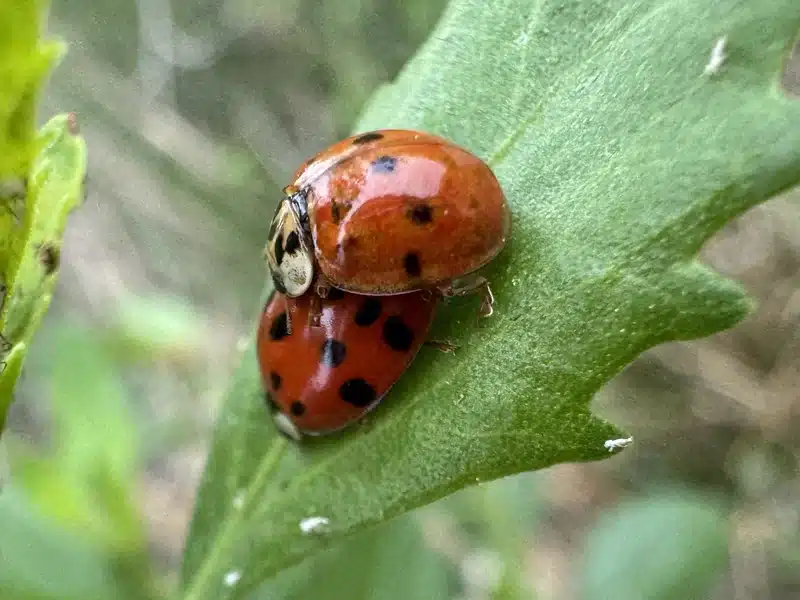

If you’ve spotted small, round beetles crawling around your home, you might be wondering whether they’re helpful ladybugs or problematic Asian beetles. As a registered technician who’s dealt with both species for years in the DMV area, I can tell you that knowing the difference matters more than you might think.
Both insects look similar at first glance, but their impact on your home and garden can be completely different. Asian beetles often invade homes in large numbers during fall, while native ladybugs typically stay outdoors where they belong.
What Are Asian Lady Beetles?
Asian beetles, scientifically known as Harmonia axyridis, aren’t native to North America. The USDA actually released them deliberately between 1978-1985 to control aphids and scale insects on crops.
The plan worked too well. By the mid-1990s, these beetles had spread throughout the entire Mid-Atlantic region. Now they’re one of the most common beetles you’ll encounter in Virginia, Maryland, and Washington DC. They’re also called multicolored Asian lady beetles, harlequin ladybirds, or Halloween beetles — that last nickname comes from their habit of swarming homes right around Halloween.
Native Ladybugs: The Good Guys
Our native ladybugs include several species that have lived in the DMV area for generations. The most common ones are convergent ladybugs, seven-spotted ladybugs, and twice-stabbed ladybugs.
These beneficial insects are voracious predators that eat 50-100 aphids per day as adults. Their larvae are even hungrier, consuming their own weight in aphids daily. Unlike Asian beetles, native ladybugs generally stay outside. They might occasionally wander into your home, but they don’t invade in massive swarms.
Key Identification Differences
Learning to tell Asian beetles vs ladybugs apart is easier once you know what to look for. The head marking is the most reliable identifier.
The M-Shaped Mark
The clearest way to tell these beetles apart is by checking the area behind the head (called the pronotum). Asian beetles have a pale “cheek” area with a distinct black M- or W-shaped mark. Native ladybugs don’t have this letter-shaped pattern. This single feature is reliable no matter what color the beetle happens to be.
Color and Spot Variations
Asian beetles show extreme color variation, ranging from mustard-yellow to deep red. They can have anywhere from zero to 19 spots, or sometimes no spots at all. This makes them tricky to identify by color alone.
Native ladybugs are more consistent. Convergent ladybugs have a reliable red-orange color with 12-13 small black spots. Seven-spotted ladybugs always have exactly seven large spots, while twice-stabbed ladybugs are glossy black with two red spots.
Size and Shape
Asian beetles average 6-8 millimeters long and appear slightly more domed than most native species. They’re often a bit larger and more rounded compared to the flatter profile of many native ladybugs. However, the size overlap between species makes this a less reliable clue than the head marking.
Here’s a quick reference table to compare the two side by side.
| Asian Lady Beetles | Native Ladybugs | |
|---|---|---|
| Head Marking | Black M or W mark | No letter-shaped marks |
| Color Range | Mustard-yellow to deep red | Consistent red-orange |
| Home Invasion | Massive swarms in fall | Rarely enters homes |
| Harmful to Humans | Can cause allergies and bites | Generally harmless |
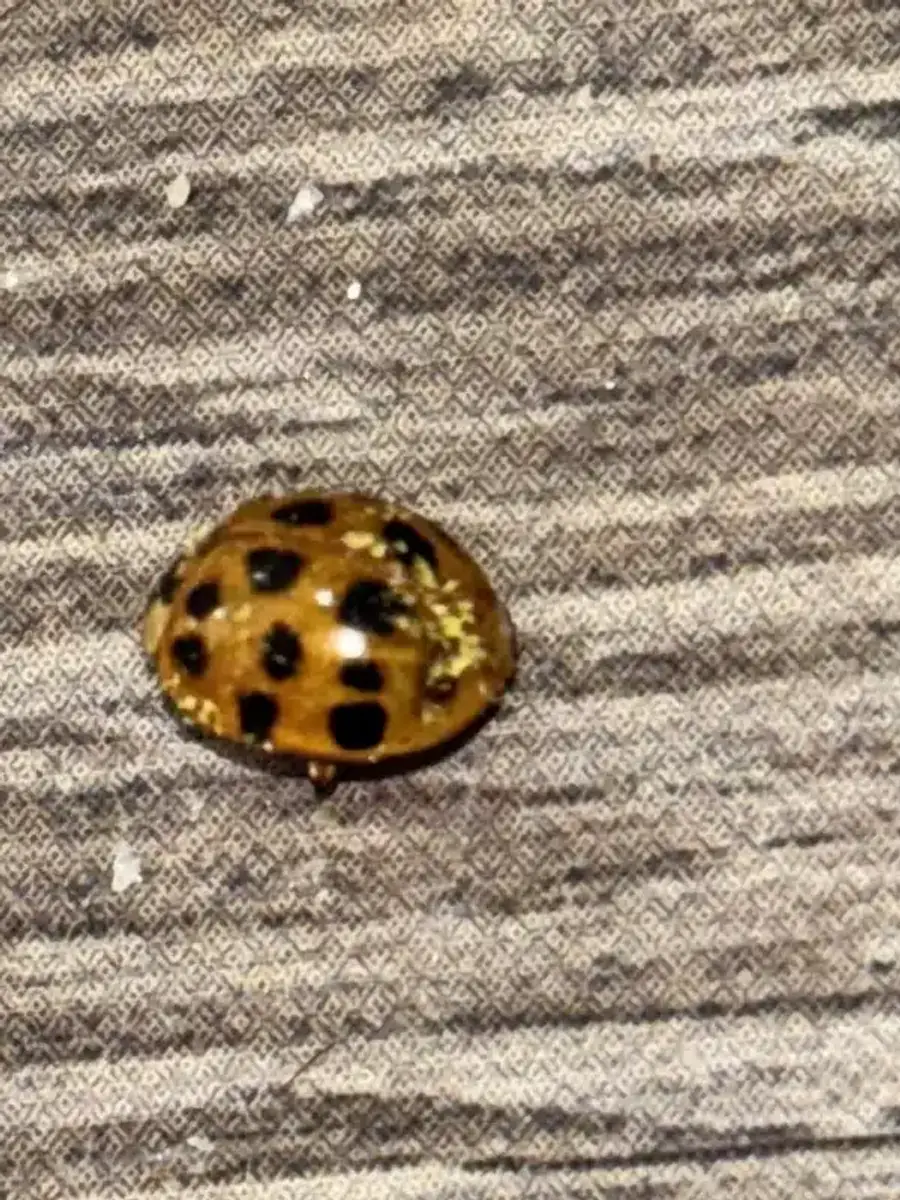
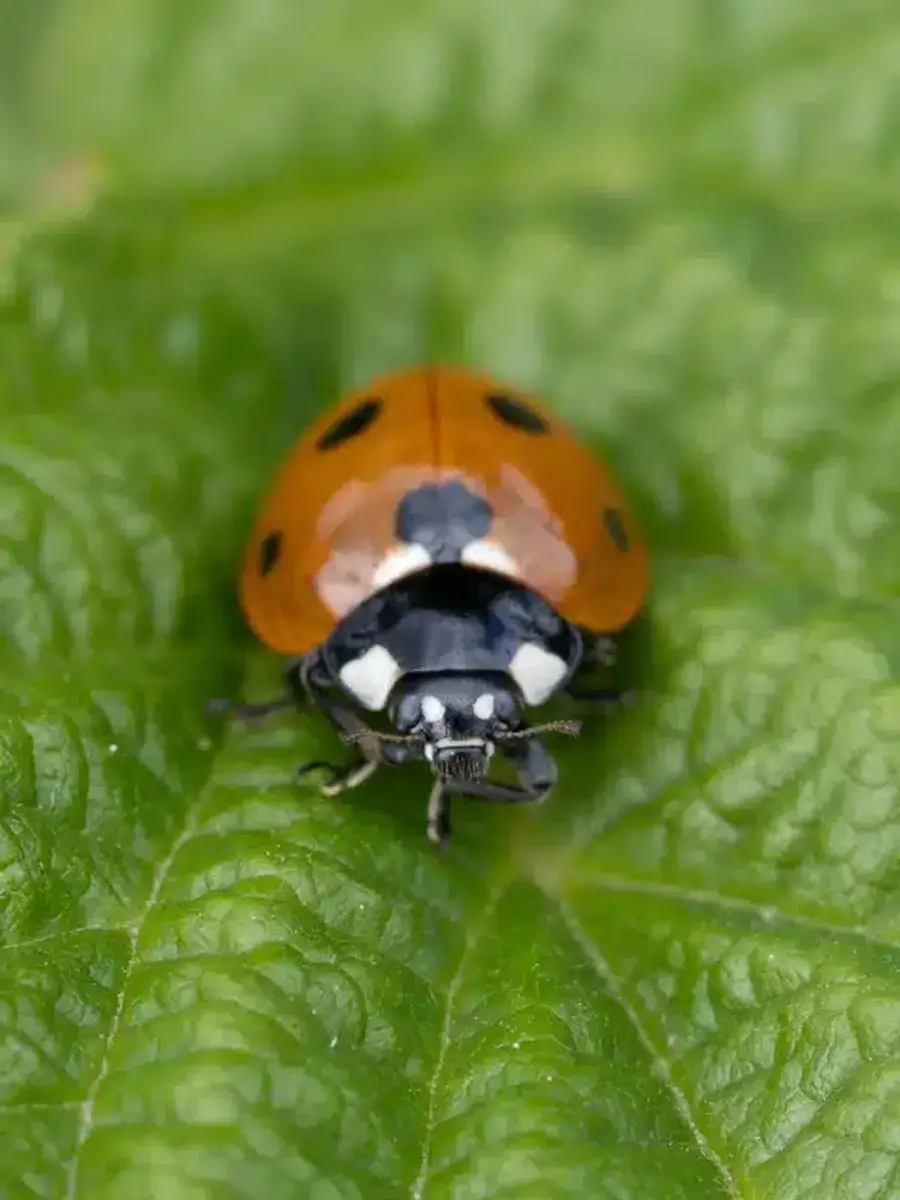
Notice how the Asian beetle on the left has a more variable color pattern, while the native ladybug on the right shows the classic red shell with defined black spots.
Behavioral Differences
The biggest difference between Asian beetles vs ladybugs isn’t how they look — it’s how they behave. This is what makes Asian beetles a much bigger problem for homeowners.
Fall Swarming
Asian beetles swarm homes in massive numbers during September through November. They’re triggered by day-length dropping below 11 hours and temperatures between 64-68 degrees F.
These beetles target sun-lit west or south-facing walls specifically. They release a pheromone that attracts even more beetles to the same spot. Once a few find your home, hundreds or thousands can follow.
Native ladybugs don’t exhibit this swarming behavior. They might occasionally find their way indoors, but you’ll typically see just one or two, not massive clusters.
Defensive Reactions
When disturbed, both Asian beetles and ladybugs release yellow or orange fluid from their leg joints (called reflex bleeding). However, Asian beetles produce much more of this smelly, staining fluid.
Asian beetles also bite defensively when handled. The bites are minor but can break skin and cause irritation. Native ladybugs rarely bite humans.
Where They Spend Winter
Asian beetles have evolved to overwinter in protected spaces like rock crevices and cliff faces. Your home’s wall voids and eaves provide similar conditions with temperatures between 50-59 degrees F. Come spring, these beetles emerge and start the cycle again.
Native ladybugs follow similar timing but typically overwinter in natural locations like rock crevices, under tree bark, or in leaf litter. They don’t seek out human structures the way Asian beetles do.
These behavioral differences explain why Asian beetles cause so many more problems for homeowners than native ladybugs ever do.
Are Asian Beetles Harmful?
When comparing Asian beetles vs ladybugs in terms of harm, Asian beetles clearly cause more problems for homeowners. Here’s how they stack up.
Household Nuisance
Asian beetles win this category hands down — and not in a good way. They invade homes in massive numbers, leave staining fluid on walls and furniture, and create strong odors when disturbed or crushed. The cleanup process can take hours and often requires professional help during large-scale invasions.
Native ladybugs cause virtually no household nuisance. You might find one or two indoors occasionally, but they don’t swarm or leave behind the mess that Asian beetles do.
Health Risks
Asian beetles pose several health risks that native ladybugs don’t. Studies have documented allergic reactions to their hemolymph proteins in areas with heavy populations. Symptoms can include allergic rhinitis, conjunctivitis, and even asthma. Pets can also be affected — dogs that eat Asian beetles sometimes develop oral ulceration, commonly called “ladybug mouth.”
According to research published in the Journal of Allergy and Clinical Immunology, up to 10% of people in areas with heavy Asian beetle populations develop allergic reactions to their hemolymph proteins. The study documented cases of allergic rhinitis, conjunctivitis, and asthma exacerbation linked to Asian beetle exposure during their fall invasion period.
Environmental Impact
Both species eat aphids and other pest insects, which benefits gardens and crops. However, Asian beetles have displaced several native species through direct competition and predation on native beetle eggs and larvae. This has reduced biodiversity in our local ecosystems.
Asian beetles also contaminate grape harvests, causing “ladybug taint” in wine when present during harvest season.
Cornell University’s biological control research documents how Asian beetles have displaced native species through aggressive competition and direct predation on native ladybug eggs and larvae. Wine industry studies show that as few as 1,200 beetles per ton of grapes can contaminate entire batches by releasing compounds that create musty, bitter flavors in finished wine.
Here’s a closer look at the beetles discussed in this article.
How to Prevent and Treat Asian Beetle Invasions
Prevention is always better than treatment when dealing with Asian beetles. Here’s the approach that works best based on our experience treating hundreds of homes in the DMV area.
Step 1: Seal Entry Points
The most effective approach is exclusion work completed before the fall invasion begins. Focus on sealing gaps larger than 1/32 inch around siding, fascia boards, and utility penetrations.
Key areas to address:
- Install 20-mesh screens on all vents
- Add brush or rubber door sweeps to all exterior doors
- Seal cracks around window frames and door trim
- Check and replace torn window screens
This work needs to happen in late summer, typically August through early September, before the beetles start looking for overwintering sites.
Step 2: Apply Exterior Treatments
When exclusion isn’t enough, exterior residual treatments applied to sun-facing walls where beetles gather can make a big difference. Professional-grade micro-encapsulated pyrethroids work best when applied in late September to early October, right before beetles start seeking shelter.
These products only remain effective for 7-10 days due to UV breakdown, so proper timing makes all the difference. Consumer-grade sprays typically don’t provide the same level of control.
Step 3: Remove Beetles Already Inside
For beetles already in your home, vacuuming is the most effective removal method. Use a shop vacuum with a HEPA filter and empty the canister promptly to prevent odors. Never crush them — this releases staining fluid and strong smells.
Light traps with UV bulbs work well in dark spaces like basements where beetles tend to cluster during winter months.
Step 4: Monitor and Follow Up
Check your home’s exterior walls on warm fall afternoons when beetles are most active. If you see clusters forming, that’s a sign that more are on the way.
Our approach also emphasizes conservation. We recommend releasing live beetles back to gardens when temperatures are above 50 degrees F, since they still provide beneficial pest control outdoors.
Here’s a quick checklist you can reference when preparing for fall beetle season.
- August-September: Complete all exclusion work before beetles start seeking shelter
- Late September: Apply exterior treatments to sun-facing walls if needed
- October-November: Vacuum any beetles that make it inside; avoid crushing them
- Year-round: Check window screens and door sweeps for gaps or damage
When to Call for Professional Treatment
You should consider professional help when you notice large numbers of beetles gathering on your home’s exterior walls in fall, or when you find significant numbers inside. Early intervention works best — if you wait until beetles are already inside in large numbers, treatment becomes more challenging and more expensive.
For help with identification or to learn more about bugs that look like ladybugs, professional assessment ensures you’re dealing with the right species using the right approach.
If you’re dealing with Asian beetles or need help telling them apart from native ladybugs, call us at 703-683-2000 or email info@bettertermite.com.