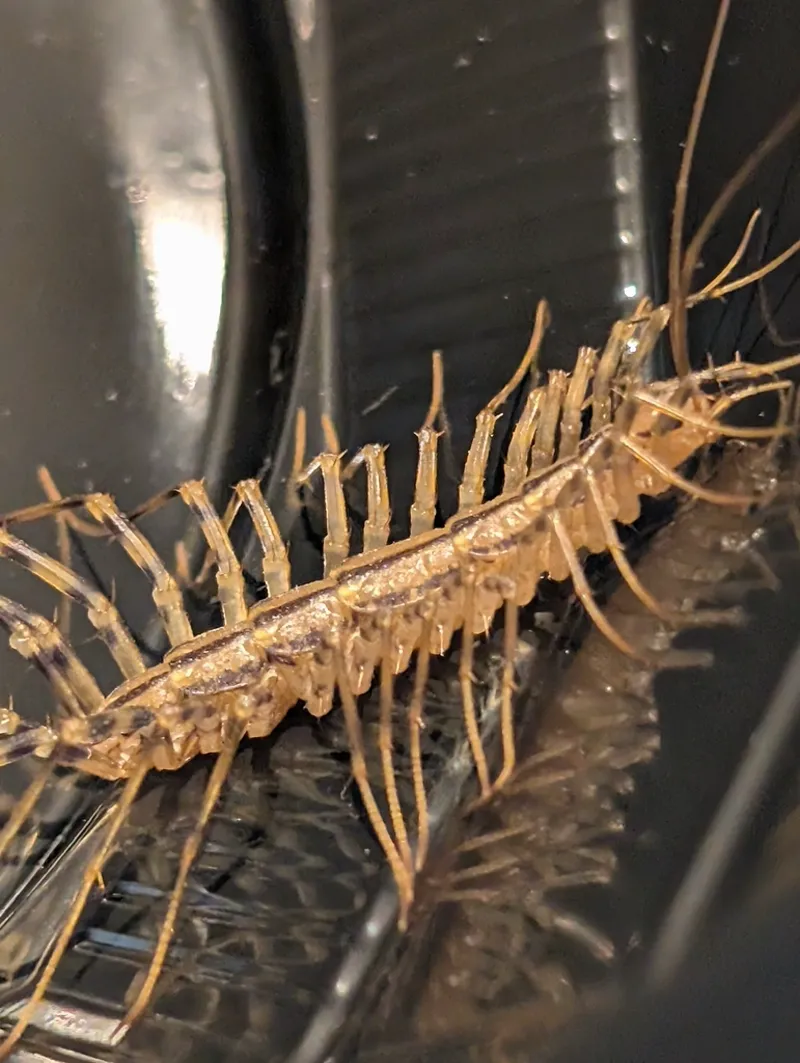

Finding a centipede on your bathroom floor can be startling. With their many legs and quick moves, you may wonder: are centipedes dangerous? For most homes, the answer is no. House centipedes pose little threat to you or your family.
I’ve worked as a pest control tech for five years at Better Termite & Pest Control, our family business. We’ve served the DC metro area for over 57 years. I’ve helped hundreds of homeowners with centipede concerns. In this guide, I’ll cover centipede risks and when you should take action.
Most house centipedes are harmless. Bites are rare, mild, and heal within 48 hours. They don’t spread diseases. If you see them often, it means your home has other pests they’re eating. Fix moisture issues and seal entry points to keep them out. Call a pro if sightings are frequent.
How Dangerous Are Different Centipede Species?
The type of centipede you find matters. Some species are harmless while others can pack a punch.
House Centipedes: The Most Common Indoor Species
The house centipede (Scutigera coleoptrata) is what most homeowners see. These yellowish-grey bugs have 15 pairs of long, banded legs. They look scary but are mostly harmless. Penn State Extension notes that their venom is only strong enough to kill small insects.
House centipedes rarely bite people. When they do, it’s because they got trapped against skin. You might put on a shoe one crawled into. The bite feels like a bee sting and goes away in a day or two.
Giant Centipedes: A Different Story
Larger species like the giant desert centipede in the Southwest can give more painful bites. These grow 8 to 10 inches long and are more aggressive. They are rare in Virginia, Maryland, and DC.
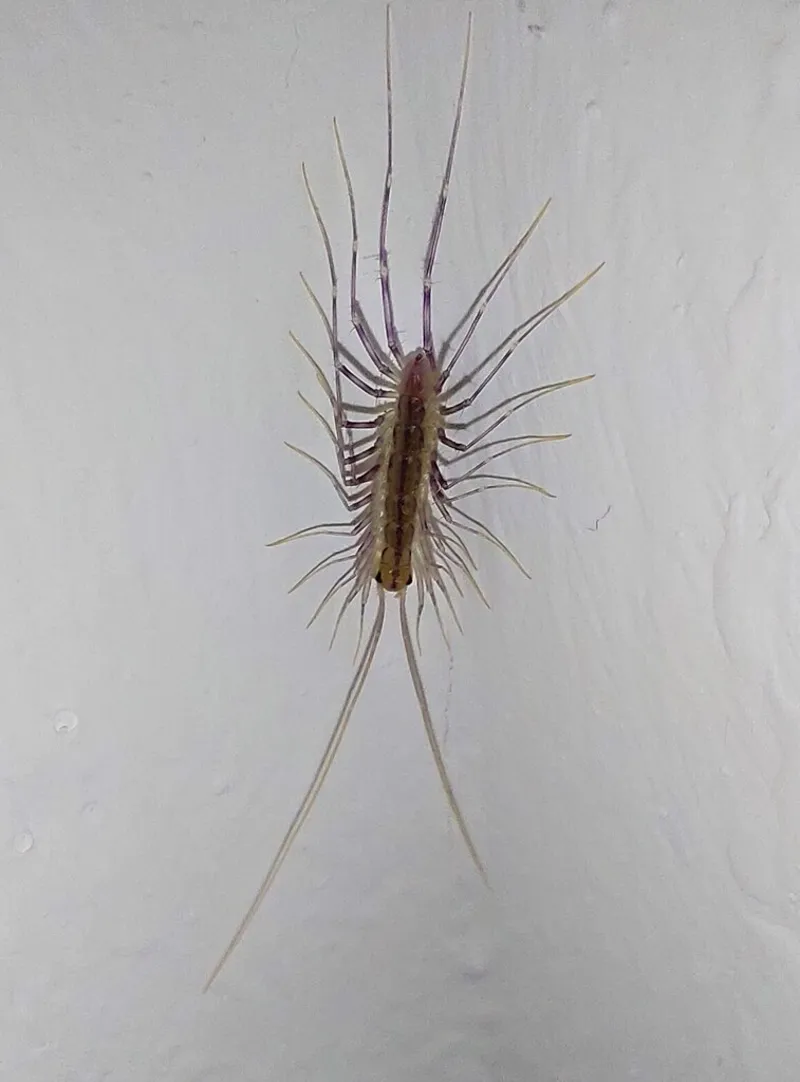
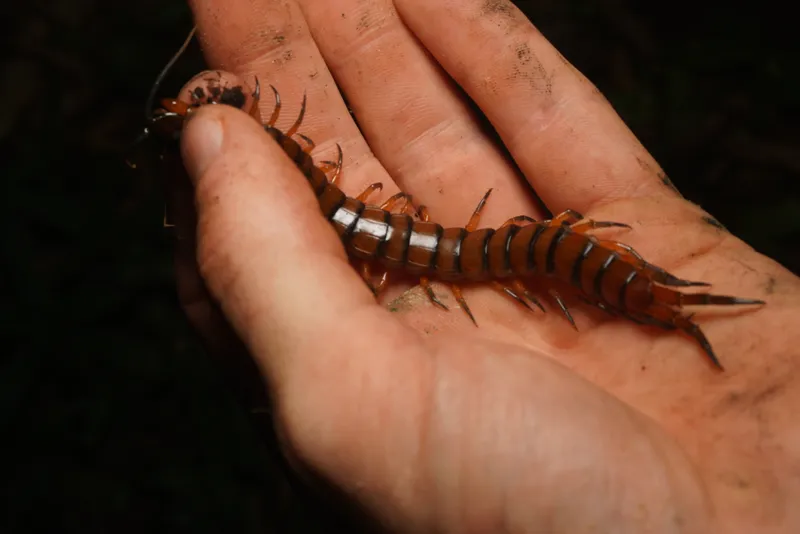

Not sure what kind of centipede you found? Upload a photo and our AI tool will help you identify it.
If you’re seeing centipedes inside often, it’s a sign that your home has conditions that attract them. We can help you find and fix those conditions.
Can Centipedes Bite?
Centipedes can bite. They use their front legs to inject venom into prey. But bites on people are uncommon.
Why Bites Are Rare
Centipedes are shy. They prefer to run and hide instead of fight. The National Capital Poison Center says bites are rare because centipedes are active at night and avoid people.
For a bite to happen, three things usually line up:
- The centipede feels trapped with no way out
- Direct touch forces it to defend itself
- The centipede is big enough to break human skin
A study on the NCBI Bookshelf found that from 1979 to 2001, only six deaths in the U.S. were linked to centipede bites. Serious harm from bites is very rare.
What a Centipede Bite Feels Like
If a centipede bites you, you’ll feel sharp pain right away. It feels like a bee or wasp sting. Healthline notes you may see:
- Two small puncture marks
- Redness and swelling around the bite
- Pain for several hours to a few days
- Itching or burning near the bite
Most symptoms clear up within 48 hours on their own.
Who Is Most at Risk?
While centipede bites are mild for healthy adults, some groups should be more careful.
Children
Children may react more to centipede venom because of their smaller size. Kids are also more likely to pick up or poke at centipedes. Teach children not to touch any centipedes they find.
People with Allergies
Some people are allergic to centipede venom. MedlinePlus lists these signs of a bad reaction:
- Trouble breathing
- Rapid heartbeat
- Swelling of the throat or mouth
- Dizziness or fainting
Pets
Dogs and cats may chase or try to eat centipedes. This puts them at risk for bites. Smaller pets are hit harder by the venom. Watch for pain, drooling, or swelling around the mouth if your pet ran into a centipede.
First Aid for Centipede Bites
If you or someone in your home gets bitten, quick first aid can reduce pain and prevent problems.
Clean the Wound
Wash the bite area well with soap and water. This removes any venom on the skin and lowers the chance of infection.
Apply Cold
Use an ice pack wrapped in a thin cloth. Apply for 10 minutes on, then 10 minutes off. This brings down swelling without risking frostbite.
Reduce Pain
Take pain relievers like ibuprofen or acetaminophen to ease the pain.
Prevent Infection
Put antibiotic ointment on the bite and keep it clean. Cover with a bandage if needed.
Watch for Reactions
Monitor for signs of allergic reaction or infection over the next 48 hours. Contact a doctor if symptoms get worse.
When to See a Doctor
Contact a healthcare provider if:
- Symptoms get worse or don’t improve after 48 hours
- You get a fever
- Red streaks appear near the bite (this can mean the infection is spreading)
- The wound leaks fluid or smells bad
- You have any signs of an allergic reaction
What Centipede Sightings Tell You About Your Home
Centipedes hunt insects. If you see them often, your home likely has other pests they’re feeding on.
Working with homeowners in Alexandria and Fairfax, I’ve seen that regular centipede sightings often point to a bigger issue. Centipedes follow their food. If they keep showing up, you likely have other pests in your home.
I once checked a home in Old Town Alexandria where the owner found house centipedes in their basement every week. We found a moisture problem that was pulling in silverfish and other bugs. Once we fixed a leaky pipe and improved airflow, both the prey bugs and centipedes went away.
House centipedes eat many common household pests, including:
- Spiders
- Cockroaches
- Silverfish
- Ants
- Moths
- Carpet beetle larvae
Why Centipedes Enter Your Home
Knowing what draws centipedes in helps you keep them out.
Moisture Is the Main Draw
Centipedes need damp spaces to live. They breathe through tiny openings on their bodies that must stay moist. Common moisture sources include:
- Leaky pipes and faucets
- Poor bathroom ventilation
- Damp basements and crawl spaces
- Condensation around windows
Food Sources Pull Them In
Where there are bugs, centipedes will follow. Even small pest problems can bring in centipedes looking for easy meals.
Entry Points
Centipedes squeeze through small gaps:
- Cracks in foundations
- Gaps around doors and windows
- Openings where pipes enter walls
- Vents without proper screens
How to Prevent Centipedes in Your Home
The best way to keep centipedes out is to make your home less appealing to them and the bugs they eat.
Reduce Indoor Humidity
- Use dehumidifiers in basements and crawl spaces
- Run exhaust fans in bathrooms during and after showers
- Fix plumbing leaks right away
- Make sure water drains away from your foundation
Seal Entry Points
- Caulk cracks in foundations and around windows
- Install door sweeps on exterior doors
- Cover vents with fine mesh screens
- Seal gaps around pipes and utility lines
Address Other Pest Problems
Cutting off their food helps keep centipedes away:
- Deal with any ant or spider problems
- Keep food stored in sealed containers
- Take out trash often
- Fix any cockroach or silverfish issues
When to Call a Professional
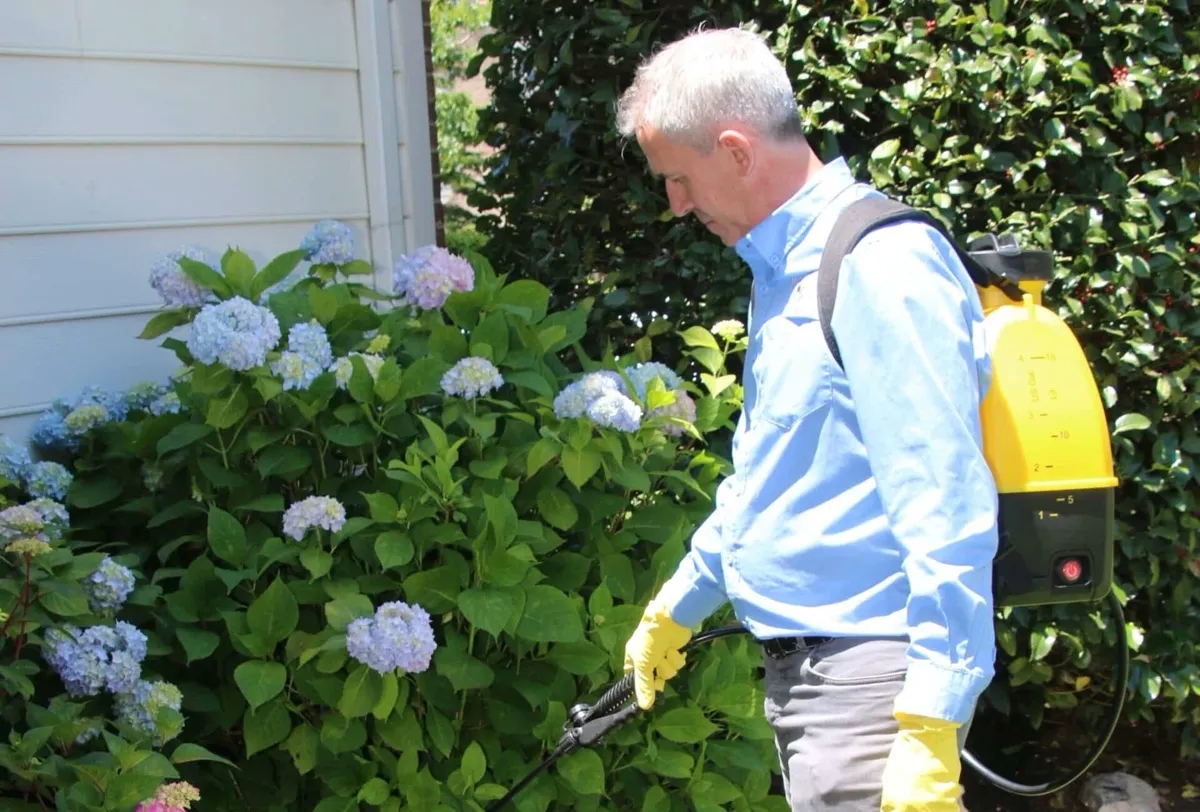
DIY steps work for the odd centipede here and there. But some cases call for expert help.
Signs You Need Professional Treatment
- Seeing centipedes multiple times per week
- Finding them in large numbers
- Spotting centipedes in several areas of your home
- Ongoing sightings despite your own efforts
At Better Termite & Pest Control, we’ve served the DC metro area for over 57 years. Our team has 300+ years of combined experience. We treat the centipedes you see and fix the pest issues that bring them in.
What Professional Treatment Includes
Our pest protection plan (three visits per year) targets centipedes and their prey through:
- A thorough 78-point inspection
- Perimeter treatments with products we trust and use in our own homes
- Interior treatments in key hiding spots
- Moisture checks and tips for your home
- Free callbacks between visits if pests come back
Are Centipedes Dangerous? The Bottom Line
For most people, no. House centipedes pose very little risk. Their bites are rare, mild, and they don’t spread diseases.
Centipedes look scary, but they cause more worry than real harm. If you start seeing them often, look into what’s bringing them in. Fixing moisture or pest issues usually solves the centipede problem too.
Have questions about centipedes or other pests? Call us at 703-683-2000 or email info@bettertermite.com. We’re a third-generation, family-owned business with over 1,000 five-star reviews. We help homeowners across Virginia, Maryland, and DC.