
Deep beneath your home’s foundation, there’s likely a creature you’ve never seen - the termite queen. She’s the reproductive powerhouse behind every colony, capable of laying thousands of eggs daily and living for decades. As a licensed technician who’s helped over 100 customers with termite-related issues, I’ve learned that understanding the termite queen is essential for effective control.
Termites cause an estimated $5 billion in property damage each year in the United States according to the National Pest Management Association. Behind every one of those damaged homes is a termite queen silently producing the workers that eat away at the wood. Here’s what homeowners should know about termite queens, from their biology to why targeting them is key to protecting your home.
What Is a Termite Queen?
The termite queen is the reproductive center of every colony. Unlike the workers you might spot in damaged wood, the queen’s sole purpose is laying eggs. She doesn’t forage, she doesn’t build tunnels, and she doesn’t eat wood directly. Instead, she remains hidden in a protected chamber while workers tend to her every need.
What makes the termite queen truly remarkable is her productivity. A mature queen can produce over 1,000 eggs per day, and this continues year after year for decades. This incredible reproductive capacity explains how a single mated pair can eventually produce a colony of hundreds of thousands of termites.
The queen also controls the colony through chemical signals called pheromones. These pheromones regulate worker behavior, prevent other females from reproducing, and maintain the colony’s social structure. When the termite queen’s pheromone production fades near the end of her life, it signals the colony to develop replacement reproductives.
What Does a Termite Queen Look Like?
The appearance of a termite queen changes dramatically as she matures. When she first mates and starts a colony, she looks similar to other termites - just slightly larger with evidence of shed wings. However, over months and years, her body transforms into something almost unrecognizable.
A mature termite queen’s abdomen becomes massively enlarged through a process called physogastry. Her body can grow up to 4-6 inches long in some species, making her roughly 100 times larger than a typical worker termite. While her abdomen expands to accommodate egg production, her head and legs remain the same size, giving her a strange, unbalanced appearance.
The termite queen’s color is typically pale - cream to milky white - with a translucent quality to her distended abdomen. You can sometimes see the eggs developing inside her body. Eastern subterranean termite queens in our area tend to be lighter colored than some tropical species.
Because of her size, the termite queen becomes essentially immobile. Her tiny legs can’t even reach the ground when she’s lying on her stomach. If she needs to move for any reason, worker termites must carry or roll her to the new location. This immobility means she’s entirely dependent on workers for food, grooming, and protection.
Physogastry - the extreme enlargement of the termite queen’s abdomen - occurs because of distended ovaries and fat deposits. Research published in Insect Science shows that this growth is accompanied by unique adaptations including enhanced telomerase activity in reproductive organs, which may contribute to the queen’s exceptional longevity.
How Long Does a Termite Queen Live?
Termite queens are among the longest-living insects in the world. While worker termites survive only 1-2 years, a termite queen can live for 25-50 years depending on the species.
Eastern subterranean termites - the most common species we encounter in the DC metro area - have queens that typically live 15-30 years. Formosan termite queens can live similarly long lifespans, and some African termite species have documented queen lifespans exceeding 50 years.
This extraordinary lifespan has significant implications for homeowners. A single termite queen that establishes a colony near your home could be producing termites for decades. The queen doesn’t slow down with age either - research shows no significant reproductive decline throughout her life. She continues producing thousands of eggs daily even after 20+ years.
According to research from the Human Frontier Science Program, termite queens and kings invest heavily in protection against oxidative stress through antioxidant enzymes, vitamins, and cofactors. They’re also protected from external dangers by worker termites and live in controlled environments. Scientists believe this combination of internal defenses and external protection enables their remarkable longevity.
This long lifespan is why termite problems don’t go away on their own. The queen keeps producing workers for decades.
The Termite Queen Life Cycle
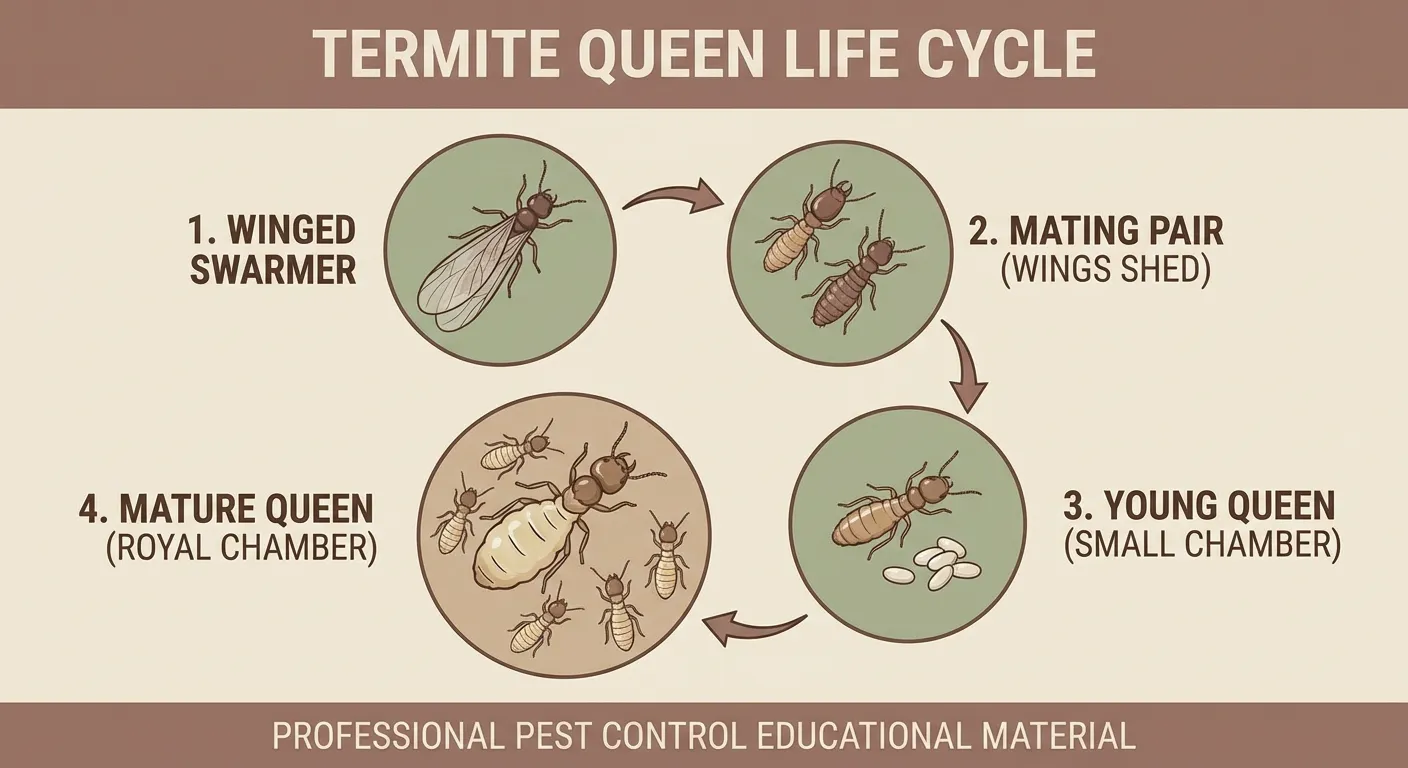
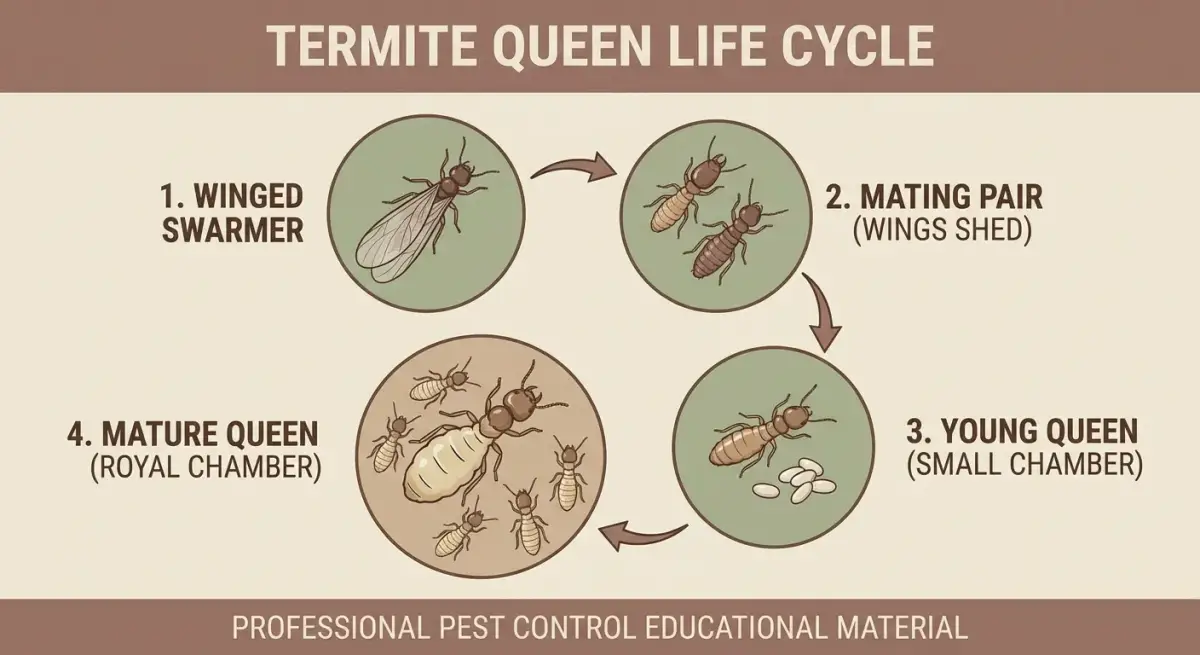
The journey of a termite queen begins long before she starts laying eggs. Understanding this life cycle helps explain how termite colonies establish and grow near homes.
Stage 1: The Swarming Flight
Every termite queen starts as a winged reproductive called an alate. During swarming season - typically spring in the DC metro area - thousands of these winged termites leave their parent colony to mate and start new colonies.
Swarmers emerge after rainfall when temperatures are warm and humidity is high. The timing varies by species, but eastern subterranean termites in Virginia and Maryland typically swarm between March and May. These swarming events are often the first sign homeowners notice that termites are active in the area.
Stage 2: Mating and Wing Shedding
During or shortly after the swarming flight, male and female termites pair up and mate. Unlike many insects, termite pairs mate for life. The male becomes the termite king and stays with the queen in the colony.
After mating, both the future queen and king shed their wings. Finding discarded termite wings near windows, doors, or foundations often indicates that termites are attempting to establish a colony nearby.
Stage 3: Colony Founding
The newly mated pair searches for a suitable nesting site. For subterranean termites, this means finding moist soil with access to wood. They excavate a small chamber, seal themselves inside, and the queen begins laying her first eggs. For additional guidance, see our article on Paper Wasp Queen vs Worker: What You Need to Know.
Initially, the termite queen produces only a few eggs - perhaps 10-20 at a time. She and the king care for this first brood themselves since there are no workers yet. This founding phase is when colonies are most vulnerable and easiest to eliminate.
Stage 4: Colony Growth and Queen Maturation
As the first workers mature, they take over all colony duties except reproduction. The termite queen’s only job becomes laying eggs. With workers now feeding her and caring for brood, her egg production increases dramatically.
Over the first few years, the queen’s body gradually transforms. Her abdomen begins expanding as her ovaries enlarge. The colony grows from dozens to hundreds to thousands of termites. By year 3-5, a mature colony may contain 50,000 to 1 million termites.
The Termite King: The Queen’s Lifelong Partner
While the termite queen gets most of the attention, the termite king plays a crucial role too. Unlike ant colonies where males die after mating, the termite king stays with his queen for life - potentially decades.
The king’s primary function is continuing to mate with the queen throughout their lives. This ongoing fertilization is necessary because the queen doesn’t store enough sperm from a single mating to last her entire reproductive life. The king and queen remain together in the royal chamber, essentially entombed in the nest they founded.
The termite king is smaller than the queen but larger than workers. He maintains normal proportions and doesn’t undergo the dramatic physical changes the queen experiences. Research suggests that kings also live exceptionally long lives, often matching the queen’s lifespan of 15-30+ years.
Secondary Queens and Colony Survival
One of the most important things to understand about termite queens is that colonies often have backup reproductives. These secondary queens, called neotenics or supplementary reproductives, can take over if the primary termite queen dies.
Neotenics develop from existing colony members when needed. Unlike primary queens, they never develop wings or go through swarming flights. Instead, they mature within the existing colony and can begin laying eggs relatively quickly.
This redundancy makes termite colonies remarkably resilient. According to research from the University of Florida, simply killing the termite queen doesn’t necessarily doom the colony. Secondary reproductives can sustain or even grow the population. This is why modern termite control focuses on eliminating the entire colony rather than targeting the queen alone.
Large, mature colonies may have multiple reproductive females actively laying eggs. This allows colonies to expand rapidly and makes complete elimination more challenging without professional treatment.
How the Termite Queen Controls the Colony
The termite queen maintains control over her colony through chemical communication. She produces pheromones that influence nearly every aspect of colony behavior:
Reproductive suppression: Queen pheromones prevent other females from developing into reproductives. This ensures the queen (and any secondary reproductives she permits) remain the sole egg-layers. When the queen’s pheromone production weakens with age, the colony begins developing replacement reproductives.
Caste determination: The queen’s pheromones influence whether developing termites become workers, soldiers, or reproductives. She can adjust caste ratios based on colony needs - producing more soldiers when threatened or more workers when food is abundant.
Worker behavior: Pheromones coordinate foraging patterns, nest construction, and brood care activities. Workers receiving these chemical signals know their specific roles and duties within the colony structure.
This pheromone system is actually exploited by some termite control methods. When bait systems like Sentricon eliminate workers, it disrupts the normal pheromone communication and eventually affects the queen’s ability to maintain colony function.
Eastern Subterranean Termite Queens in Our Area
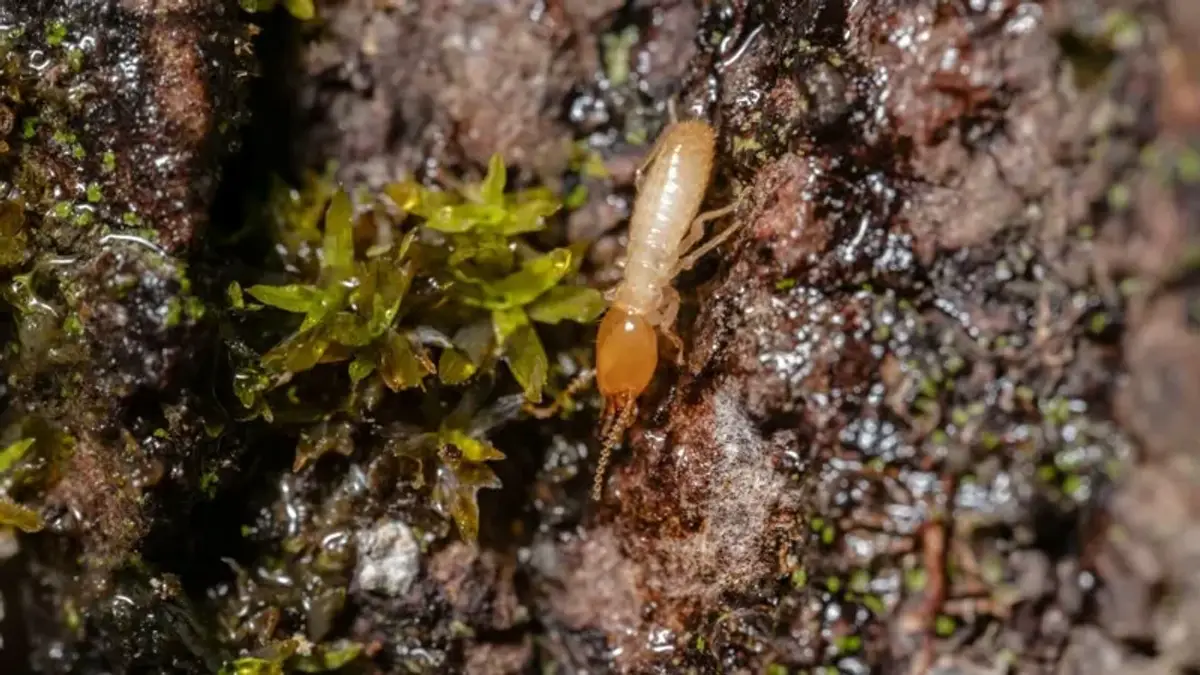
In Northern Virginia, Maryland, and the DC metro area, the primary termite threat comes from eastern subterranean termites. Understanding the specific characteristics of these termite queens helps homeowners protect their properties.
Eastern subterranean termite queens:
- Live approximately 15-30 years
- Produce around 1,000 eggs per day at maturity
- Establish colonies in moist soil, typically underground
- Create mud tubes to reach above-ground wood sources
- Can have colonies ranging from 20,000 to over 1 million termites
These termites cause the majority of termite damage in the eastern United States. Their colonies are often located in the soil around foundations, under concrete slabs, or near moisture sources like leaky pipes. The termite queen remains deep underground while workers travel through mud tubes to reach the wood in your home.
One situation I always think about was during my training. We went to a house in Alexandria - less than a quarter mile from the company owner’s house. There had been no obvious problems until the homeowner noticed a small bulge in a window sill in an addition. That bulge was termites eating up to the paint and starting to break through. When we entered the crawl space, we found years of termite feeding with tunnels up the sides of the foundation. The termite queen and her colony had caused tons of difficult-to-repair damage, all while remaining completely hidden underground.
This case shows why professional treatment matters. Surface-level fixes miss the queen, and the colony keeps growing.
Why Targeting the Termite Queen Matters for Control
Understanding the termite queen’s role explains why effective termite control must address the entire colony, including the queen. Simply killing the workers you can see accomplishes little because the queen continues producing replacements at a rate of 1,000+ eggs per day.
Traditional liquid termiticides create barriers that kill termites on contact. While effective at protecting structures, these treatments don’t necessarily eliminate the termite queen herself. The colony may simply find alternative routes or wait until the chemical breaks down before resuming activity.
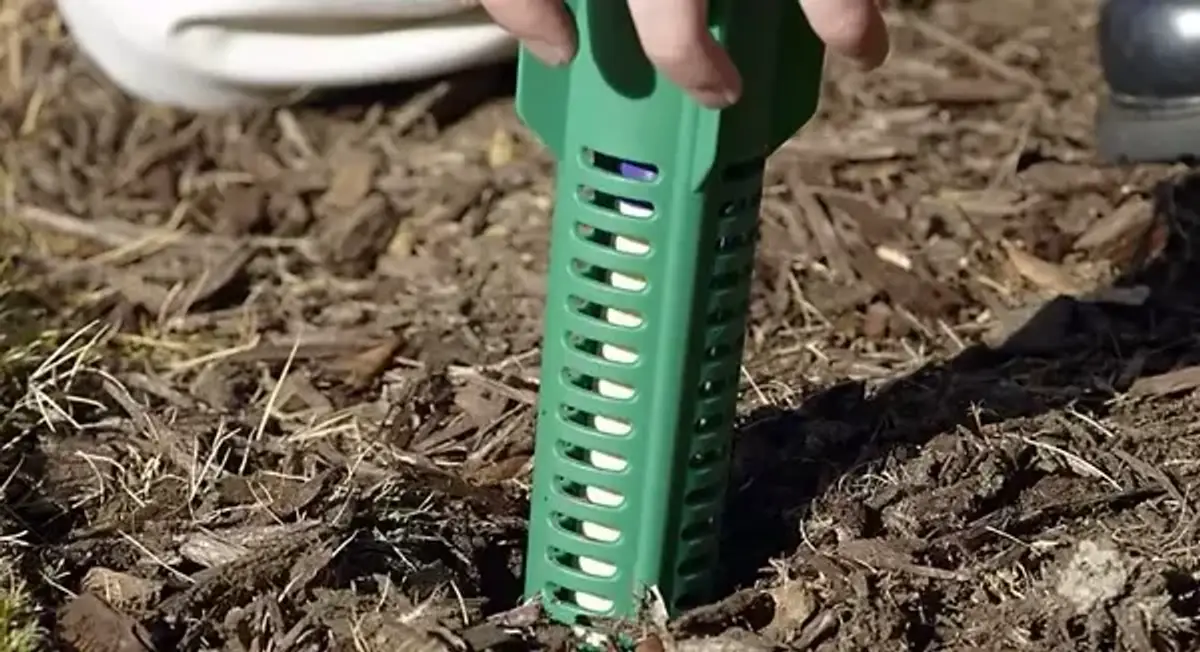
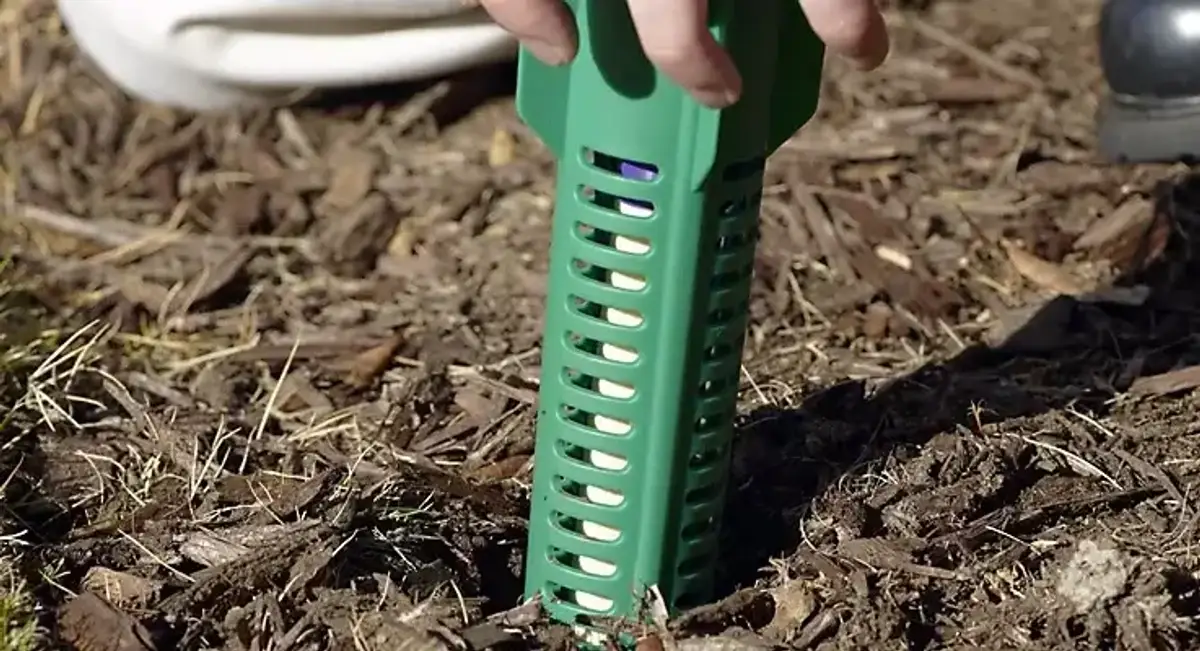
Modern baiting systems offer a different approach. Products like Sentricon use slow-acting materials that workers carry back to the colony and share through feeding. Termites share food mouth-to-mouth (called trophallaxis), so the bait eventually reaches the queen. Once she stops producing eggs, the colony cannot sustain itself.
This is why I often recommend Sentricon for proactive termite protection. In my experience helping over 100 customers with termite issues, it’s often cheaper and lower stress to use Sentricon proactively. The system has a very high success rate because it targets the termite queen and entire colony rather than just creating a barrier.
Signs a Termite Queen May Be Near Your Home
You’ll never actually see the termite queen herself - she remains hidden deep in her colony. However, certain signs suggest an active colony with a reproducing queen nearby:
Mud tubes: These pencil-width tunnels on foundation walls indicate subterranean termites traveling between soil and wood. An active mud tube means workers are actively foraging, which means a termite queen is actively producing them somewhere nearby.
Swarmers indoors: Finding winged termites or discarded wings inside your home during spring suggests either an existing colony in your structure or termites attempting to establish new colonies.
Wood damage: Hollow-sounding wood, bubbling paint, or visible damage with mud-lined galleries indicates an established infestation. The longer termites have been present, the larger and more productive the termite queen has likely become.
Frass or mud in damaged wood: Subterranean termites line their galleries with soil and fecal material, unlike carpenter ants which leave clean, sandpaper-smooth galleries.
How Professional Termite Control Addresses the Queen
At Better Termite & Pest Control, our approach to termite control is specifically designed to reach the termite queen and eliminate the entire colony. With over 57 years in the industry and over 1 million homes serviced, we’ve refined methods that work for homes in the DC metro area.
Inspection: Our licensed technicians identify all signs of termite activity, locate potential entry points, and assess conditions that attract termites. This helps us understand where the termite queen’s colony is likely located.
Treatment options: Depending on your situation, we may recommend:
- Sentricon baiting system - Stations placed around your home that workers bring back to the colony, eventually eliminating the termite queen
- Liquid treatments using products like Termidor or Premise - Non-repellent formulations that termites unknowingly carry back to the nest
- Combination approaches for severe infestations where termites can’t initially find bait stations
Monitoring: Termite protection isn’t a one-time event. We provide ongoing monitoring to ensure the termite queen and her colony have been eliminated and to prevent recolonization.
As Certified Sentricon Specialists and members of the Virginia Pest Management Association, NPMA, and Maryland Pest Management Association, we bring expertise and accountability to every termite treatment.
Protecting Your Home from Future Termite Queens
Prevention is always easier than treatment. While you can’t stop termite queens from existing, you can make your property less attractive for colony establishment:
Reduce moisture: Termite queens need moisture to survive. Fix leaky faucets, ensure proper drainage away from foundations, and address any standing water issues.
Eliminate wood-to-soil contact: Keep firewood, mulch, and wooden structures away from your foundation. Termite queens establish colonies in soil, and direct wood contact provides easy access.
Maintain ventilation: Ensure crawl spaces and basements have adequate ventilation to reduce humidity levels that attract termites.
Schedule regular inspections: Professional termite inspections can identify early activity before significant damage occurs. Most damage happens when colonies have been active for years without detection.
Consider proactive protection: Baiting systems like Sentricon provide ongoing monitoring and protection, eliminating termite queens before they can establish damaging colonies.
Get Help with Termite Control
The termite queen may be hidden, but her impact on your home is very real. These remarkable insects can produce millions of offspring over their multi-decade lifespans, causing thousands of dollars in damage before you even know they’re there.
If you’ve noticed signs of termite activity or simply want the peace of mind that comes with professional protection, our team at Better Termite & Pest Control is here to help. With over 300 years of combined experience among our technicians and more than 1,000 five-star reviews, we have the expertise to eliminate termite queens and protect your home.
Call us at 703-683-2000 or email info@bettertermite.com to schedule an inspection. We serve Alexandria, Fairfax, Bethesda, Burke, and communities throughout Northern Virginia and Maryland.