
Finding bugs or seeing damage on your favorite sweater can be worrying. Sometimes the culprit is carpet beetles. These small pests sneak into homes and cause real damage if you don’t catch them early. I’m a licensed technician and the third generation at Better Termite, and I’ve been in this business since 2015. Carpet beetle calls come in steadily every spring across Northern Virginia, and most of them start the same way: a few small beetles on a windowsill, or a mystery hole in a wool item.
What Are Carpet Beetles?
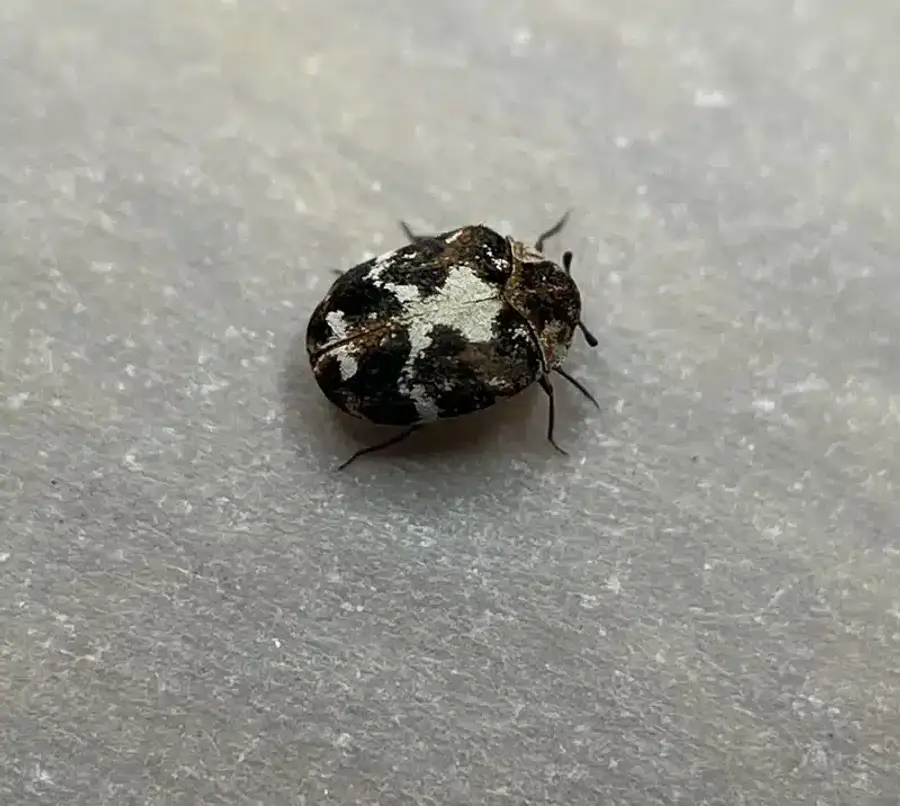
Carpet beetles are small oval insects in the Dermestidae family. Adults are tiny, from about 1/16 inch up to 1/4 inch long depending on the species. The black carpet beetle is dark brown to black. The varied carpet beetle and furniture carpet beetle have mottled patterns with white, yellow, or orange specks.
Adults are drawn to light and often gather near windows in spring. They eat pollen and nectar outdoors. They fly into homes through open windows or hitch rides on cut flowers, secondhand furniture, or rugs.
What Do Carpet Beetles Look Like?
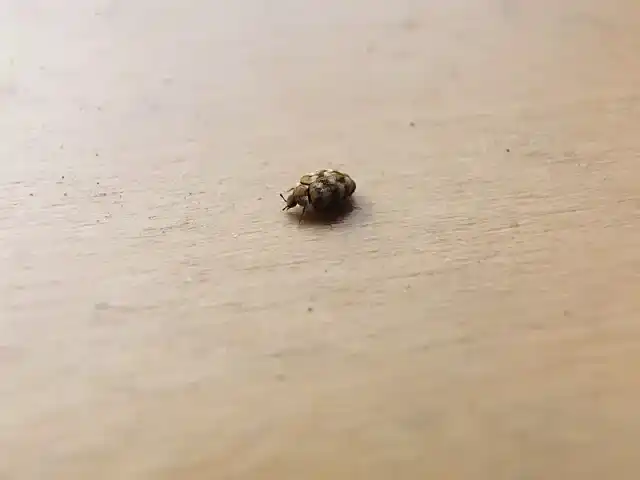
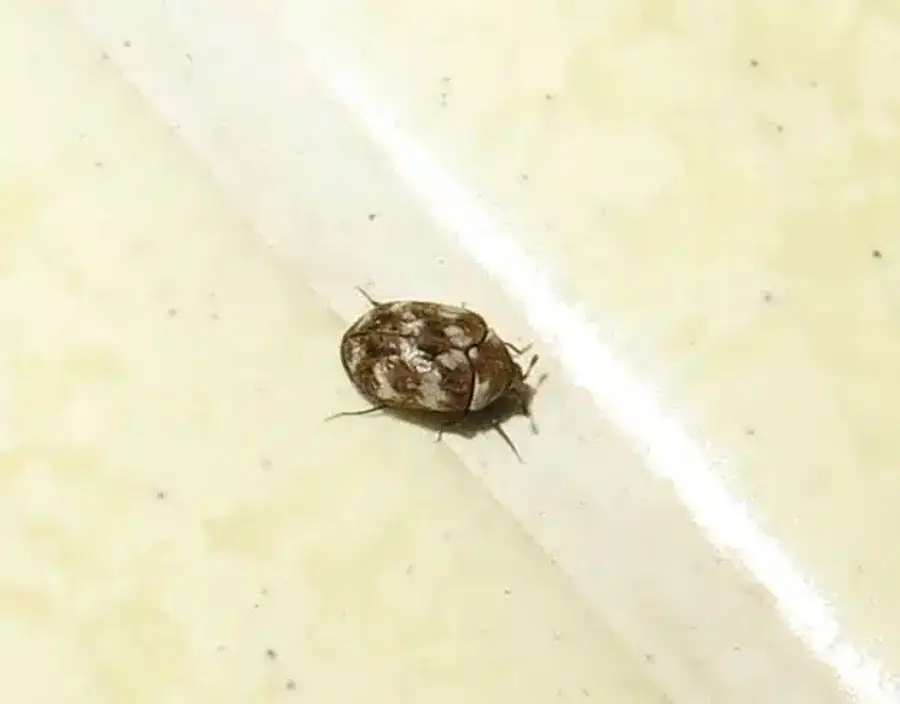
Most people who call us describe the same thing: a tiny black and white spotted bug in the house, or a small brown bug with white spots on its back. That mottled, calico look is the varied carpet beetle, the species University of Maryland Extension lists as one of the two most common in our region. It is only 2 to 3 millimeters long, about the size of a sesame seed, and from a few feet away it can pass for a speck of dirt.
If what you found is a solid, shiny, dark bug that looks like a tiny watermelon seed, that is a black carpet beetle. People often call it a brown carpet beetle because it looks dark brown in good light. Both species are rounded and oval, with short clubbed antennae. If you see a tiny brown and white striped bug in the house, look closer. The “stripes” on a varied carpet beetle are actually bands of scales that wear off as the beetle ages, so older beetles look darker and plainer than fresh ones.
The larvae look nothing like the adults. They are fuzzy, carrot-shaped grubs with bands of brown bristles, and many have a tuft of long hairs at the tail end. If you have seen one, our carpet beetle larvae guide walks through the ID in more detail.
Life Cycle
Females lay 30 to 100 tiny eggs near a food source like wool, lint, or pet hair. The eggs are white to cream colored and less than half a millimeter long, so you will almost never see carpet beetle eggs with the naked eye. Eggs hatch in 1 to 3 weeks, and the larvae are the ones that cause all the damage.
Larvae are fuzzy, brownish worms about 1/8 to 1/4 inch long, covered in hairs and bristles. They feed on natural fibers for anywhere from 3 months to as long as 3 years, and they shed their skin 5 to 12 times along the way. After pupating for 1 to 3 weeks, adults emerge and the cycle starts again.
According to Virginia Cooperative Extension, larval development takes 3 to 36 months and each larva molts 5 to 12 times before it pupates. Those old cast skins are often mistaken for live larvae, which makes an infestation look much bigger than it really is. That is worth knowing before you panic over a drawer full of “worms” that are actually empty shells.
The two photos below show what the adults look like up close. Note how small and rounded they are compared with most beetles you see outdoors.
Signs of an Infestation
- Fabric damage: Irregular holes or thin patches in wool, silk, fur, or feathers. Damage looks like the surface was grazed, creating bare spots (different from the clean holes moths make)
- Shed skins: Empty, brownish, bristly shells in corners, drawers, or fabric folds. Finding clusters means larvae have been active
- Fecal pellets: Tiny grain-like specks, brown or black, found under damaged items or in carpet fibers
- Live larvae: Fuzzy brown worms in dark spots like under furniture, along carpet edges, or in closets
- Adult beetles: Small, oval bugs near windowsills or light fixtures, especially in spring
Here’s one extra tip for catching them early.
What Causes Carpet Beetles? Where They Come From
Carpet beetles don’t show up because a house is dirty. They show up because something in it is edible to the larvae, and the adults found a way in. The most common sources we trace infestations back to:
- Open windows in spring. Adults feed on pollen outdoors and fly toward light. A screen with a gap is all it takes.
- Old bird, wasp, or rodent nests in an attic, soffit, or wall void. Feathers, fur, and dead insects are a full pantry for larvae, and they wander from there into closets.
- Secondhand rugs, furniture, and taxidermy. Wool rugs and upholstered pieces from estate sales are a classic way they arrive.
- Dead insects piling up in light fixtures, window tracks, and attic corners after a stink bug or lady beetle winter.
- The pantry. Daren, one of our registered technicians with about ten years in the field, says carpet beetles are the second most common pantry pest he finds in DMV kitchens, right behind Indian meal moths. Larvae feed on pet food, dried spices, and crumbs behind cabinets, then spread out from there.
If you can find the source, you are most of the way to fixing the problem. Treating a closet without clearing an old nest in the attic above it just means the larvae come back.
Where to Look
Here are the specific spots to check in each part of your home.
Check stored wool clothes, blankets, and furs. Look in drawers and on closet shelves for shed skins and larvae. Items stored for a long time without being moved are most at risk.
Inspect carpet edges, especially under heavy furniture and along walls where it’s dark. Wool rugs and natural fiber carpets are prime targets. Look for thin or bare patches.
Check behind baseboards, inside air vents, and around old bird or rodent nests in walls. Lint traps, pet bedding areas, and accumulations of pet hair can also feed larvae. Museum specimens and taxidermy are targets too.
Signs of Carpet Beetles in a Mattress or Bed
People often search for signs of carpet beetles in a mattress because they woke up with itchy bumps. Carpet beetles don’t live inside a mattress the way bed bugs do, and they don’t feed on you. What you will find instead is larvae in feather pillows, down comforters, wool blankets, and the dust and pet hair under the bed frame. Check the bed skirt, the carpet edge under the headboard, and the seams of any wool or down bedding. If you see blood spots or dark fecal smears on the sheets, that points to bed bugs, not carpet beetles. Our carpet beetle vs. bed bug comparison covers the differences side by side.
If you’re finding signs in multiple areas, it’s time to get professional help.
How to Tell Them From Other Pests
Carpet beetle larvae get confused with clothes moth larvae. The difference: moth larvae are smooth, pale worms often found in silken tubes. Carpet beetle larvae are fuzzy/bristly and don’t make webbing. The damage pattern differs too. Carpet beetles tend to graze one large area of a garment or rug, while moth damage shows up as scattered holes.
The itchy rash from larval hairs (carpet beetle dermatitis) gets mistaken for bed bug bites. But carpet beetles don’t bite. If you find no bed bugs in your mattress but see larvae in closets, it’s carpet beetles. For more on telling these apart, see our carpet beetle bites guide.
Carpet Mites vs. Carpet Beetles
There is no pest called a carpet mite. When someone tells us they have carpet mites, it is almost always one of three things. Fuzzy, slow-moving specks in the carpet are carpet beetle larvae. Tiny red dots crawling on a sunny windowsill in spring or fall are clover mites, which are harmless to fabric. An itchy feeling with nothing visible is usually dust mites, which are microscopic and never seen with the naked eye. If you can see the bug and it has bristles, treat it as a carpet beetle.
Are Carpet Beetles Bad?
Carpet beetles don’t bite, sting, or carry disease, so a few adults on a windowsill in April is not an emergency. The problems come from the larvae. Left alone for a season, they will ruin wool rugs, sweaters, upholstery, and taxidermy, and the damage is often not noticed until an item is pulled out of storage. The second issue is skin. Some people react to the larval bristles with a rash that is easy to confuse with bites. We cover both in more depth in are carpet beetles dangerous.
Some people react to the larval bristles with an itchy rash, but that is a skin question, not an infestation sign. Our carpet beetle bites and rash guide covers what the rash looks like, why only some people react, and how long it lasts.
Treatment
Most carpet beetle problems come down to finding the food source and removing it. Here is how the DIY route compares with what we do on a service visit.
DIY Steps
- Vacuum carpet edges, under furniture, and inside closets. Focus on dark, undisturbed areas
- Steam clean carpets, upholstery, and bedding to kill larvae
- Launder infested clothes on high heat or dry clean them
- Dust diatomaceous earth along baseboards and in cracks
- Throw out heavily damaged items that can’t be cleaned
According to University of California pest notes, insecticides may not be needed at all if food sources are removed and areas are kept clean. Thorough cleaning combined with proper storage is the foundation of carpet beetle control.
Professional Treatment
For infestations covering multiple rooms or hidden in hard-to-reach areas, professional help works best. Our registered technicians use EPA-registered products and find hidden larvae and food sources that DIY methods miss. Carpet beetles are covered under our home pest control plan, which starts around $49 a month for an average DMV home plus a one-time $200 setup fee on the first visit.
We include follow-up visits to make sure the problem is fully resolved.
Prevention
These steps keep carpet beetles from coming back.
- Vacuum regularly to remove lint, pet hair, and dead insects that feed larvae
- Wash or dry-clean natural fiber items before storing them for the season
- Store wool in airtight containers or sealed bags
- Seal entry points around windows, doors, and utility lines
- Inspect secondhand furniture and rugs before bringing them inside
- Check stored items each spring and fall for early signs
Seasonal Patterns
Spring is when adults emerge and gather near windows. In Northern Virginia and Maryland, most of our windowsill calls come between April and June, when the adults are out feeding on pollen. Females lay eggs in spring and summer. Larvae feed actively during warm months but can keep going through fall and winter in heated homes. Late winter wandering larvae are common as they search for food or pupation spots, which is why a “sudden” larva sighting in February usually means they have been there since last spring.
If you suspect carpet beetles, call us at 703-683-2000 or email info@bettertermite.com for expert identification and treatment.