TLDR: Roach poop varies by species. German roach droppings look like black pepper or coffee grounds. American roach droppings are small ridged cylinders with blunt ends. Droppings contain allergens that trigger asthma and attract more roaches through pheromones. Clean with a HEPA vacuum, not a broom. If you find droppings in more than one area, call a professional.
Finding dark specks in your kitchen cabinets or along your baseboards? You might be looking at roach poop. As a licensed technician at Better Termite & Pest Control, I’ve helped hundreds of homeowners identify cockroach droppings. German, Oriental, and American roaches are very common in the DC metro area. Knowing how to spot their droppings is often the first step toward fixing a problem.
This guide covers what roach poop looks like, where to find it, the health risks, and what to do about it.
What Does Roach Poop Look Like?
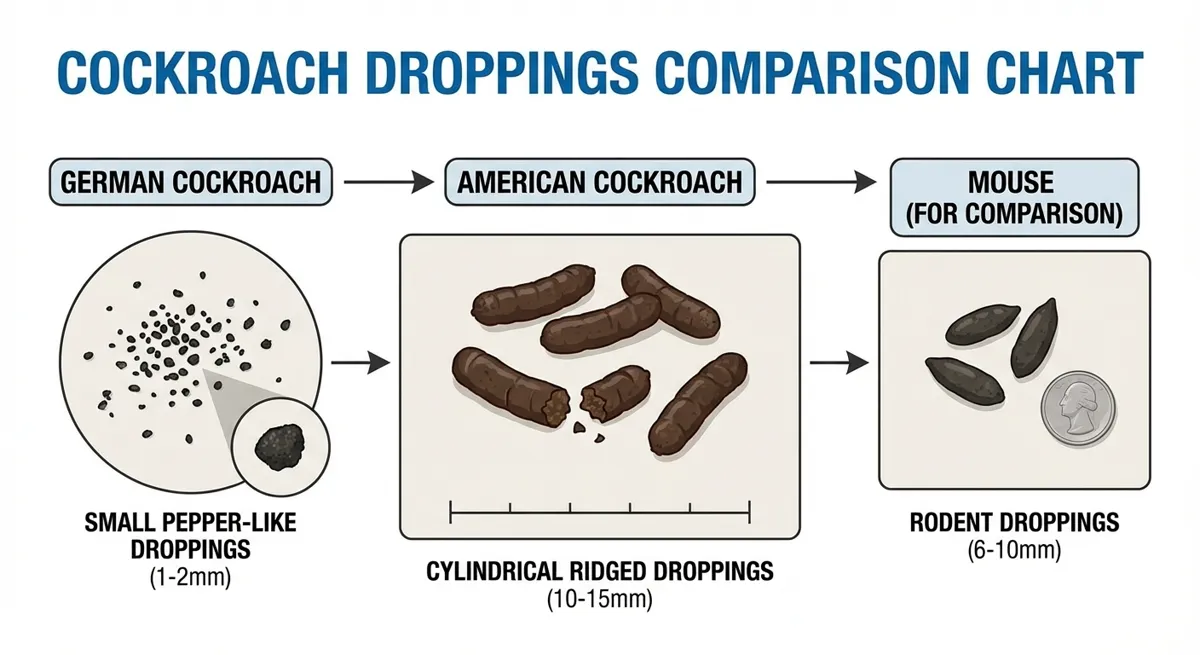
Roach droppings look different by species. The size and shape of the poop matches the size of the roach that left it.
German Roach Droppings
German roaches are the most common indoor cockroach in our area. Their droppings are:
- Very small, about 1-2mm, like ground black pepper or coffee grounds
- Dark brown to black in color
- Often appear as smears or stains rather than distinct pellets
- Leave dark ink-like spots in corners and along edges
German roaches stay close to their hiding spots. You’ll usually find their droppings grouped in one area. Heavy staining around cabinet hinges, drawer tracks, or behind appliances is a clear sign.
American Roach Droppings
American roaches, sometimes called “water bugs” or “palmetto bugs,” leave larger droppings. Their poop is:
- Small cylinders about 2-3mm long
- Ridged or grooved along the sides
- Blunt at both ends, which sets them apart from mouse droppings
- Dark brown to black when fresh
Oriental Roach Droppings
Oriental roaches prefer damp areas like basements and crawl spaces. Their droppings are mid-sized, larger than pepper specks but still small. You’ll find them near floor drains, under sinks, or in basement corners.
Where to Look for Roach Droppings
Roaches leave droppings wherever they spend time. Check these spots:
- Kitchen areas: Inside cabinets, behind the fridge, under the stove, near the dishwasher
- Bathroom spaces: Under sinks, behind toilets, around plumbing panels
- Dark corners: Along baseboards, in closet corners, behind furniture
- High areas: On top of cabinets, on shelving units (German roaches love these spots)
- Utility spaces: Near water heaters, in laundry rooms, around HVAC units
Most homeowners first notice roaches in the kitchen or bathroom. When I inspect homes, I always check inside upper cabinet corners and behind the fridge. These warm, dark spots are favorite hiding places for German roaches. You’ll often find droppings there even if you haven’t seen a single live roach.
Roach Poop vs. Mouse Poop: Key Differences
One of the most common questions I get is whether droppings are from roaches or mice. Here’s how to tell them apart:
| Feature | Roach Droppings | Mouse Droppings |
|---|---|---|
| Size | 1-3mm (varies by species) | 6-10mm |
| Shape | Pepper-like (small roaches) or ridged cylinders (large roaches) | Pellet-shaped with pointed ends |
| Ends | Blunt | Pointed at one or both ends |
| Texture | May appear smeared | Solid, distinct pellets |
If you’re finding larger pellets with pointed ends, you may have mice or rats instead of roaches. The treatment is very different, so getting the right ID matters.
Health Risks of Cockroach Droppings
Roach poop can affect your health. The Asthma and Allergy Foundation of America lists cockroach allergens as one of the most common indoor asthma triggers, especially for children.
The proteins in roach droppings go airborne when disturbed. They can cause symptoms even in people who don’t know they have a cockroach allergy. Kids in homes with high roach allergen levels have more asthma-related ER visits.
Studies show cockroach allergens are found in a large share of urban homes. Children living in these homes have higher rates of asthma attacks and hospital visits tied to cockroach exposure.
The health effects include:
- Asthma attacks from airborne allergens
- Runny nose, sneezing, and congestion
- Skin rashes in sensitive people
- Bacteria spread, as roaches can carry Salmonella and E. coli
How Much Roach Poop Means an Infestation?
The amount and location of droppings tells you a lot:
Light, scattered droppings in one area might mean a few roaches wandered in from outside. This is common with American or Oriental roaches during humid weather.
Droppings in multiple spots point to a larger, settled population. German roaches leave heavy staining near their hiding spots.
Droppings plus other signs like egg cases, shed skins, or a musty smell mean a more serious problem that likely needs professional treatment.


Why Roach Droppings Attract More Roaches
Roach poop contains pheromones that attract other cockroaches. These chemical signals tell other roaches that a spot is a good place to gather.
This is one reason infestations grow so fast. More roaches means more droppings, which draws in even more roaches. To break this cycle, you need to both get rid of the roaches and clean the affected areas well.
How to Clean Up Roach Droppings
Proper cleanup matters for both health and pest control. Here’s what I recommend:
Put on rubber gloves and a dust mask. This keeps you from breathing in allergens while you clean.
Use a vacuum with a HEPA filter to pick up droppings. This traps tiny particles instead of spreading them around.
Clean with hot soapy water or a disinfectant spray. Wipe down cabinet interiors, drawer tracks, and all surfaces near the droppings. This removes pheromone residue that attracts more roaches.
Sweeping launches allergens into the air. Always vacuum first, then wipe.
Seal vacuum bag contents in a plastic bag before throwing it away.
What to Do After Finding Roach Droppings
Finding roach poop means you have roach activity. Here are your next steps:
For Minor Activity
- Clean the affected areas well
- Seal cracks and gaps around pipes, cabinets, and baseboards
- Fix leaks and use exhaust fans to reduce moisture
- Store food in sealed containers
- Watch the area for more droppings
For Larger Problems
If you find droppings in more than one room, see live roaches during the day, or have German roaches, DIY methods often don’t work. German roaches breed fast. A single female can produce hundreds of babies in her lifetime.
When to Call a Professional
Call a licensed pest control company if:
- Droppings show up in multiple areas of your home
- You’re seeing roaches during the day
- DIY treatments haven’t worked after 2-3 weeks
- You’re dealing with German roaches (they need specialized treatment)
- Anyone in your home has asthma or allergies
At Better Termite & Pest Control, we’ve served Northern Virginia, Maryland, and the DC area for over 57 years. Our licensed technicians find the roaches, treat the hiding spots, seal entry points, and fix the conditions that brought them in.
Preventing Future Roach Problems
Once you’ve dealt with a problem, prevention keeps roaches from coming back:
- Store food in sealed containers. Clean up crumbs right away. Don’t leave pet food out at night.
- Fix moisture issues. Repair leaky pipes, use bathroom fans, and address condensation.
- Seal entry points. Caulk cracks around pipes, add door sweeps, and fix worn weatherstripping.
- Remove clutter. Roaches love hiding in cardboard boxes and paper piles.
- Clean often. Vacuum and mop kitchens and bathrooms on a regular basis.
For ongoing protection in Fairfax, Alexandria, and Bethesda, many of our customers choose tri-annual pest control (three visits per year). This creates a steady barrier against roaches and other common pests.
Get Expert Help with Roach Problems
If you’ve found roach droppings in your home, our team at Better Termite & Pest Control can help. We handle everything from minor sightings to severe infestations across the DC metro area. We’ll identify the species, find their hiding spots, and build a treatment plan for your home.
Call us at 703-683-2000 or email info@bettertermite.com. With over 1,000 five-star reviews and 57 years of experience, we’ll get your home roach-free.