Thread-Waisted Wasps Identification Guide
Sphecidae (Family)
Thread-waisted wasps are solitary insects named for the extremely thin waist connecting their thorax and abdomen. These non-aggressive wasps hunt caterpillars, grasshoppers, and spiders to feed their young.
Taxonomy
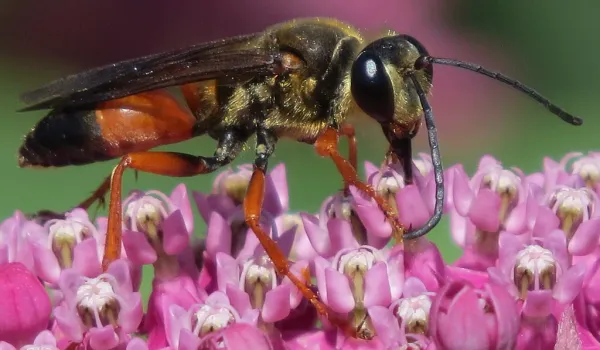
Thread-Waisted Wasps Coloration
Common color patterns to help identify thread-waisted wasps
Thread-Waisted Wasps
Seasonal Activity
When thread-waisted wasps are most active throughout the year

Where Thread-Waisted Wasps Are Found
Hover over states to see their names. Green regions indicate where thread-waisted wasps have been reported.
Thread-Waisted Wasp Identification Guide
Physical Characteristics
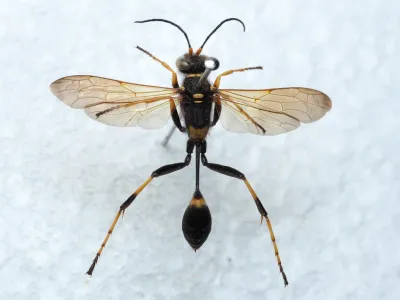
Thread-waisted wasps get their name from the very thin stalk connecting their chest to their abdomen. This narrow waist makes these wasps easy to spot. Body length ranges from about half an inch to over one and a half inches. Some species are among the largest solitary wasps in North America.
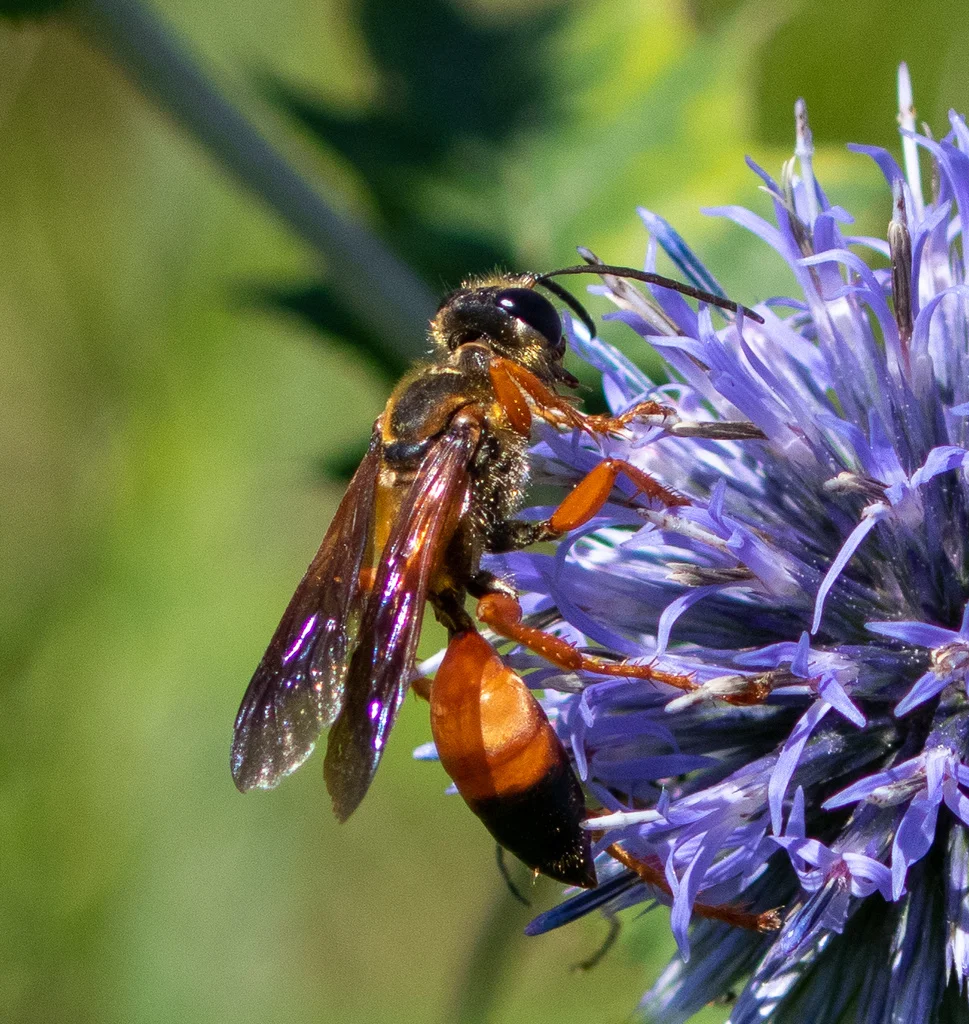
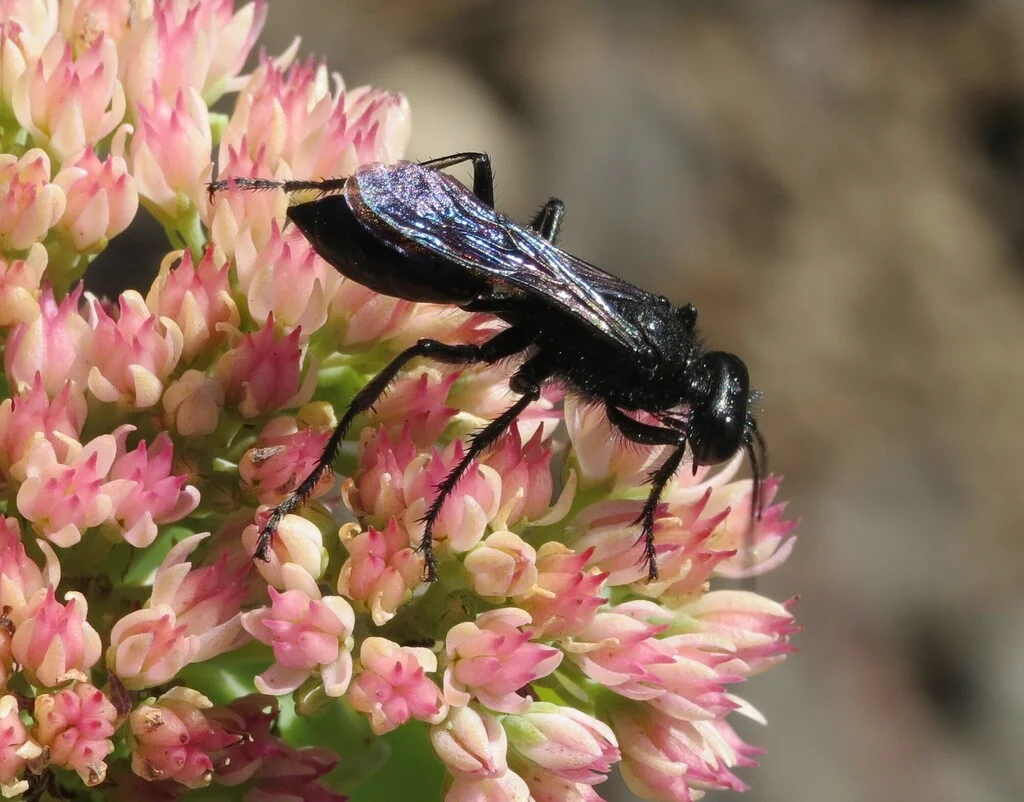
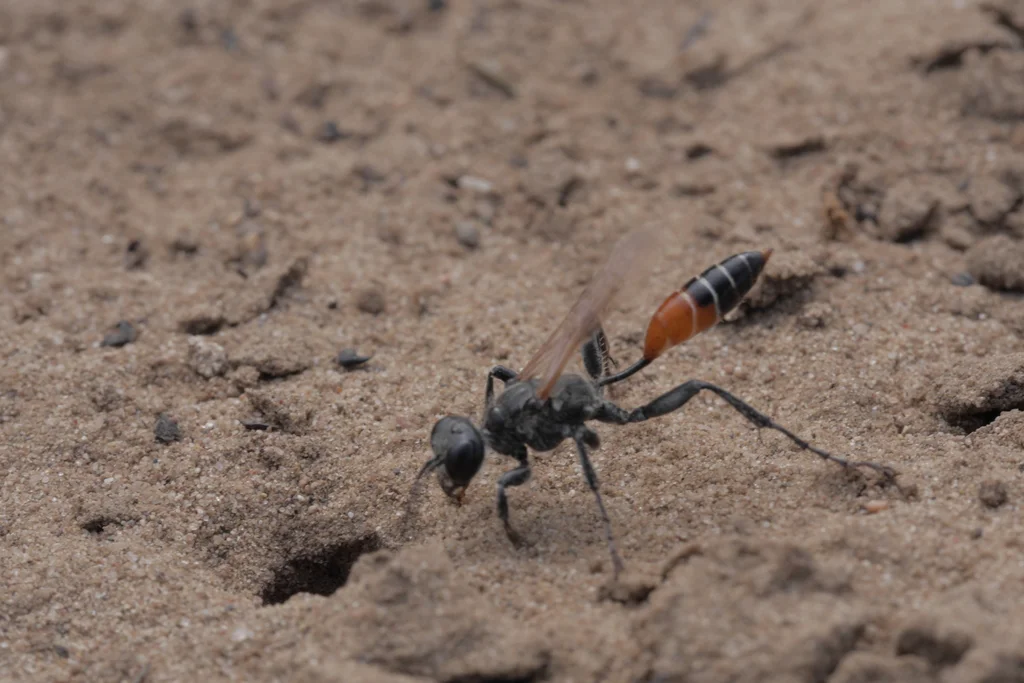
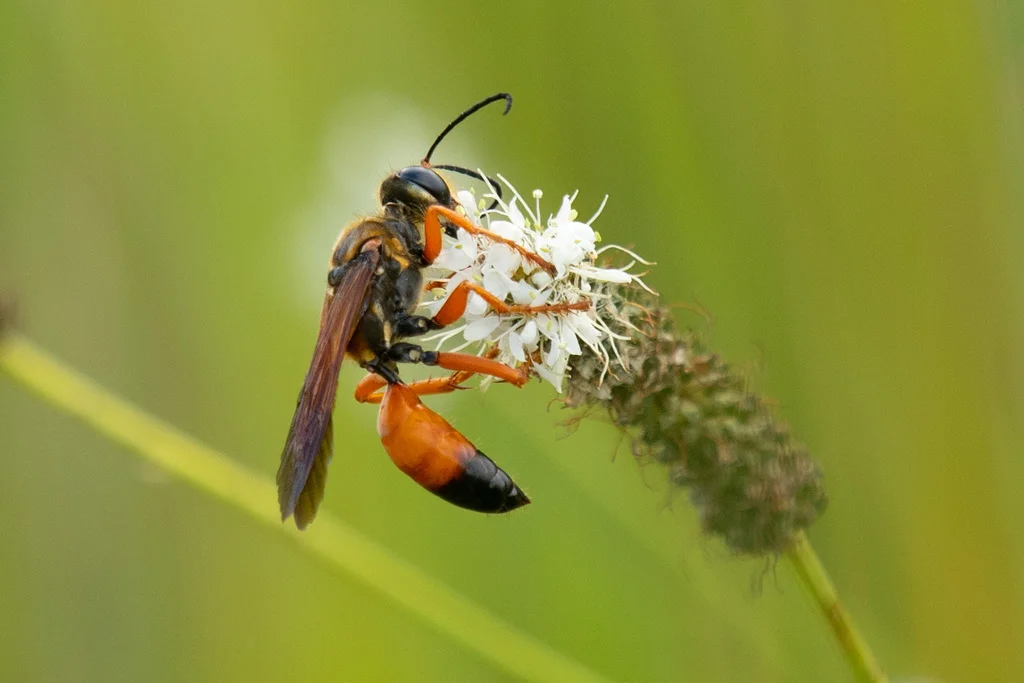
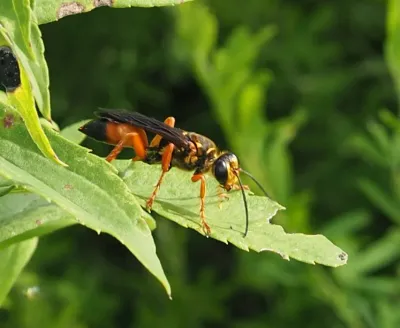
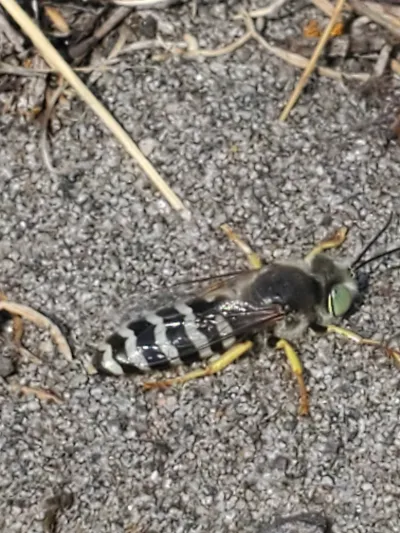
Colors vary by species. Some thread-waisted wasps are all black, sometimes with a metallic blue or green sheen. Others show bold patterns of black and orange, black and red, or yellow and black. The great golden digger wasp has a golden-orange abdomen with black markings. All species have two pairs of wings and six long legs that hang down when they fly.
Common Species
Over 125 species of thread-waisted wasps occur in North America. Several species are commonly encountered around homes and gardens:
-
Great Golden Digger Wasp (Sphex ichneumoneus) is a large wasp up to 1.5 inches long with a golden-orange abdomen and black thorax. It is common throughout North America and often visits flowers. It hunts crickets and katydids.
-
Common Thread-Waisted Wasp (Ammophila procera) is a slender black and orange species that hunts caterpillars. It is known for using small pebbles as tools to pack soil when sealing nest burrows.
-
Gold-marked Thread-Waisted Wasp (Eremnophila aureonotata) is a black wasp with golden markings. Pairs stay coupled while the female visits flowers during mating.
-
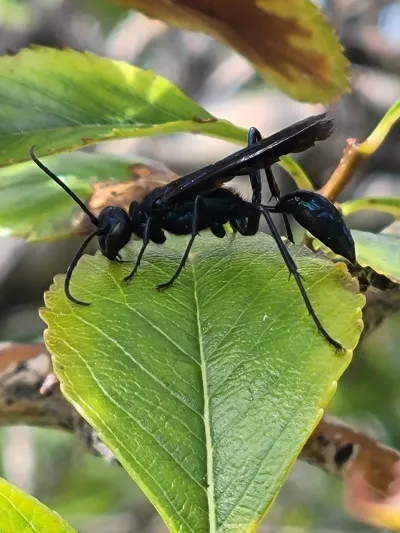
Great Black Wasp (Sphex pensylvanicus), also called the blue-black thread-waisted wasp, is entirely blue-black. It hunts grasshoppers and katydids.
Thread-Waisted Wasp Behavior and Biology
Thread-waisted wasps are solitary insects. Each female works on her own to build nests and stock them with prey. Unlike social wasps such as yellowjackets, they do not form colonies or have workers. This solitary nature makes them far less defensive than colonial wasps.
Nesting Behavior
Most thread-waisted wasps dig burrows in sandy or loose soil for nesting. The female uses her strong jaws and front legs to dig a simple tunnel. Some species vibrate their wings against the ground to loosen packed soil. These solitary wasps are related to mud daubers, which build mud nests instead of digging burrows. Once the burrow is done, she hides the entrance and goes hunting.
After catching and paralyzing prey, the female drags or carries the victim back to her nest. She places the paralyzed insect in the burrow, lays an egg on it, and seals the chamber with soil. The common thread-waisted wasp has been seen using small pebbles to pack down the soil when closing her nest.
Hunting and Prey
Thread-waisted wasps are skilled hunters. Each species targets specific types of prey. Some hunt only caterpillars, while others prey on grasshoppers, crickets, katydids, or spiders. When a female finds prey, she grabs it behind the head and stings it. The sting paralyzes but does not kill the victim.
The paralyzed prey is then carried back to the nest. The wasp’s strong jaws and long legs help her carry or drag prey that may be larger than herself. A single female may stock multiple nests during the season.
Lifecycle
Thread-waisted wasp larvae develop inside the sealed nest chambers. The larva feeds on the paralyzed prey its mother left behind. It eats the prey slowly, keeping the food fresh as long as possible. When the prey is gone, the larva turns into a pupa inside the chamber.
Most species spend the winter as pupae in their nest cells. Adults come out in spring and start mating and nesting. Female thread-waisted wasps live one to two months during the warm season. They spend their time hunting prey and building nests. Males live shorter lives and do not help build nests.
Thread-Waisted Wasps and Their Role in the Environment
Thread-waisted wasps hunt a variety of garden pests. Their prey includes caterpillars, grasshoppers, crickets, and spiders depending on species. A single female may stock dozens of nest cells during her lifetime.
Adult thread-waisted wasps feed on flower nectar. They visit goldenrod, Queen Anne’s lace, mountain mint, milkweed, and many other plants. While feeding, they transfer pollen between flowers.
When Thread-Waisted Wasps Become a Concern
Thread-waisted wasps rarely cause problems for homeowners. However, their nesting activity can occasionally become a concern in specific situations:
- Burrows in high-traffic areas where people walk barefoot
- Multiple nests in sandy play areas or sandboxes
- Ground-nesting activity in bare soil near entryways
- Concerns about stings in households with severe insect allergies
In most cases, thread-waisted wasps coexist peacefully with people. They are not attracted to human food like yellowjackets and do not aggressively defend their nests. Stings are rare and typically only occur from accidental contact.
Managing Thread-Waisted Wasps
When thread-waisted wasps nest in problem areas, several approaches can help address the issue.
Habitat Modification
To discourage nesting in specific areas, you can change the habitat to make it less attractive. Thread-waisted wasps prefer bare, sandy soil for nesting. Adding mulch, ground cover plants, or dense vegetation can deter nesting activity. Keeping lawn areas well-watered also makes soil less suitable for burrows.
Treatment Options
For nests in problem locations, treatment typically involves applying a residual insecticide to the burrow entrance. The returning wasp contacts the product when entering or leaving. This approach works the same as managing other ground-nesting wasps. Since thread-waisted wasps are solitary, treatment targets individual nests rather than entire colonies.
Professional pest control can help when multiple nests are present or when wasps are nesting in hard-to-reach areas. A technician can identify all nest locations and treat them efficiently.
References
Other Wasps
Explore other species in the wasps family
Commonly Confused With
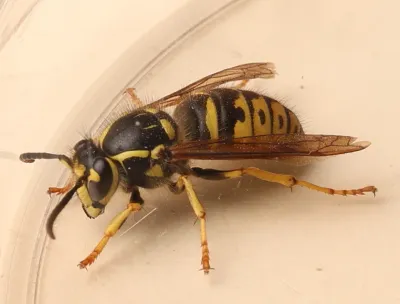
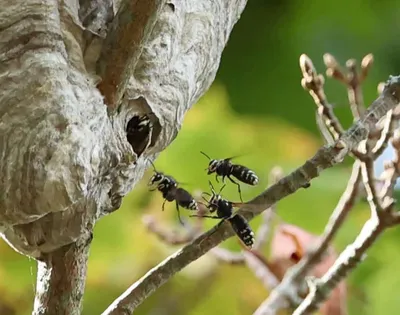
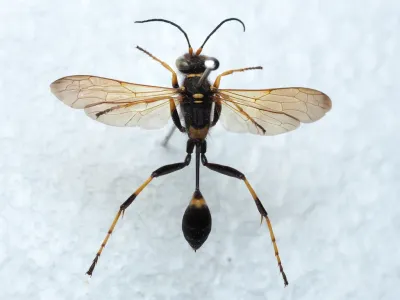
Thread-Waisted Wasps are often mistaken for these similar pests
Where Thread-Waisted Wasps Are Found
Hover over states to see their names. Green regions indicate where thread-waisted wasps have been reported.
Common Questions about Thread-Waisted Wasps
Are thread-waisted wasps dangerous?
+
Thread-waisted wasps are not dangerous to humans. They are solitary, non-aggressive wasps that rarely sting unless directly handled or stepped on. Unlike yellowjackets or hornets, they do not defend their nests aggressively and pose minimal risk to people.
Do thread-waisted wasps sting?
+
Thread-waisted wasps can sting, but they very rarely do. Stings typically only happen if the wasp is grabbed or trapped against skin. Their stings are used primarily for paralyzing prey, not defense. These wasps show little interest in people and can generally be observed without incident.
What do thread-waisted wasps eat?
+
Adult thread-waisted wasps feed on flower nectar. They hunt various insects to feed their larvae, including caterpillars, grasshoppers, crickets, katydids, and spiders depending on the species. Each type of thread-waisted wasp specializes in hunting specific prey.
Should I get rid of thread-waisted wasps?
+
If thread-waisted wasps are nesting in high-traffic areas like walkways, play areas, or near entryways, treatment may be warranted. These solitary wasps pose minimal sting risk compared to yellowjackets or hornets. Treatment involves applying insecticide to nest entrances.
Where do thread-waisted wasps nest?
+
Most thread-waisted wasps dig burrows in sandy or loose soil for nesting. Some species use pre-existing cavities or build mud nests. The female provisions each nest cell with paralyzed prey before laying an egg and sealing the chamber.
How can I identify a thread-waisted wasp?
+
Thread-waisted wasps have an extremely thin, thread-like petiole connecting their thorax to their abdomen, giving them their distinctive appearance. They are typically slender with long legs and can be black, orange, red, or metallic blue depending on species.
What is the difference between thread-waisted wasps and mud daubers?
+
[Mud daubers](/pests/wasps/mud-daubers/) are actually a type of thread-waisted wasp within the Sphecidae family. Both have the characteristic narrow waist. The main difference is nesting behavior. Mud daubers build mud nests while other thread-waisted wasps typically dig ground burrows.

With five years of hands-on experience in the pest control industry, George Schulz is a registered technician with the Virginia Pest Management Association and a proud third-generation professional in a family business that's been protecting homes for over 57 years. He manages and trains a team of service pros while also leading internal research efforts—recently spearheading a deep-dive review of thousands of documents on pest control materials to hand-pick the most kid and pet friendly, most effective solutions tailored specifically for homes in the DC metro area.