Sand Wasps Identification Guide
Bembix americana and Ammophila spp.
Sand wasps are solitary ground-nesting wasps that dig burrows in sandy soil to raise their young. They often hover near people while catching flies, which can be alarming, but they rarely sting unless handled.
Taxonomy
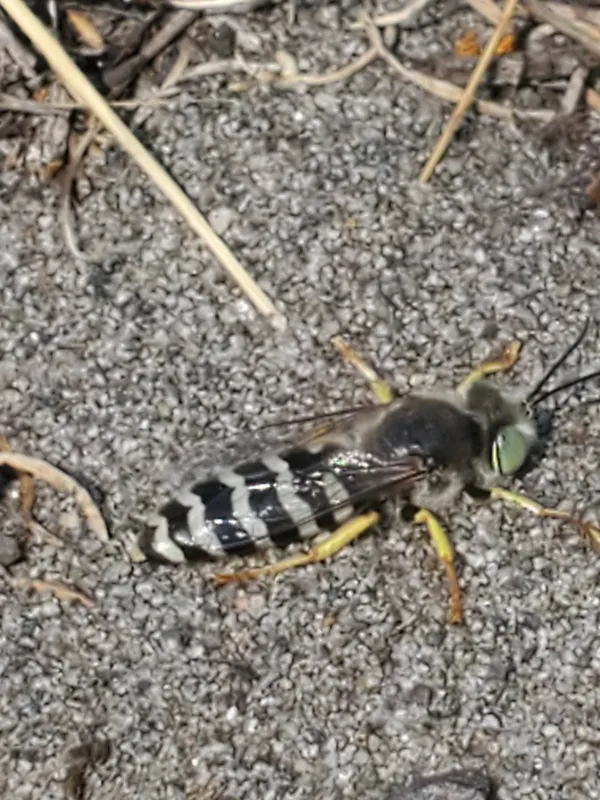
Sand Wasps Coloration
Common color patterns to help identify sand wasps
Sand Wasps
Seasonal Activity
When sand wasps are most active throughout the year

Where Sand Wasps Are Found
Hover over states to see their names. Green regions indicate where sand wasps have been reported.
Sand Wasp Identification Guide
Physical Characteristics
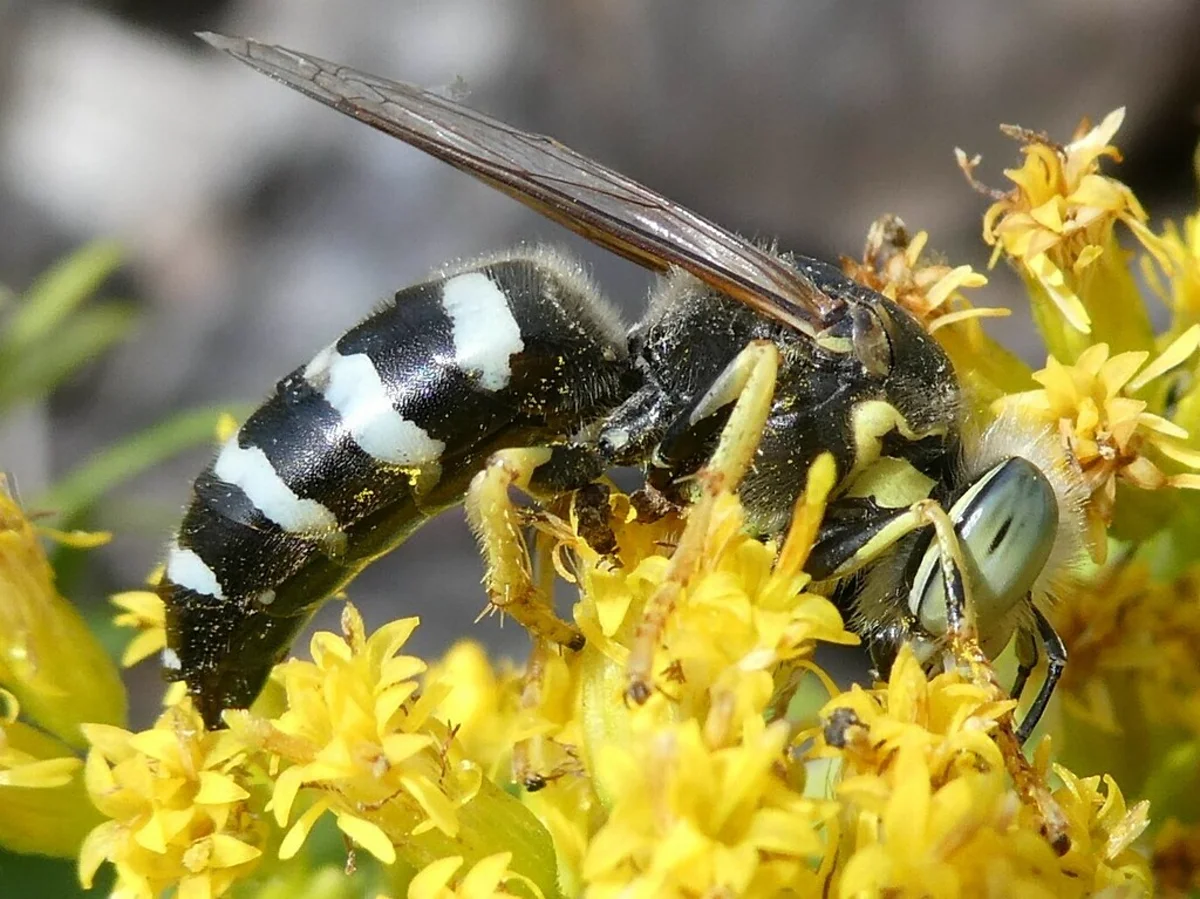
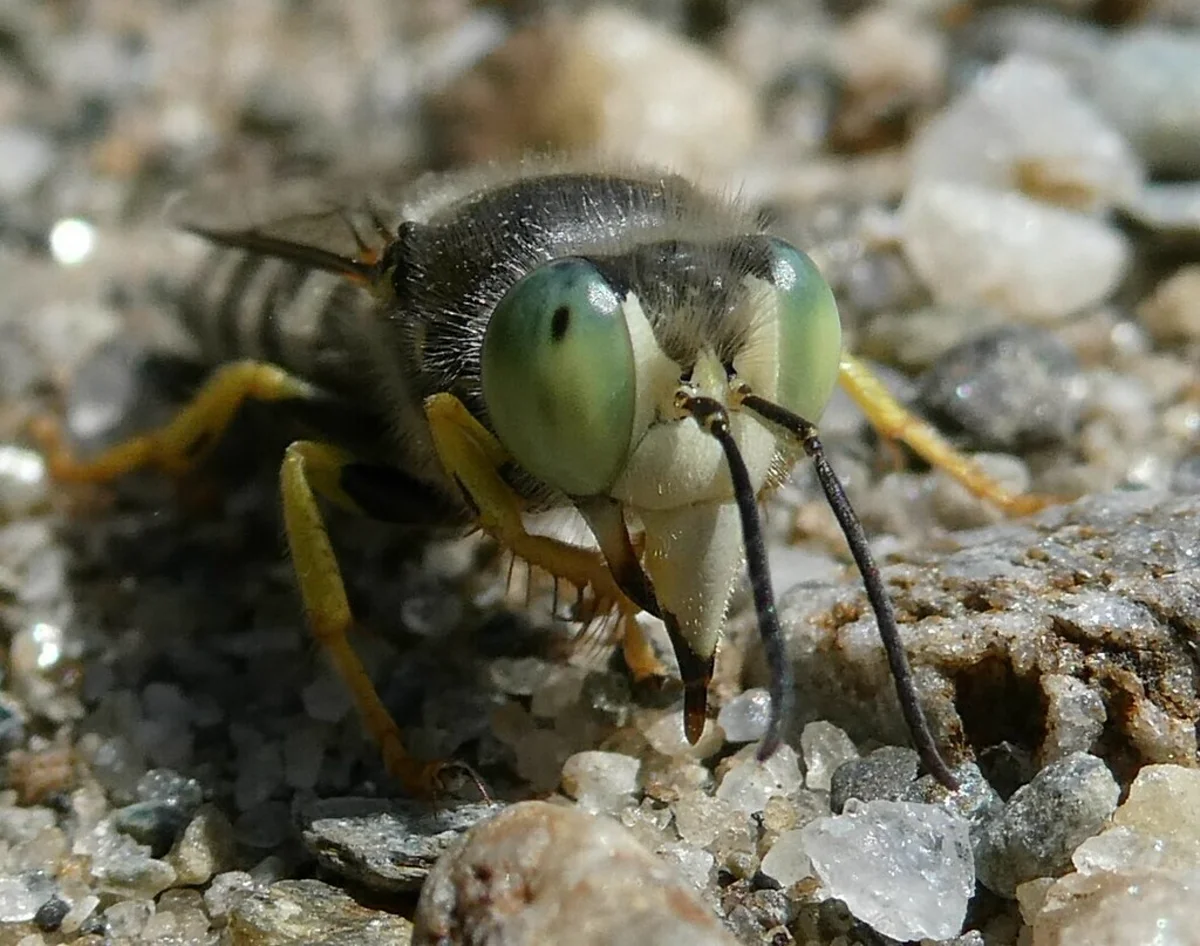
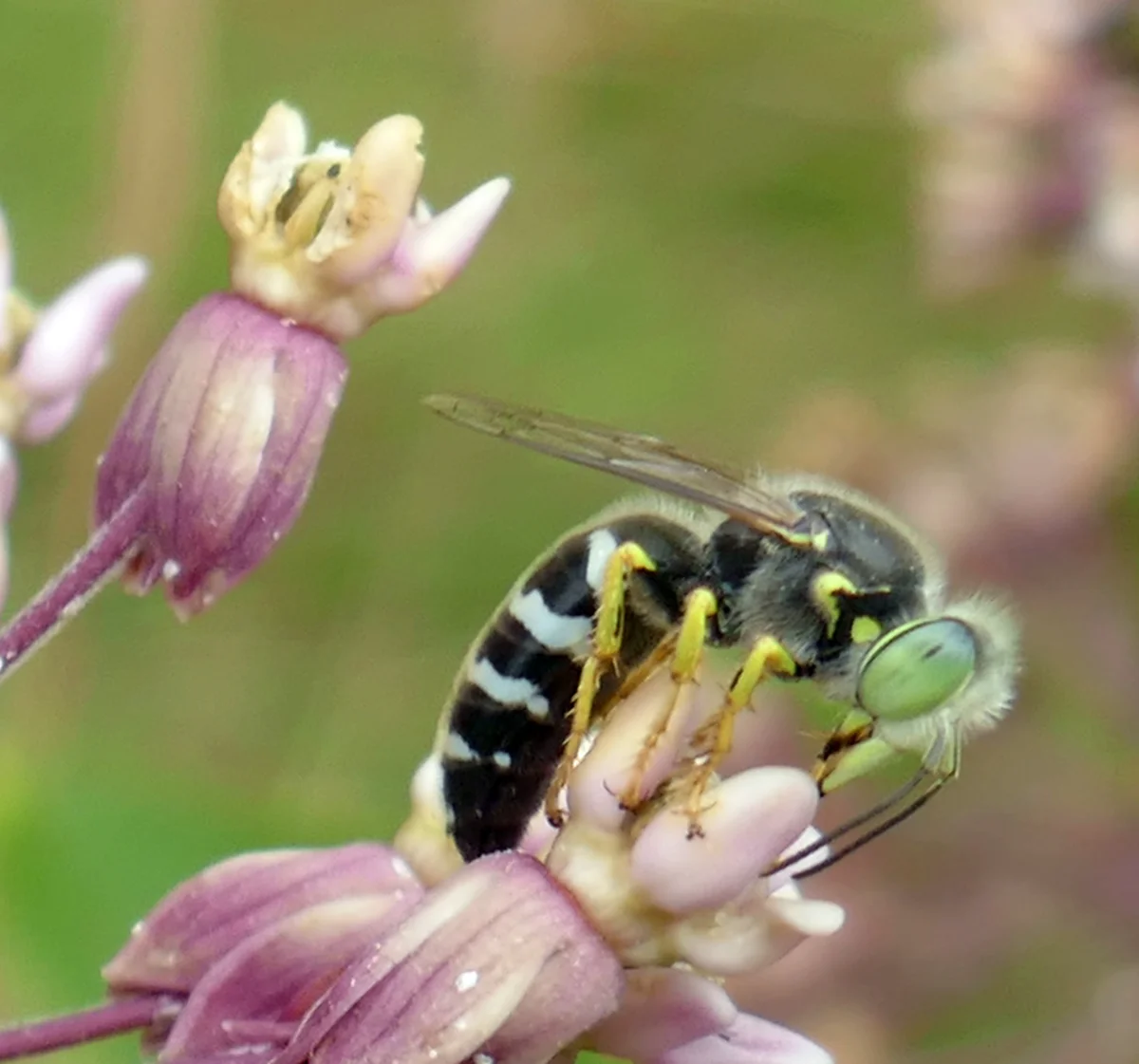
Sand wasps are medium to large wasps measuring half an inch to one inch long. Their bright green compound eyes are their most notable feature. These eyes stand out against their dark bodies. They also have three small eyes on top of their head. Another key trait is their long, triangular upper lip. This gives them a beak-like look.
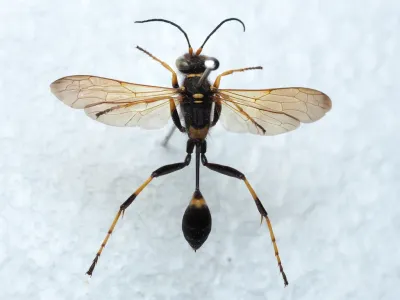
The American sand wasp has a mostly black body. Five pairs of white or pale yellow spots form bands across the abdomen. Short, pale hairs cover the head and thorax. The wings are clear with brown veins. The legs are mostly yellow. Thread-waisted sand wasps have a very narrow waist. They often show orange or rust markings on their abdomen.
Common Species
Several sand wasp species are found throughout North America:
-
American Sand Wasp (Bembix americana): The most common species. Found from coast to coast. Has a black body with white bands and bright green eyes. Hunts flies and nests in sandy areas.
-
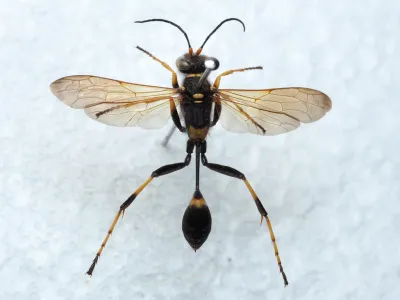
Thread-waisted Sand Wasps (Ammophila spp.): Slender wasps with a very thin waist. Often black with orange or rust markings. They hunt caterpillars and grasshoppers.
-
Horse Guard (Stictia carolina): A large sand wasp found in the eastern United States. Hunts horse flies and deer flies around livestock.
Sand Wasp Behavior and Biology
Sand wasps are solitary wasps. Each female works alone to dig her burrow and stock it with prey. Unlike yellowjackets, sand wasps do not live in colonies with workers and a queen. However, many females often nest close together in good sandy areas. These groups can number in the hundreds. This happens because suitable sandy habitat is limited.
Nesting Habits
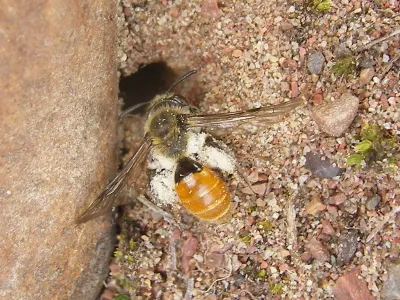
Female sand wasps are expert diggers. They choose open areas with loose sandy soil that drains well. The female uses her front legs to rake soil backward while digging. The burrow slants 6 to 9 inches into the ground. It ends in a chamber where she will raise her young. After digging, she flattens the soil mound to hide the nest entrance.
American sand wasps smooth their soil mounds by raking in straight lines. Related species rake in half-circle patterns. Females are very good at finding their hidden burrow entrances after leaving to hunt.
Hunting and Provisioning
Sand wasps are skilled hunters that catch prey in flight. The American sand wasp hunts flies, including house flies, blow flies, and other pest species. Their hunting often brings them close to people. When a sand wasp hovers near your face or body, it is catching flies attracted to you. It is not threatening you.
Most wasps paralyze prey to keep it fresh. Sand wasps often kill their prey instead. This means they must keep bringing fresh food to their growing larvae. A female may provide her larva with two dozen flies during its growth. This is like how a bird feeds its chicks.
Life Cycle
Sand wasps produce one generation per year. After mating, the female digs a new burrow for each egg she lays. She stocks the chamber with flies, then lays a single egg. The larva hatches and feeds on the flies its mother keeps providing. After the larva finishes feeding, the female seals the nest. The larva spins a cocoon and spends winter underground. It becomes an adult the following spring and emerges in early summer.
Mating Behavior
Male sand wasps perform a behavior called a sun dance. Groups of males fly low over nesting areas. They hover and patrol as they wait for females to emerge. Males compete to mate with newly emerged females. This hovering can alarm people but poses no danger. Males cannot sting.
Treatment Options for Sand Wasps
Sand wasps rarely sting and show no aggression toward people. Their habit of hovering close while hunting flies can be startling, but this behavior is harmless. However, nesting aggregations can become a concern in high-traffic areas.
When Treatment Is Needed
Playgrounds, volleyball courts, and sandy paths may attract nesting females. Their burrows create trip hazards and disturb sand surfaces. Parents may worry about children playing near nesting areas. When sand wasps nest in problem locations, treatment can address the issue.
Professional Treatment Approaches
Treatment for sand wasps typically involves applying products to individual burrow entrances. Evening hours work best when wasps are less active. For large nesting areas, broader treatment of the soil may be needed. A pest control professional can assess the situation and recommend the right approach.
Habitat Modification
Long-term control focuses on making areas less attractive for nesting. Options include:
- Improve lawn density with overseeding and regular watering
- Add mulch to bare sandy areas in garden beds
- Increase irrigation since females avoid wet soil
- Reduce bare sandy patches where nesting commonly occurs
Sand wasps return to favorable nesting sites year after year. Combining treatment with habitat changes provides the most lasting results.
References
Other Wasps
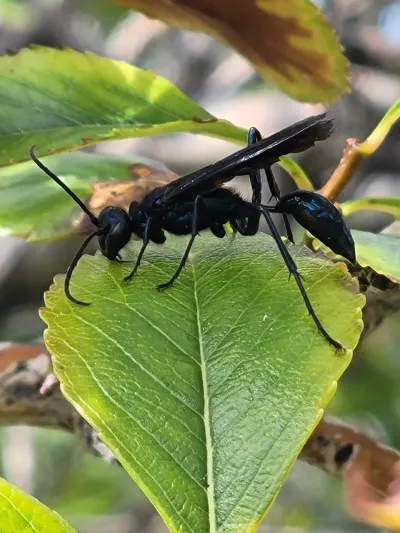
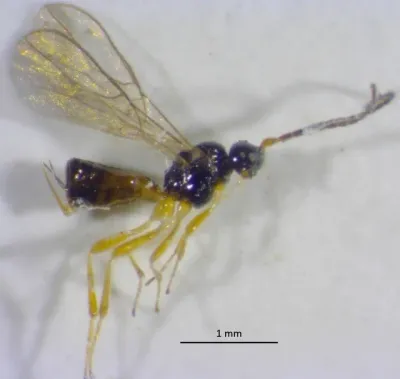
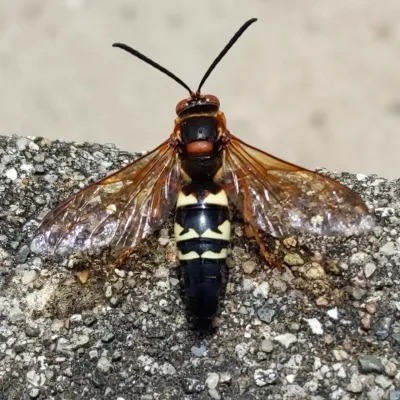
Explore other species in the wasps family
Commonly Confused With
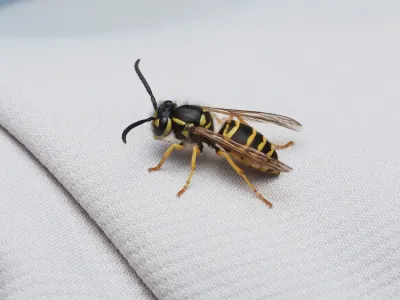
Sand Wasps are often mistaken for these similar pests
Where Sand Wasps Are Found
Hover over states to see their names. Green regions indicate where sand wasps have been reported.
Common Questions about Sand Wasps
Are sand wasps dangerous?
+
Sand wasps are not dangerous to humans. They are solitary wasps and rarely sting unless directly handled or stepped on. Their habit of hovering near people while hunting flies is often mistaken for aggression, but they are simply catching flies attracted to you.
Why do sand wasps hover around me?
+
Sand wasps are excellent fly hunters. When they hover near you, they are catching flies attracted to your body heat, scent, or sweat. This behavior looks alarming but is completely harmless. The wasps have no interest in stinging you.
Why are sand wasps digging in my yard?
+
Female sand wasps dig burrows in sandy or loose soil to create nests for their young. They prefer open, sunny areas with little vegetation. Sandy lawns, volleyball courts, playgrounds, and beach areas are common nesting sites.
What do sand wasps eat?
+
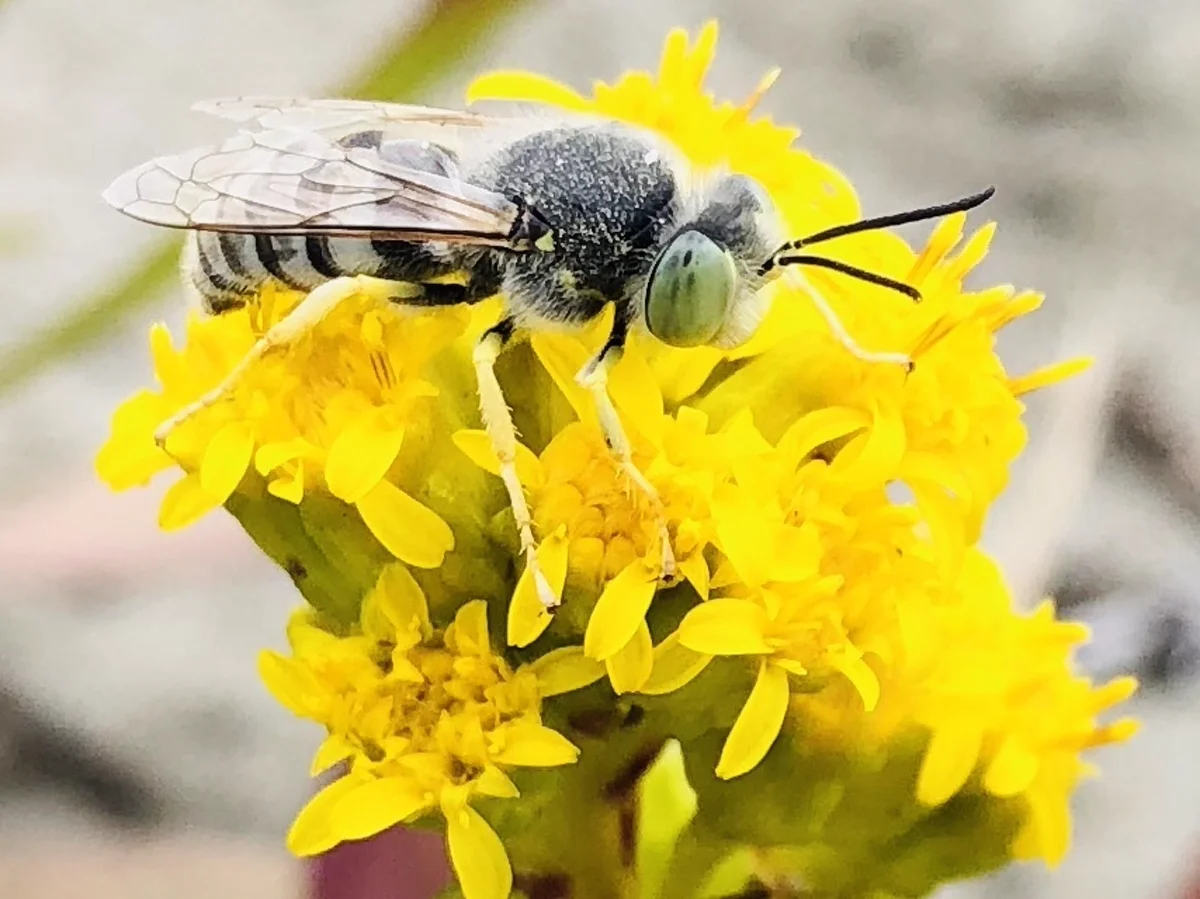
Adult sand wasps feed on flower nectar from plants like goldenrod, milkweed, and black-eyed Susan. They hunt flies to provision their nests. The larvae feed on the paralyzed or killed flies the mother provides.
How do I tell sand wasps from yellowjackets?
+
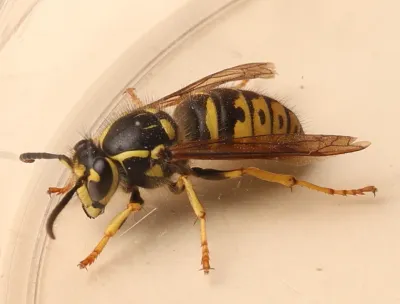
Sand wasps have distinctive bright green compound eyes and an elongated triangular upper lip that makes them appear to have a beak. They are larger and more robust than yellowjackets. Their color pattern features white or pale yellow bands rather than the bright yellow of yellowjackets. Other ground-nesting [wasps](/pests/wasps/) like [digger wasps](/pests/wasps/digger-wasps/) and [cicada killers](/pests/wasps/cicada-killers/) also nest in sandy soil.
Do sand wasps form colonies?
+
Sand wasps are solitary, meaning each female builds and provisions her own nest. However, they often nest gregariously, with many females digging burrows close together in favorable sandy areas. This can look like a colony but there is no social structure.
How can I discourage sand wasps from nesting in my yard?
+
Improving lawn density with overseeding and regular watering makes soil less attractive for nesting. Mulching bare sandy areas and reducing foot traffic near nesting sites also helps. For active infestations in high-traffic areas, professional treatment can address the problem.
What do sand wasps hunt?
+
Sand wasps hunt flies, including house flies, blow flies, and horse flies. A nesting group of 50 females can kill over 5,000 flies during a single season. They also feed on flower nectar from plants like goldenrod and milkweed.

With five years of hands-on experience in the pest control industry, George Schulz is a registered technician with the Virginia Pest Management Association and a proud third-generation professional in a family business that's been protecting homes for over 57 years. He manages and trains a team of service pros while also leading internal research efforts—recently spearheading a deep-dive review of thousands of documents on pest control materials to hand-pick the most kid and pet friendly, most effective solutions tailored specifically for homes in the DC metro area.